
We had read that it was possible to camp and trek on Jebel Ahkdar in Oman throughout the summer. The plateau is over 2000m and can be 20 degrees cooler than the surrounding lowlands. Since Sue’s broken ribs are still causing trouble, we booked into the Sahar Hotel where we had stayed in December and planned a reconnaissance mission to find suitable camp sites for future visits. This turned out to be a really good move.
It was 31 degrees as we started the climb up Jebel Ahkdar and at over 2000 metres the temperature had dropped to 14.
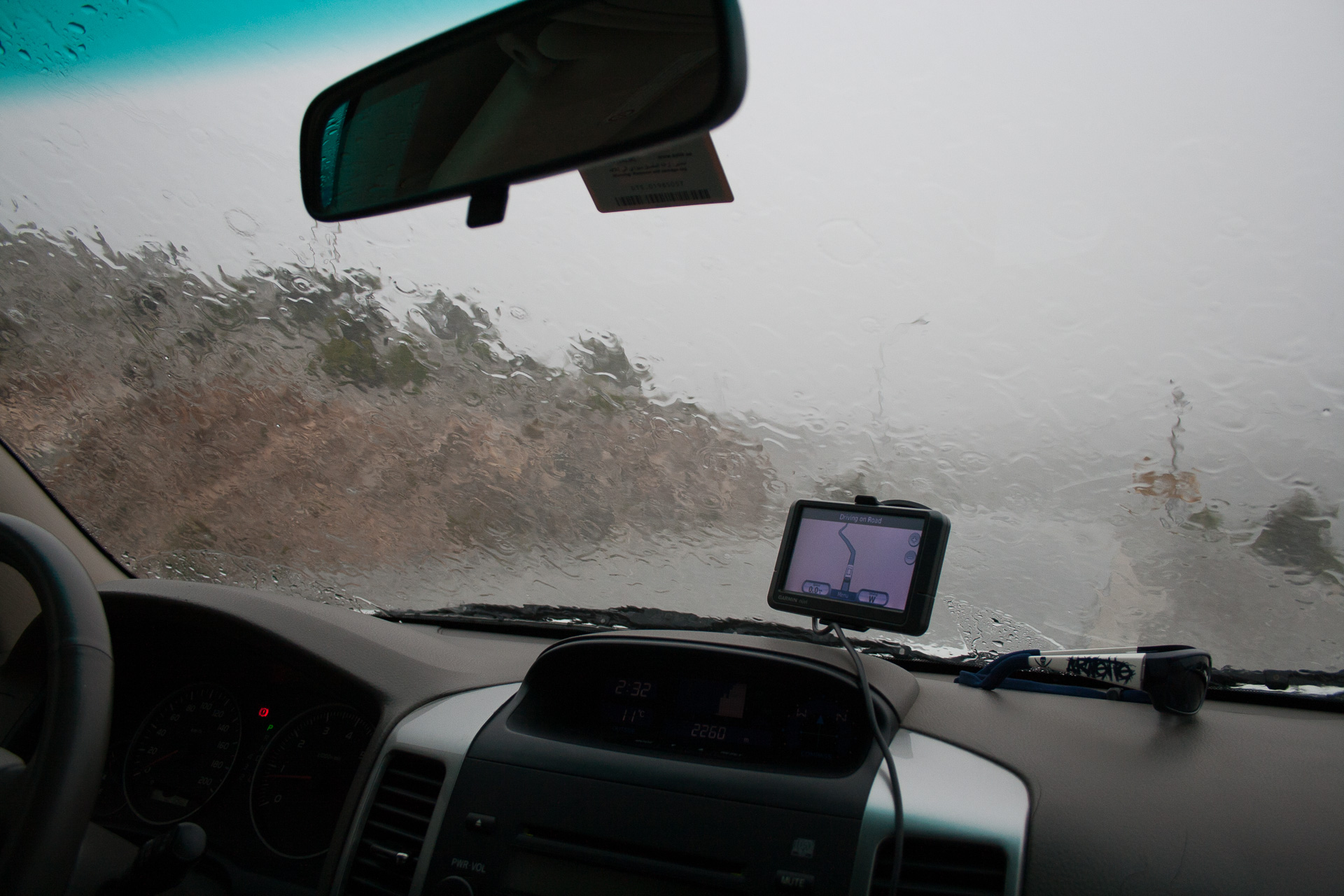
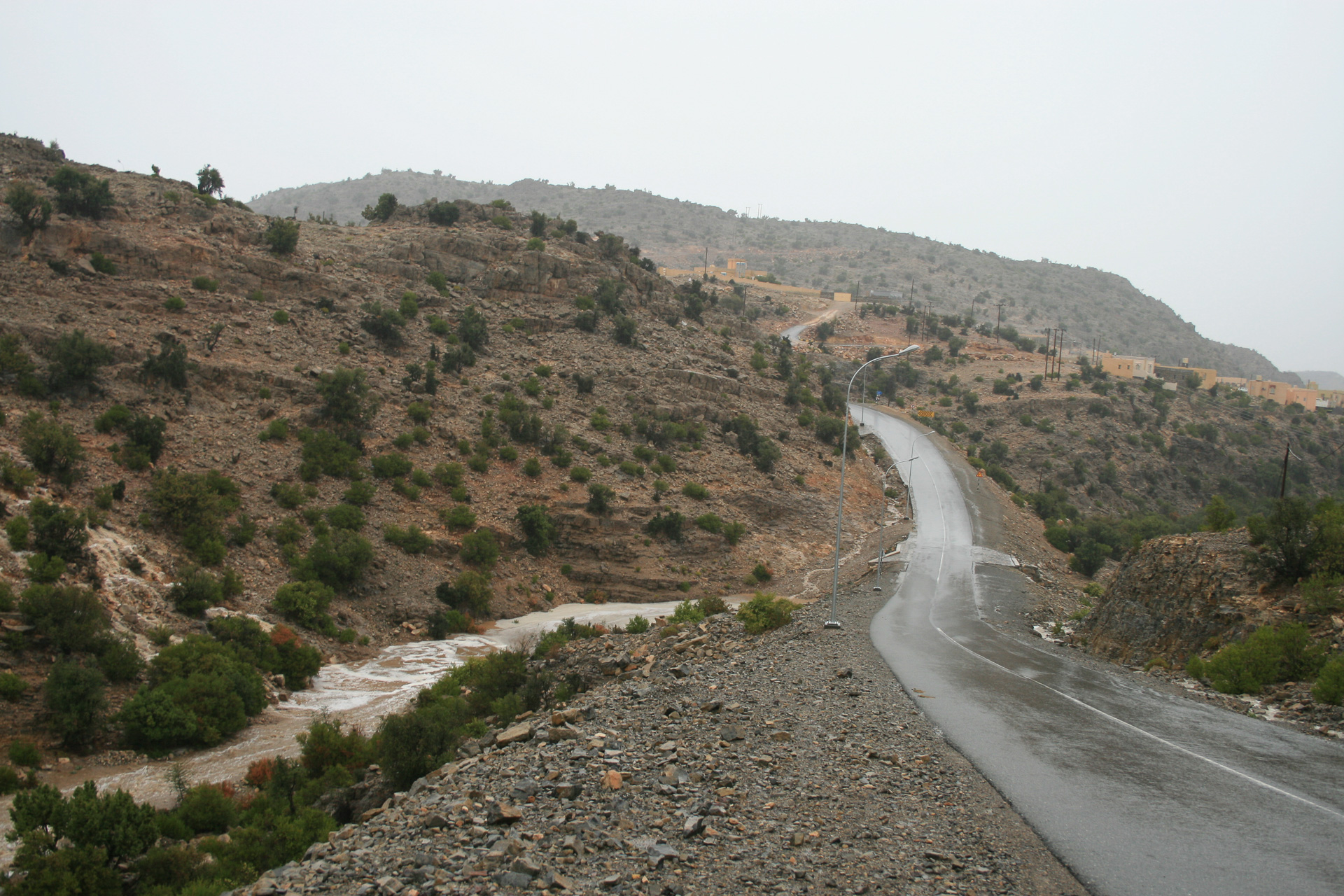
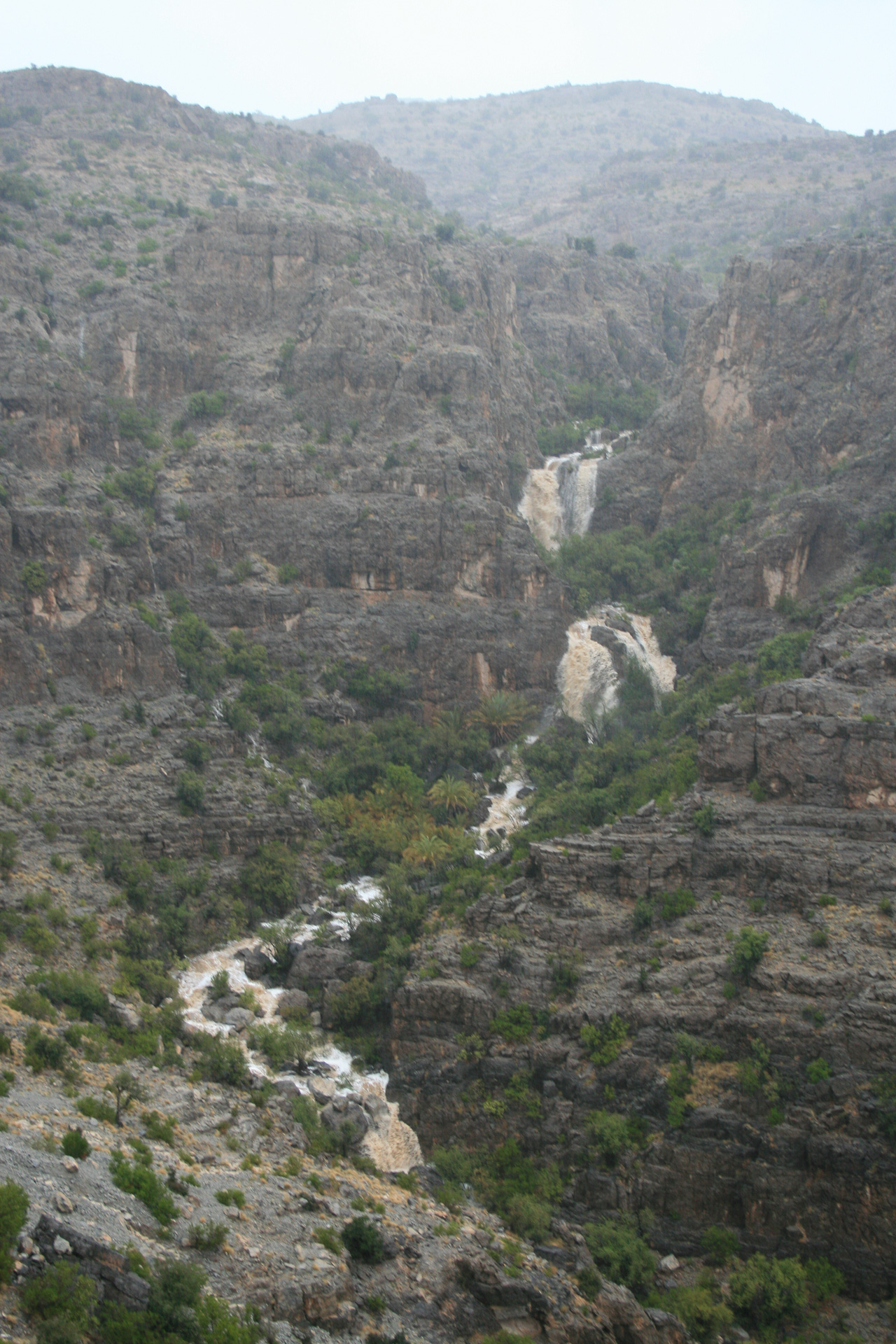
We drove higher still, intending to explore a remote village, when the rain found us. In a spectacular thunder and lightening storm we opted not to continue down an increasingly precipitous track and instead drove back onto the tar seal to watch the water cascade down the bare mountain slopes and begin to fill the wadis below. The temperature dropped to 10 degrees as we sat in the car.
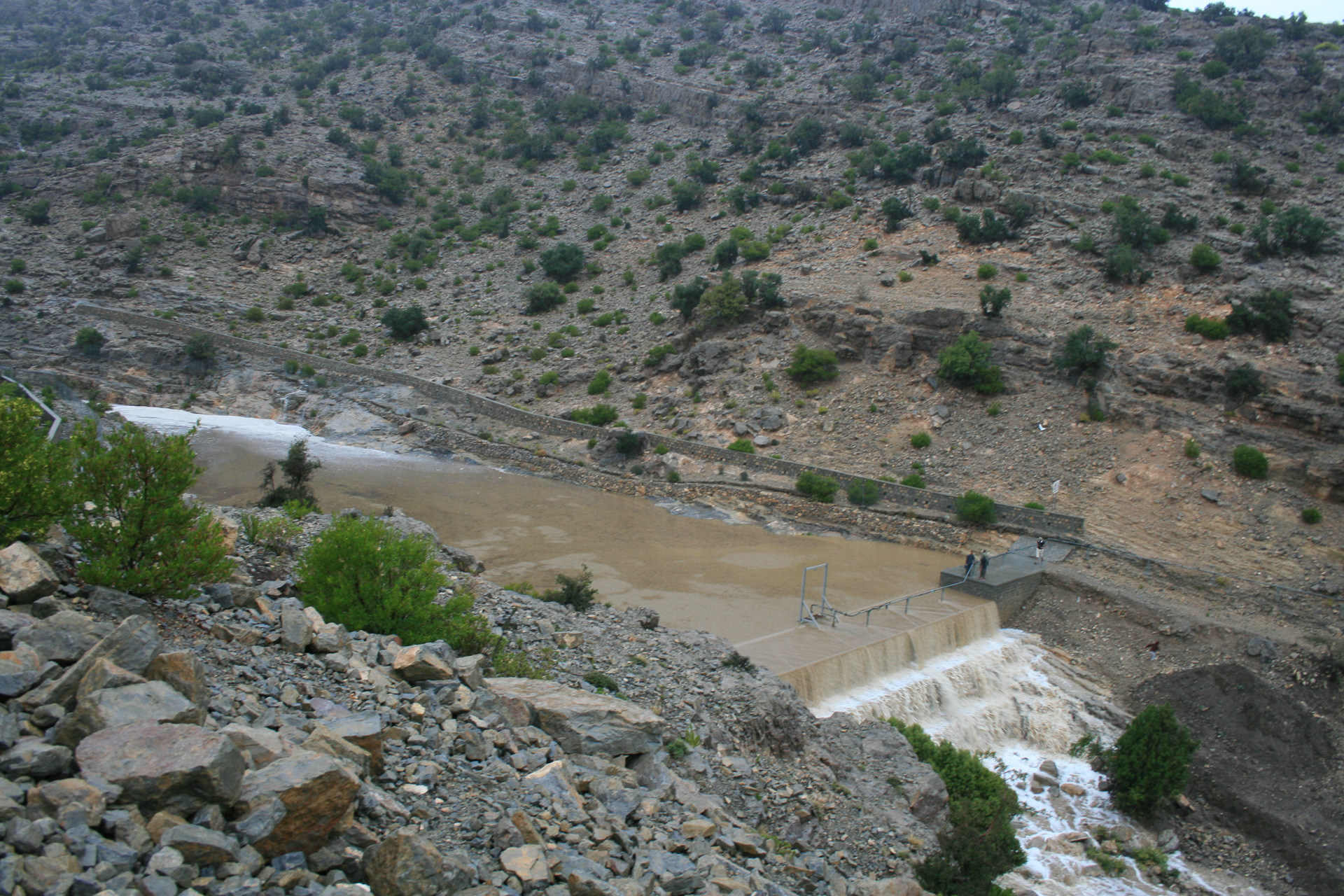
Within a few minutes there were waterfalls roaring down the wadis and dams overflowing.
We headed for the hotel and waited for the rain to stop. We finally emerged from our room at about 5pm and set off to see why so many locals were clambering to a cliff-top view point near the hotel.
We could hear what they were coming to view before we actually saw it. The dry wadi that we had walked through on the Three Villages Walk in December now held a raging torrent ending in a spectacular waterfall dropping several hundred metres.

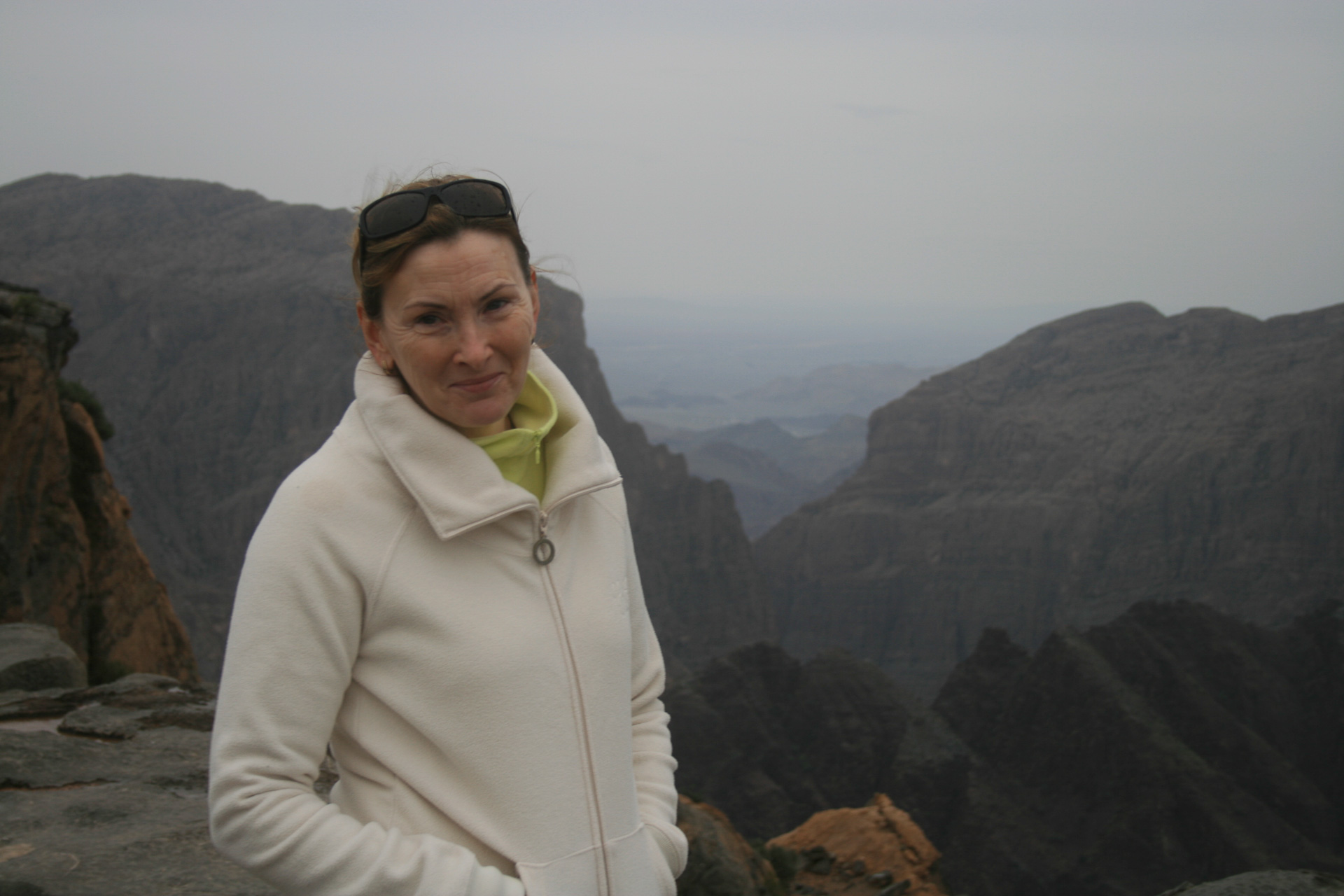
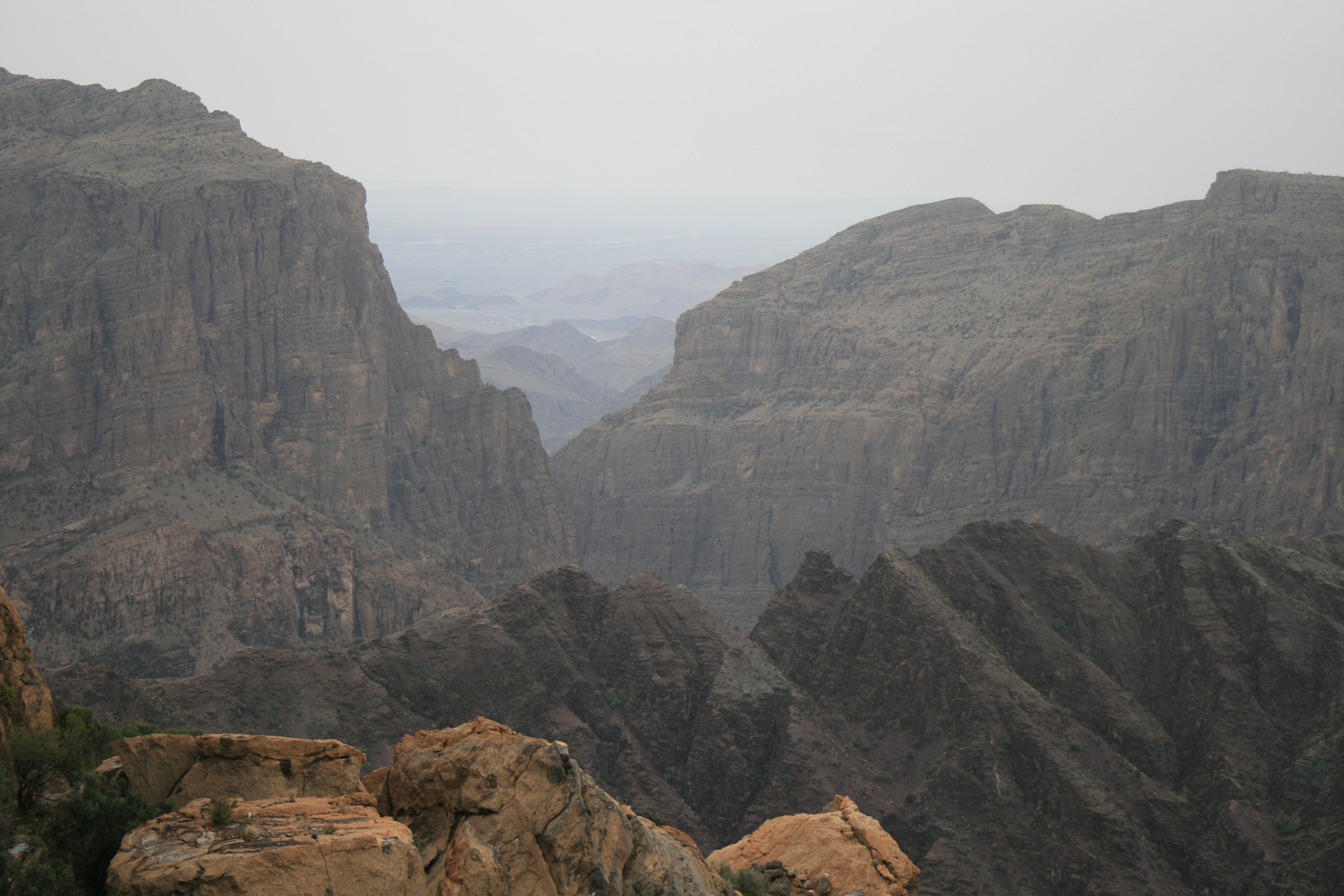
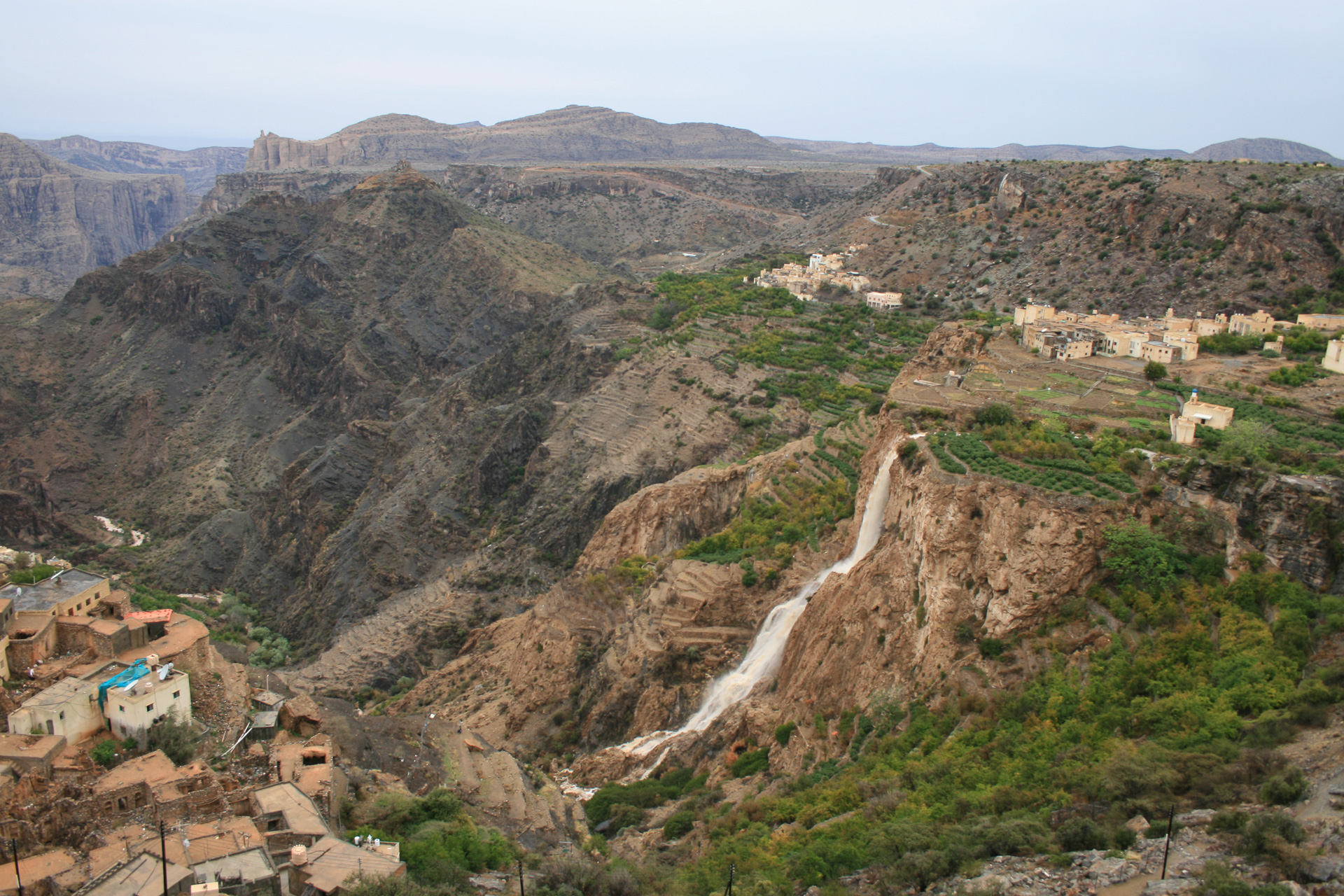
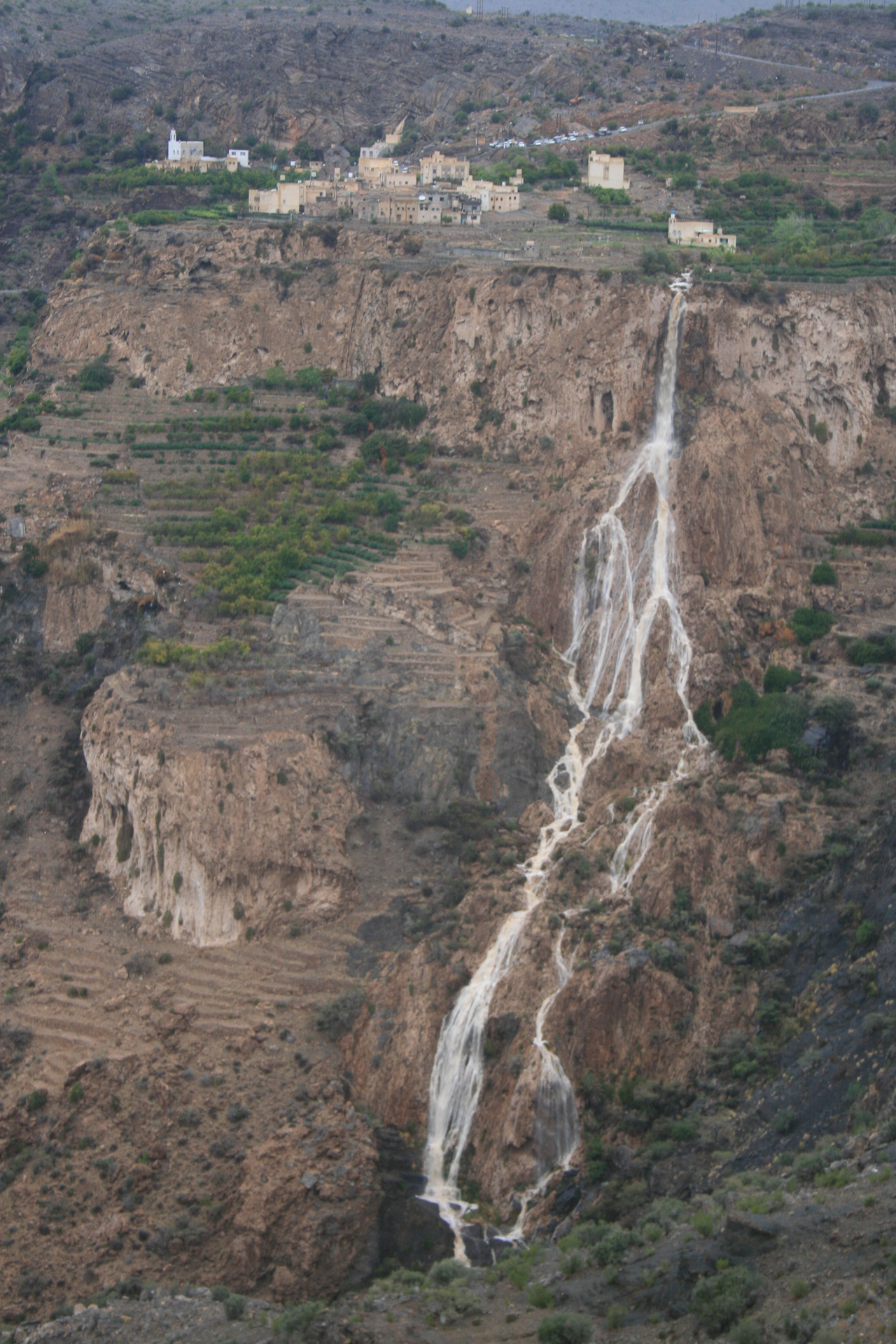
By 9 o’clock the next morning there was barely a trickle.
We completed the reconnaissance and found several suitable camp sites before setting of to explore the abandoned village of Wadi Bani Habib. Everything looked fresh after the rainfall and the region justified its title of Green Mountain.
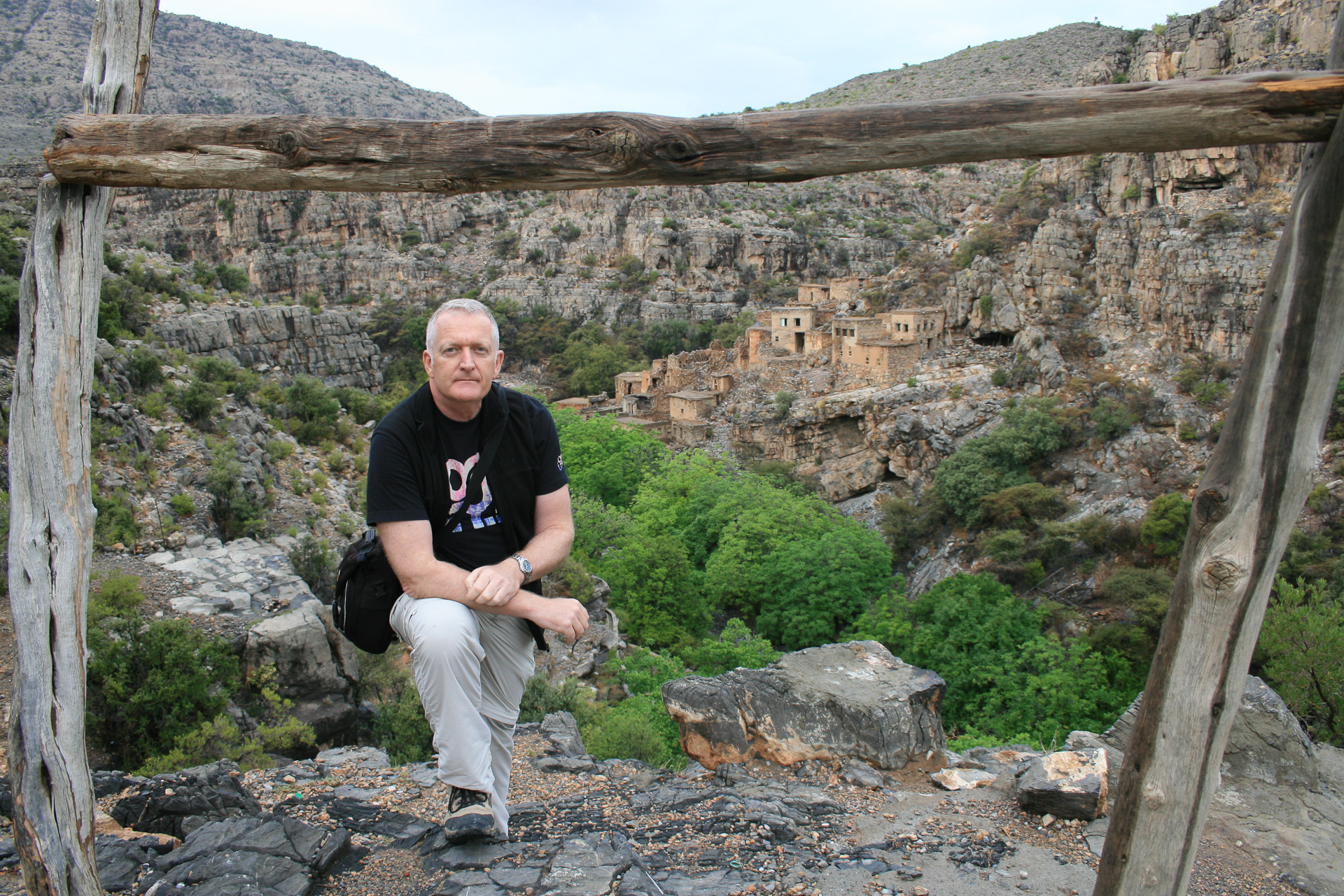
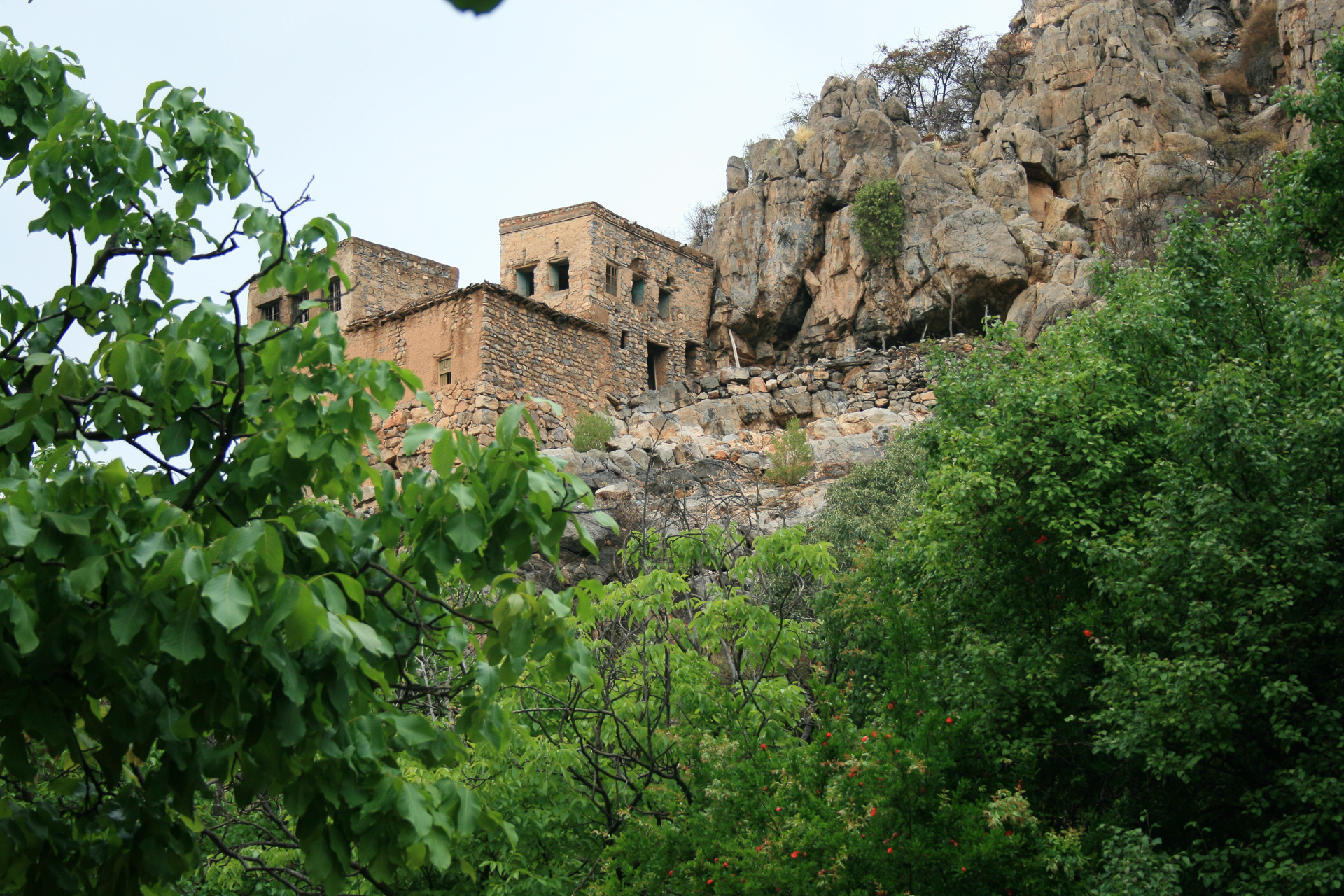
We had wanted to explore the ruined buildings but had driven through a shallow ford and several wadis that had obviously been flooded yesterday. With thunder rolling through the hills around us we decided it was time to leave and headed down the mountain in yet more pelting rain.
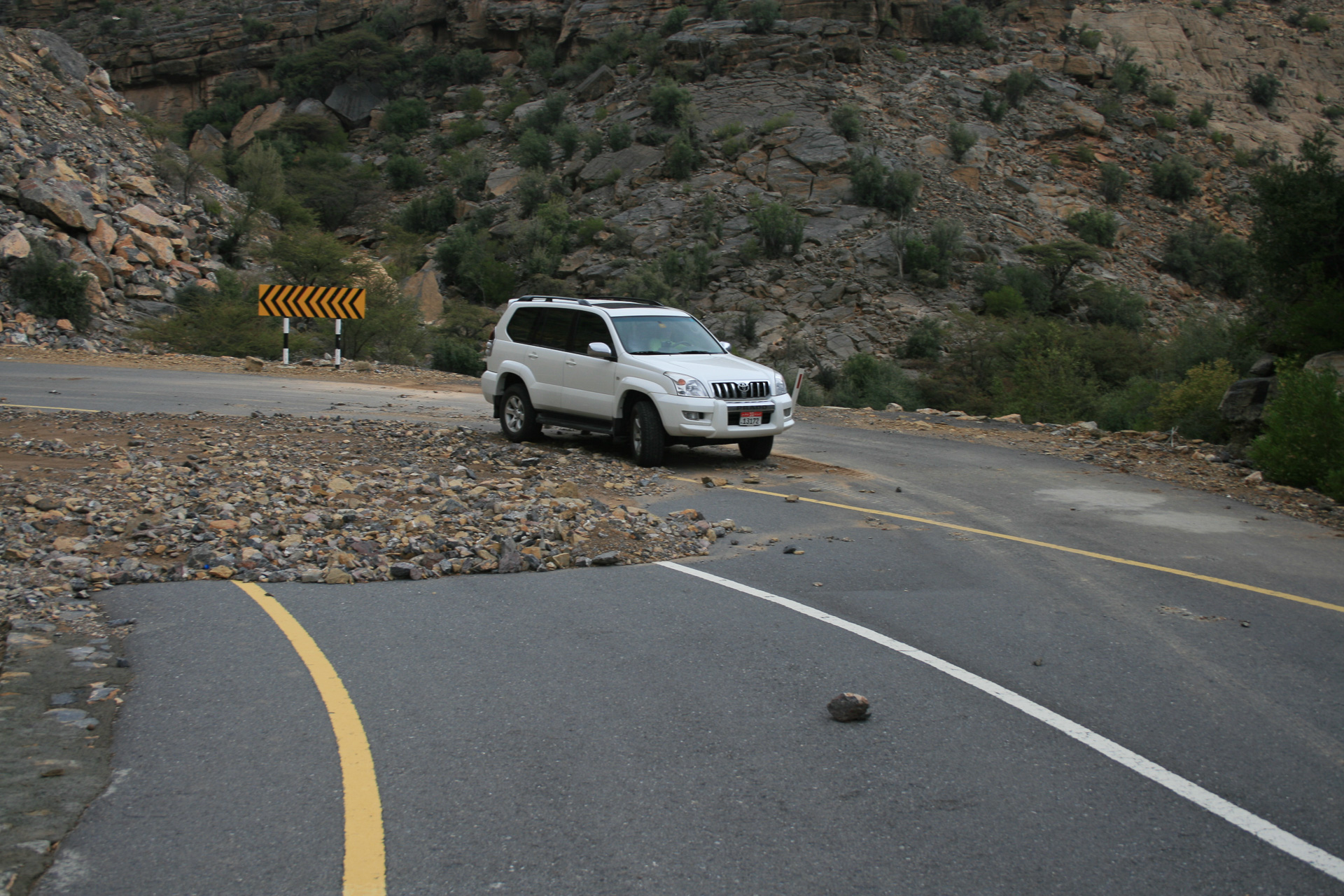
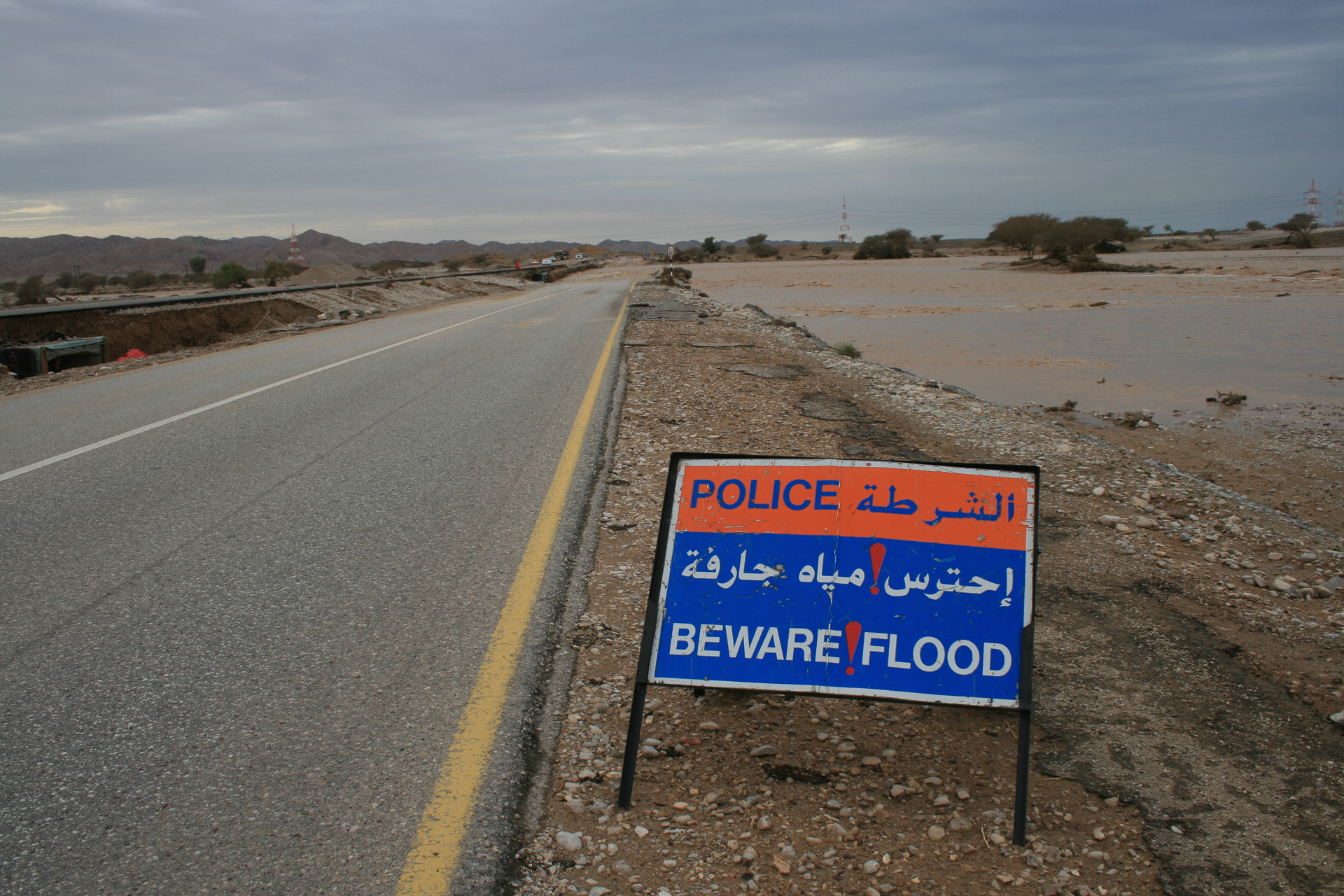
As we drove north through the desert plains we were shown just what impact the mountain rain could have.
The first flood was quite exciting.


About ten crossings later we were getting quite blasé about it all. There are major roadworks along this stretch of road and in many places the old road was completely submerged and traffic was only flowing by using the incomplete, but above water, new highway.
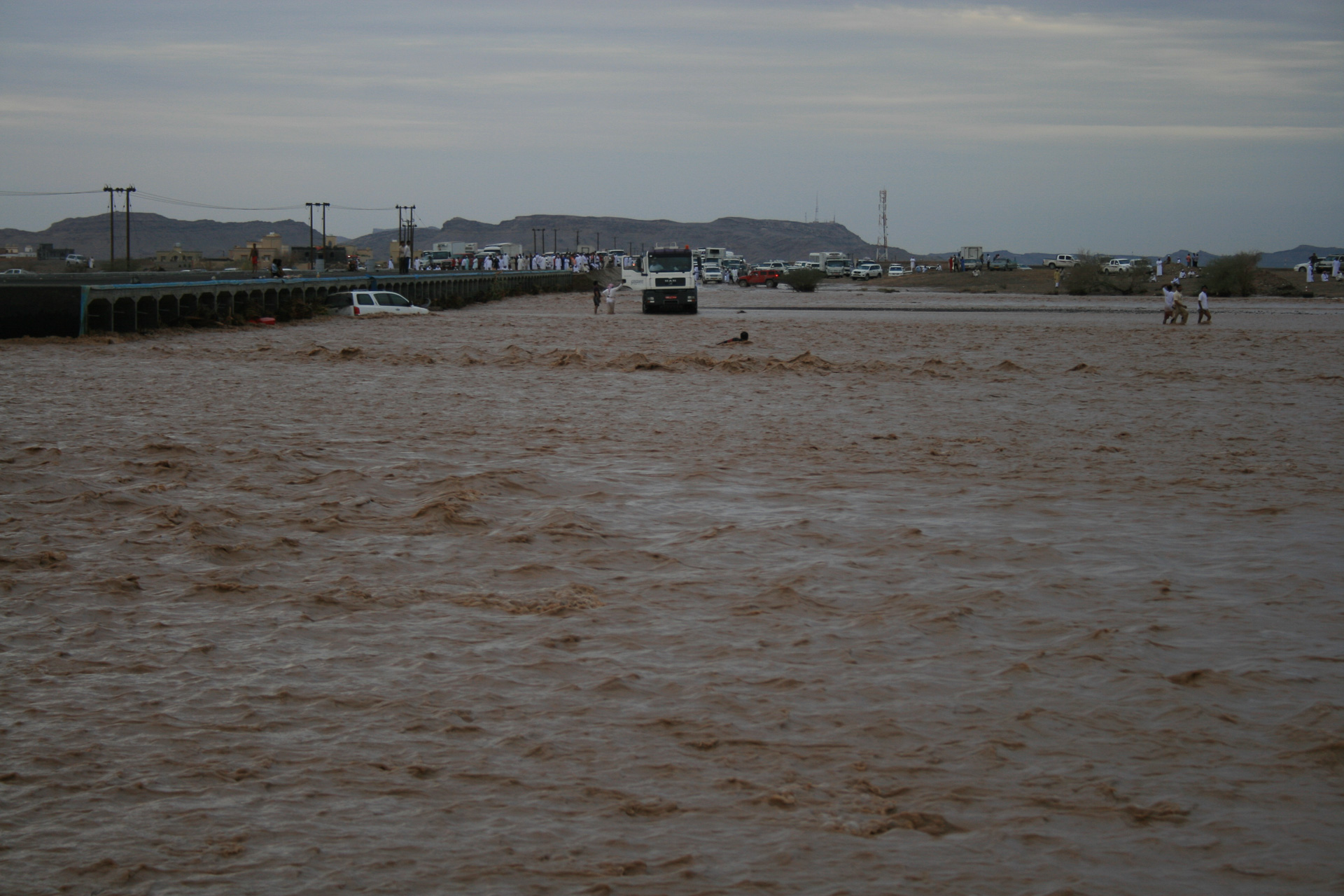
Remember these are not rivers that have burst their banks. Just a few hours earlier this would have been a shallow, dry wadi with no water in sight.

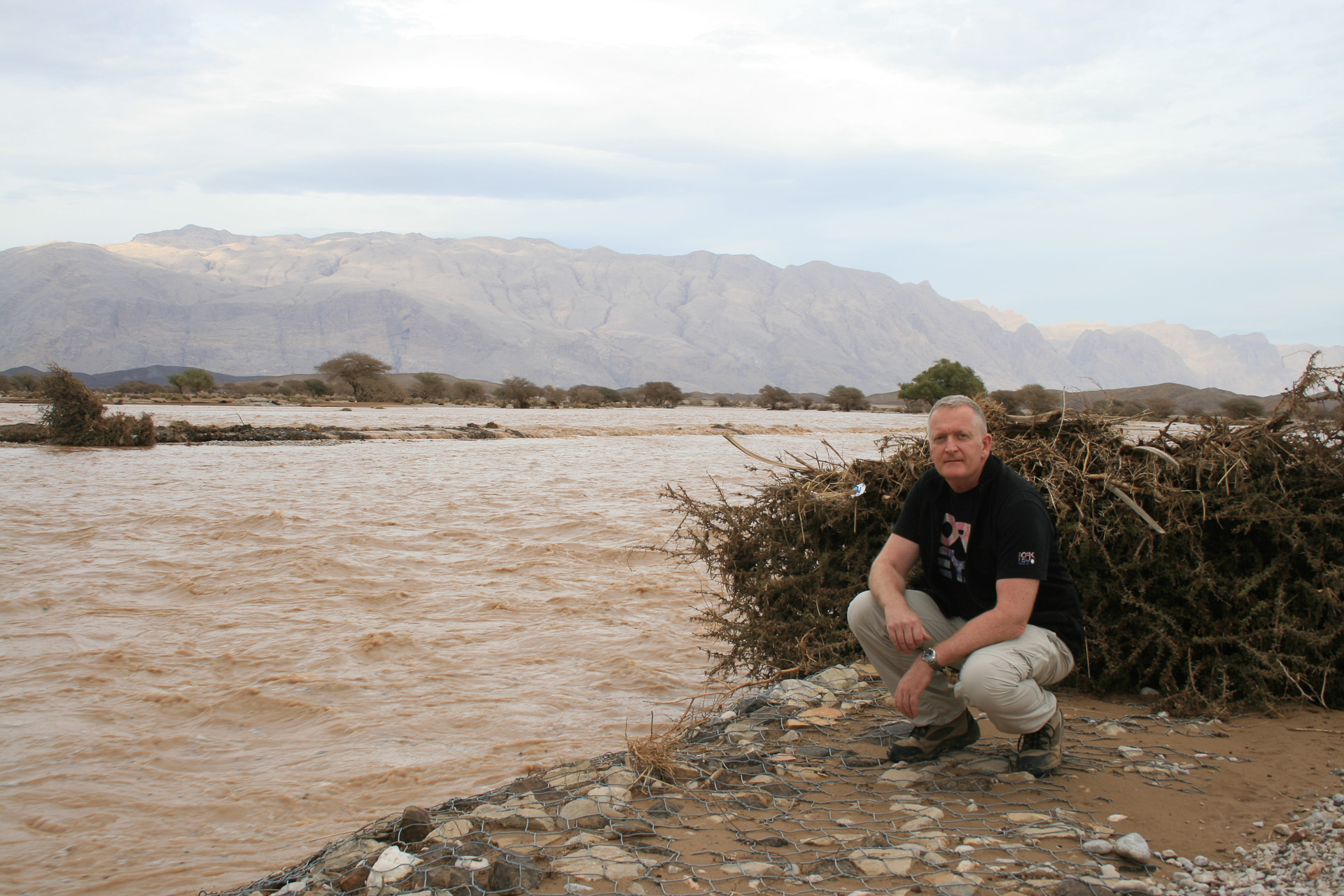
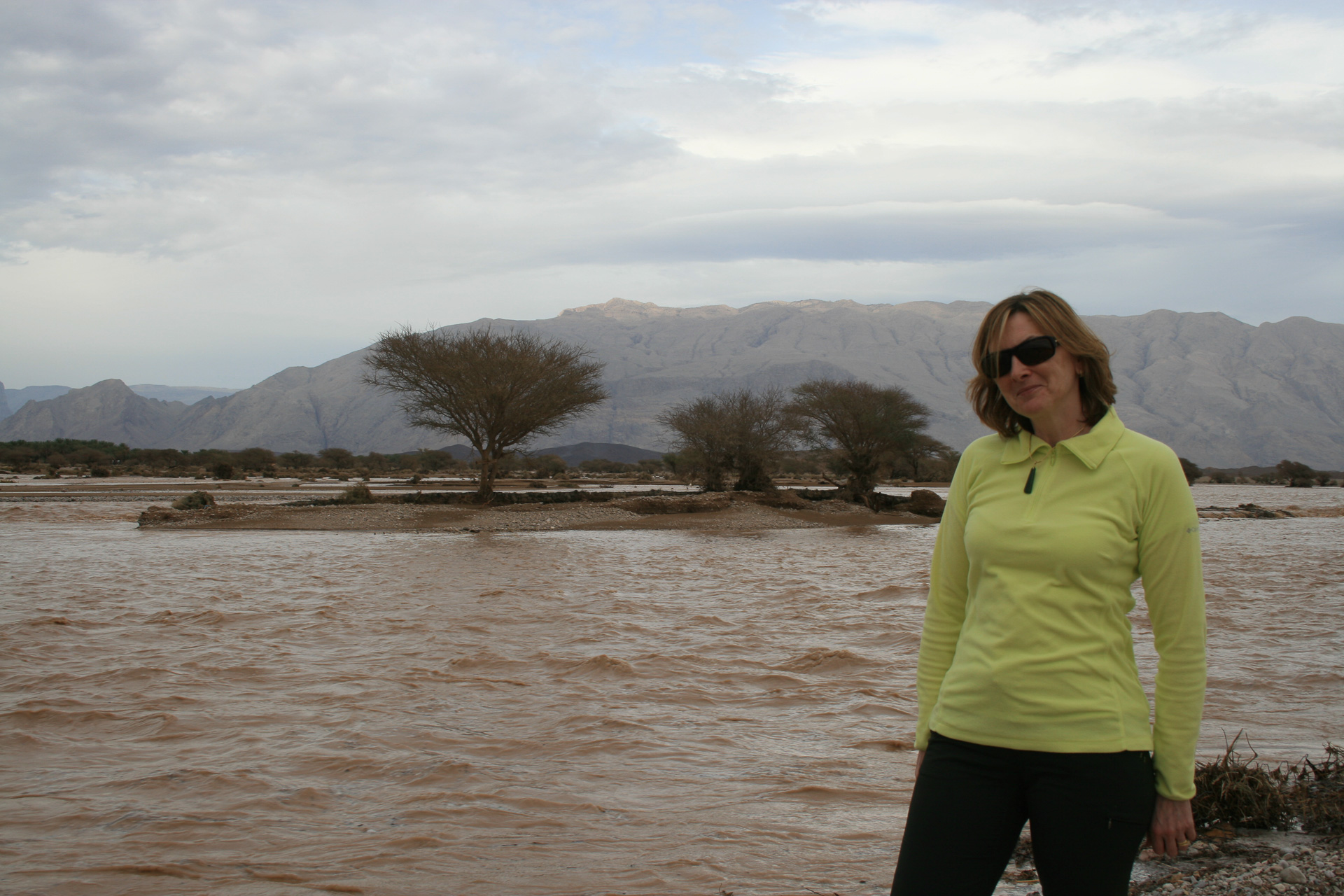
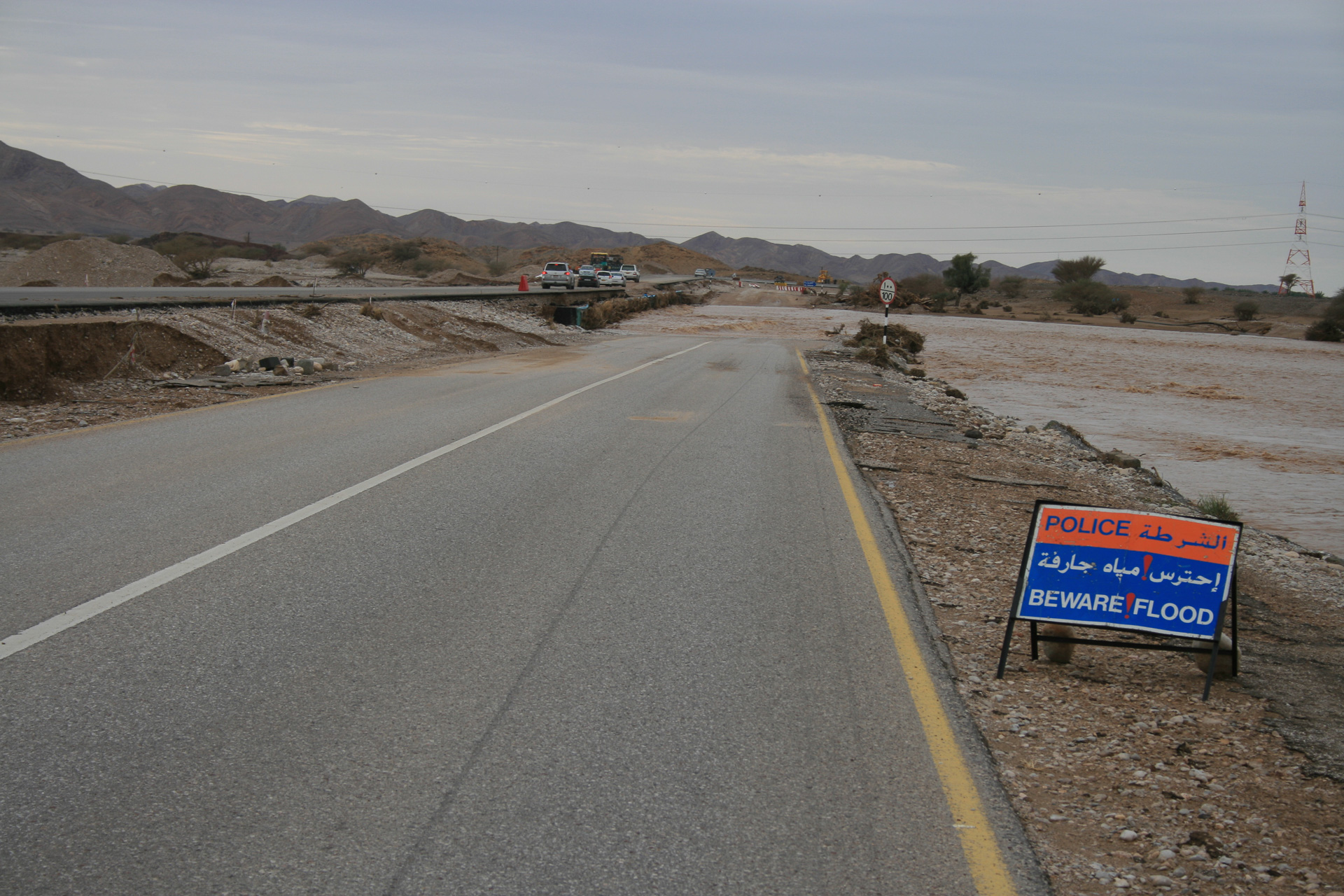
It was still very interesting to see and good fun driving on the new sections of road that were not yet open, We should have realised that the lack of oncoming traffic signalled a major problem ahead. We were soon to find it.
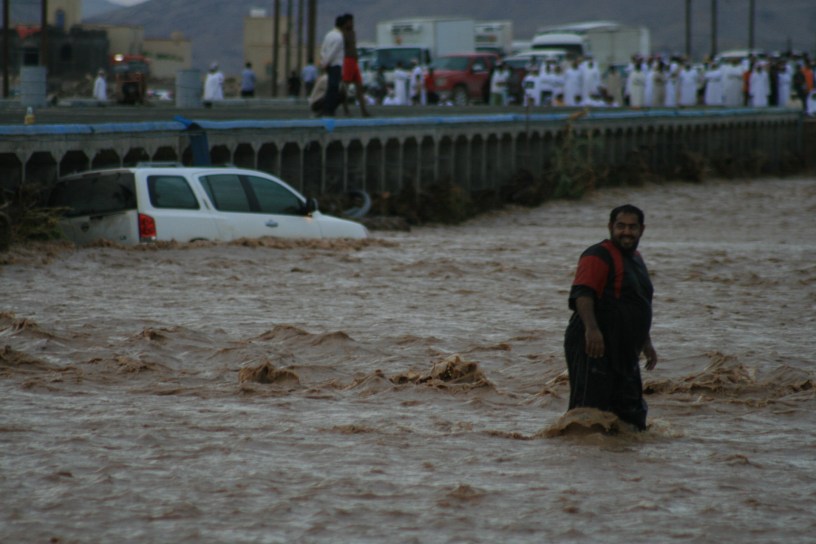
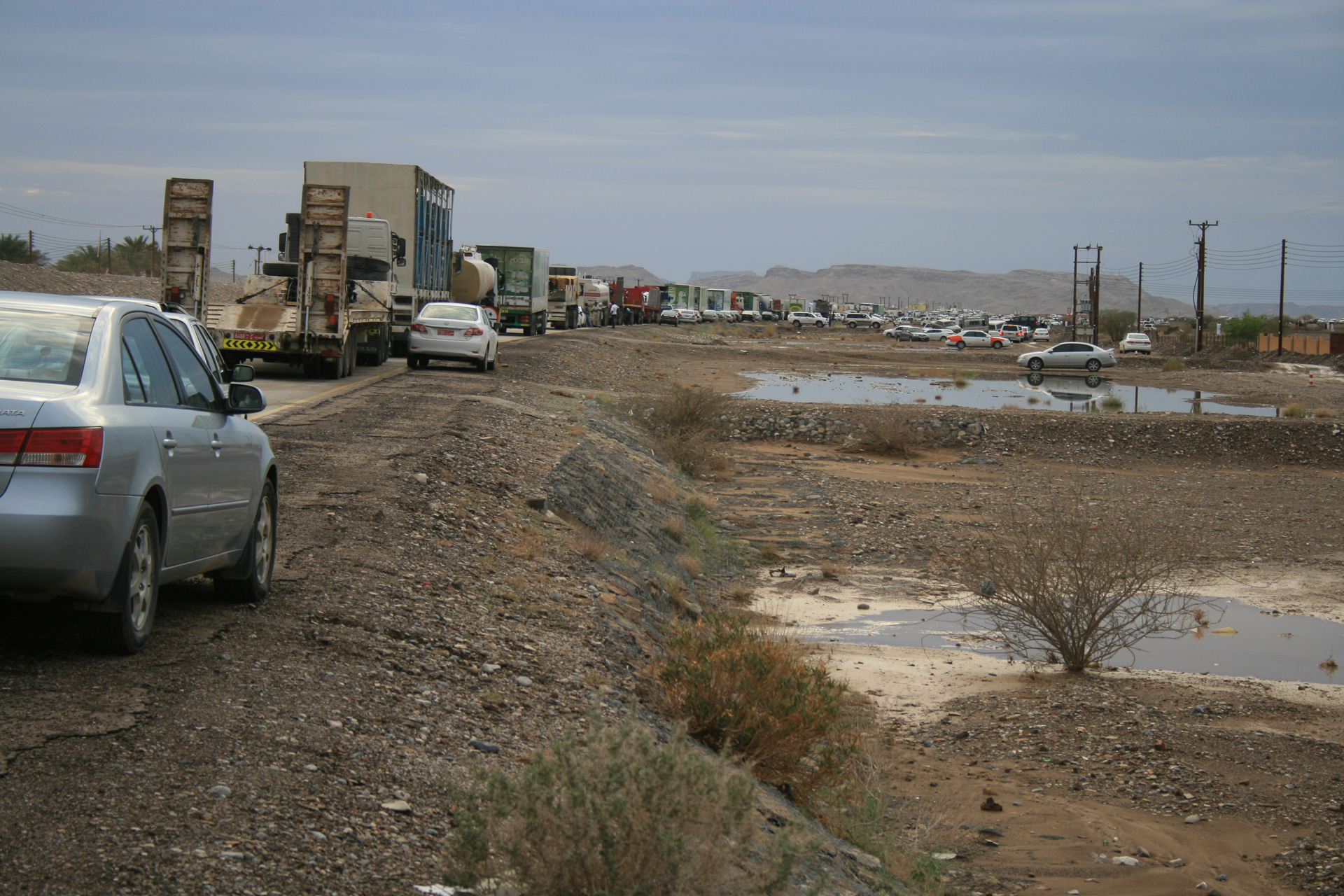
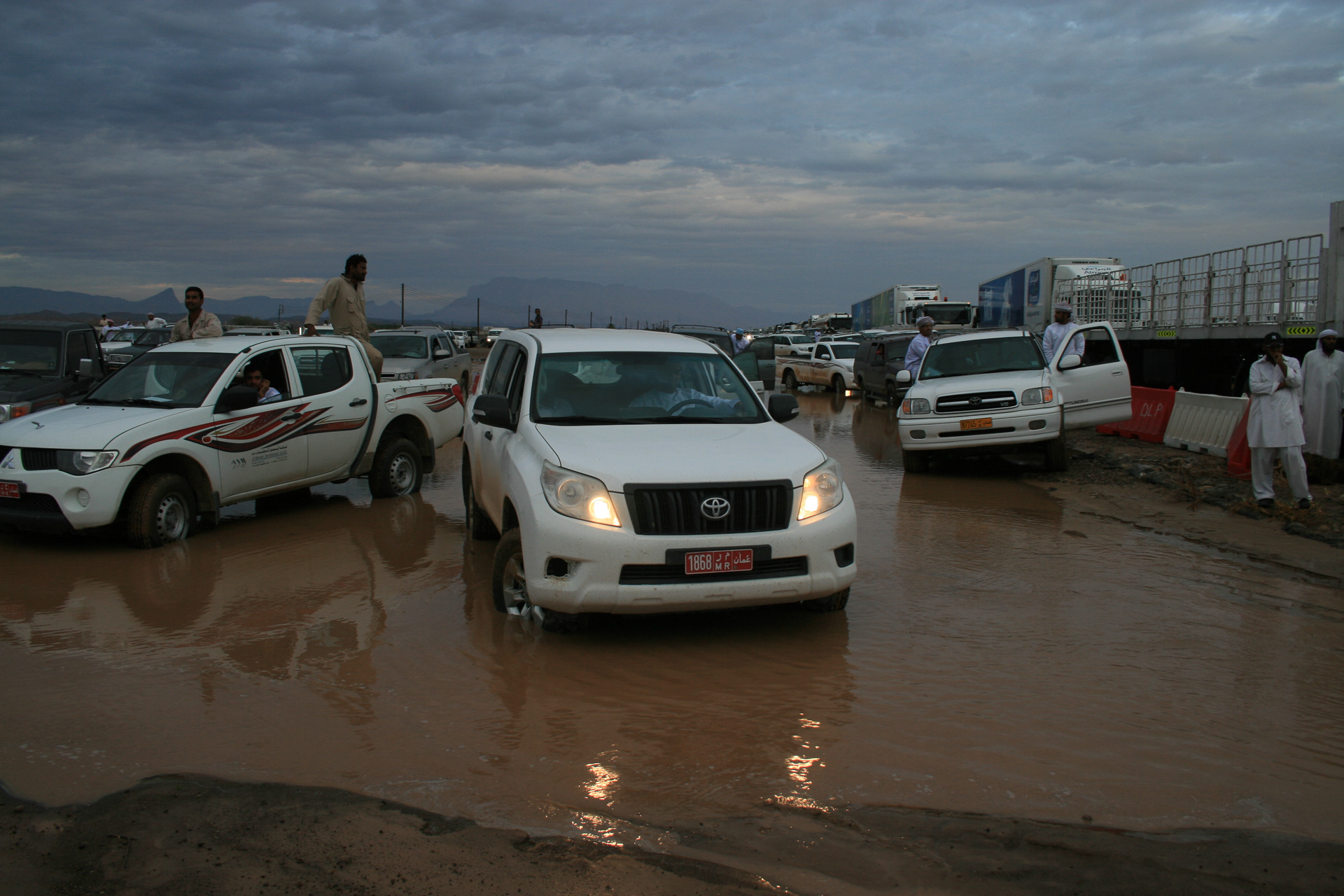
The first sign of trouble was a long queue of stationary vehicles. The trucks were in a reasonably orderly line but cars and 4wd’s spilled across the oncoming traffic lane and onto the surrounding ground.
We parked on the waste ground to the right and walked to the front to find out what was happening.
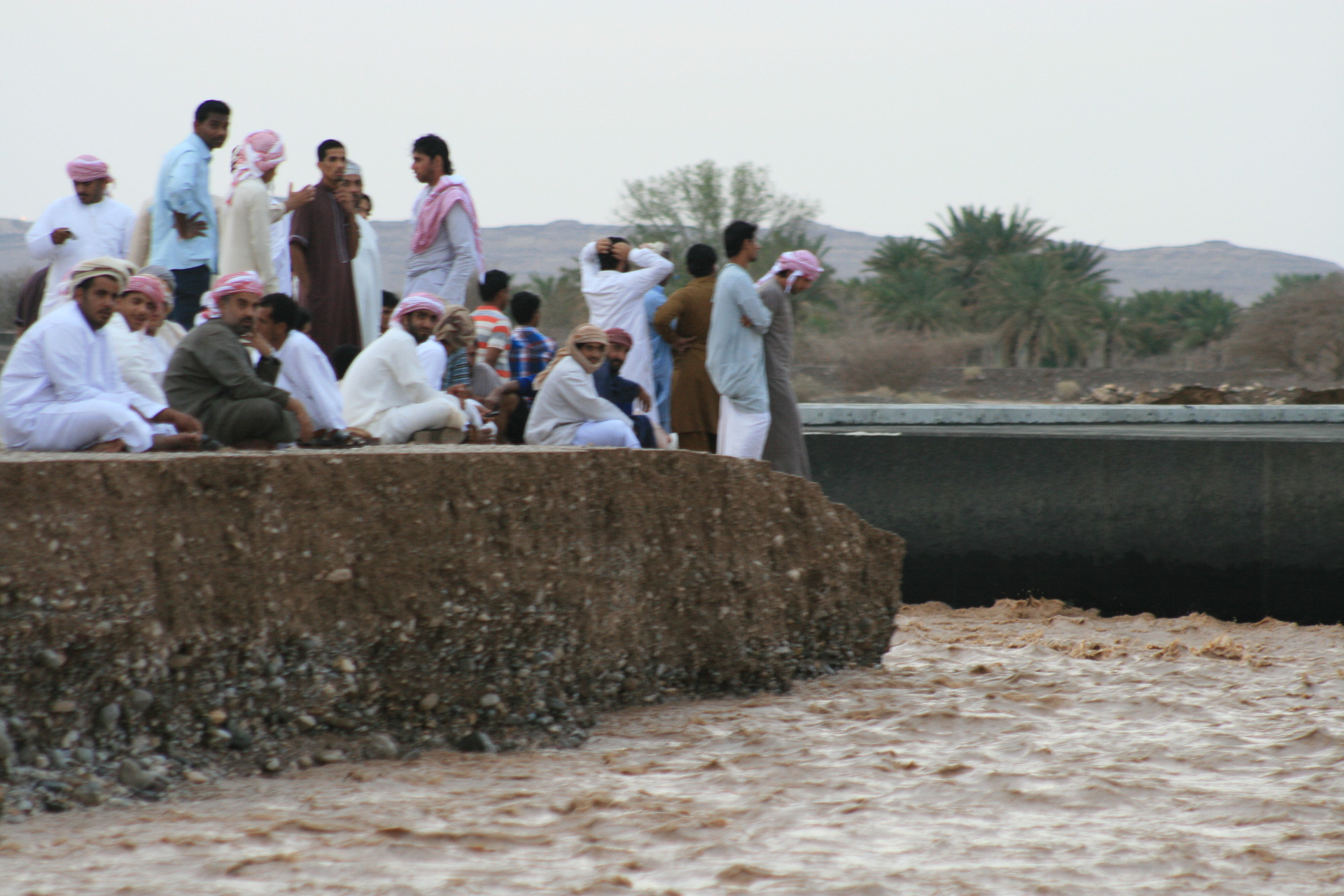
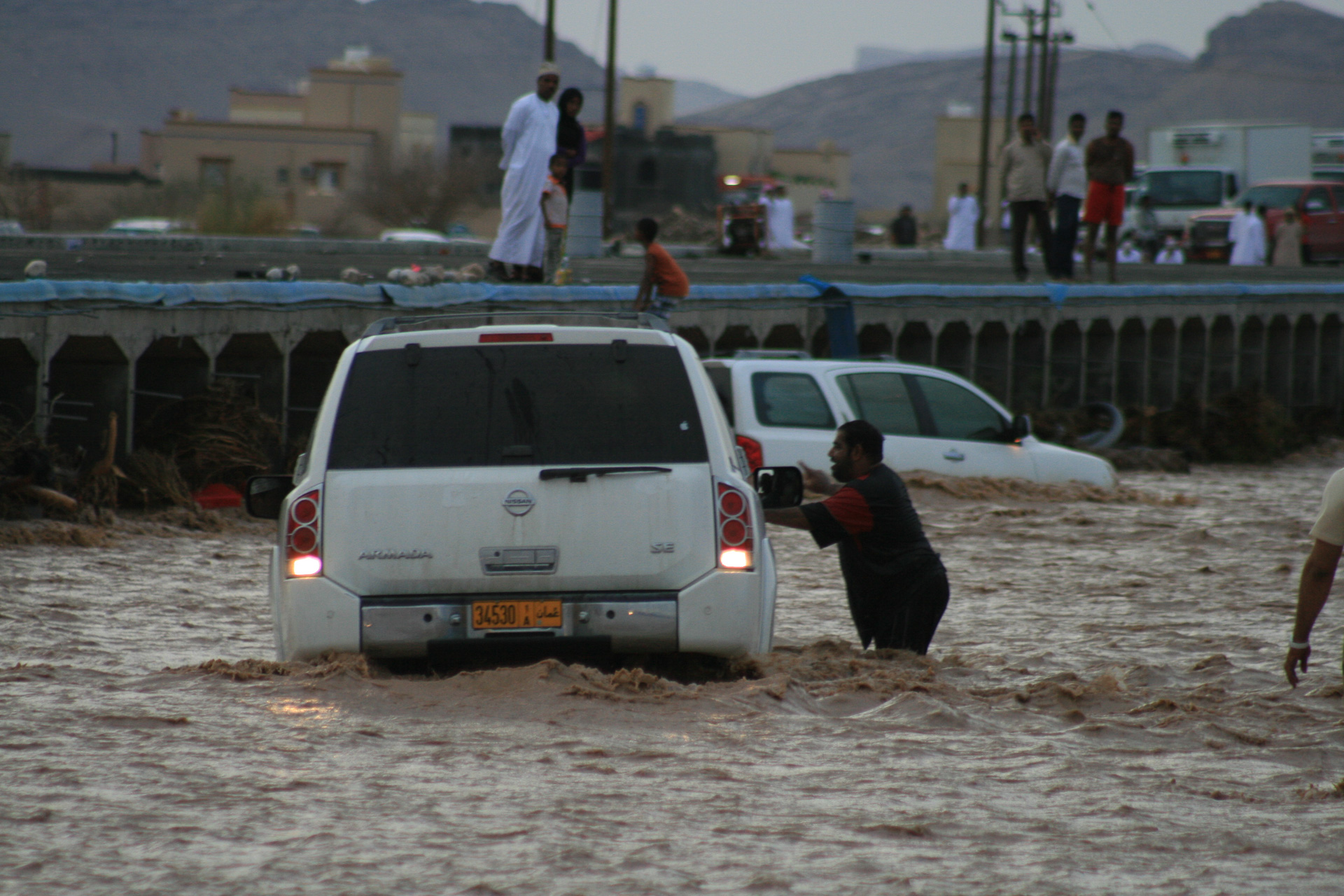
The new road that had served us well through some of the previous floods wasn’t finished at this point. So there was no option but to sit and wait for the water to go down. A few brave (or foolish) souls attempted to cross. Some made it…and some didn’t. We opted to wait. We arrived at 4.30 pm and finally made it across – through water up to the door sills – at 12.30!

We are kind of over floods by now. It was good to see but we don’t want to see anymore.
 Weather is lovely, wish you were here