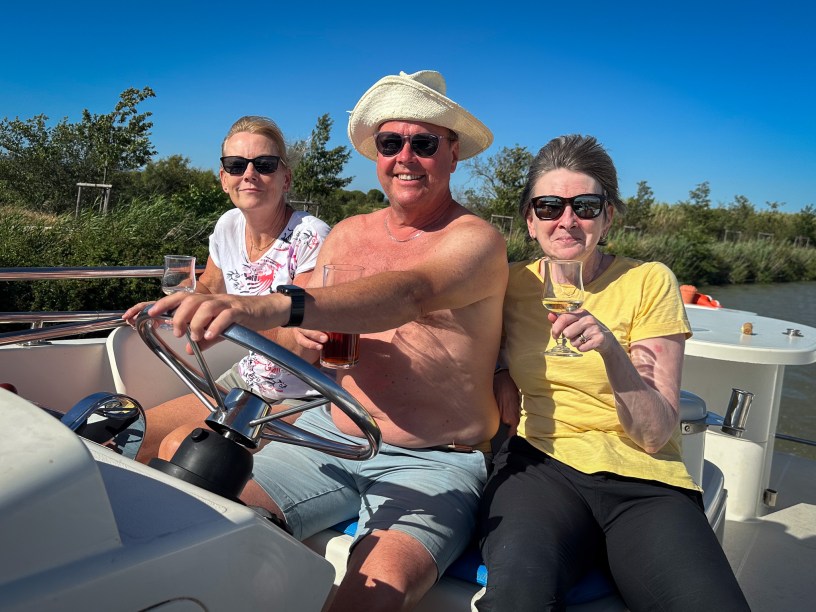
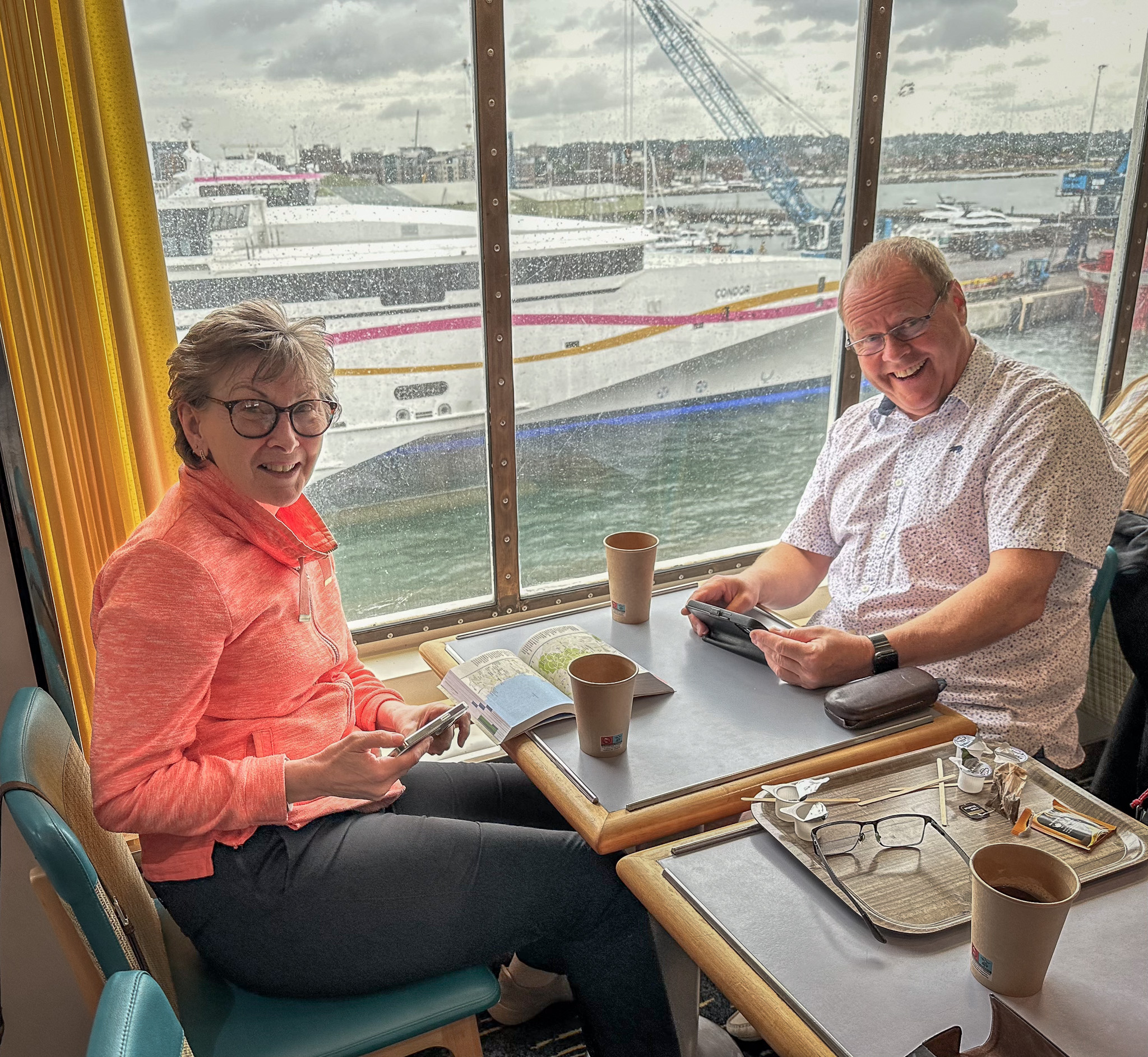
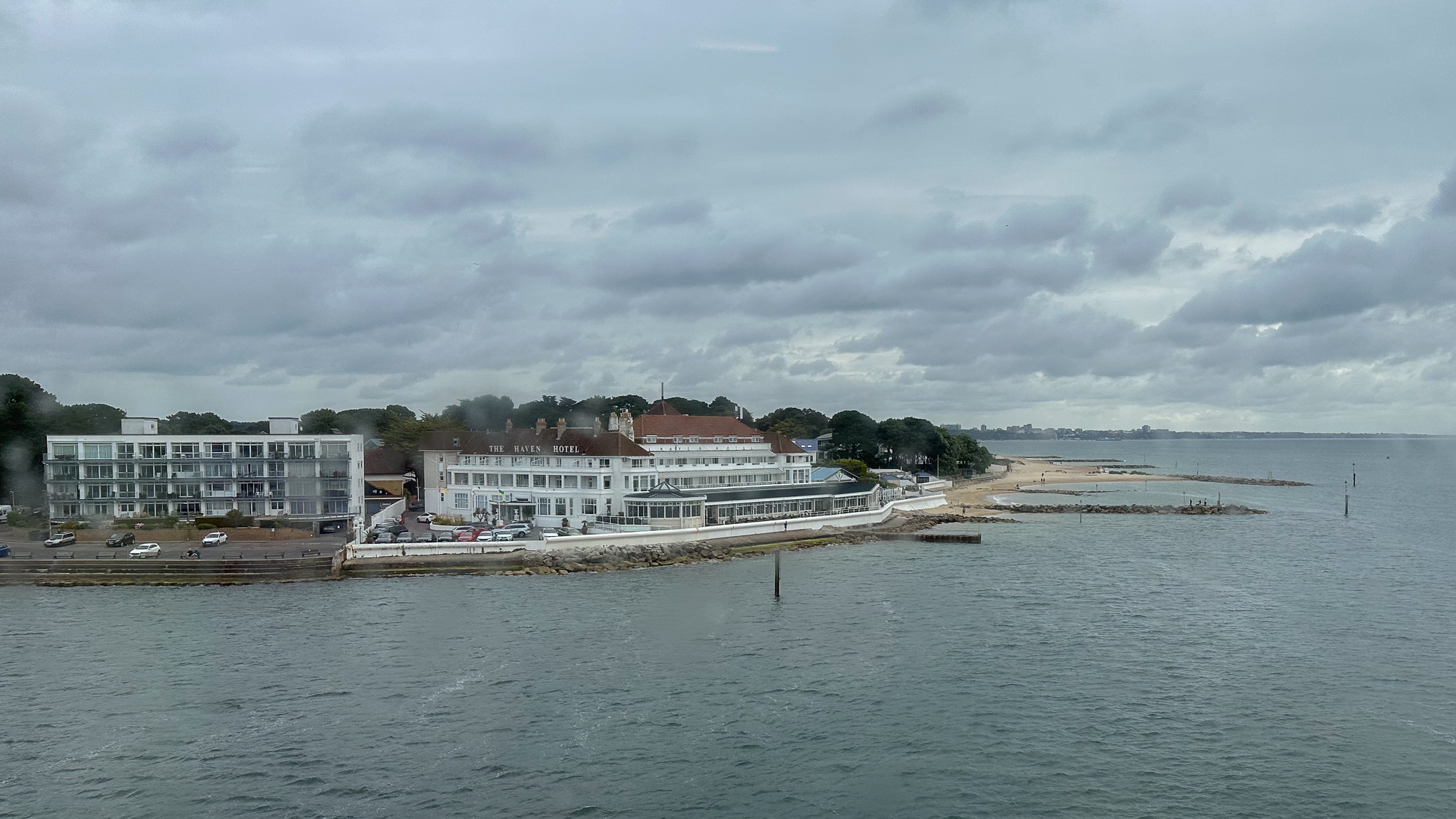
We only managed two nights in Dorset before loading Jonathan’s car for an early morning ferry crossing from Poole to Cherbourg.

Le Mont-Saint-Michel
Claire is working in Jersey so she will get the ferry from St Helier to St Malo where we will collect her this evening. This has left us with enough time to follow in the footsteps of pilgrims visiting Le Mont-Saint-Michel since the 8th century.
There is no longer any need to time your visit to coincide with low tide, however. Since 2014, the tidal island has been connected to the mainland by a raised bridge. This together with the installation of a hydraulic dam on the River Couesnon, and the removal of the raised causeway built in the nineteen century, is allowing centuries of silt build-up to be gradually eroded; thus restoring Le Mont-Saint-Michel to its island status.
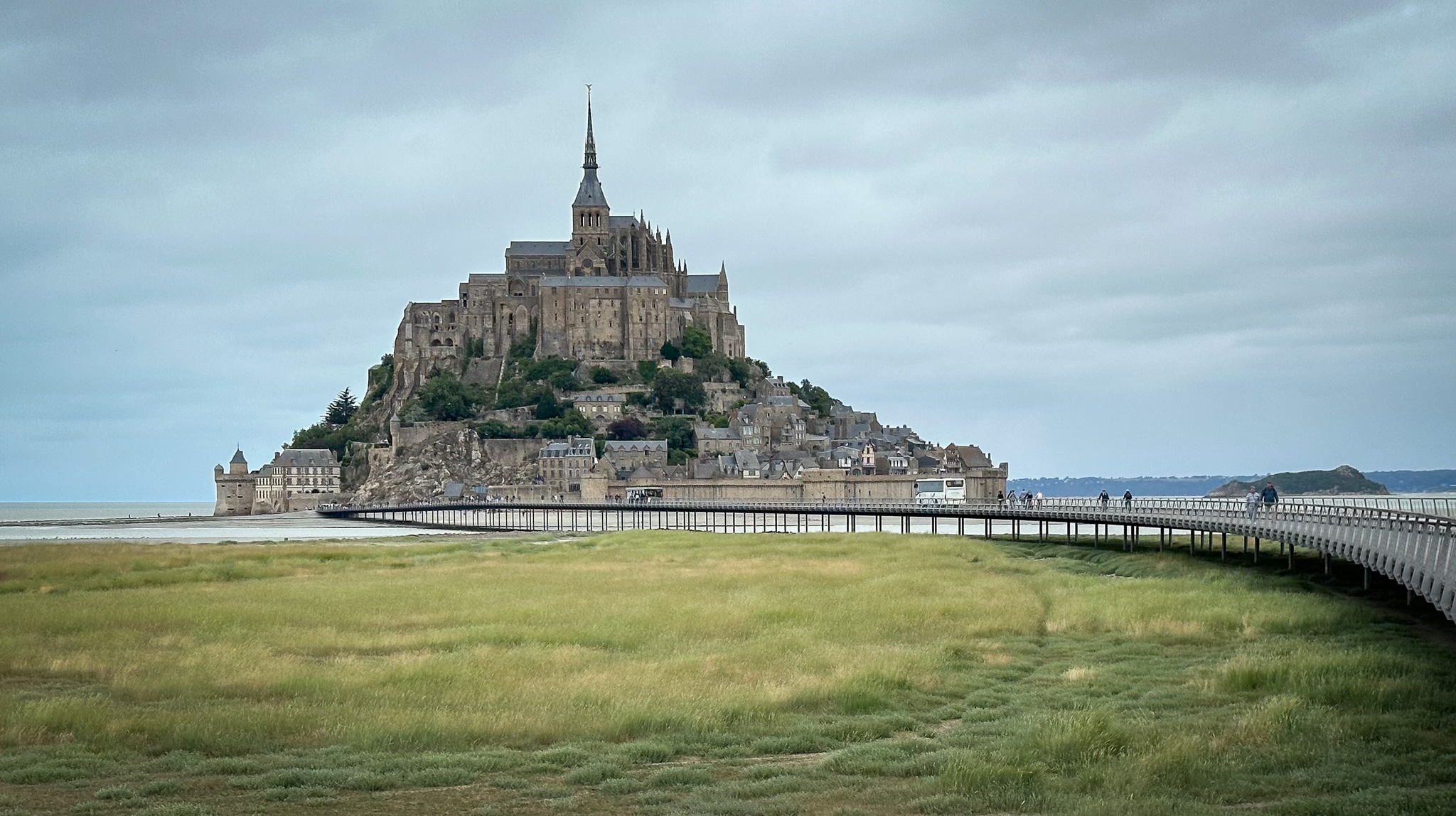
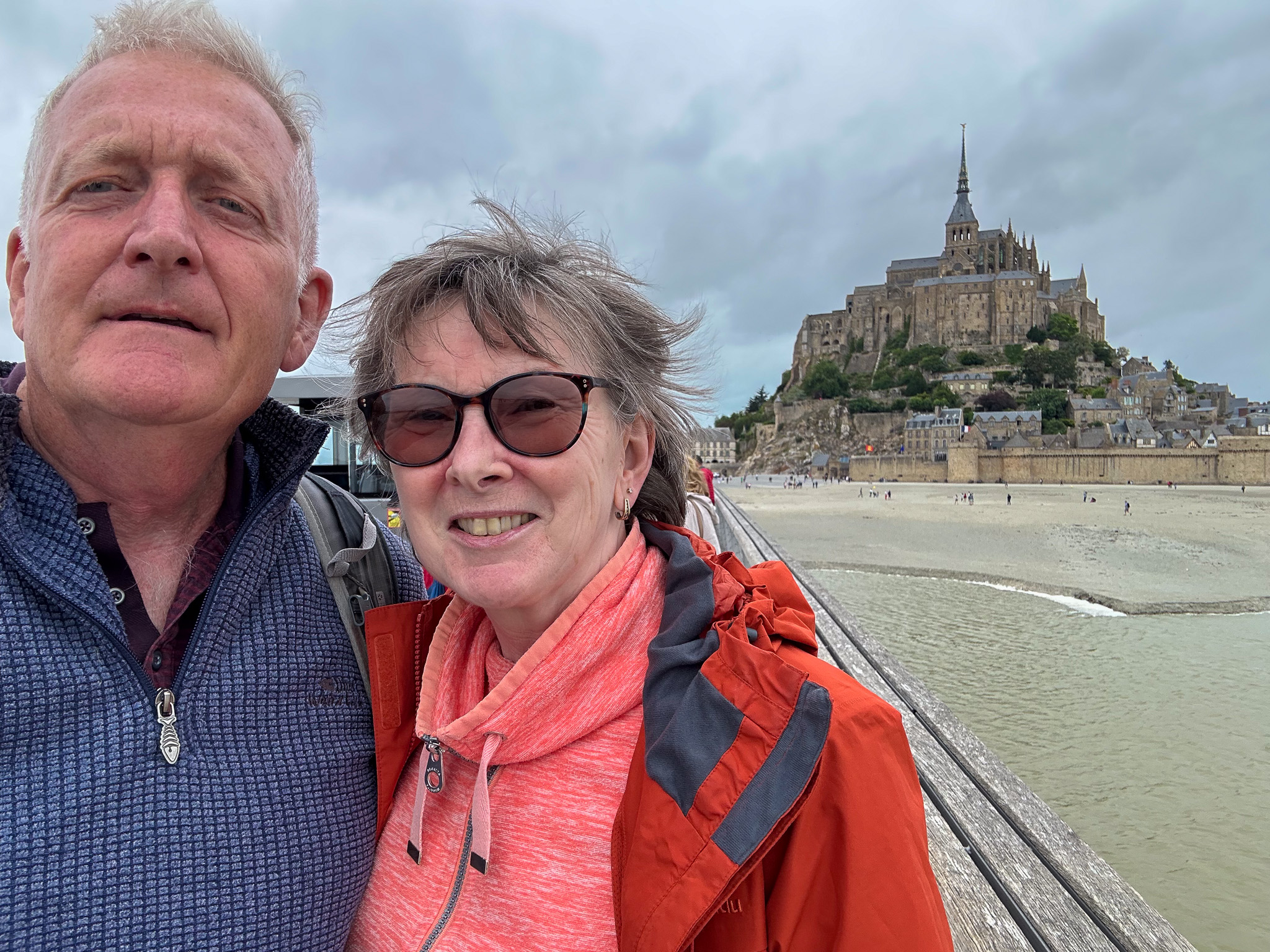
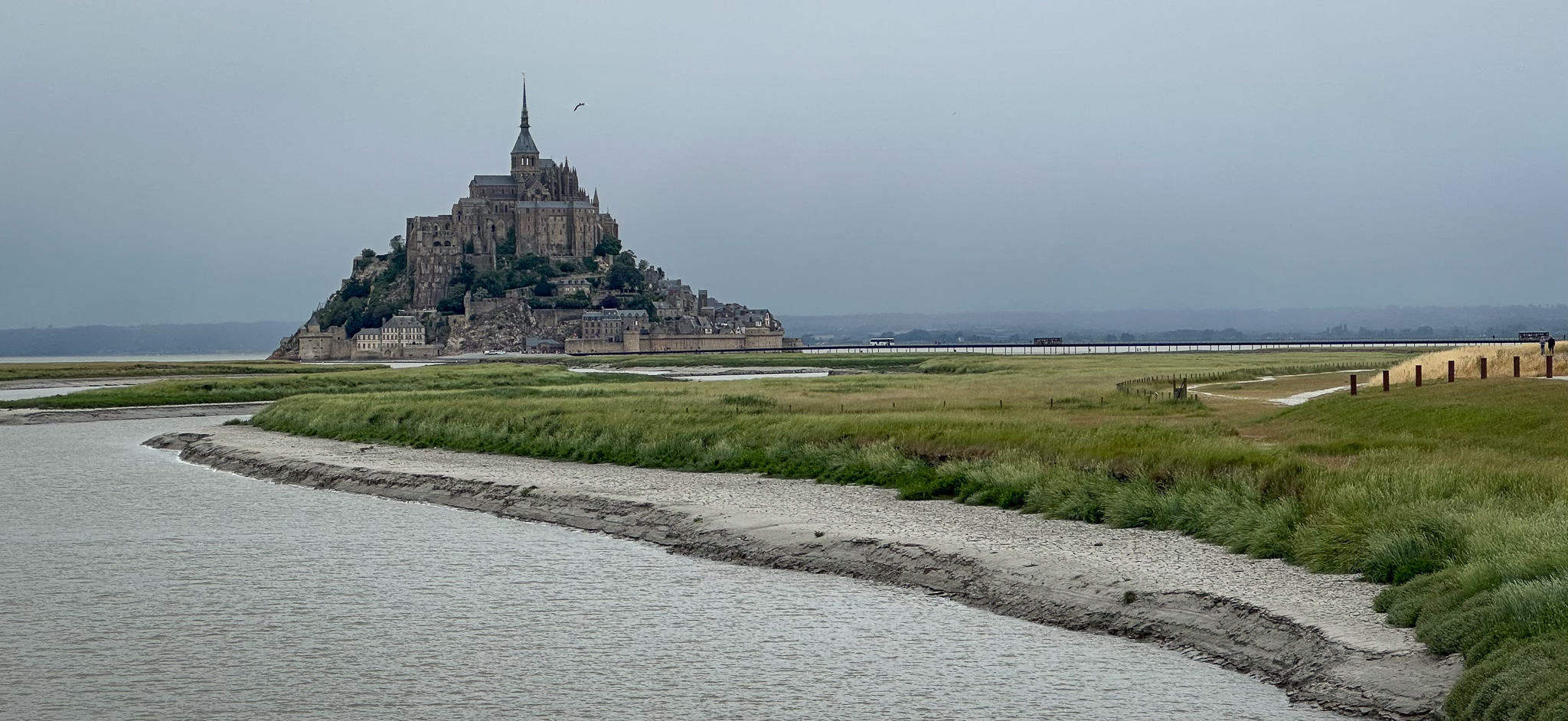

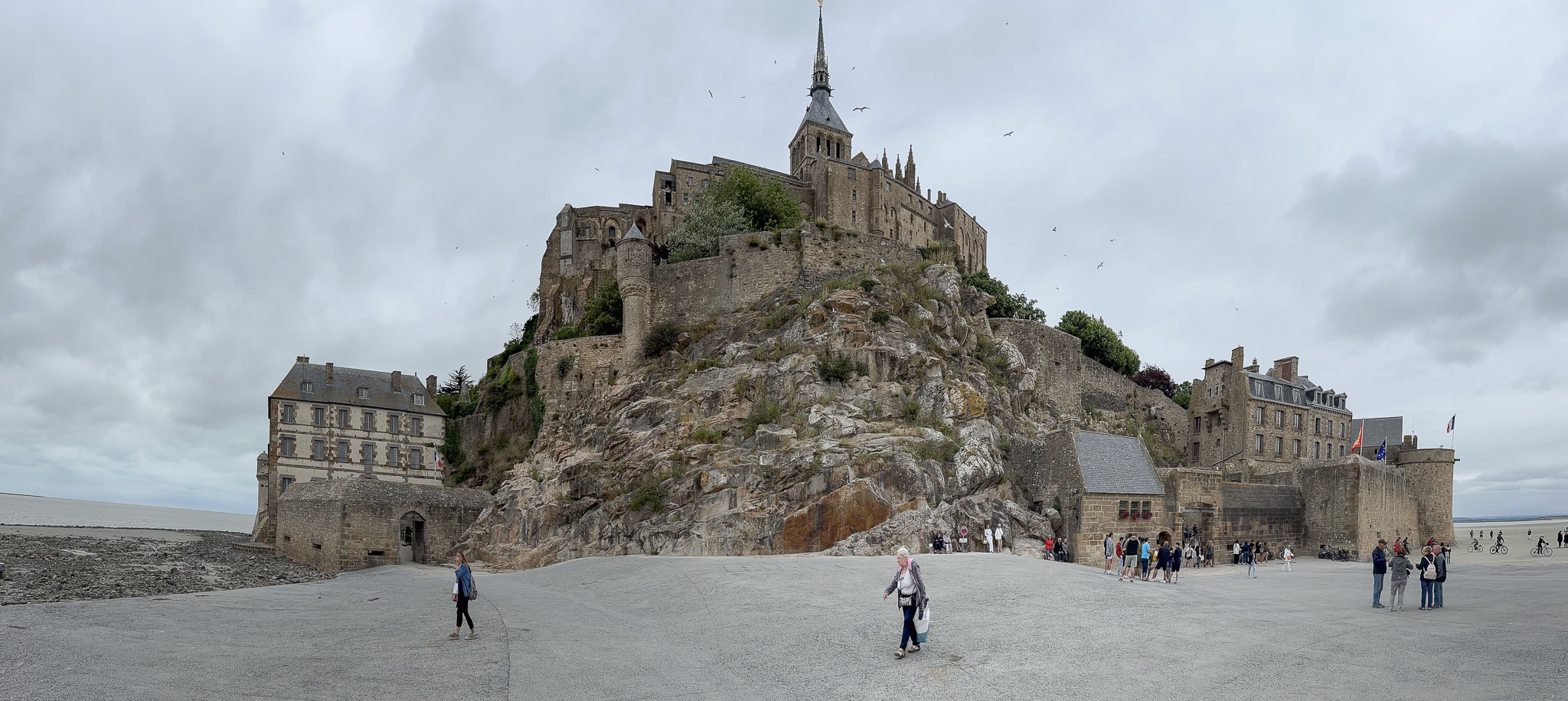
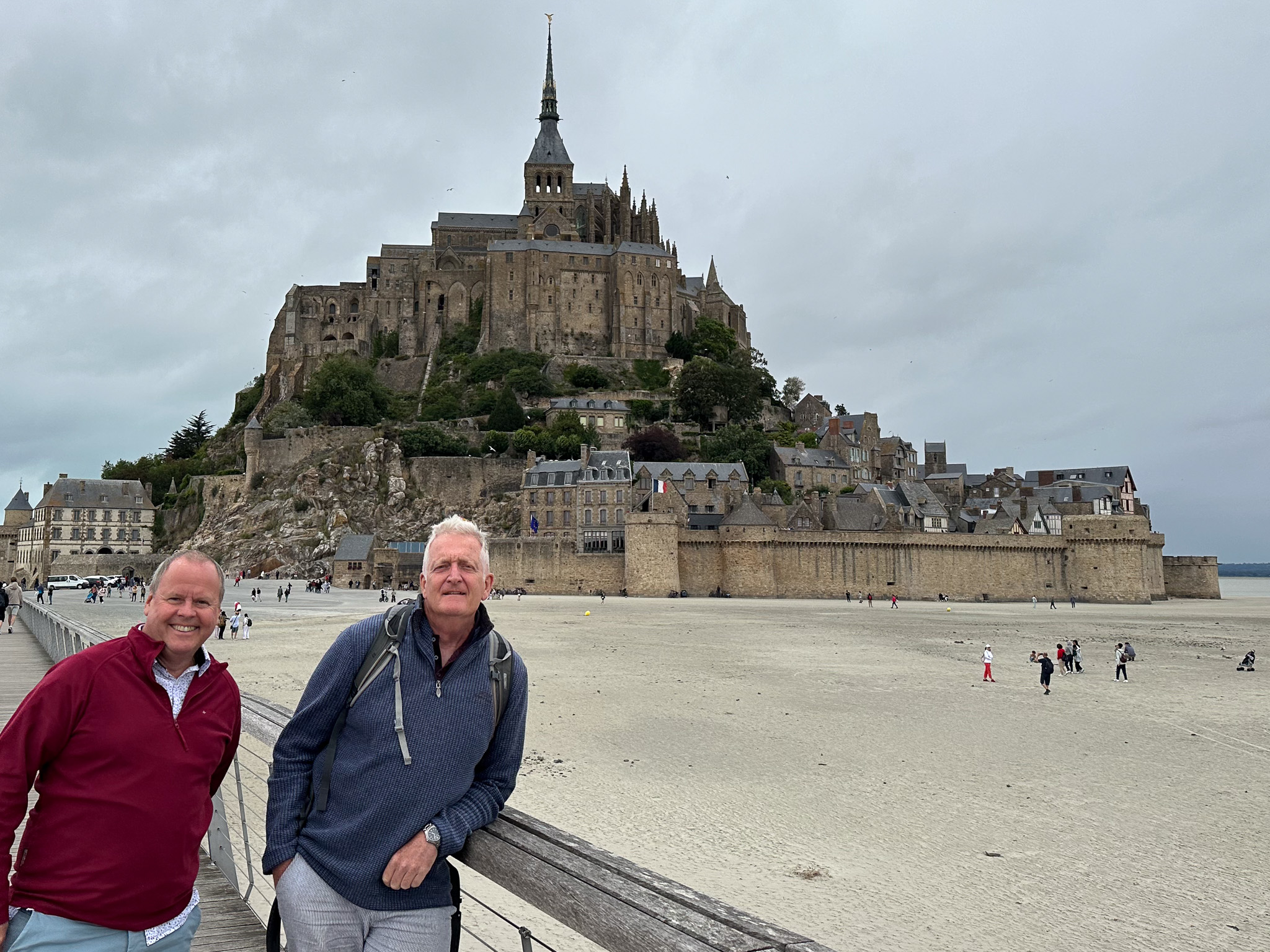

From the early eighth century, Le Mont-Saint-Michel has been home to a number of monastic orders and a site of pilgrimage. Its popularity waned with the reformation until, by the time of the French Revolution, there were hardly any monks left and the abbey was closed. It was then converted into a prison, housing high profile political prisoners until 1863. Long before this, at the time of the Norman conquest, the monks of Le Mont-Saint-Michel supported William in his bid for the English throne. He rewarded them with land in England including an island off the coast of Cornwall which was extensively developed to become a Norman priory at Saint Michaels Mount.
Today, it is a delightful warren of tourist traps with quaint shops selling all the usual tourist junk at inflated prices and similarly overpriced restaurants and bars nestled into tiny winding streets.
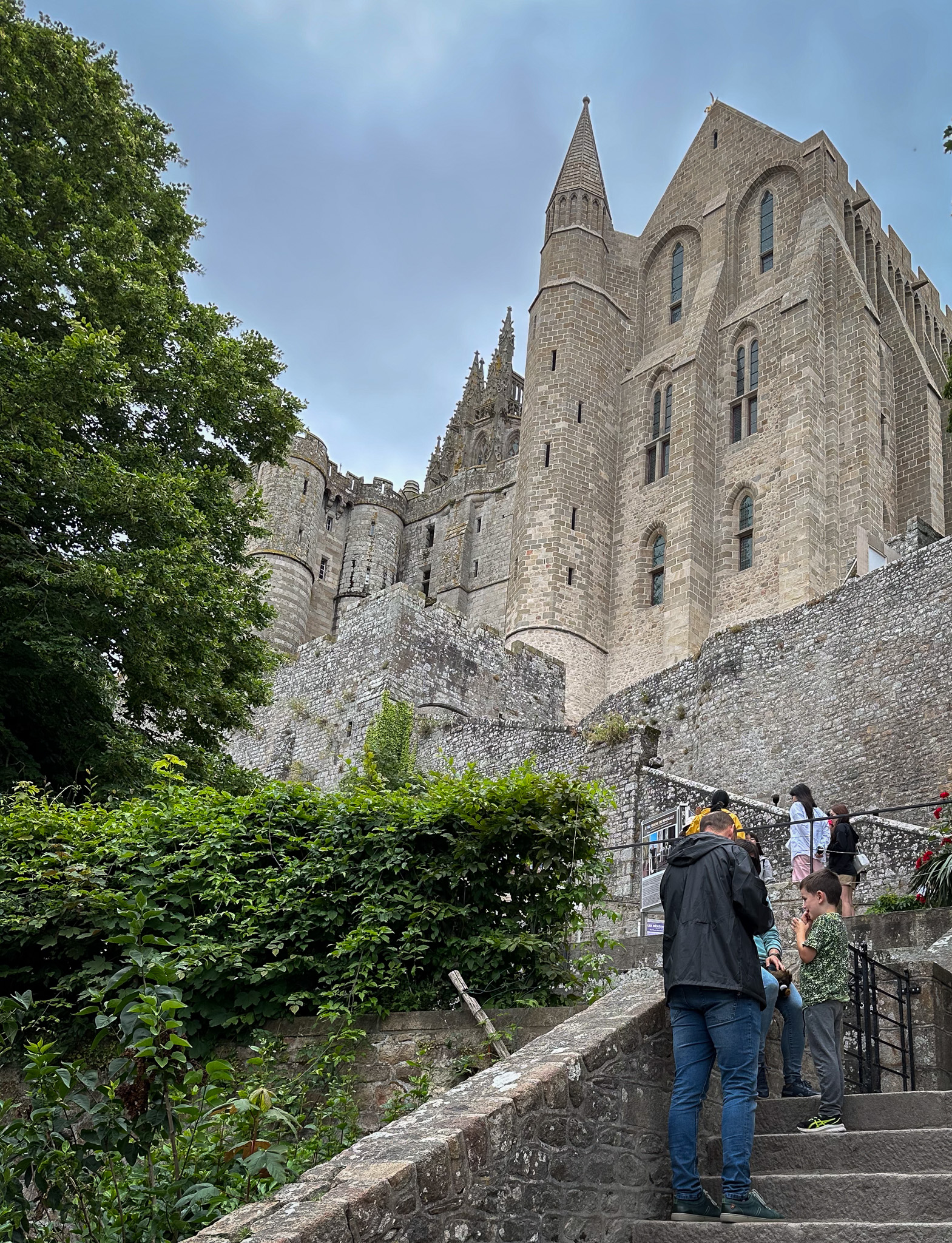

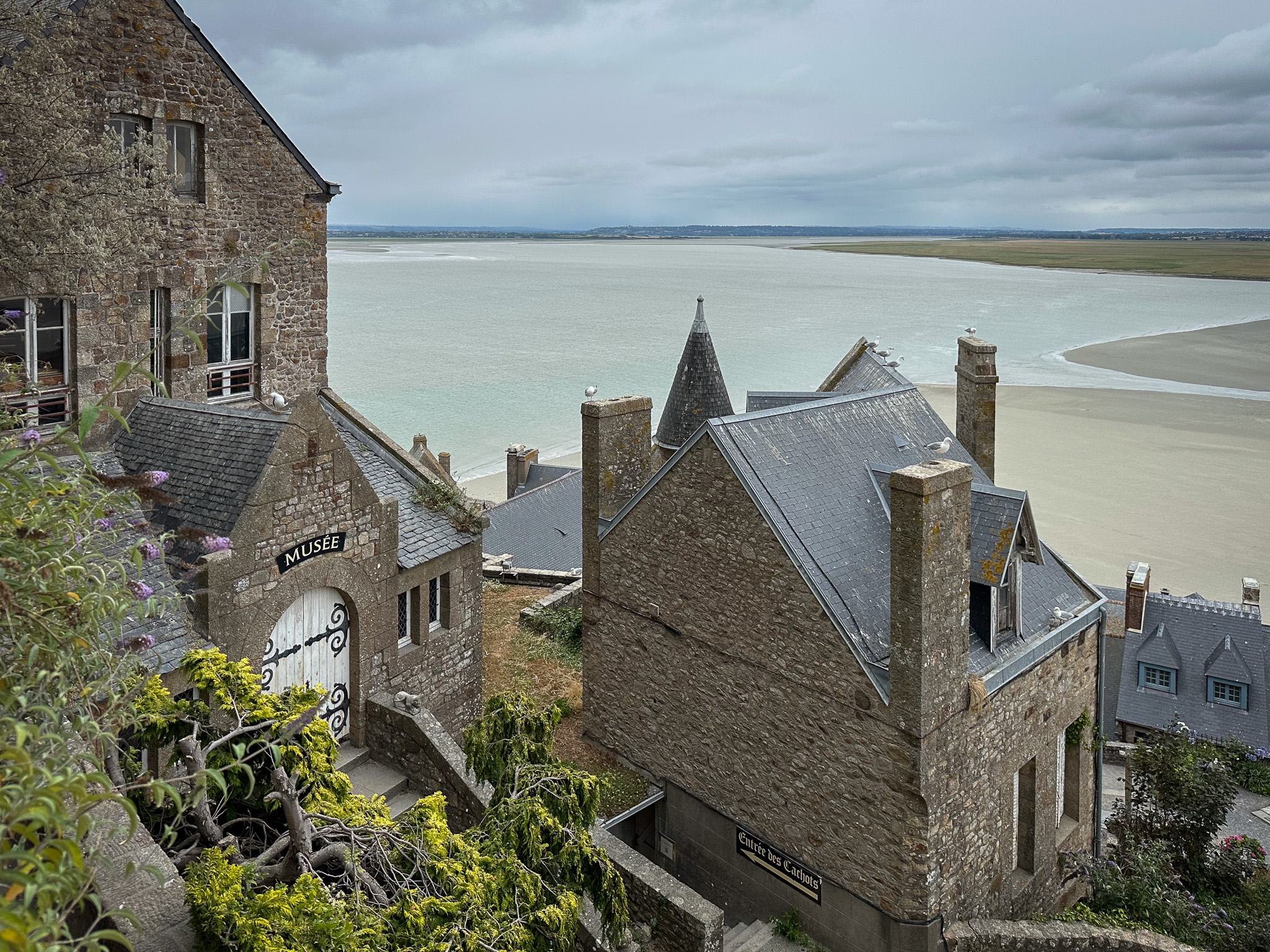
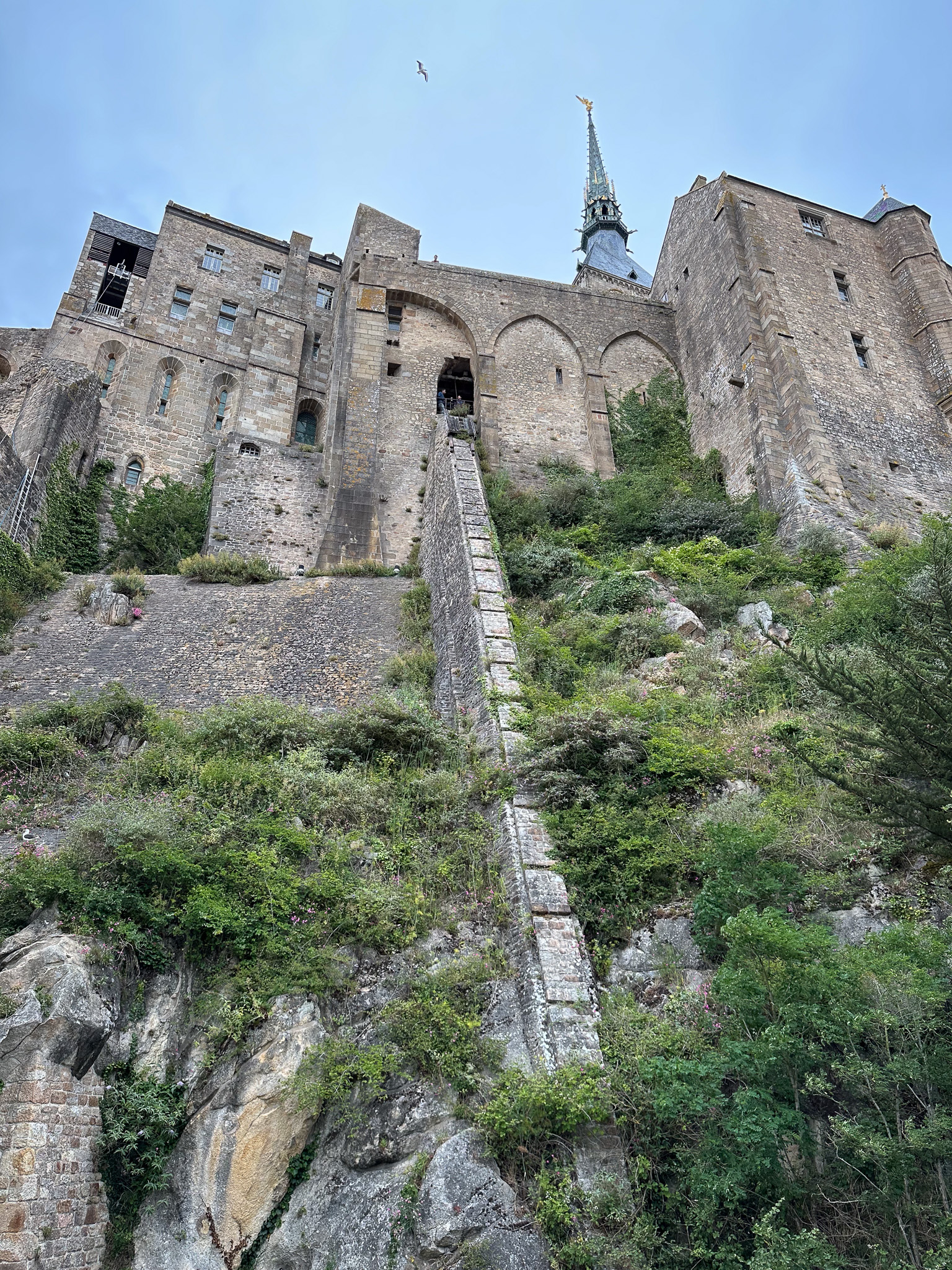
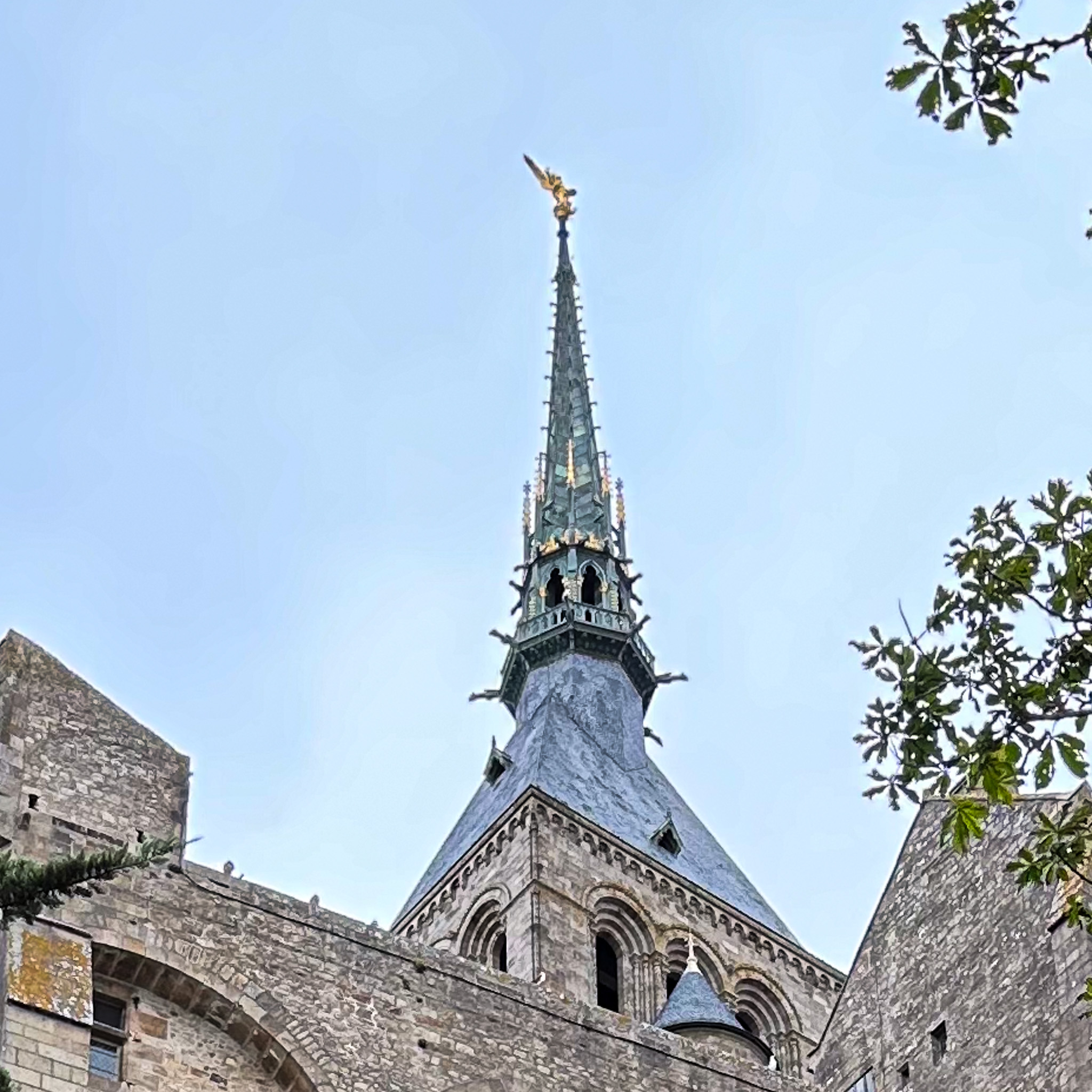
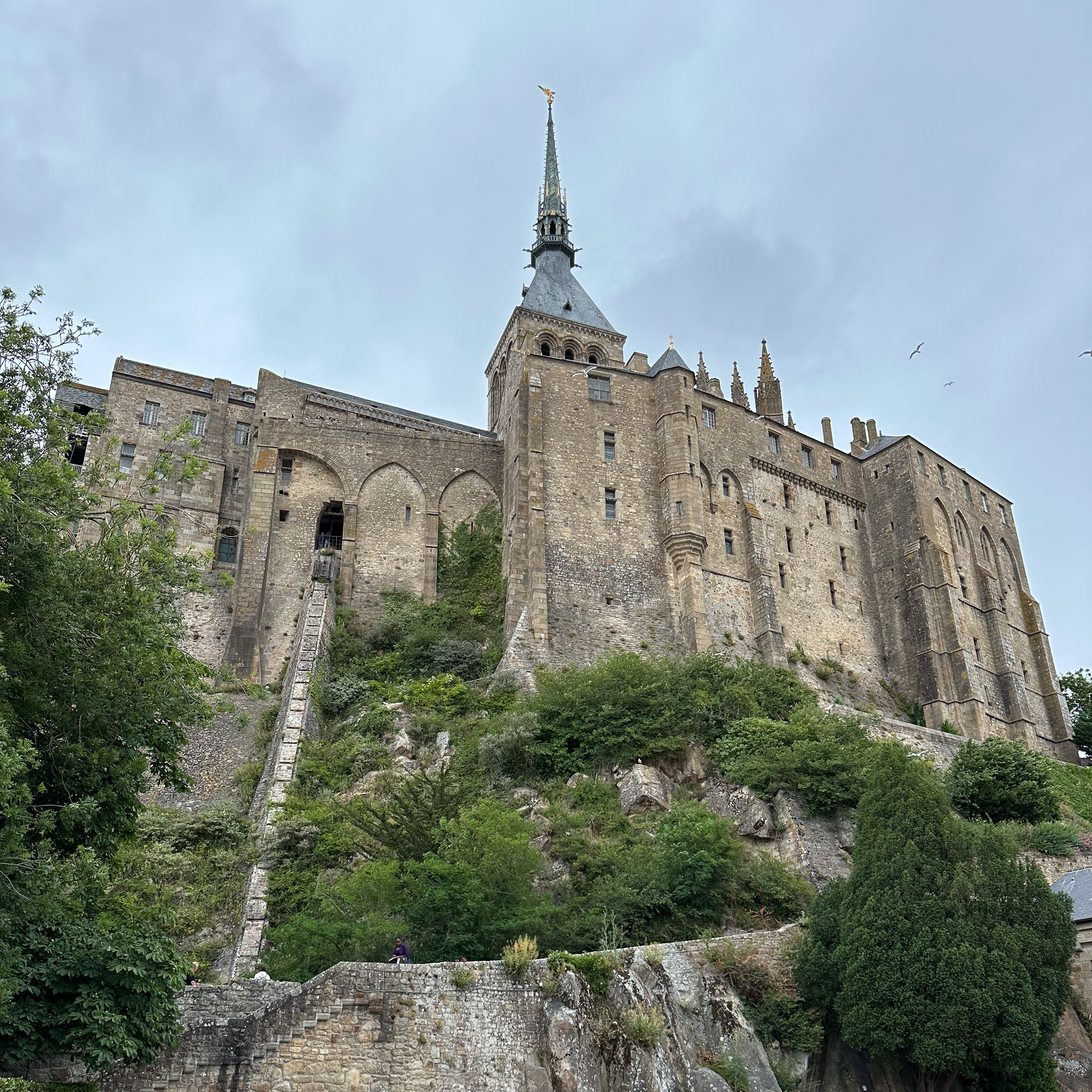
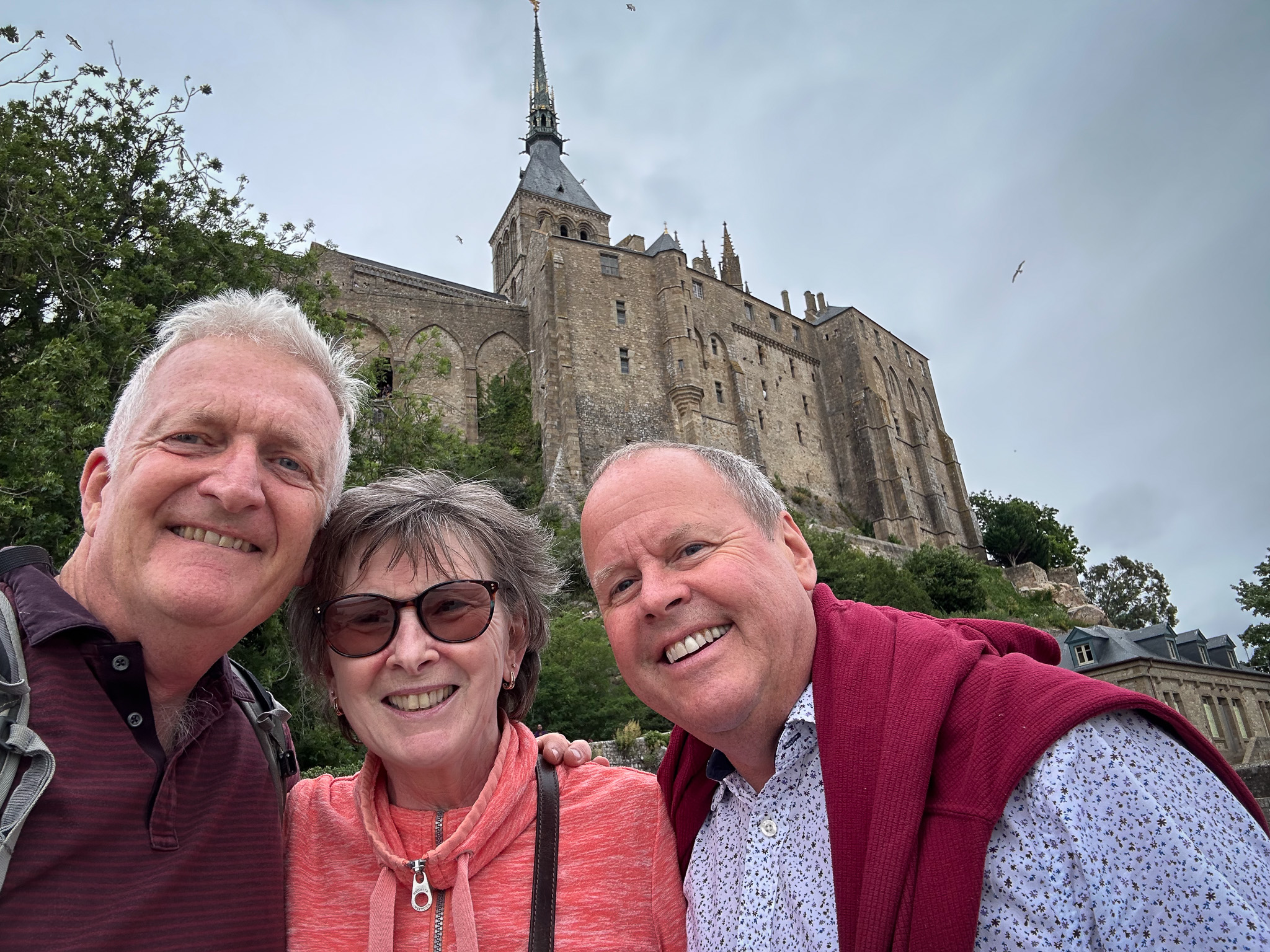
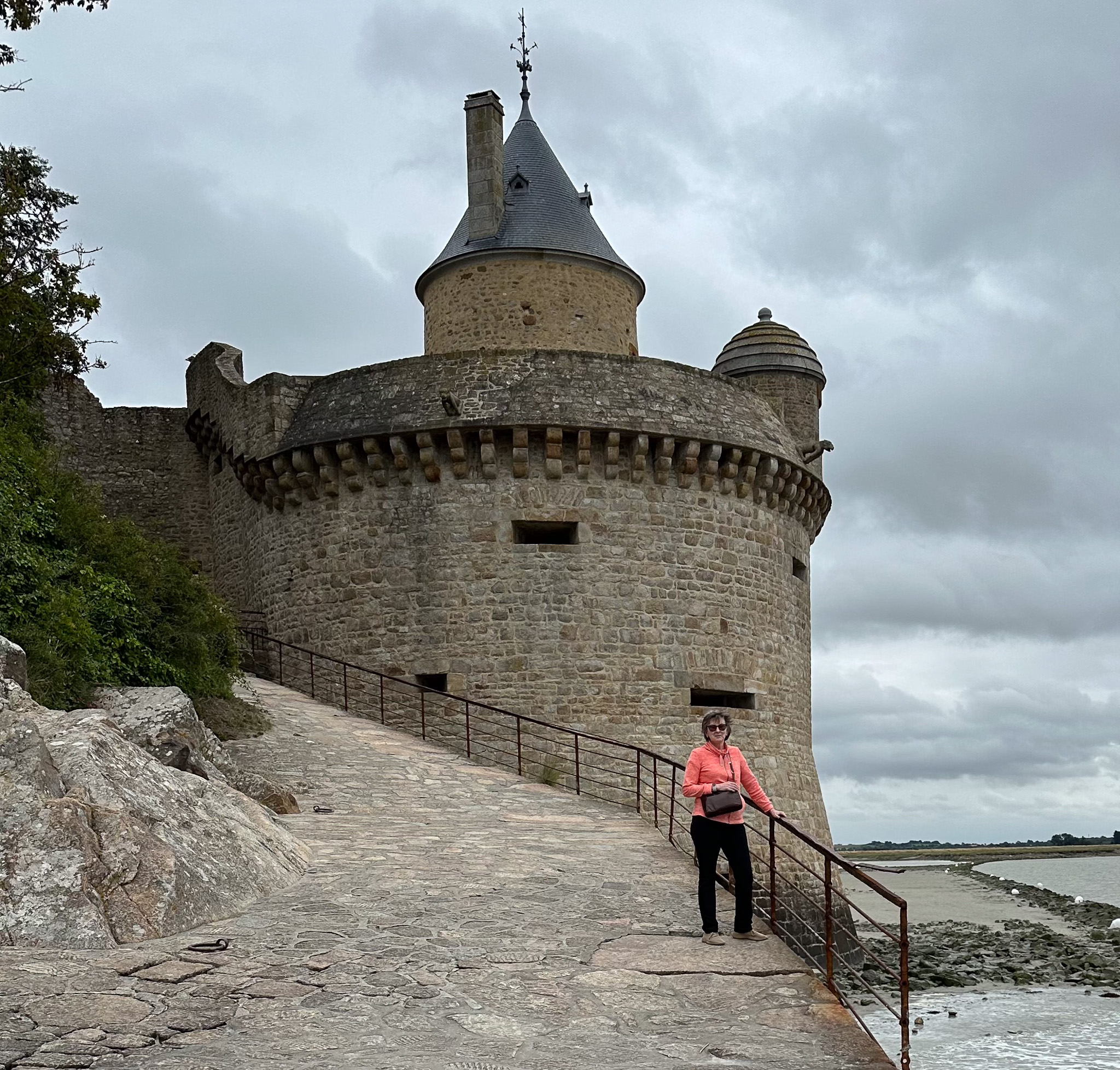

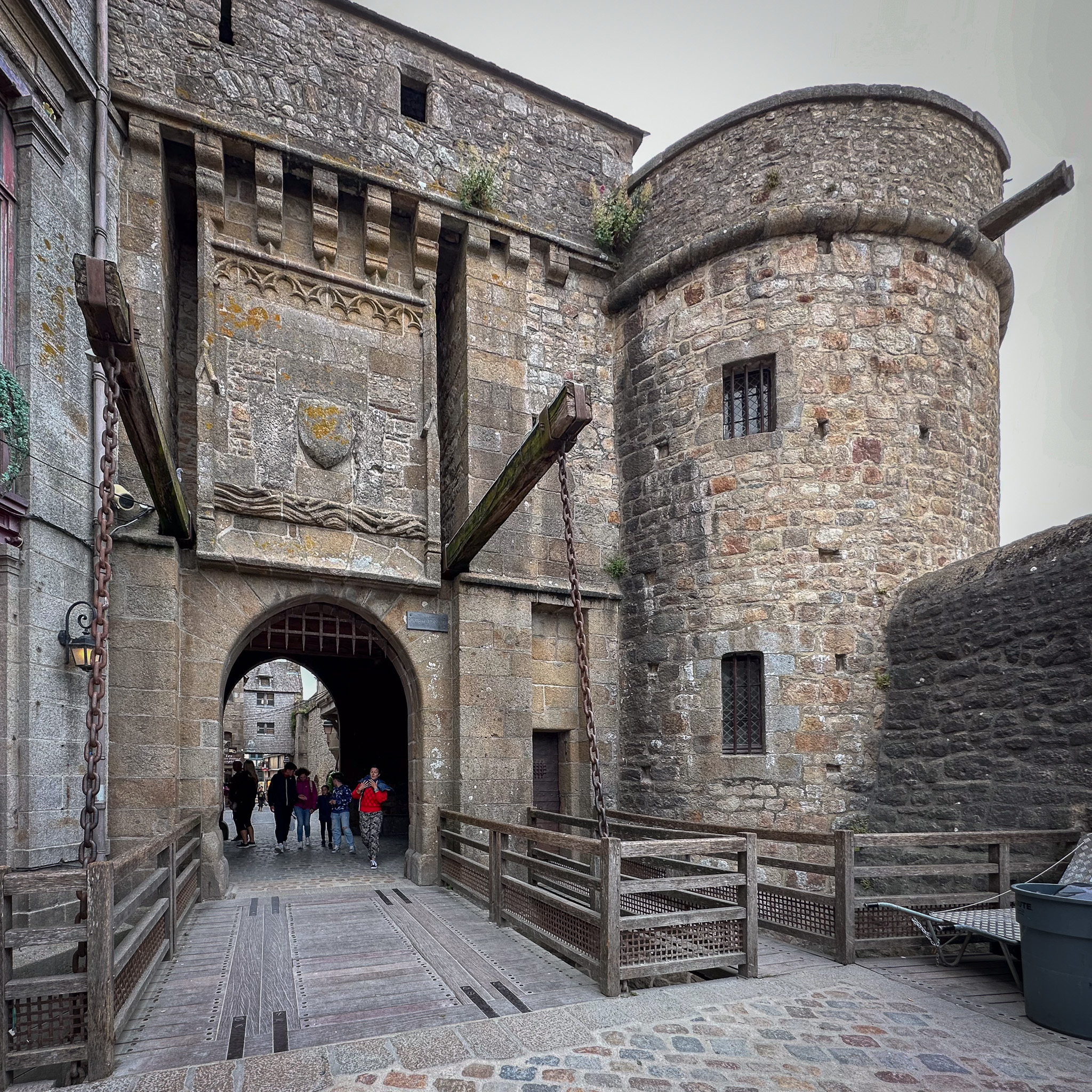
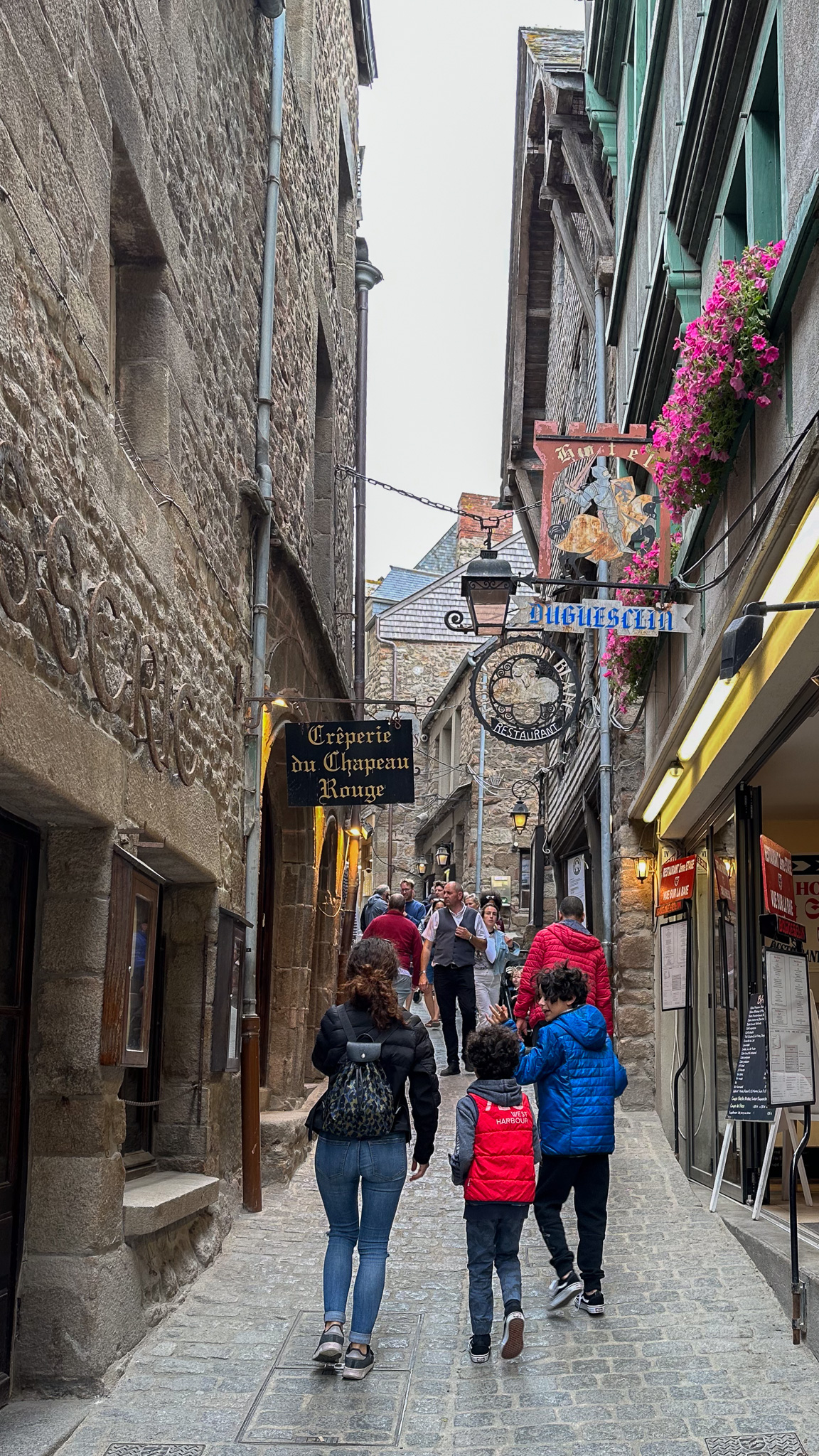
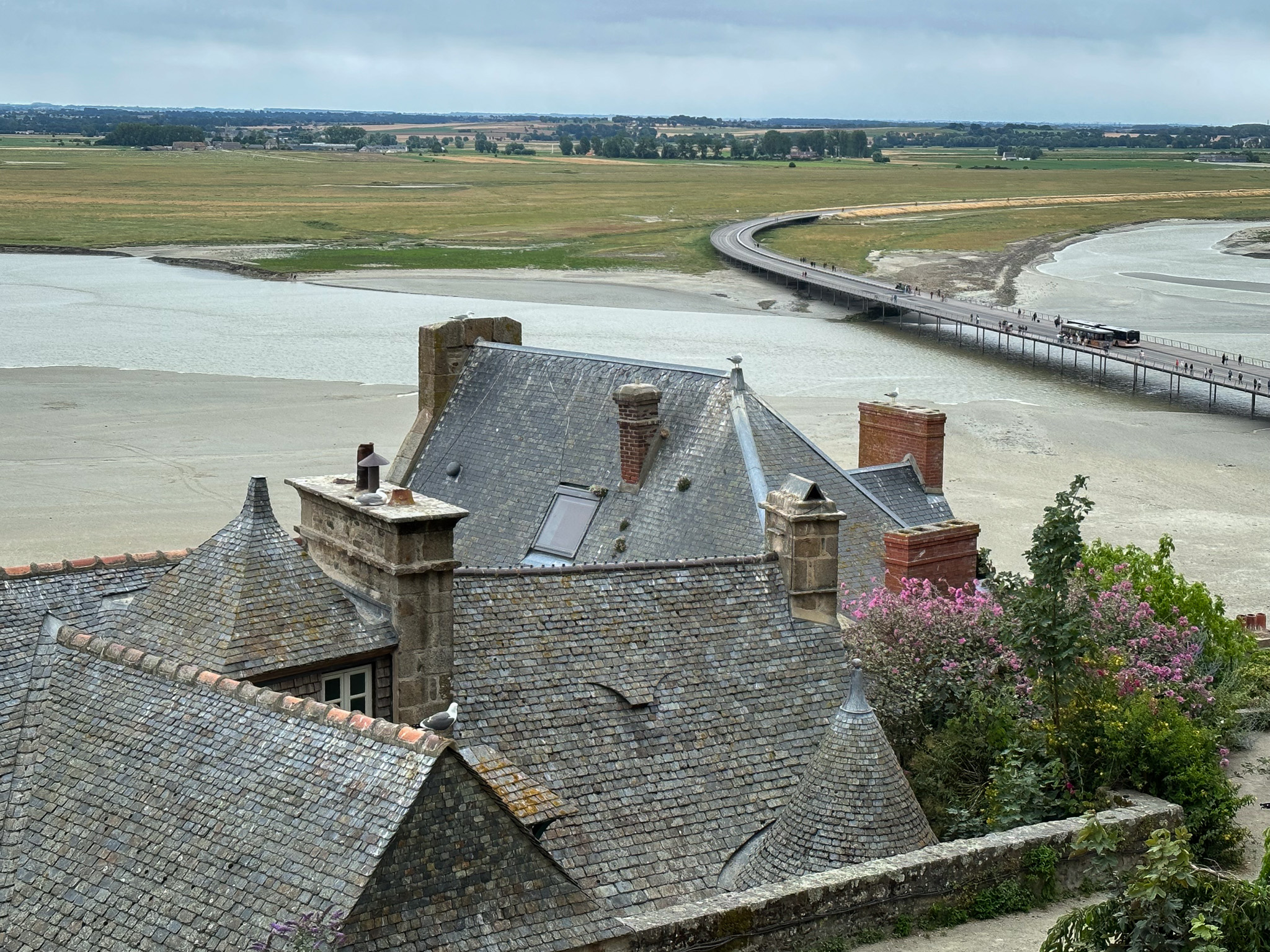
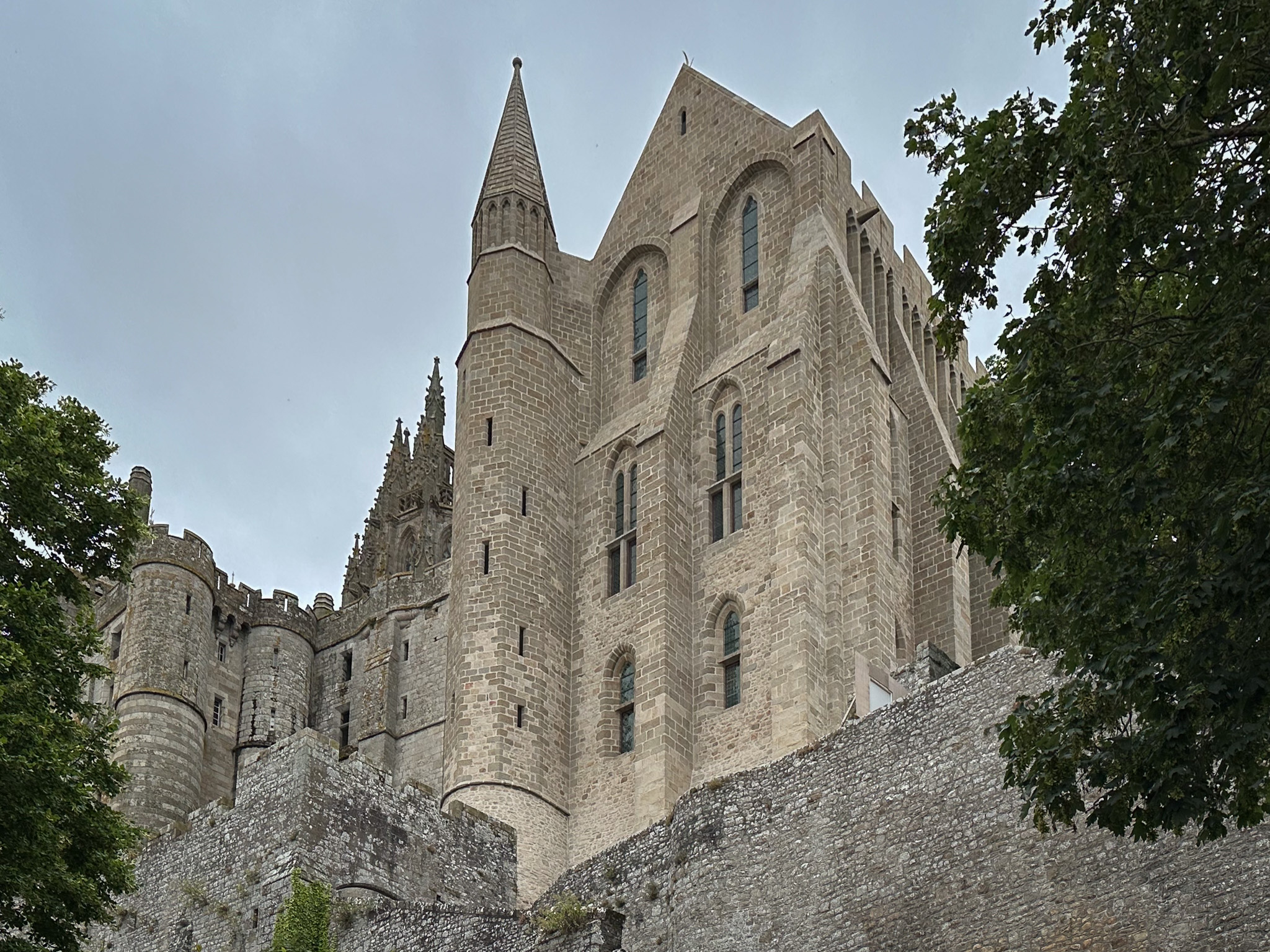
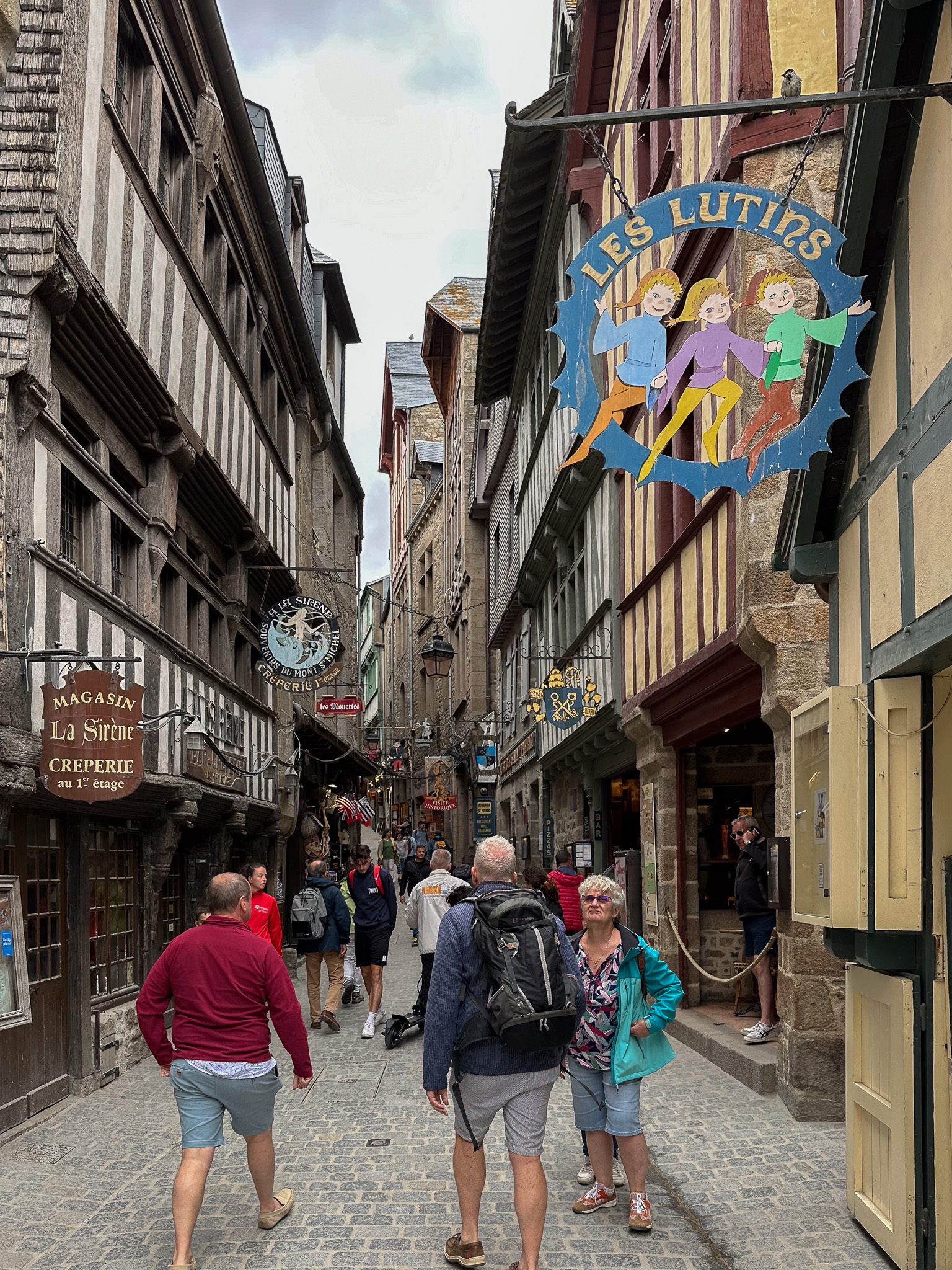
It was a fabulous diversion for a few hours and left us with enough time for a meal in St Malo before collecting Claire from her late evening ferry and setting off for a long drive south to Poitiers.
Our intention had been to spend two nights here using the day to recover from the late night and long drive and to explore some of the sights. Unfortunately, we ended up in the most bizarre Airbnb in which we have stayed. It was clearly the owner’s usual home. All his personal belongings, including clothing (and the contents of the pantry and fridge) were still in the house. The second bedroom was a ‘loft’ taking advantage of the extremely high ceilings of what had once been a very fine home. The access was via a ladder with no hand rail, the bed was a mattress on the floor and if you rolled out of bed there was nothing to stop you crashing all the way back to ground level.
We were too tired and it was too late (it was after 2am) to look for alternative accommodation so Claire and Jonathan braved the high level bed while we slept in a normal bed which had a strange steel frame around it. When we saw the stock of plywood and other building supplies outside the apartment the next morning, we realised that he was planning to build another mezzanine floor above this bed. Crazy! Once Sue began showing signs of an allergic reaction to a cat (which had apparently died two years earlier – its cage and blanket and other paraphernalia were still in the lounge!) that was all the excuse we needed to move out and spend the day travelling all the way to the Mediterranean coast ready to collect our canal boat the next day. A night in a perfectly comfortable hotel and a restaurant meal meant we were all well rested and ready for our holiday to begin.
Stage 1 – Le Canal du Midi
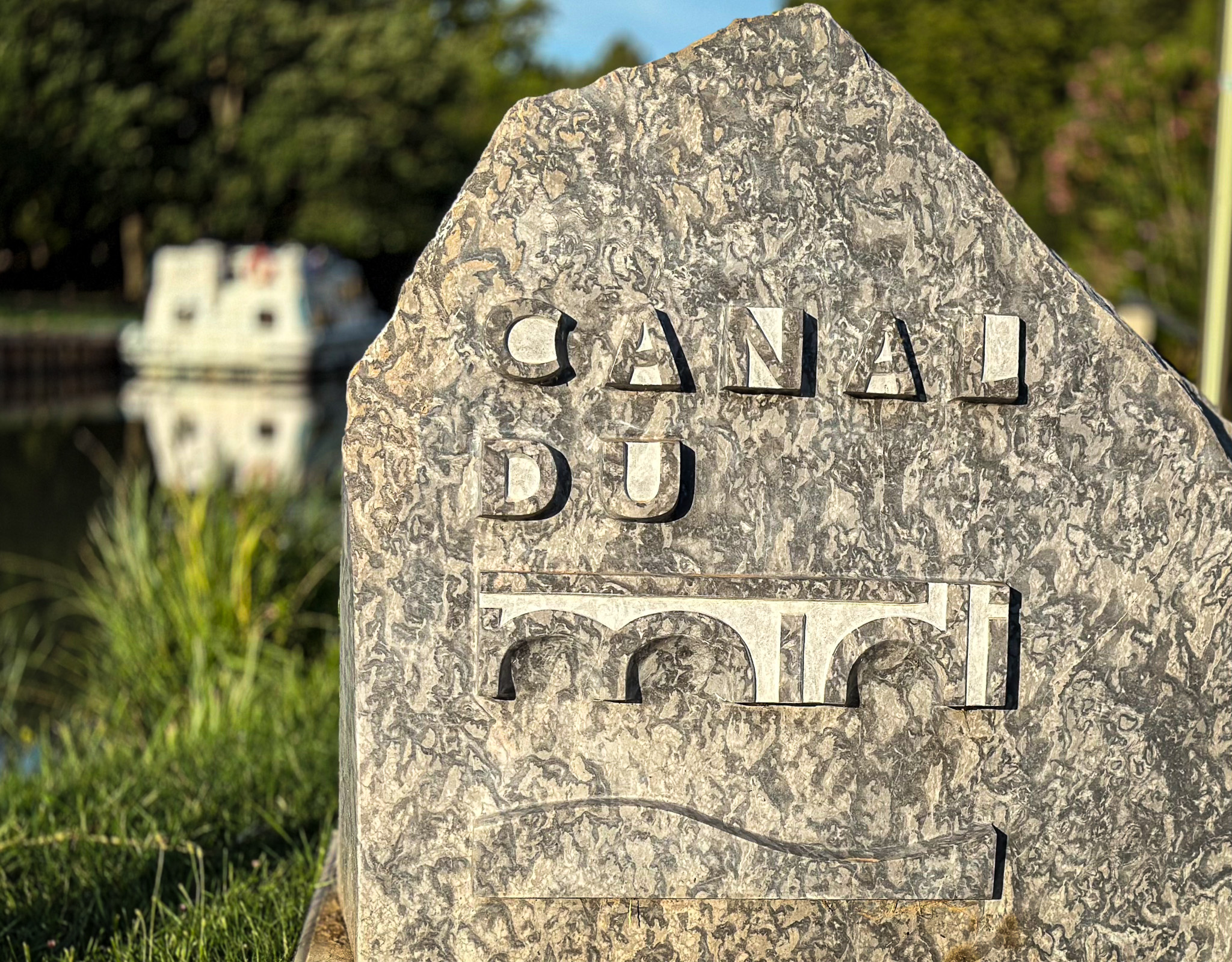
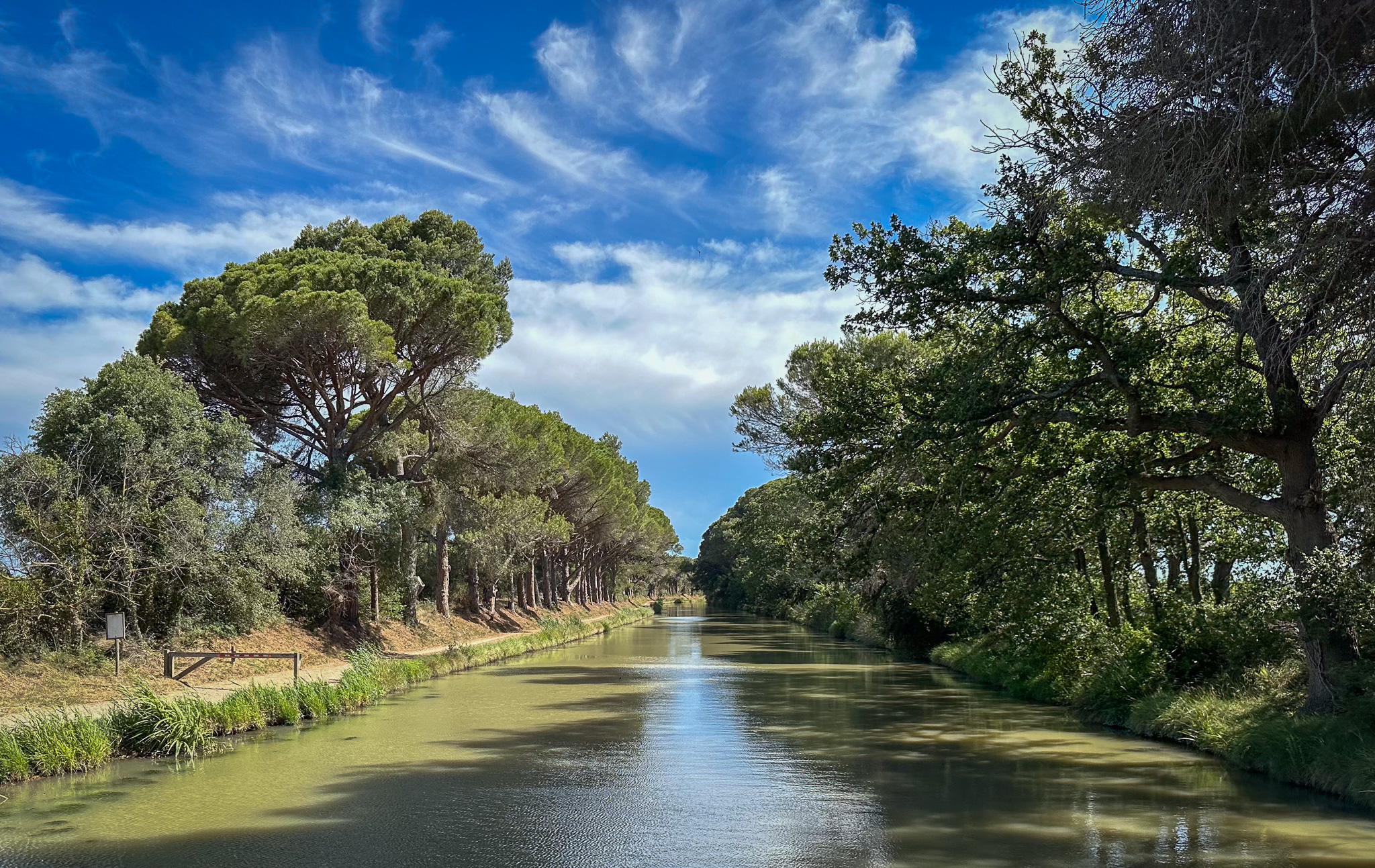
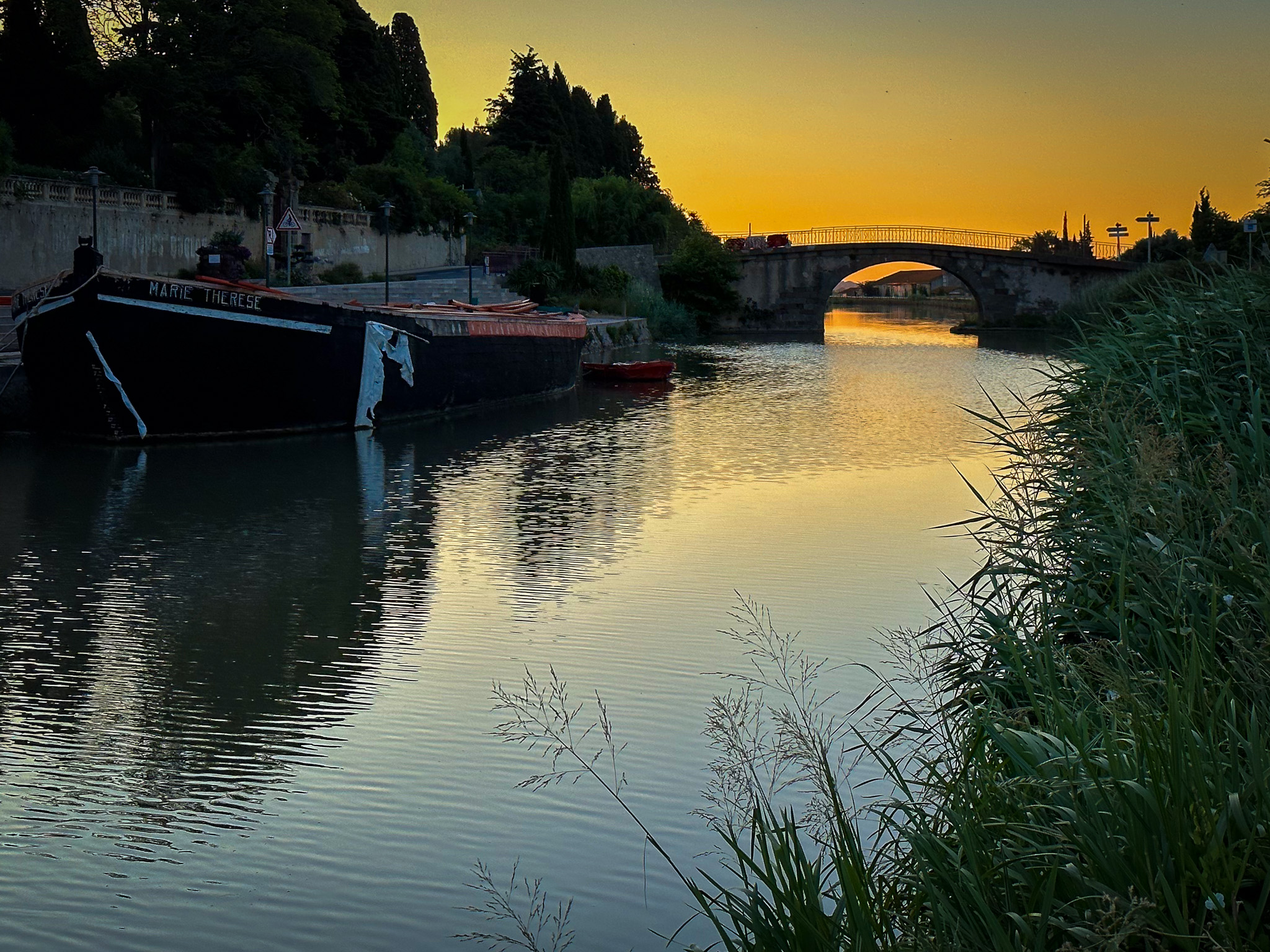
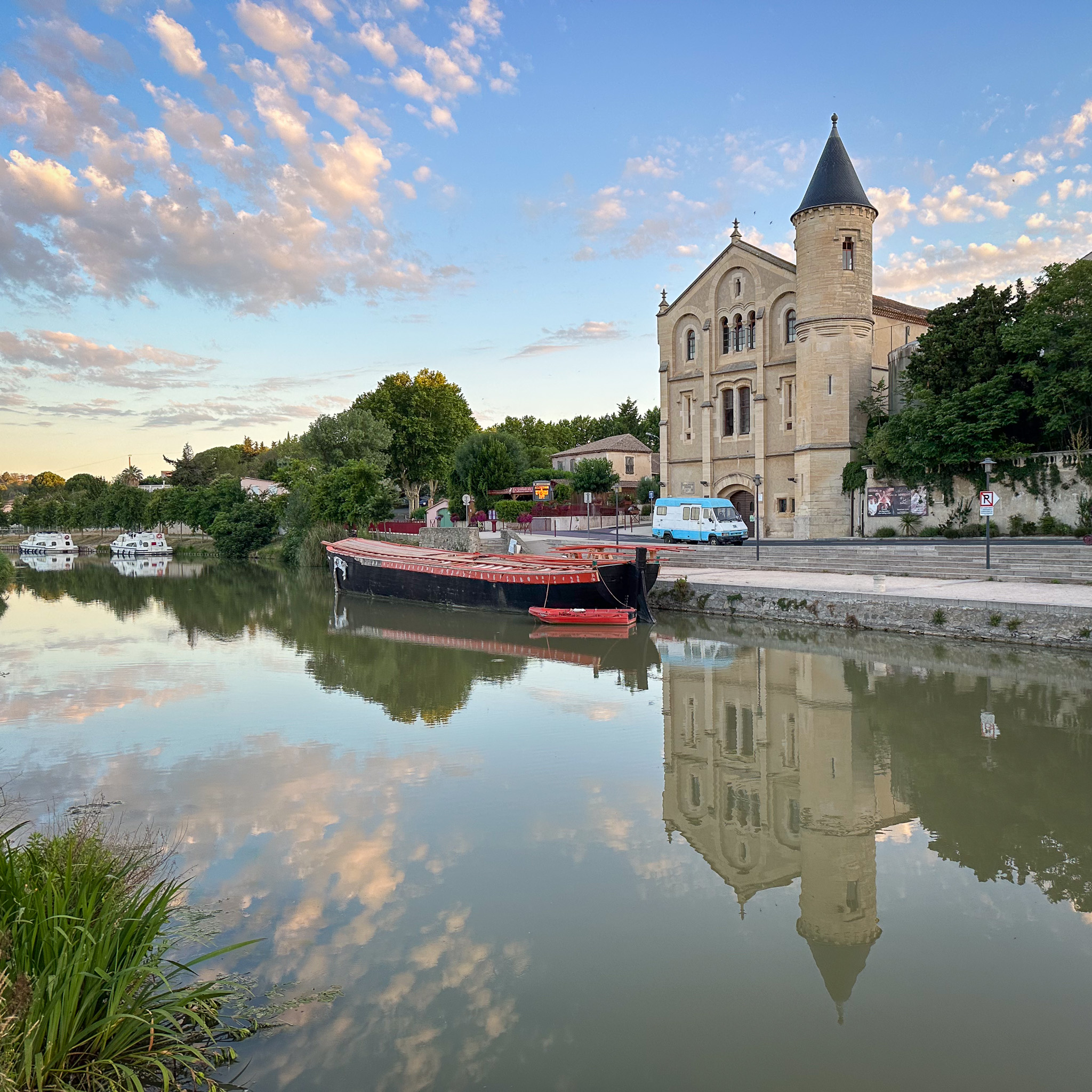
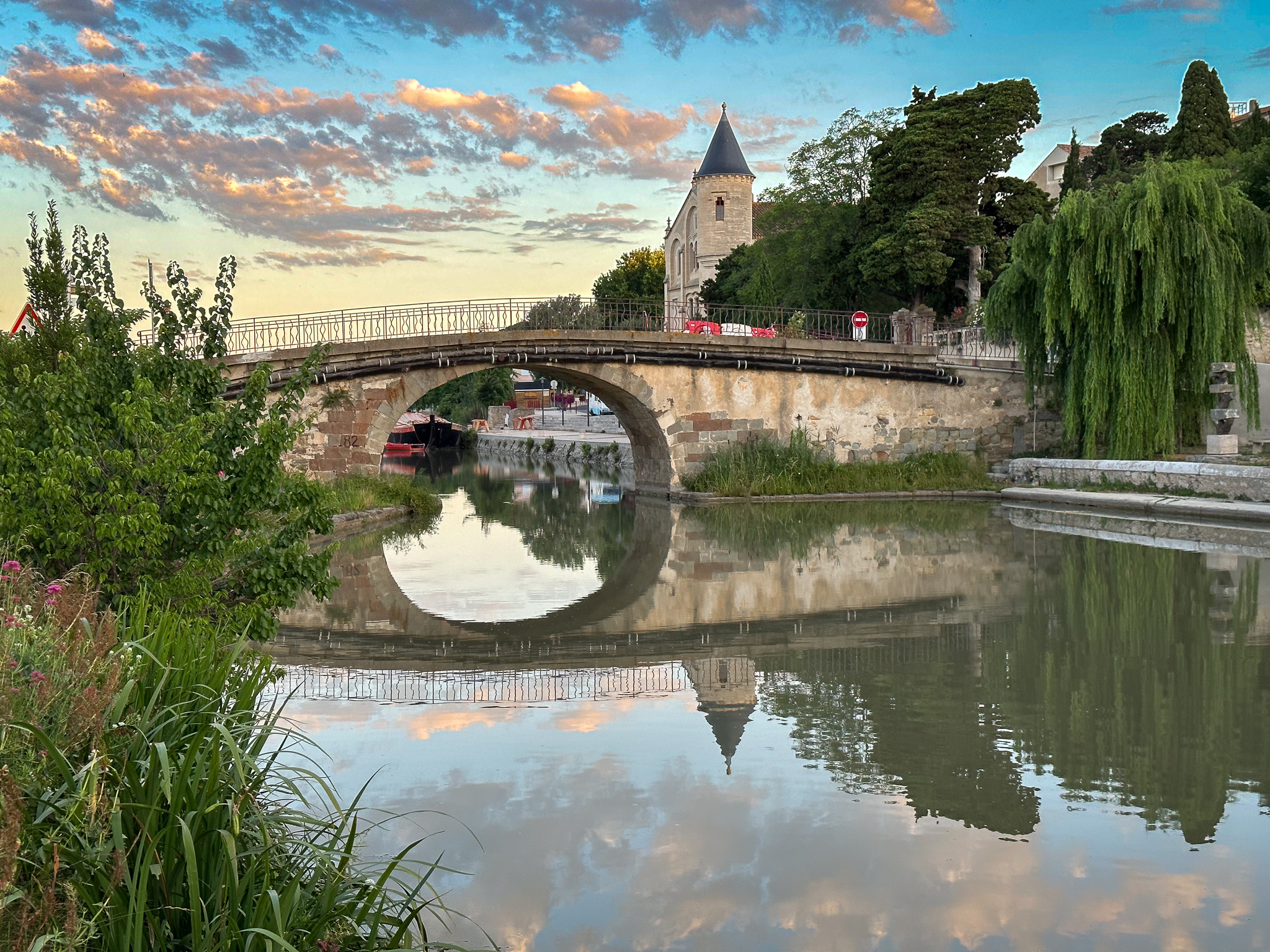
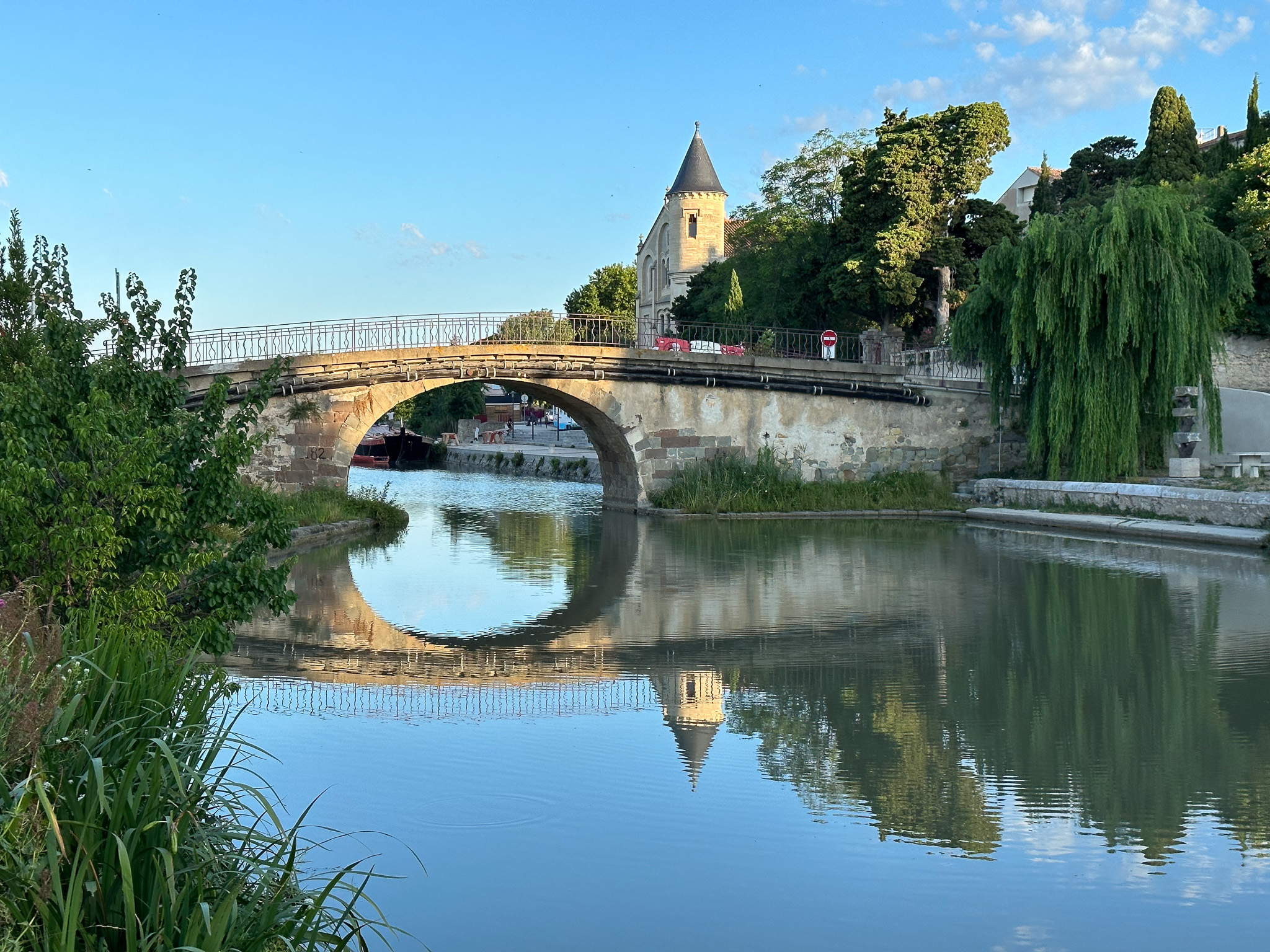
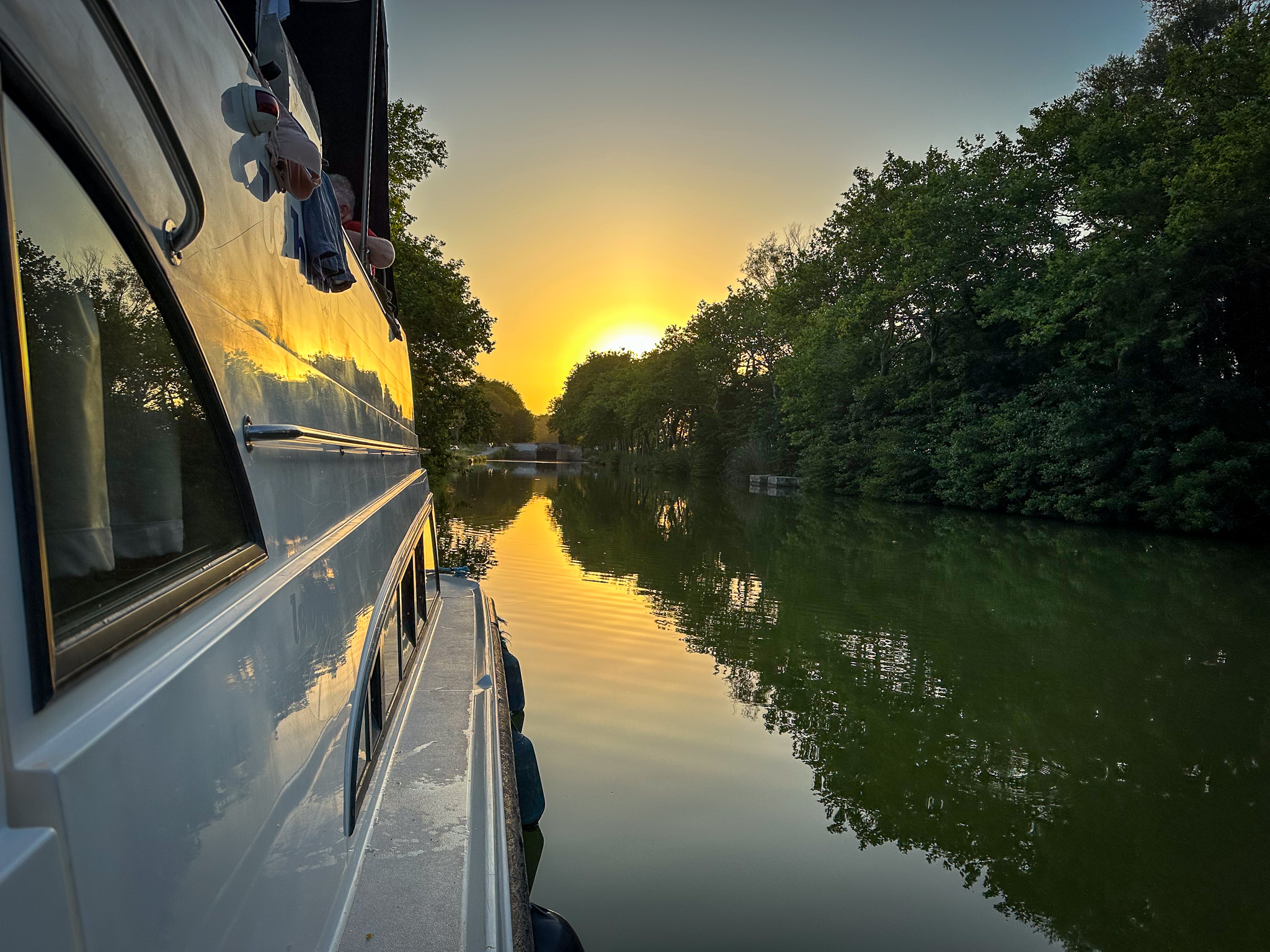
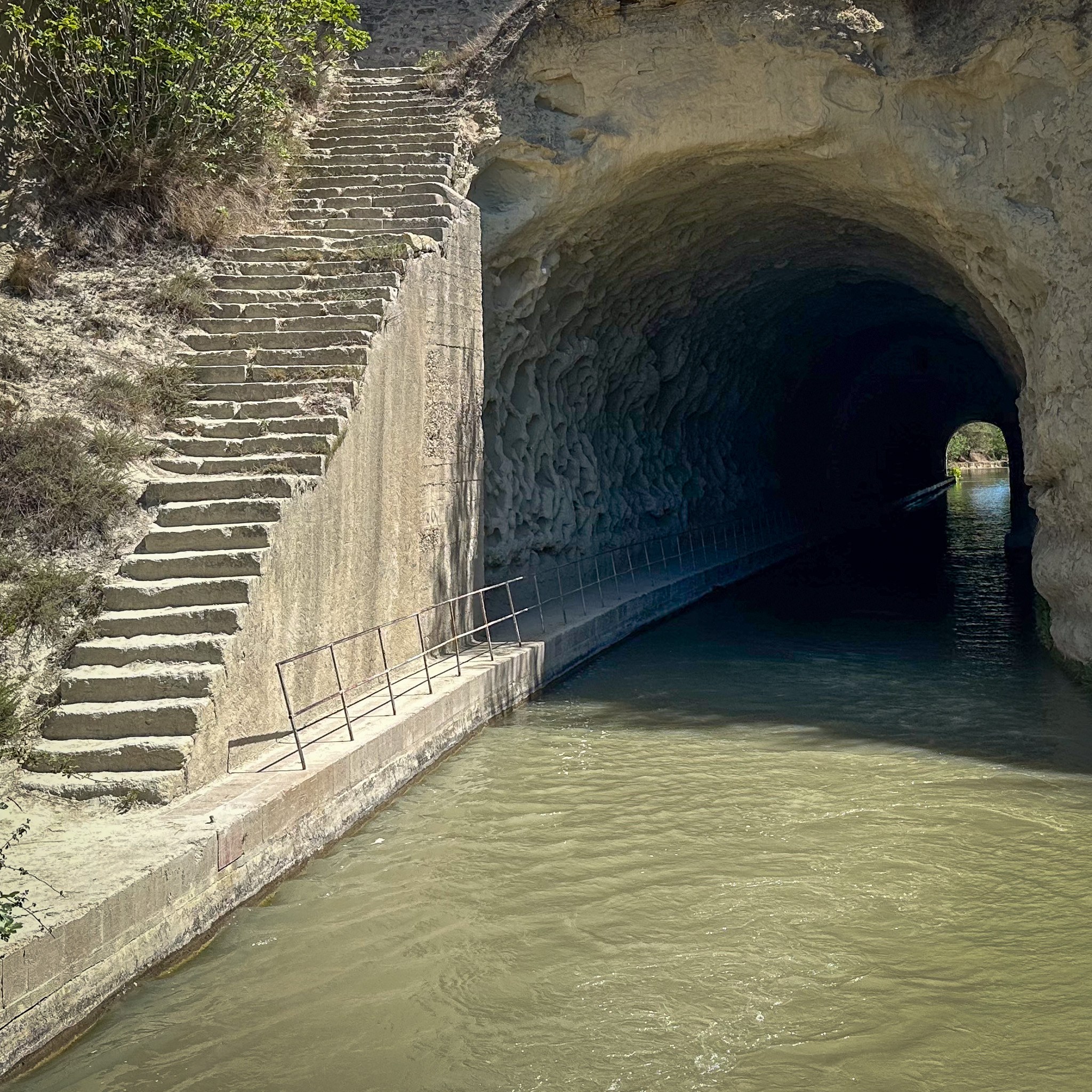
Le Canal du Midi is one of the oldest operational canals in the world. It links the Mediterranean coast to Toulouse and then joins other canal systems to make it possible to travel by canal from the Mediterranean to the Atlantic coast of France. We joined at the Le Boat base at Port Cassafières near the Mediterranean coast and arranged for Jonathan’s car to be transported to Castelnaudary near Toulouse to allow us to make a ten day, one way trip.
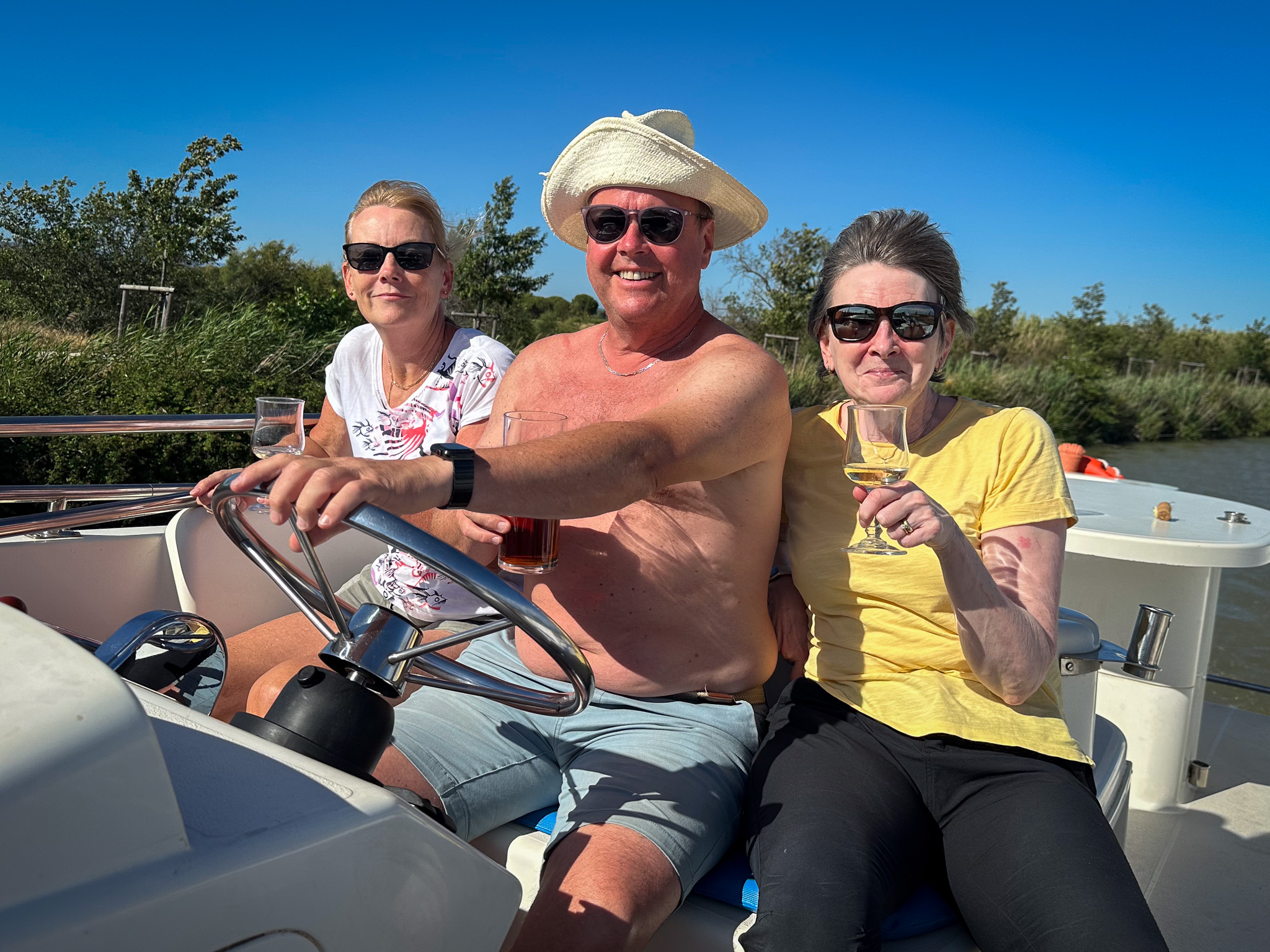
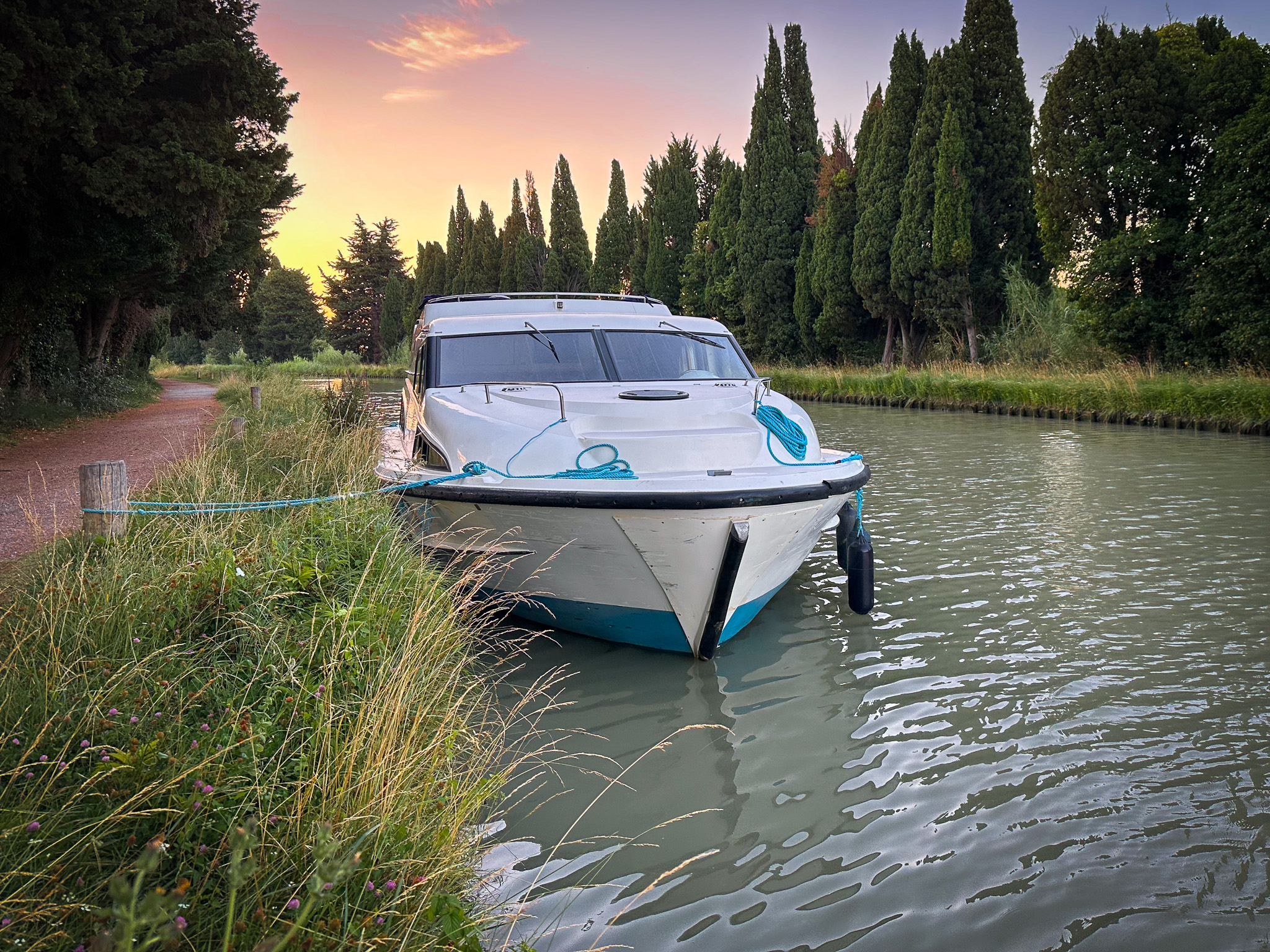
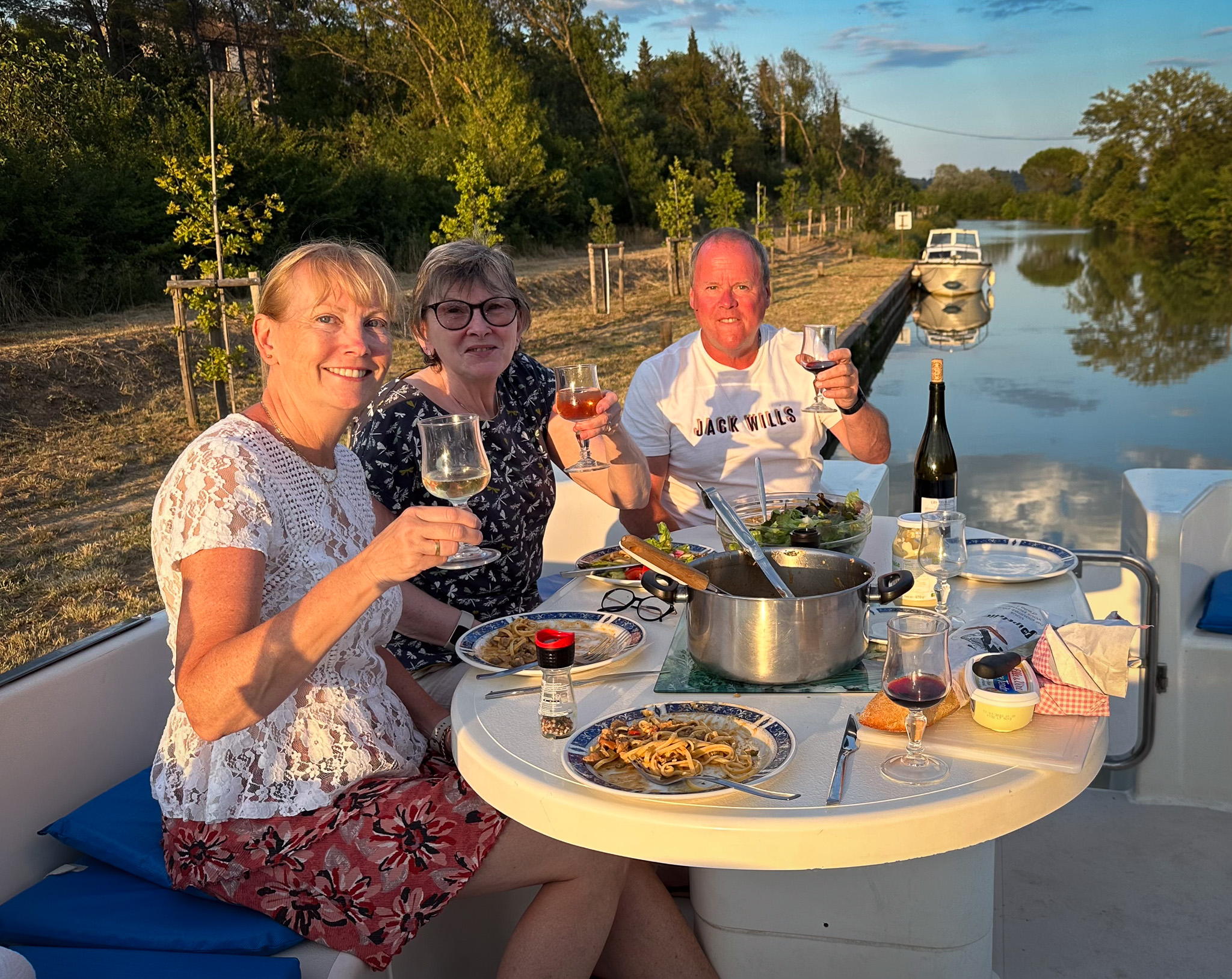
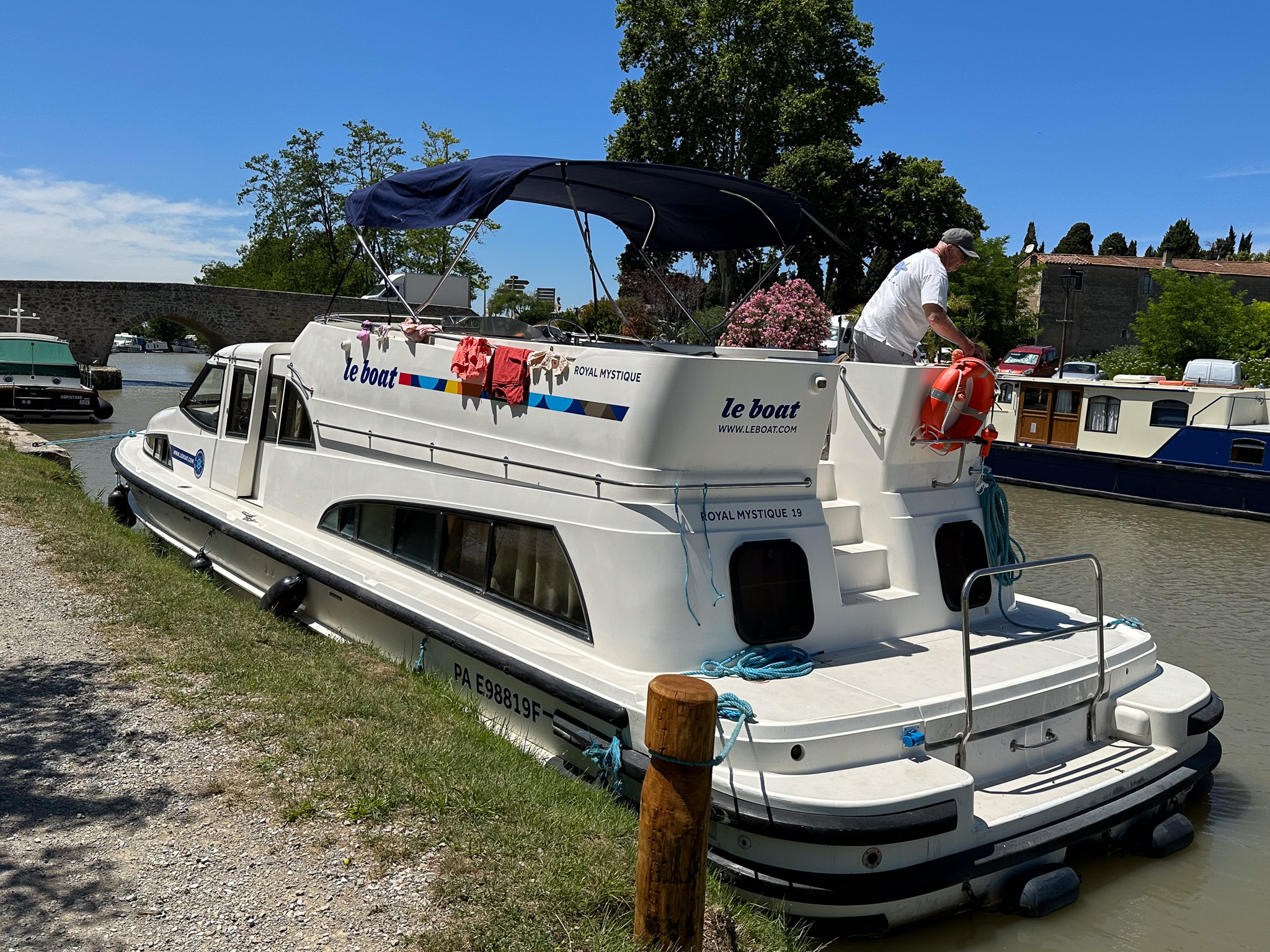
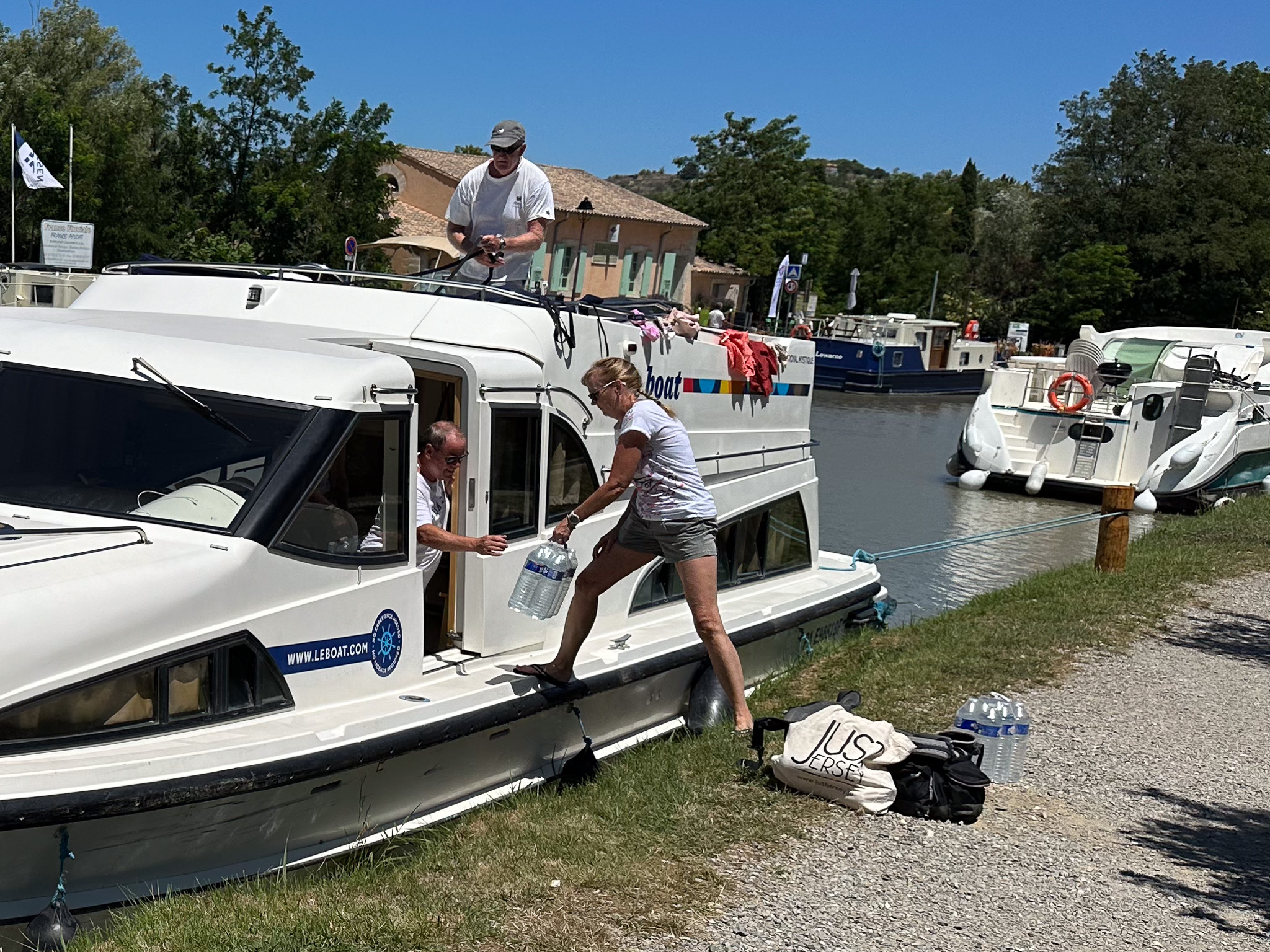
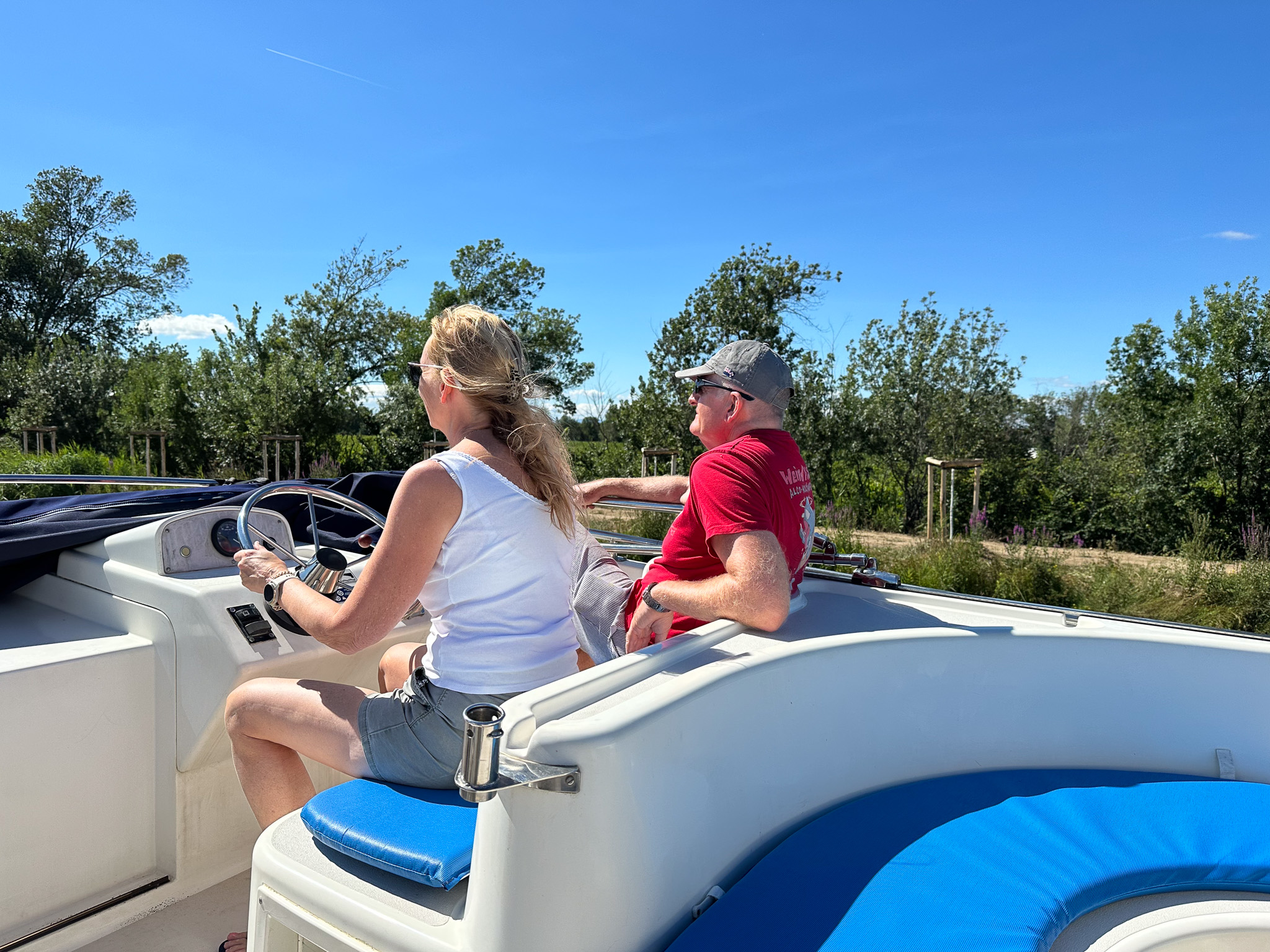
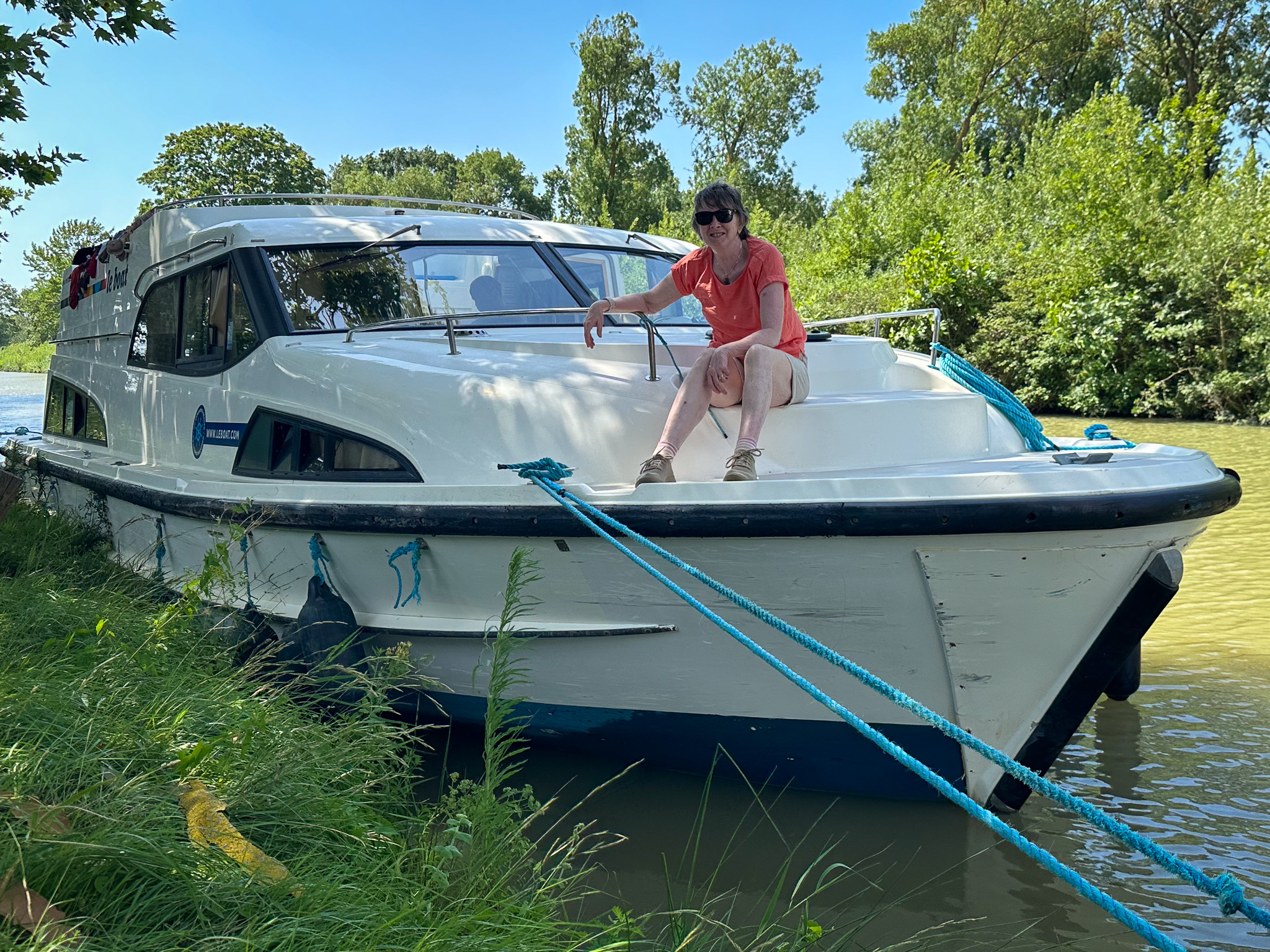
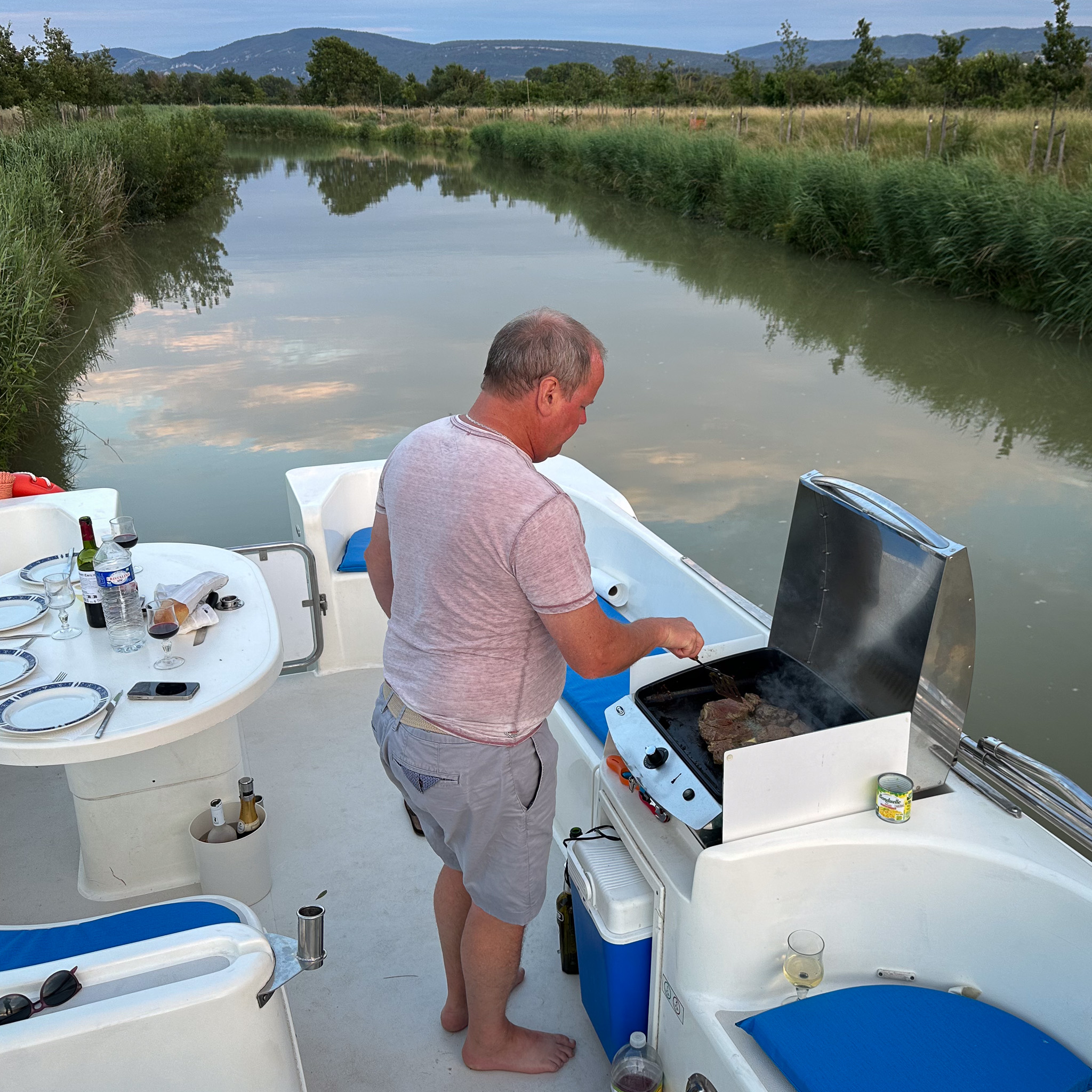
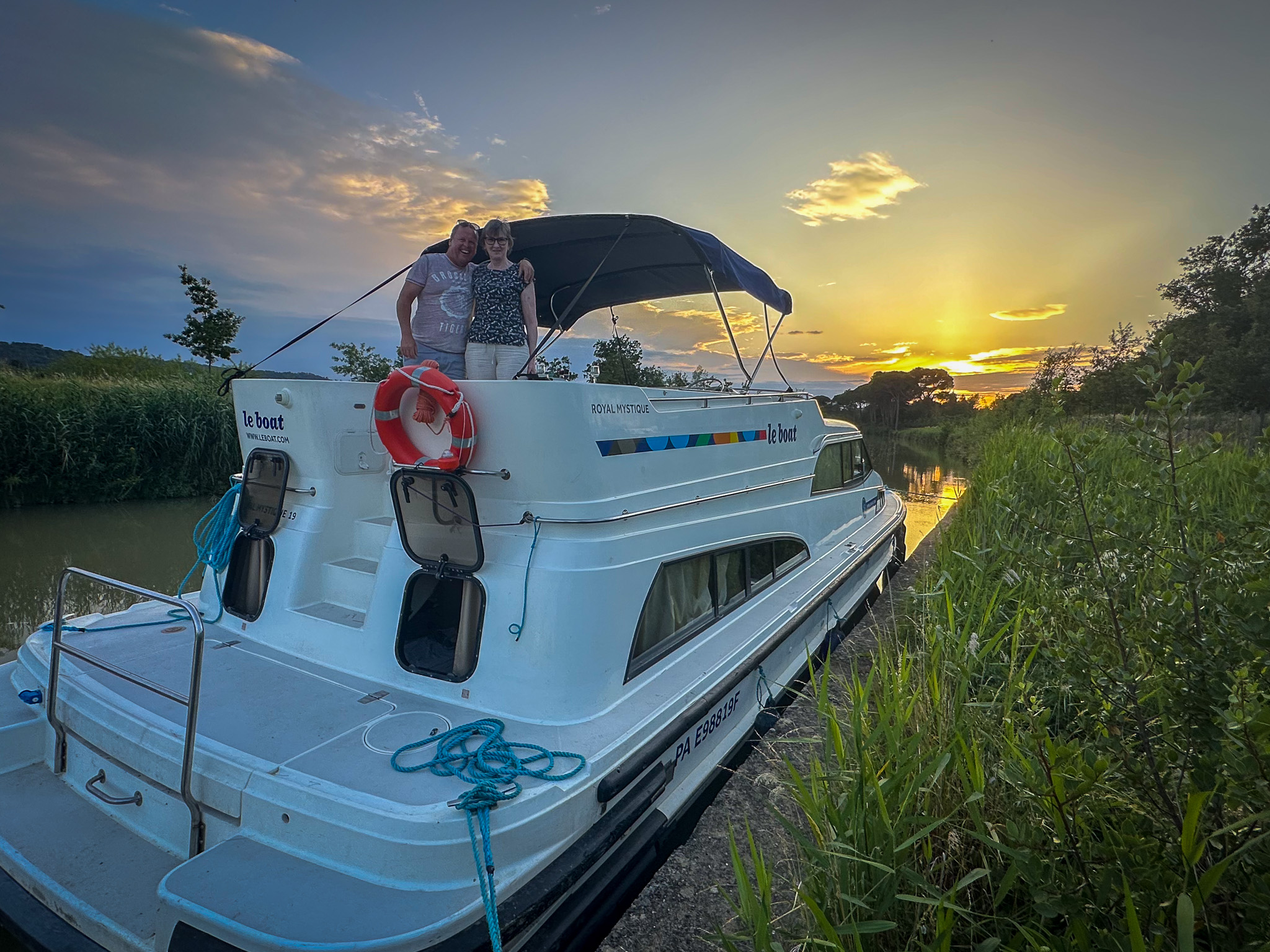
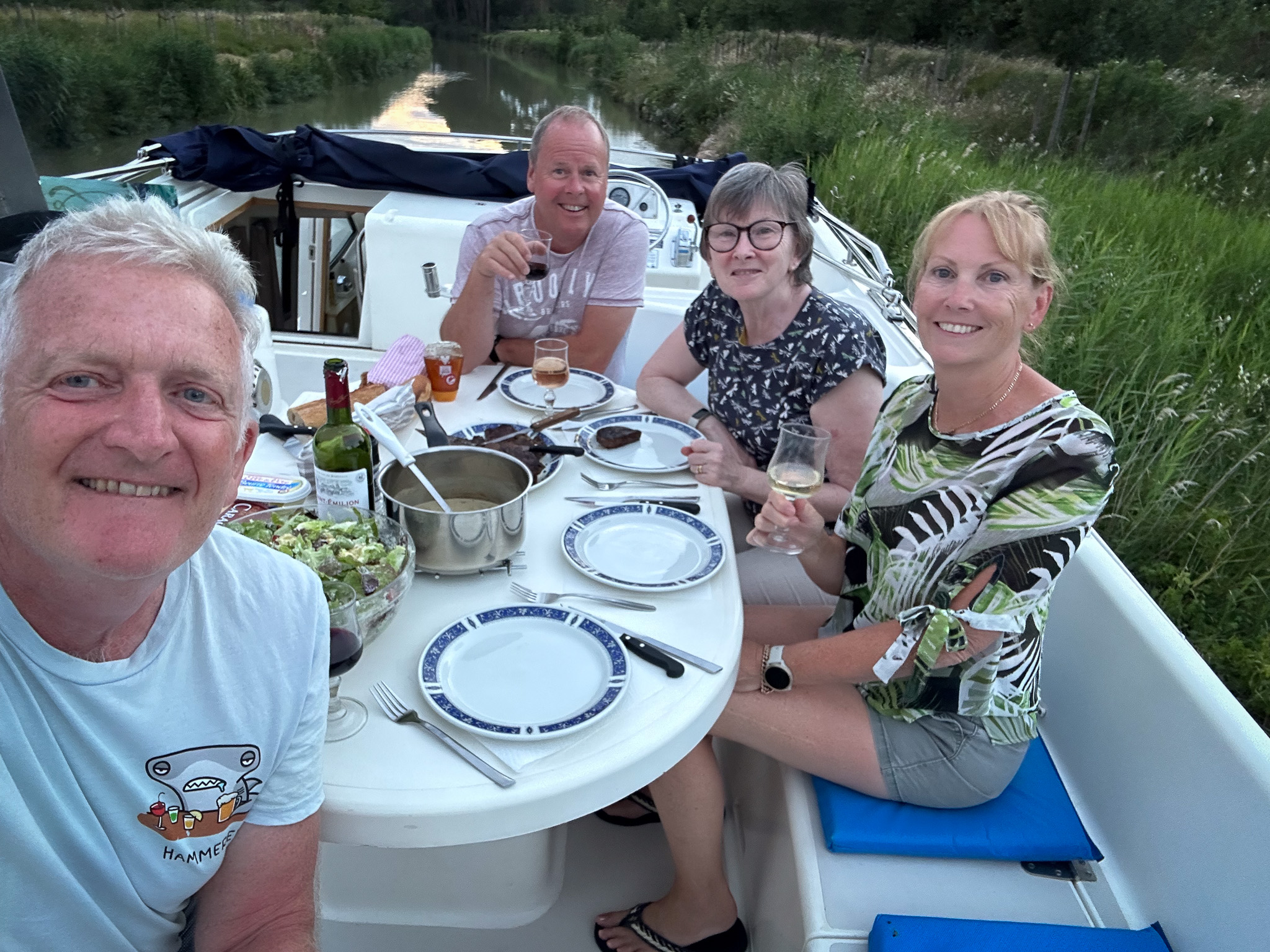
Nigel and Jonathan had a half hour lesson on driving the boat while Sue and Claire organised provisions at a local supermarket. Then we were off for ten days of leisurely cruising, navigating canal locks, exploring ancient villages and towns and of course lots of eating and drinking of French wines and food.



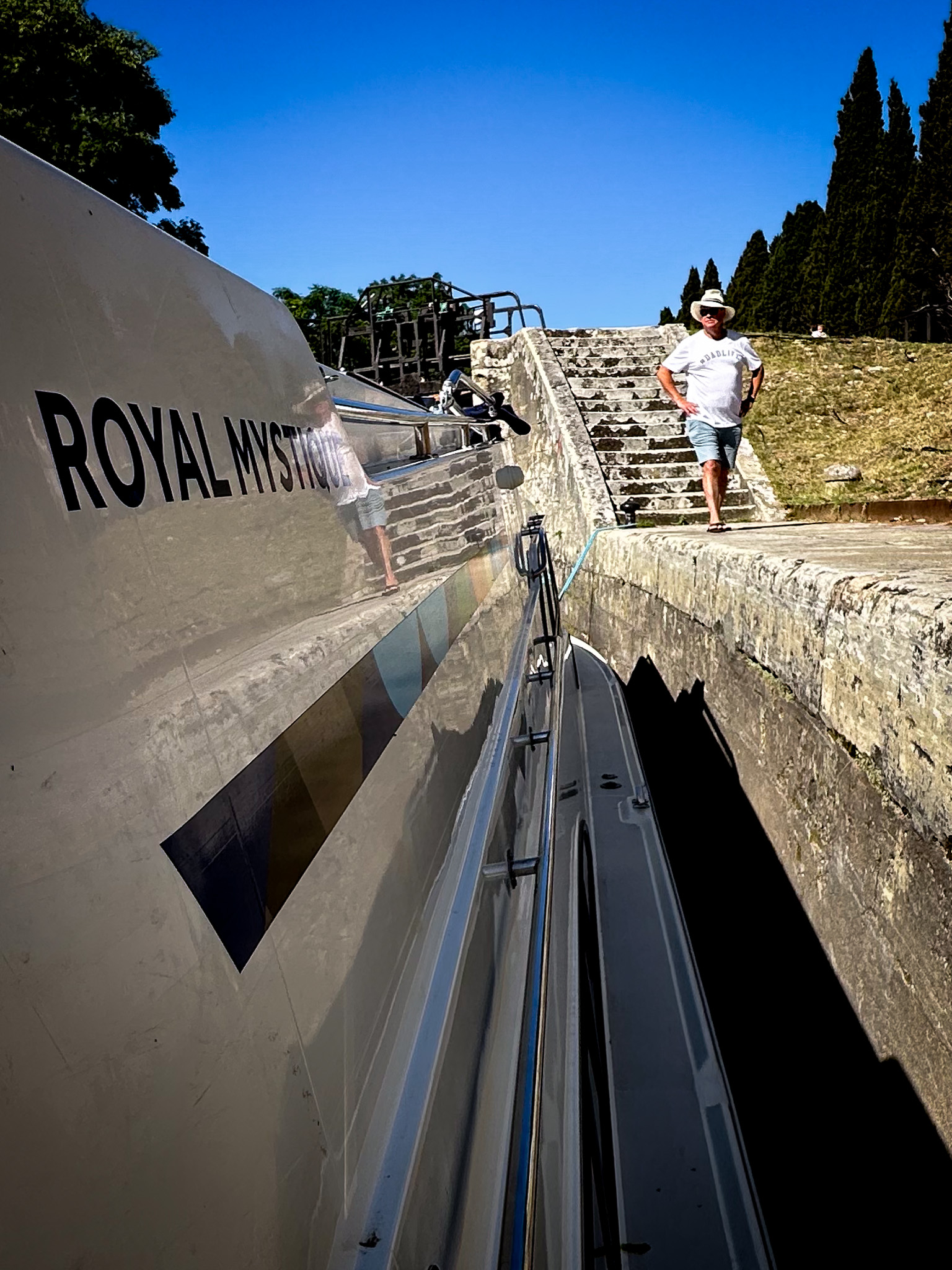
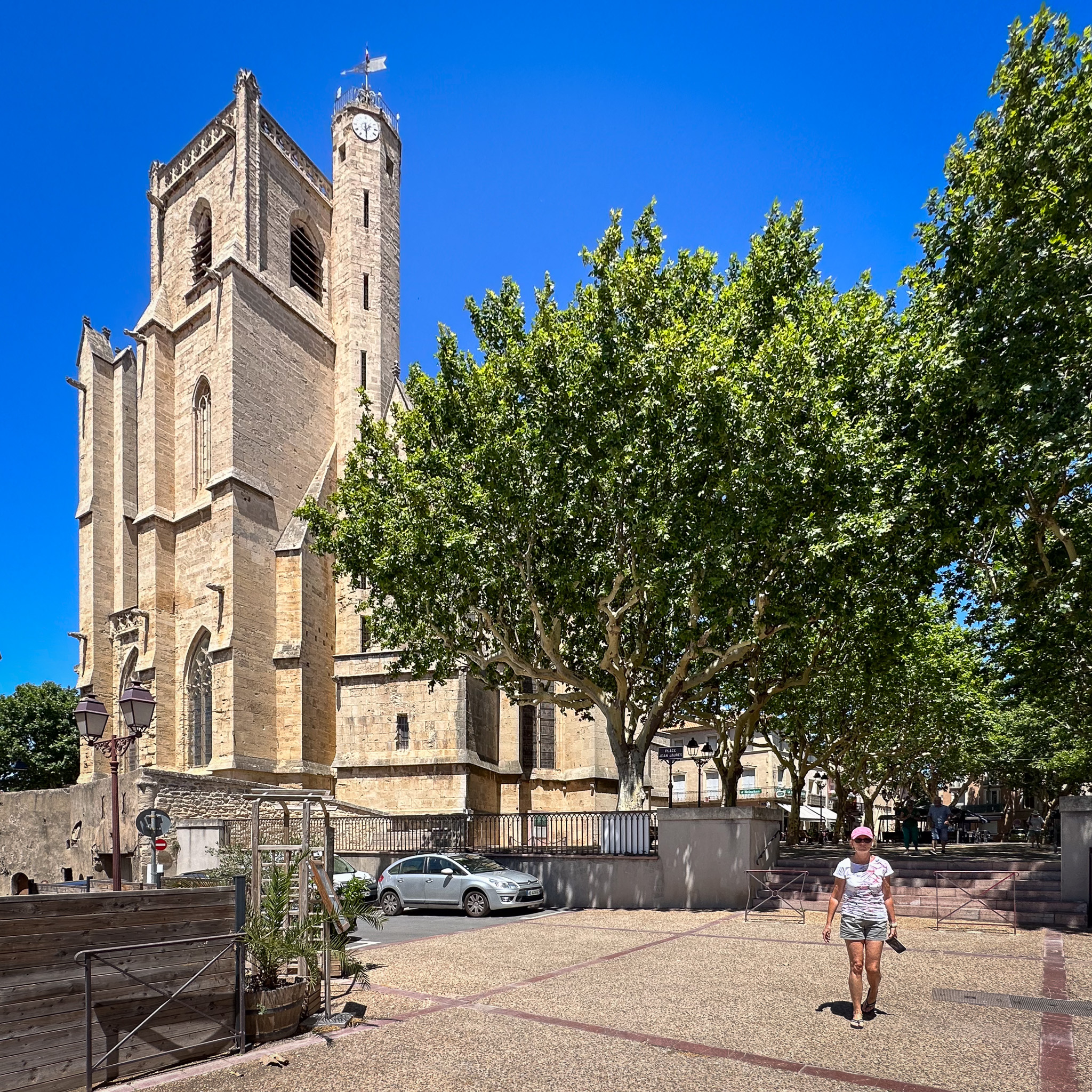
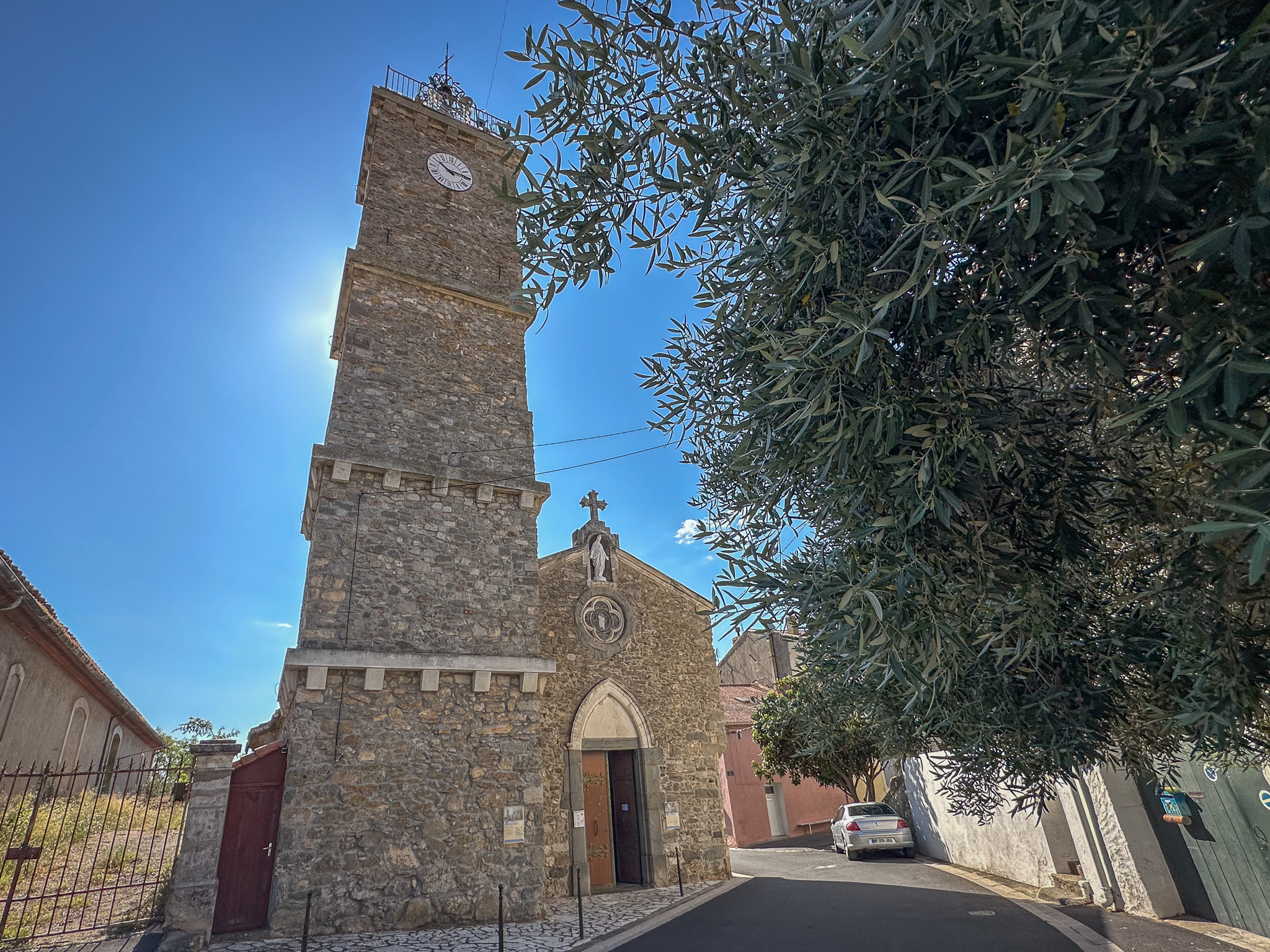
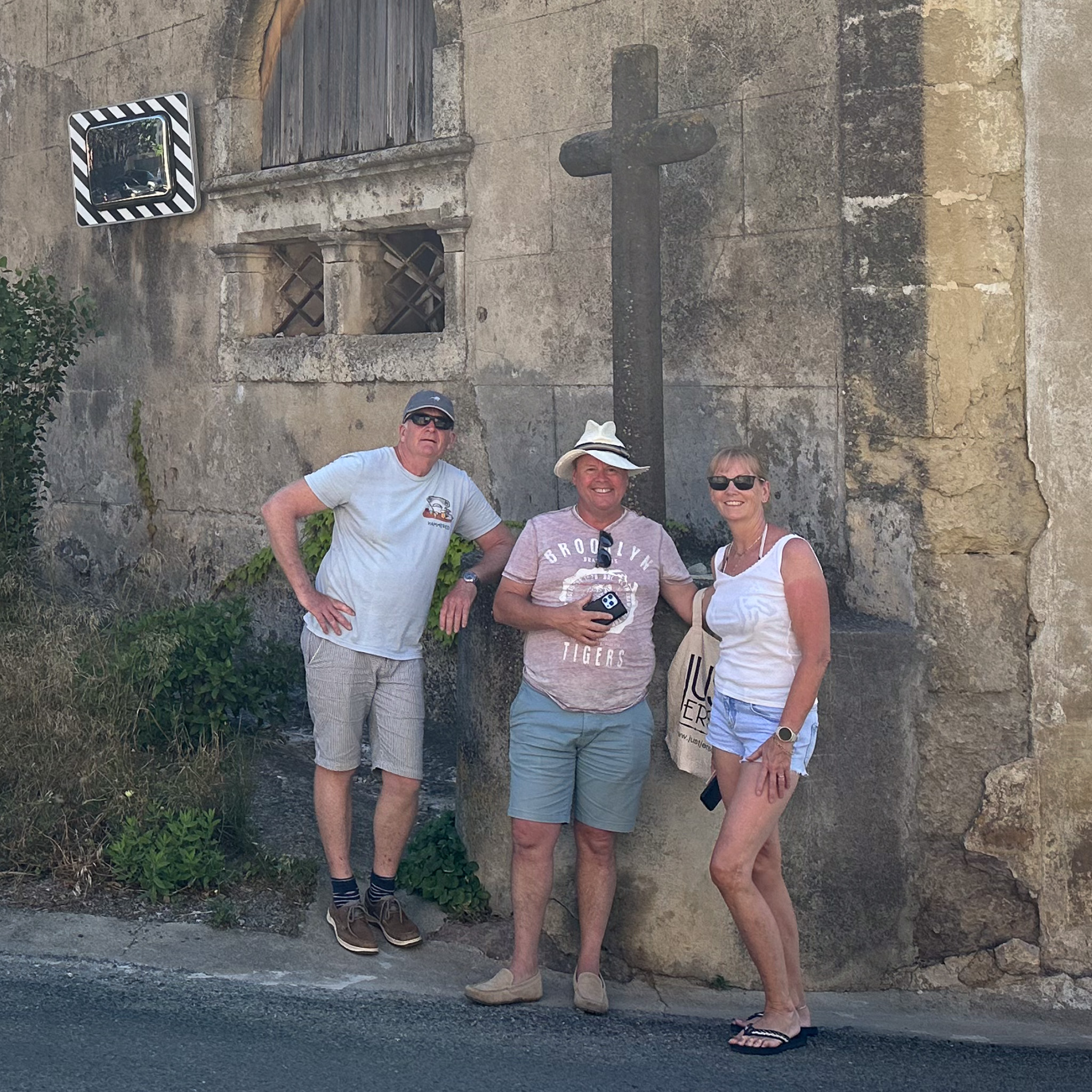
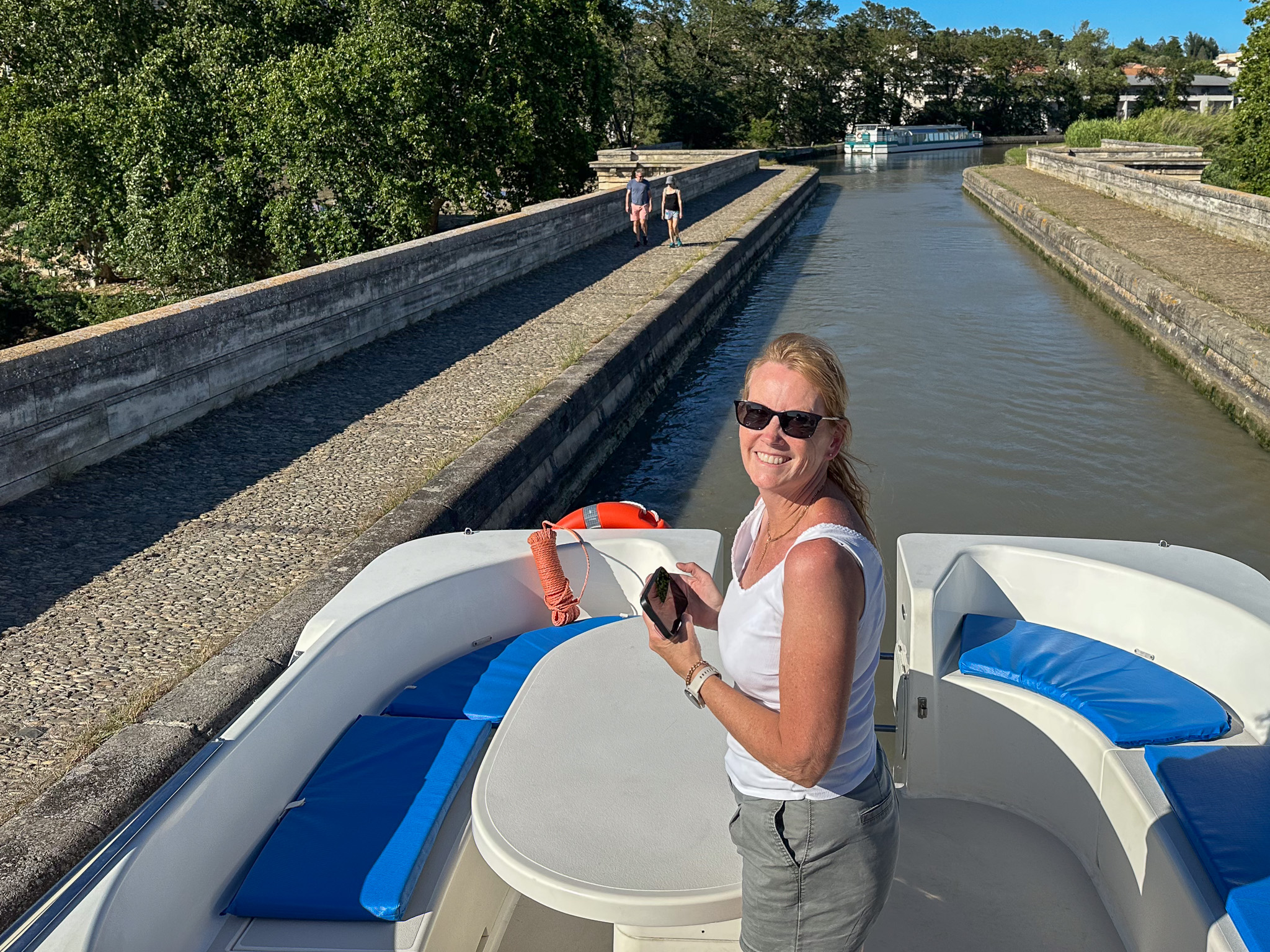
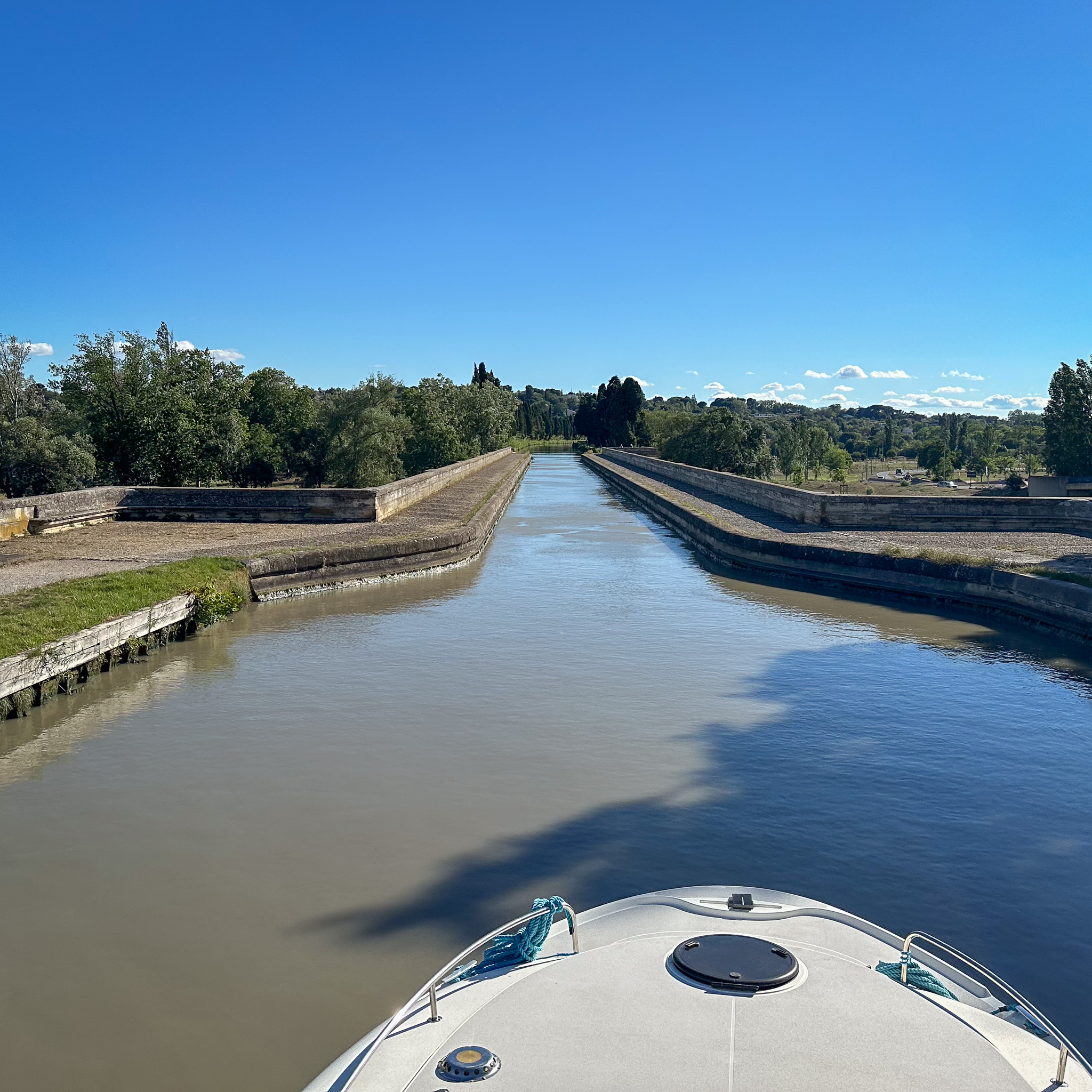
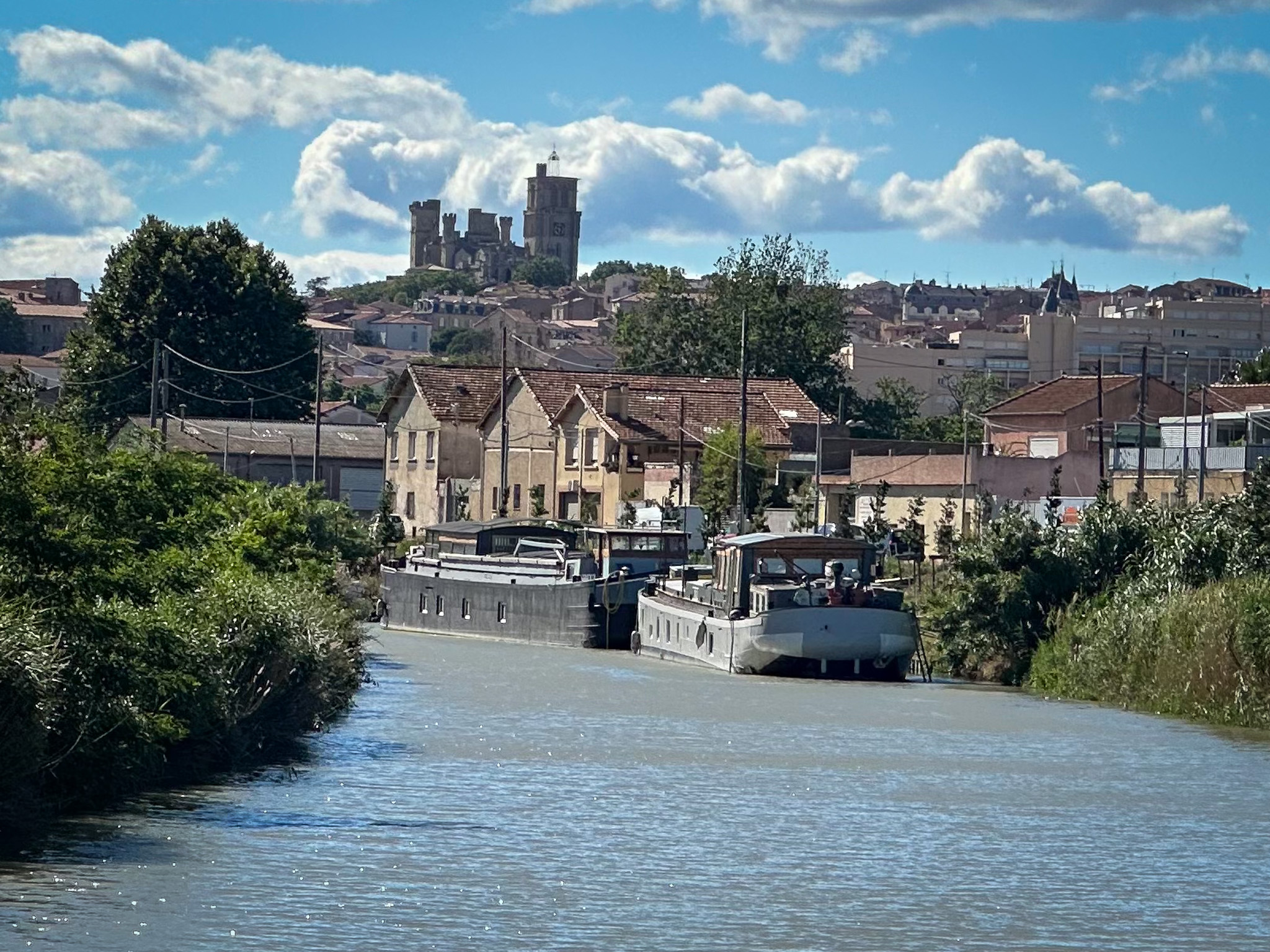
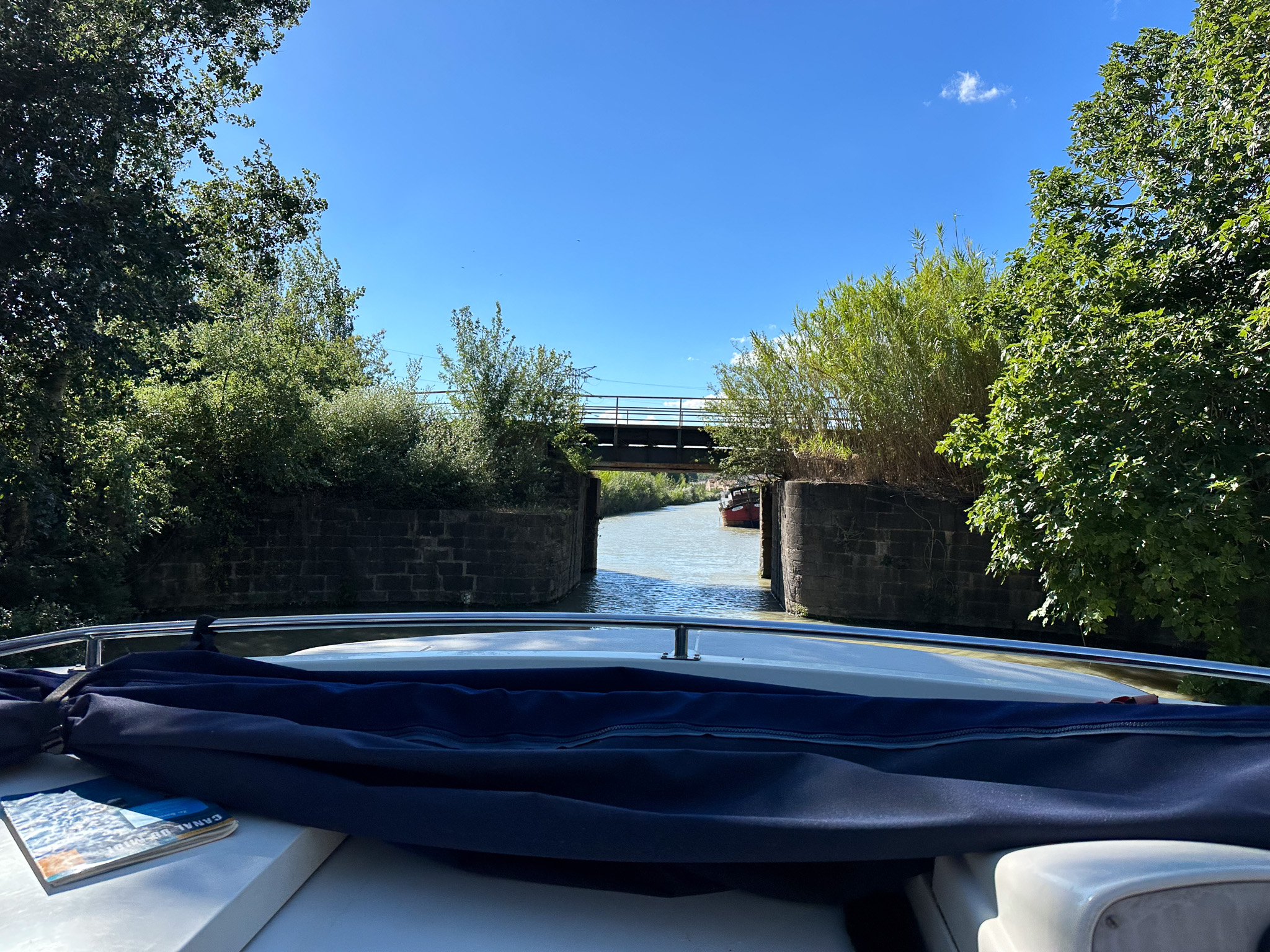



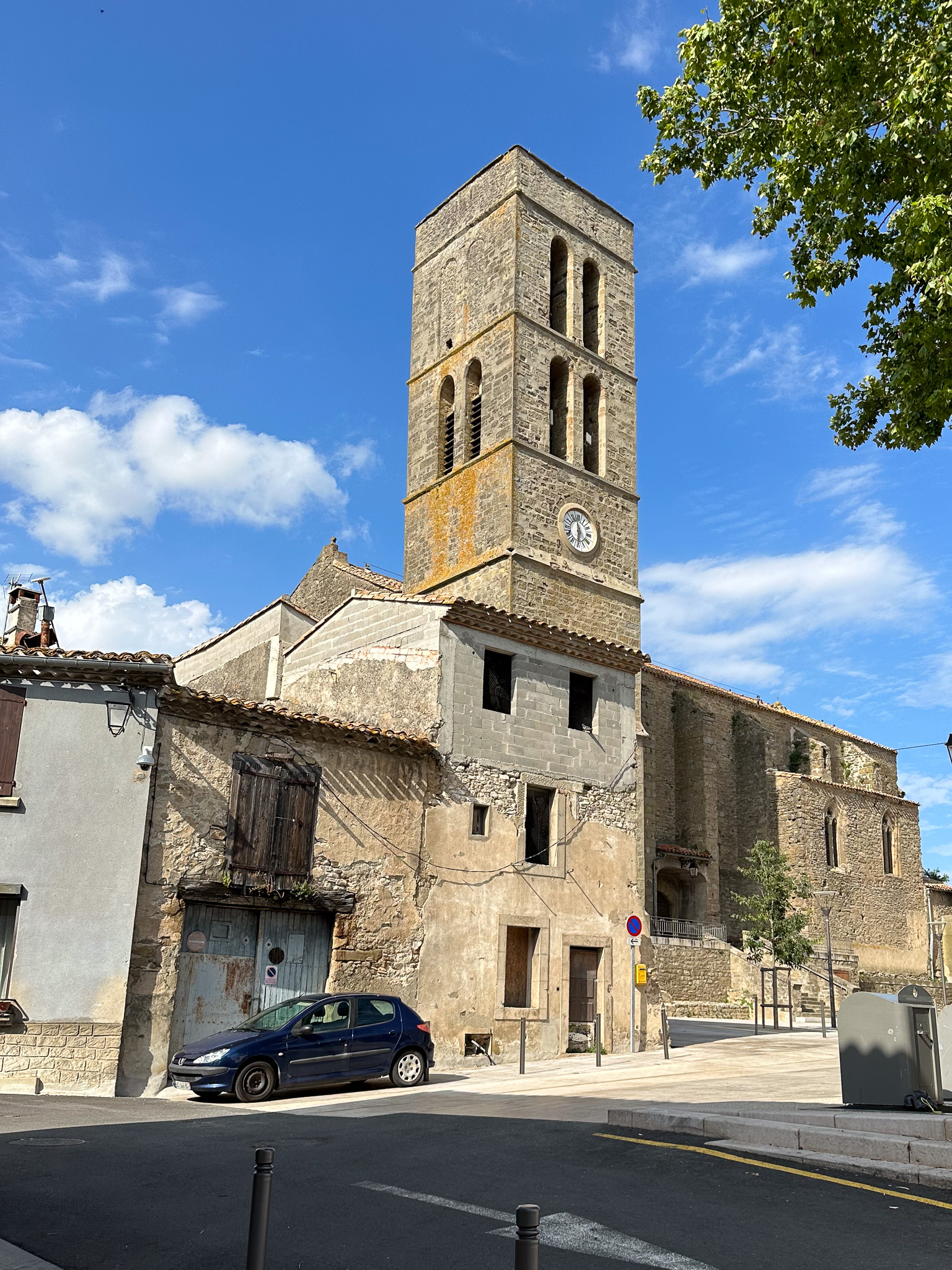
Managing the locks
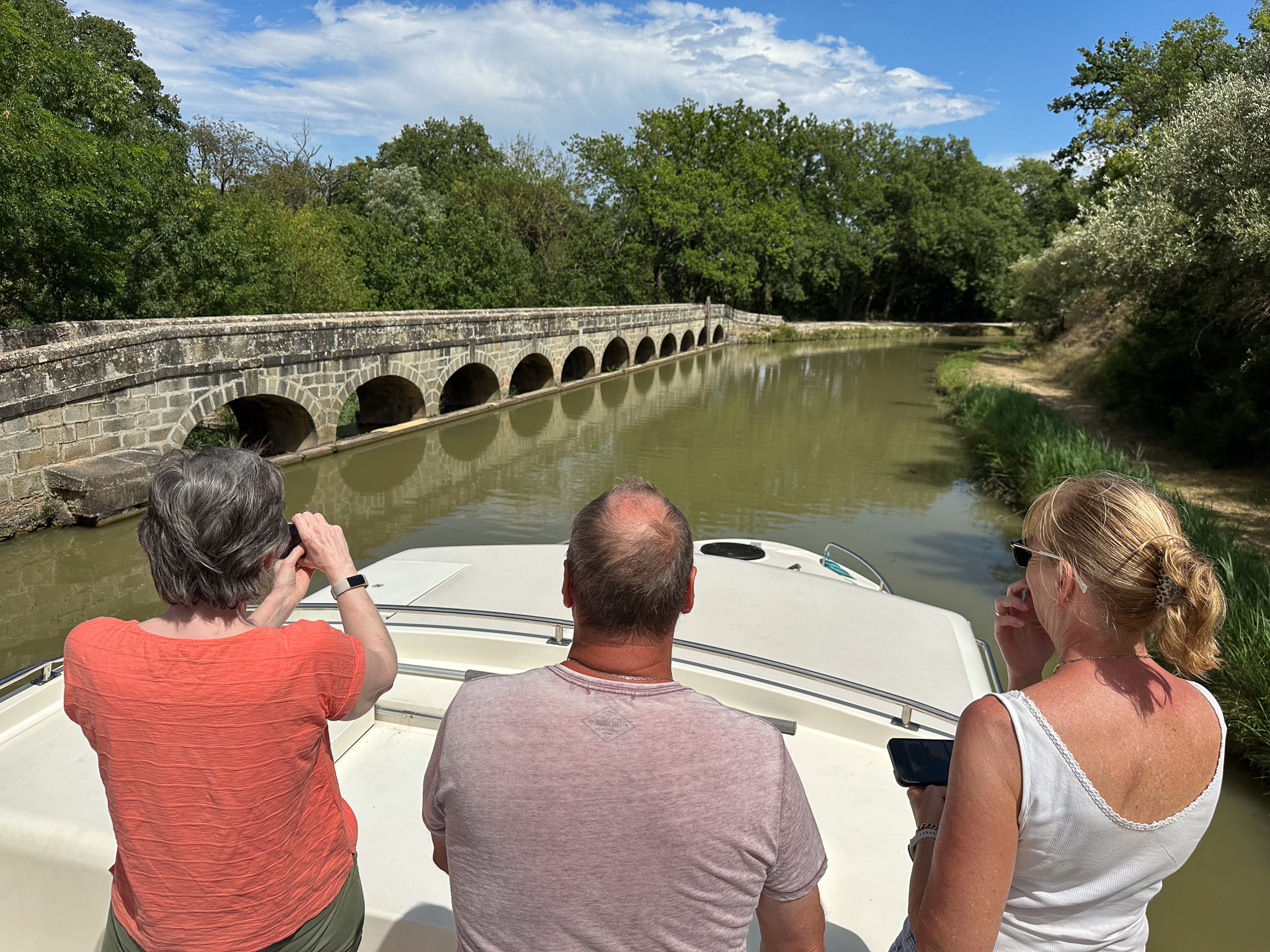
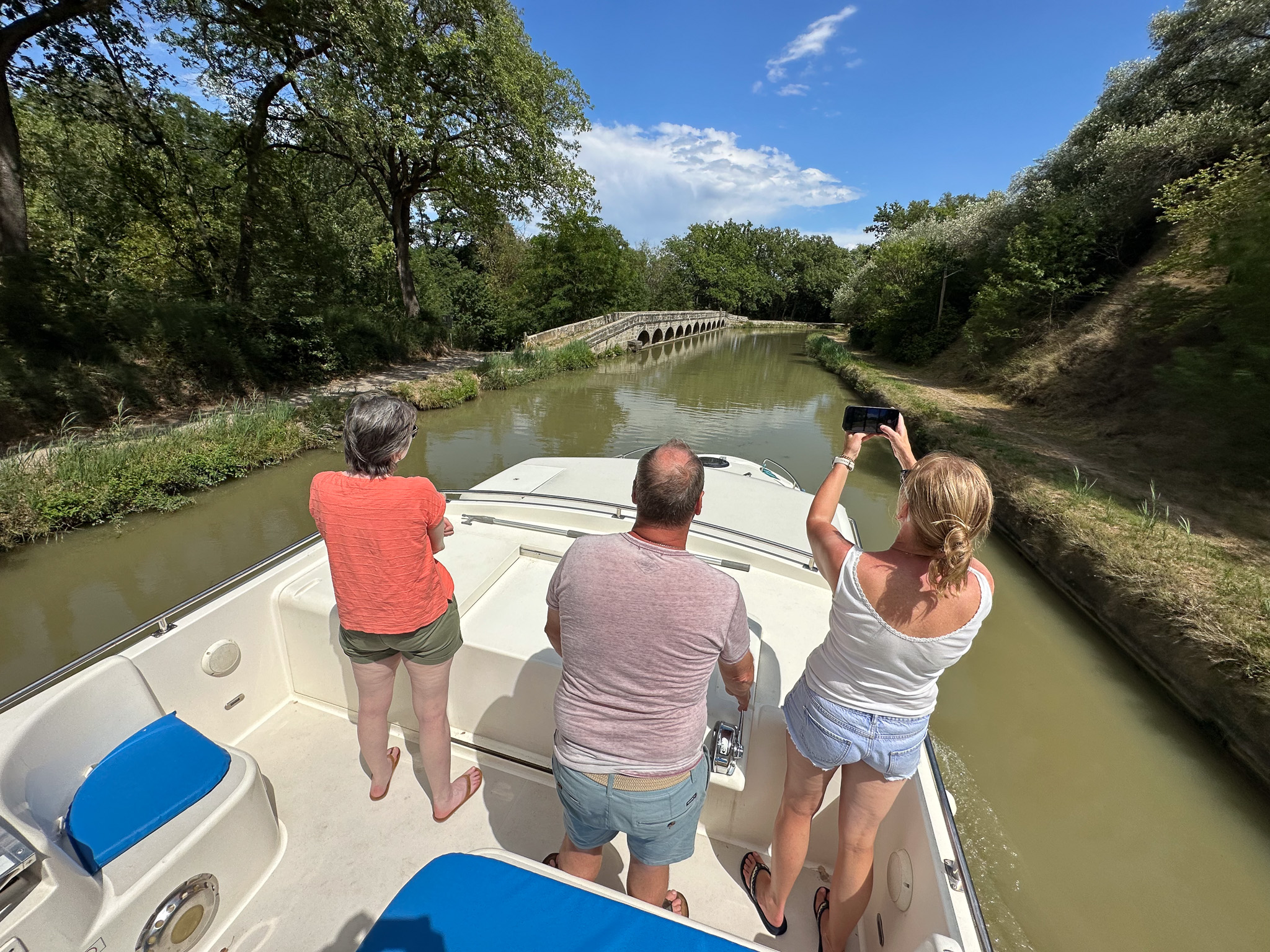
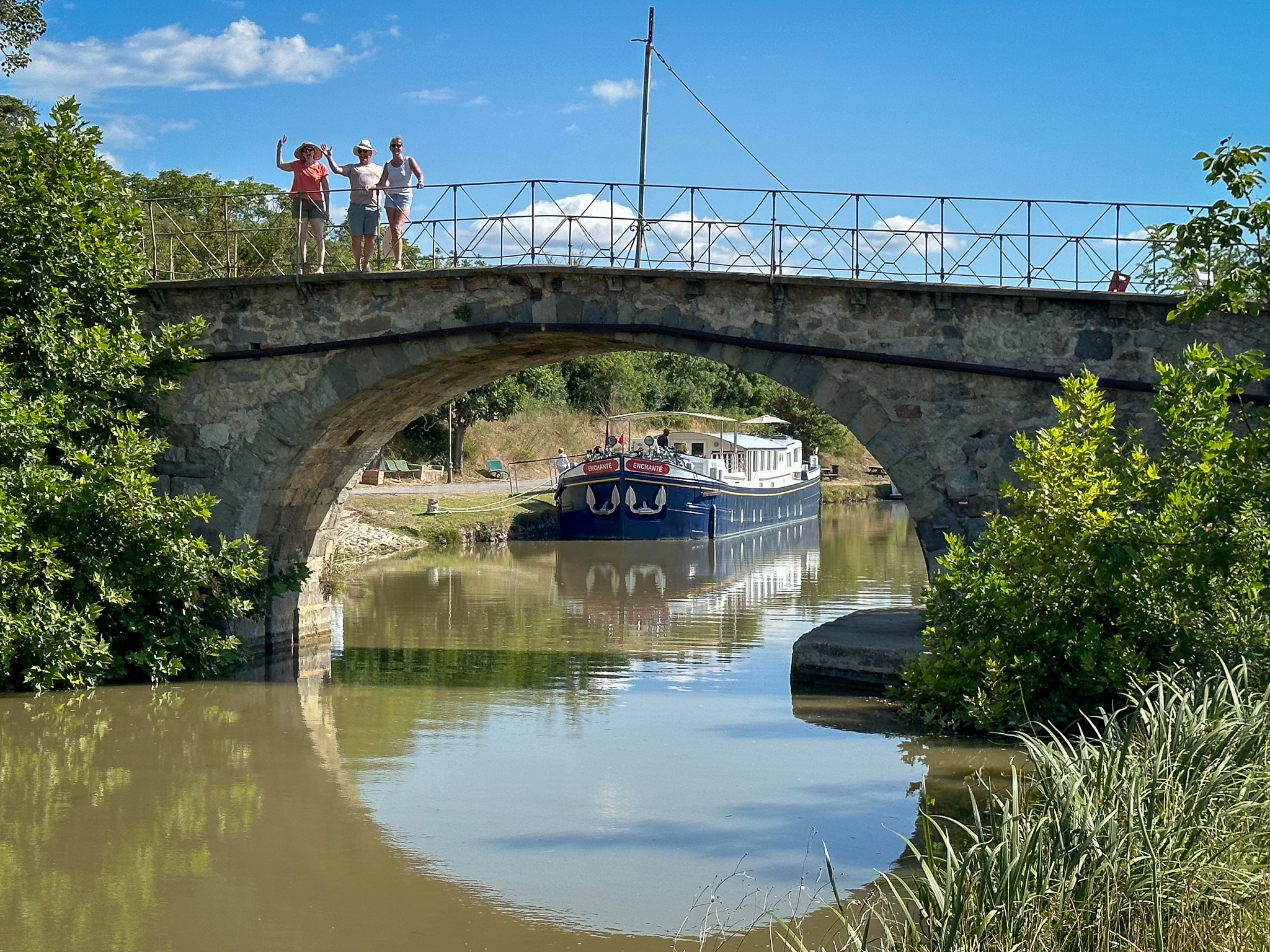
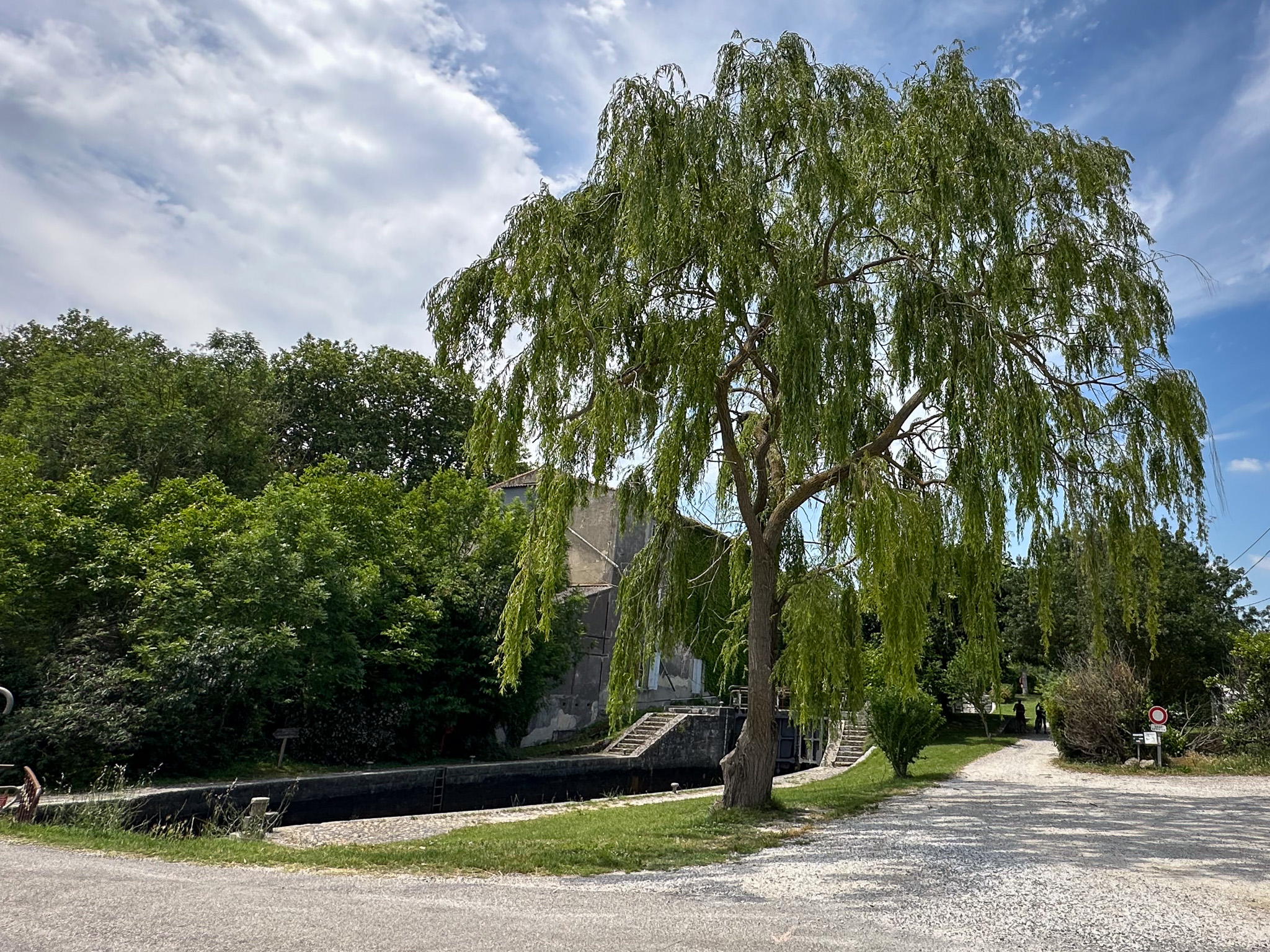
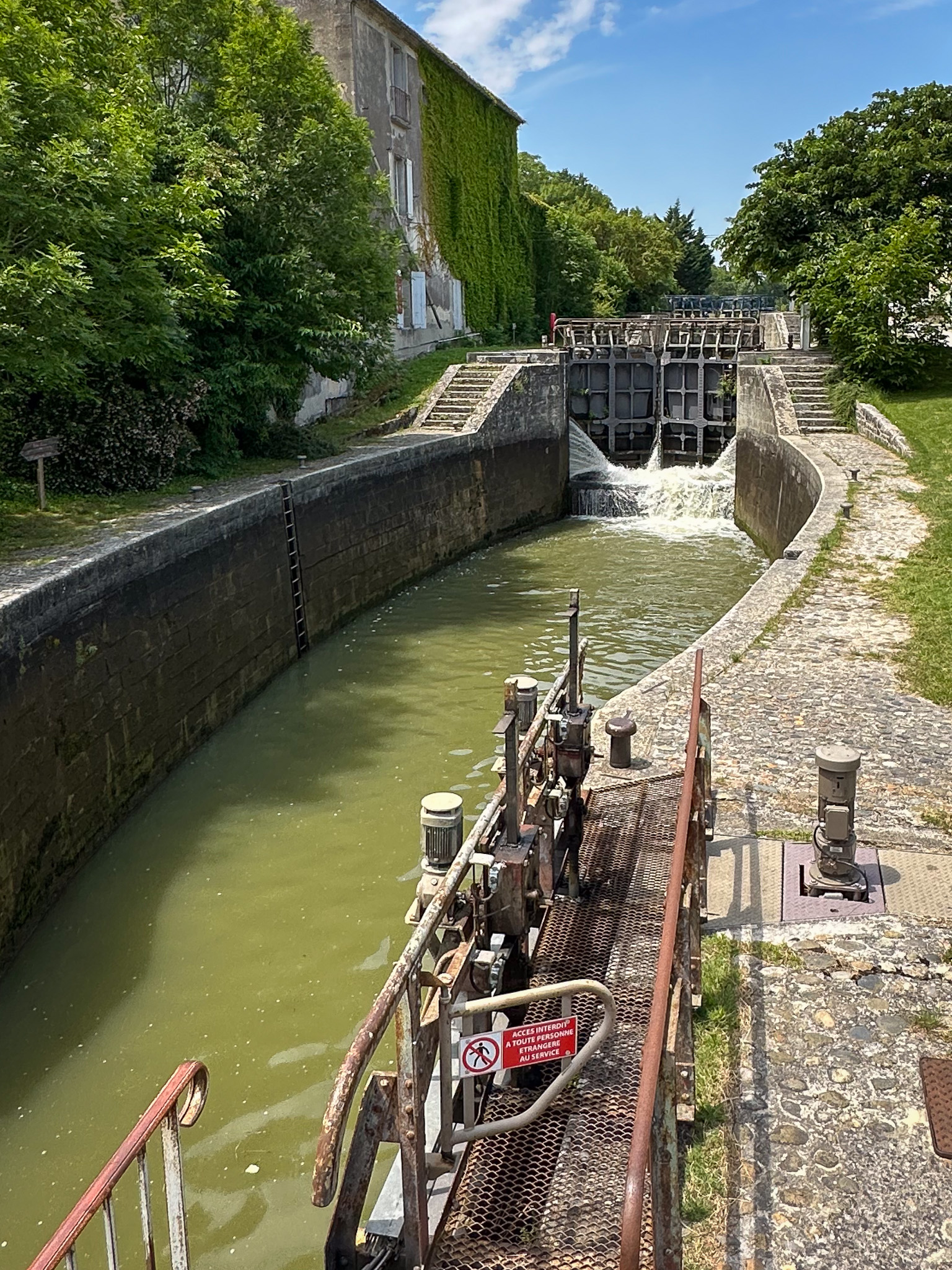
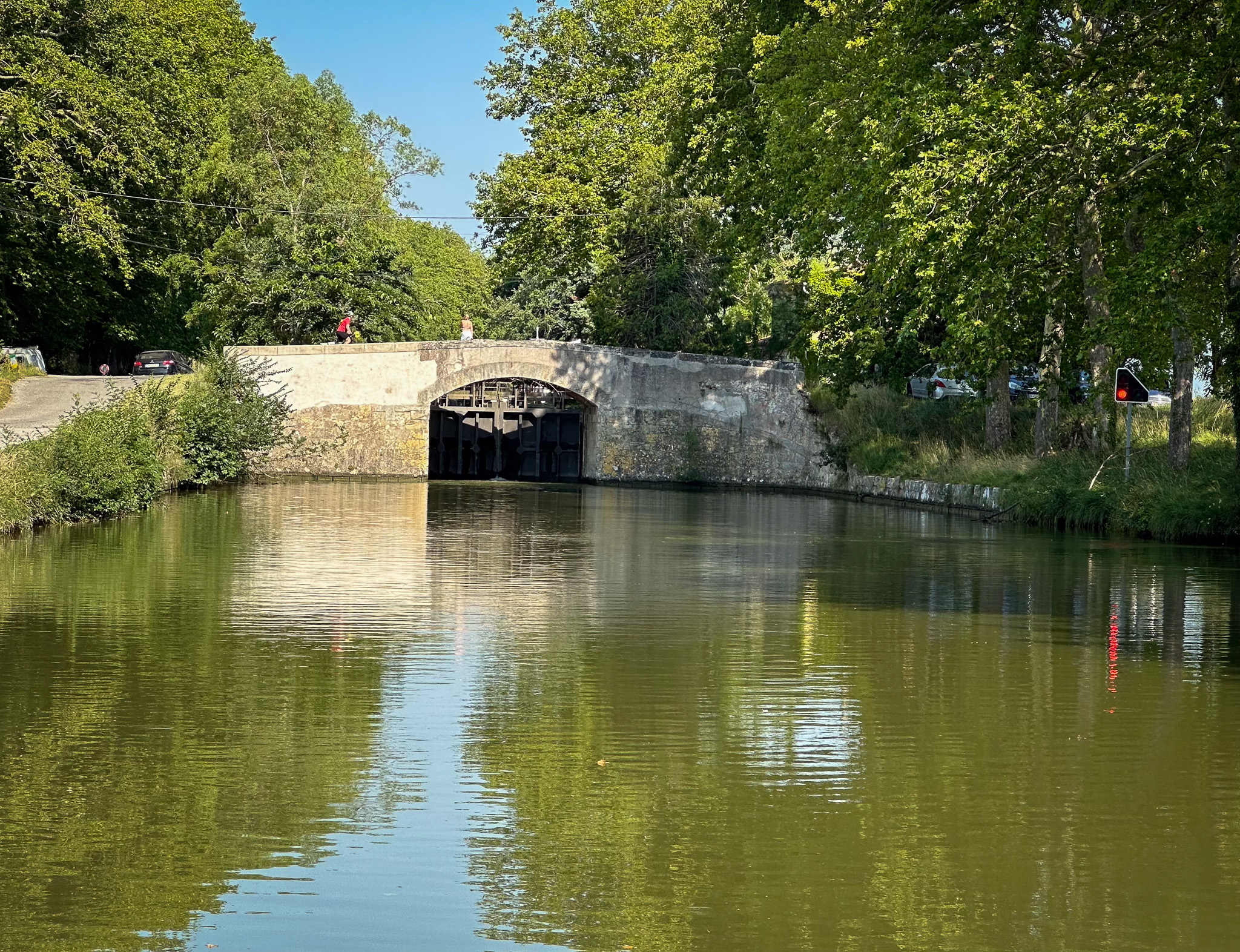
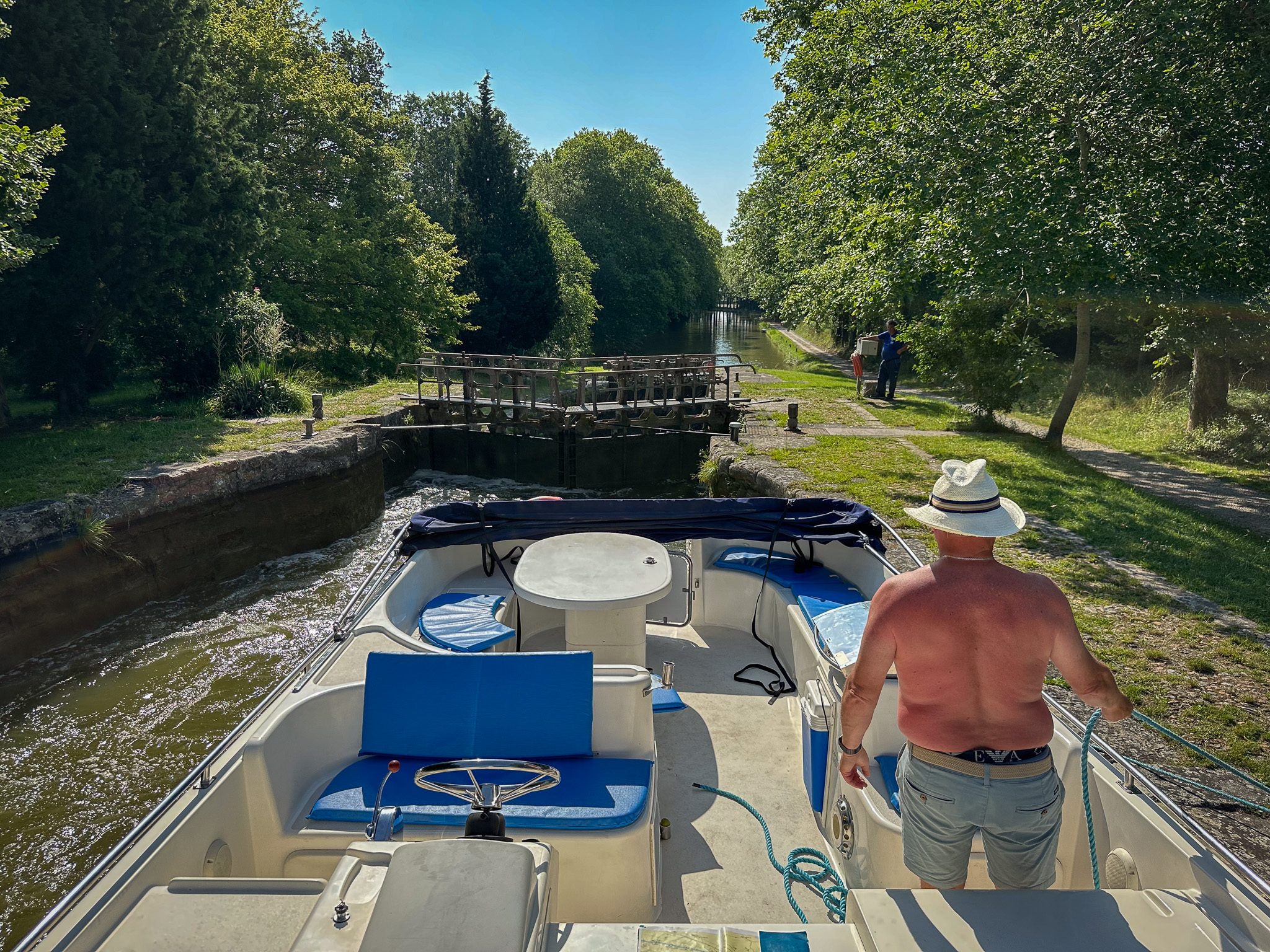
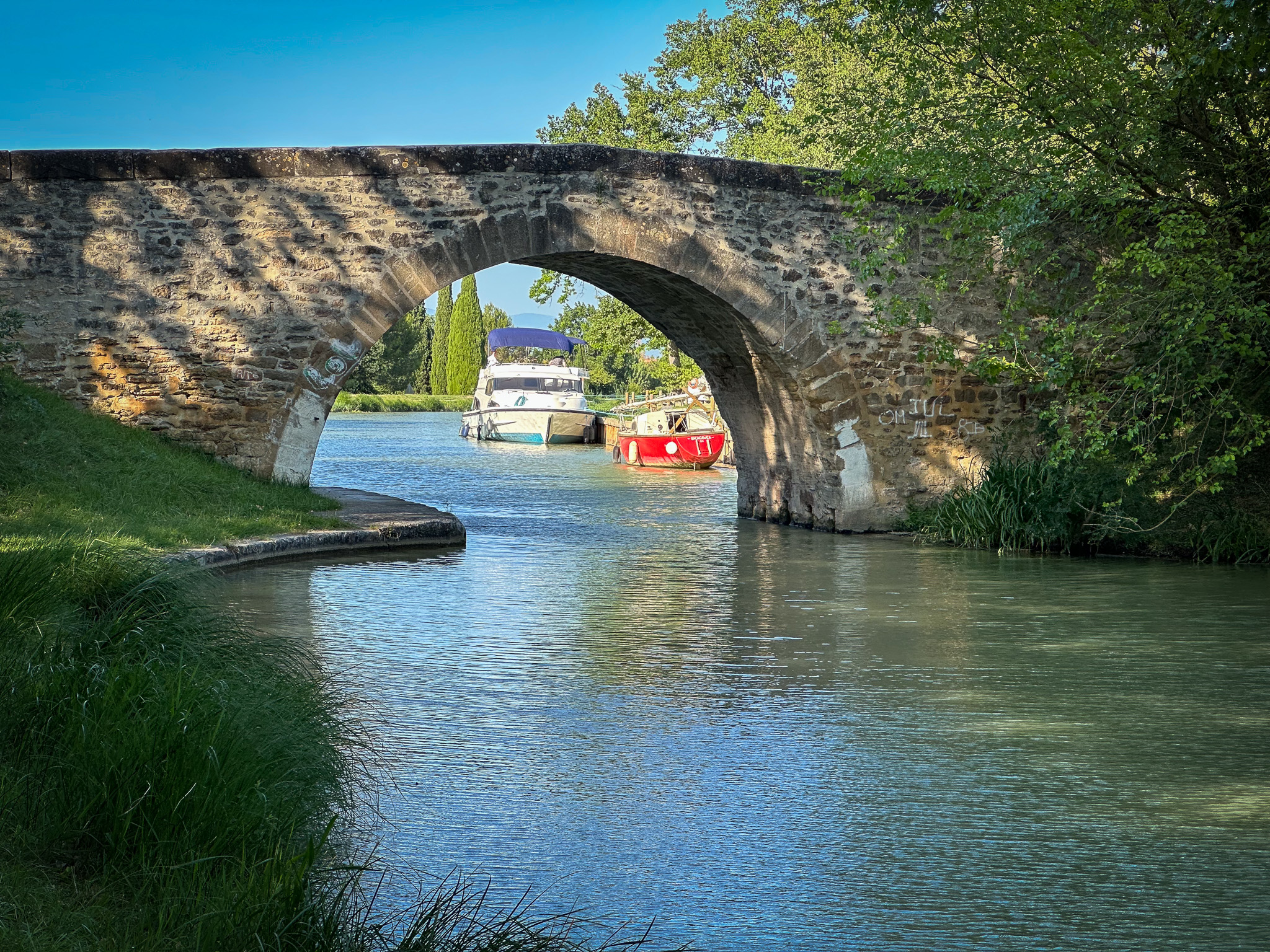
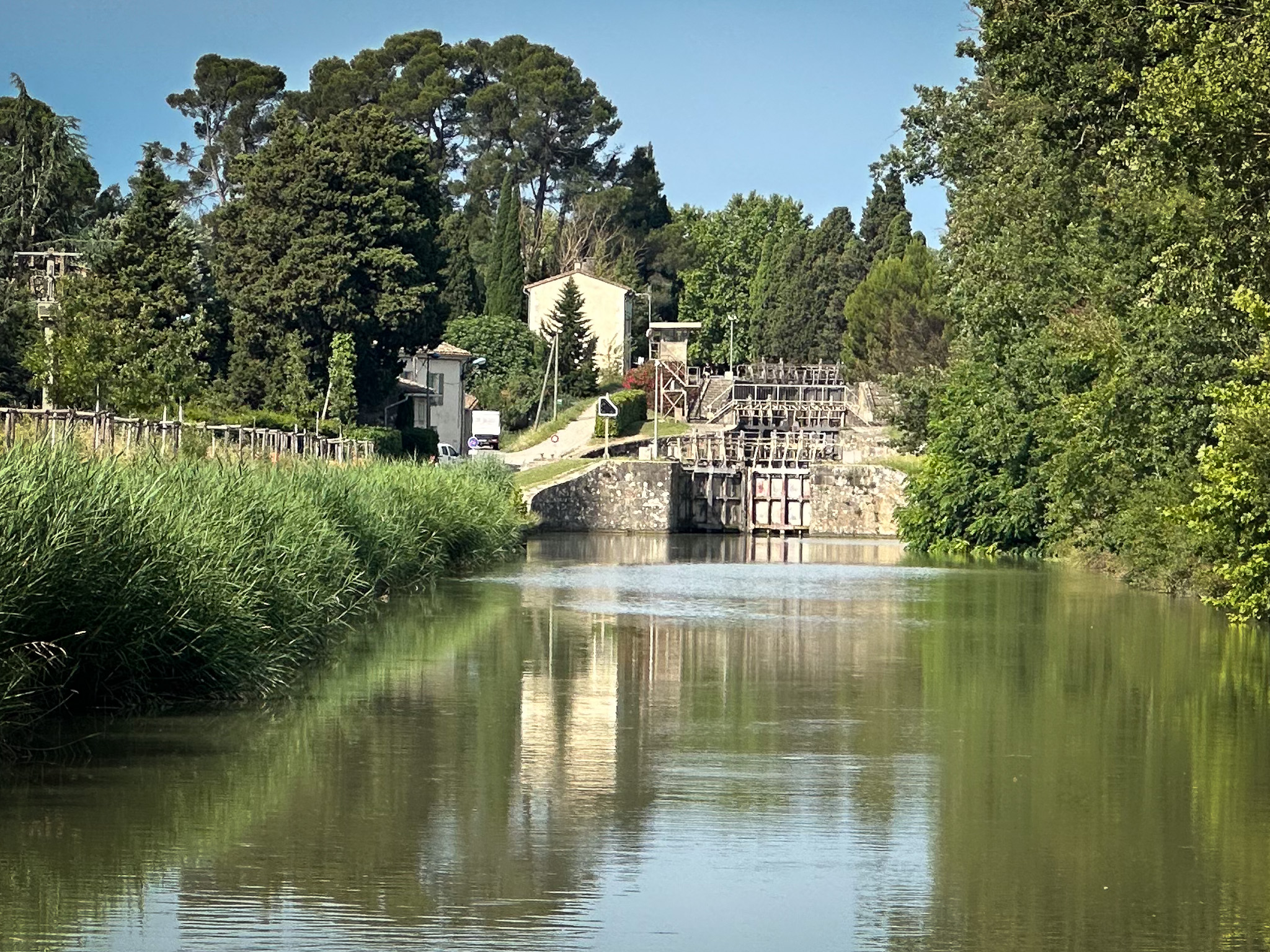
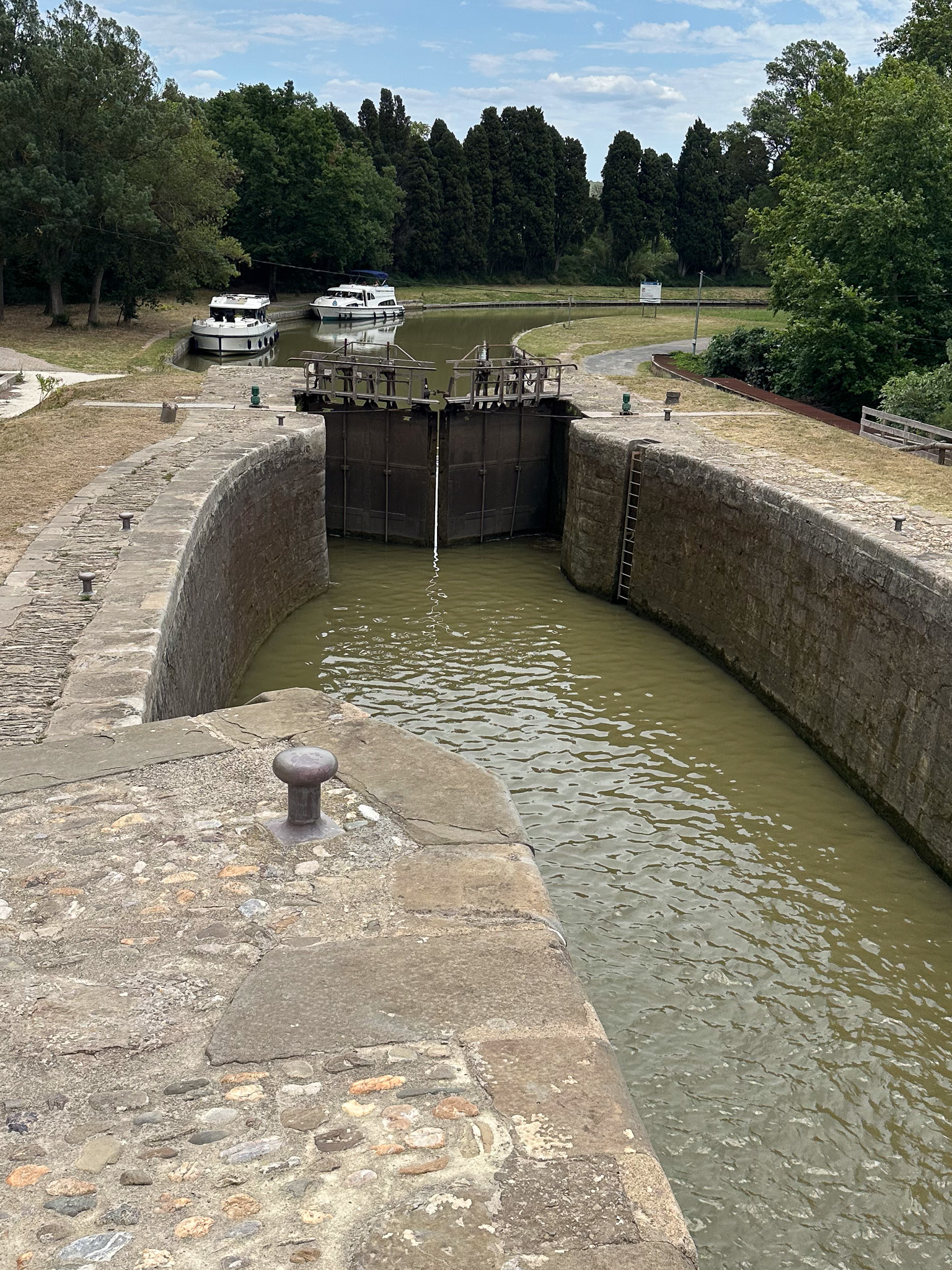
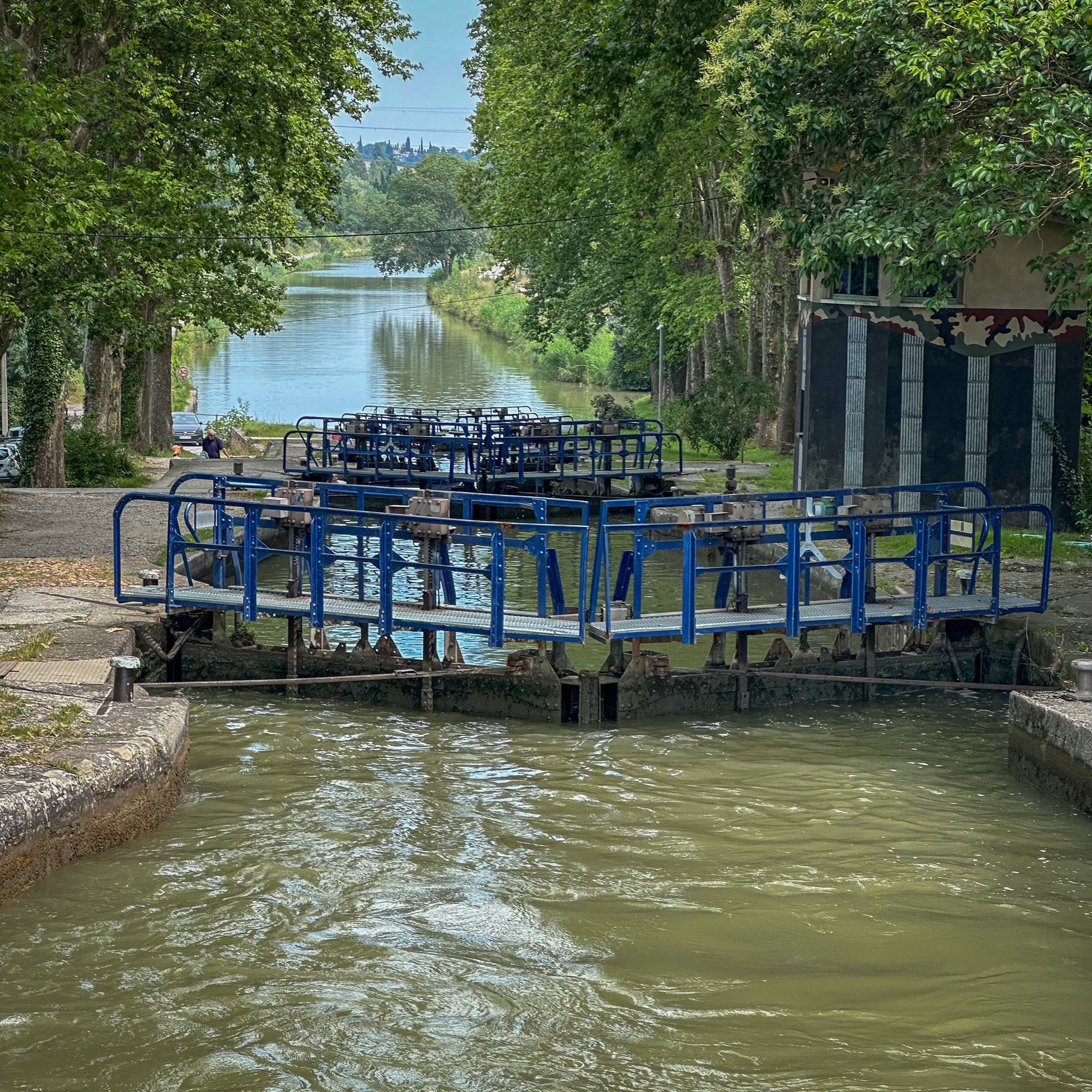
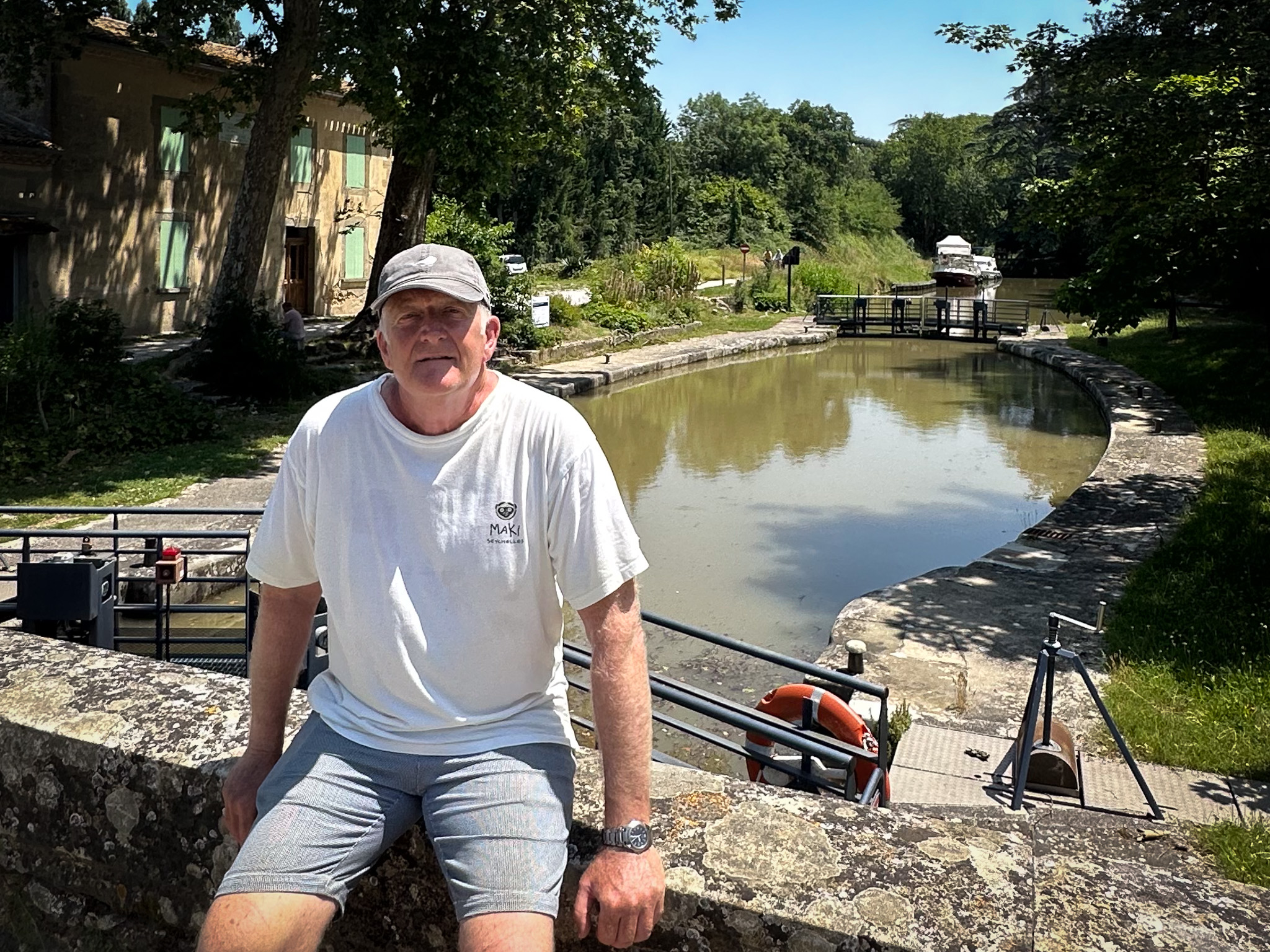
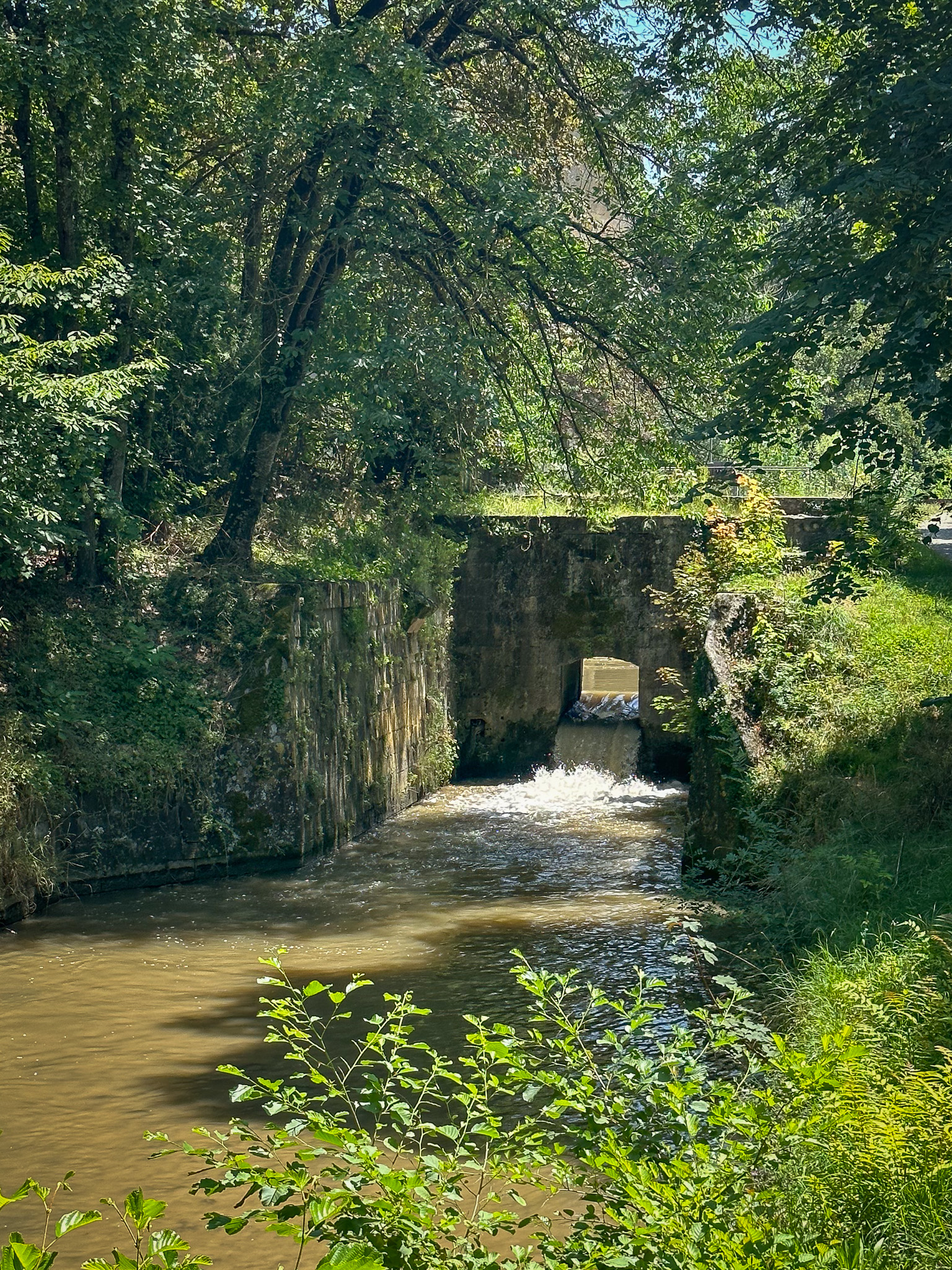
The locks were fascinating. We were a little apprehensive as we entered the first but the lock keepers were all friendly and helpful and the routine was pretty much the same at each lock.
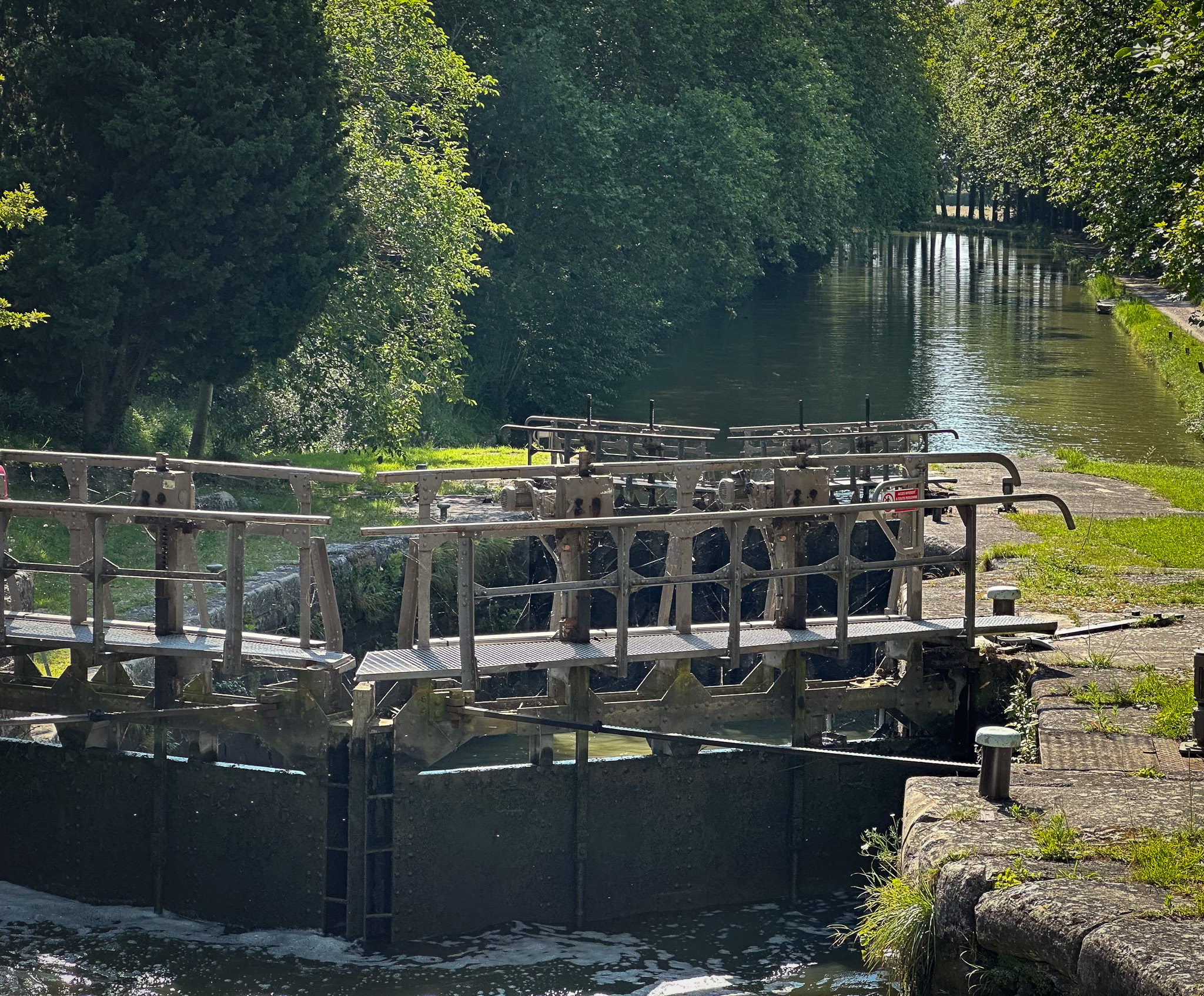
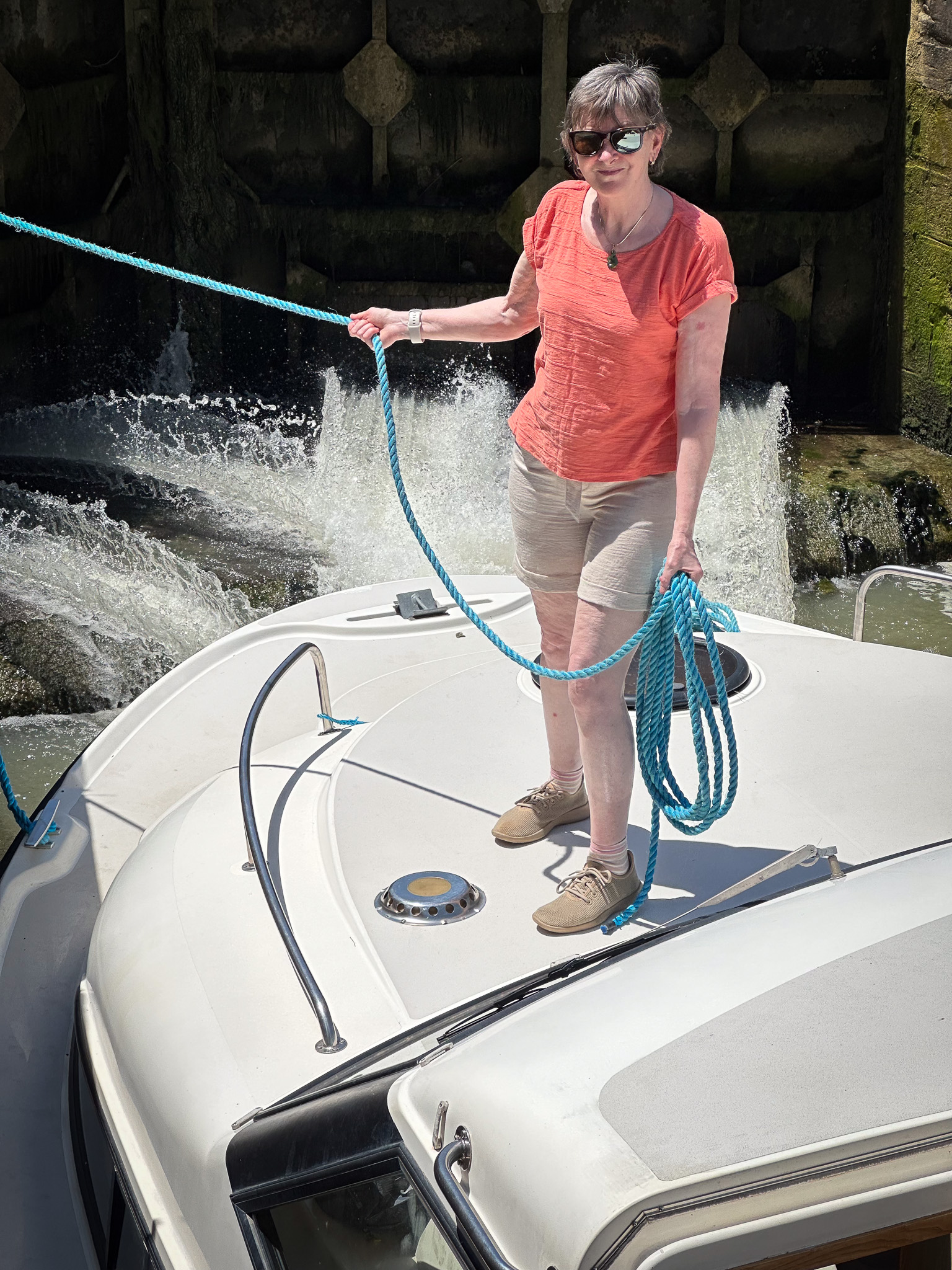
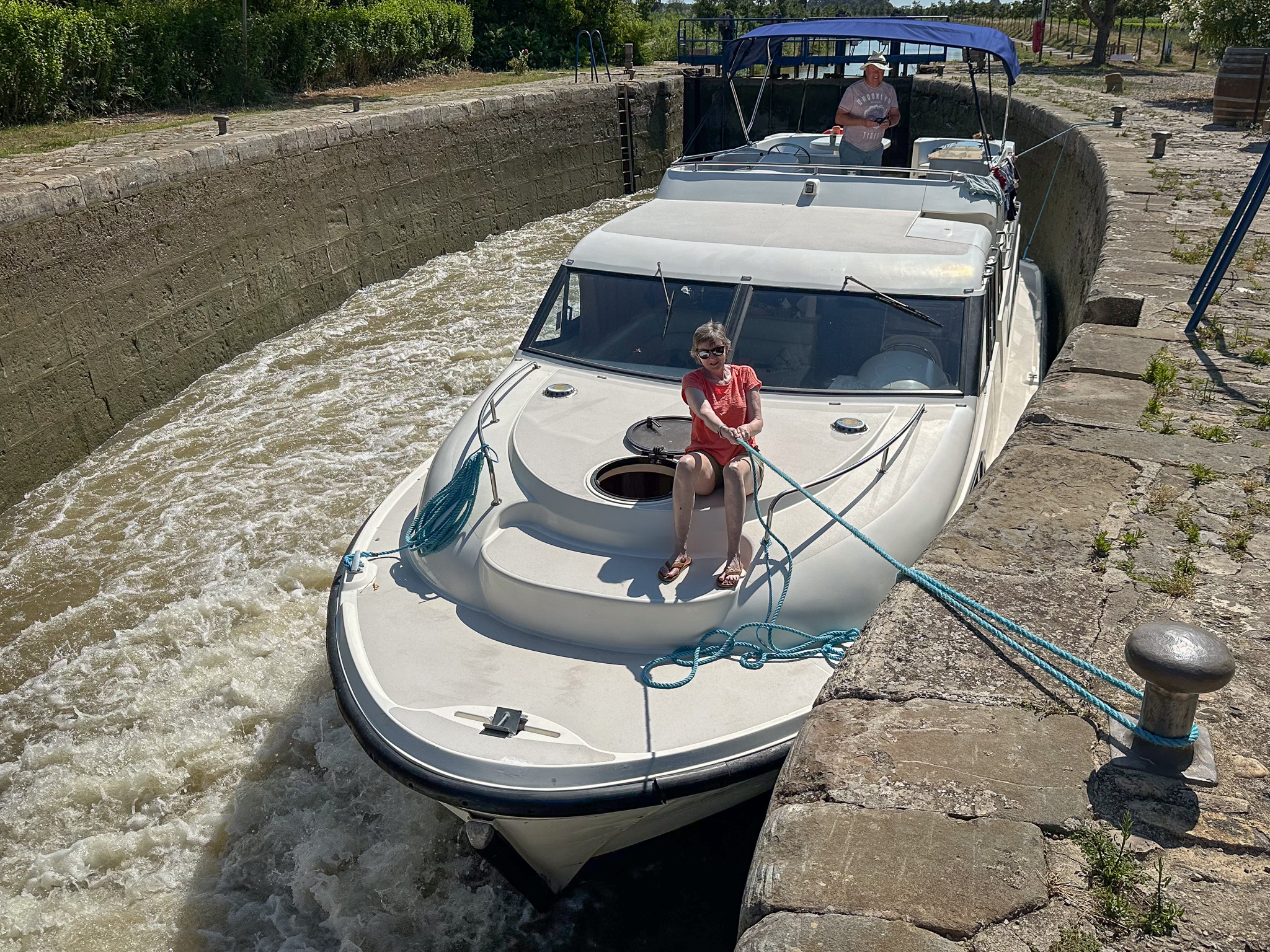
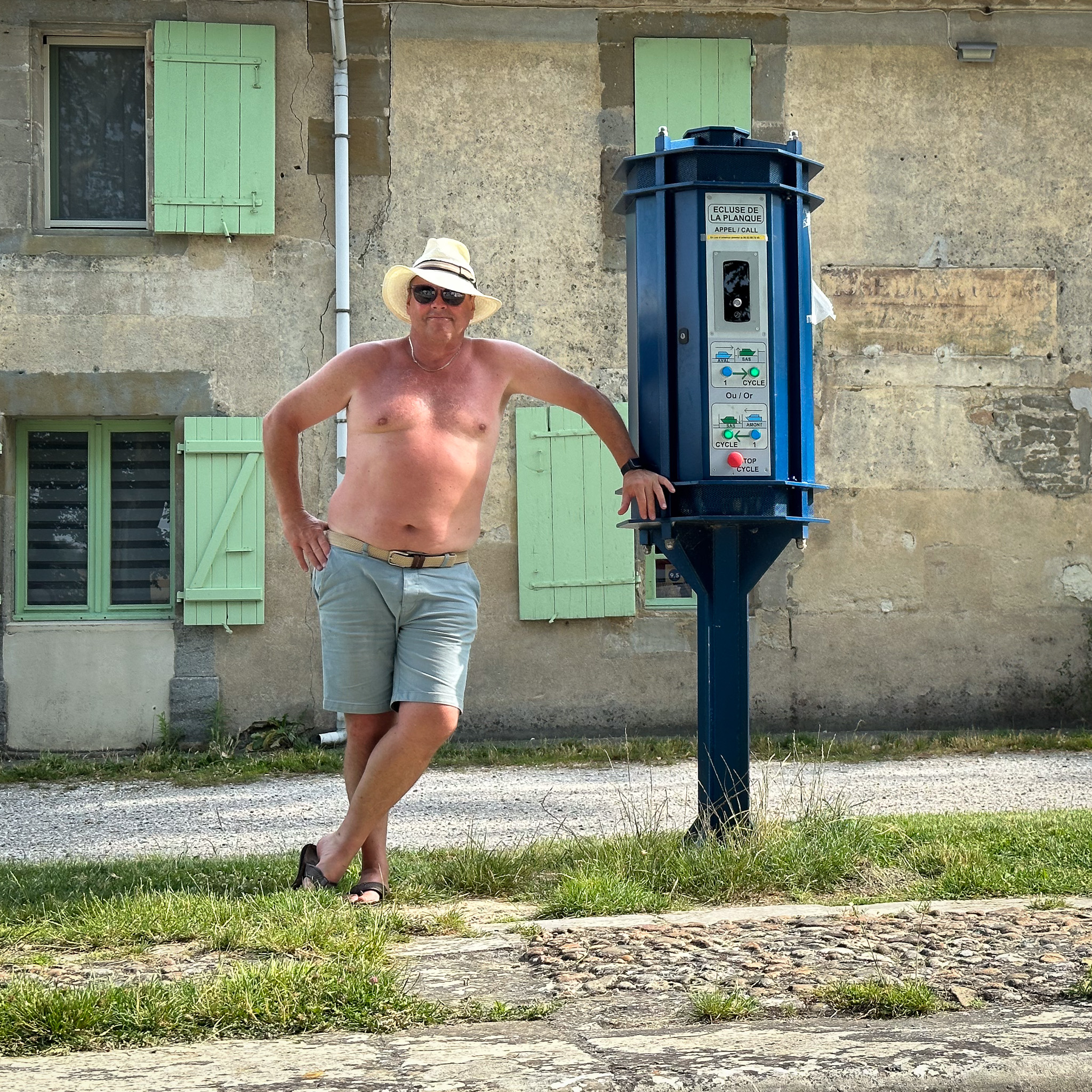
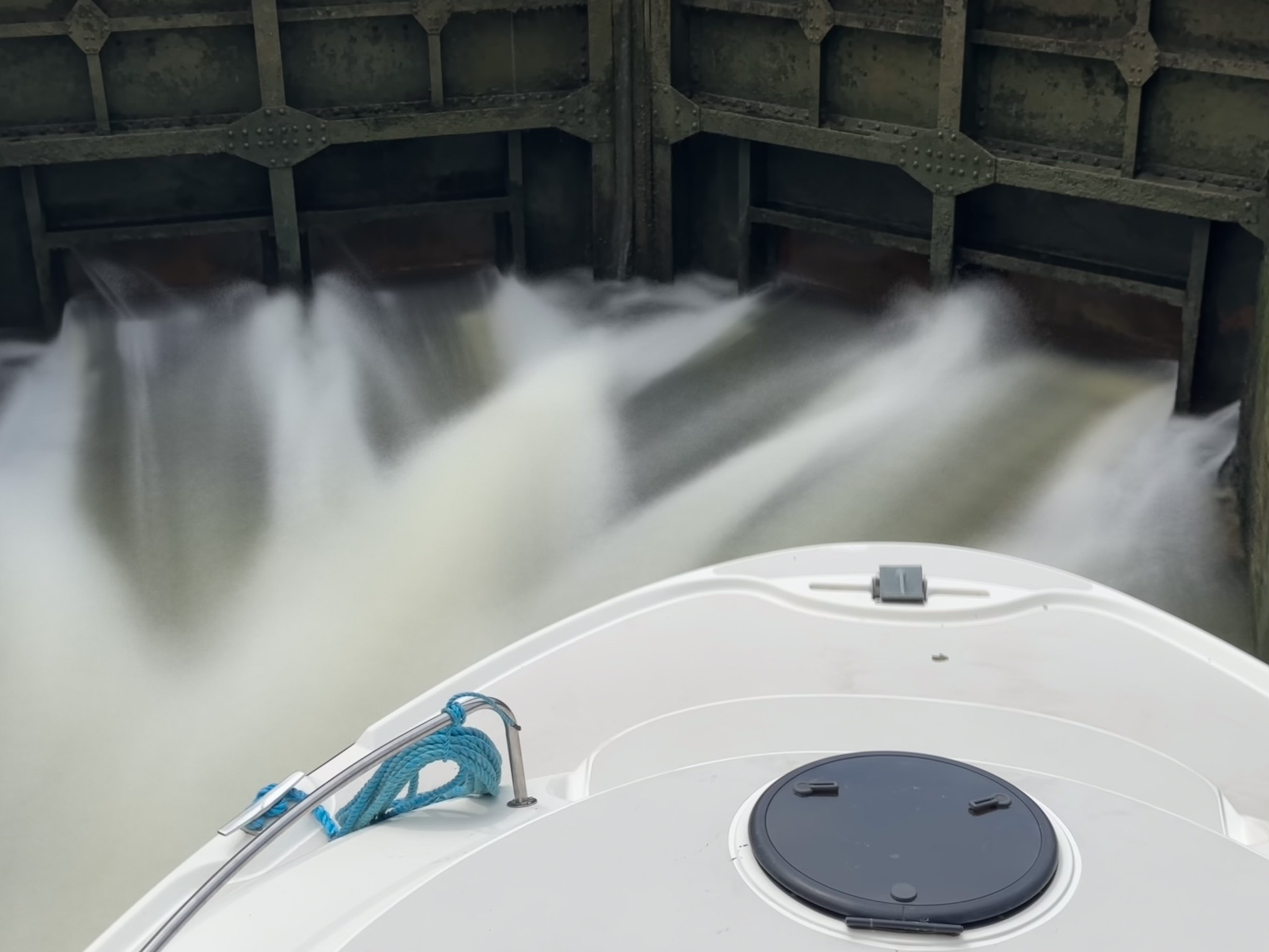
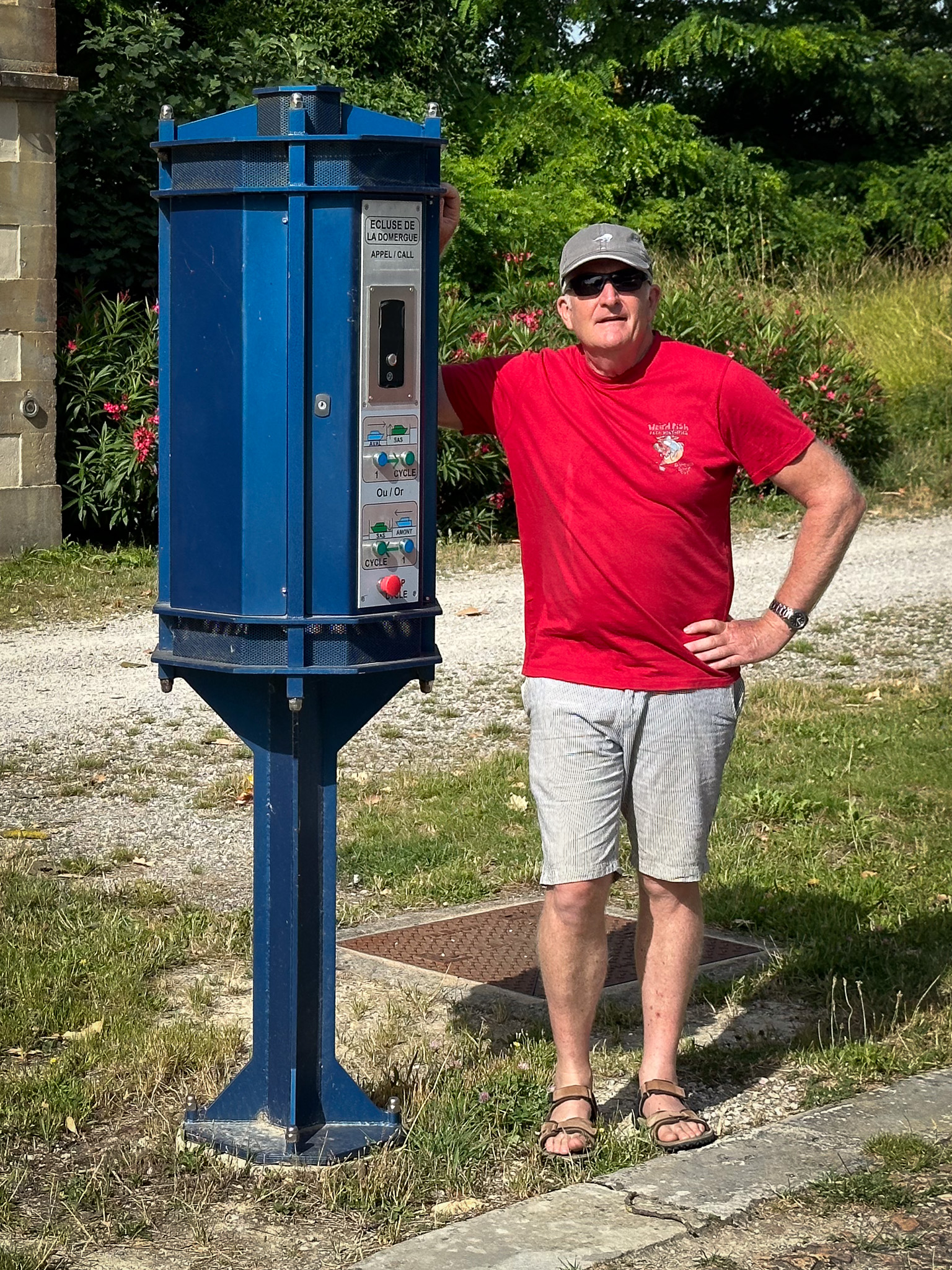
Most locks had red/green lights, visible from a short distance away, to let you know when you were allowed to enter. Each lock had a short ‘quay’ on one side of the canal or other at which we would await the green signal and from which one person would get off the boat and walk up to the lock ready to handle the ropes. Occasionally this person had to go looking for the lock keeper to let them know we were waiting. The boat was then manoeuvred into the lock itself and two people would throw lines from the bow and stern up to the shore person to loop around the mooring posts. The lock keeper then closed the gate and filled the lock. While this was happening the rope handlers had to keep the ropes tensioned to hold the boat in very turbulent water as the lock was rapidly filled and the boat rose. Within a few minutes the waters were still again, the lock keeper would open the upper gates, the shore person would step aboard and we would be on our way again. In the case of double (or triple etc) locks, the lines could be carried along the tow path – making for a much more efficient process – but not before we tried the messier one first!
These timelapse videos give you a good idea of how the process worked for us.
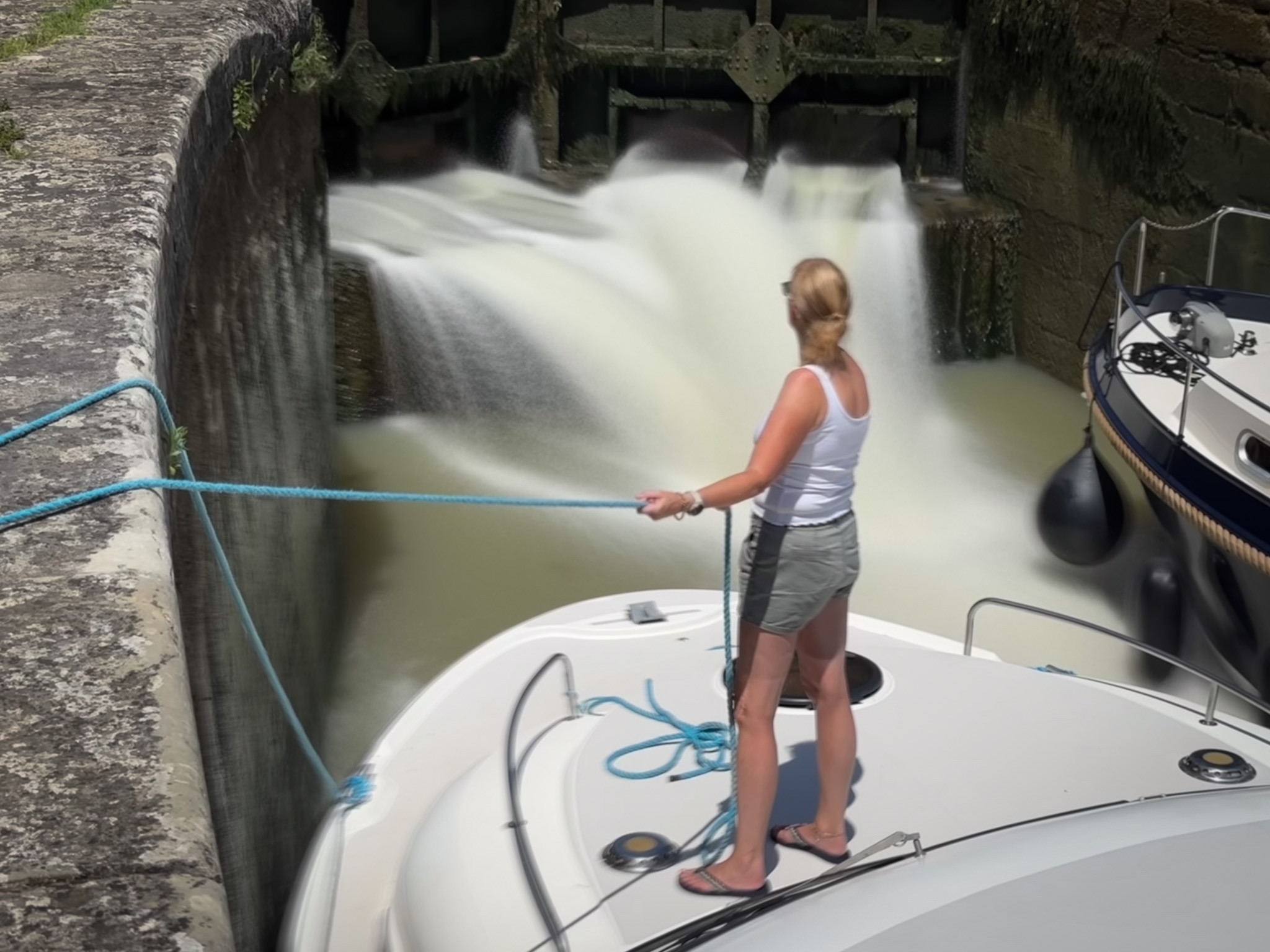
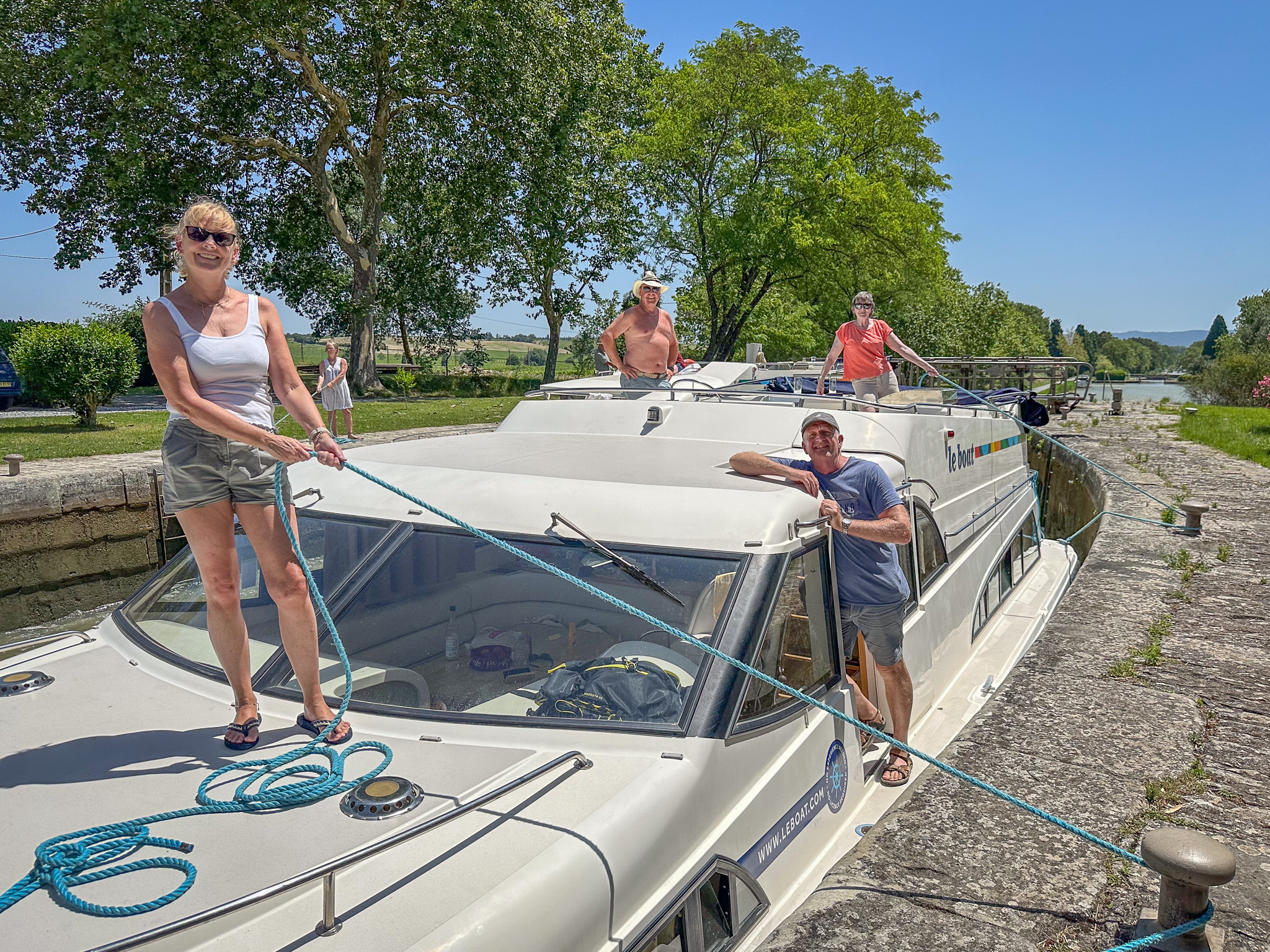
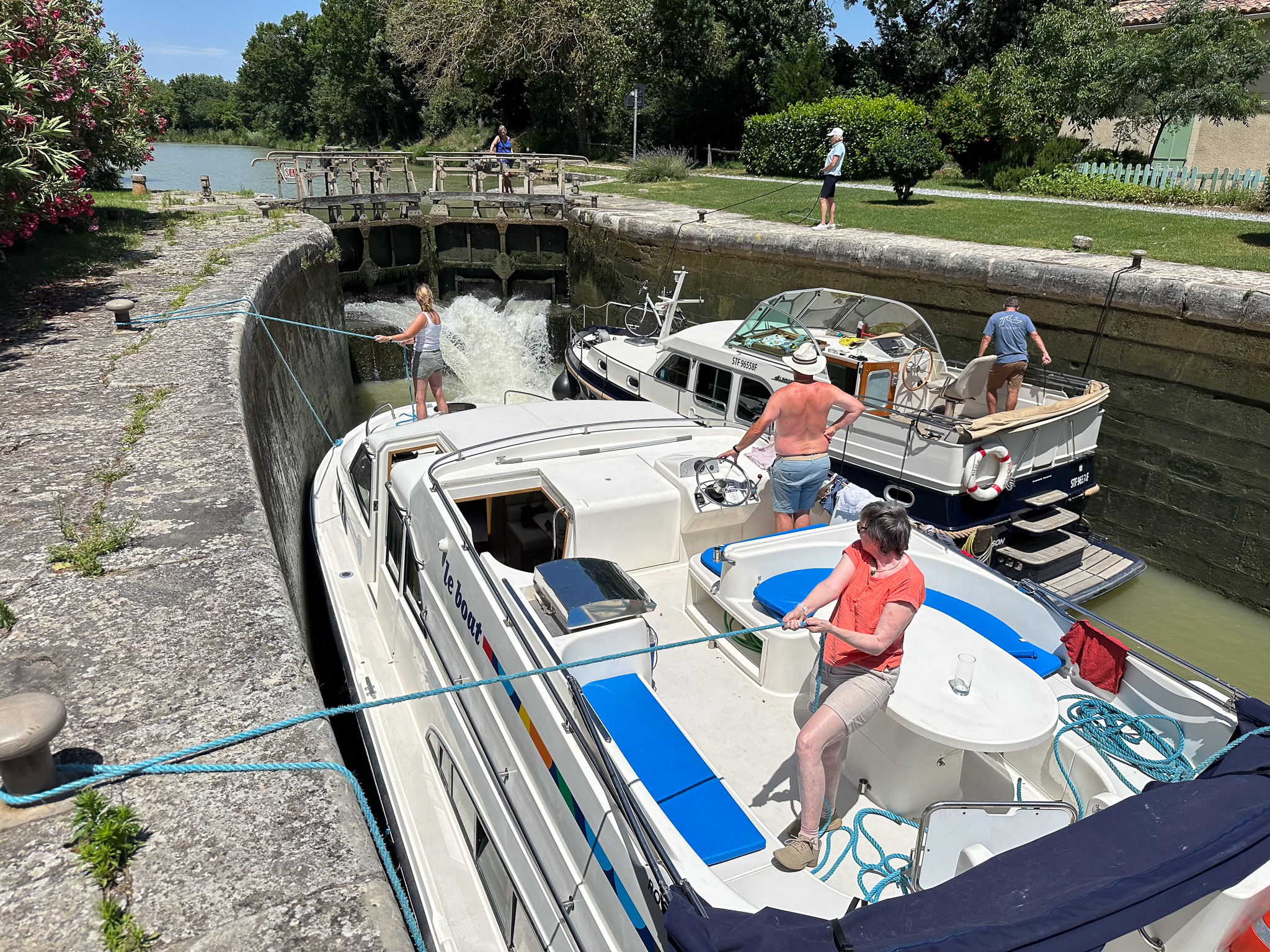
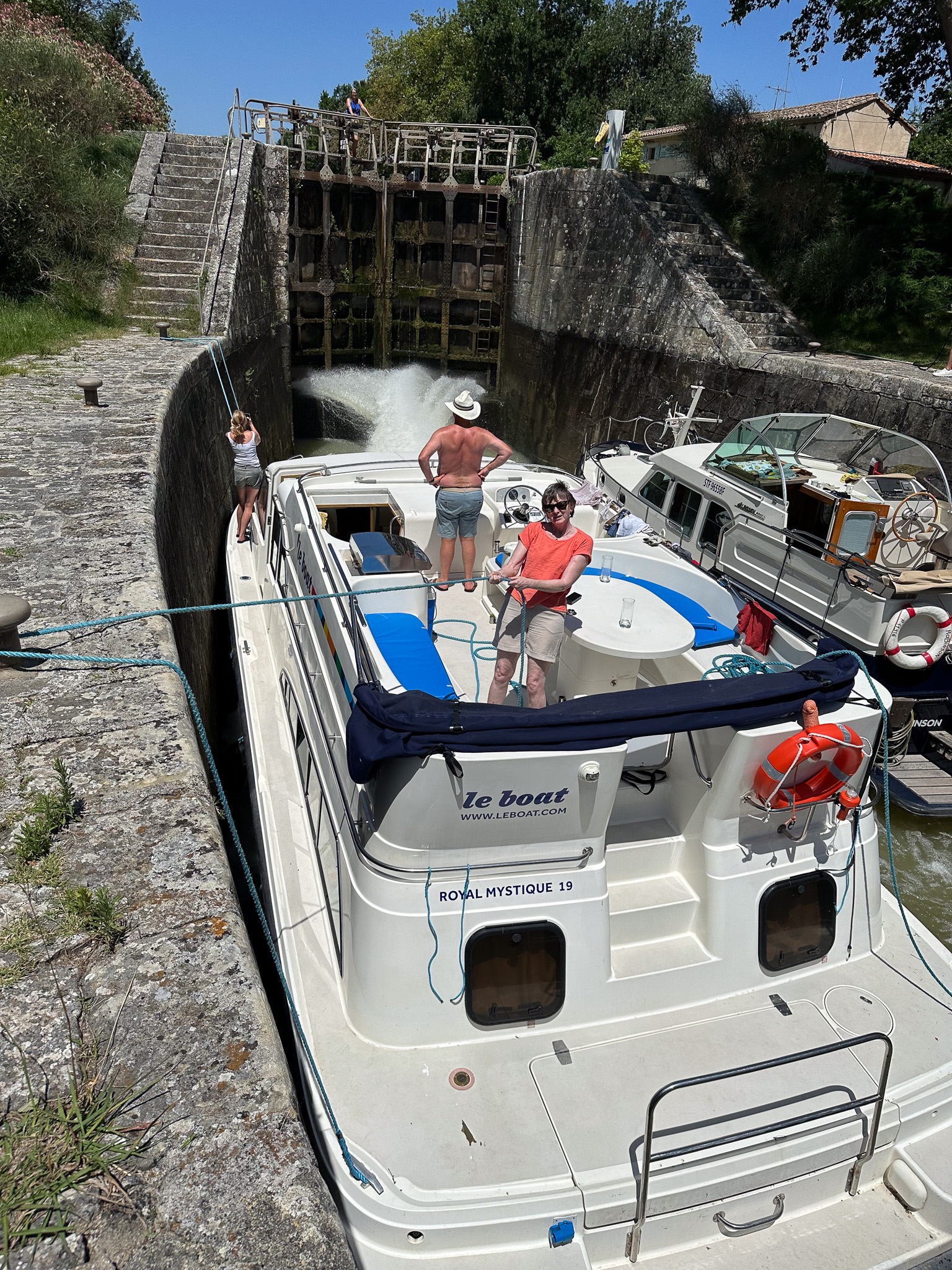


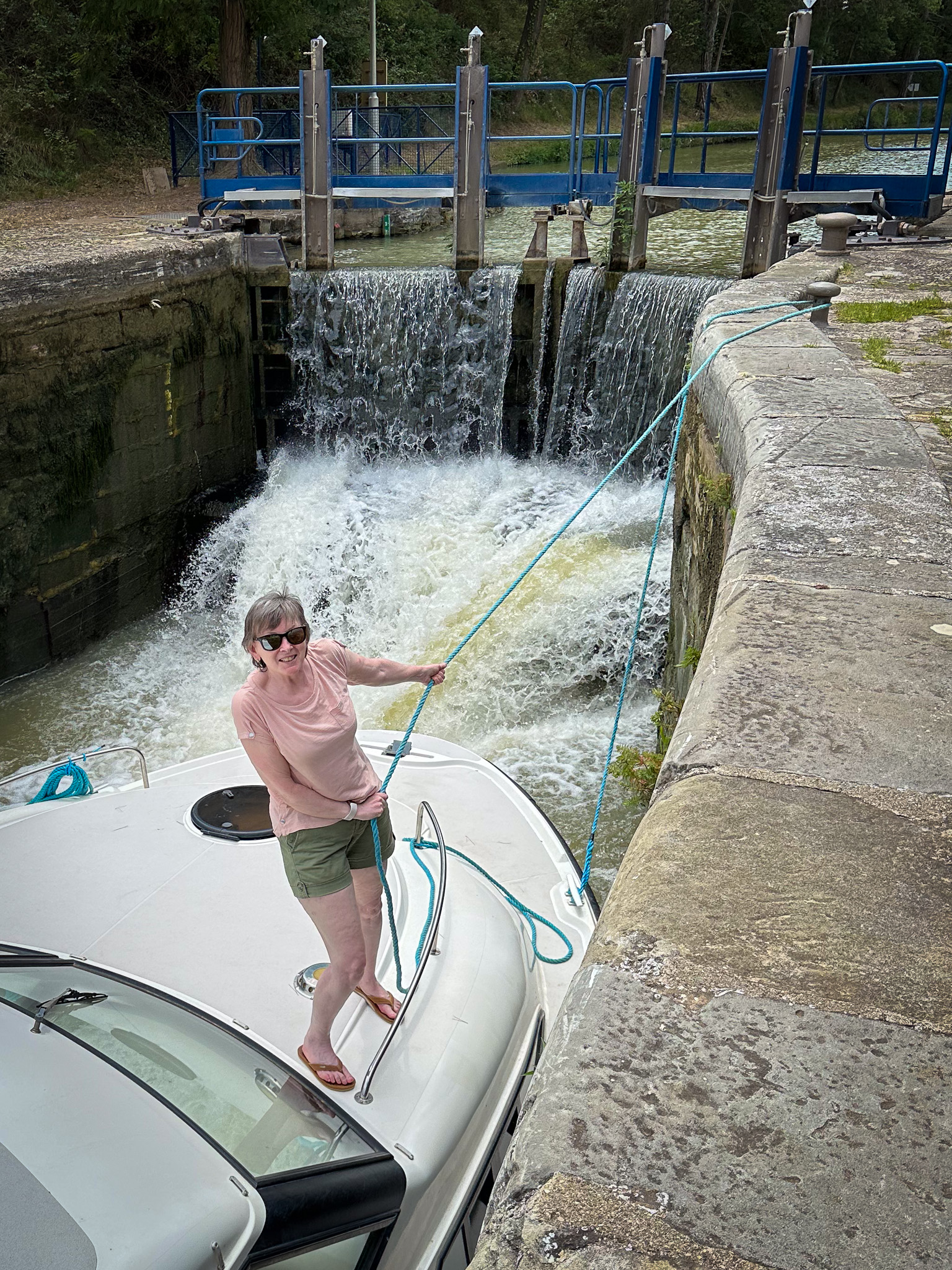

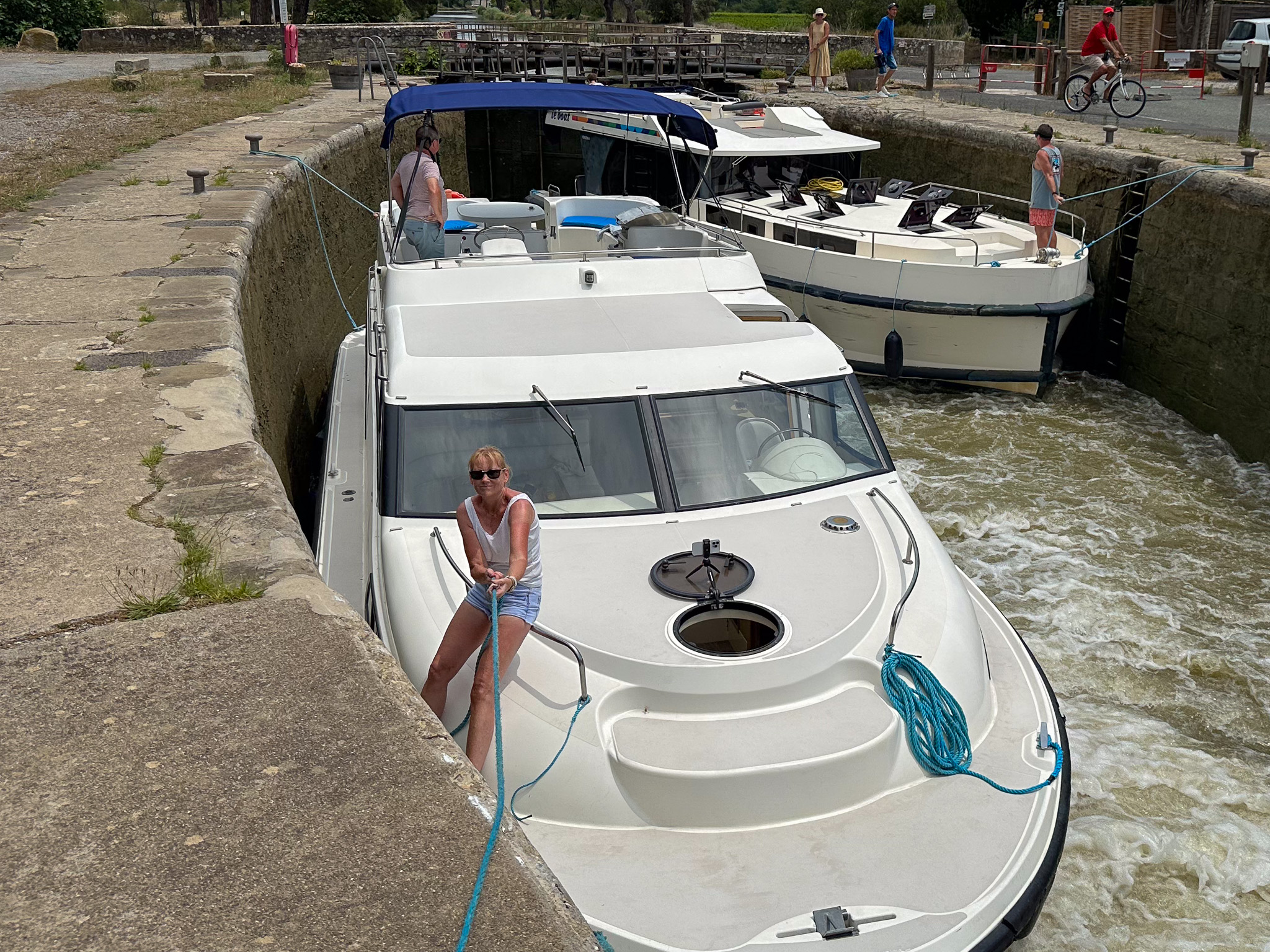
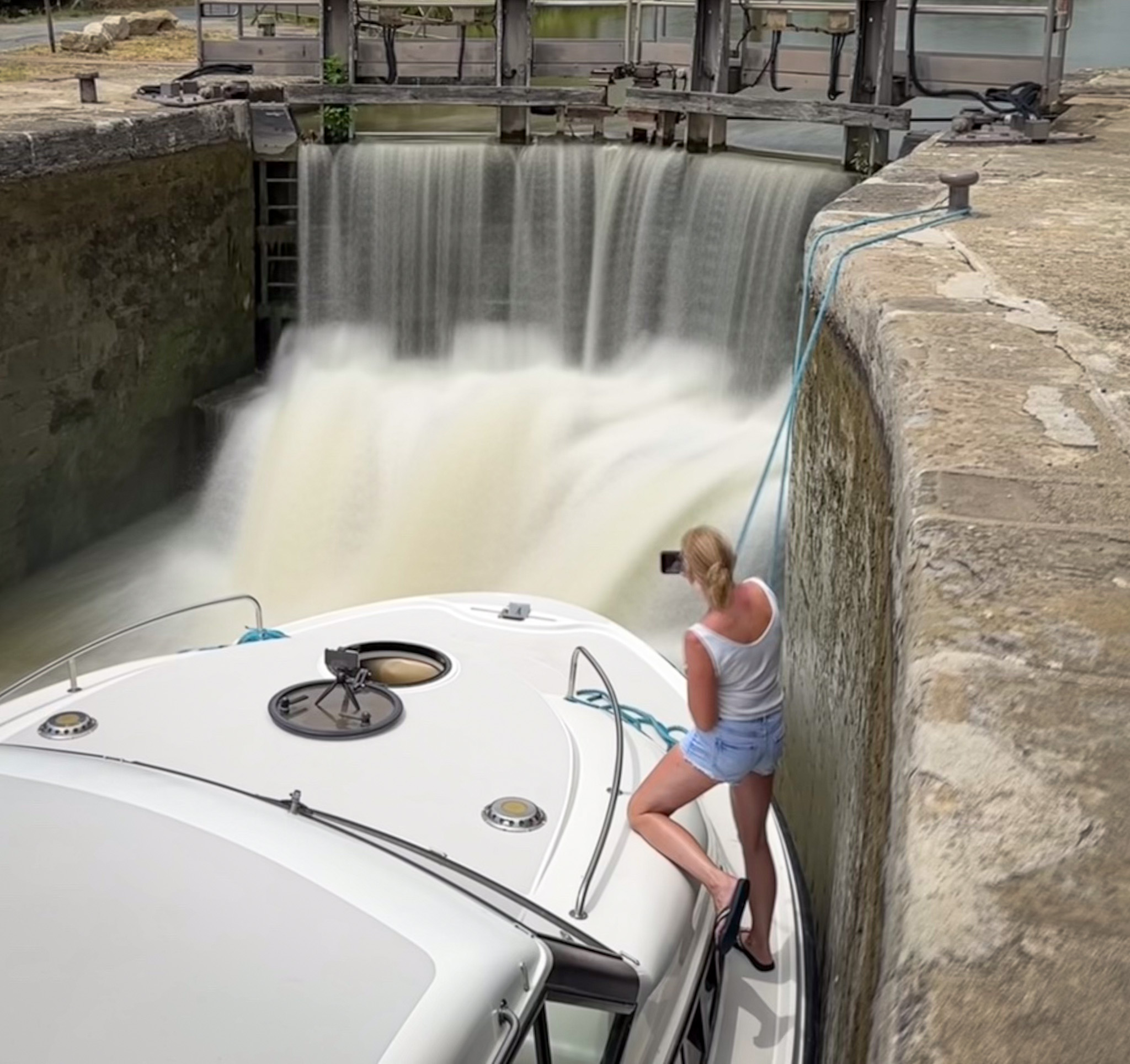
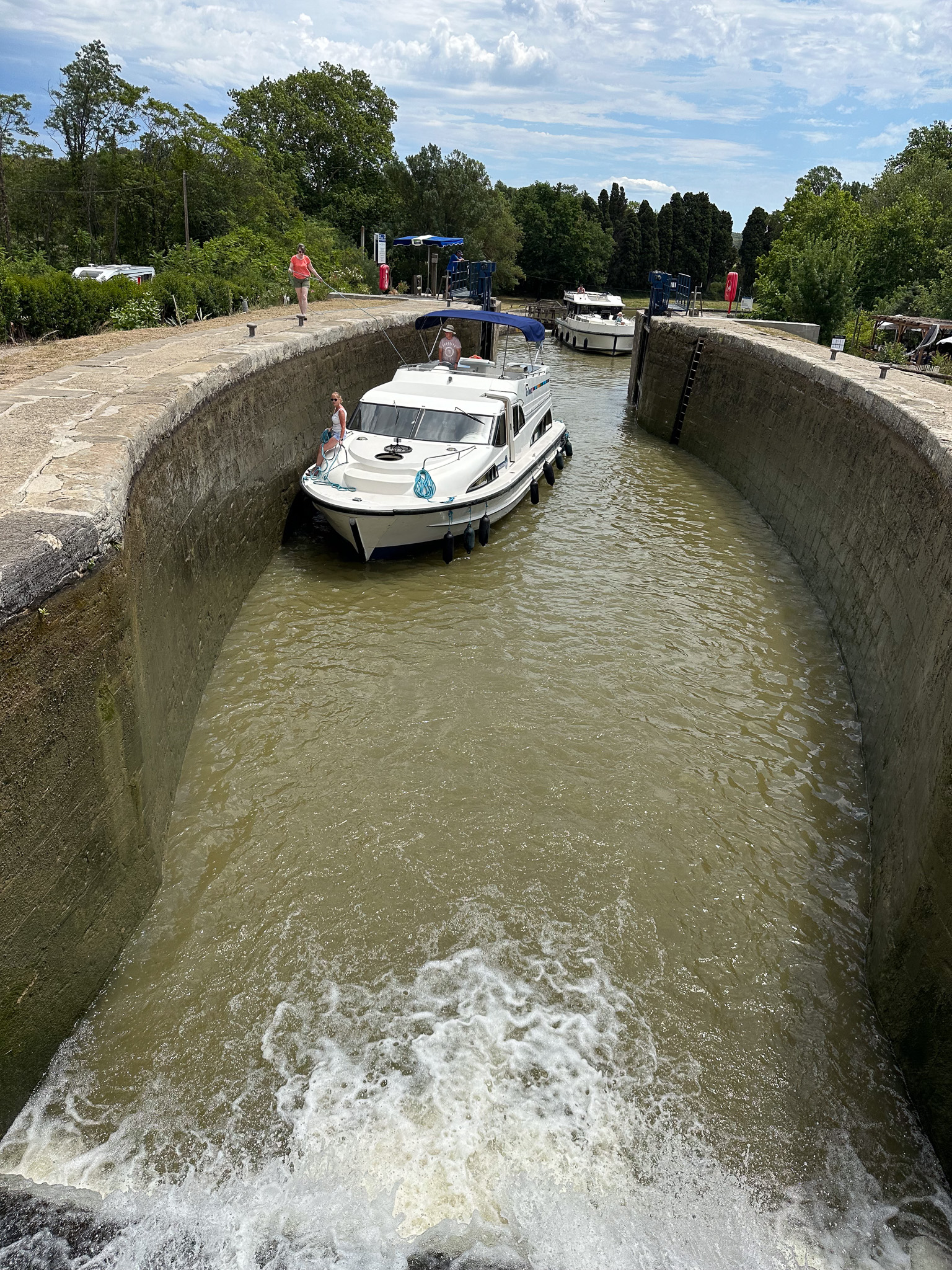
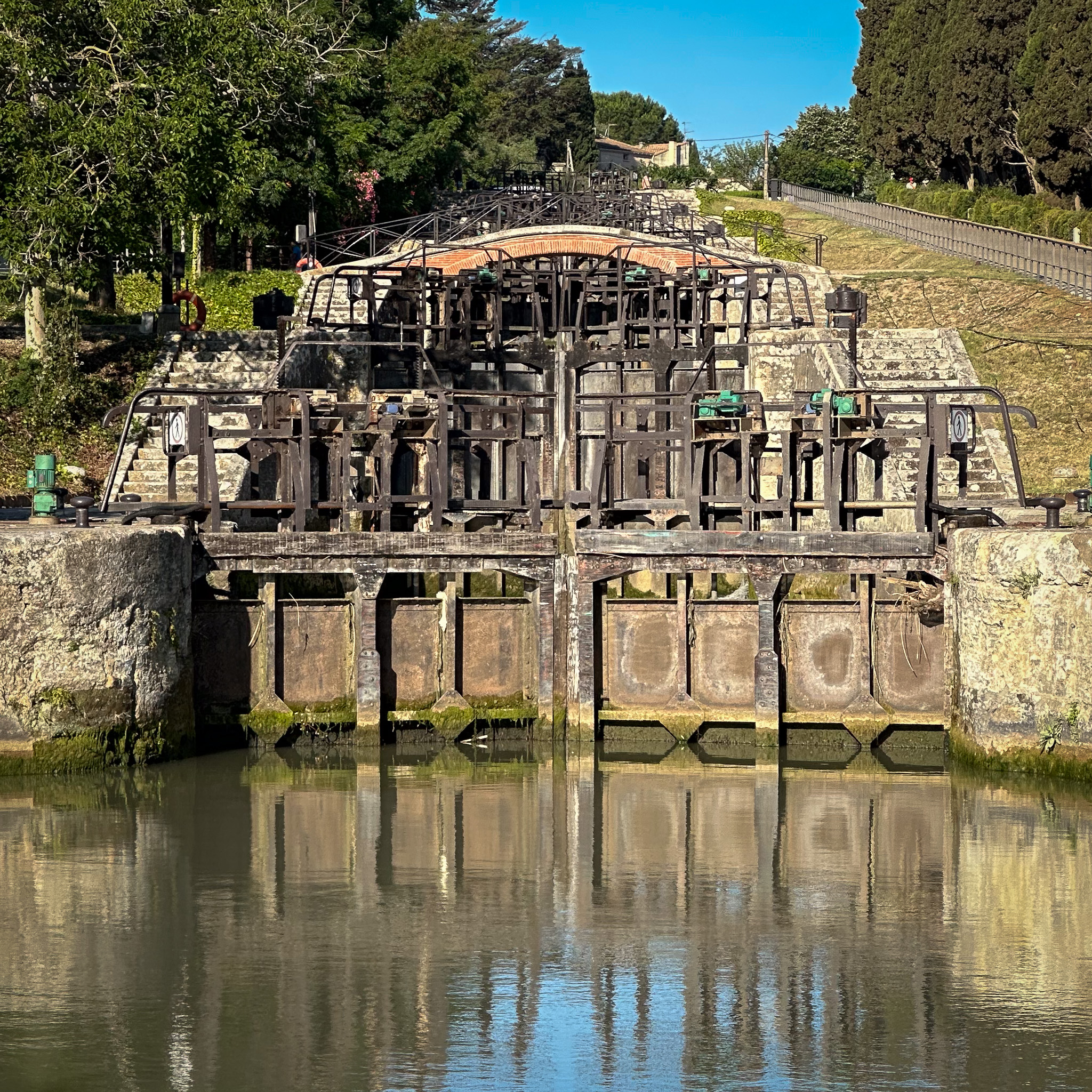
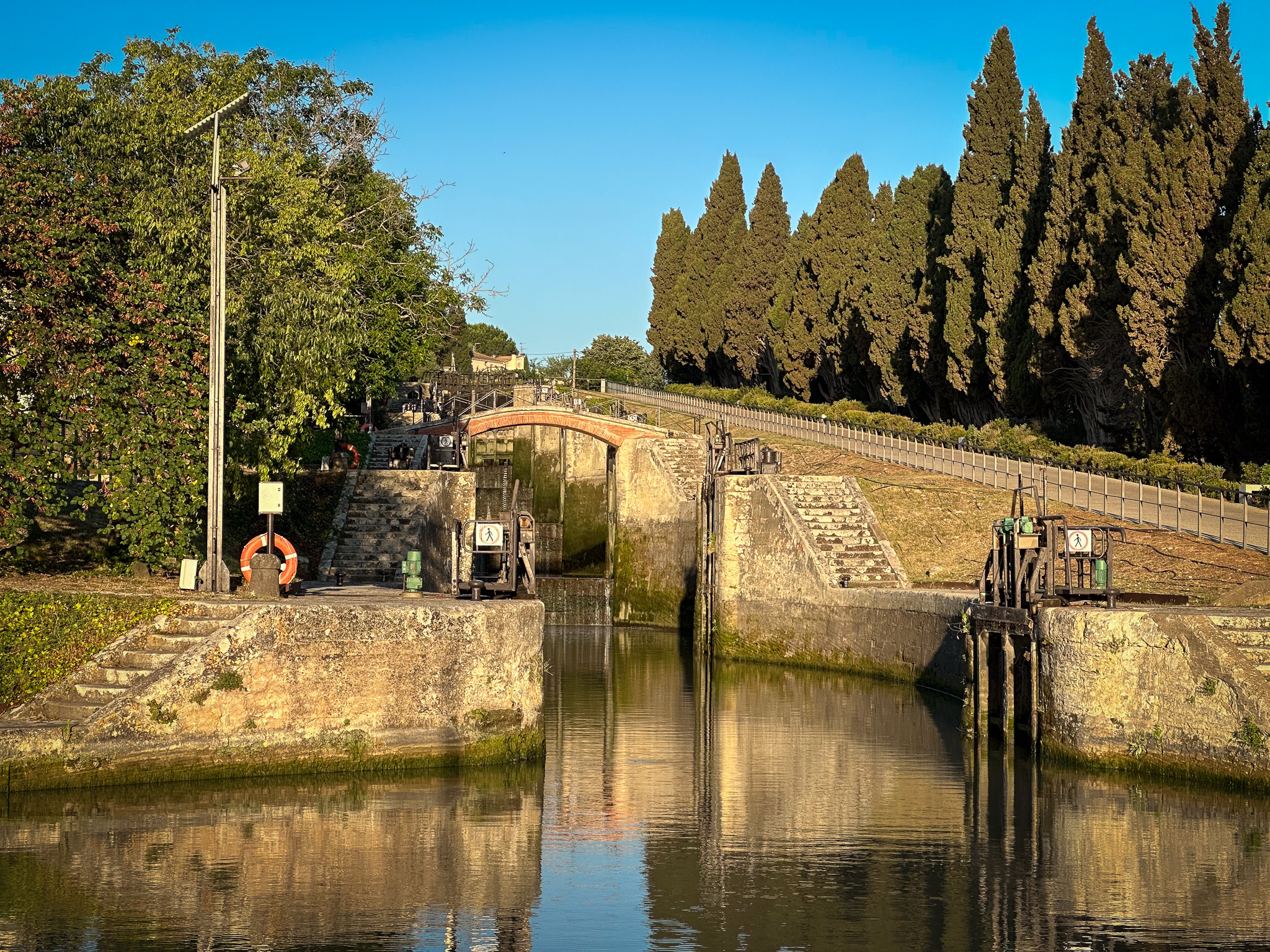
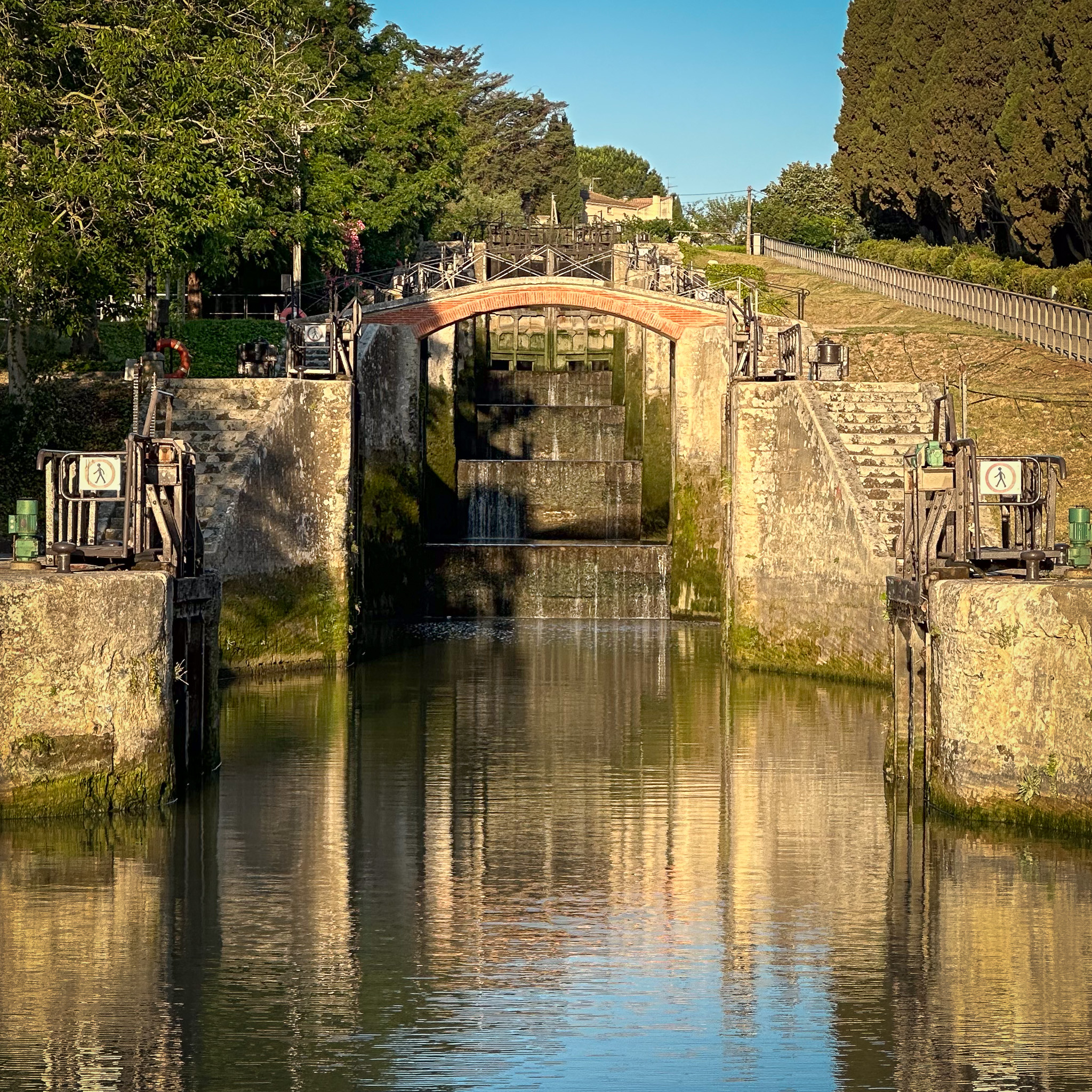
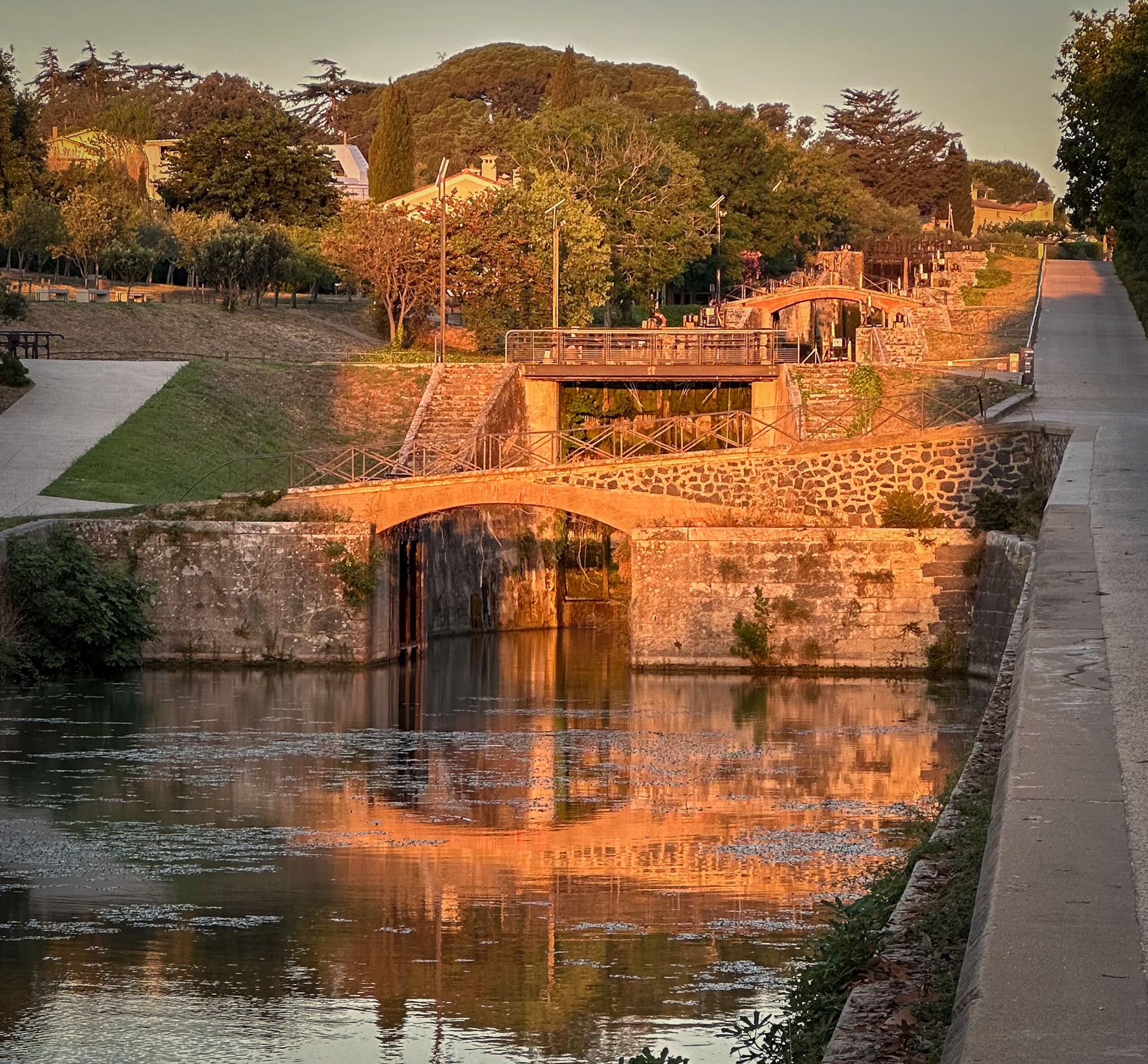
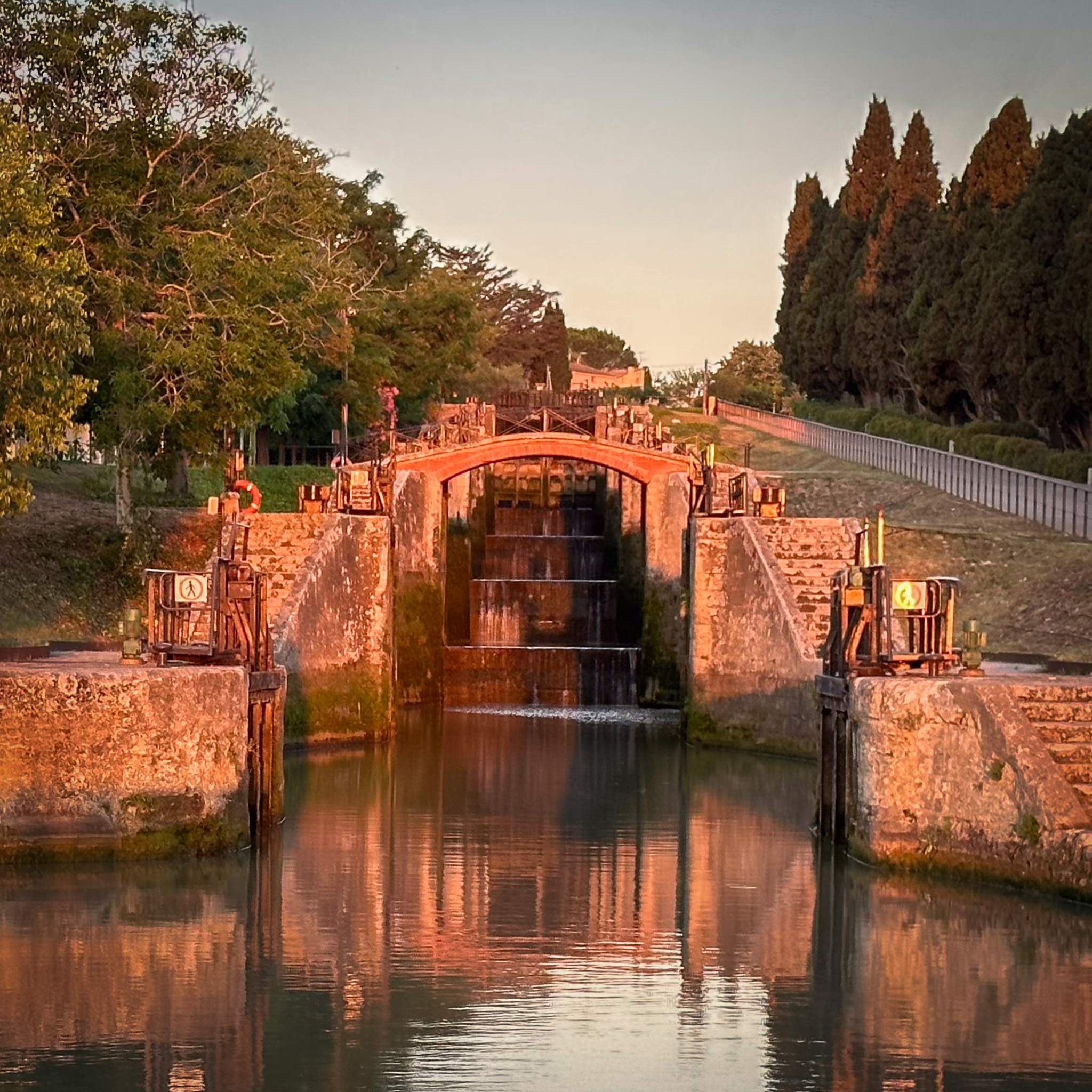
By the time we got to the seven gate Fonserannes Lock Staircase at Beziers we were old hands. The staircase is 312 metres long and lifts boats 25 metres through 6 ovoid lock chambers and 7 gates. A fascinating experience shared with crowds of onlookers who were there just to ensure we got it right at each stage and to keep us under pressure. No problem.

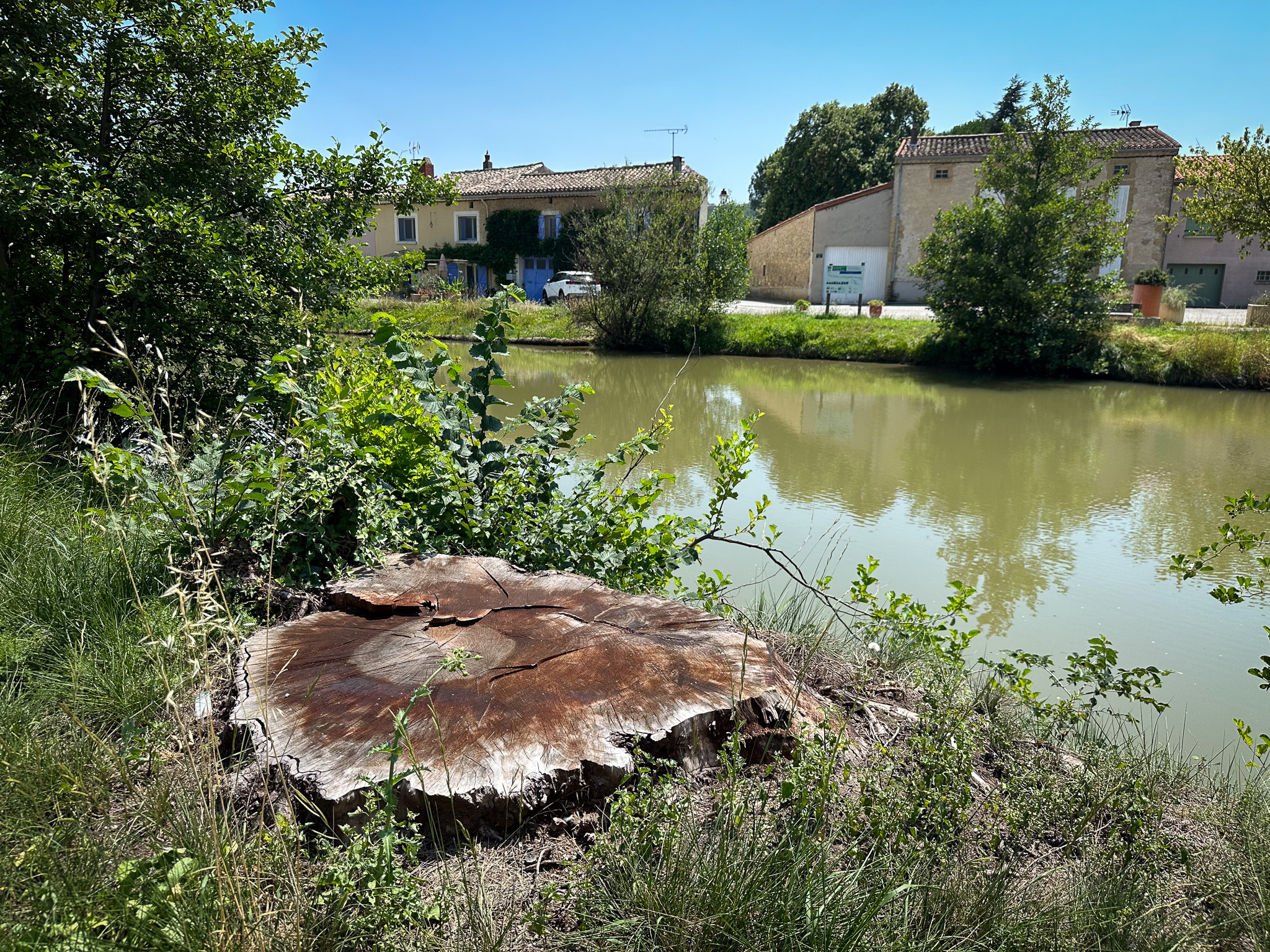
The demise of the trees
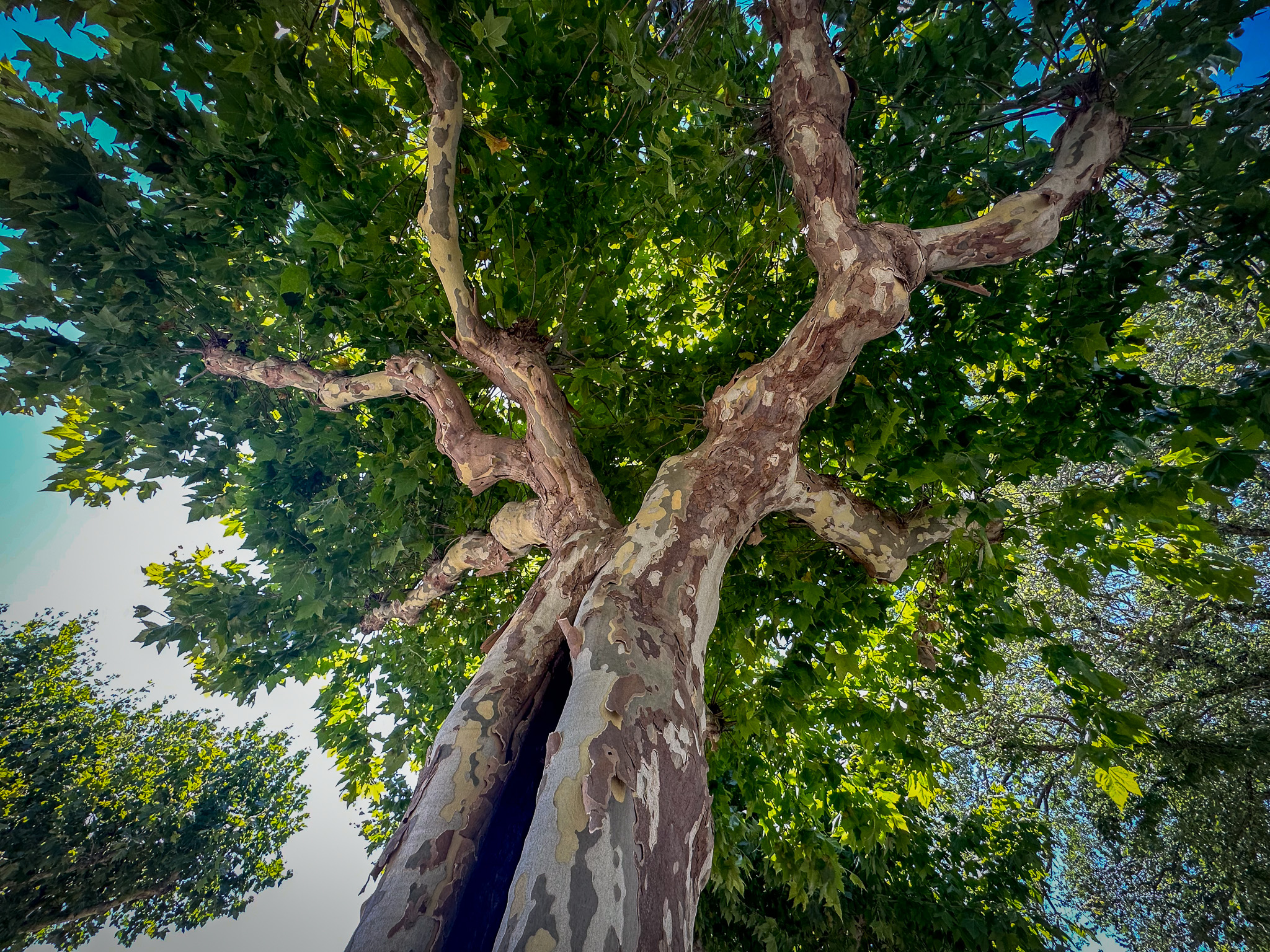
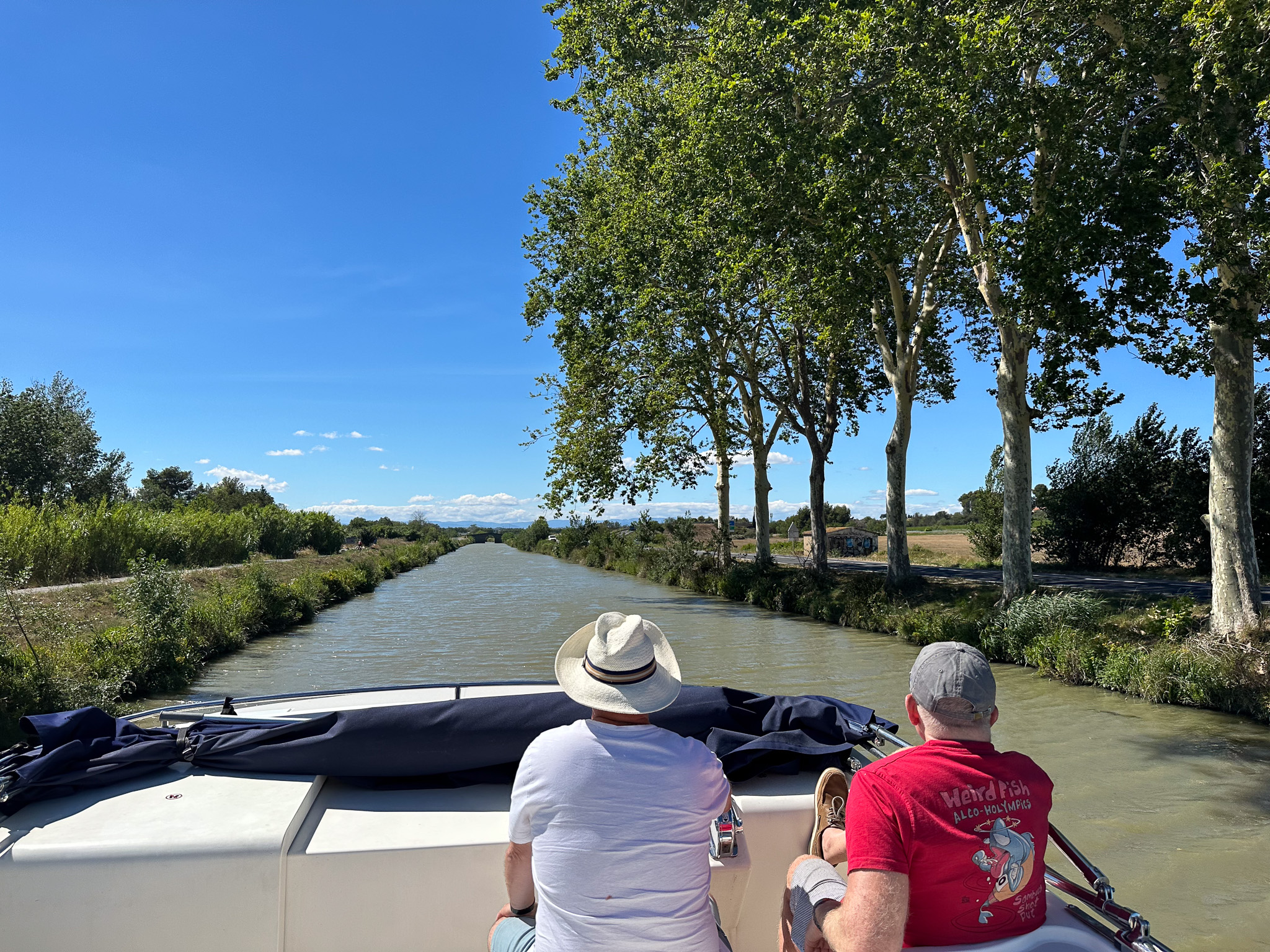
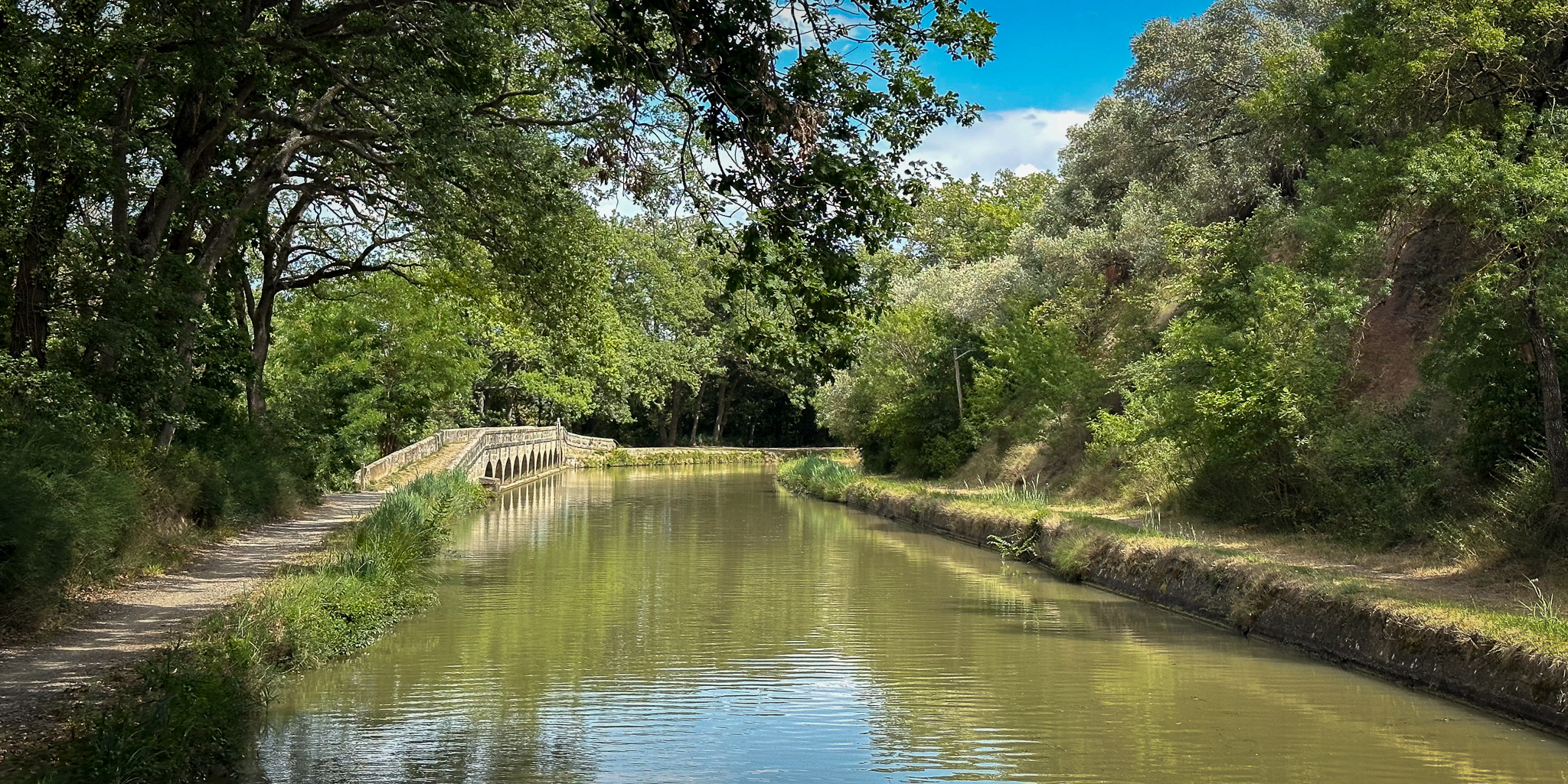
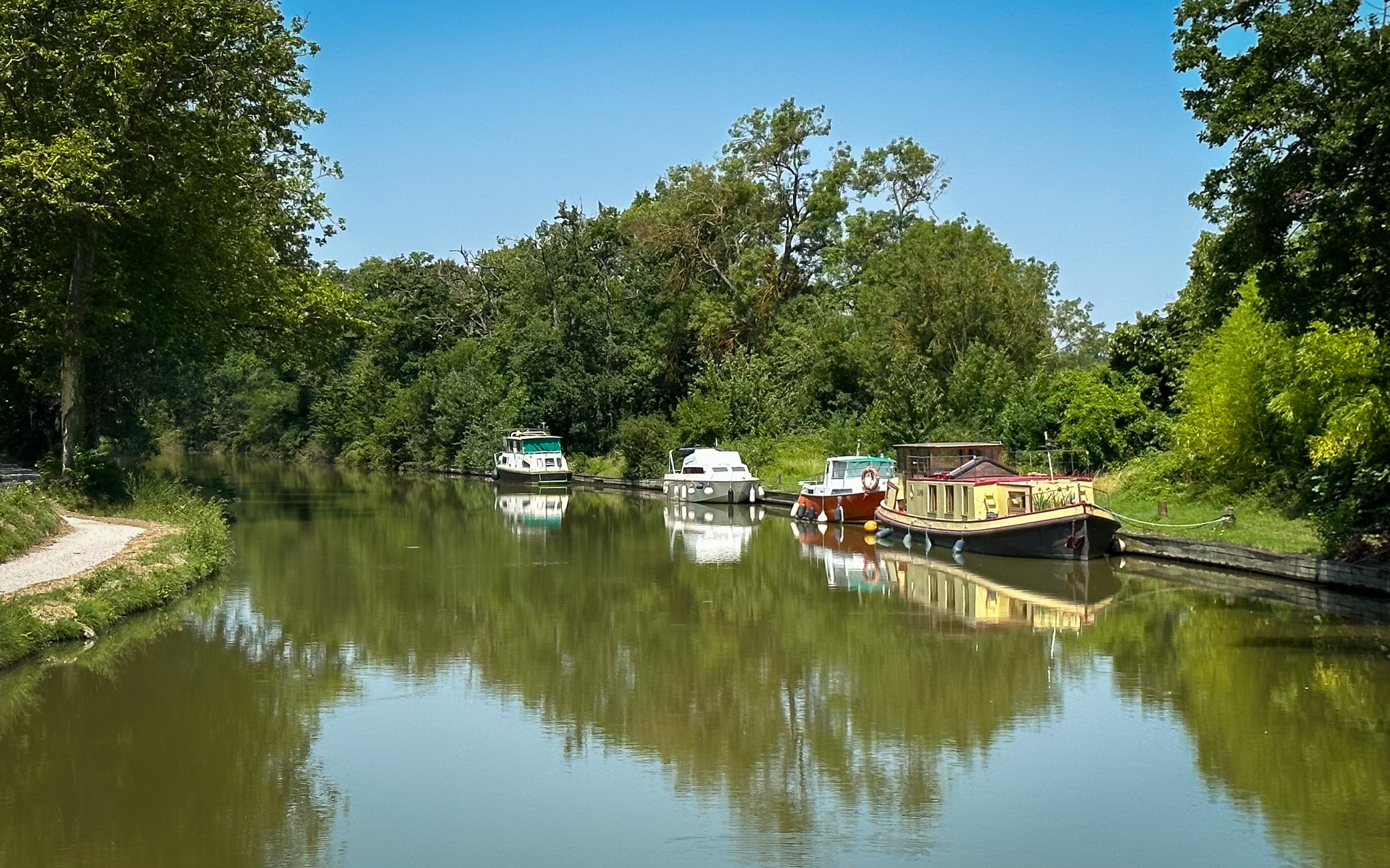
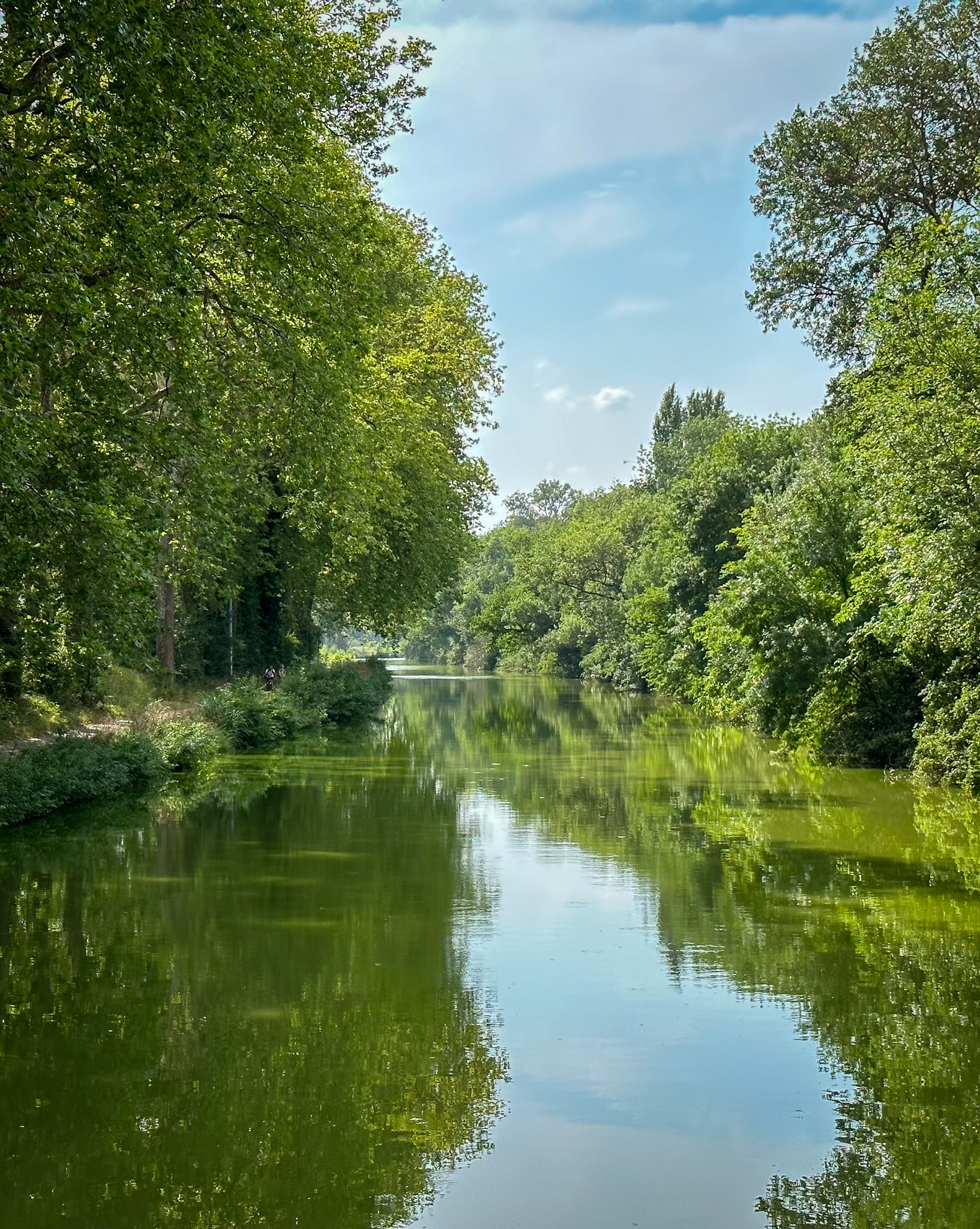
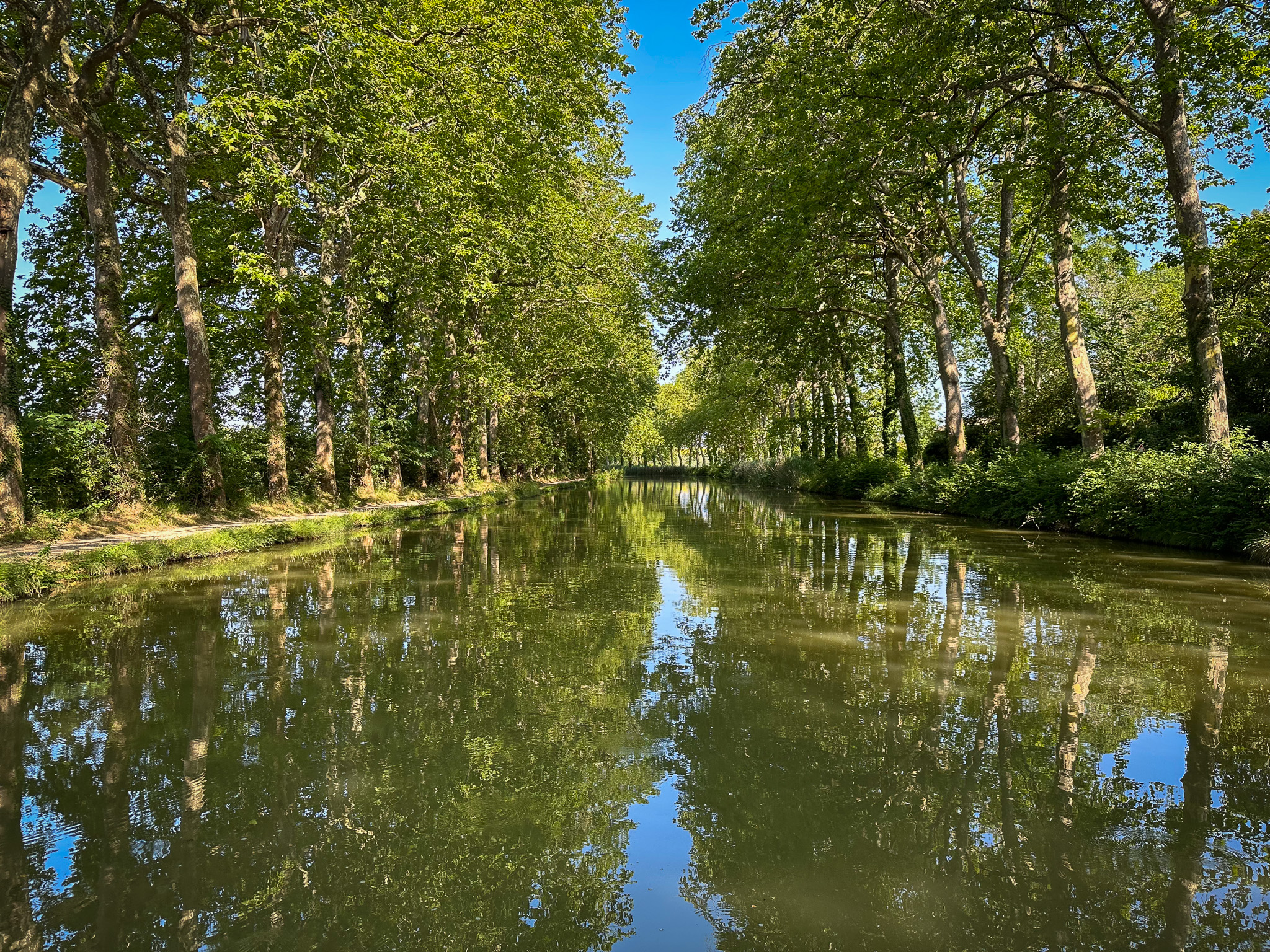
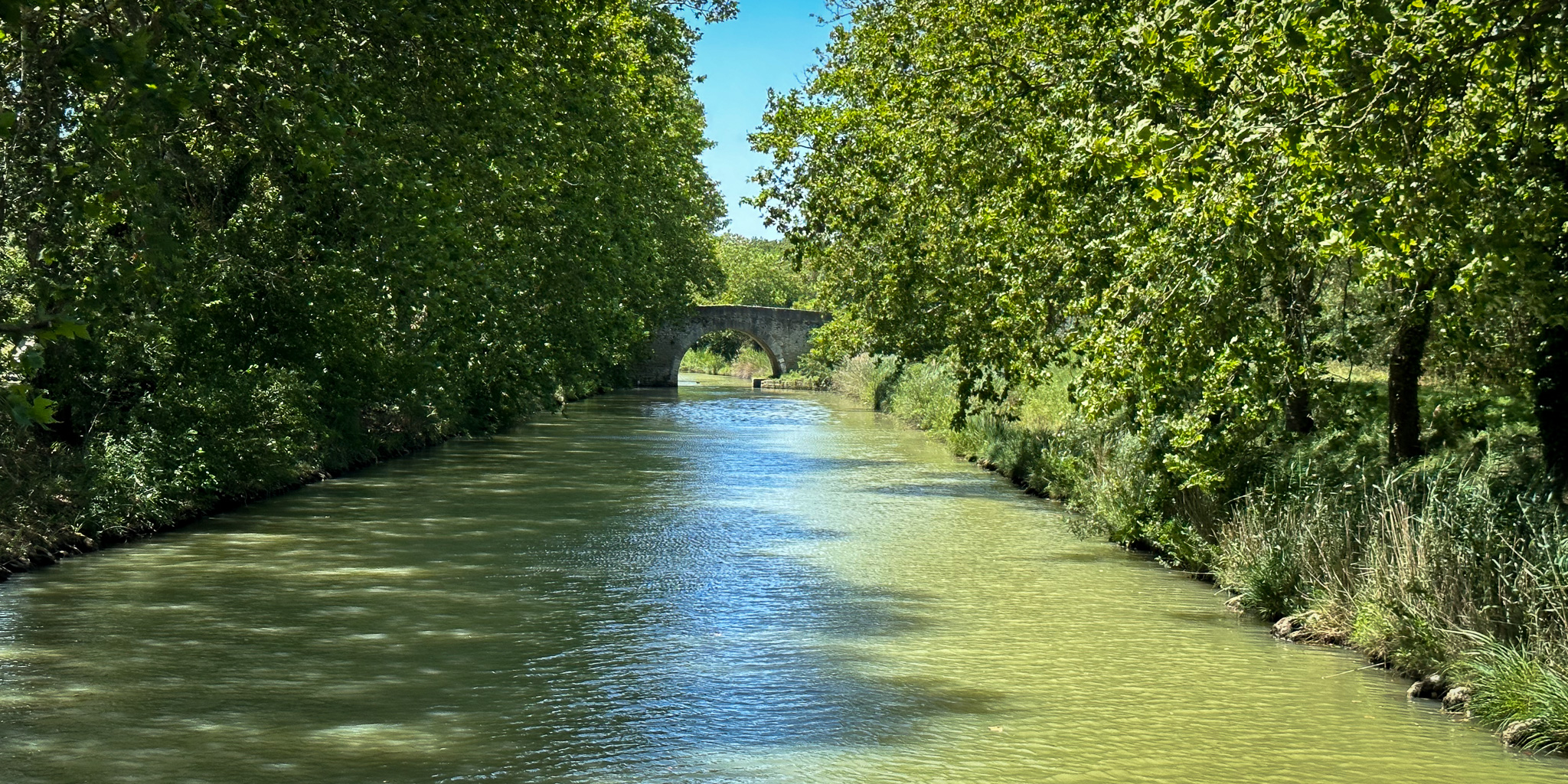
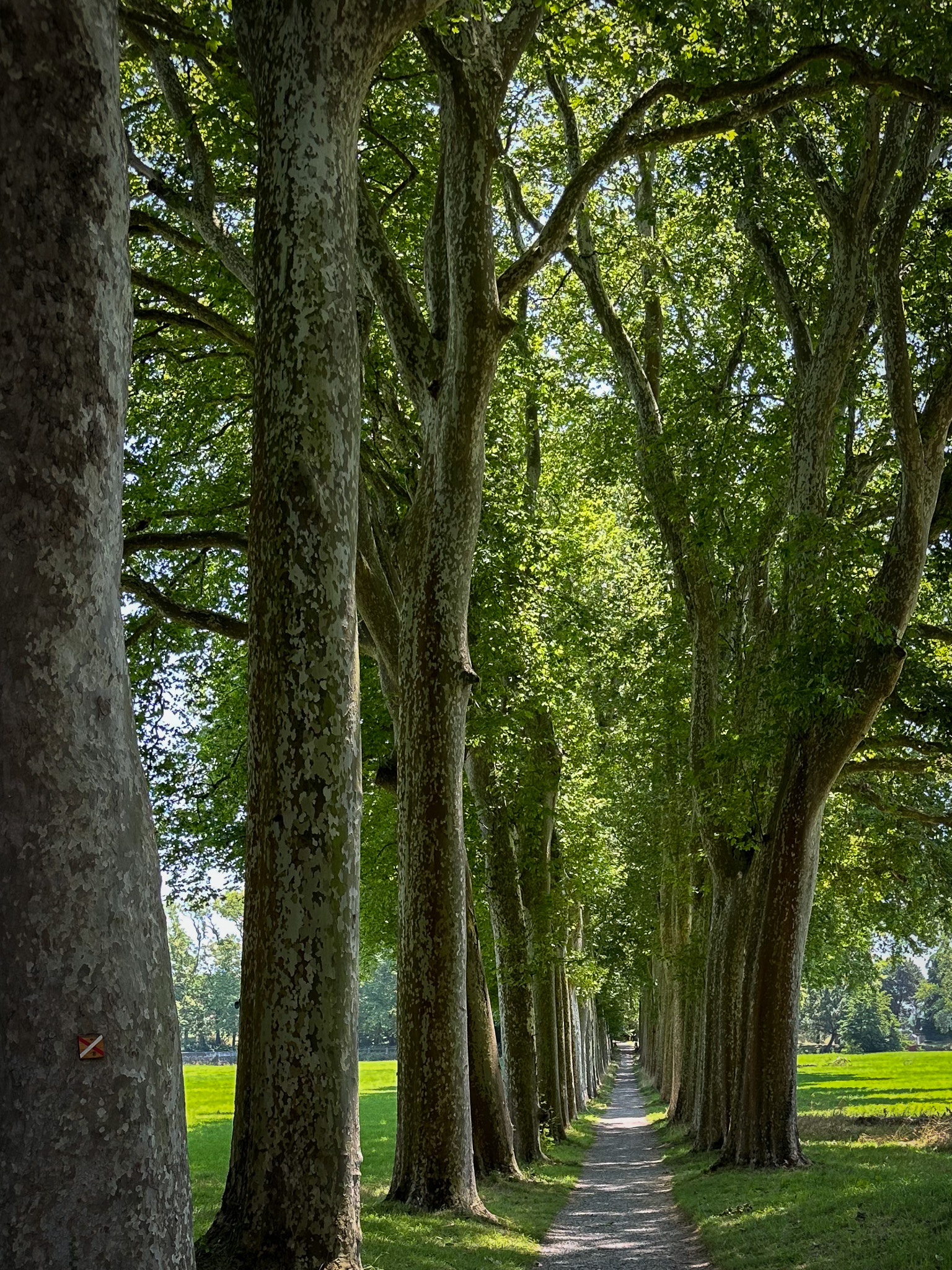
For us, the most picturesque sections of the canal were those lined with majestic old trees. Unfortunately, a great many of the original plane trees (which belong to the same family as sycamore trees) have succumbed to a fungal infection, commonly known as canker stain, and have been cut down. It is claimed that the fungus was introduced into Europe towards the end of World War II, via wooden ammunition boxes from America. The wood used in these ammunition boxes came from the American sycamore.
The trees are gradually being replaced with a variety of species, including planes that are resistant to this fungus. It is hoped that, in the future, the whole canal will again resemble the beautiful, water-filled, tree-lined avenues of the past.

Carcassonne
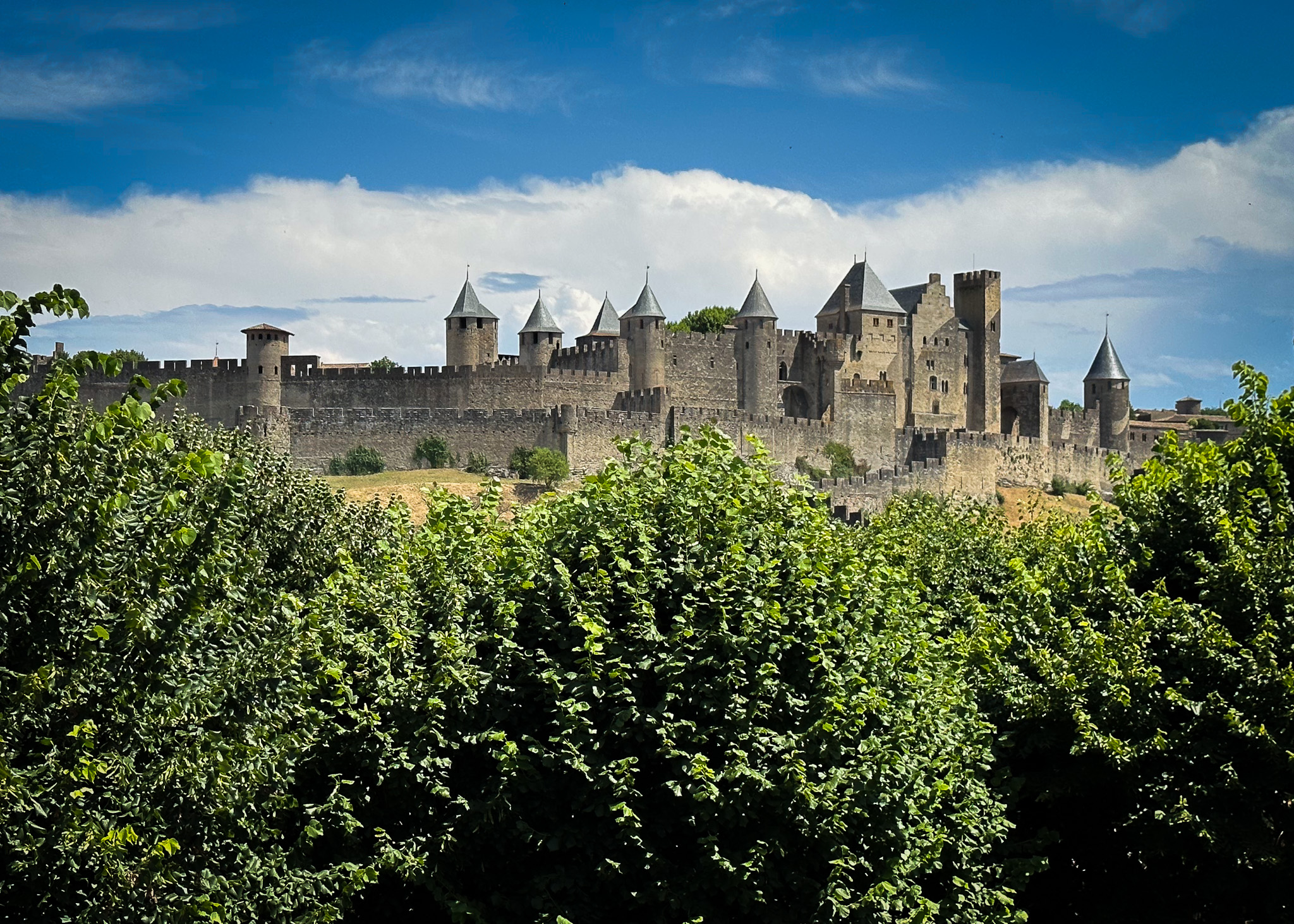
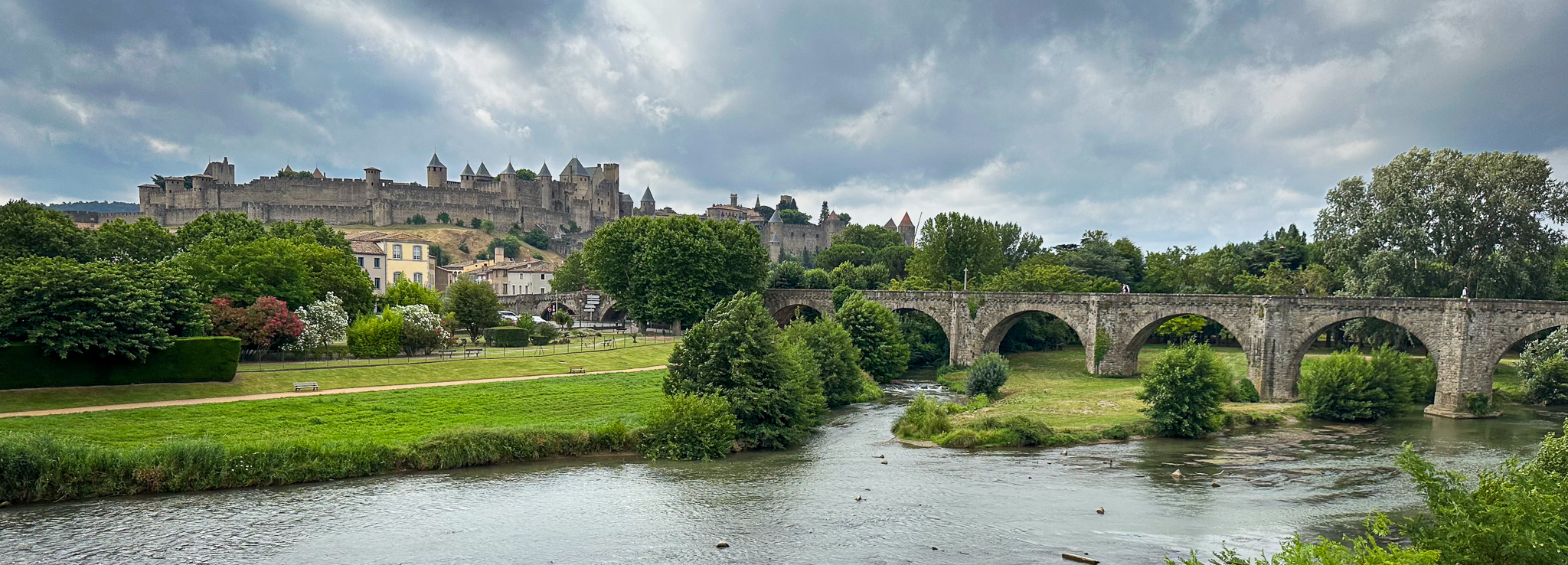
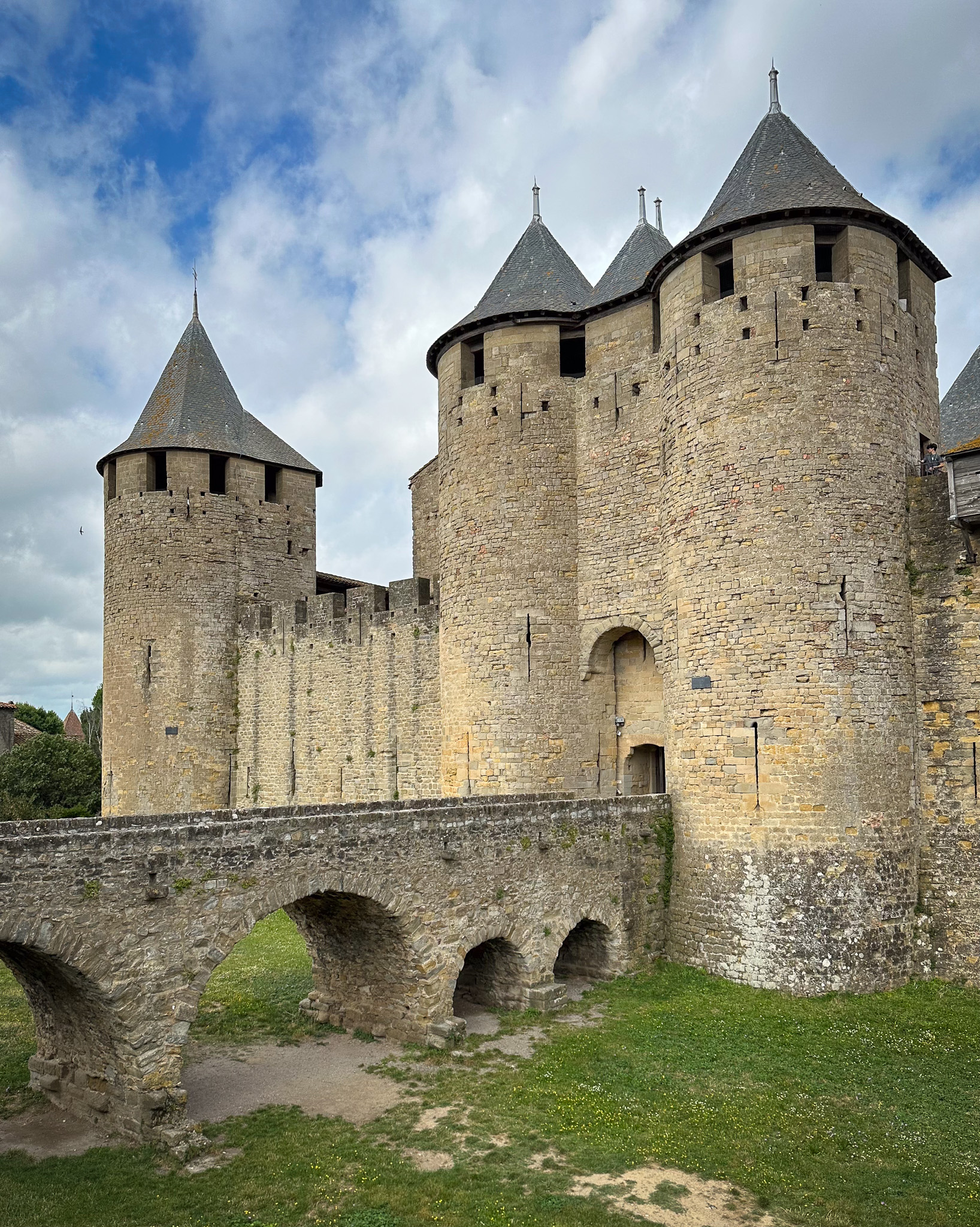
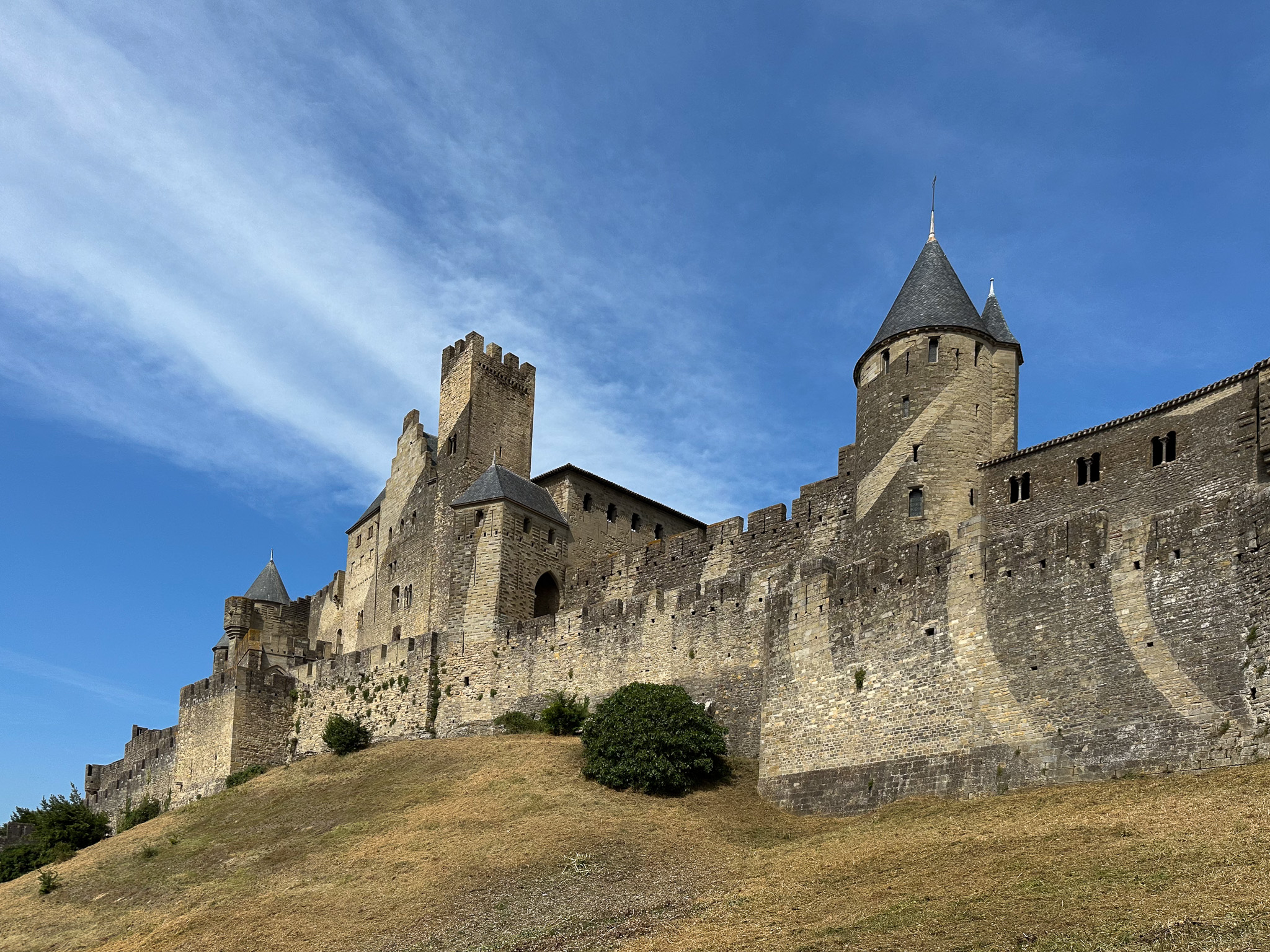
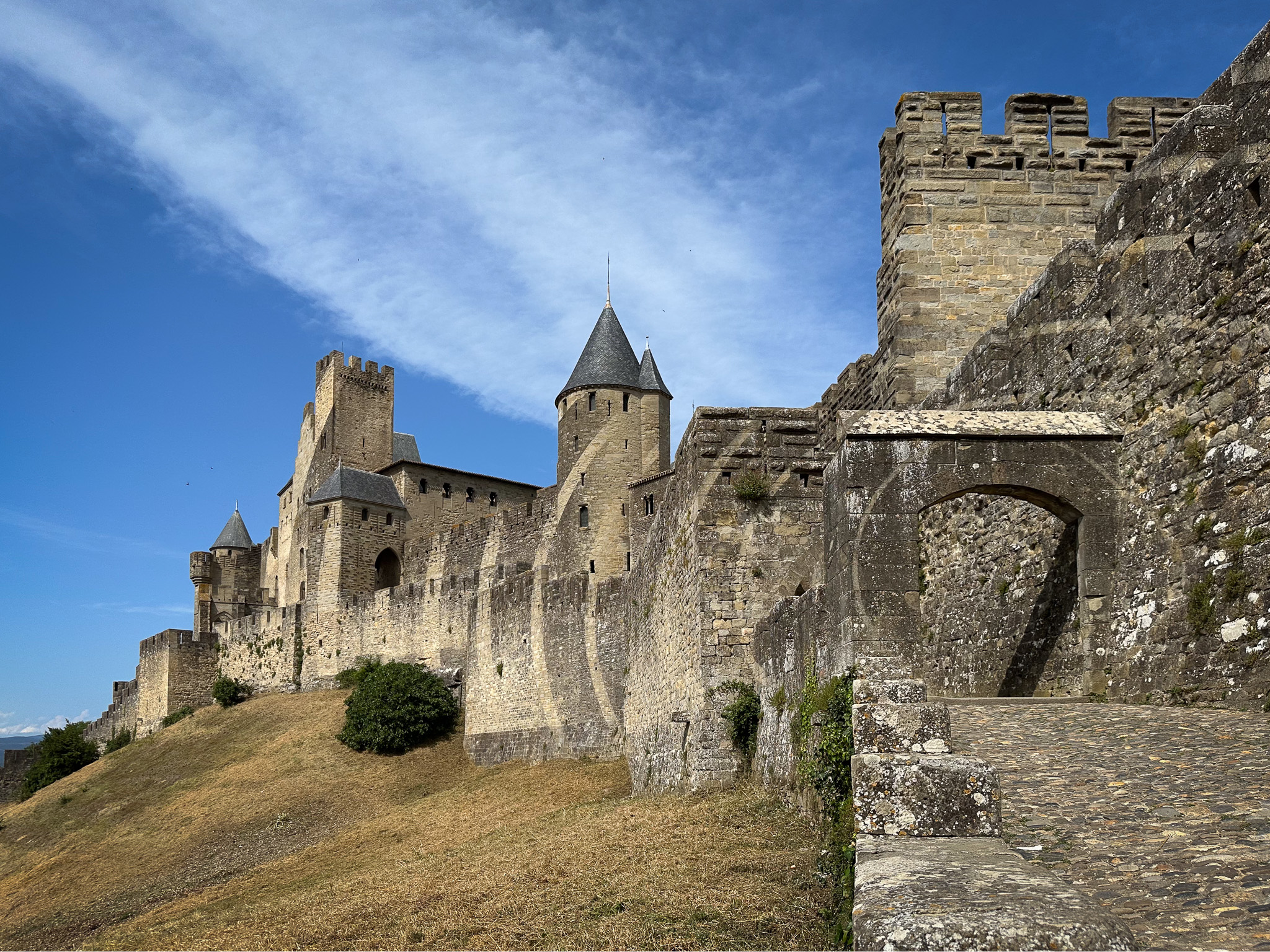
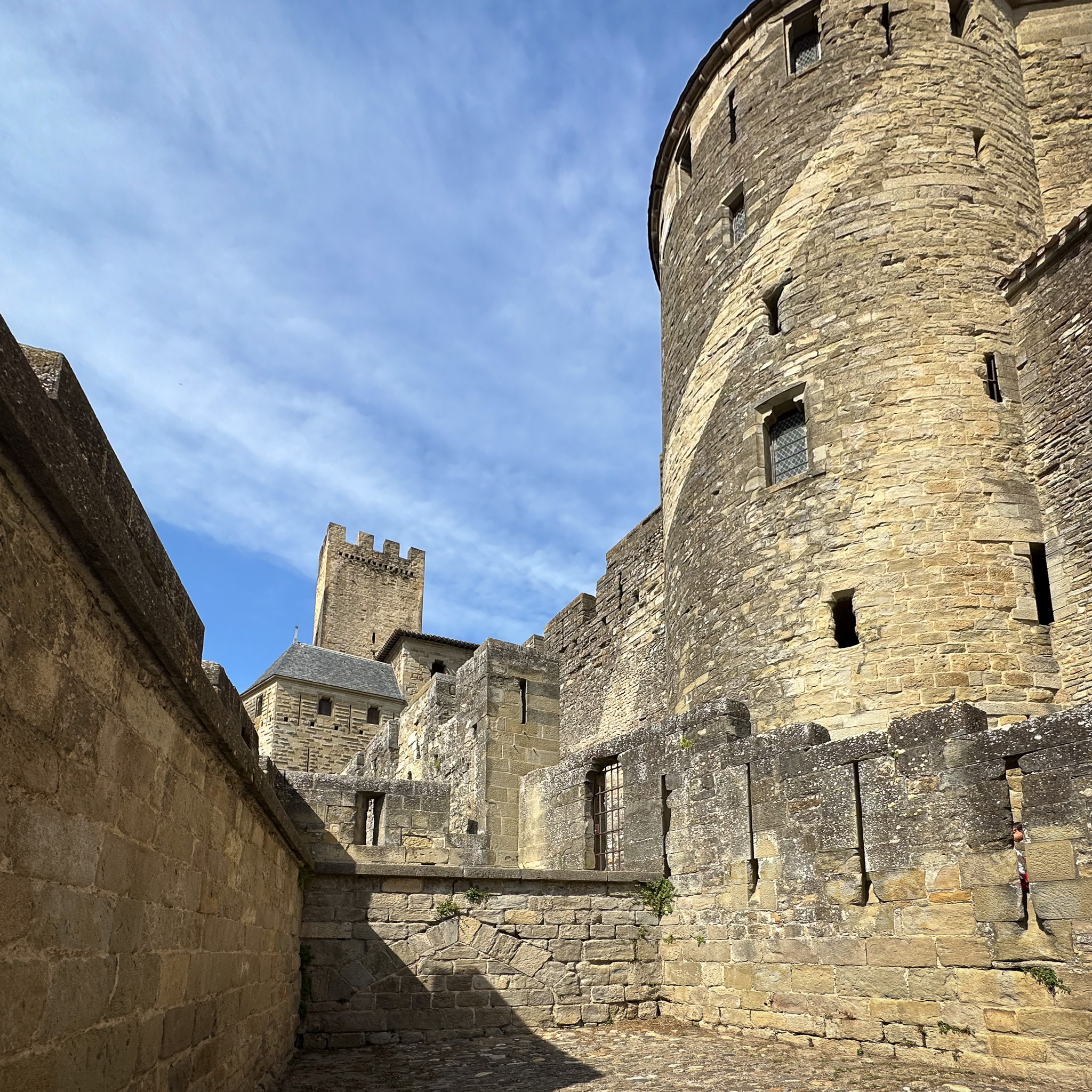
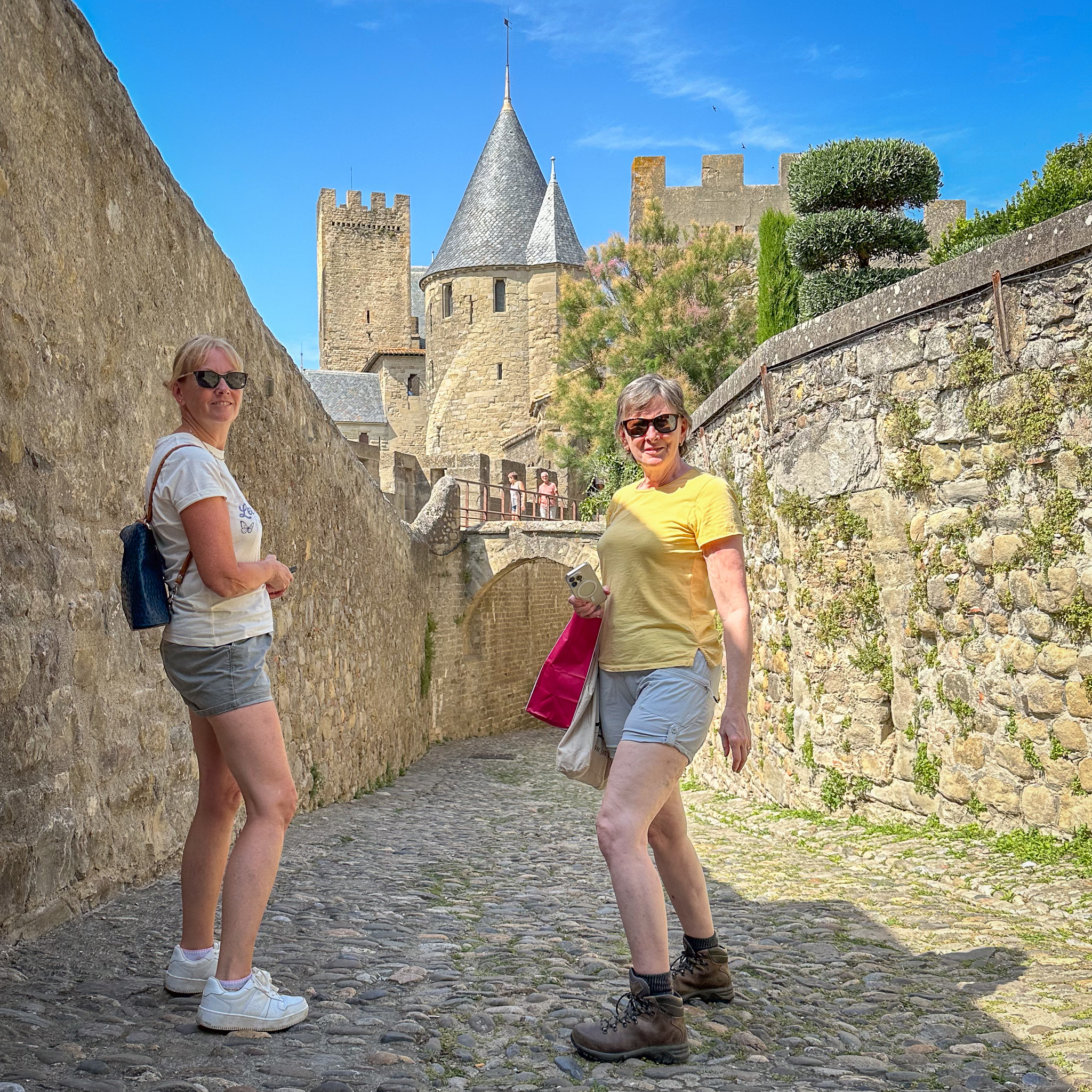
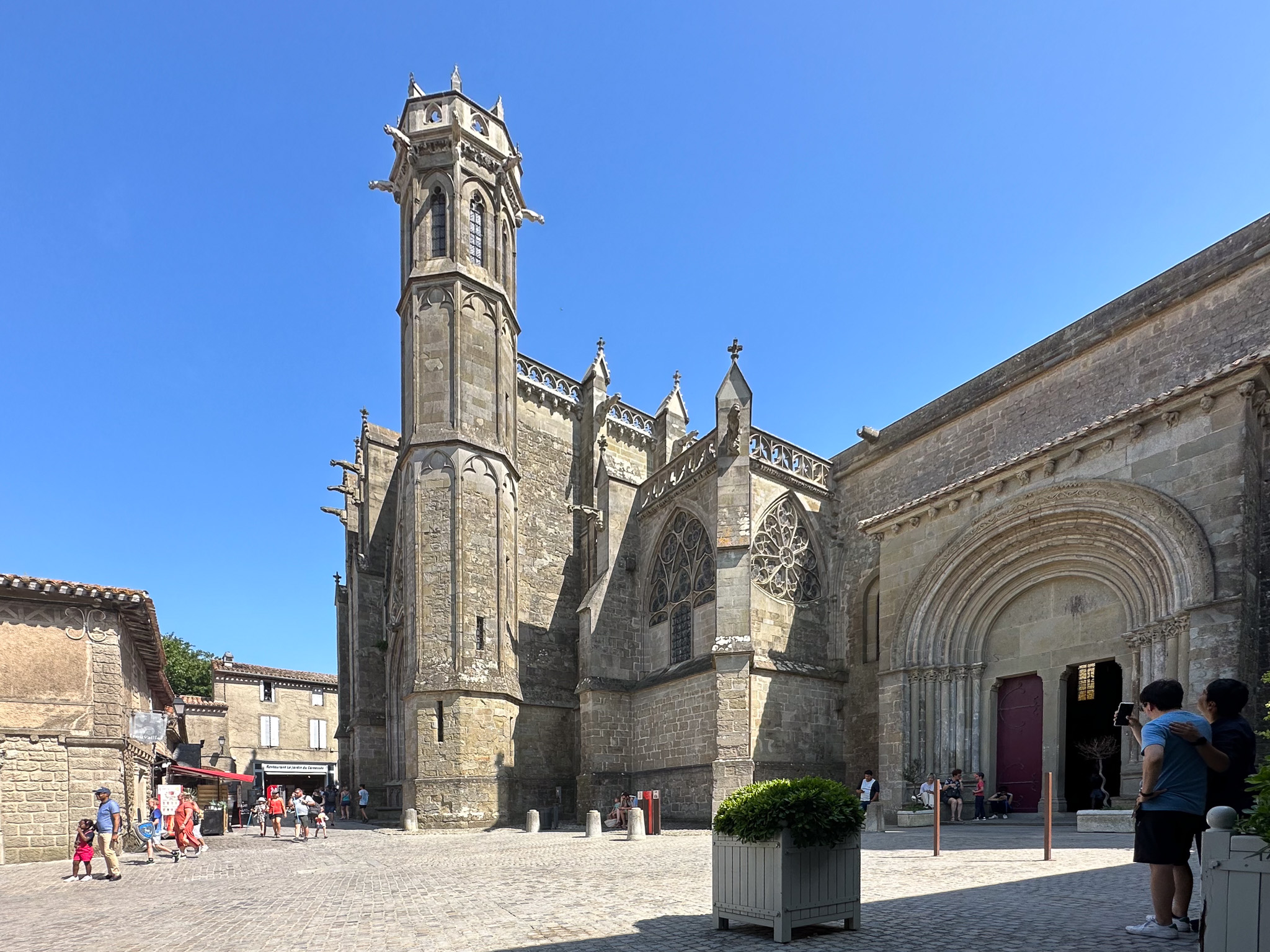
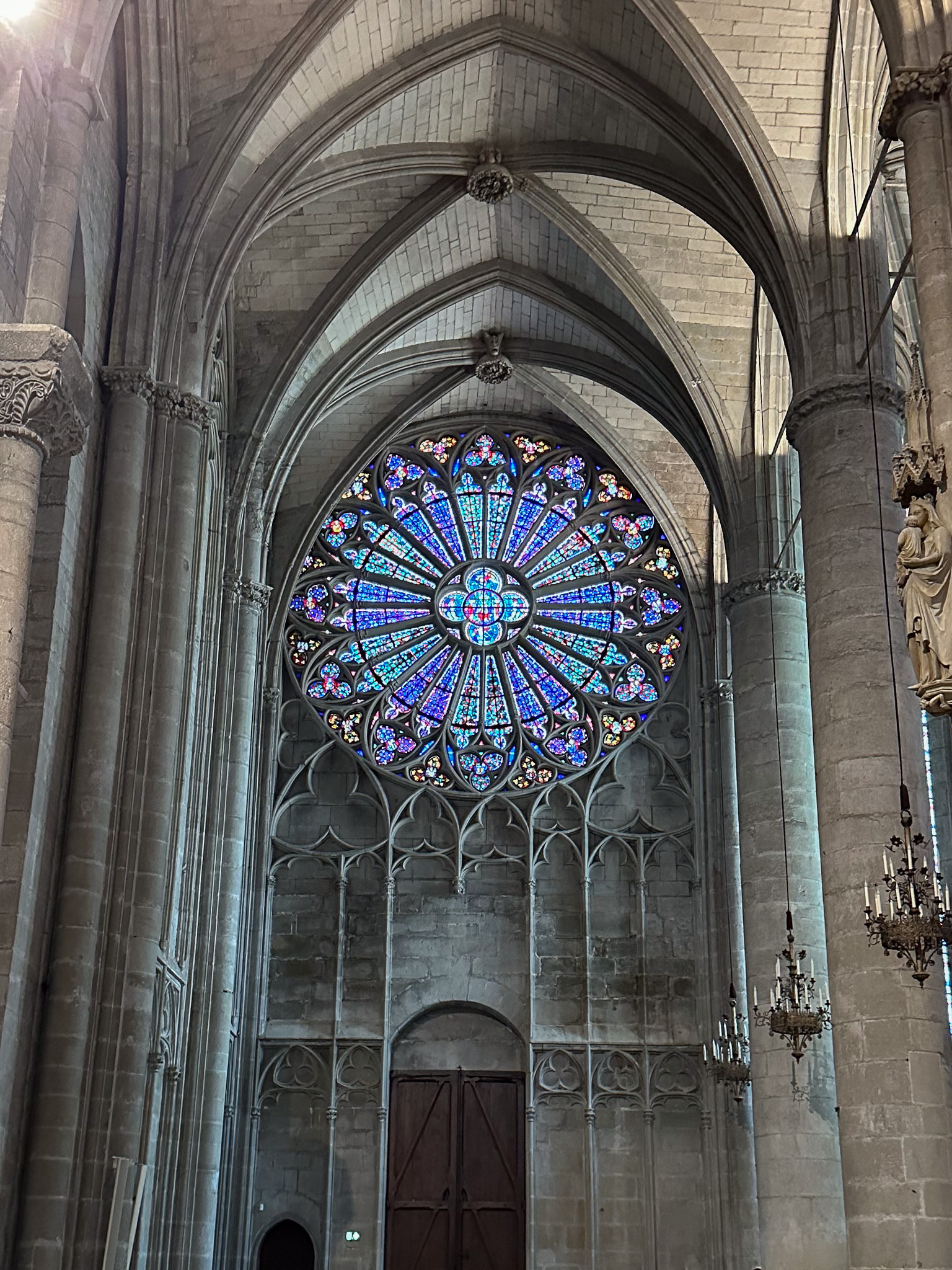
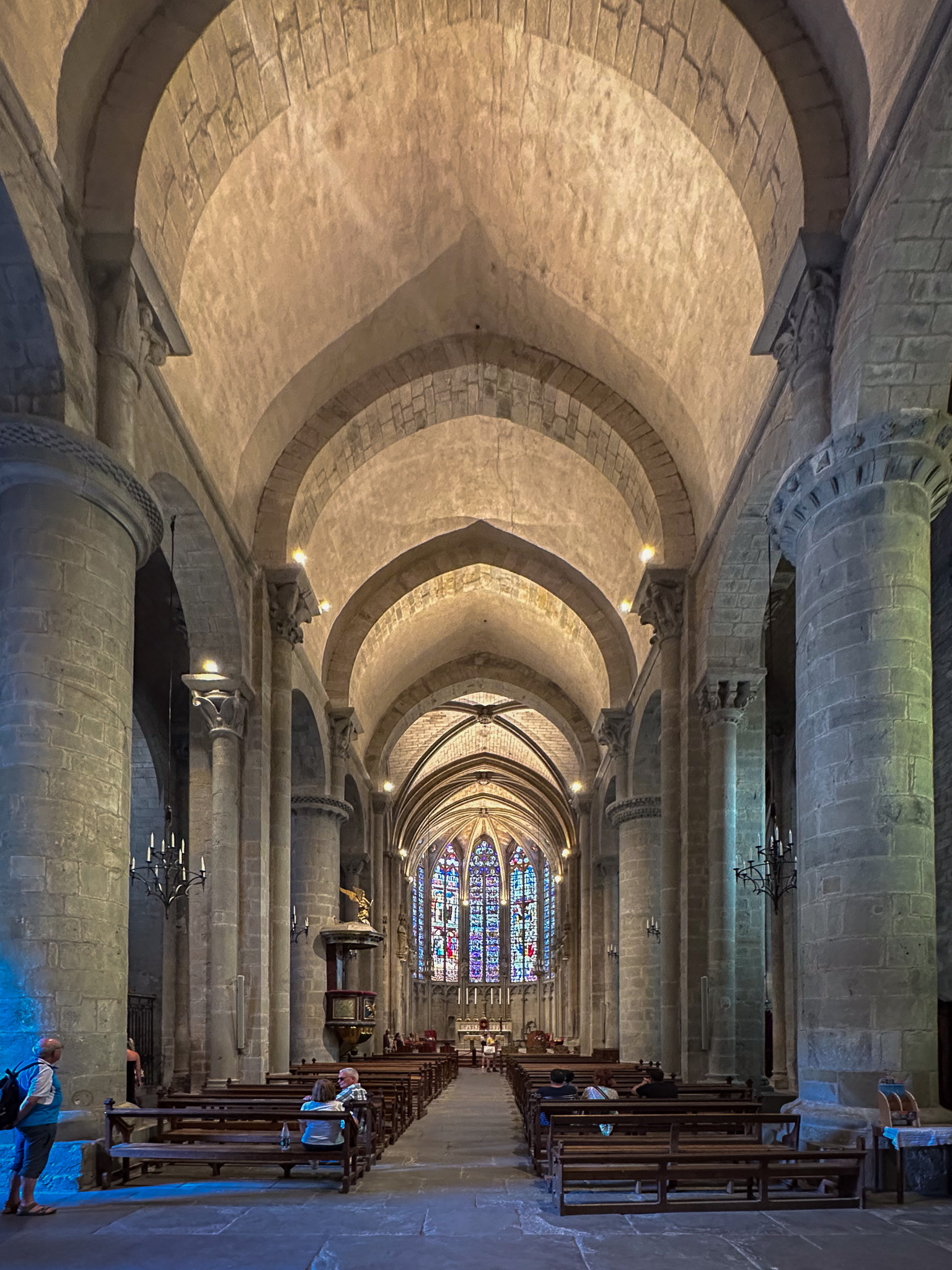
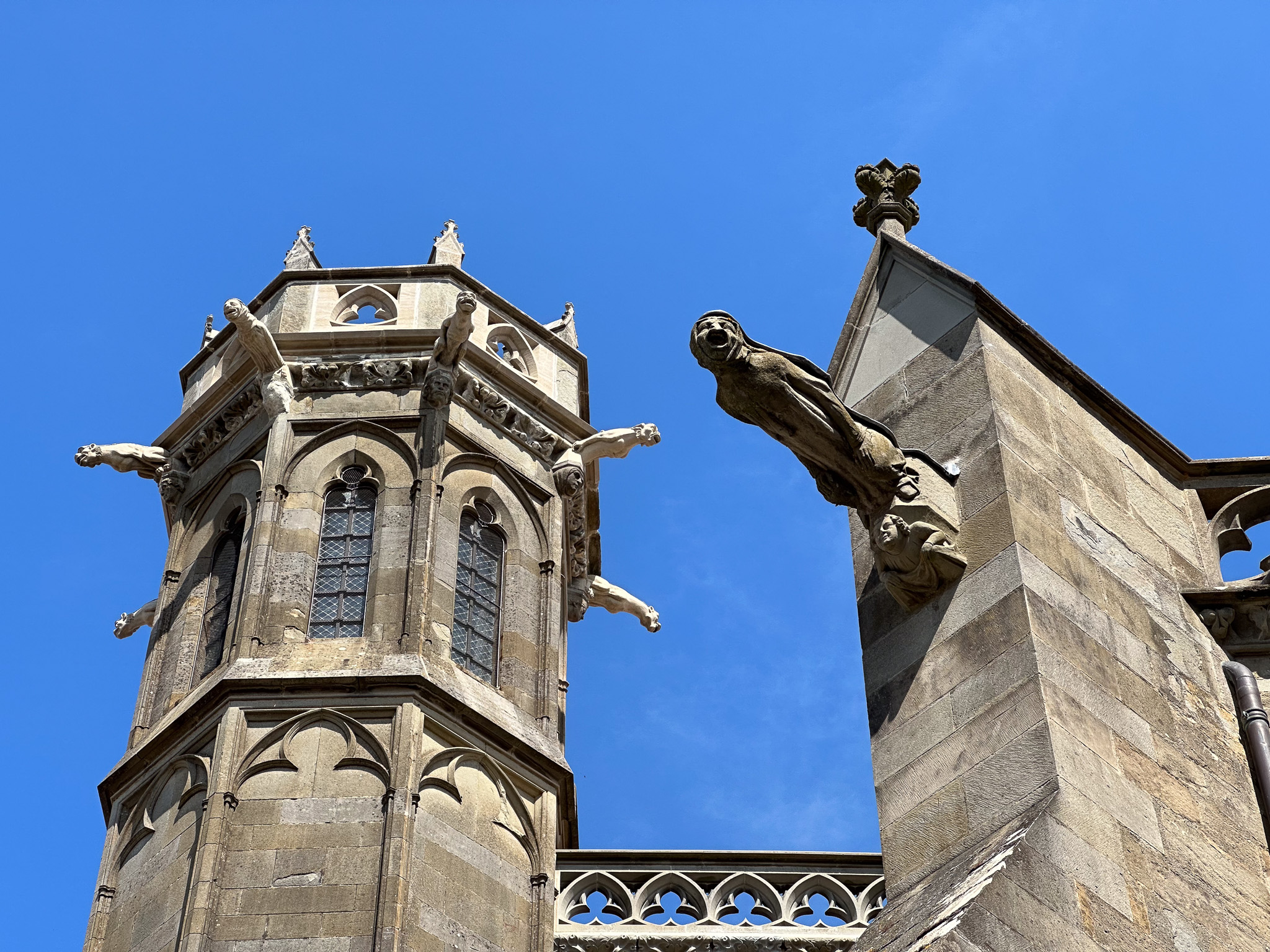
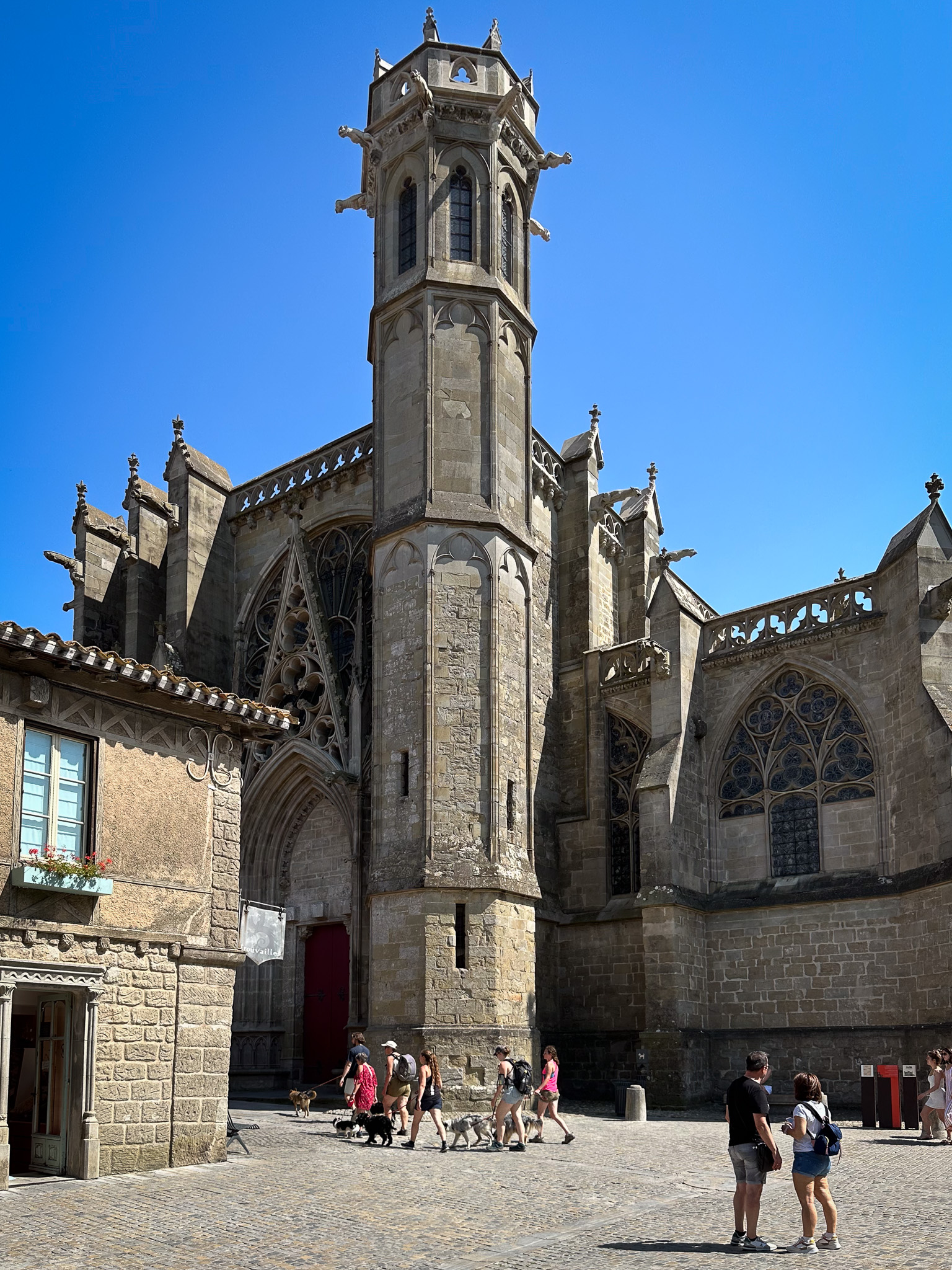
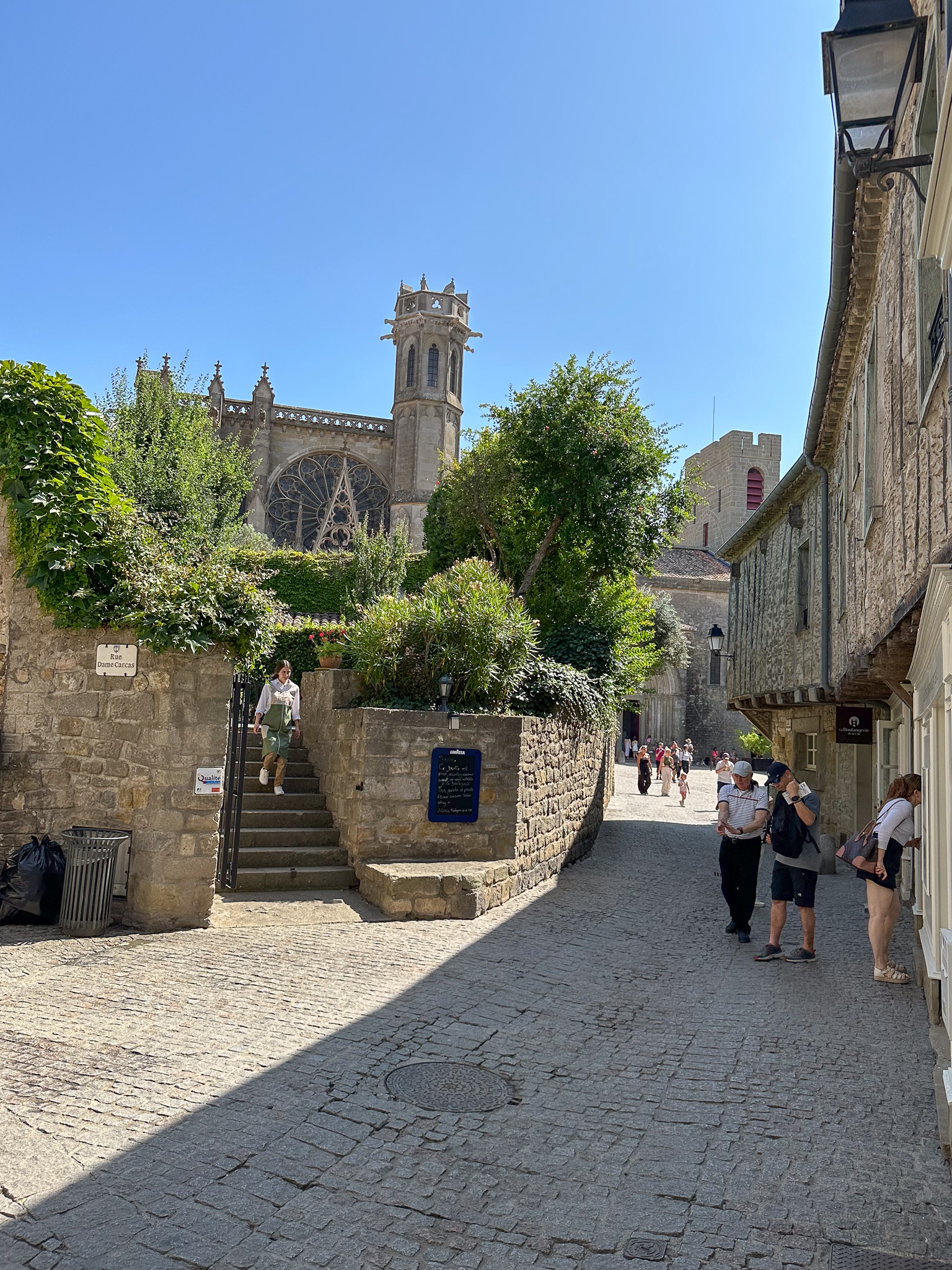
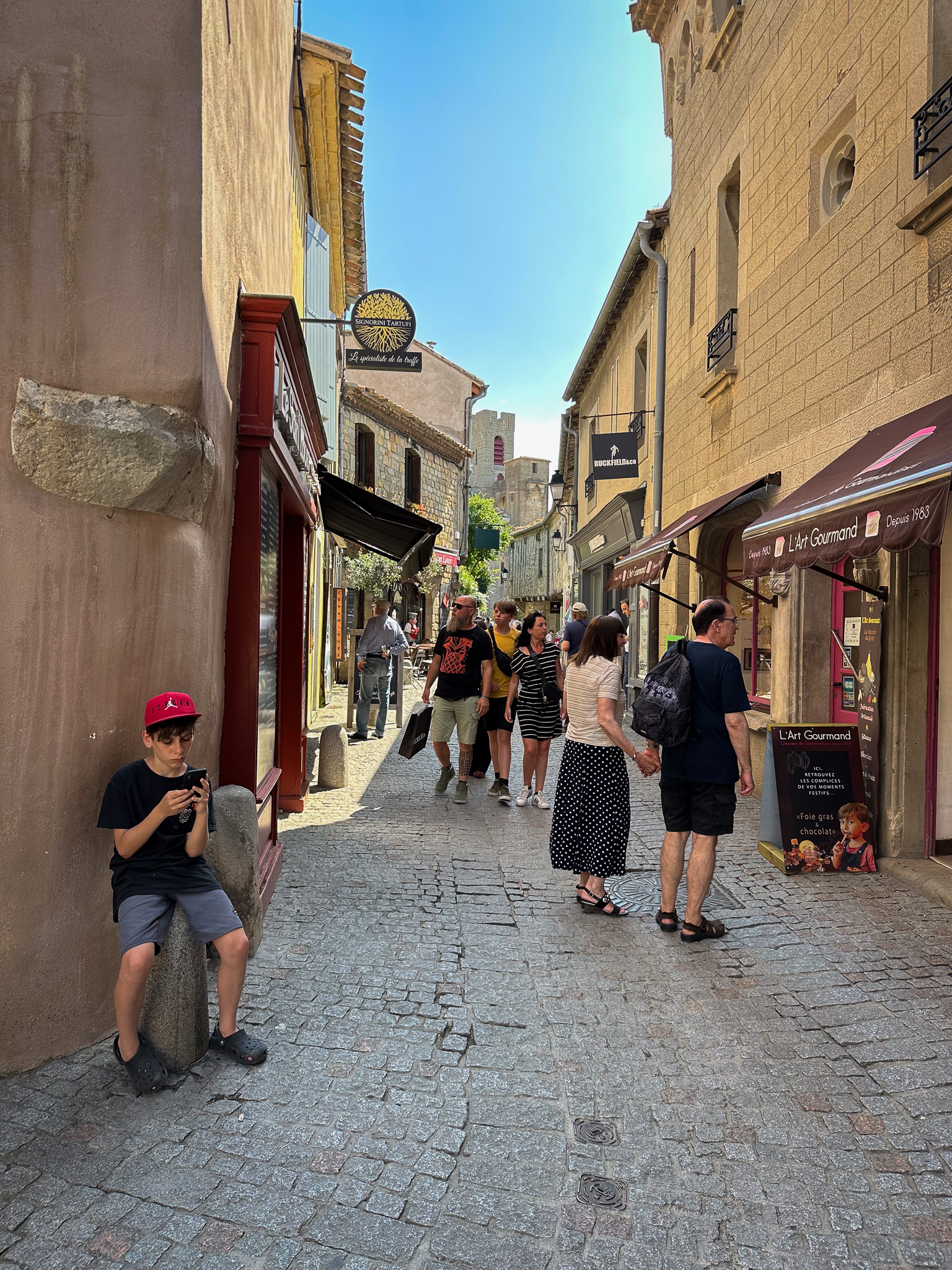
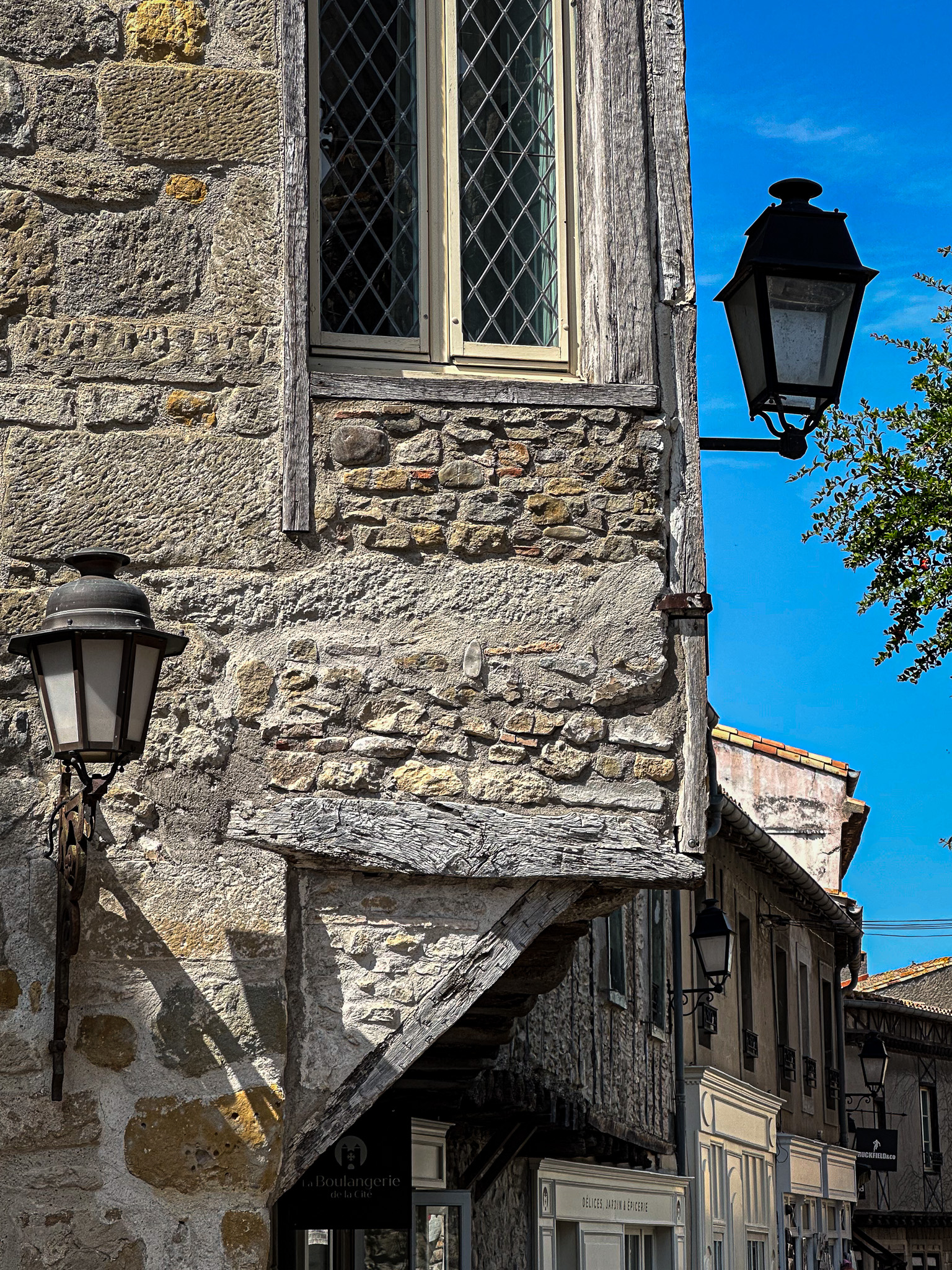
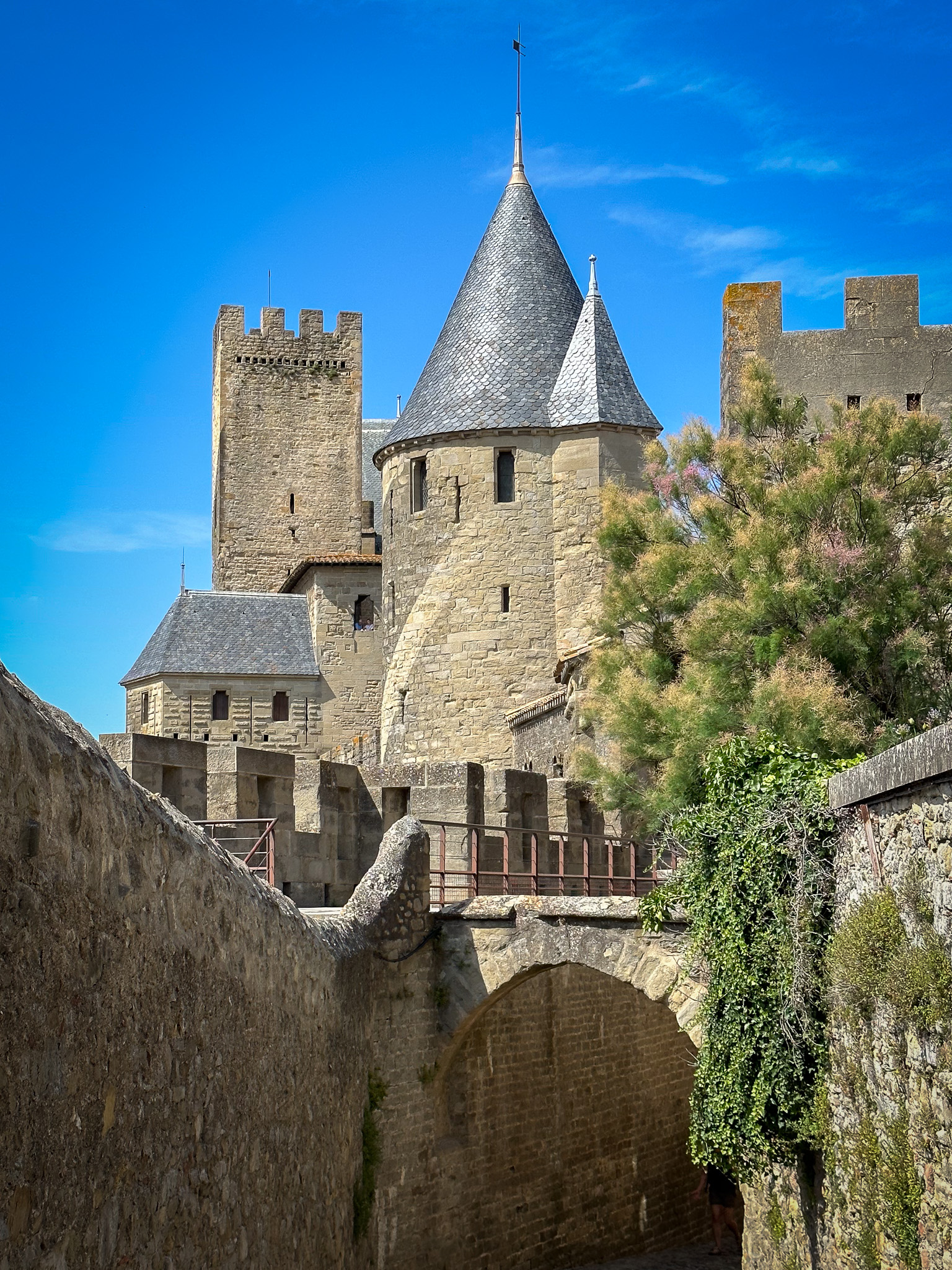
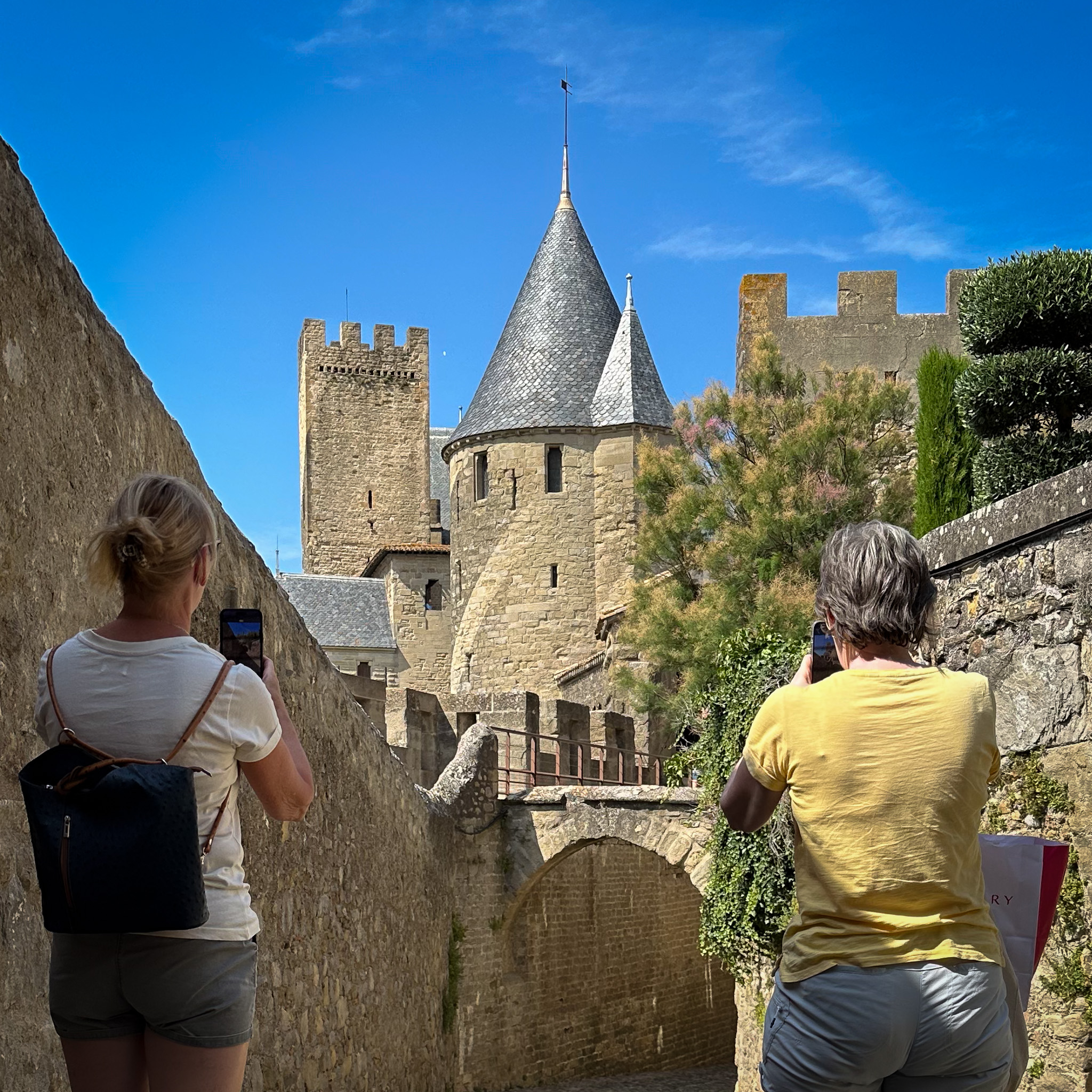
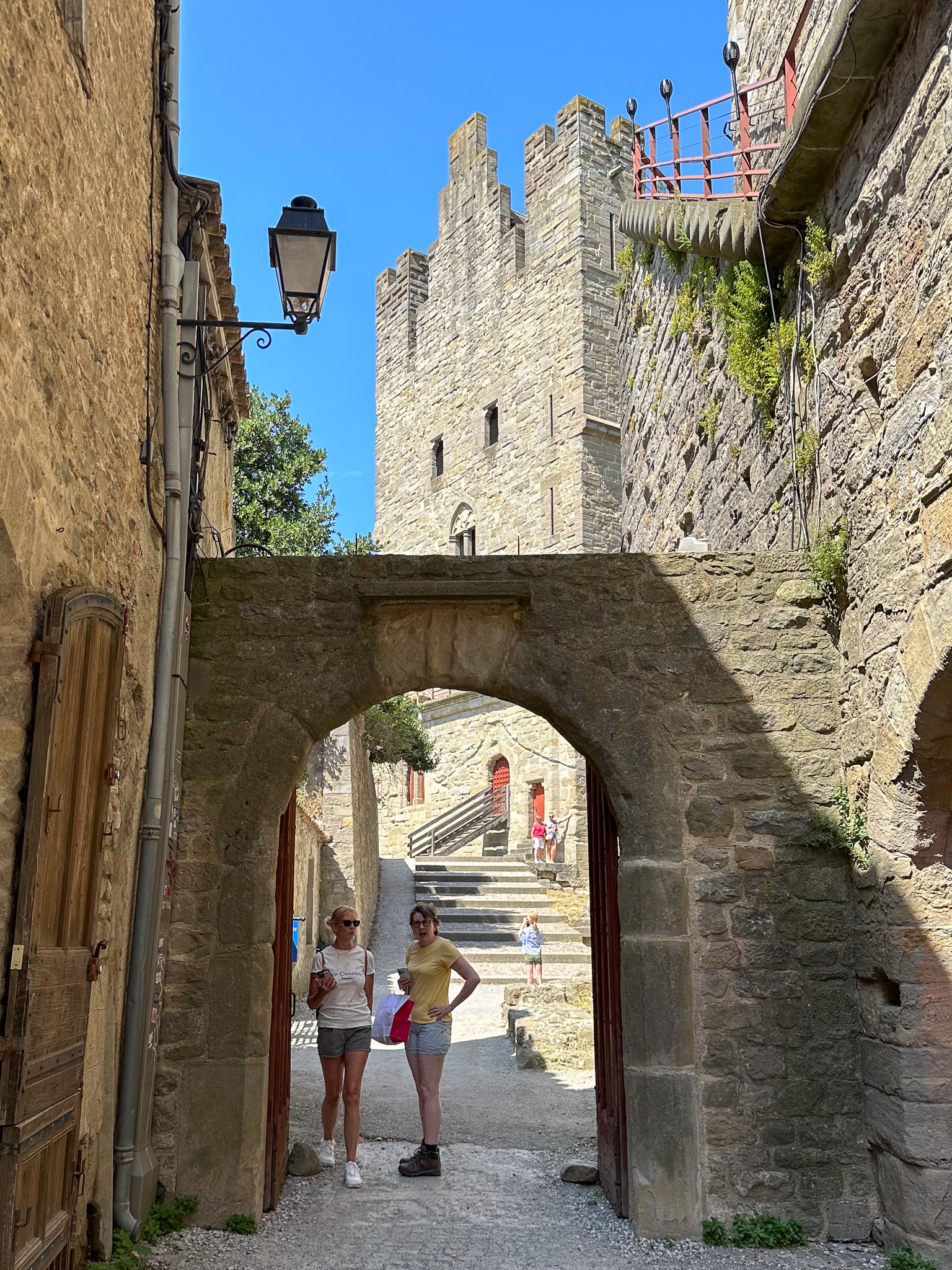
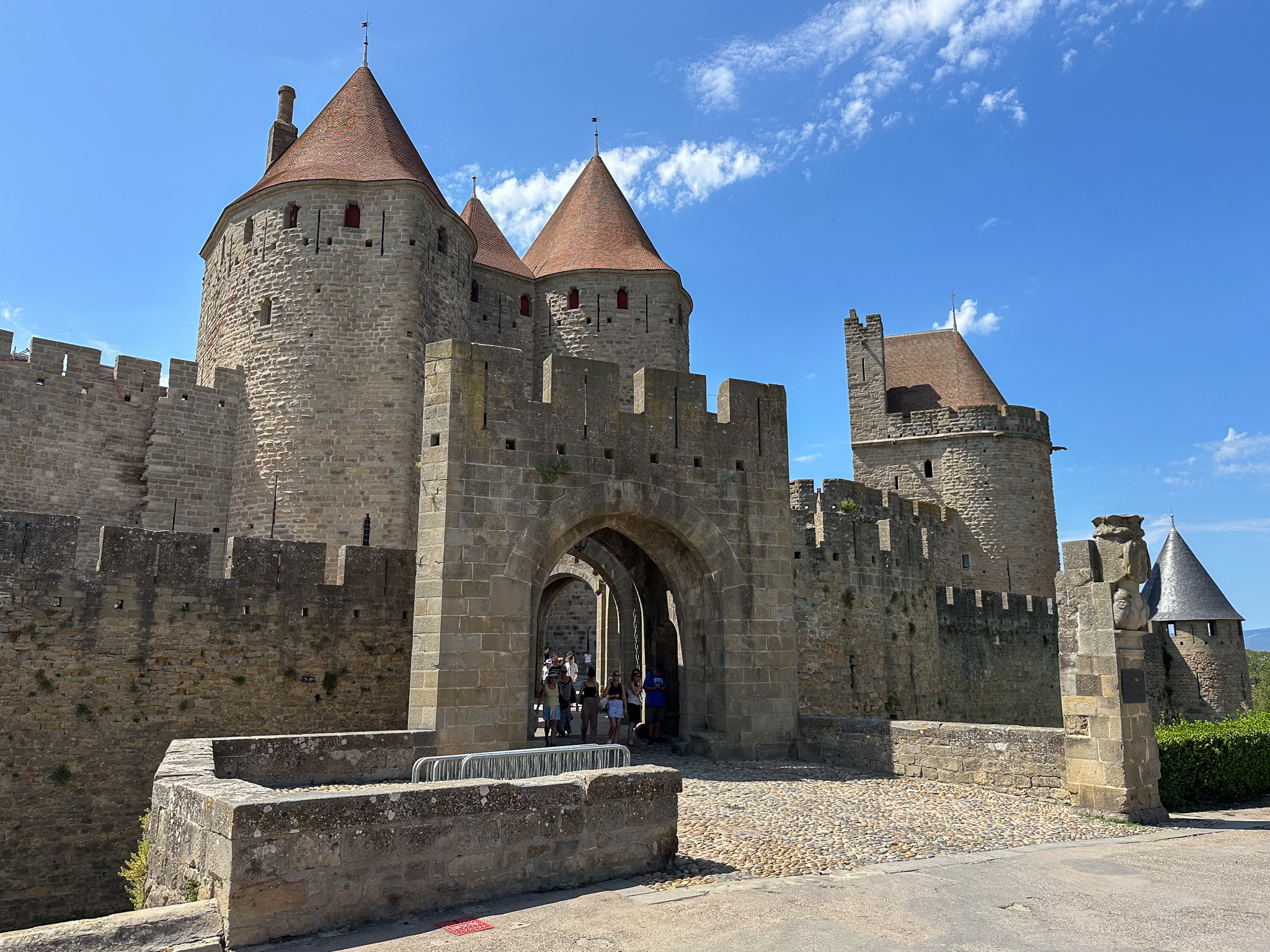
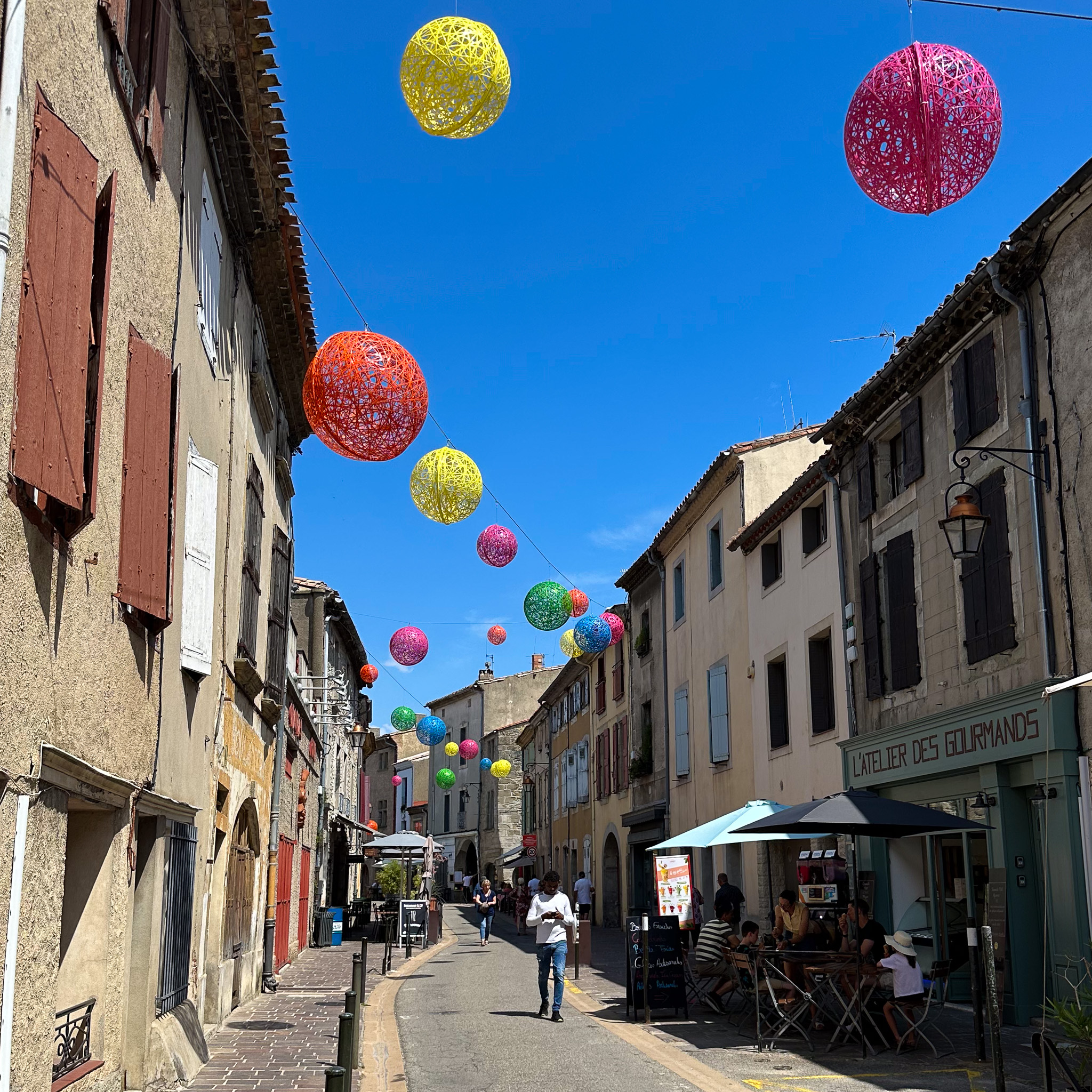
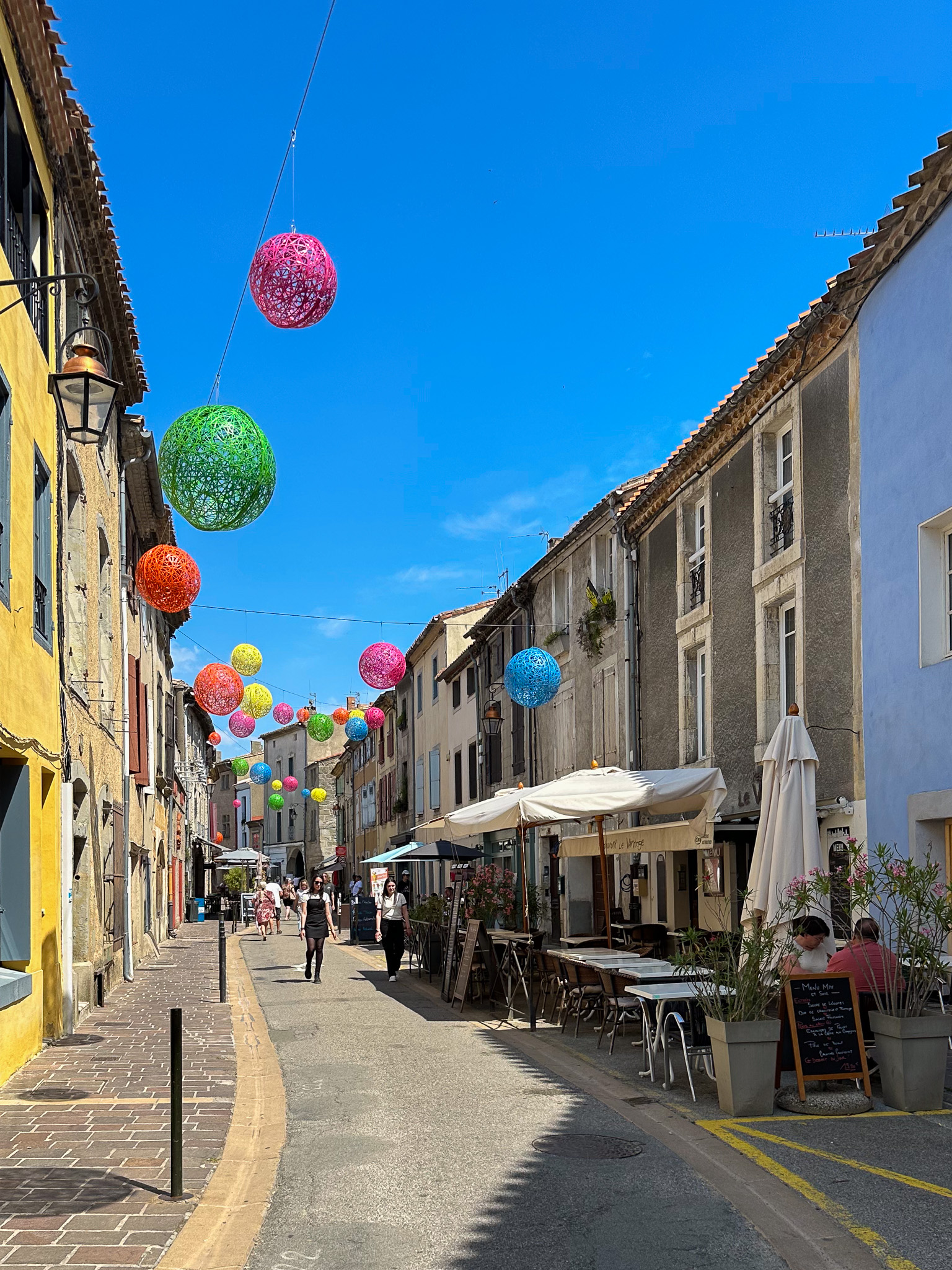
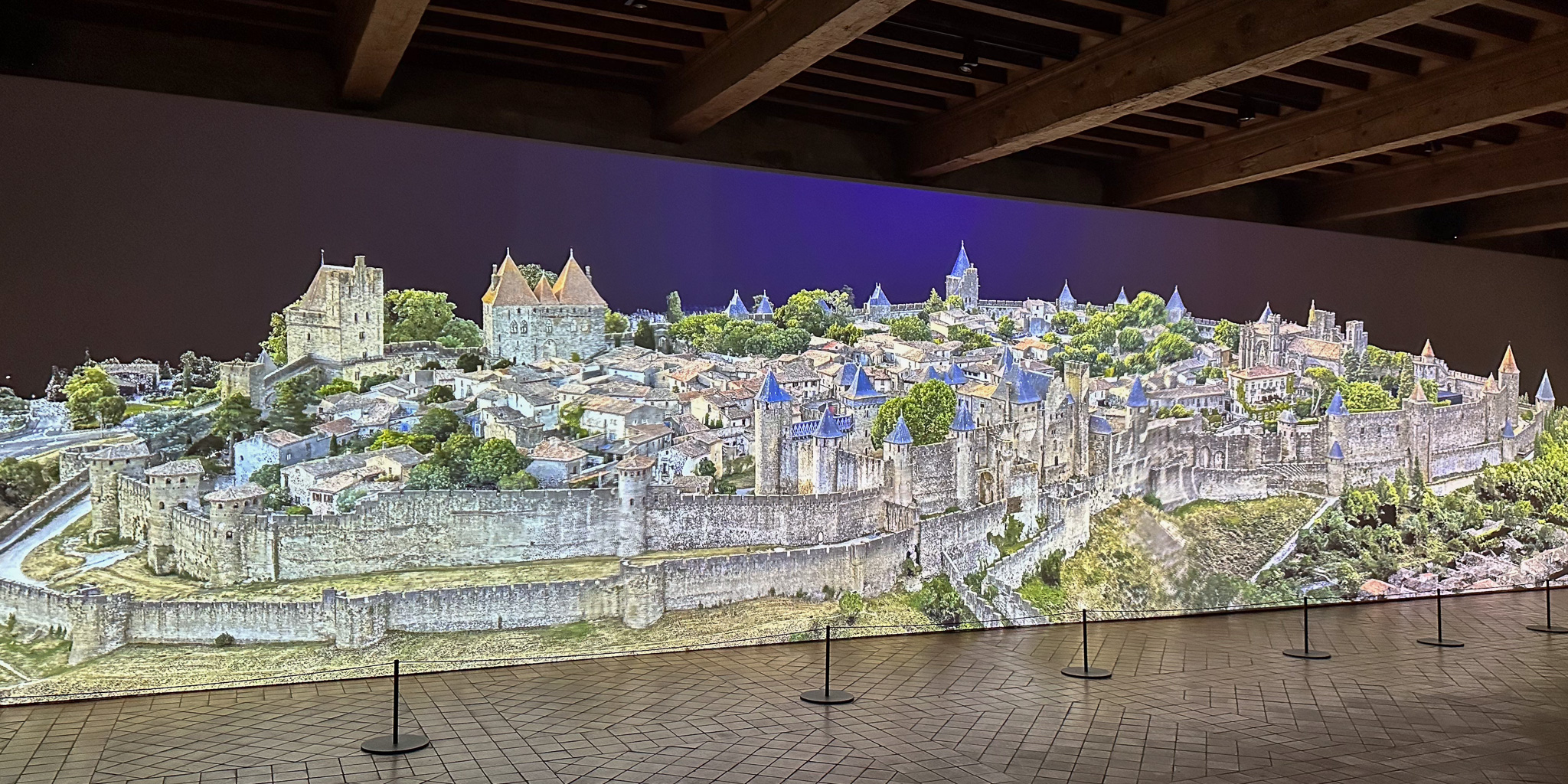
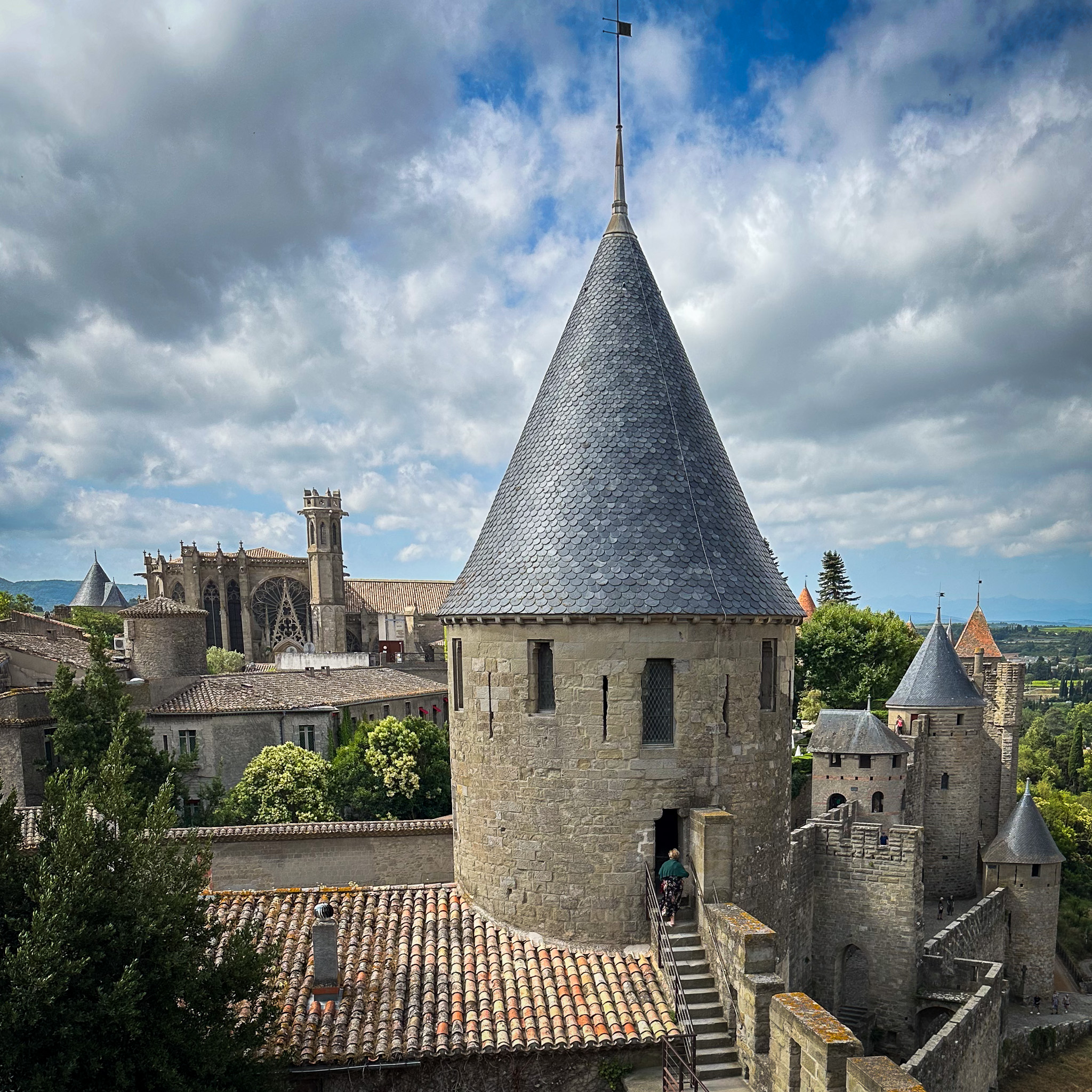
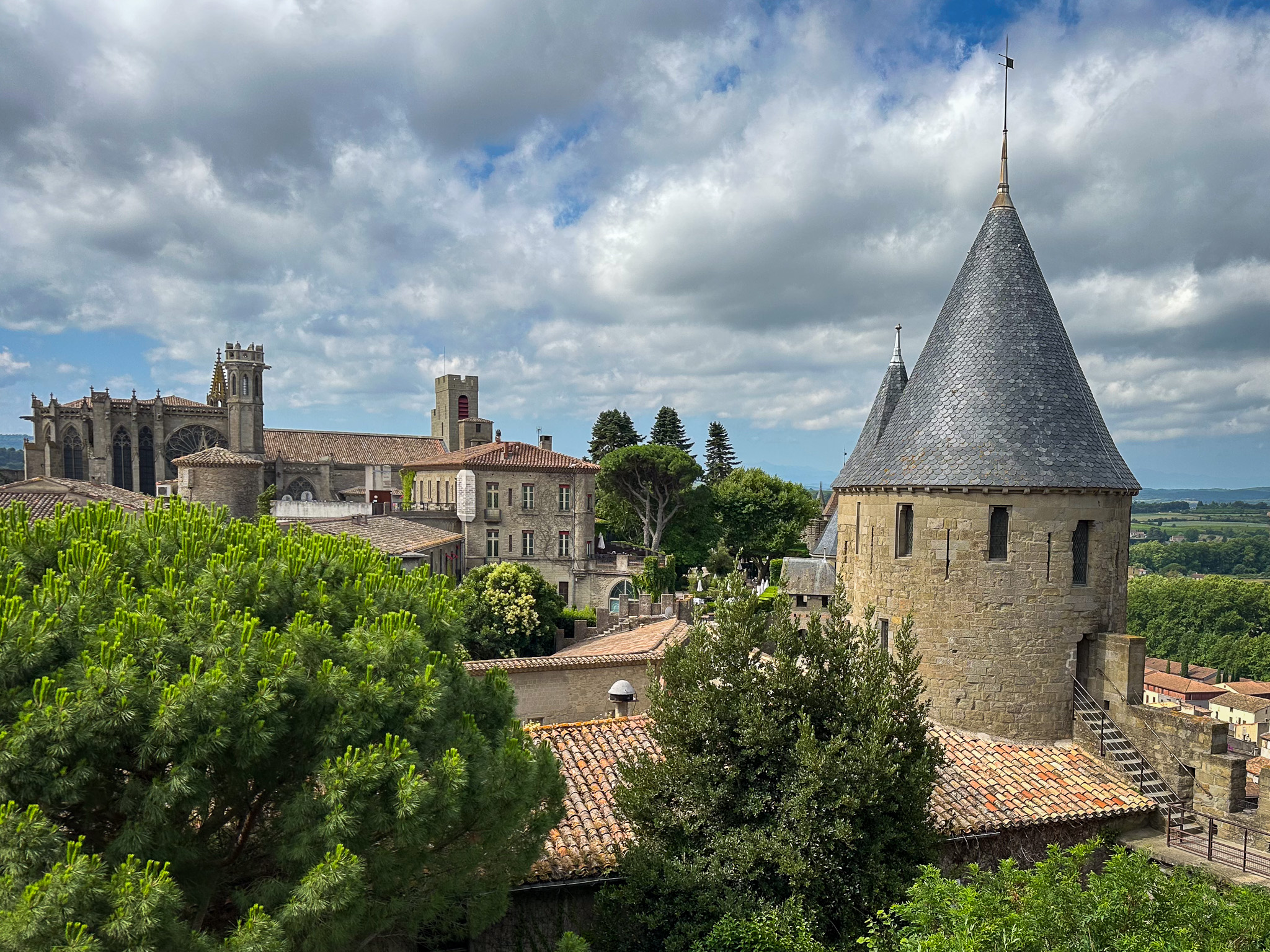
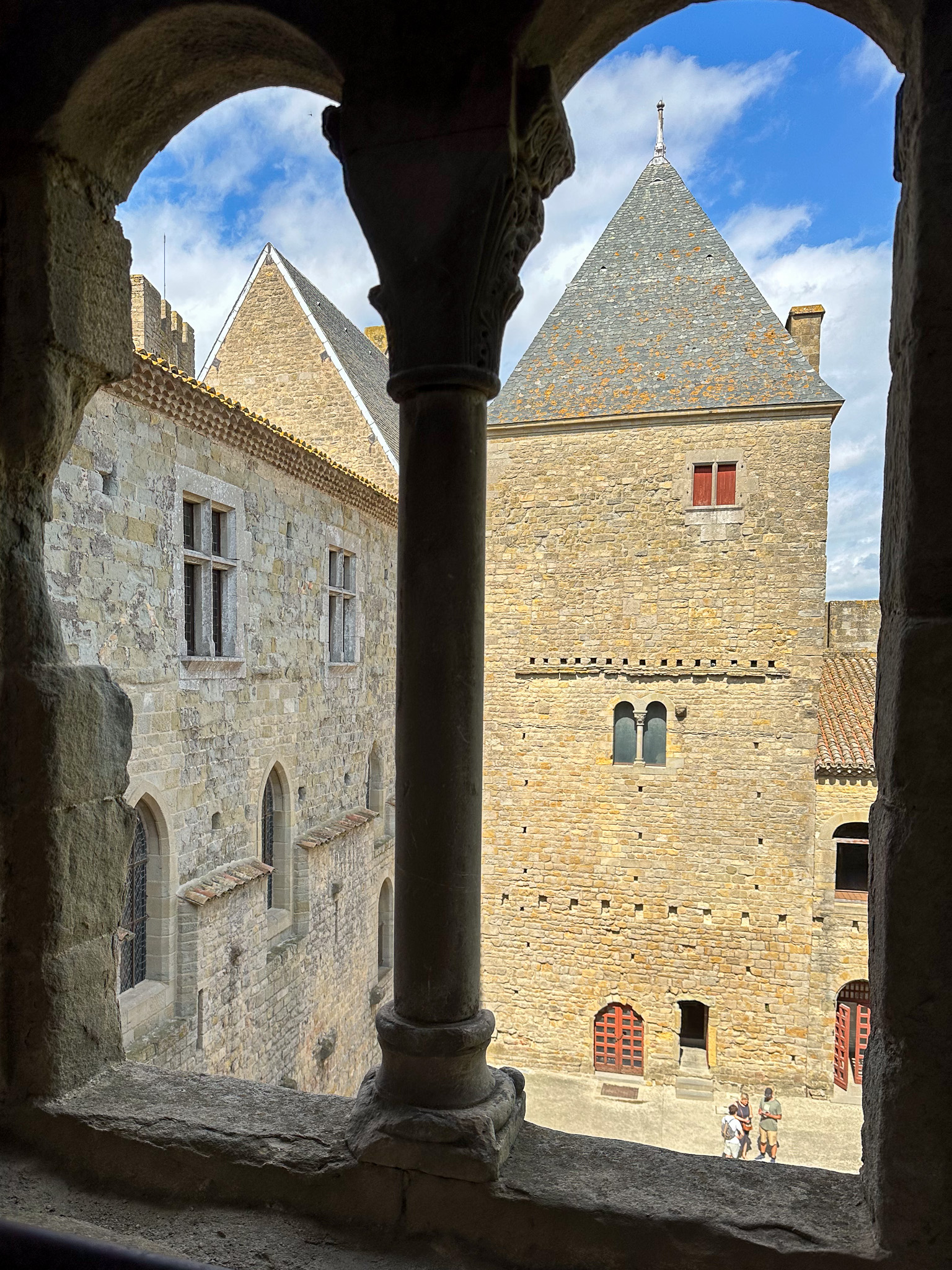
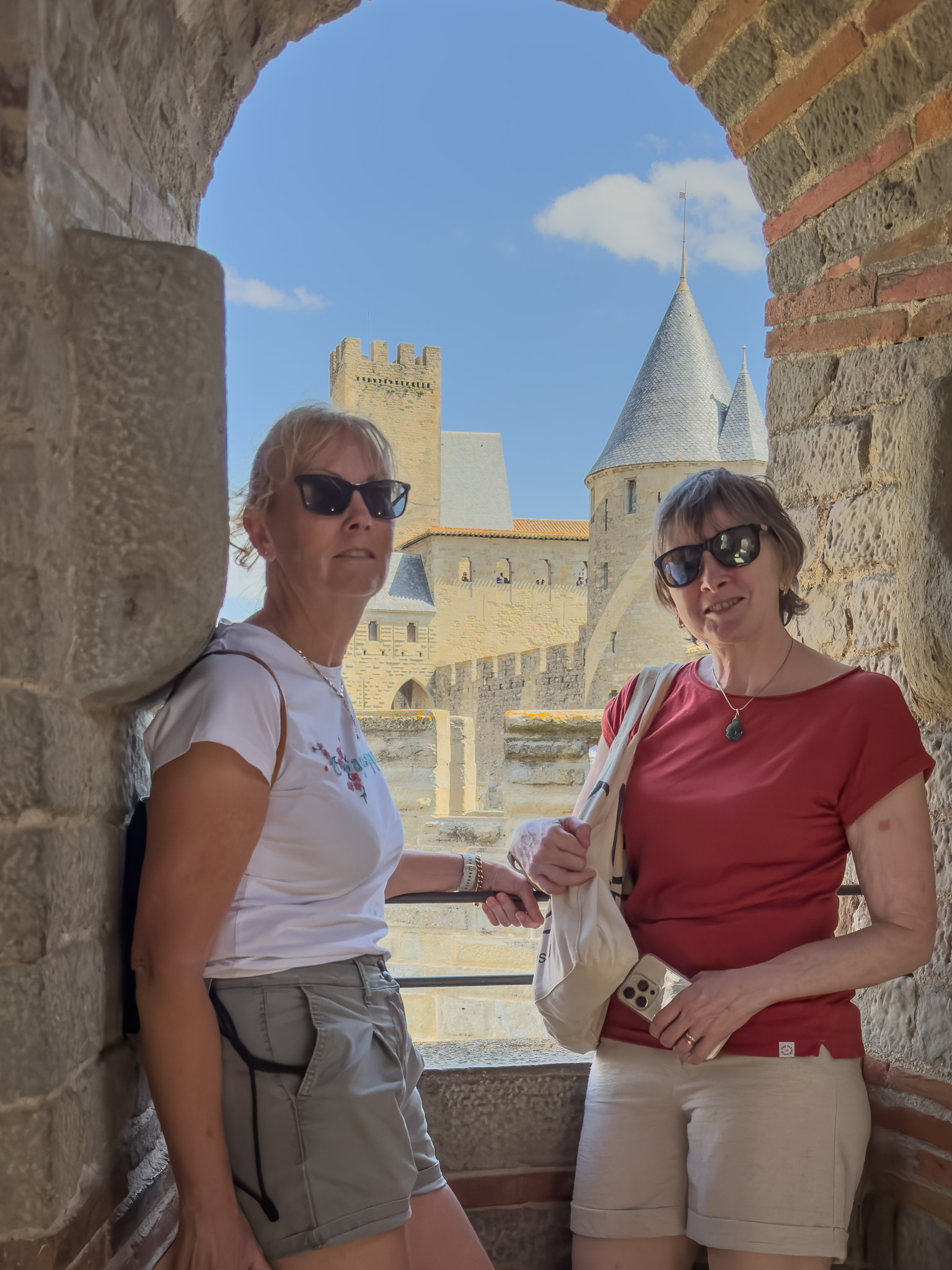
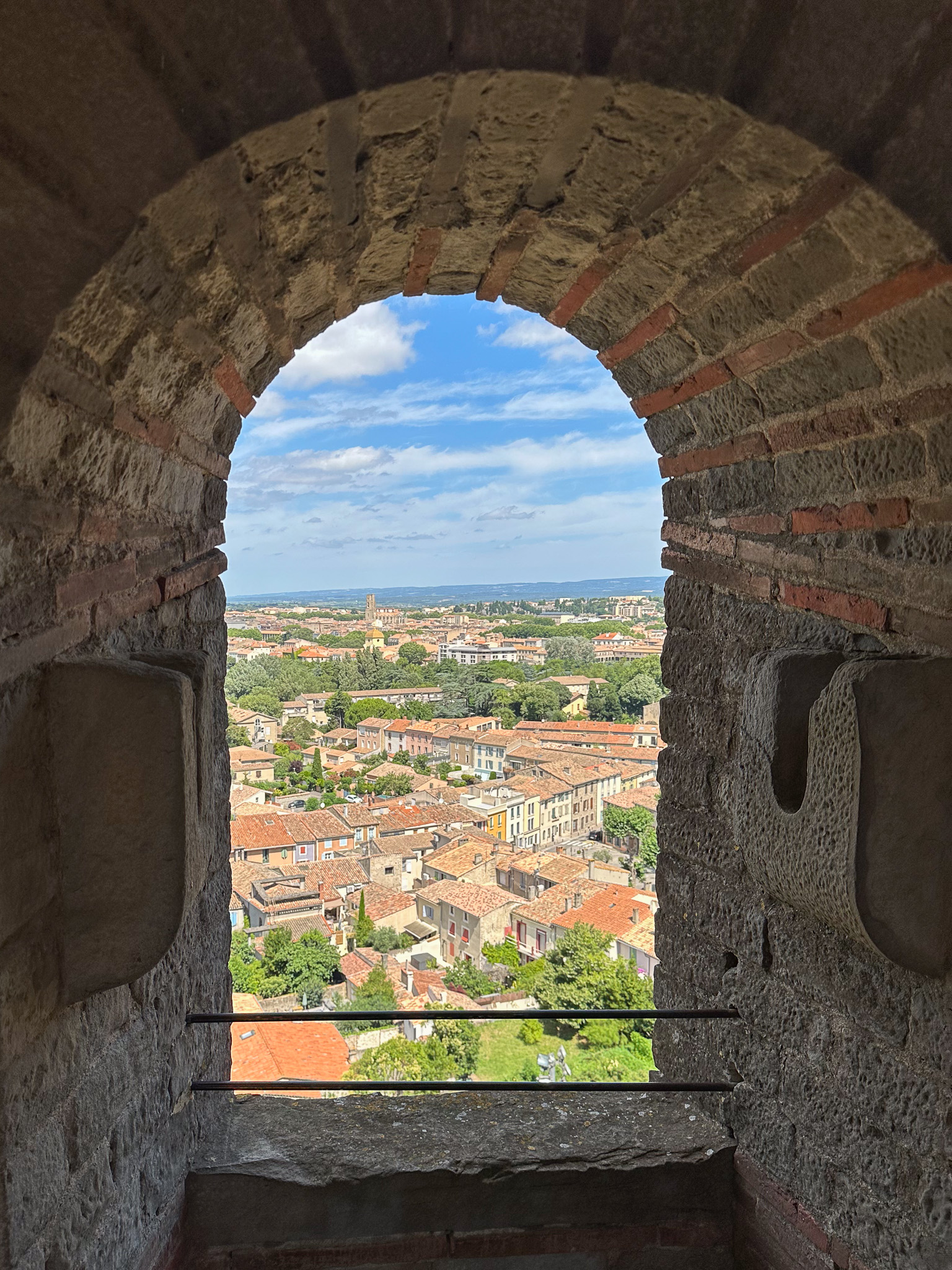
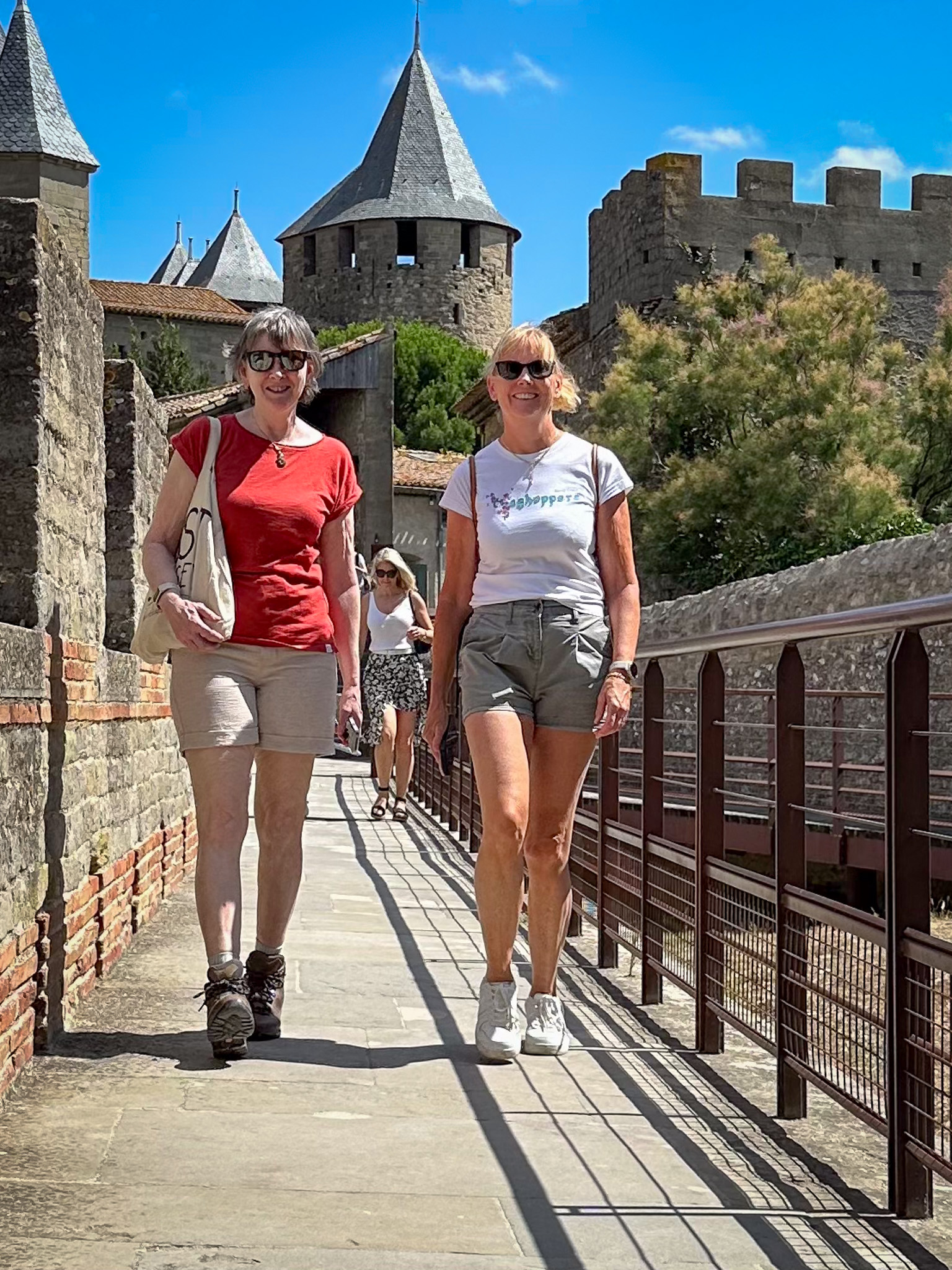
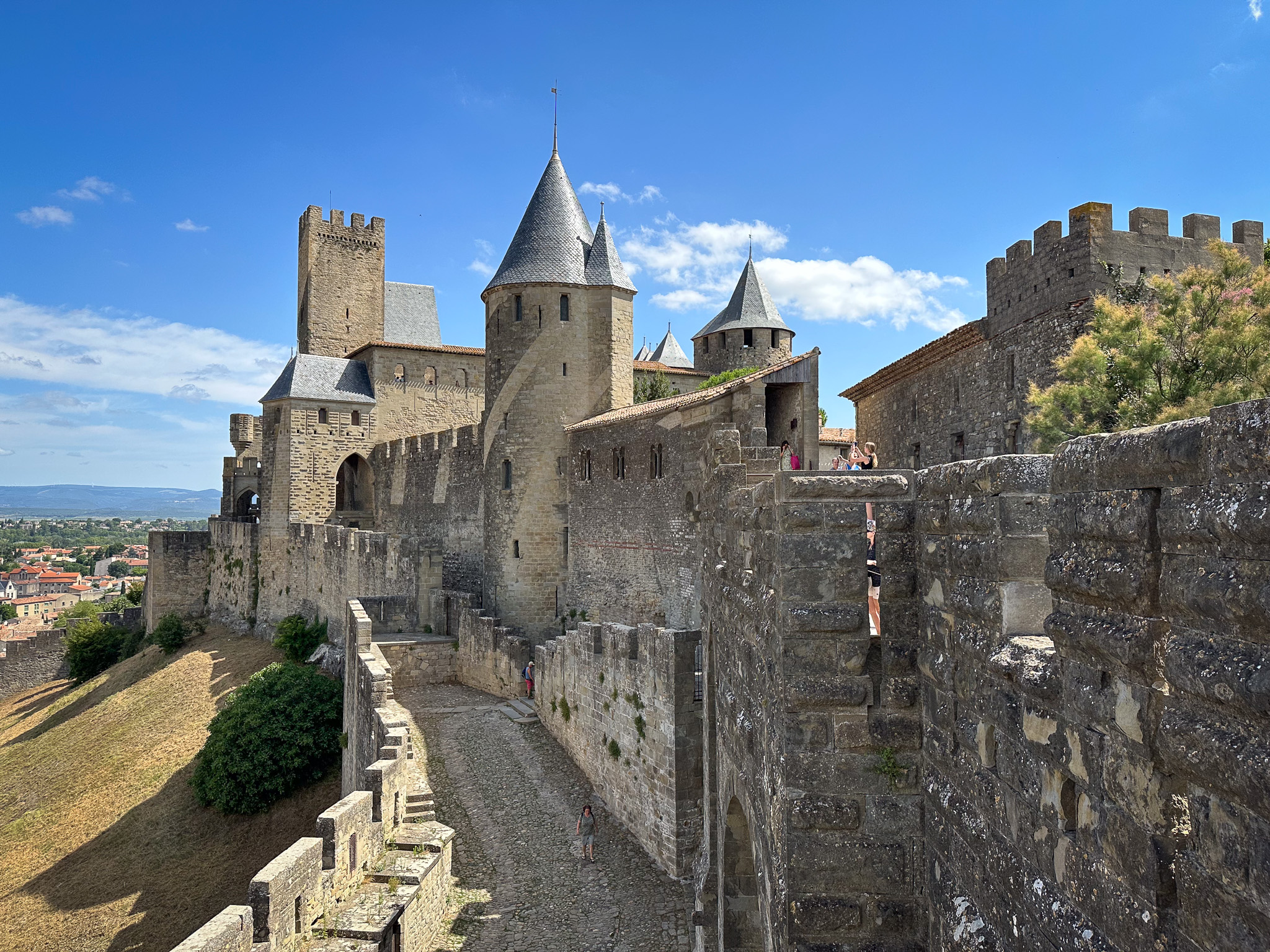
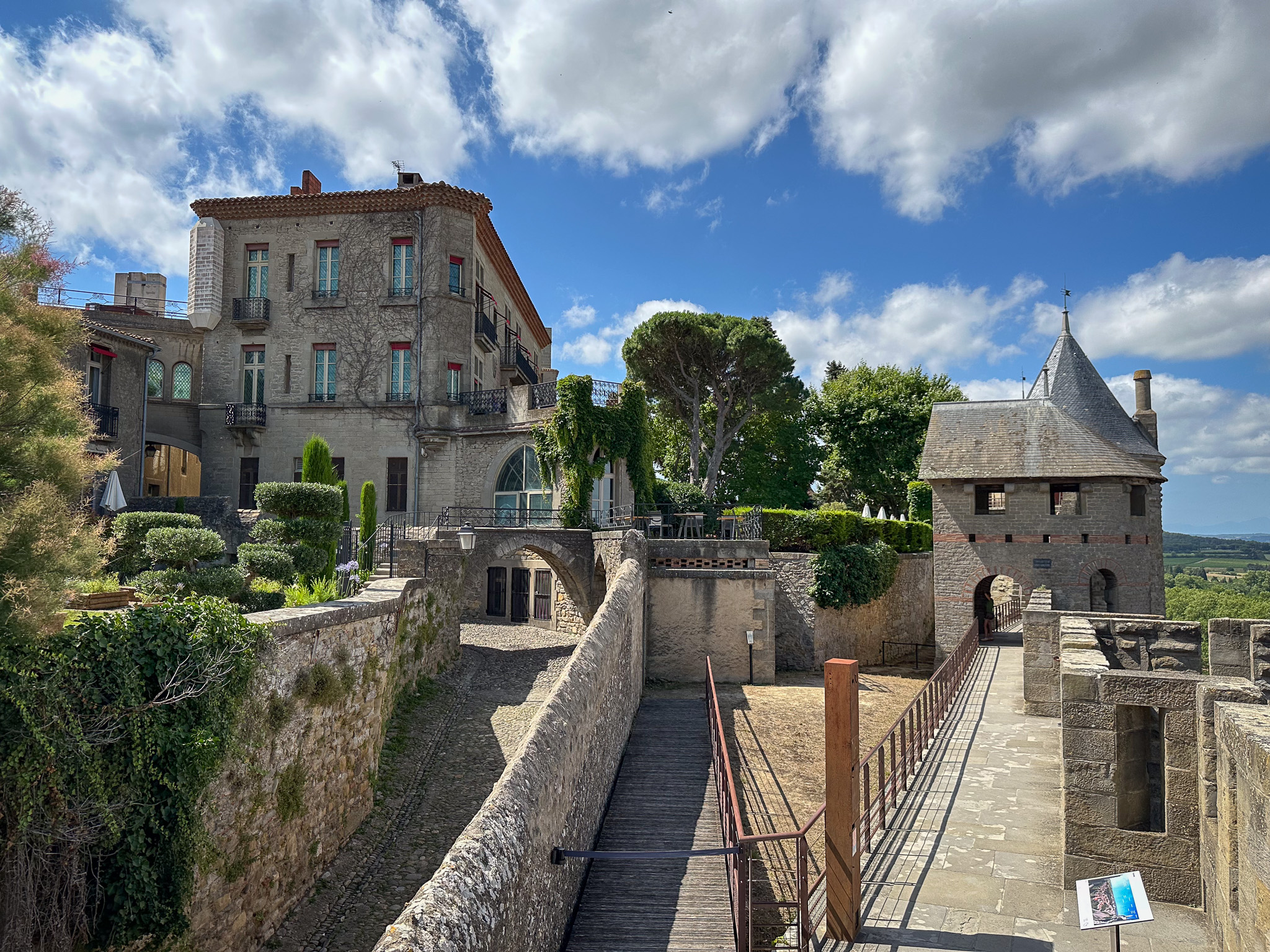
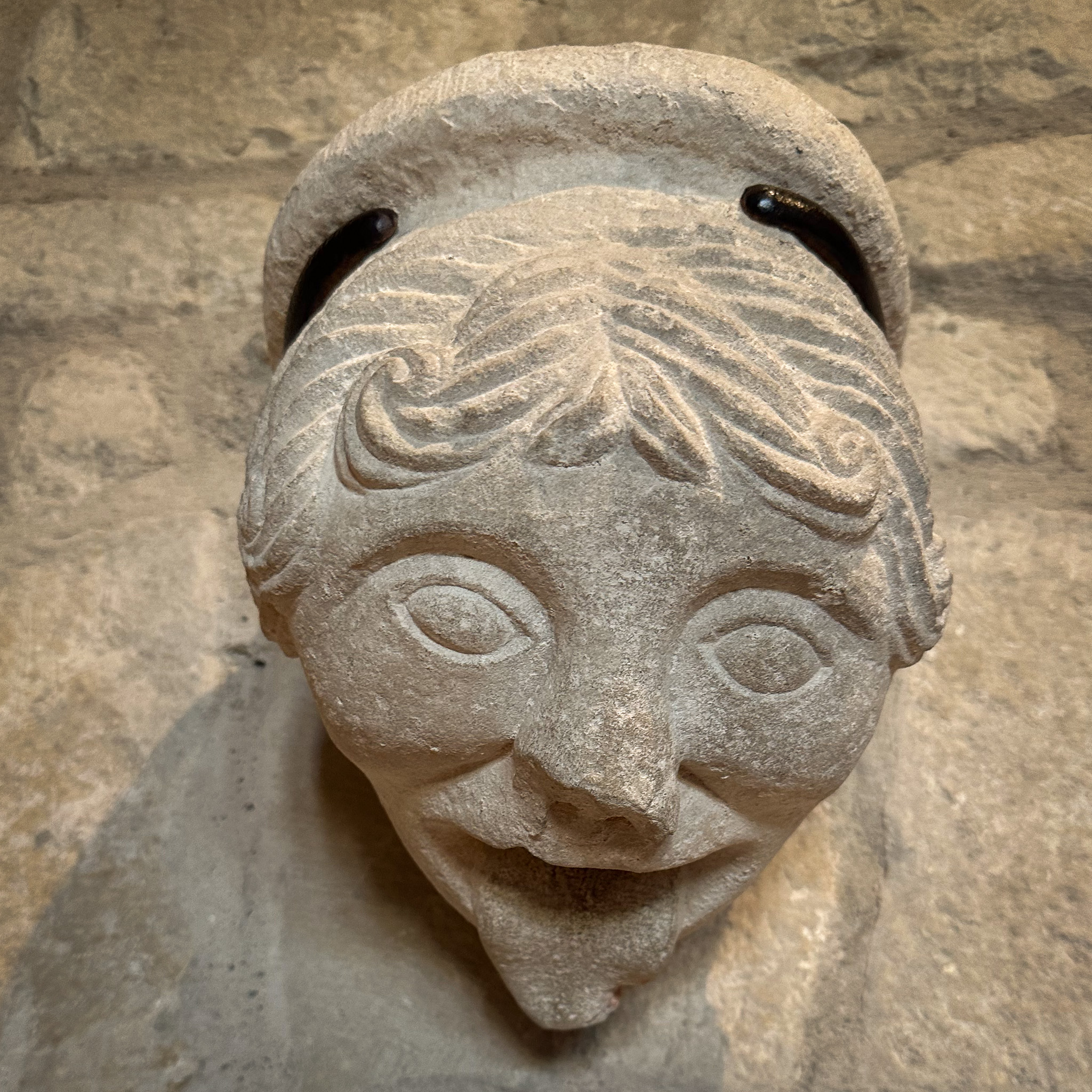
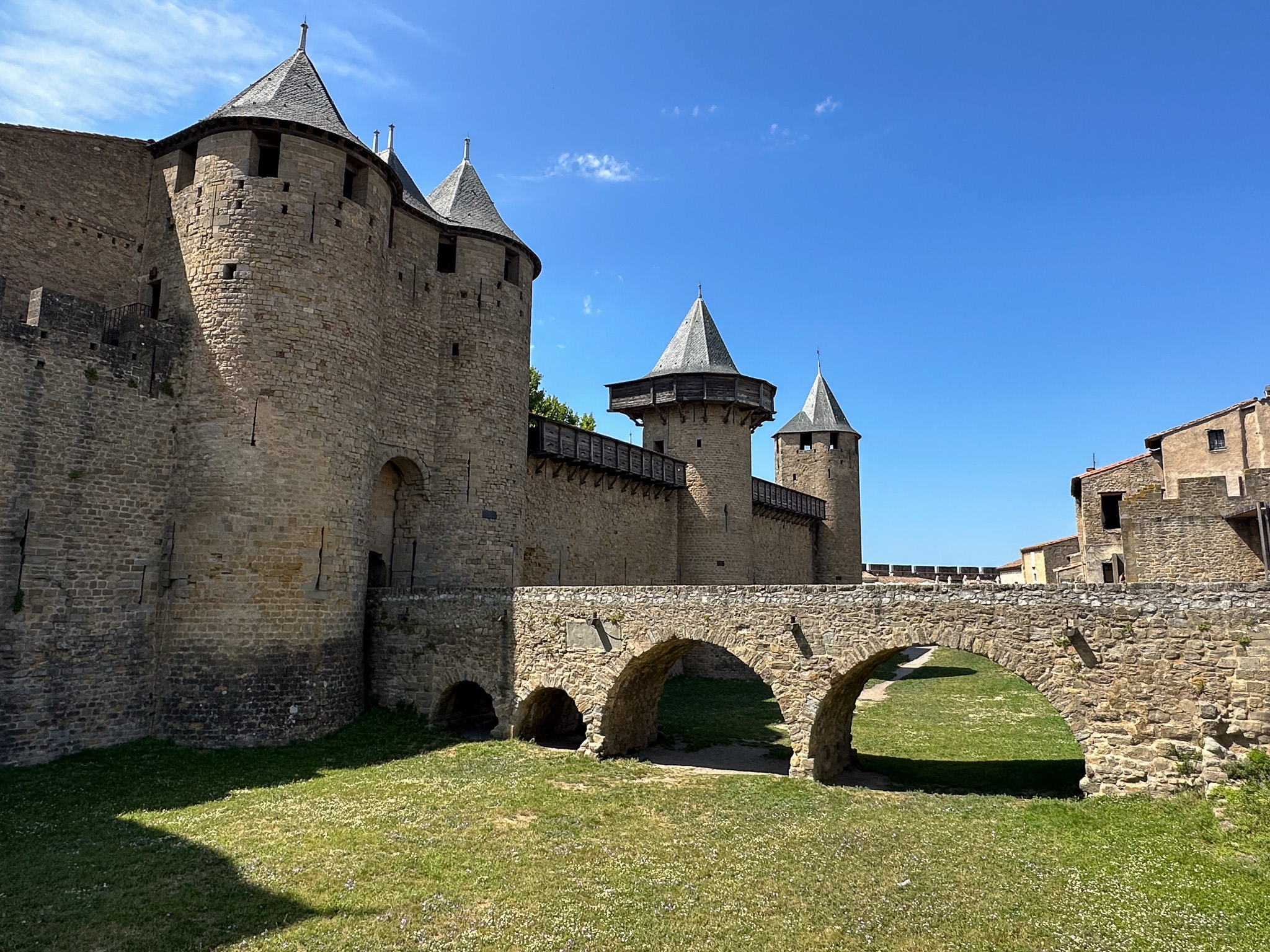
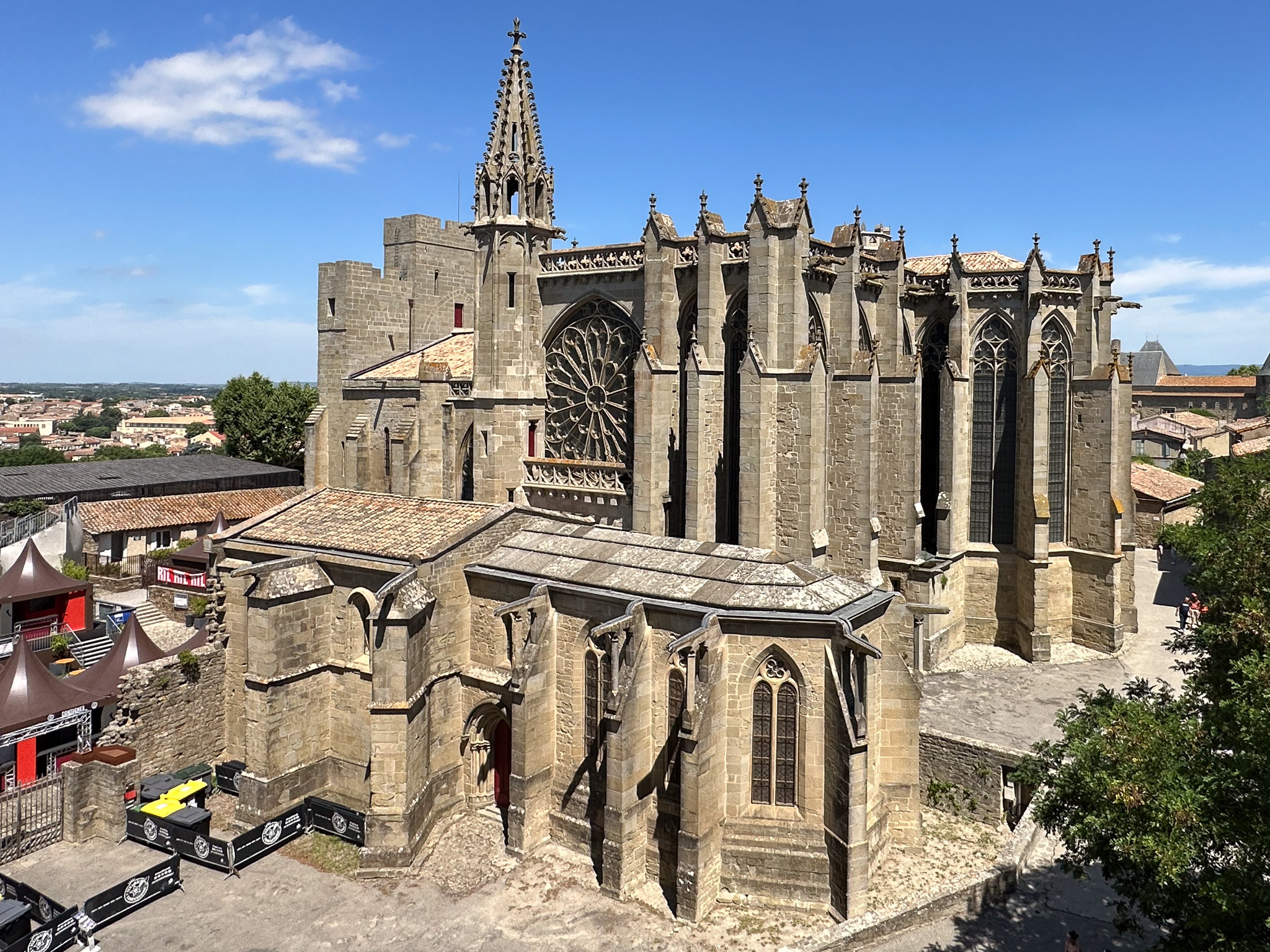
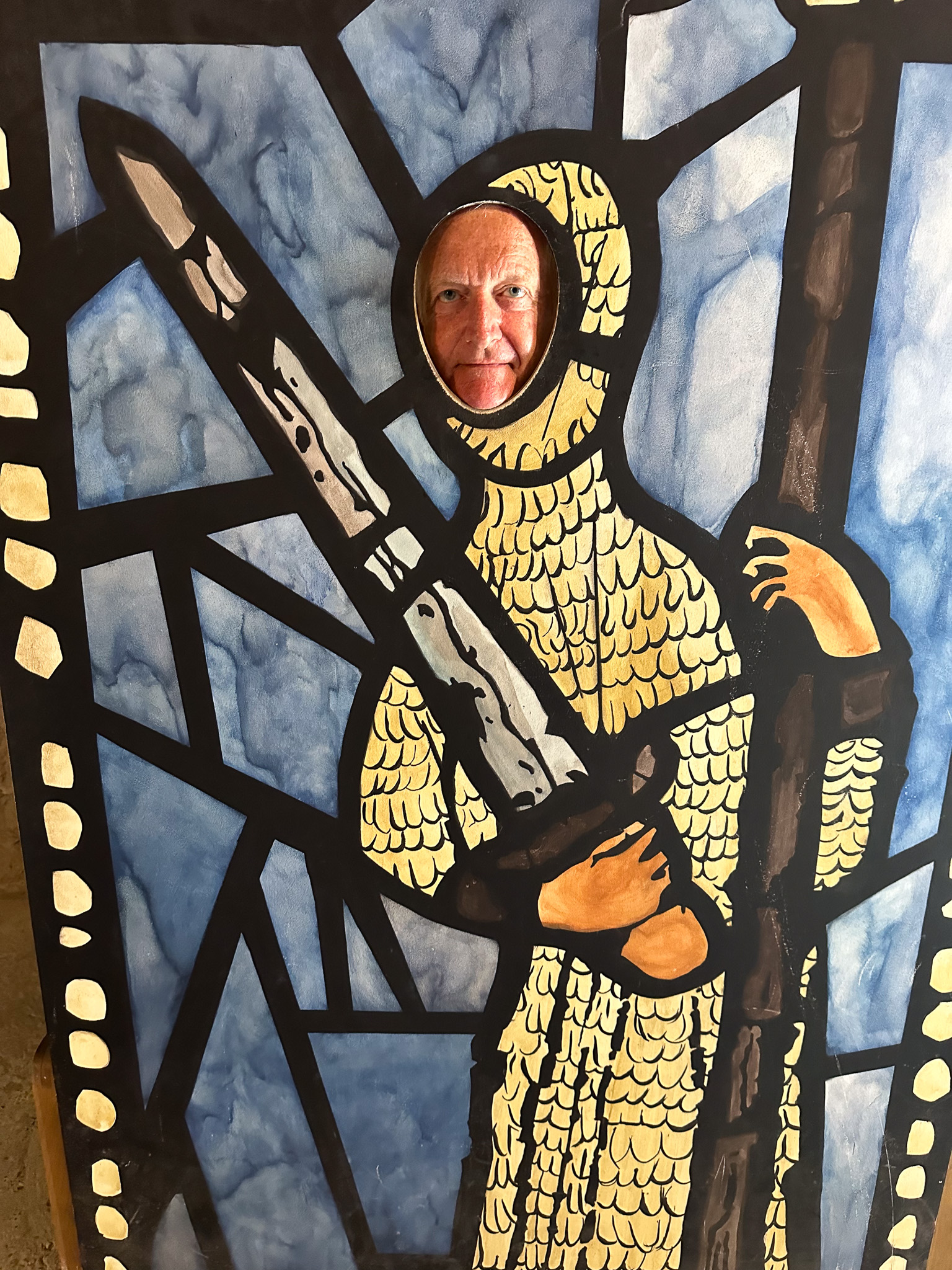
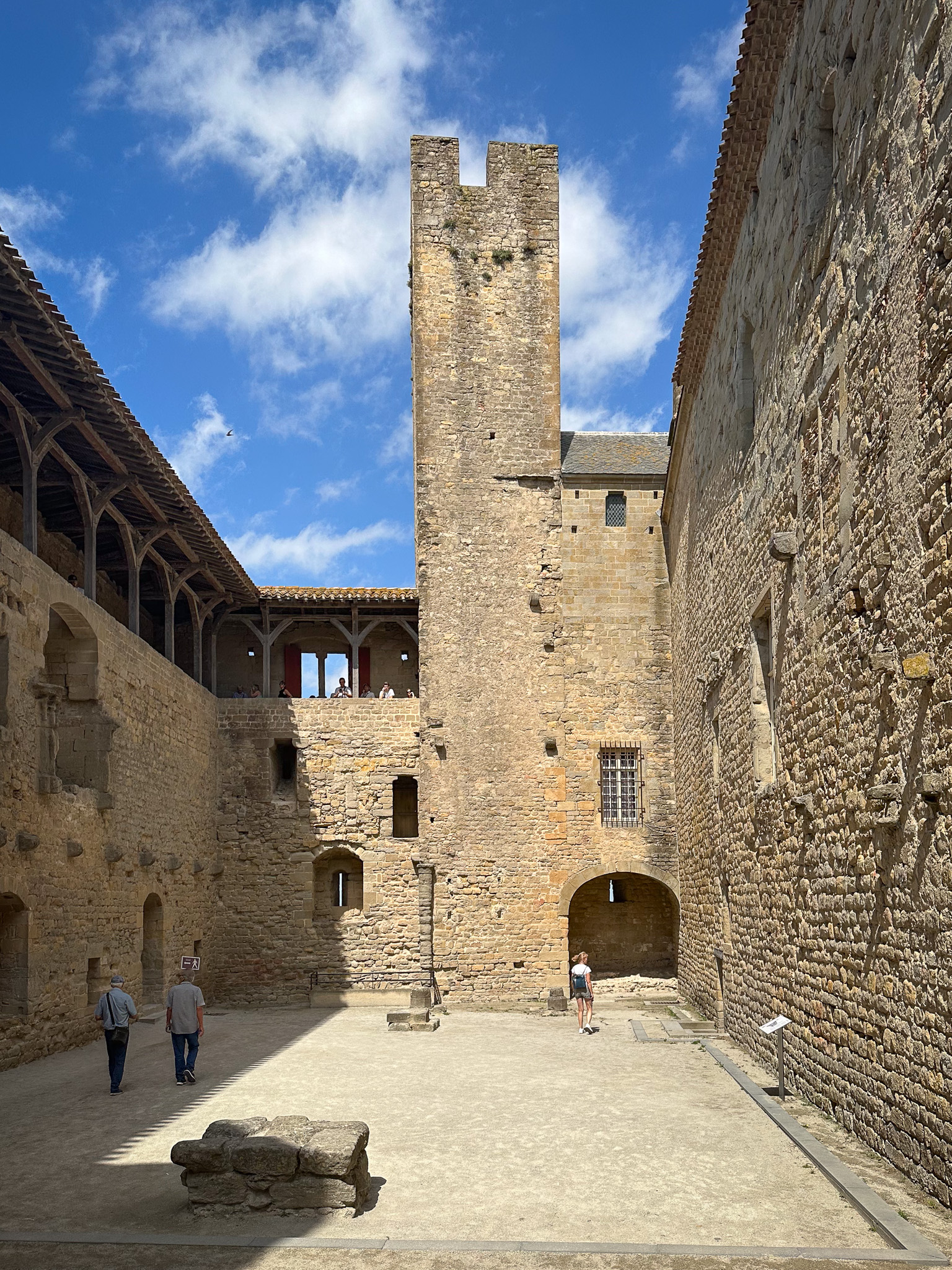
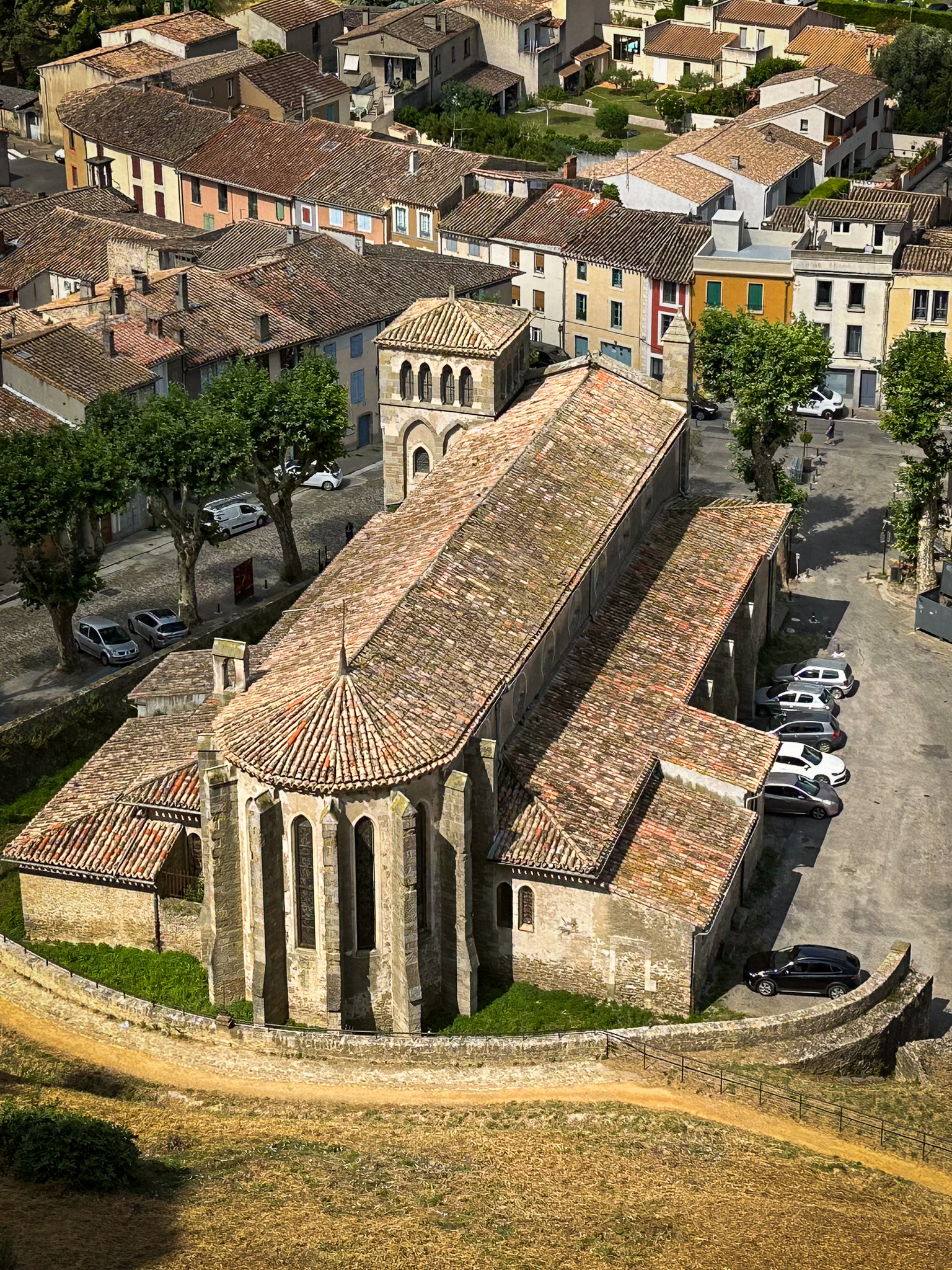
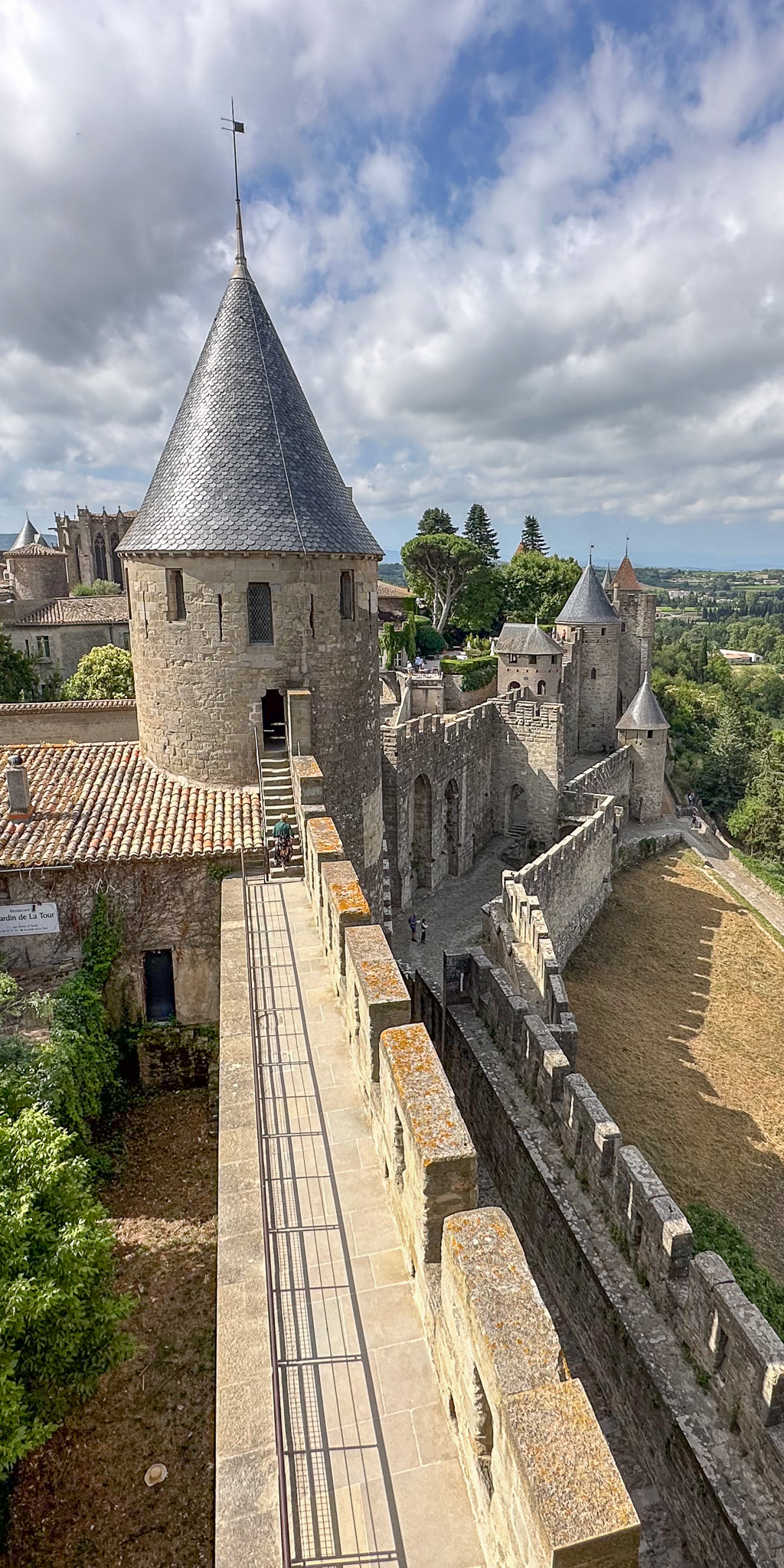
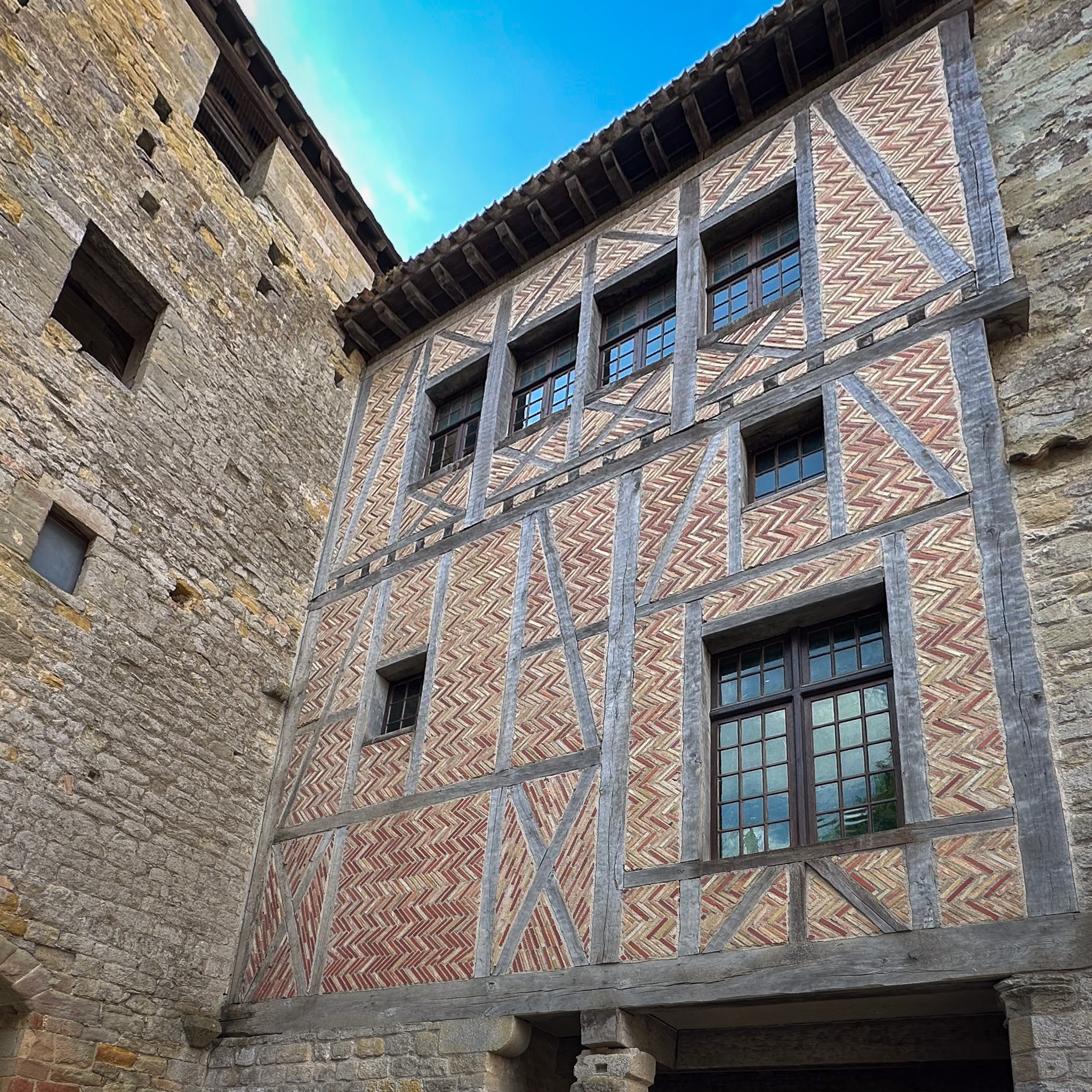
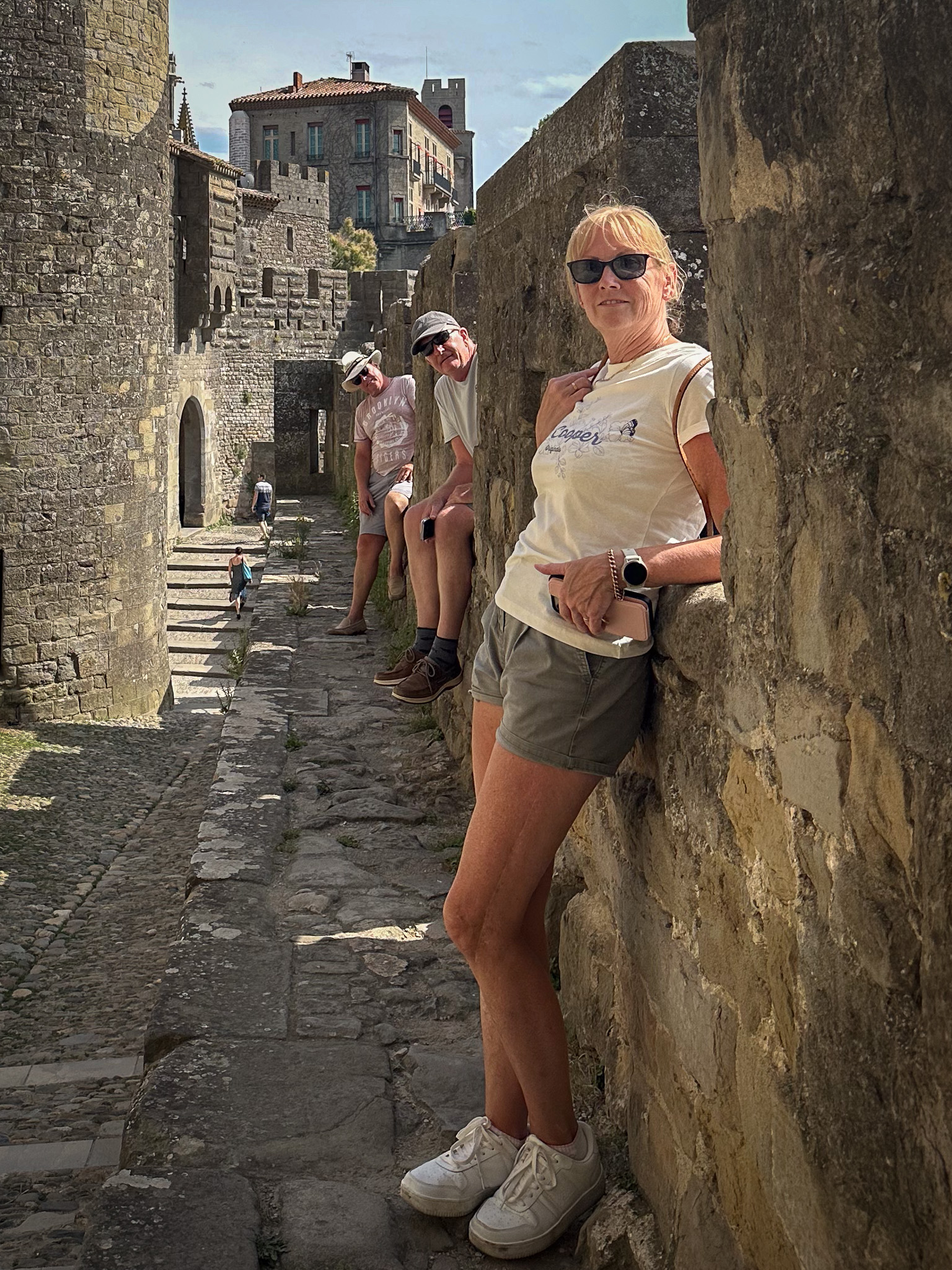
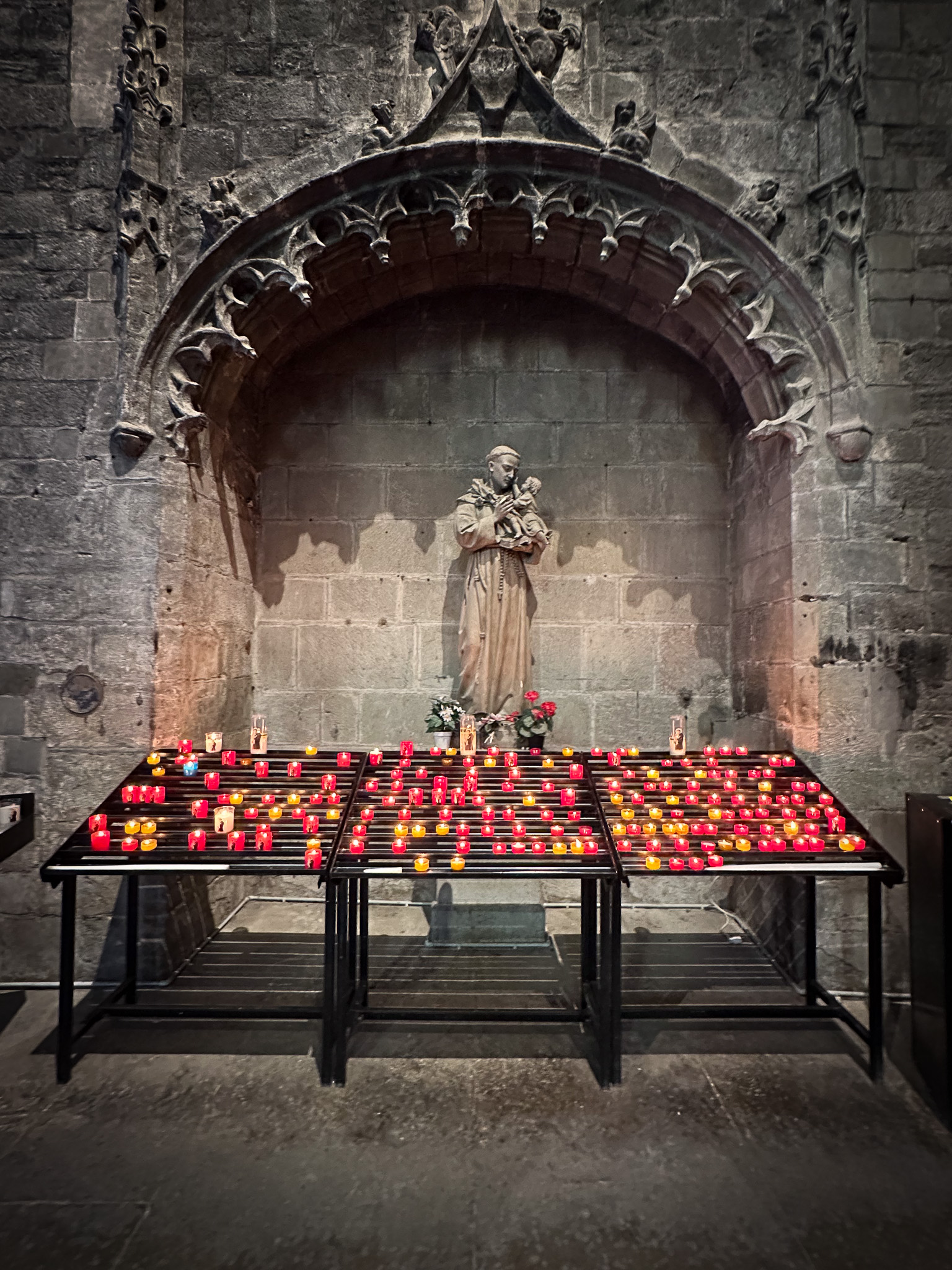
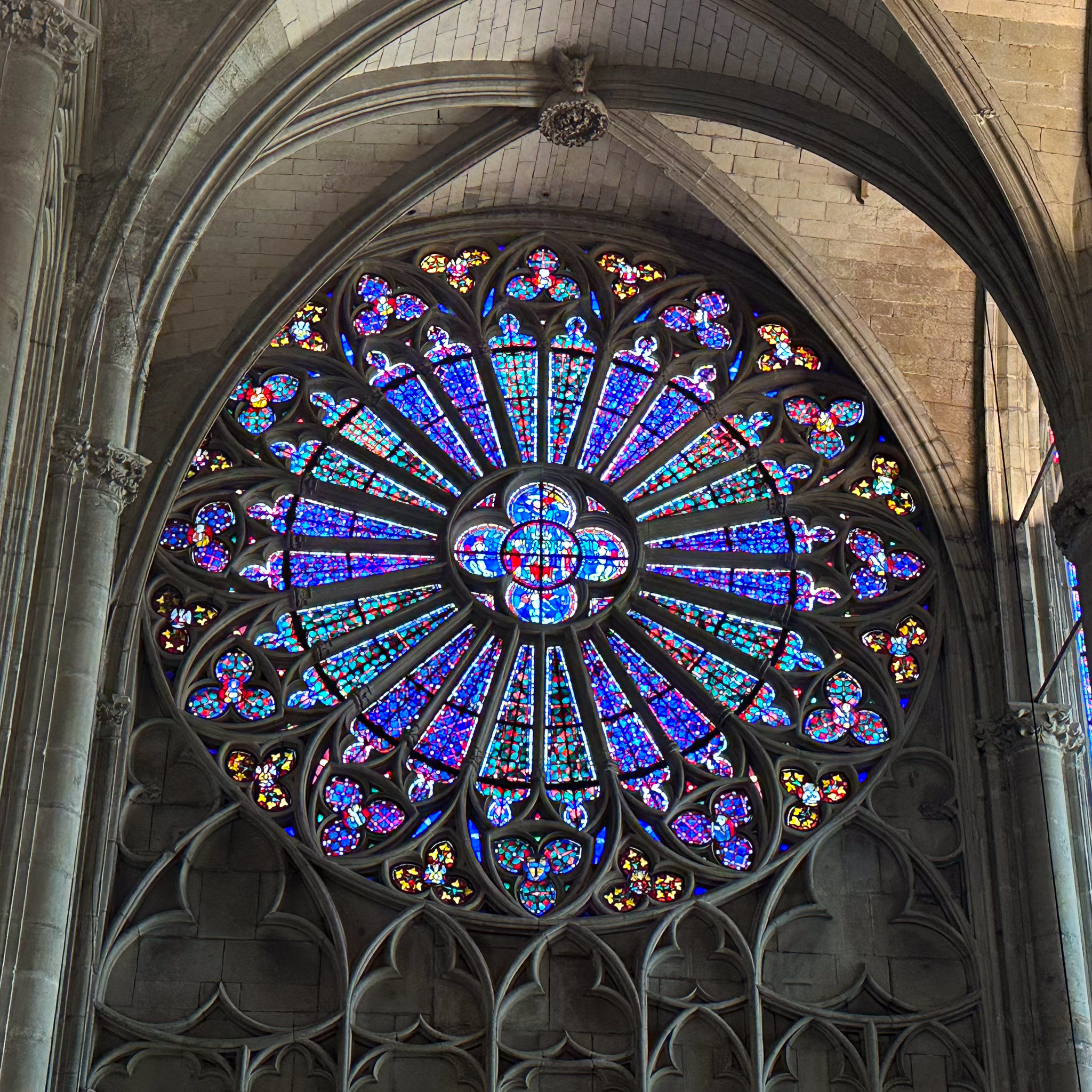
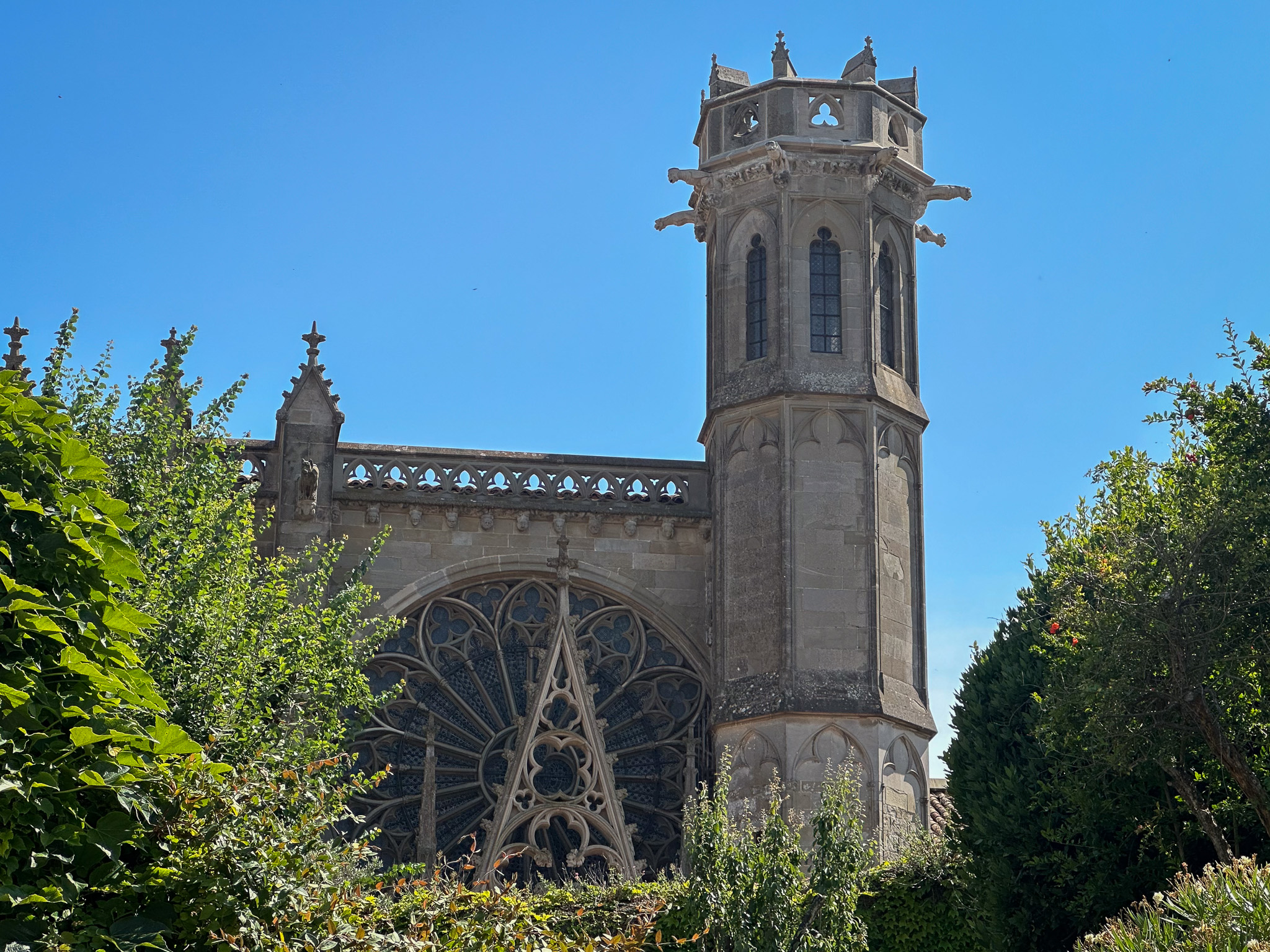
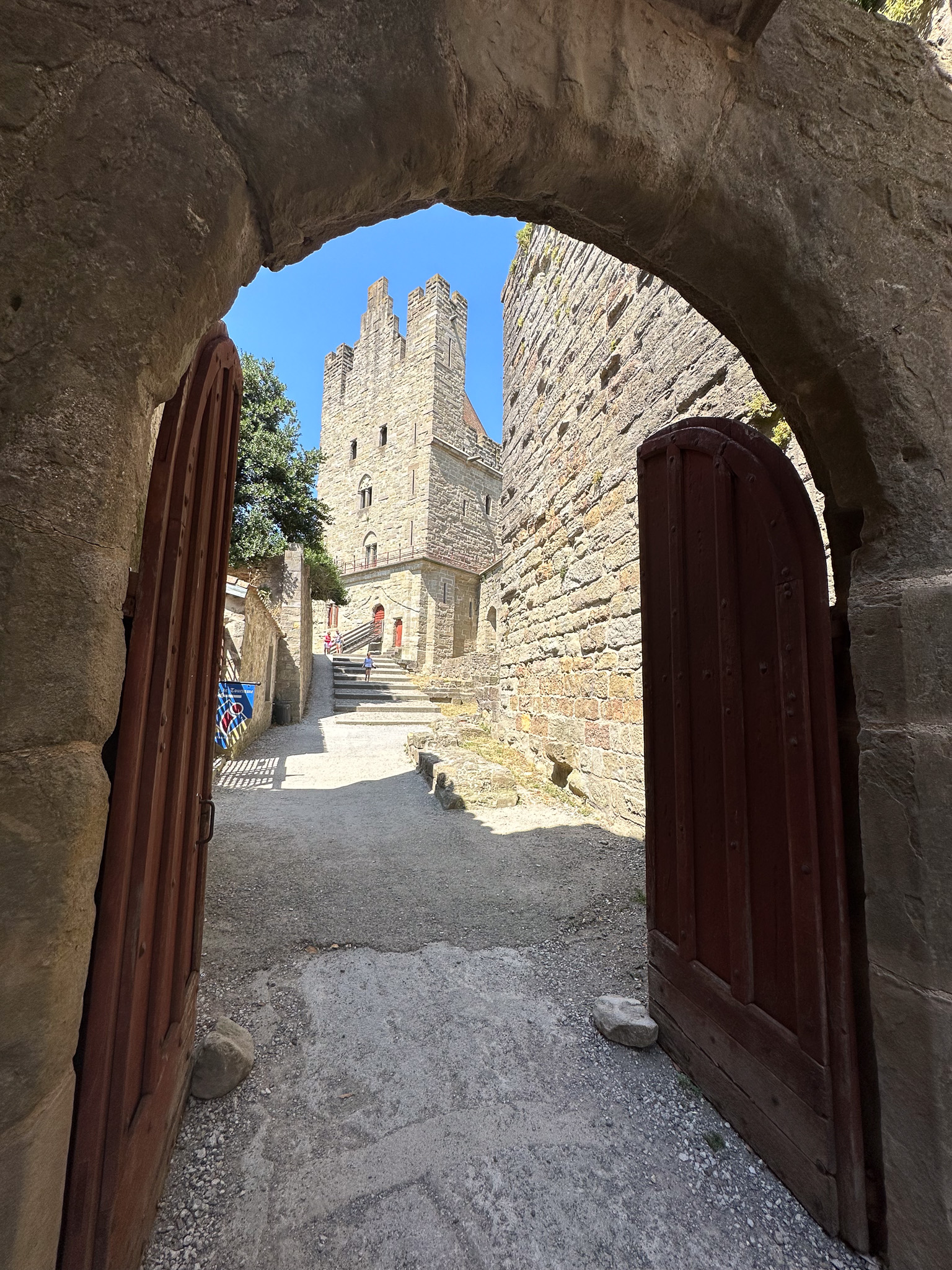
One of our stops along the canal was the city of Carcassonne. The canal enters a large basin in the centre of the town and we were able spend two nights here giving us plenty of time to explore Cité de Carcassonne, the mediaeval citadel strategically positioned on a hill above the River Aude. The citadel was nearly demolished by the French government in 1849. Fortunately, local opposition led to a reversal of the decision and a huge restoration programme began. The bizarre curved marks on city walls are a consequence of a highly controversial, and temporary, art installation Concentric Eccentric in 2018.


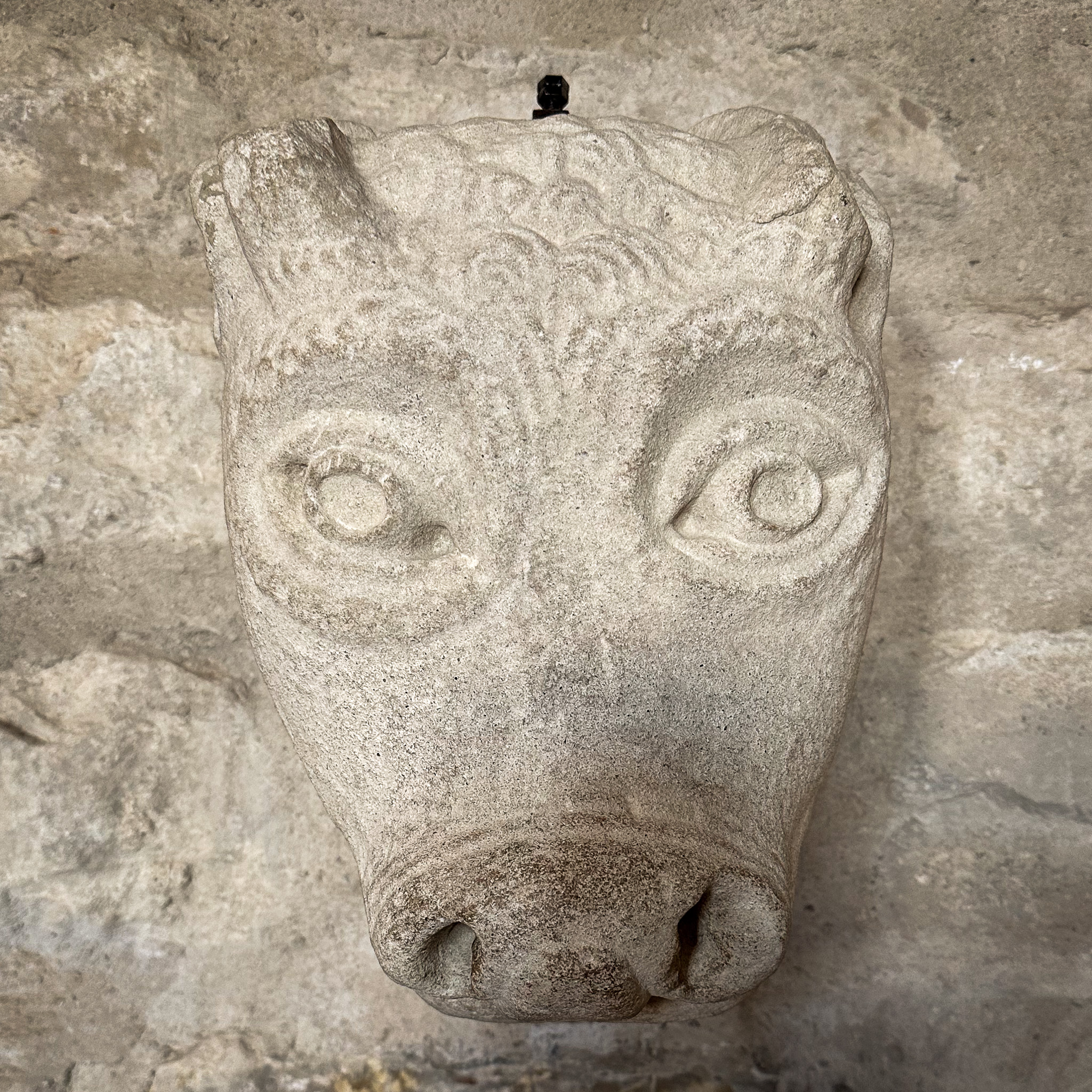

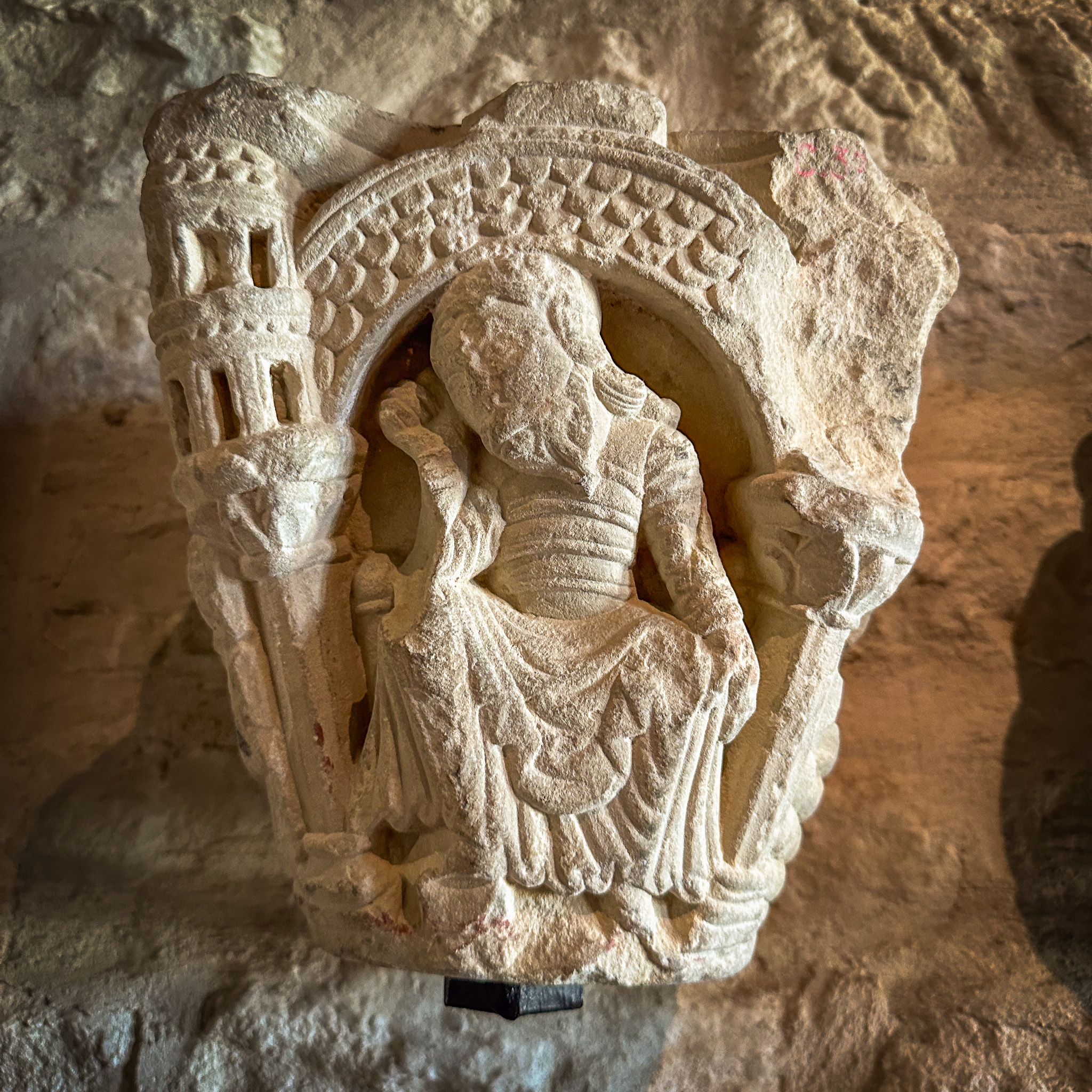
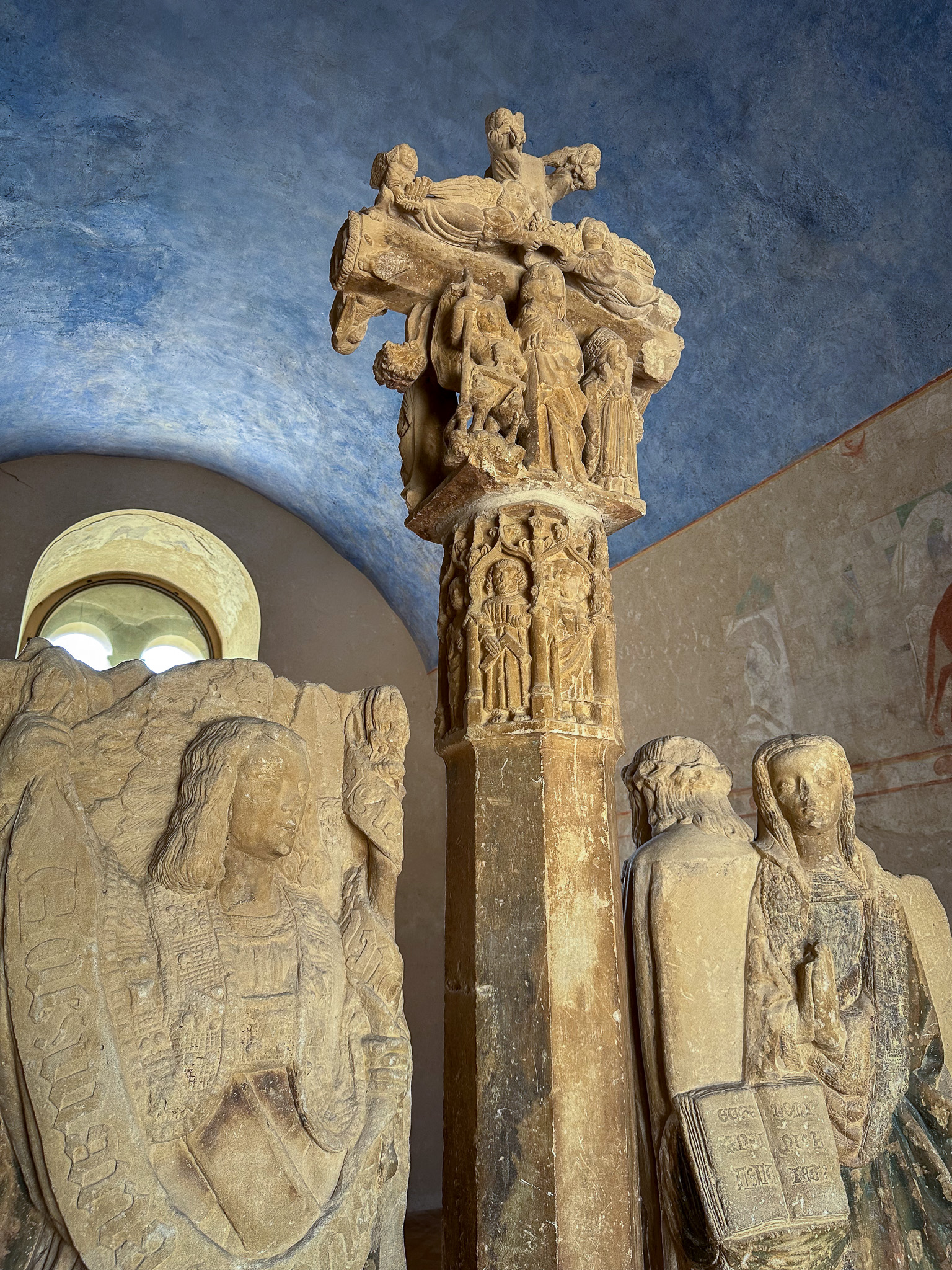
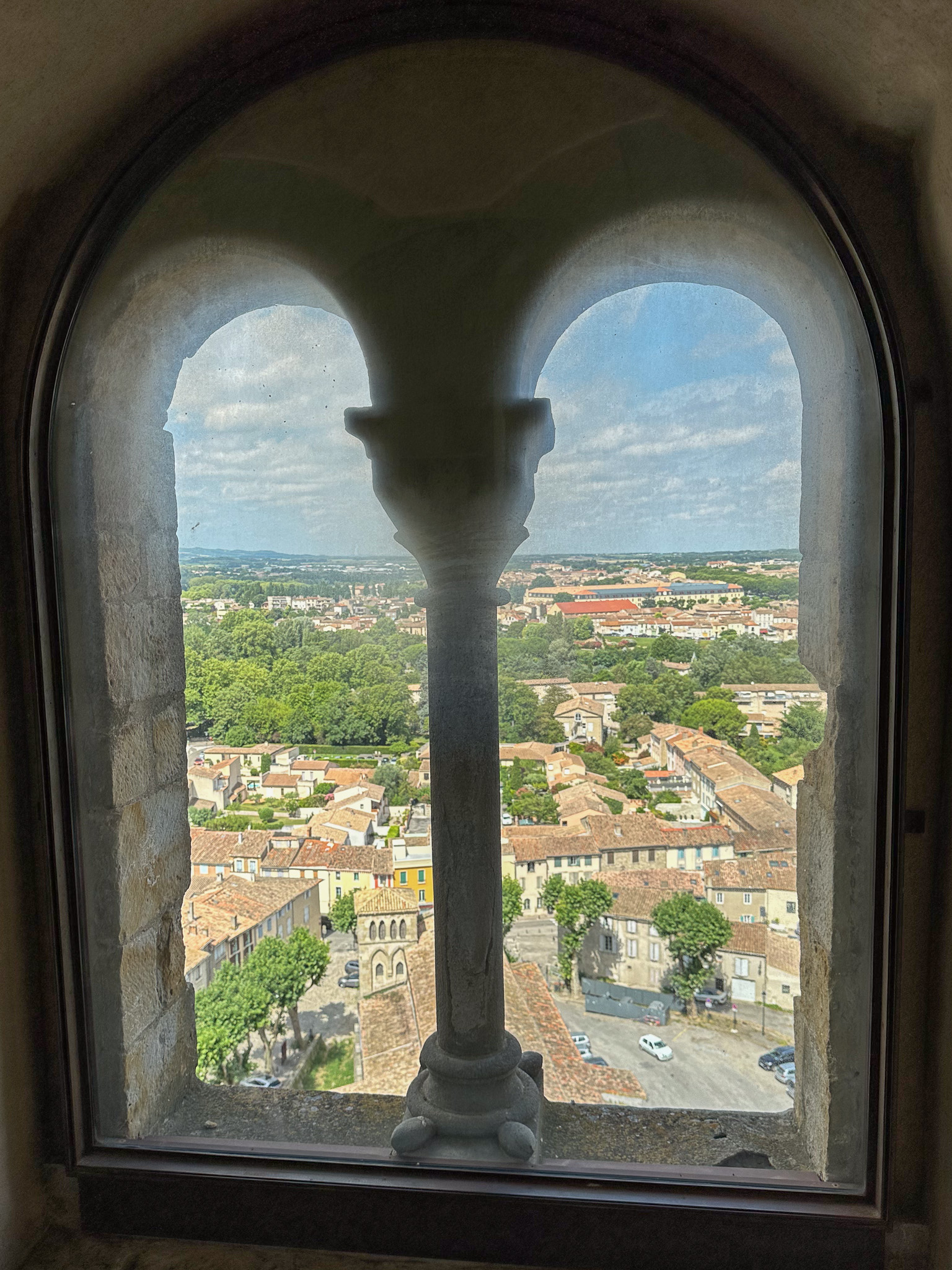
Distractions along the way
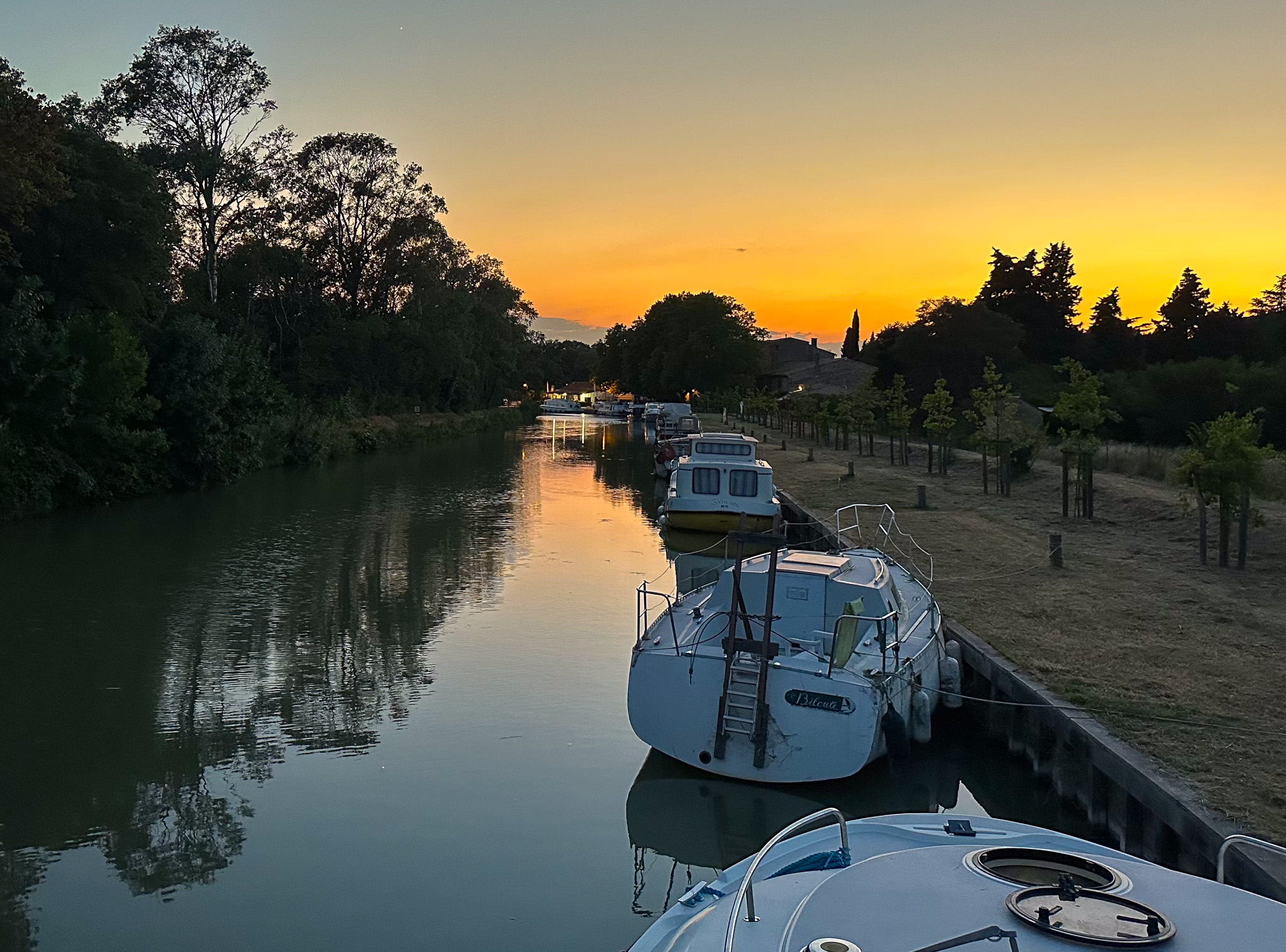
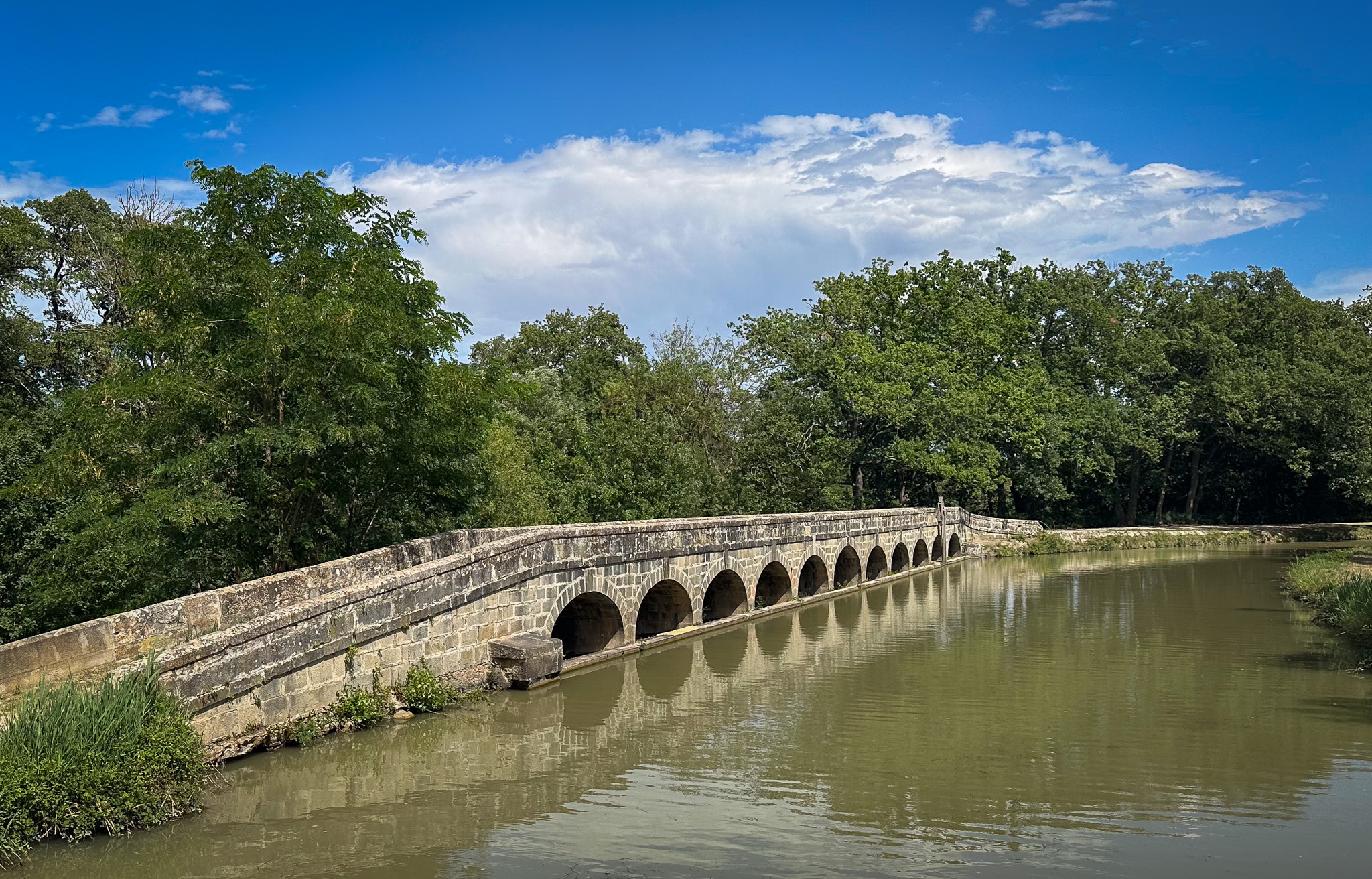
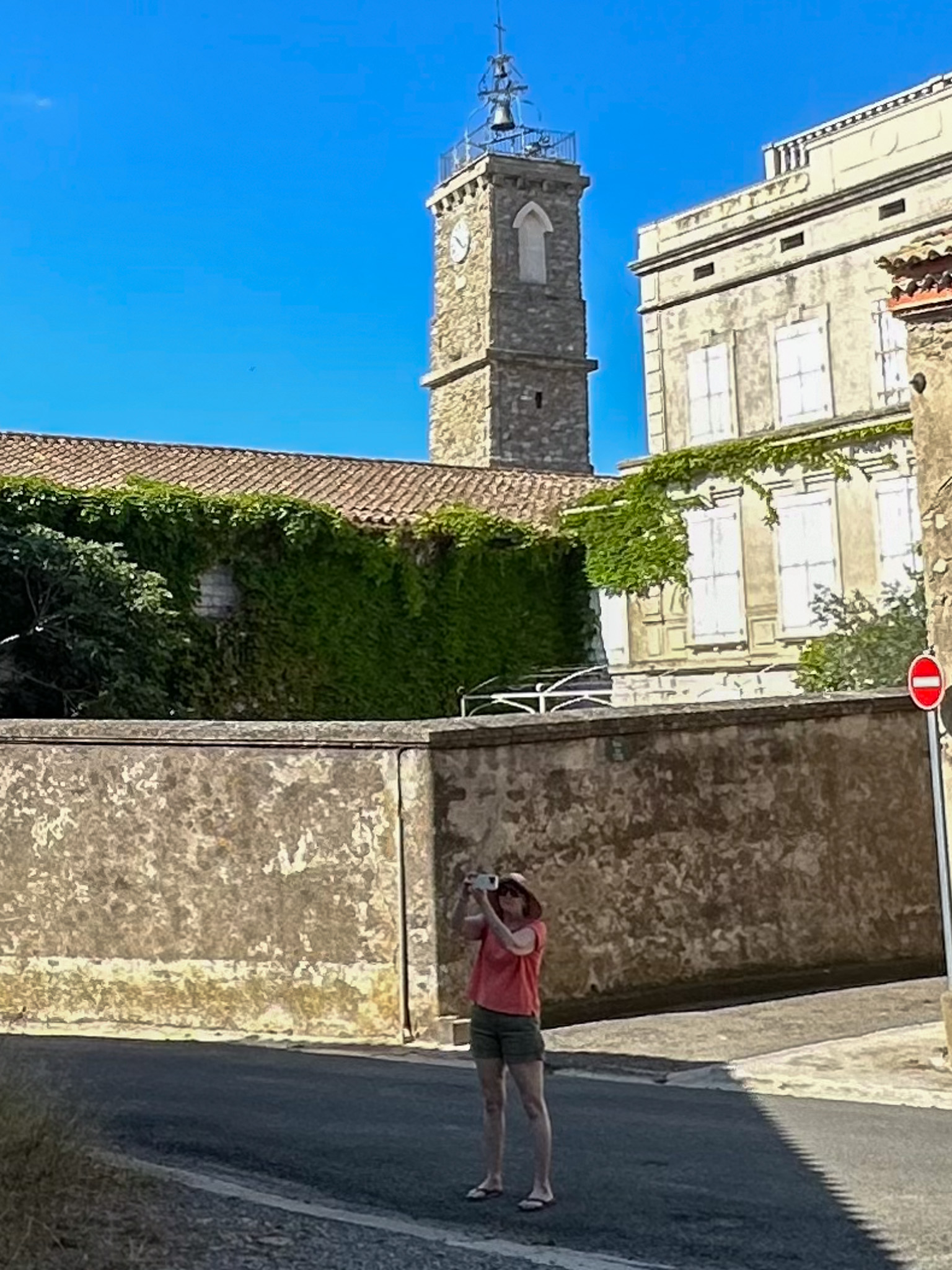
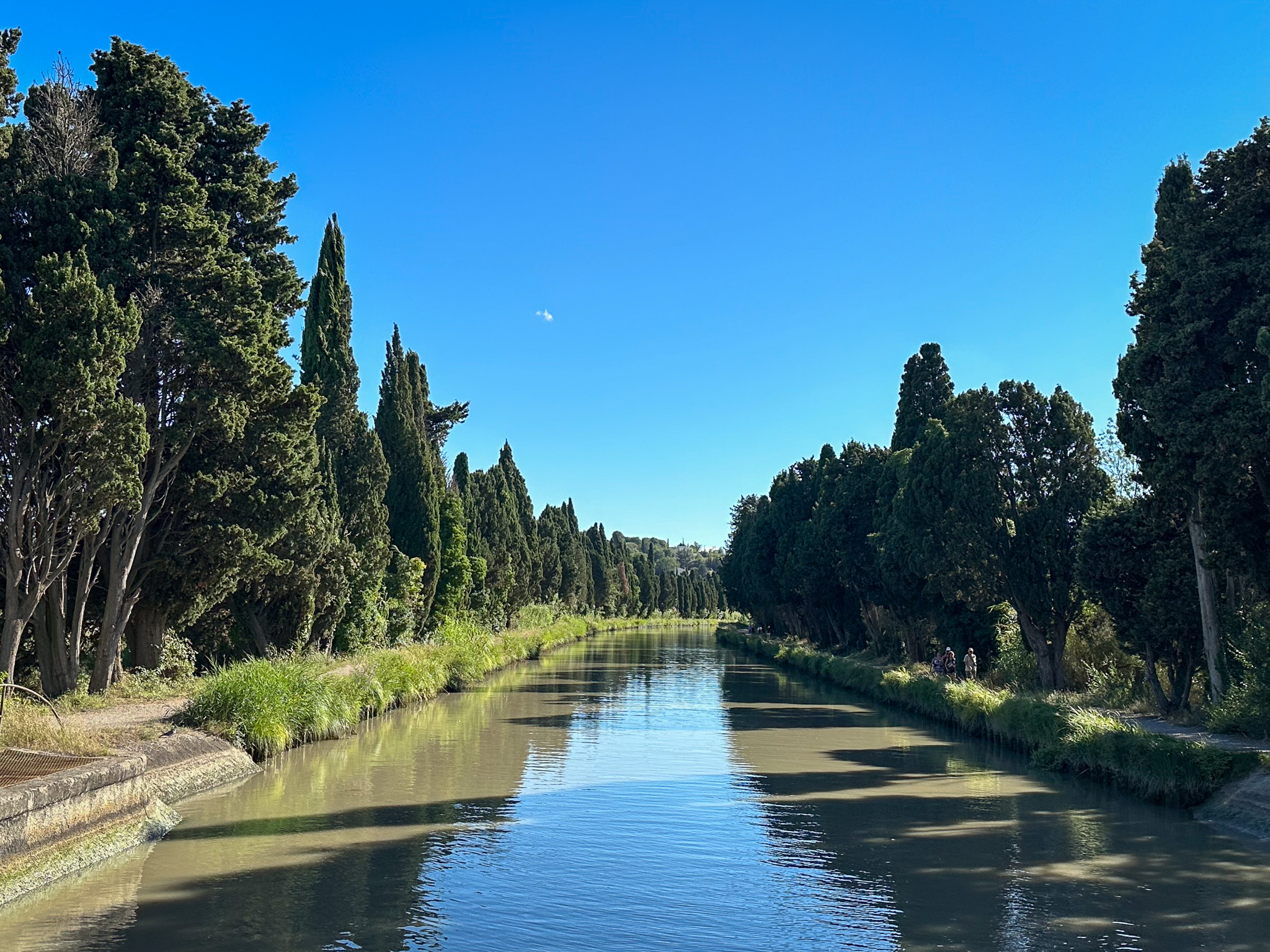
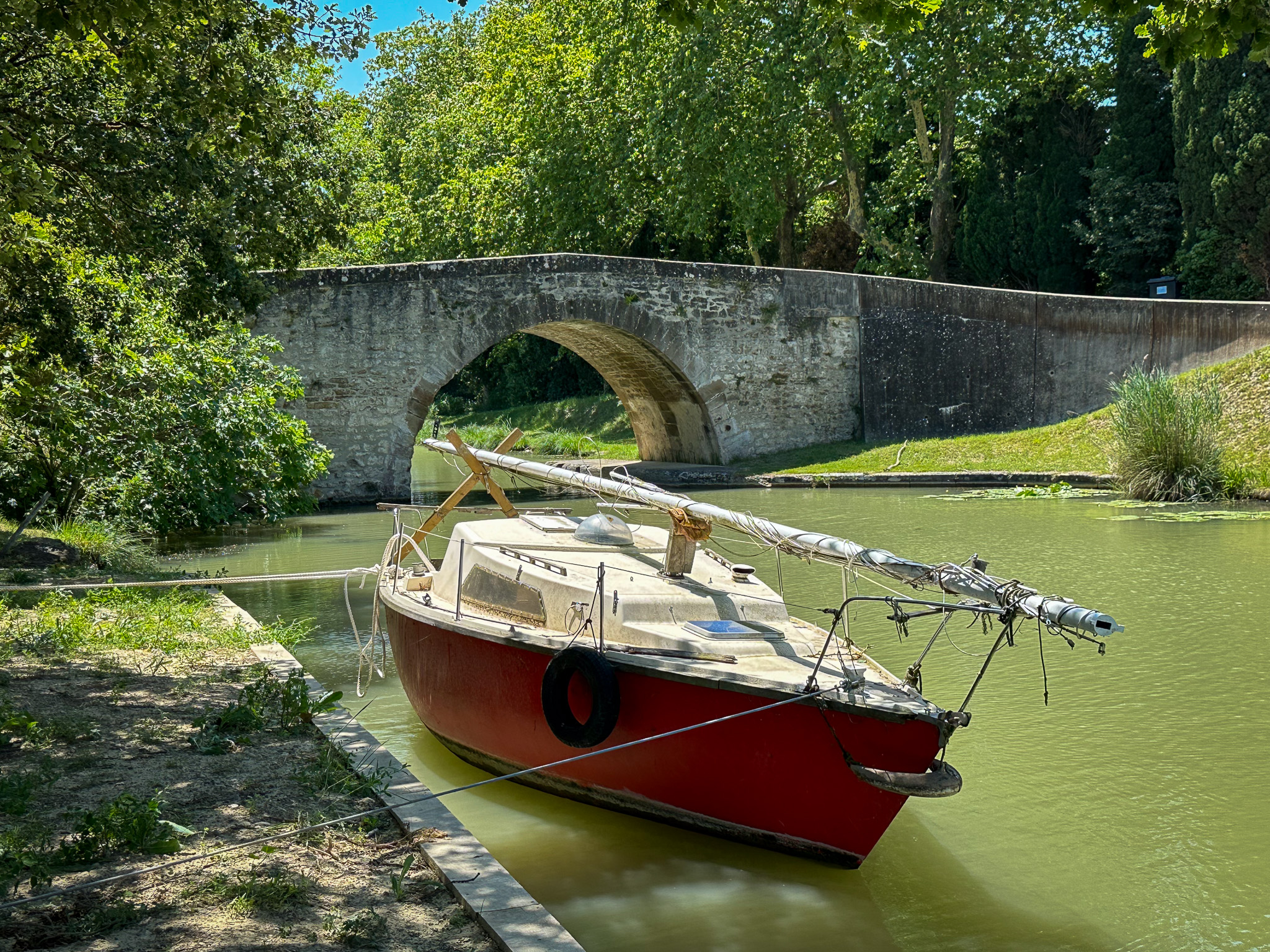
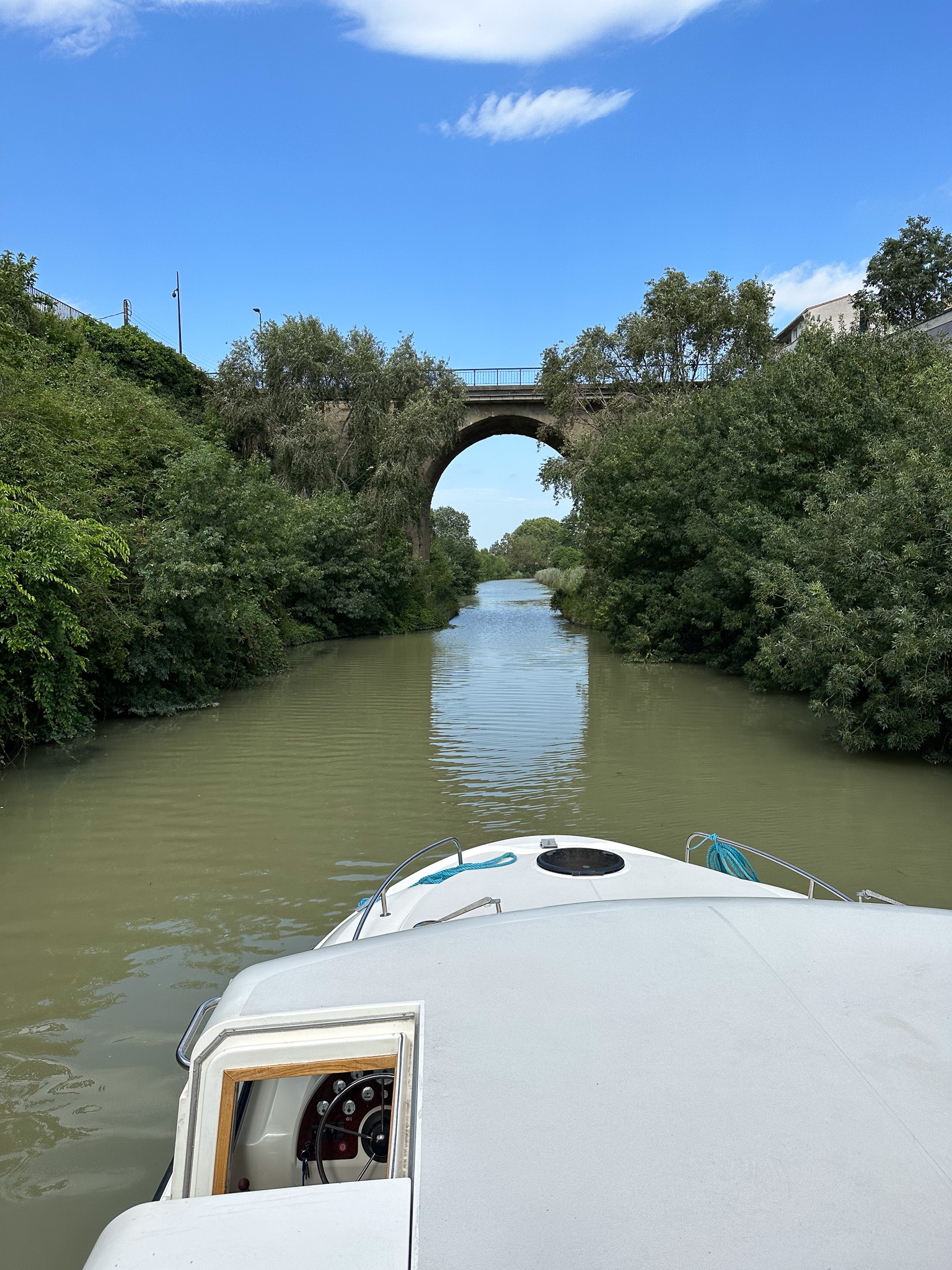
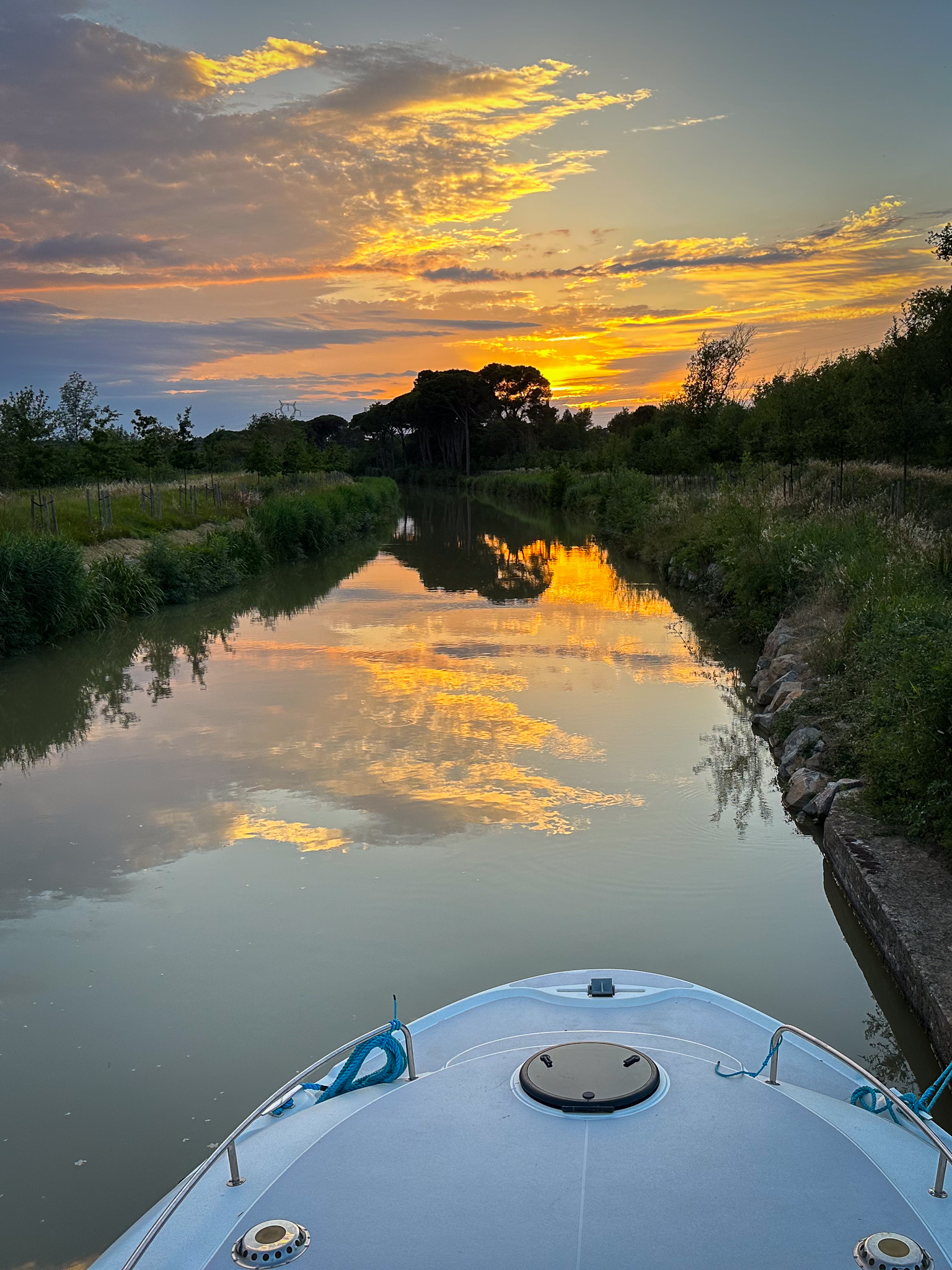
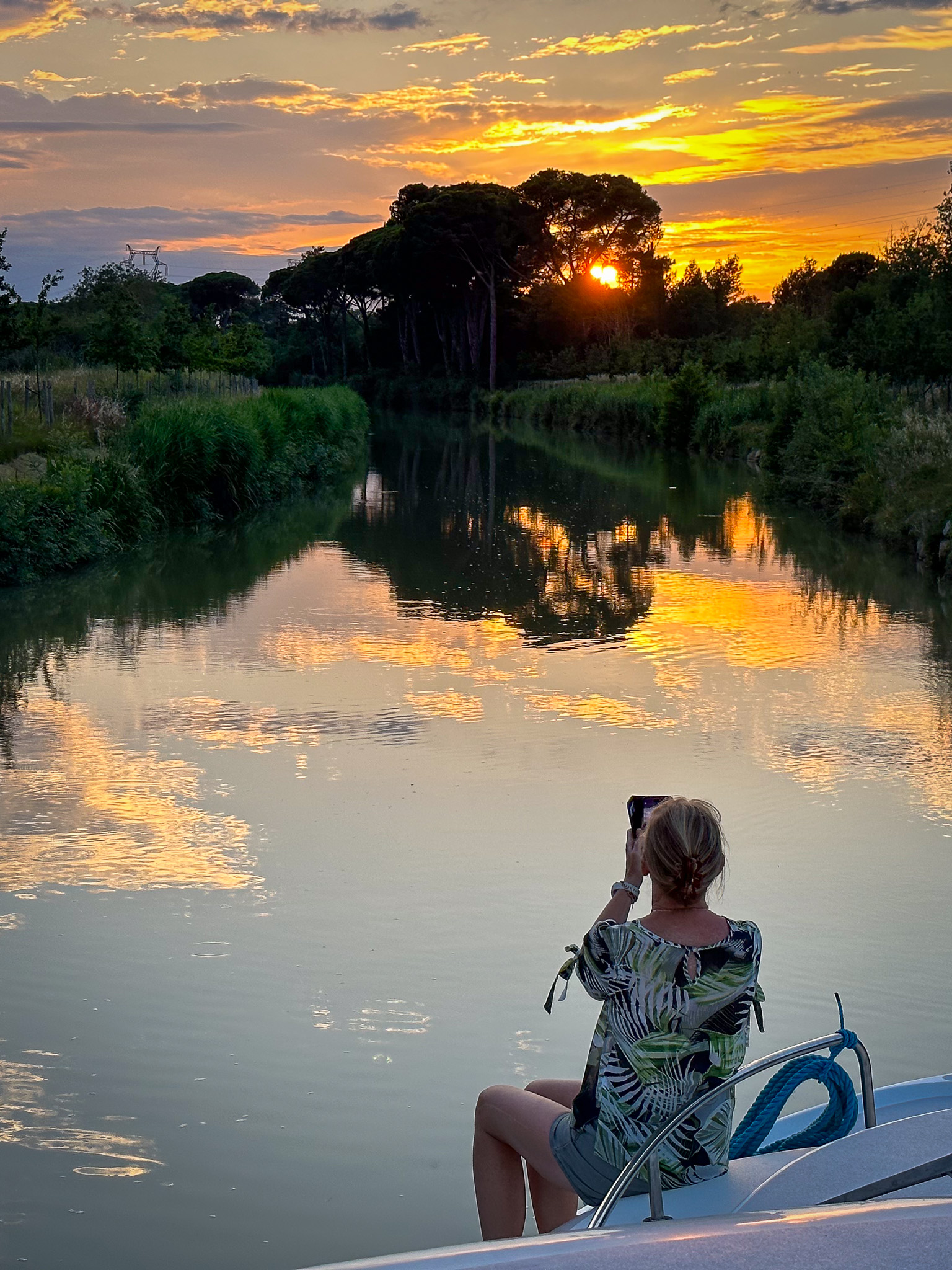
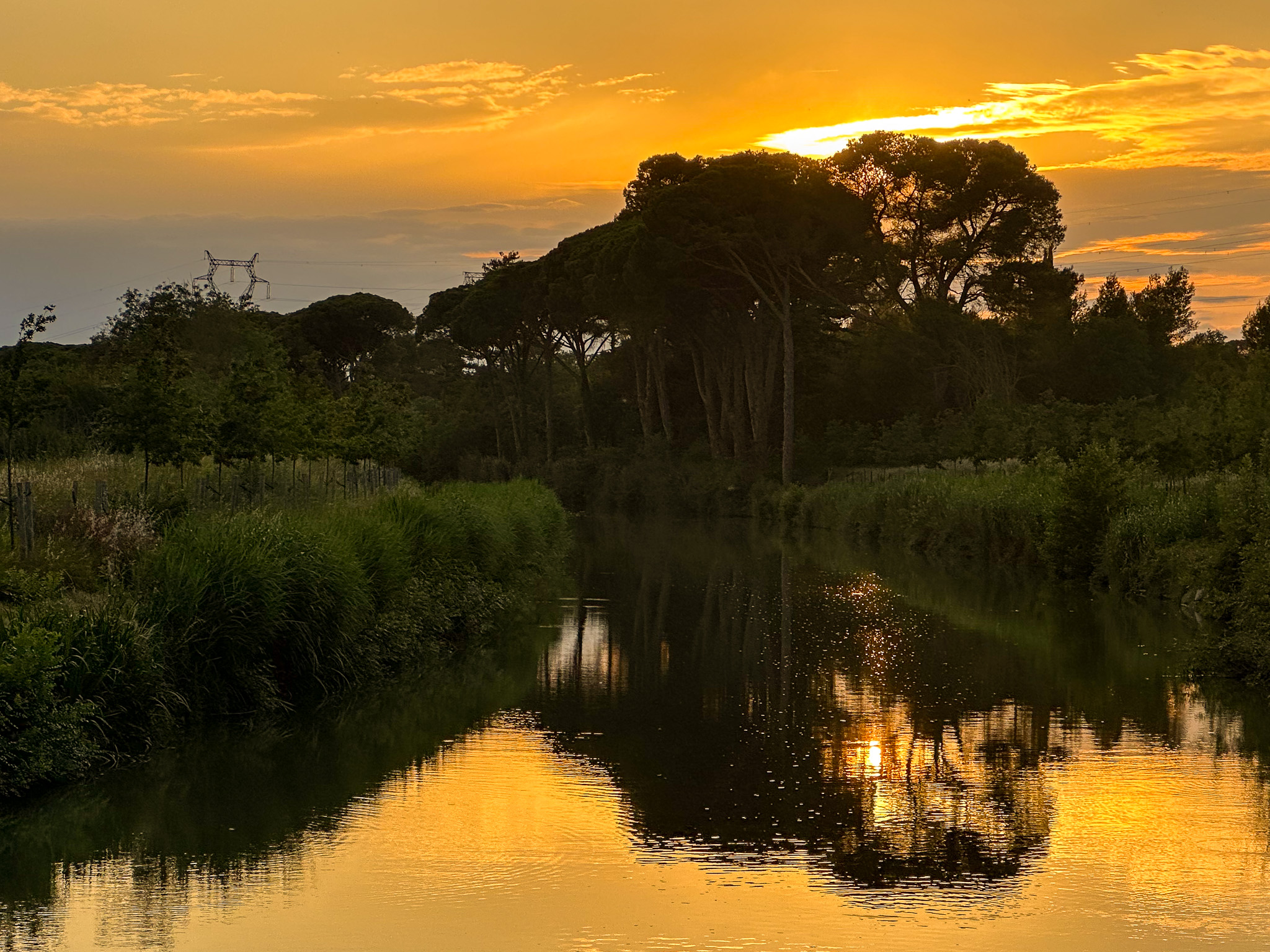
The scenery and sights along the canal changed constantly. Even at our sedate maximum speed of 8km/h there was always something new appearing around a corner.
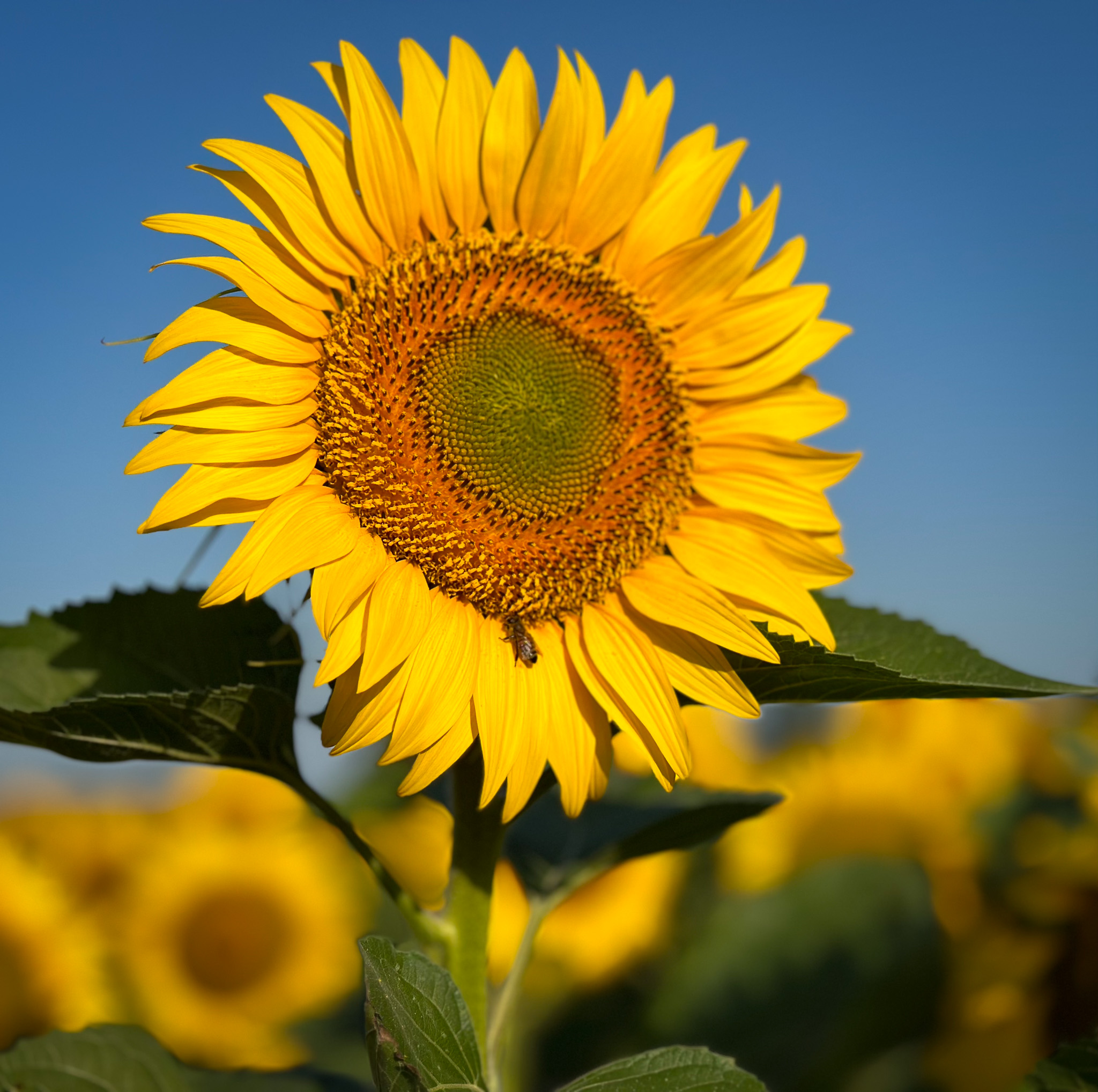
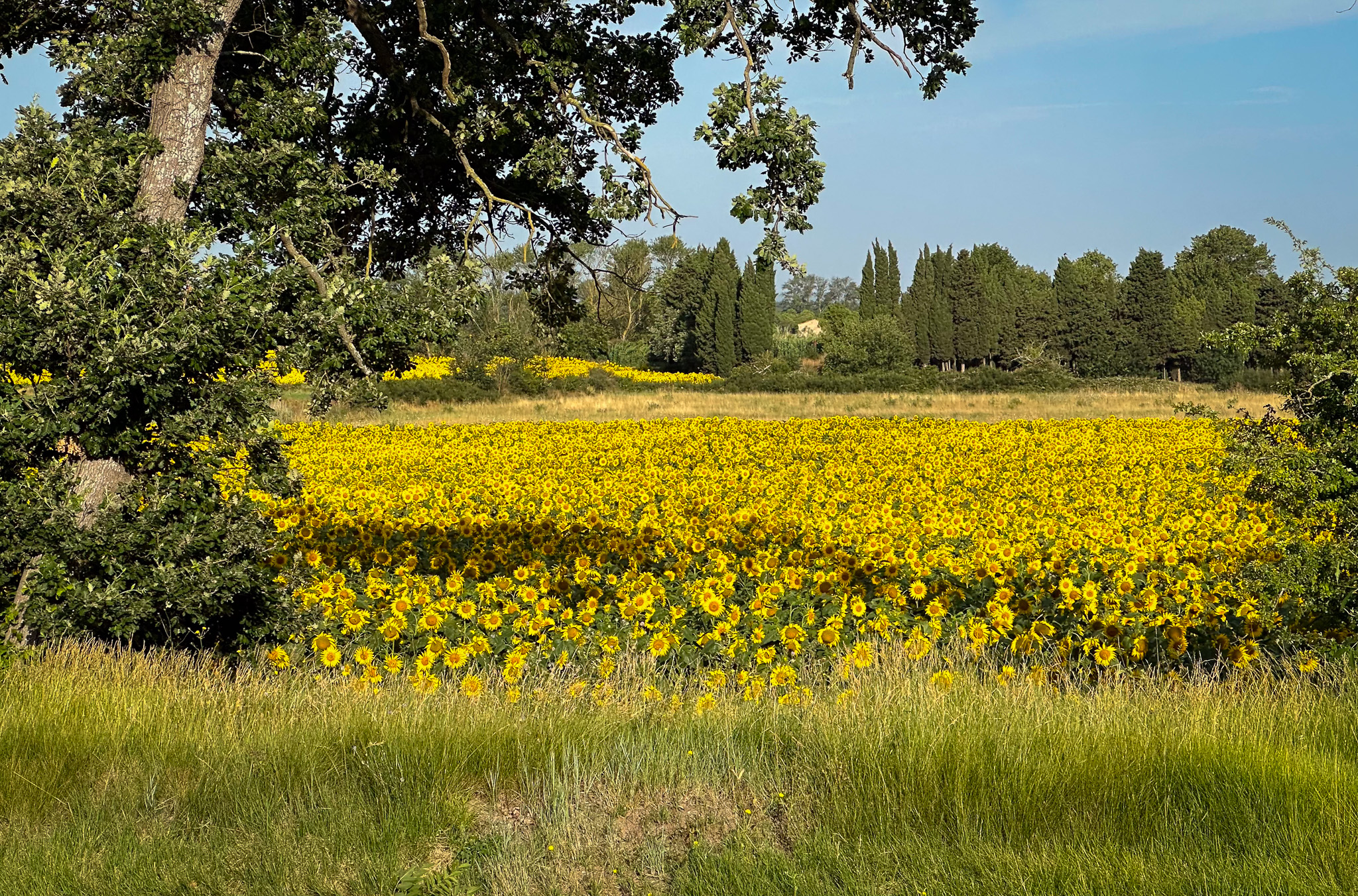
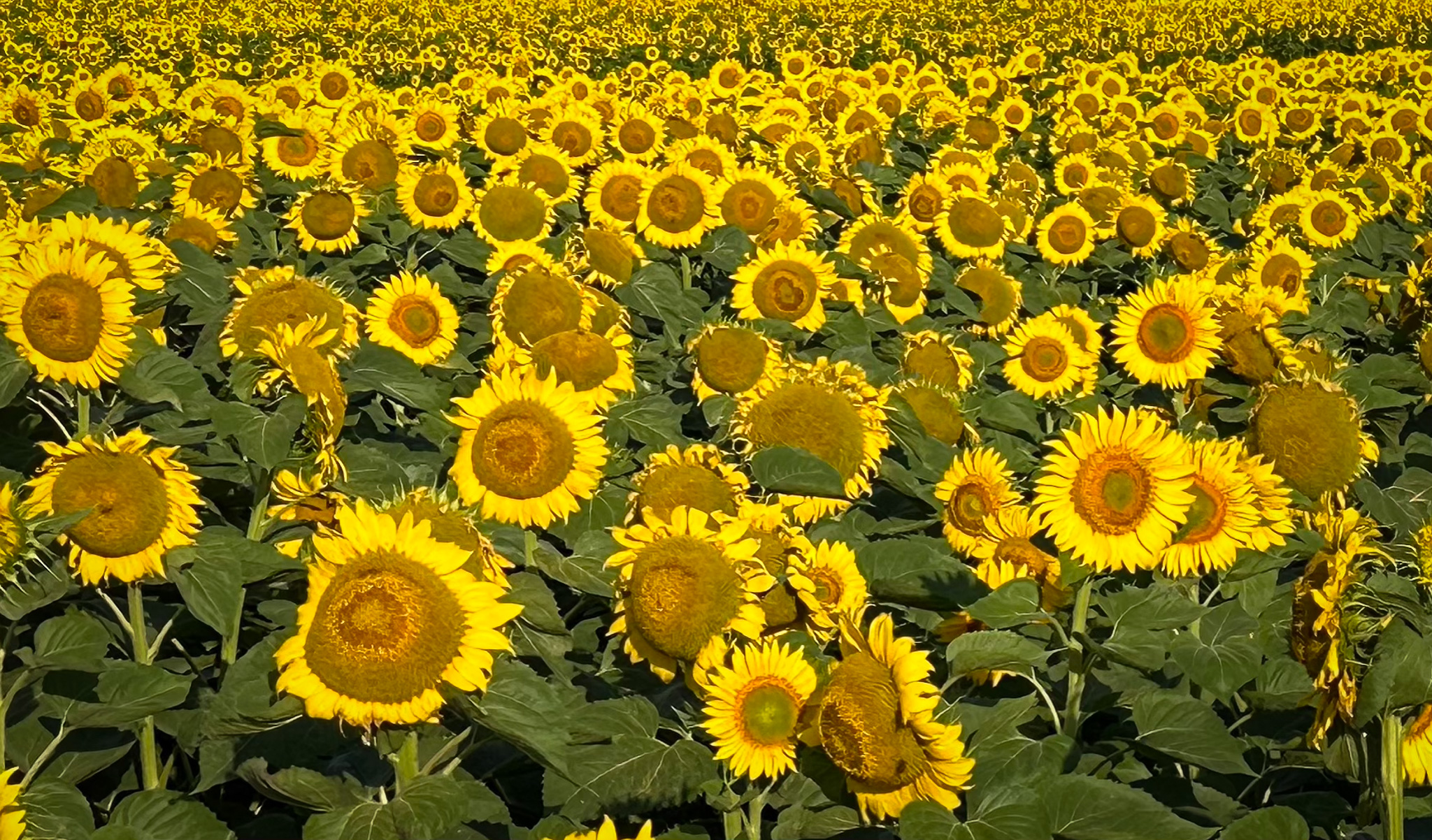
The sunflowers in the fields provided splashes of colour as they turned to face the sun during the day.

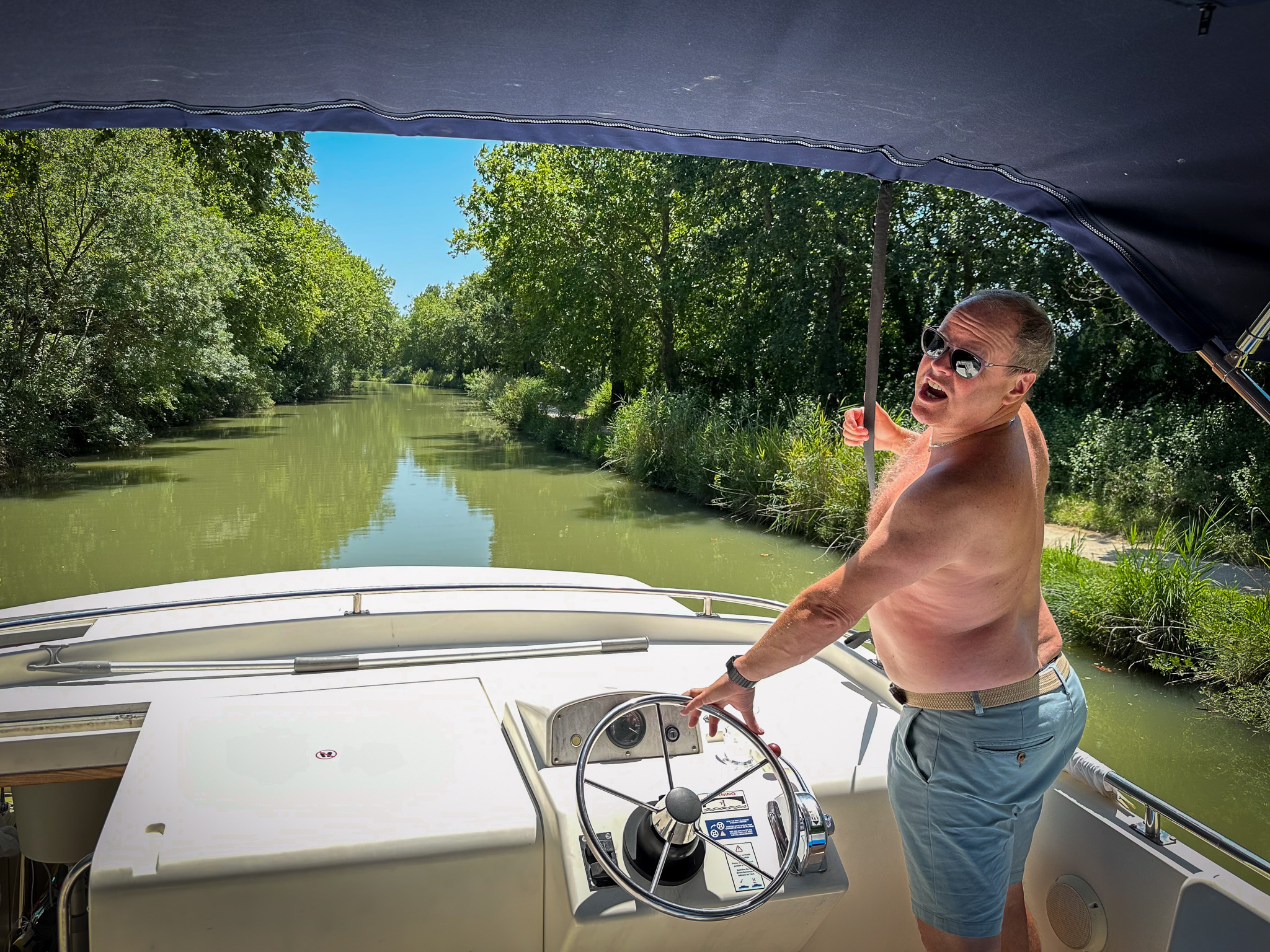
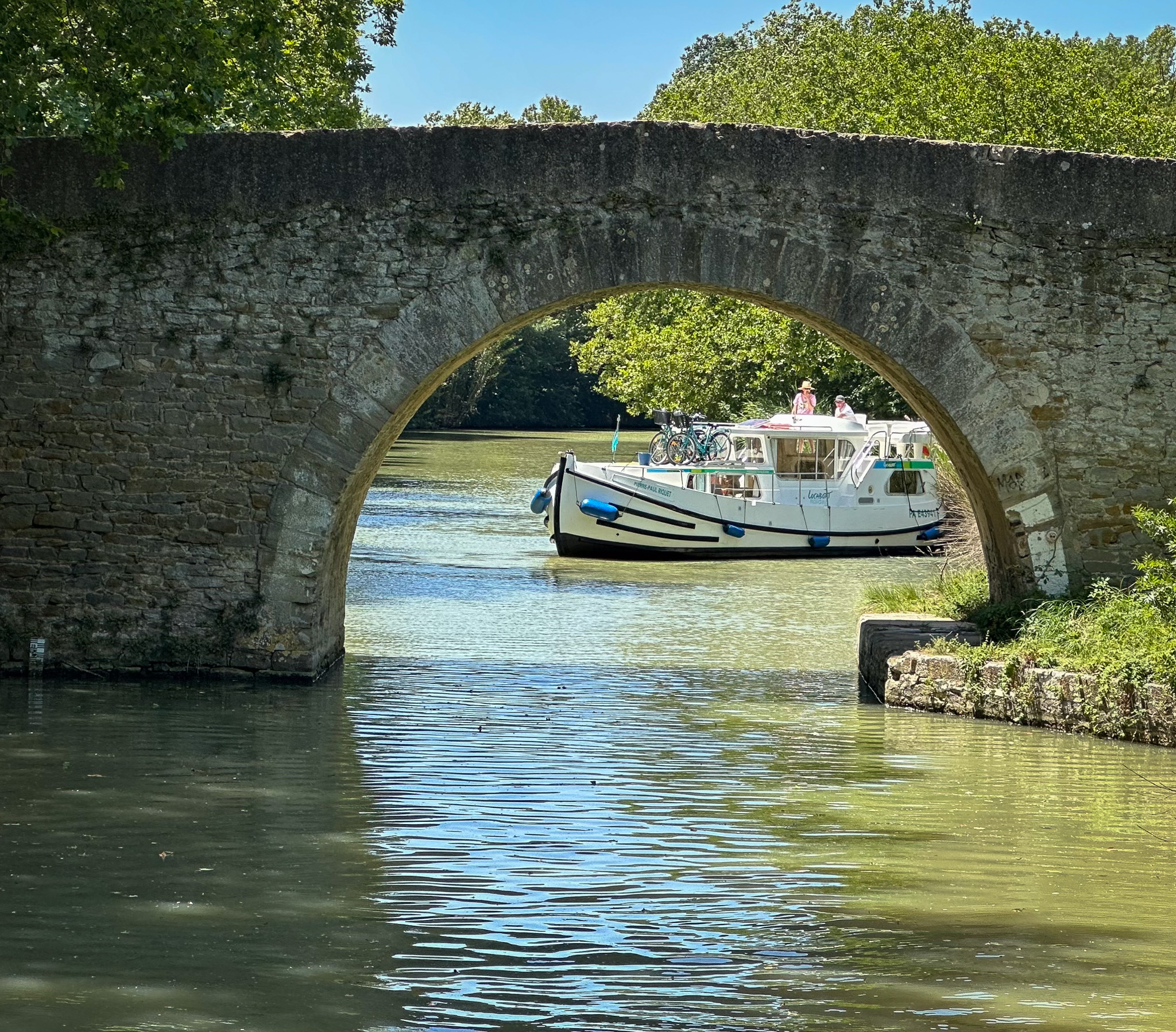
Despite the sedate pace, the helmsman’s job was trickier than it looked. The boat needed to be actively steered, especially when heading into the wind. Even a slight breeze would push the bow off course and if you overcorrected you would end up zigzagging down the canal. The helmsman in the boat below obviously panicked as he approached the narrow bridge, overcorrected, had to reverse and then backed into the bank before finally getting it all under control and passing under the bridge while we waited. Nigel gave him a round of applause as we passed. We were not sure that he appreciated it.


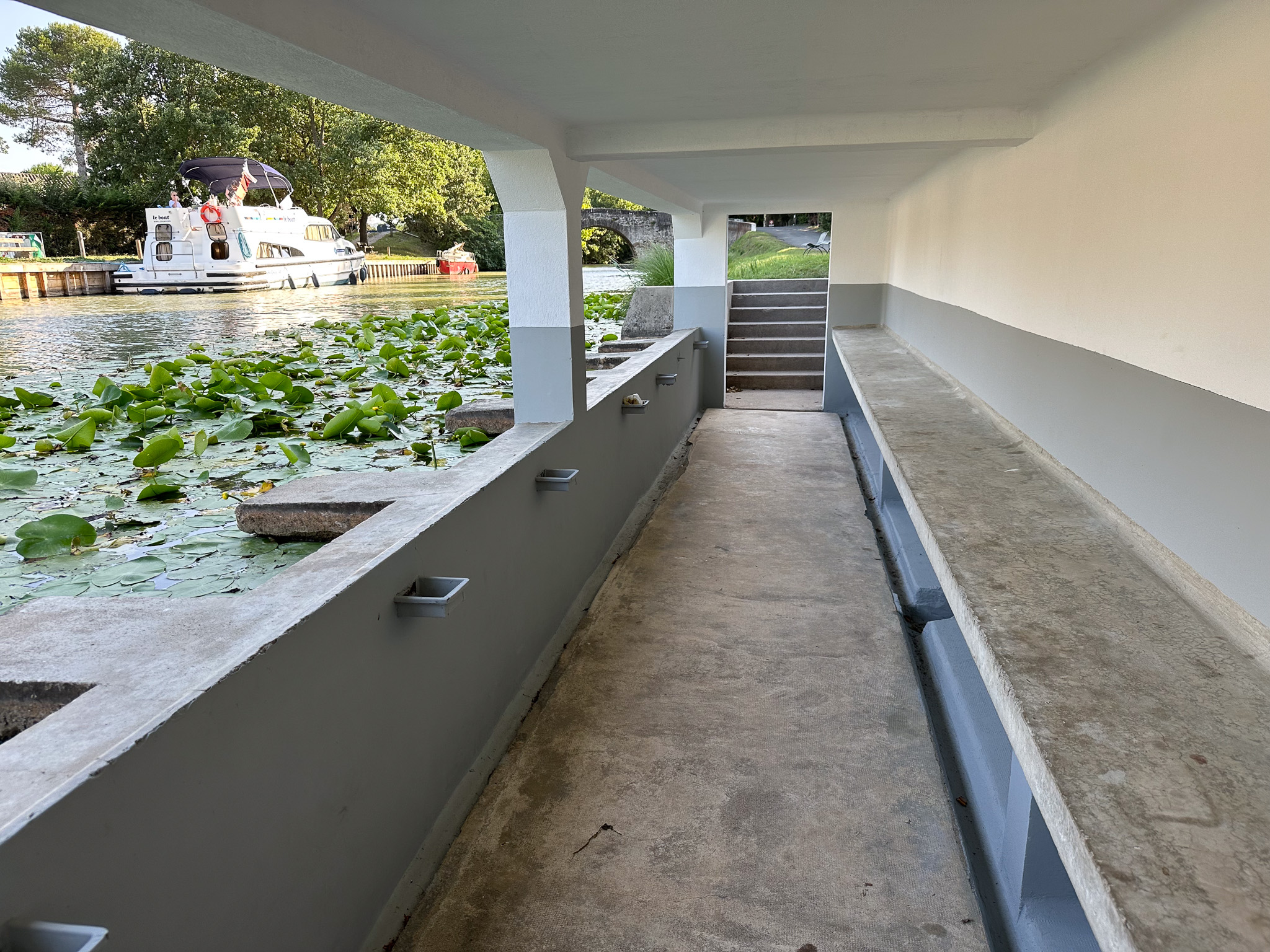
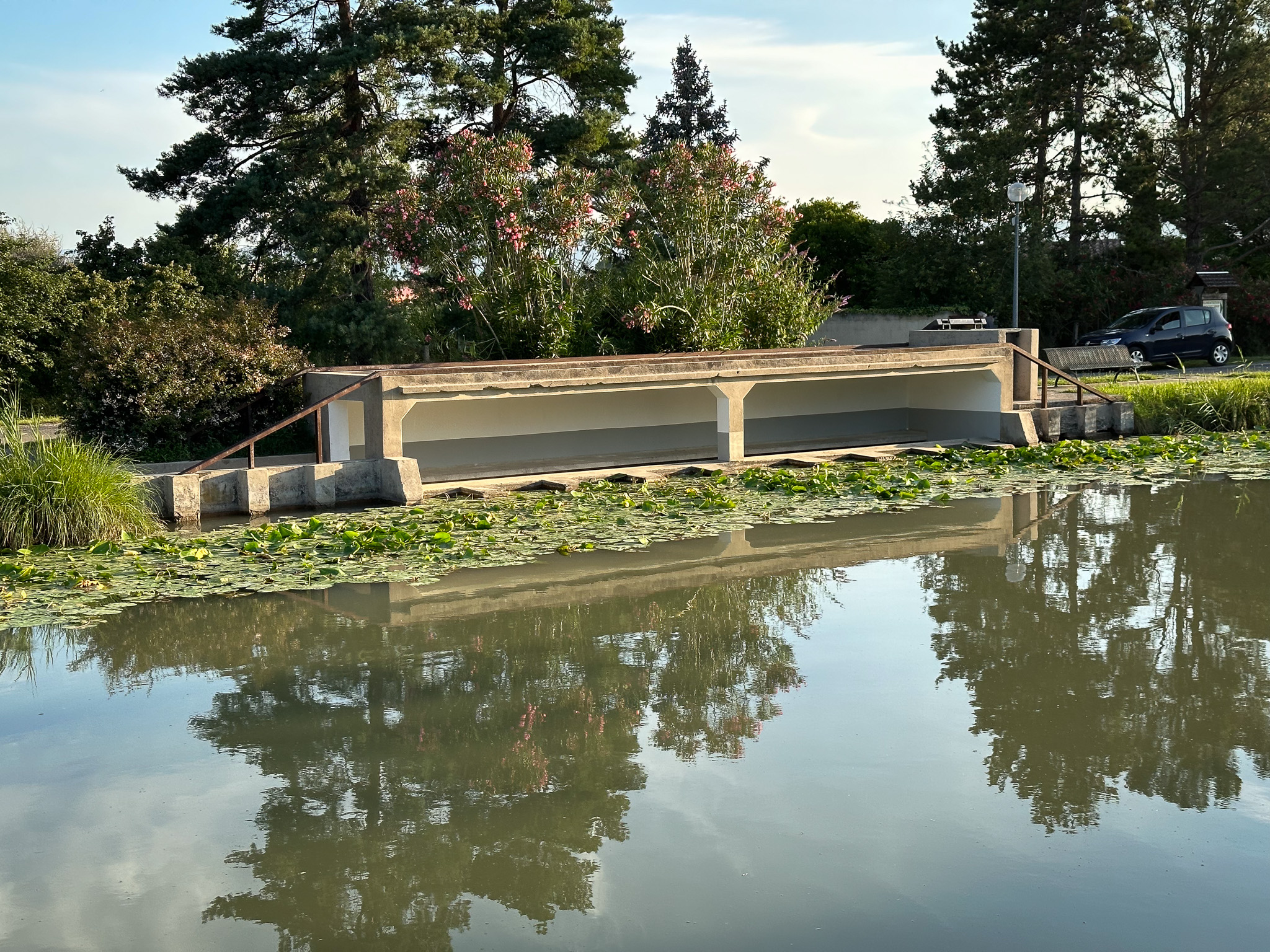
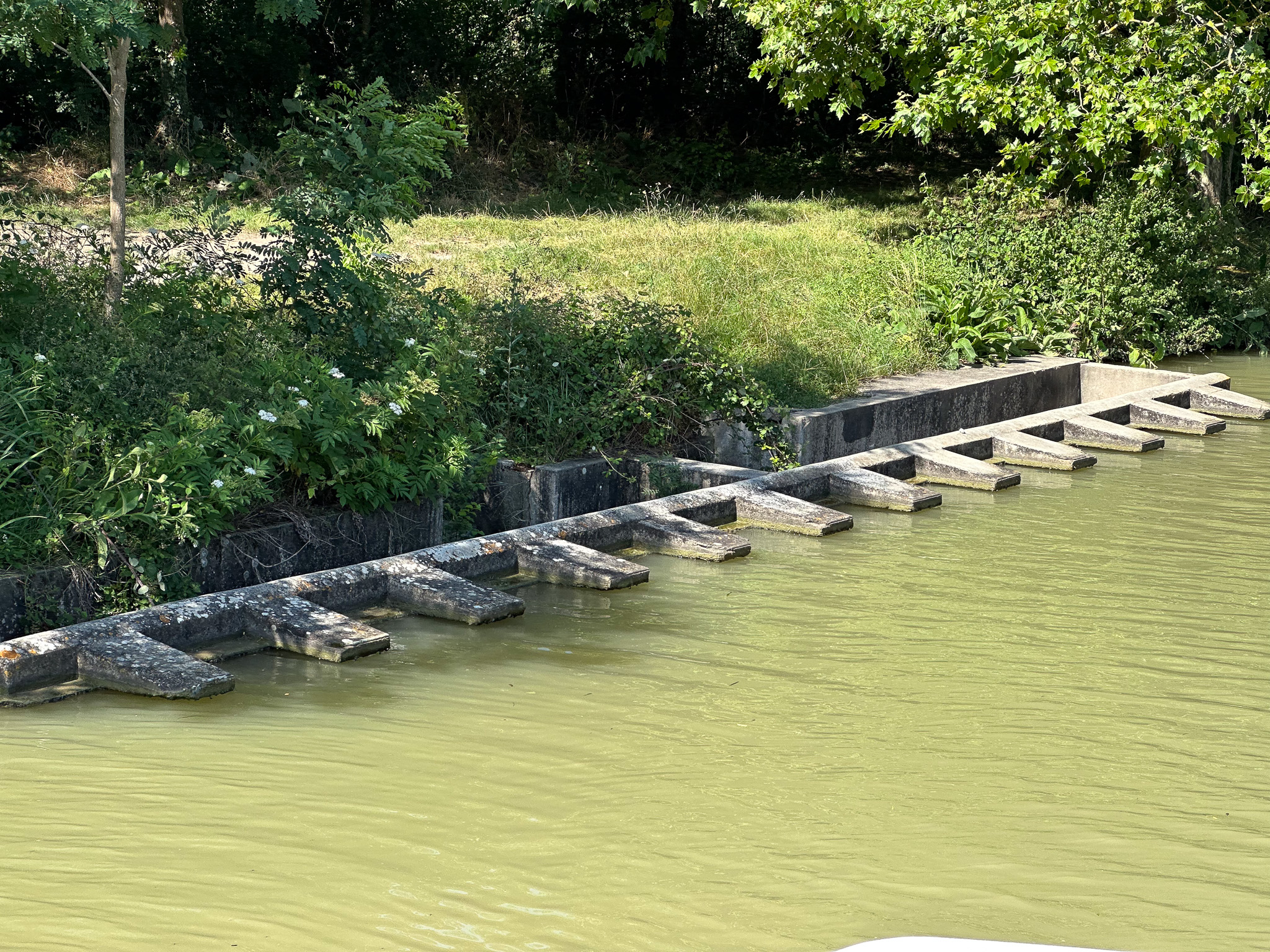
In several places we passed old washing stations or lavoirs. These were public places set aside for the washing of clothes. The one at Villesèquelande has been restored and even has a roof. Others were exposed and in various states of (dis)repair. No one would wash anything in the canal these days. We were horrified to learn that there is no requirement for any of the boats to have holding tanks. All boat sewerage is discharged directly into the canal making it more or less an open sewer. Surely something could be done to better manage this.
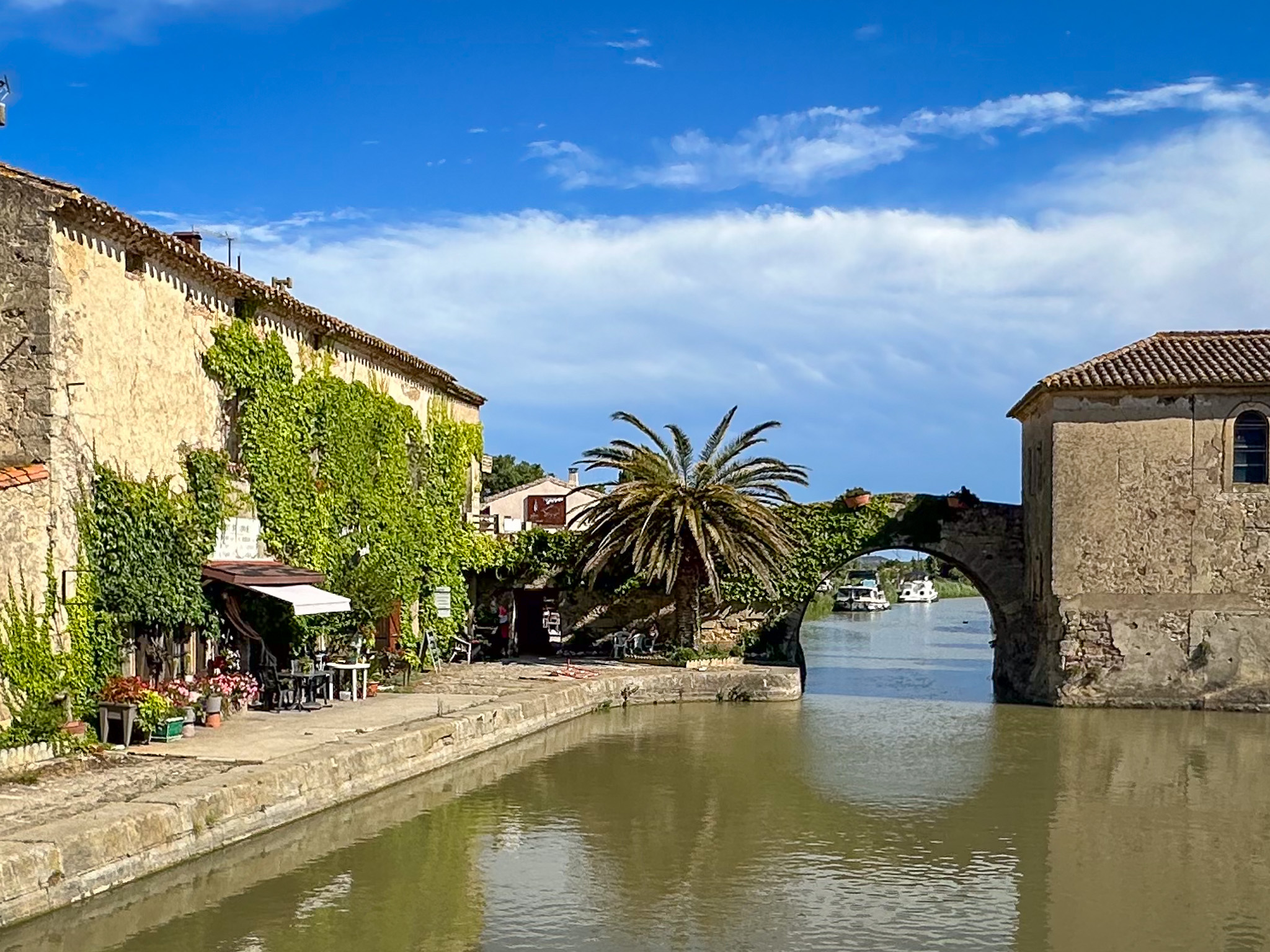
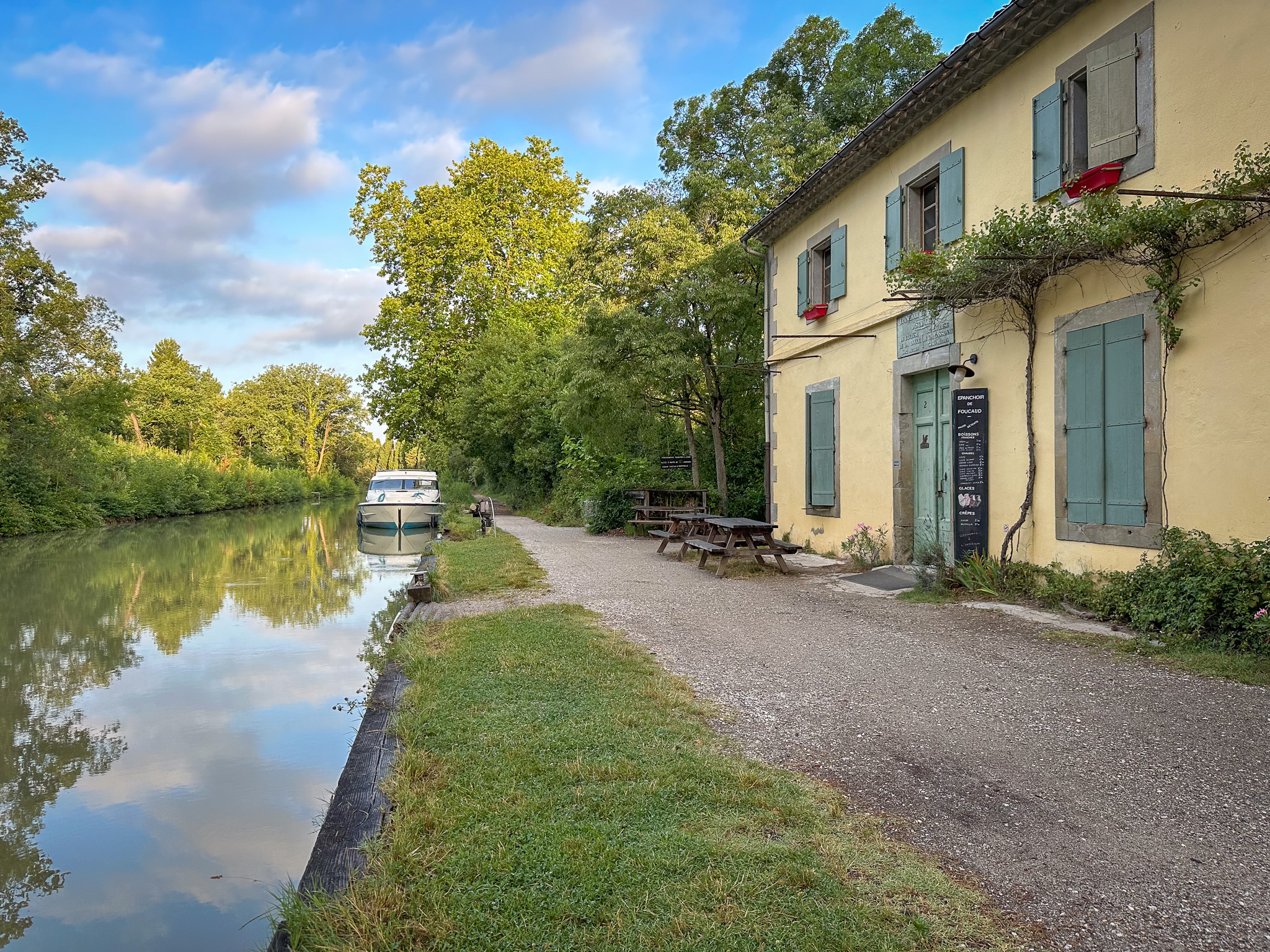
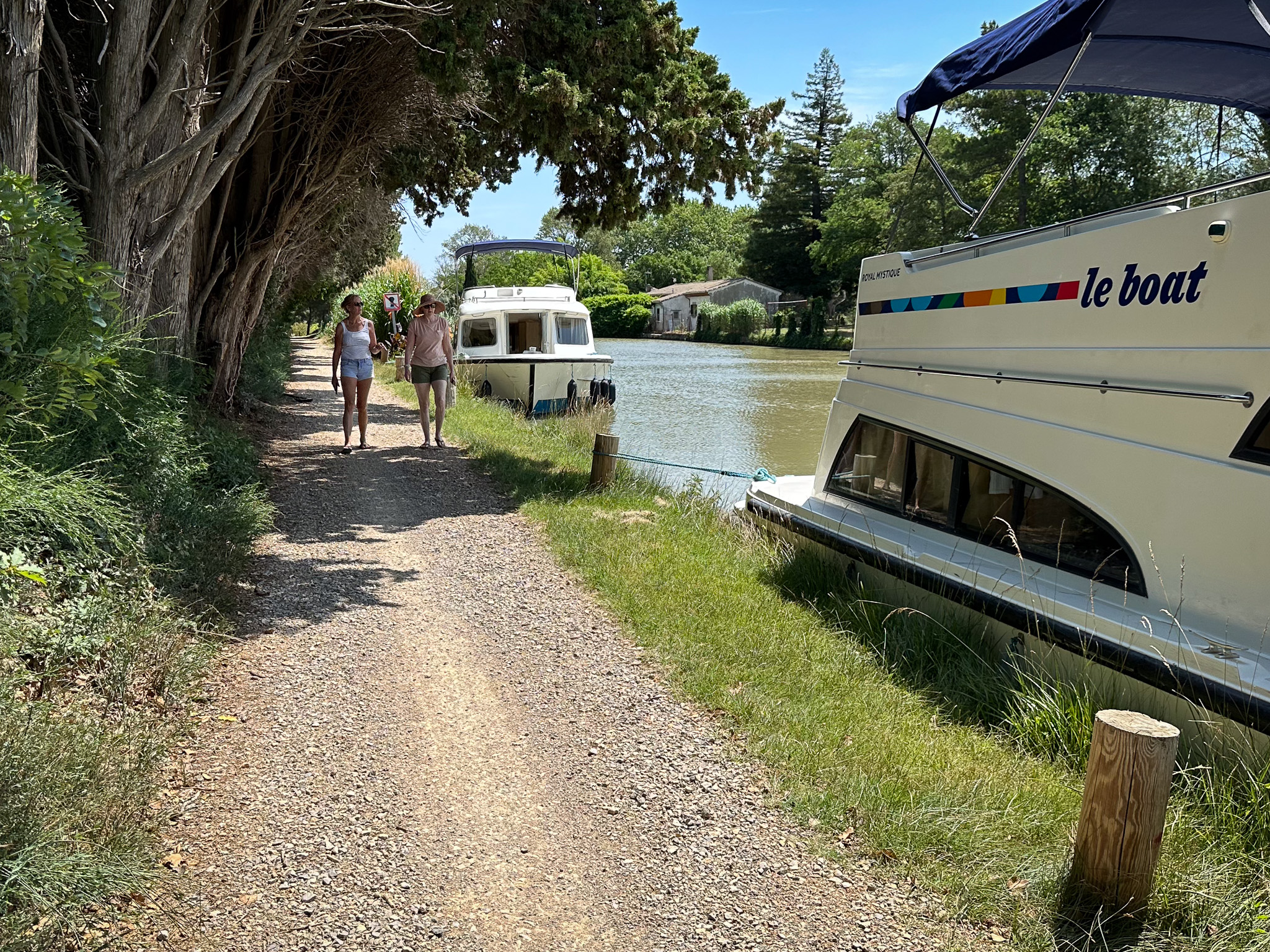
Many of the lock keeper’s cottages had cafés, restaurants and/or gift shops attached to them. After stopping for a beer we ended up staying overnight by this former lock keeper’s cottage now operating as a café and gîte.
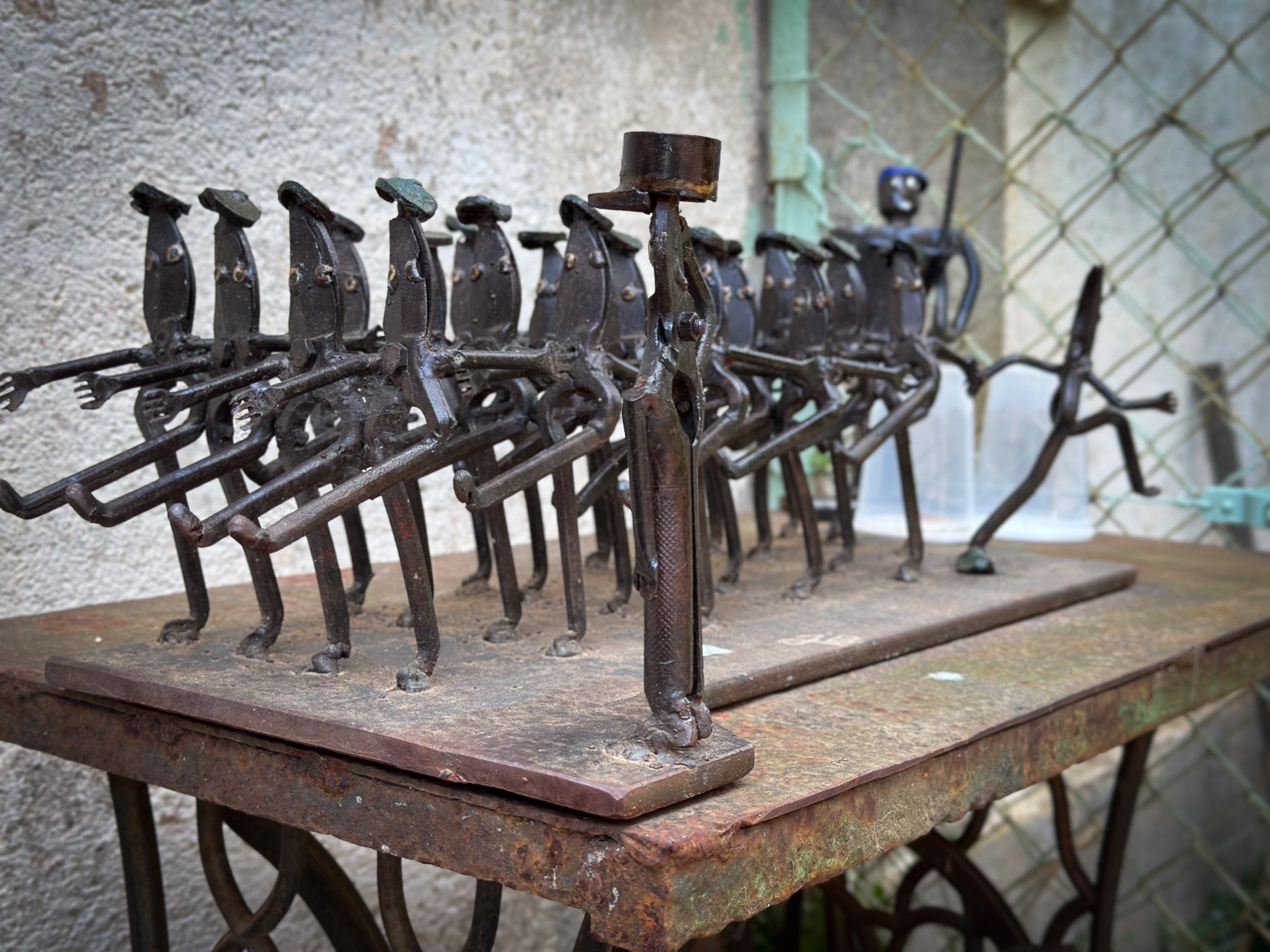
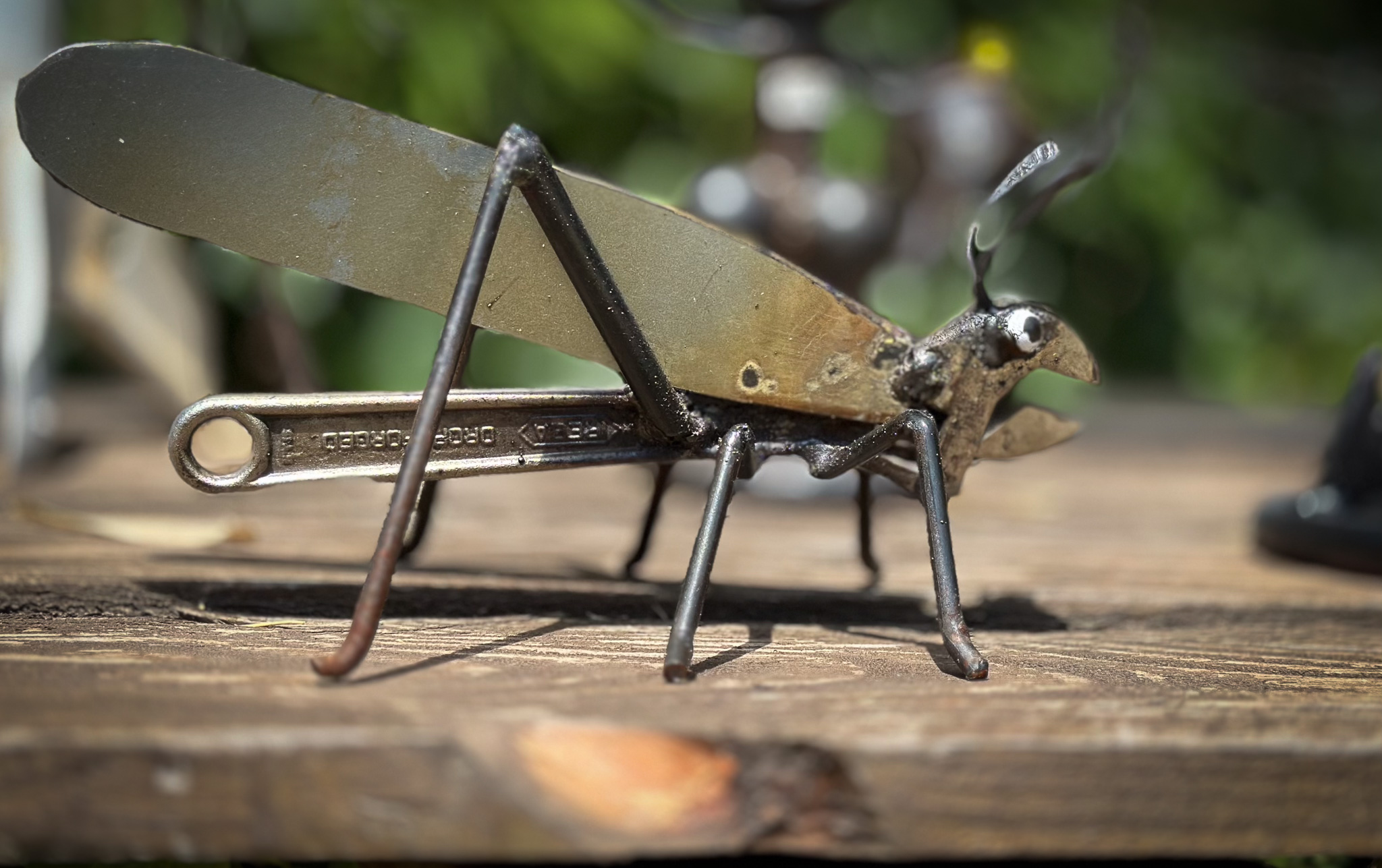
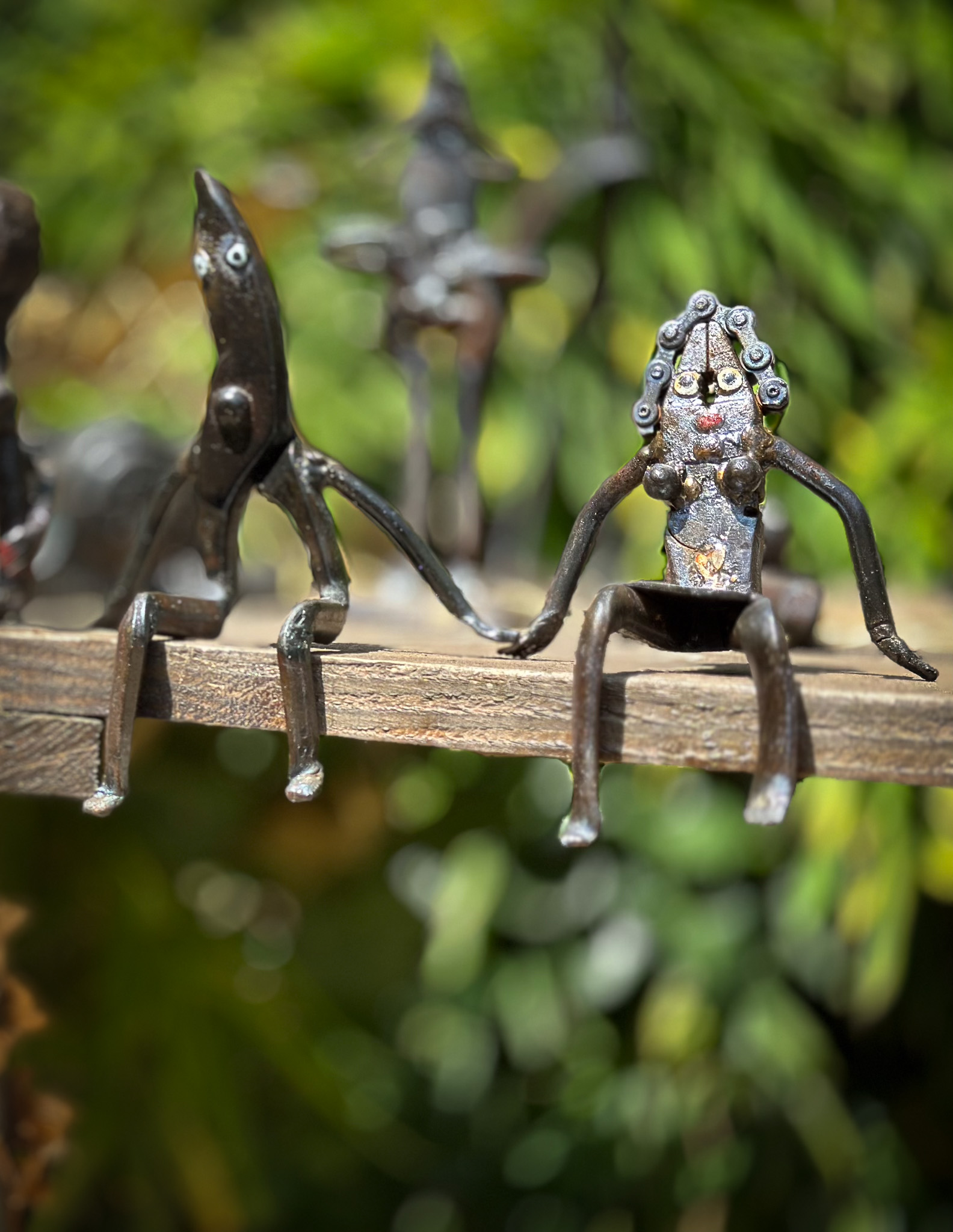
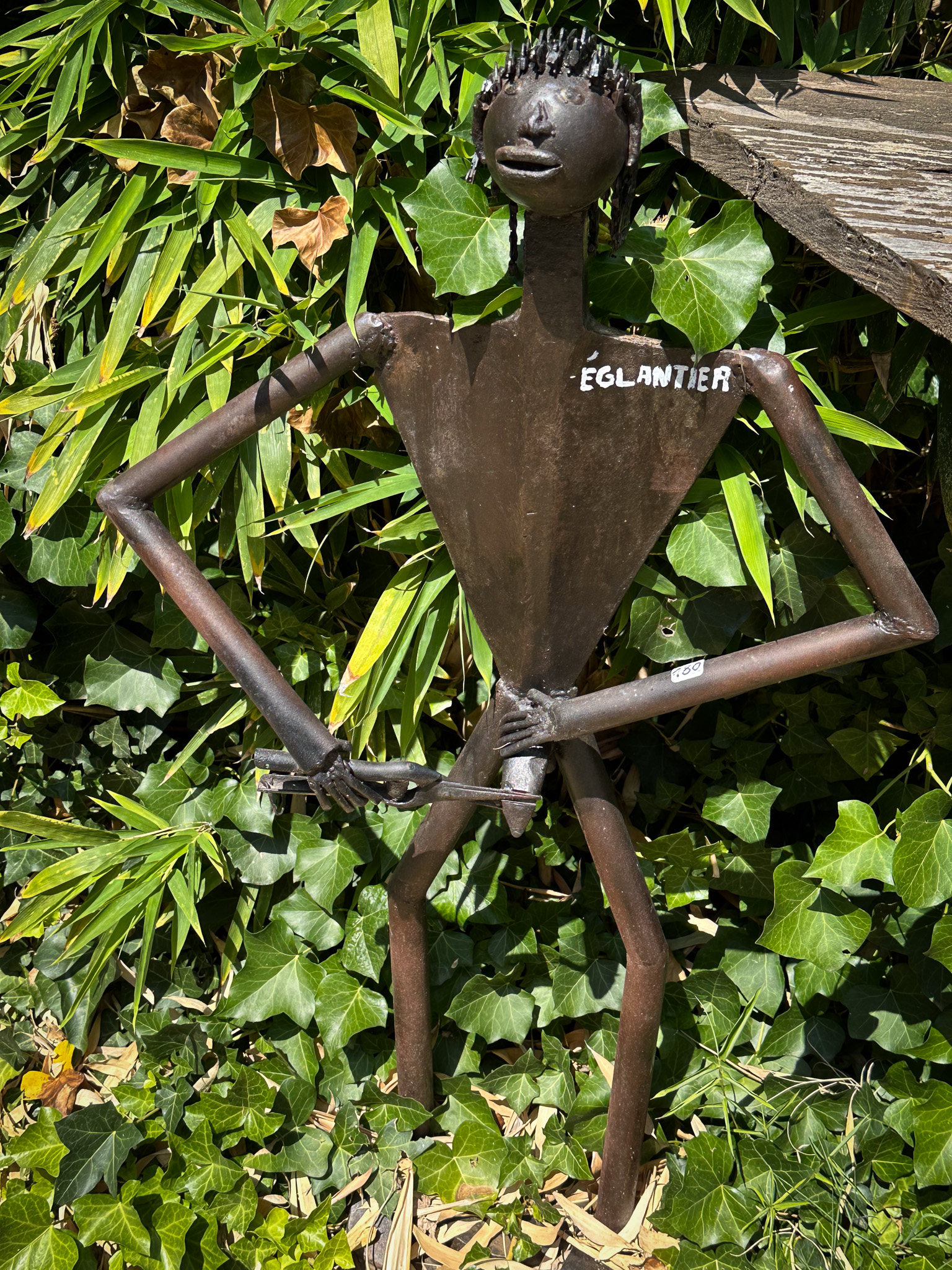
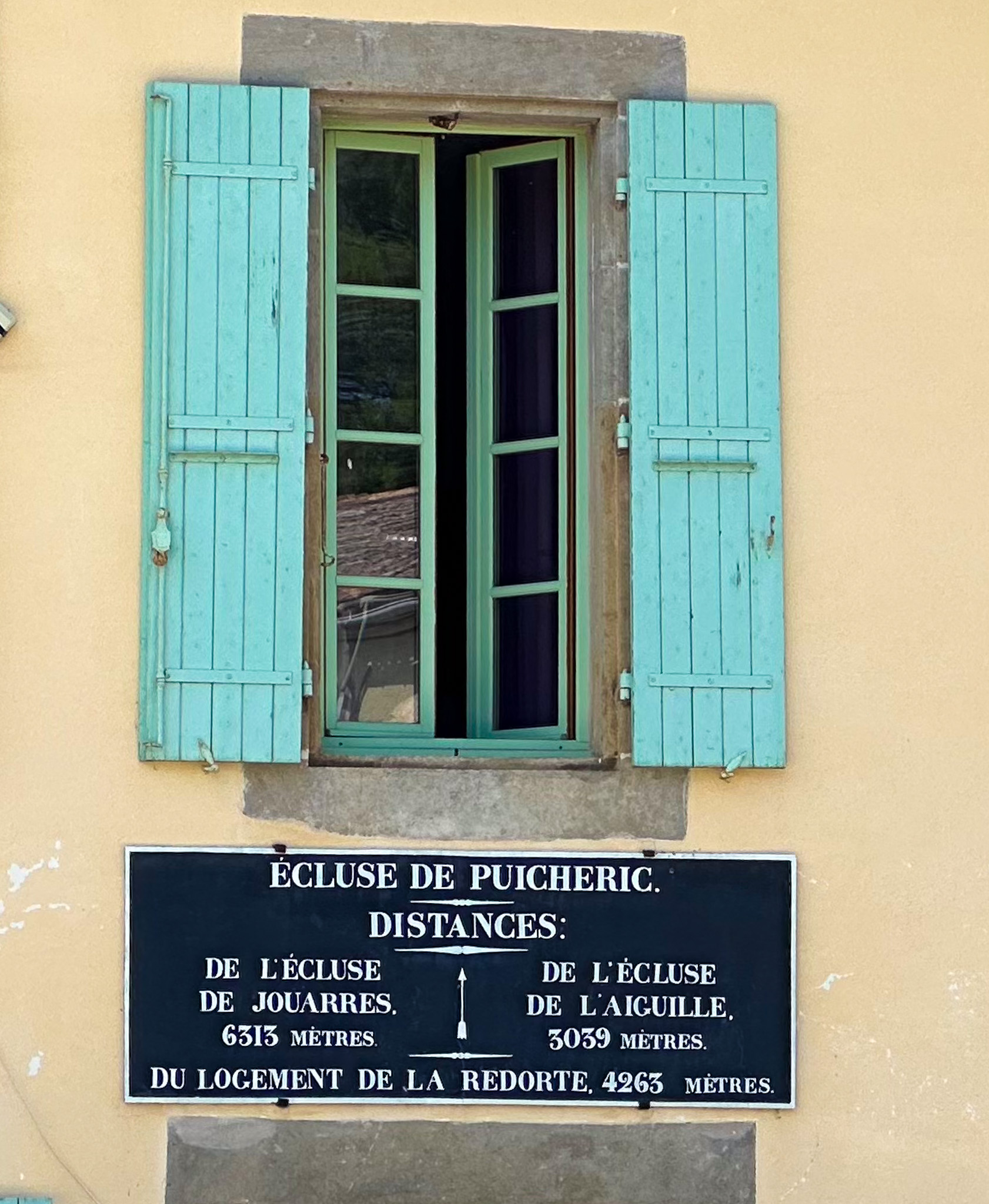
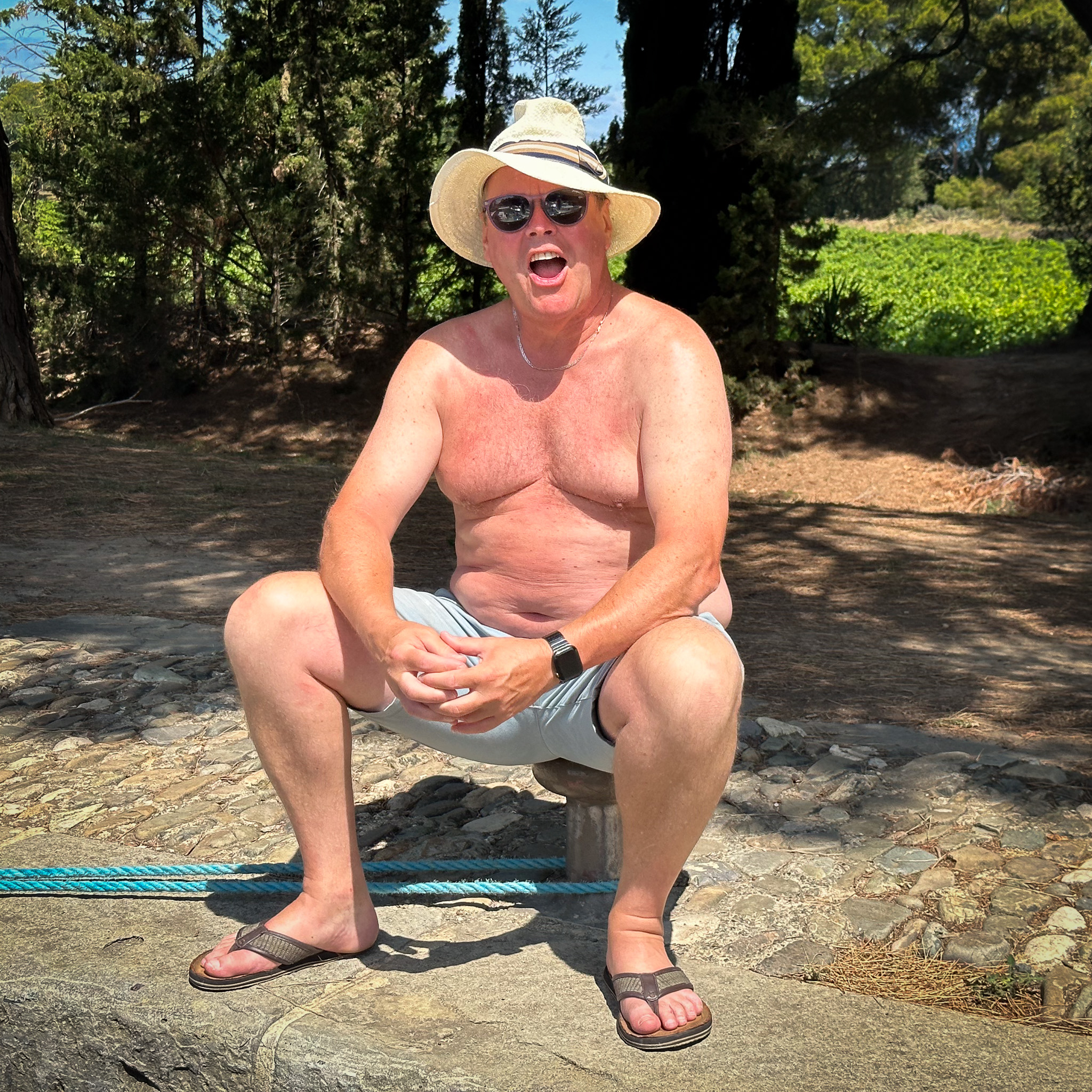
But our favourite was at L’Ecluse (lock) de Puicheric where an imaginative artistic metalworker made completely wacky sculptures out of everyday items. Many were automated and sprung into life as you walked past them. Most were borderline pornographic – we have the videos to share at a price. The gnome in the last picture was not for sale.


The highest point
Our final destination was Castelnaudry but, after making better time than anticipated, we decided to carry on beyond there to get to the highest point on the canal.
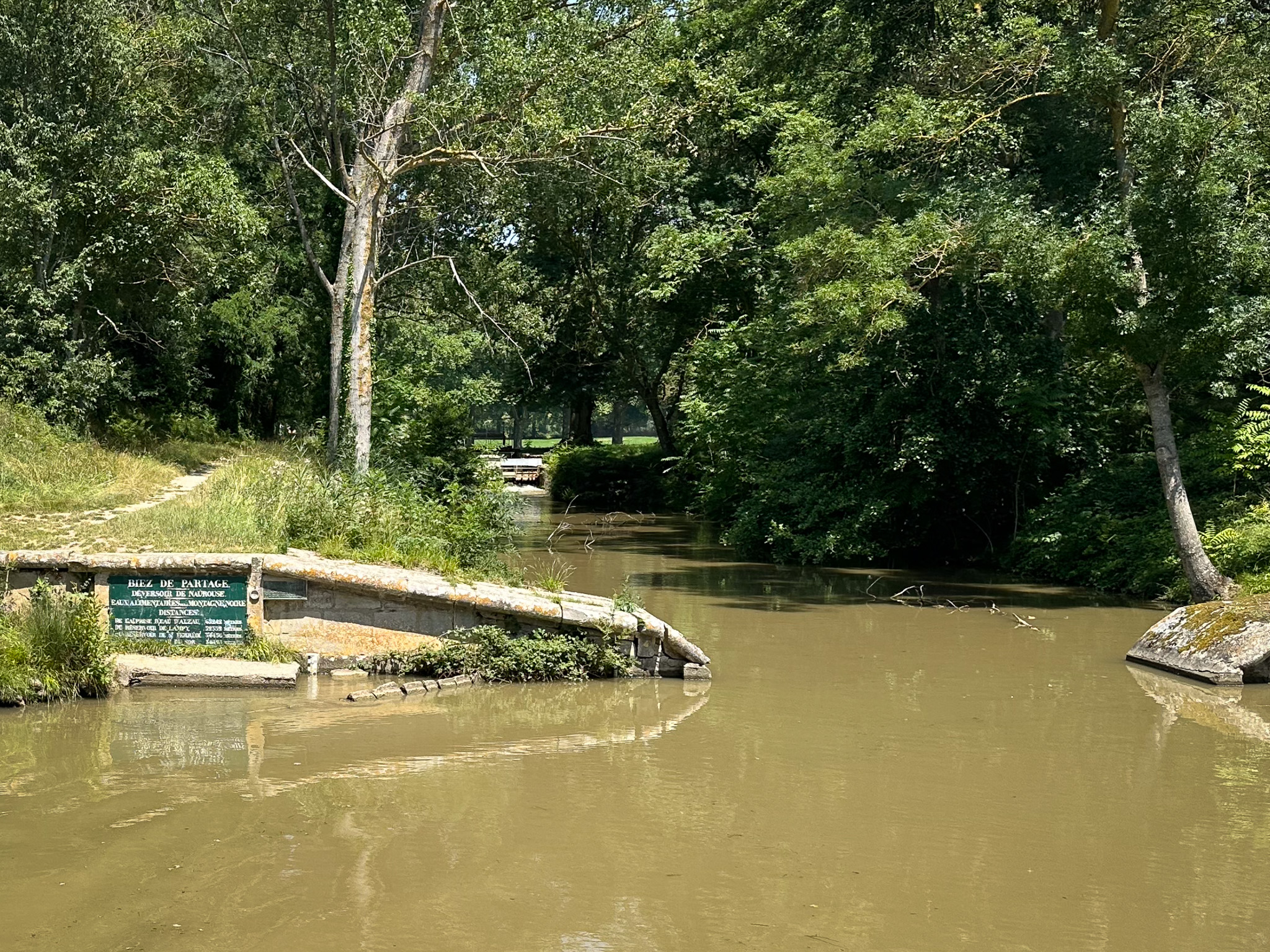
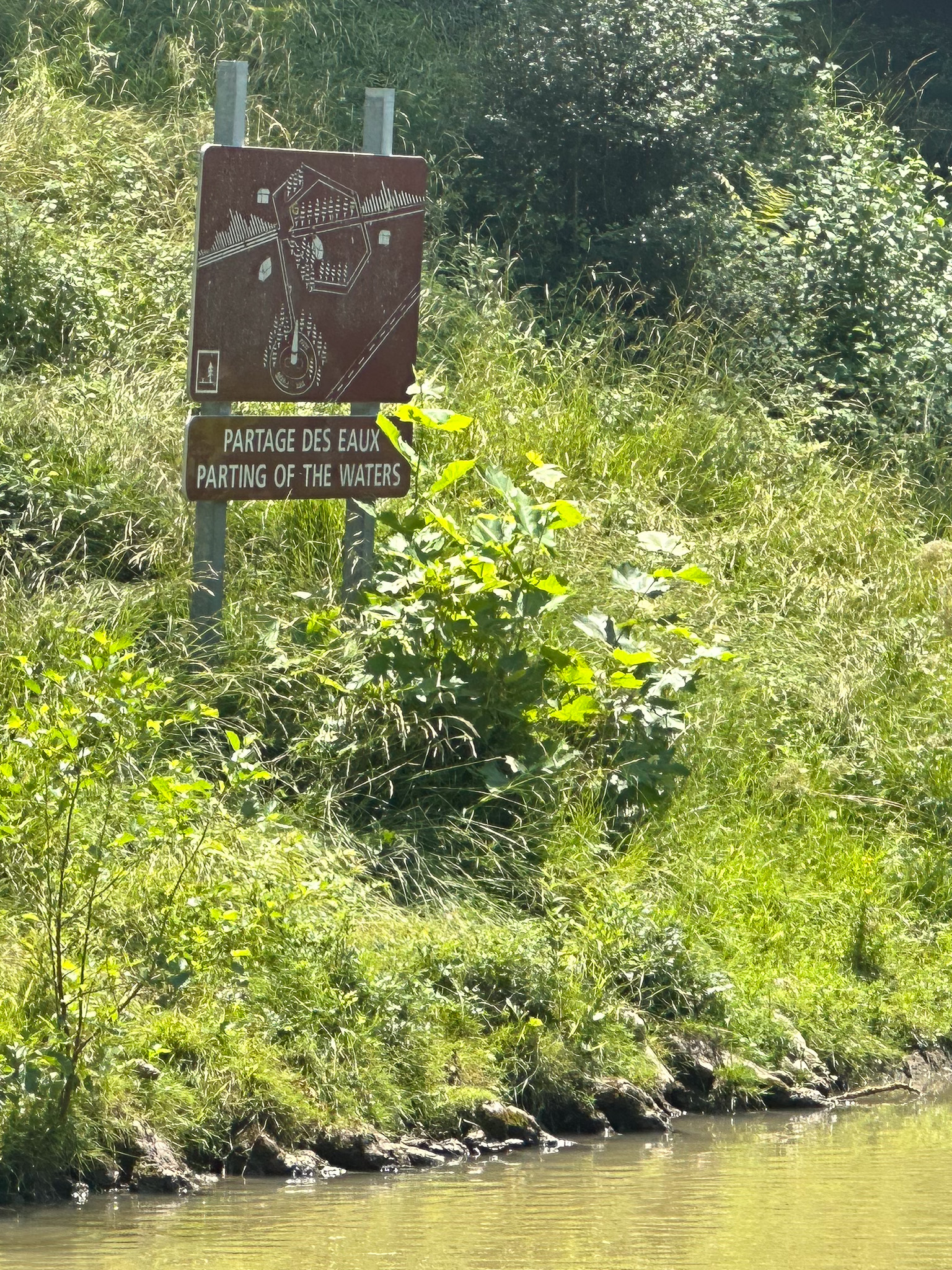
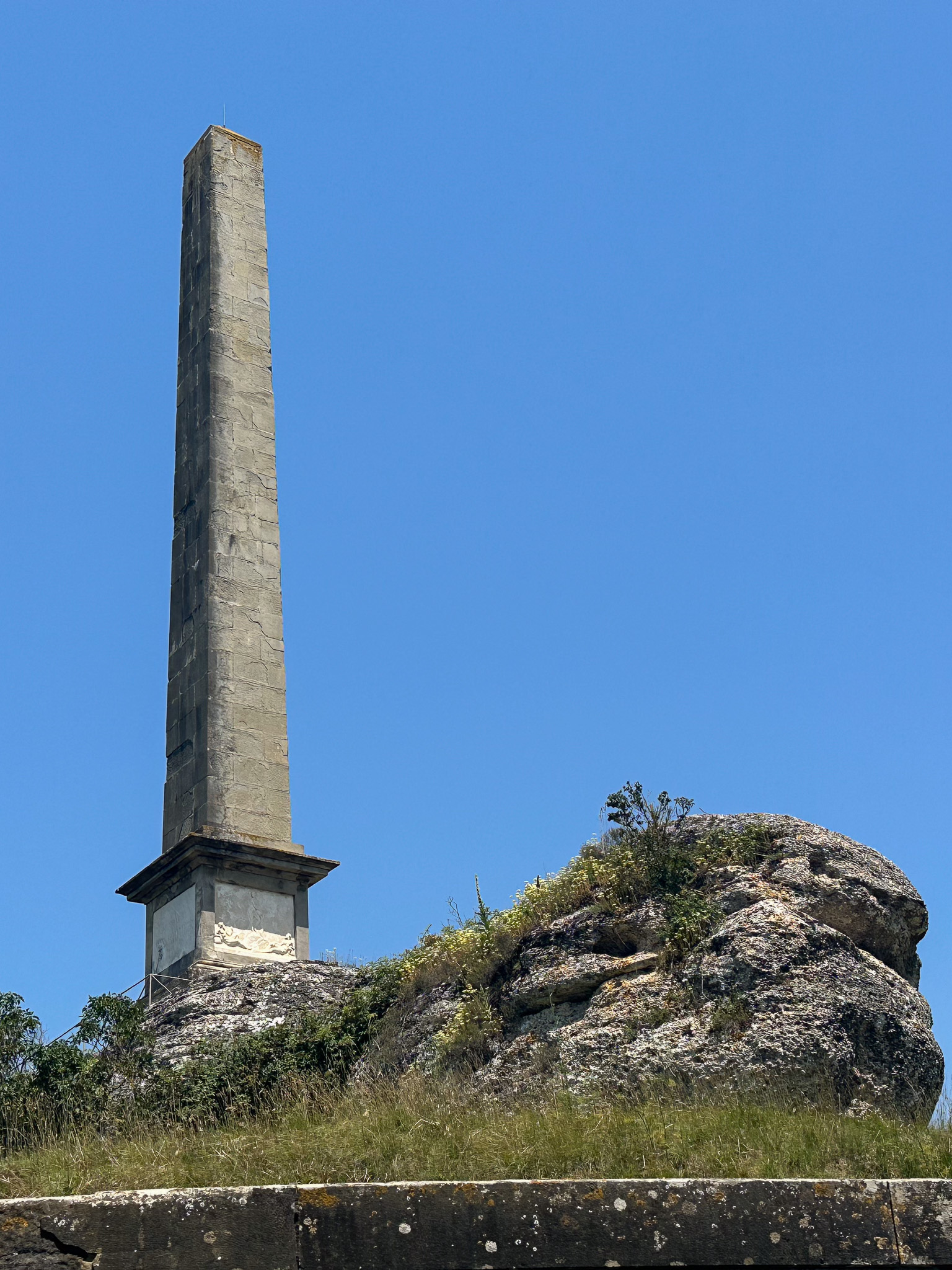
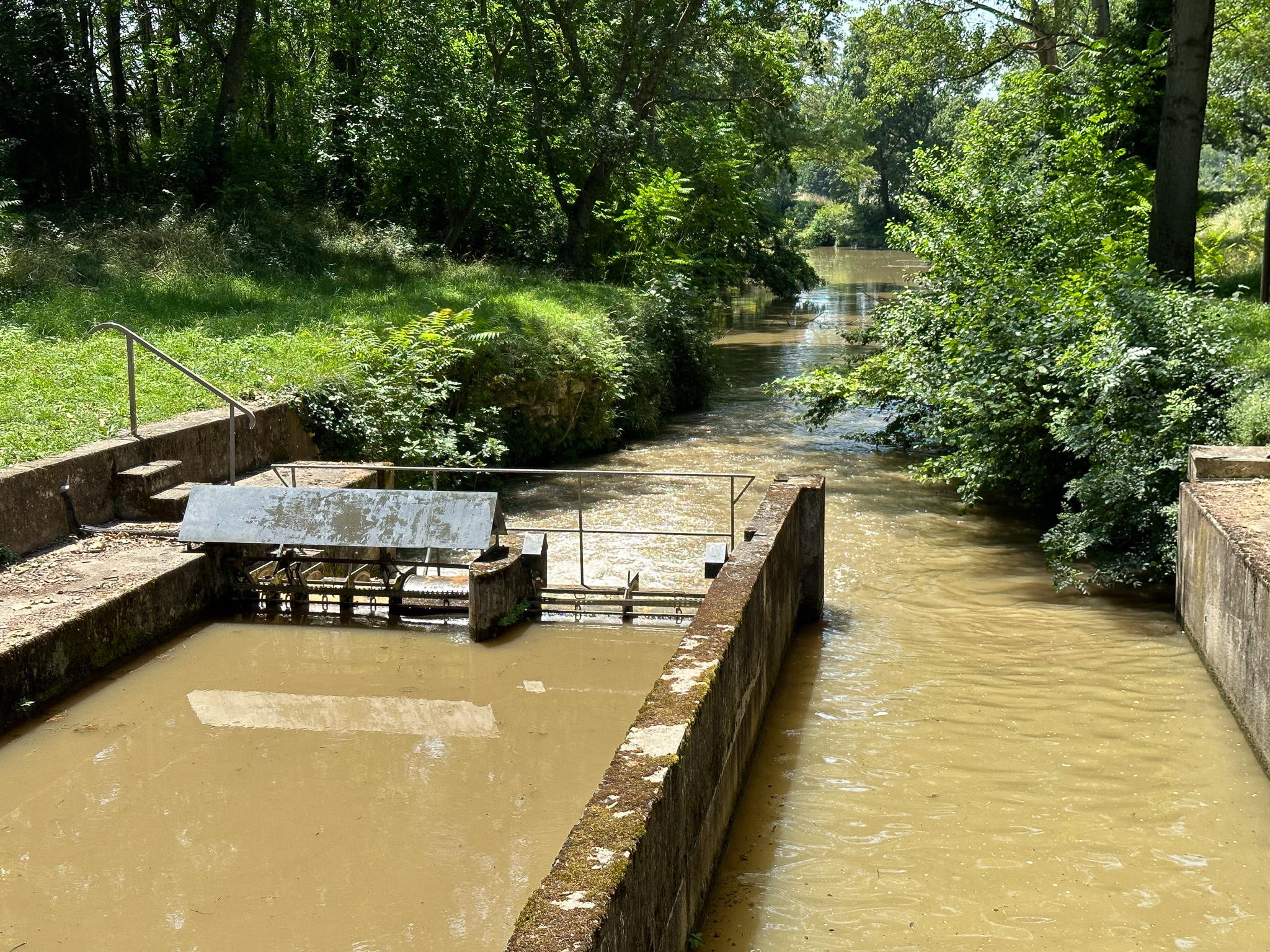
The Seuil de Naurouze is 190 m above sea level and is the watershed point on the canal. Water falling on the western side of this point flows to the Atlantic Ocean and on the eastern side to the Mediterranean Sea. Water is diverted from the nearby mountains to join the canal here and we visited the Riquet Obelisk built to honour Pierre-Paul Riquet who designed and built the canal. Riquet masterminded this incredible feat of engineering but it ruined him financially and, sadly, he died just six months before its completion.
It was a particularly pretty section of the canal. Definitely worth adding onto the journey and, as it turned out, brilliantly serendipitous. The following day the lock keepers went on strike (ironically in protest over the automation of the locks which would put an end to their livelihoods). Had we still been heading upwards to Castelnaudary, we would have been stuck with several manned locks to pass through. The locks above Castelnaudary are already fully automated so we had no difficulty returning to the base.

Castelnaudary – time to leave the boat
Climbing to the highest point on the canal gave us the opportunity to experience decending through locks – so much more gentle and peaceful.
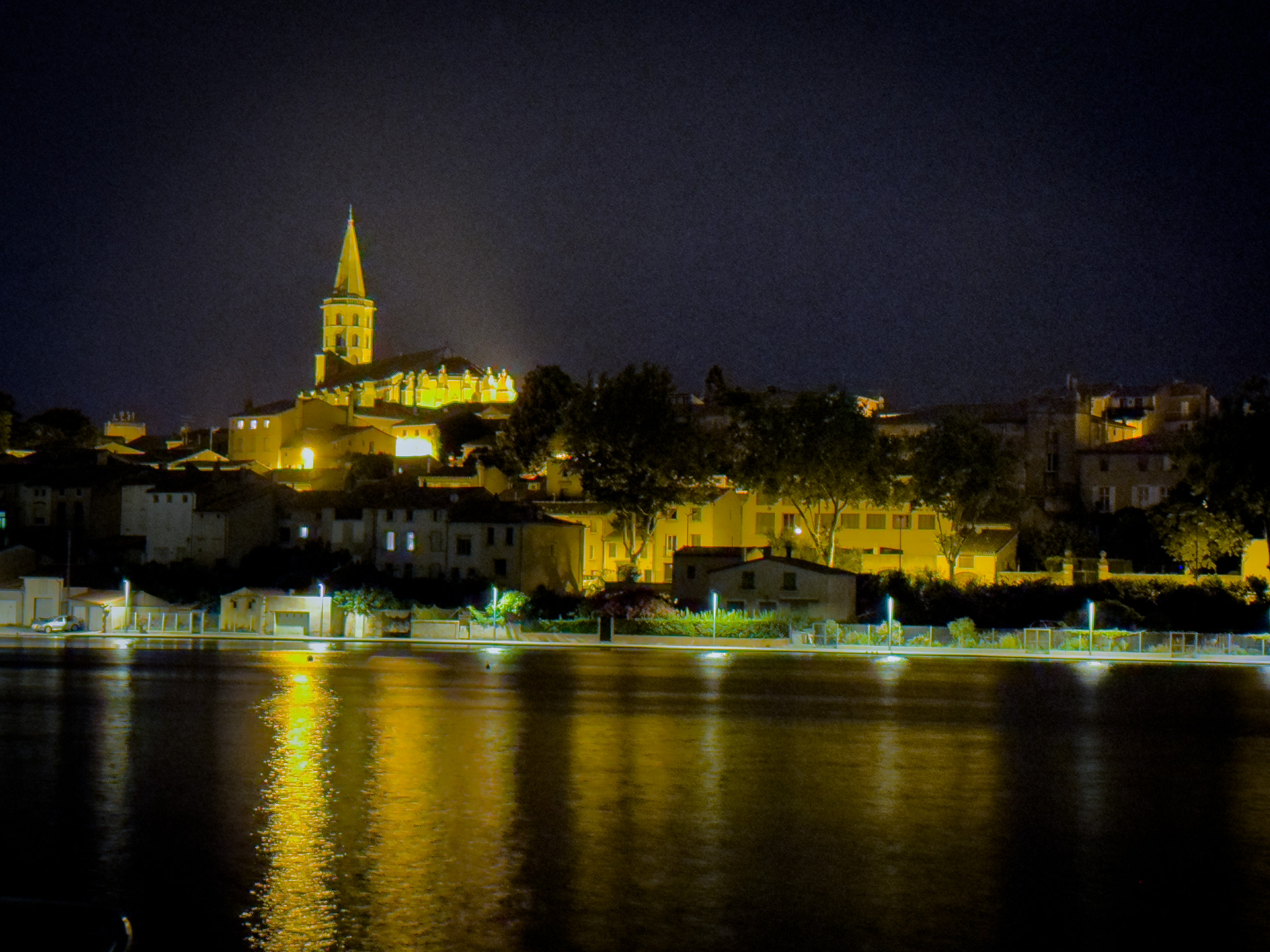
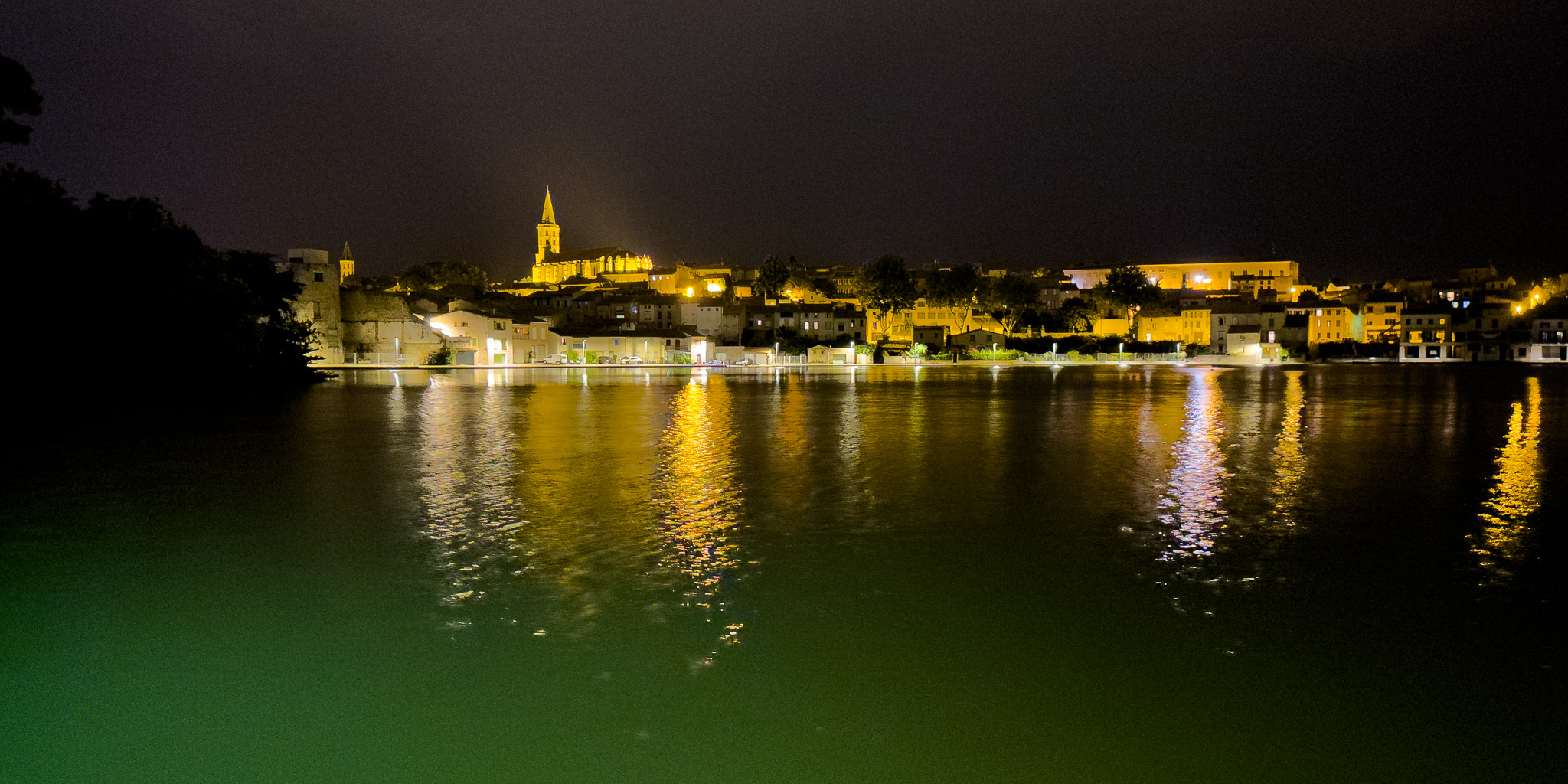
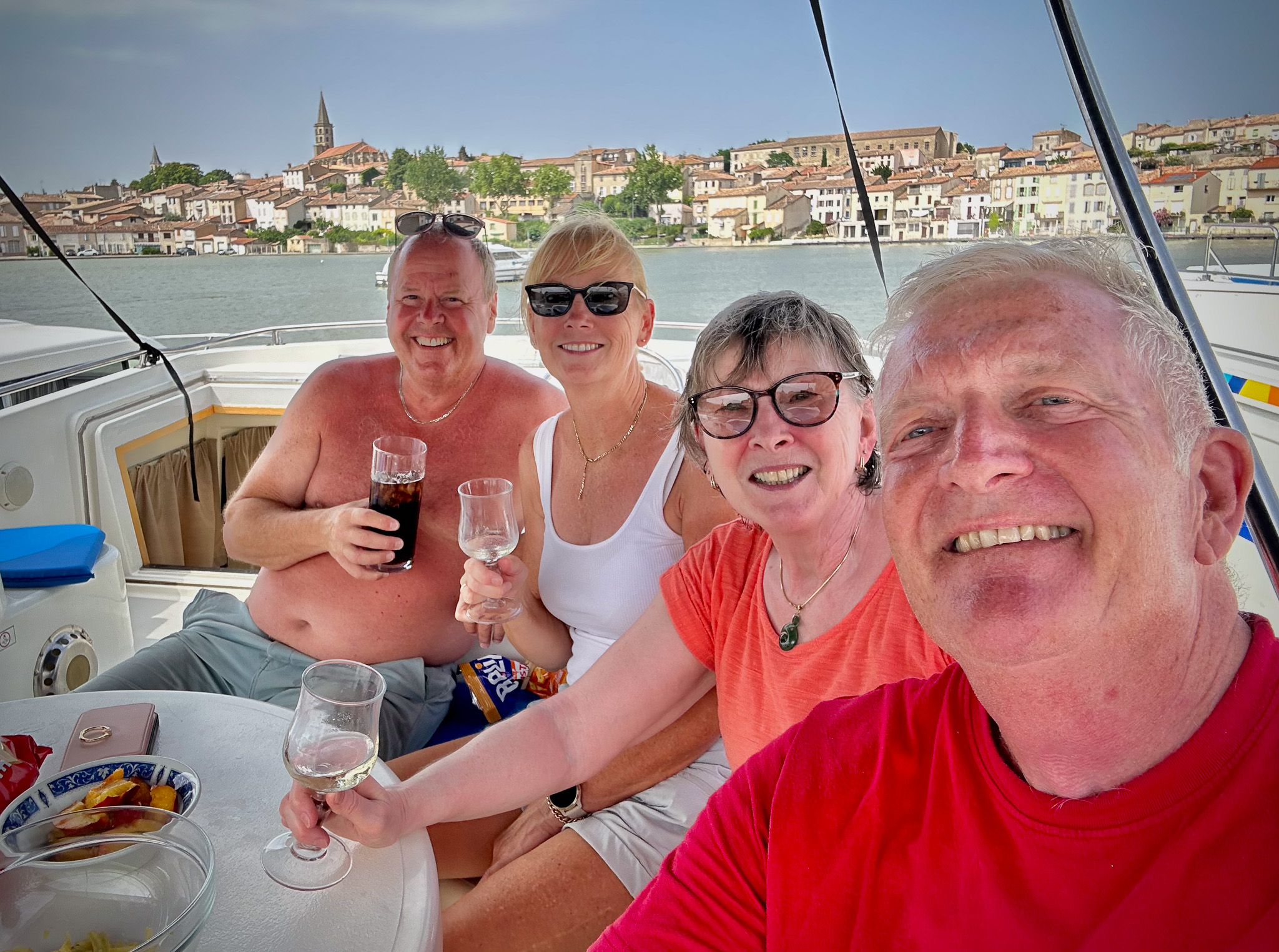
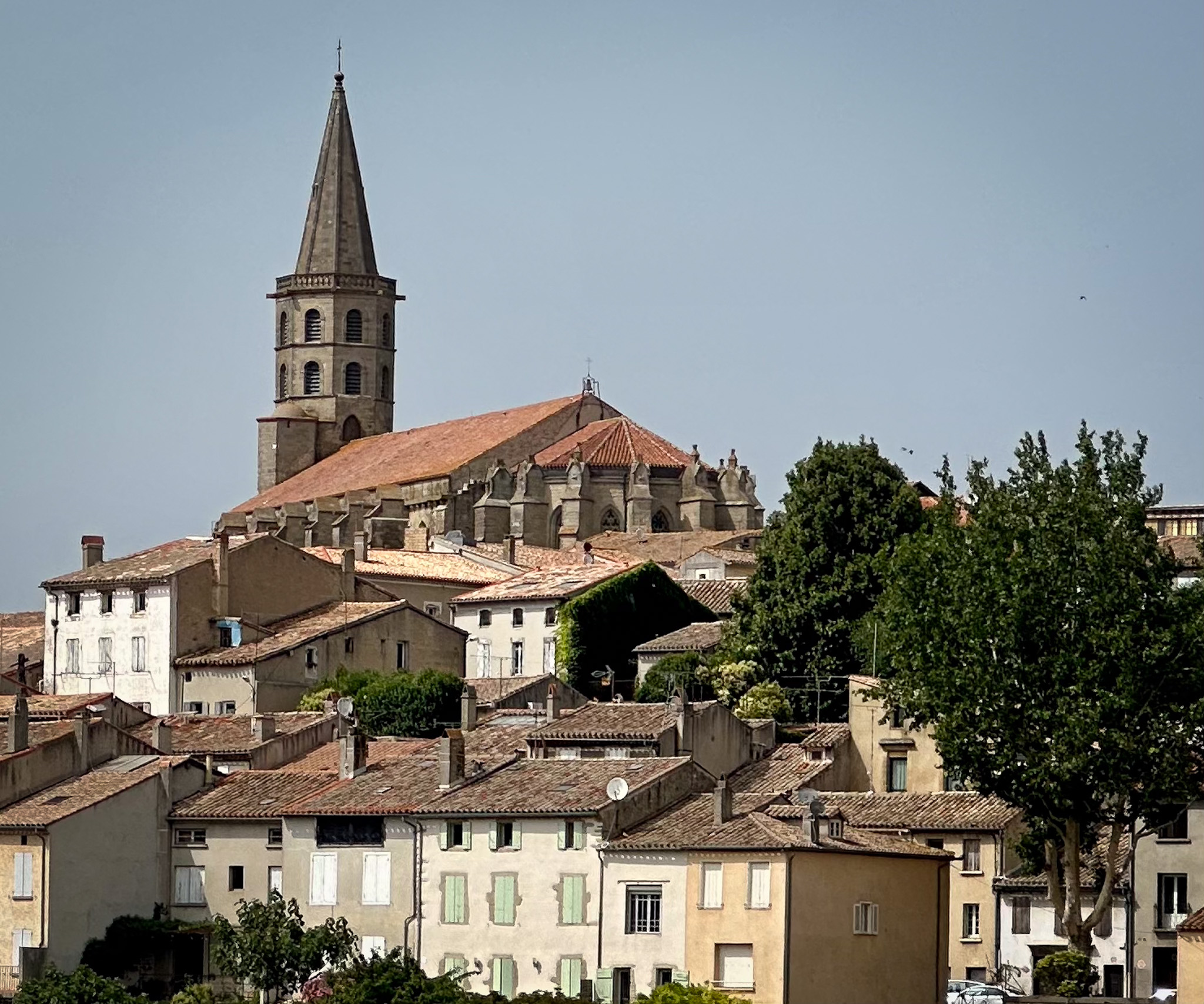
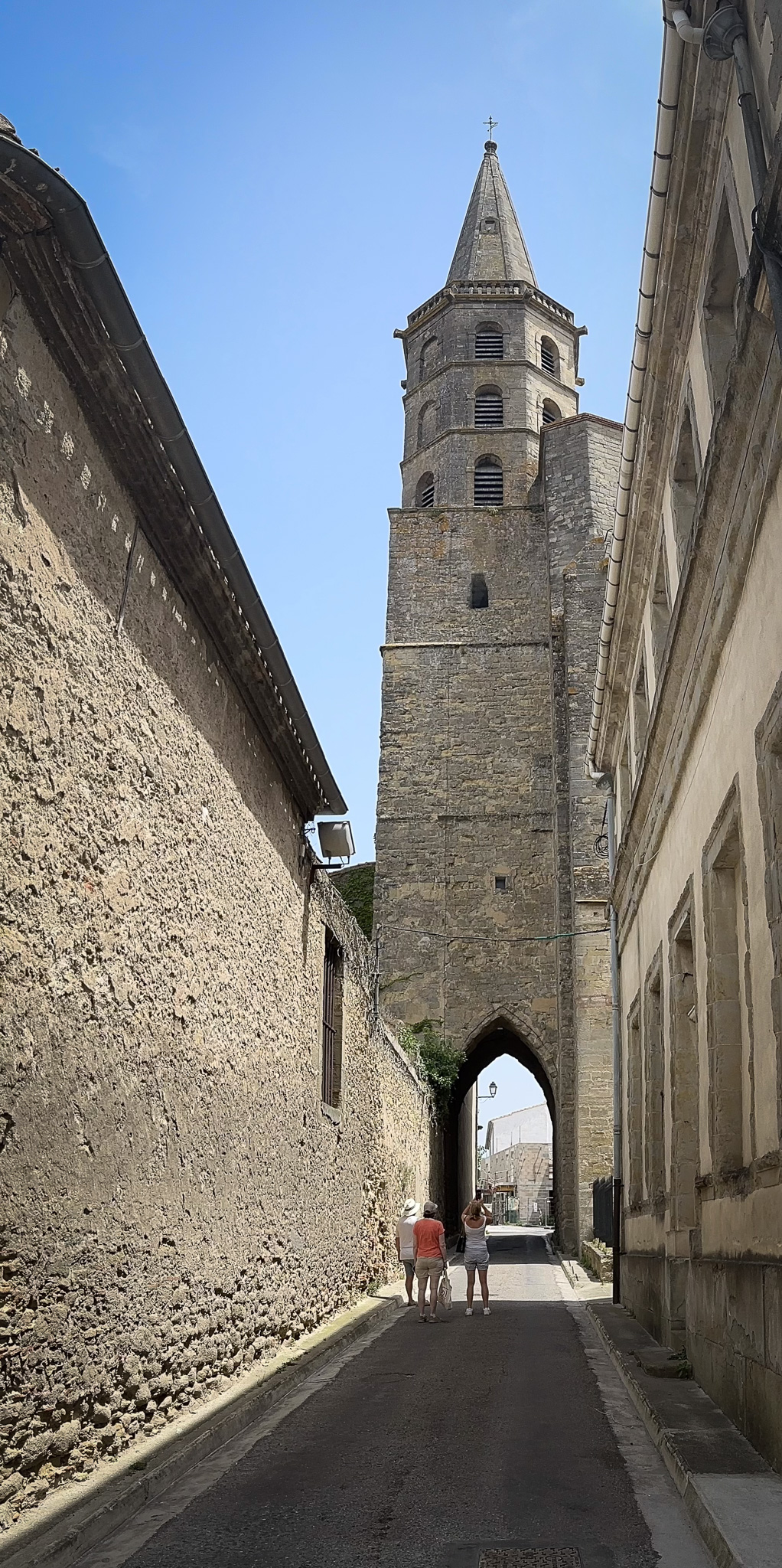
Our last night was in the Le Boat base in Castelnaudary about 50km from Toulouse. We had plenty of time to explore the old town before cleaning the boat and enjoying a meal at a local restaurant. Claire and Nigel shared a local speciality – Cassoulet de Castelnaudary – a slow-simmered stew of white beans, sausage, duck confit, and pork. It has a ten hour cooking time and so had to be ordered the day before. Delicious, but having a starter was a big mistake.
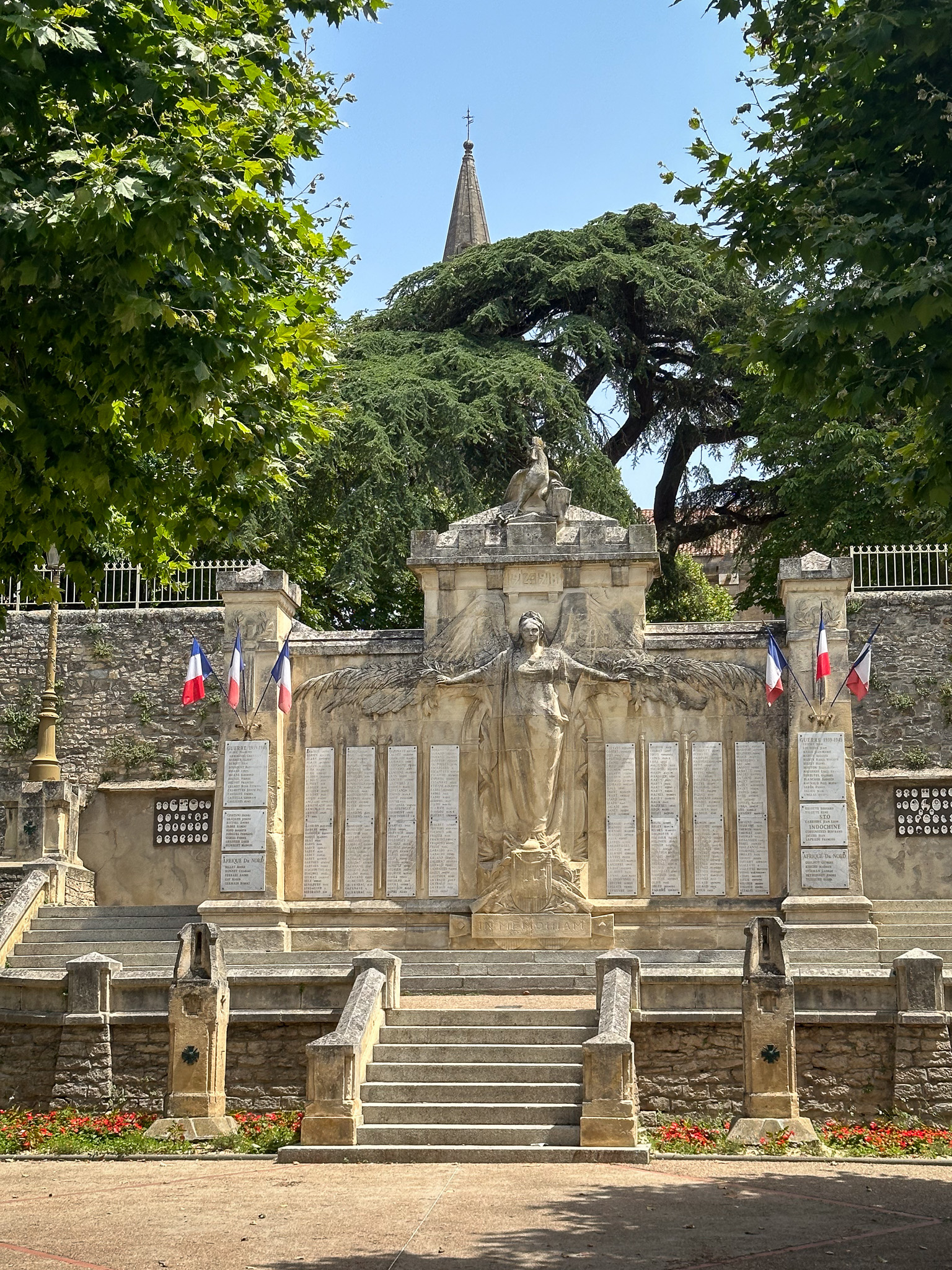

Stage 2 – Rocamadour
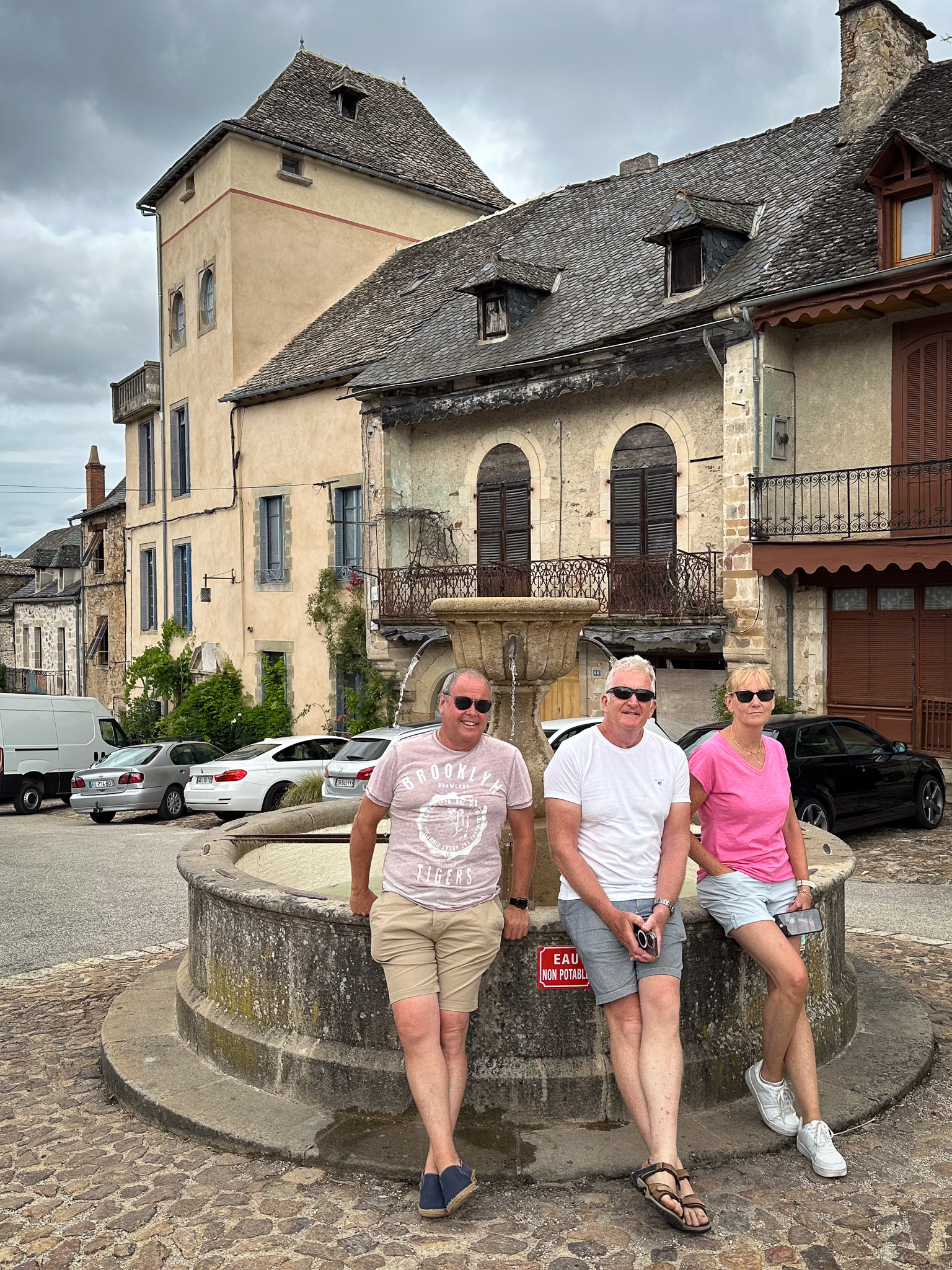
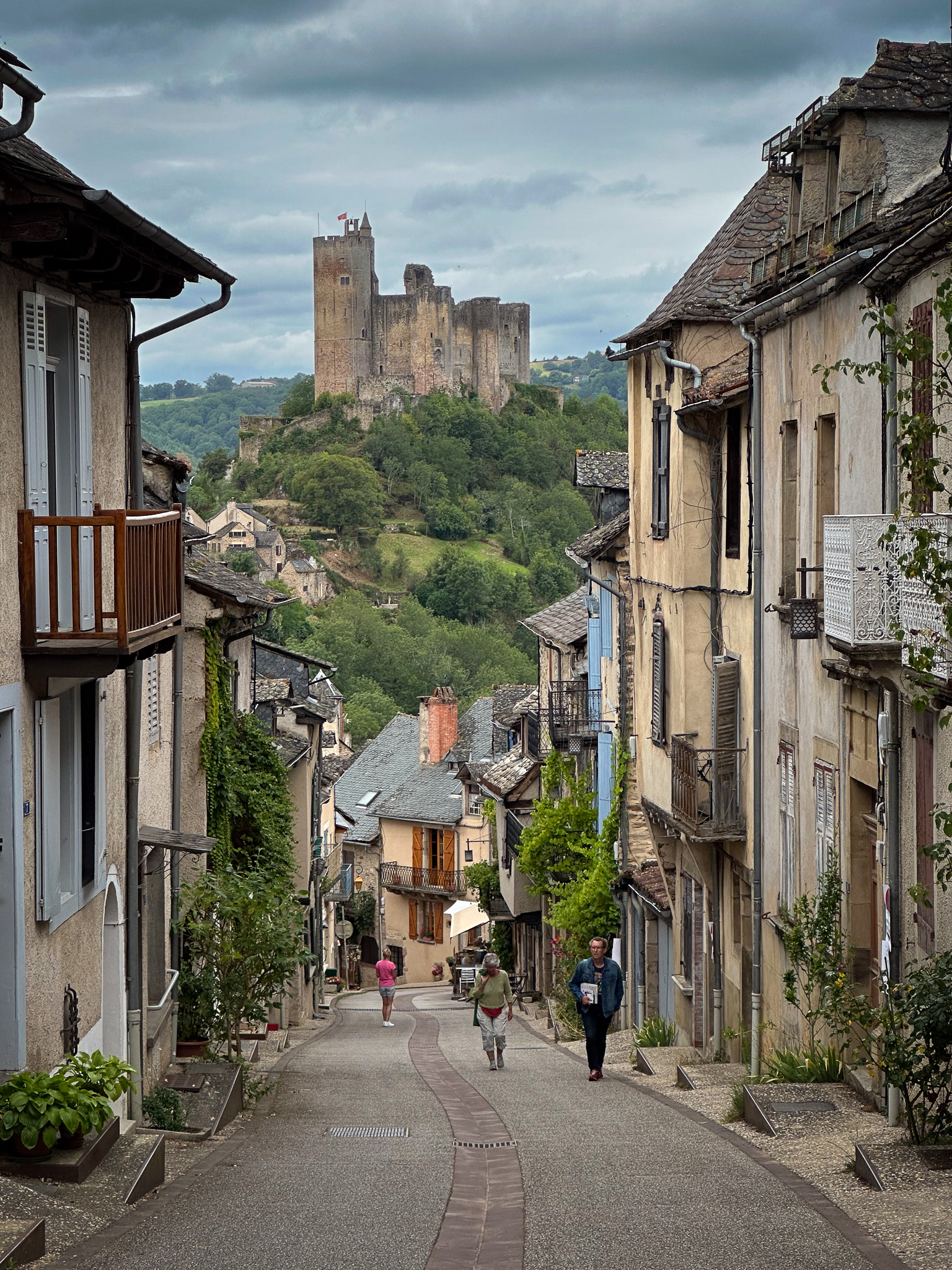
We had three nights booked into an Airbnb in Rocamadour but, to break the journey, Claire had found us a lunch break in the village of Najac. It turned out to be a spectacular stop.
Najac
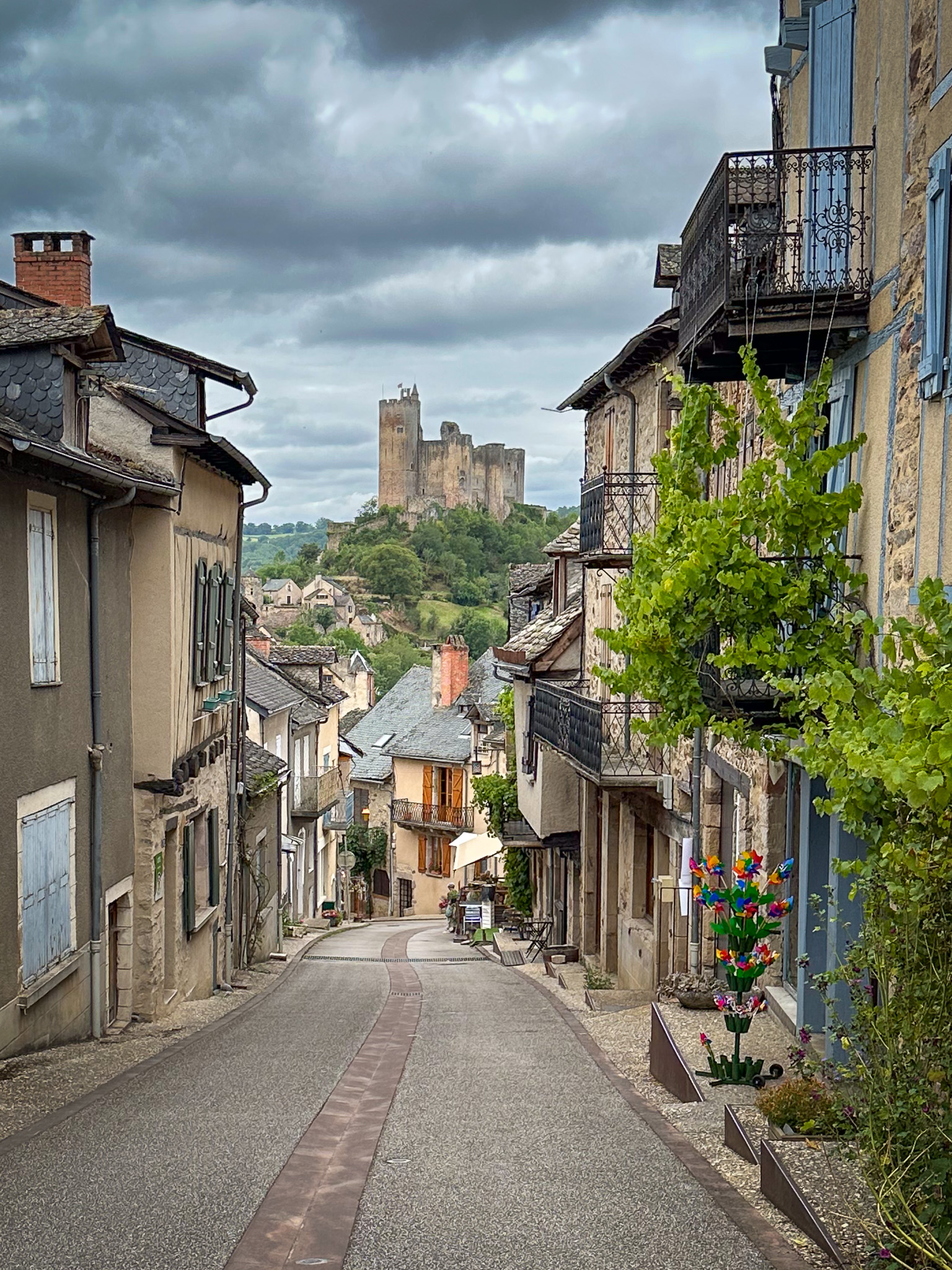
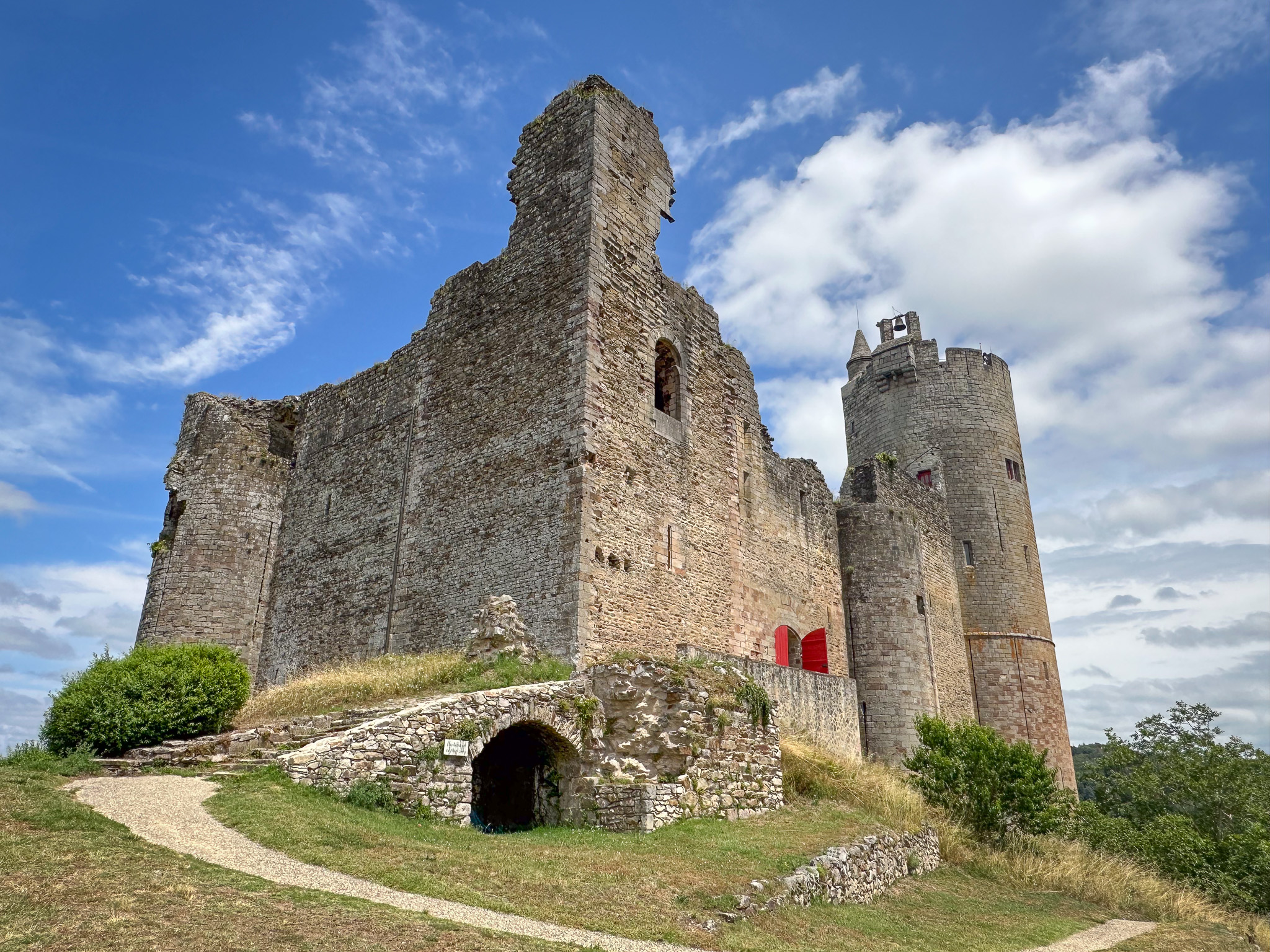
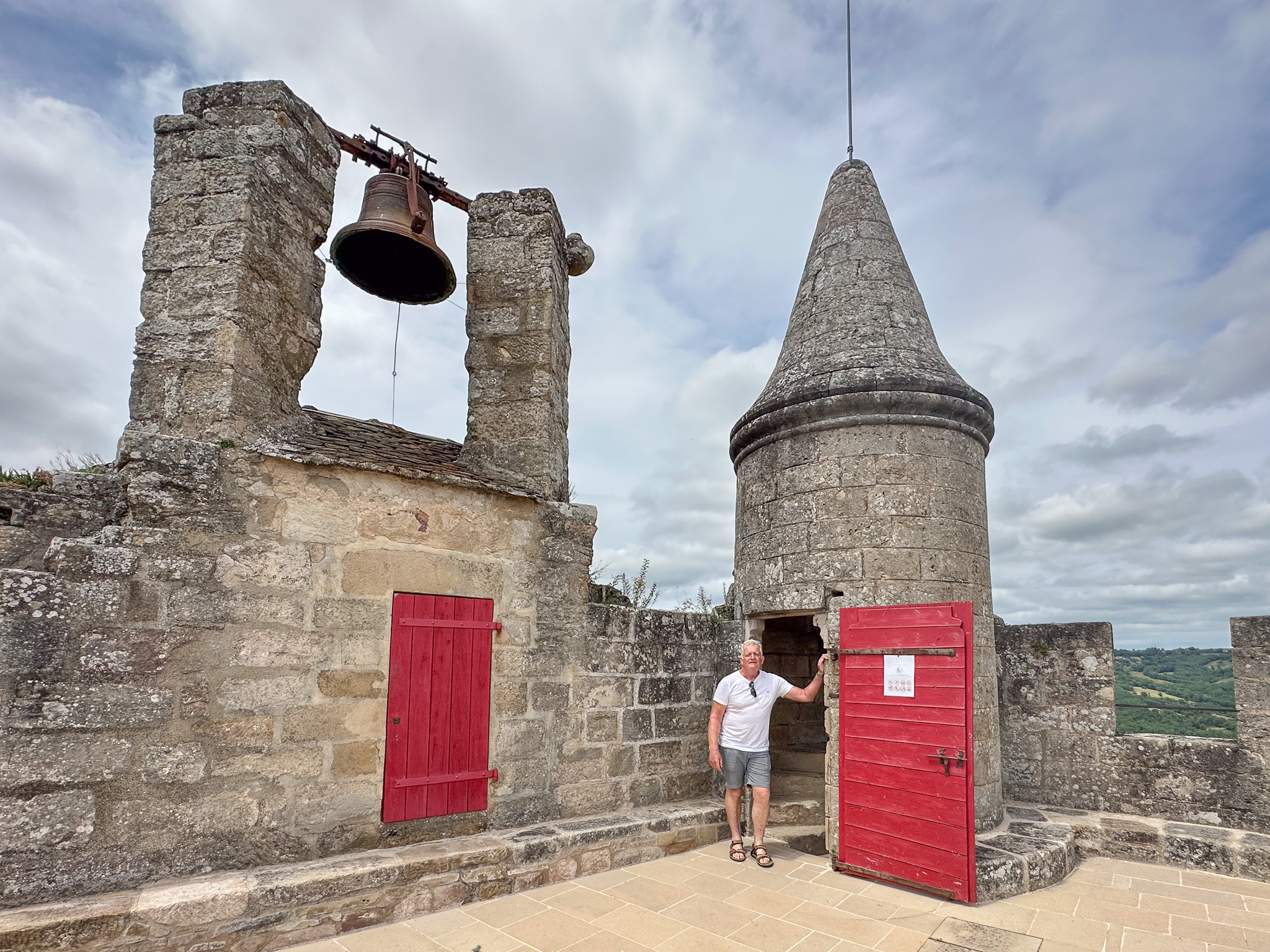
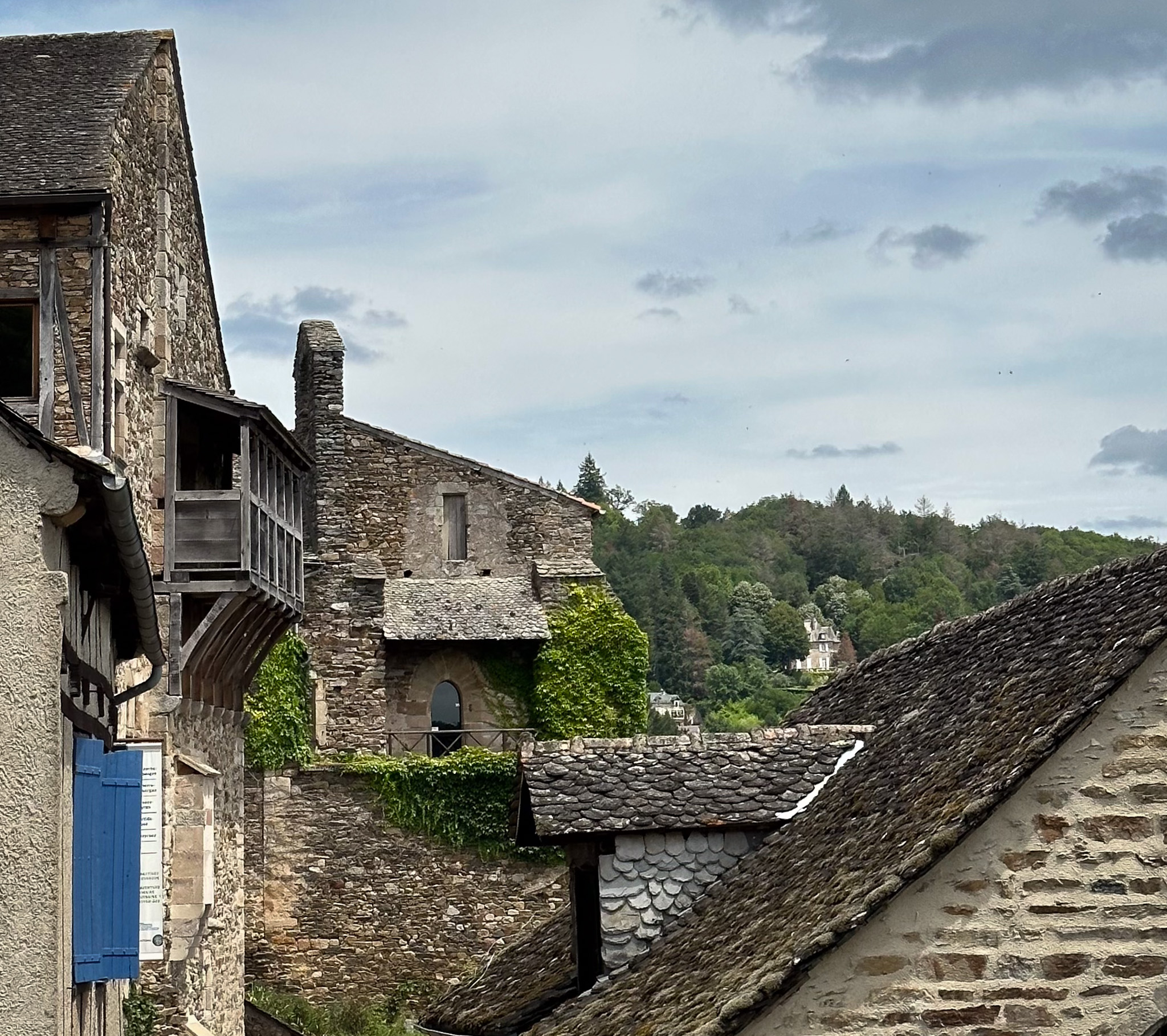
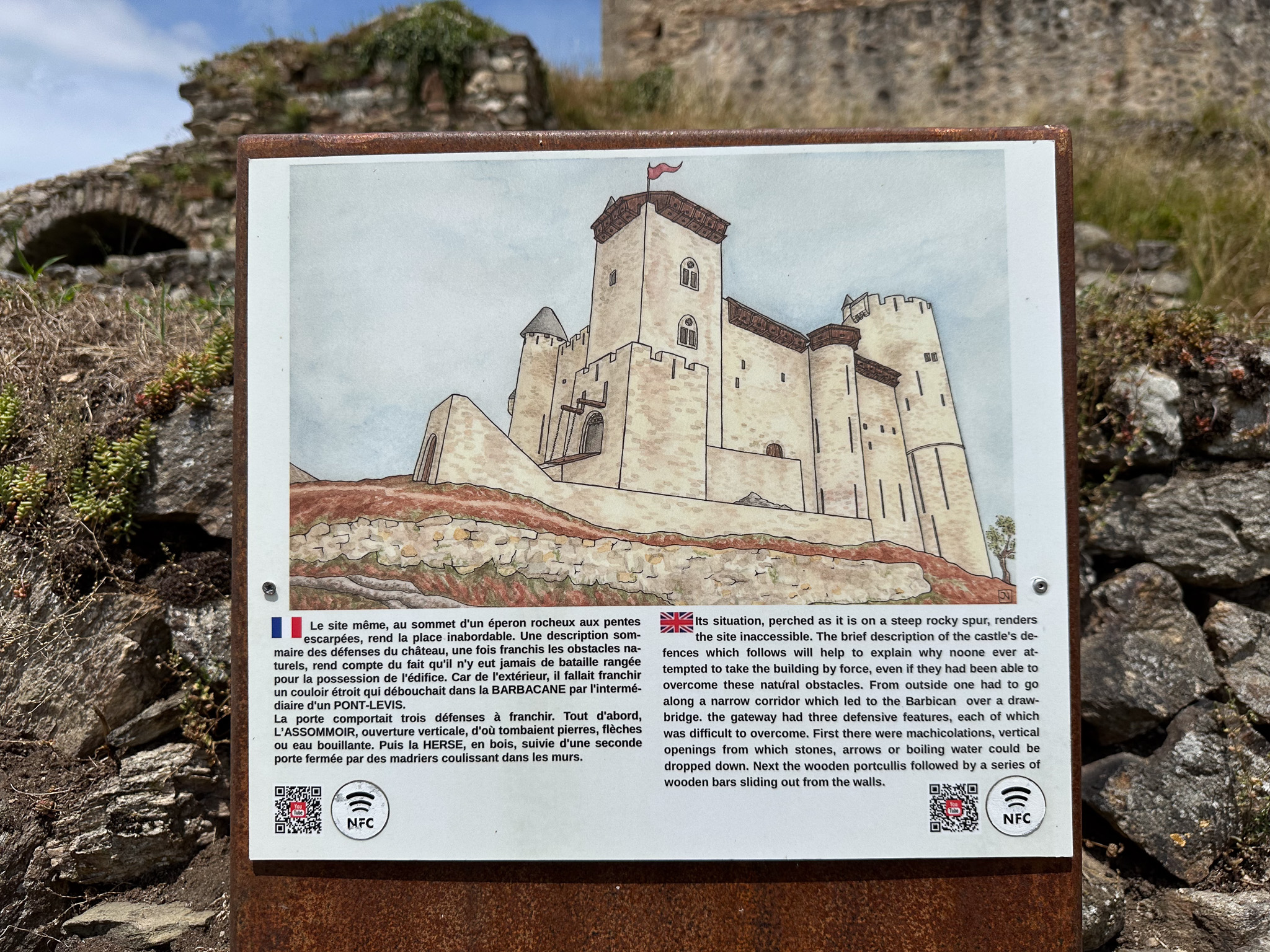
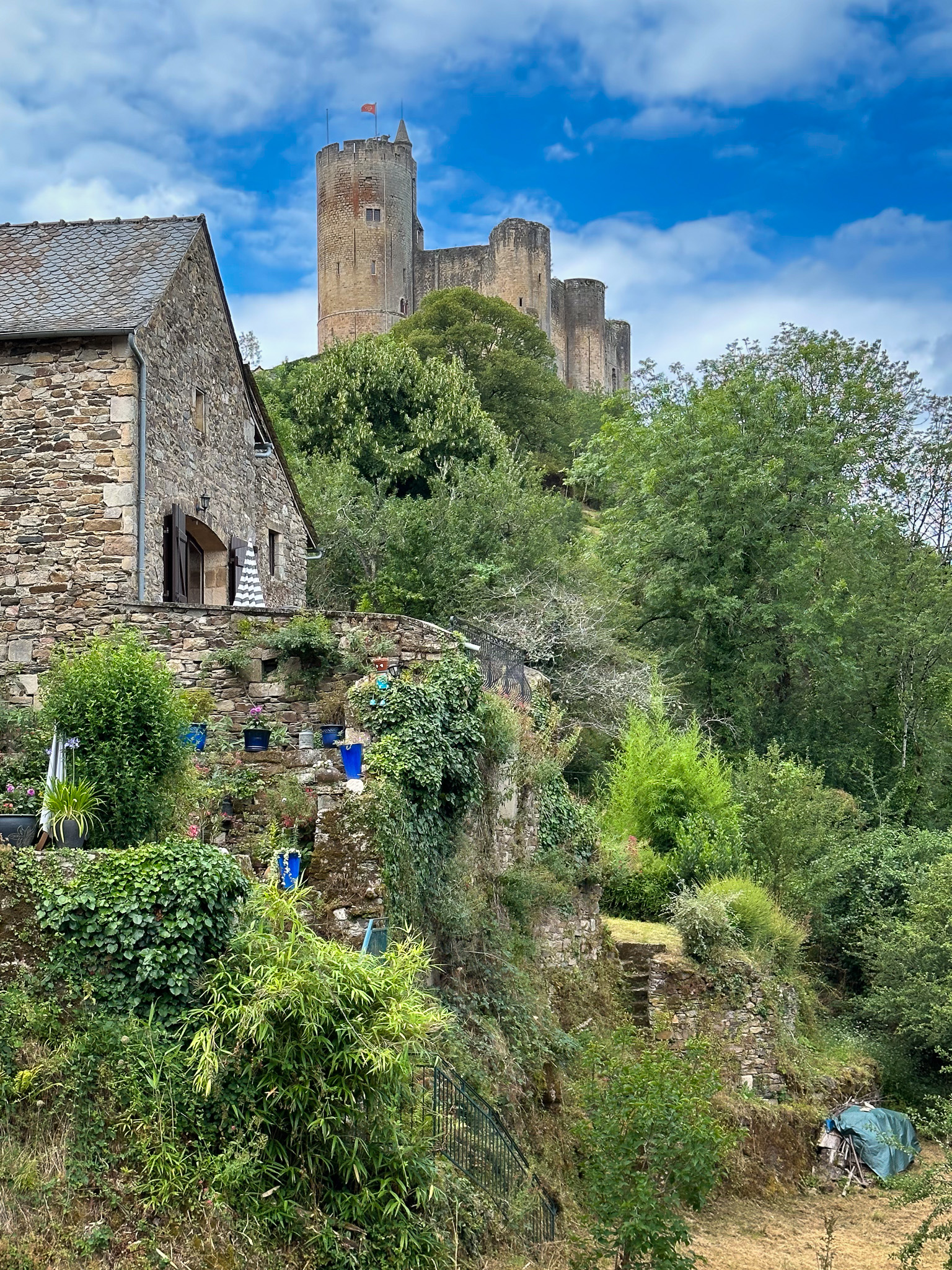
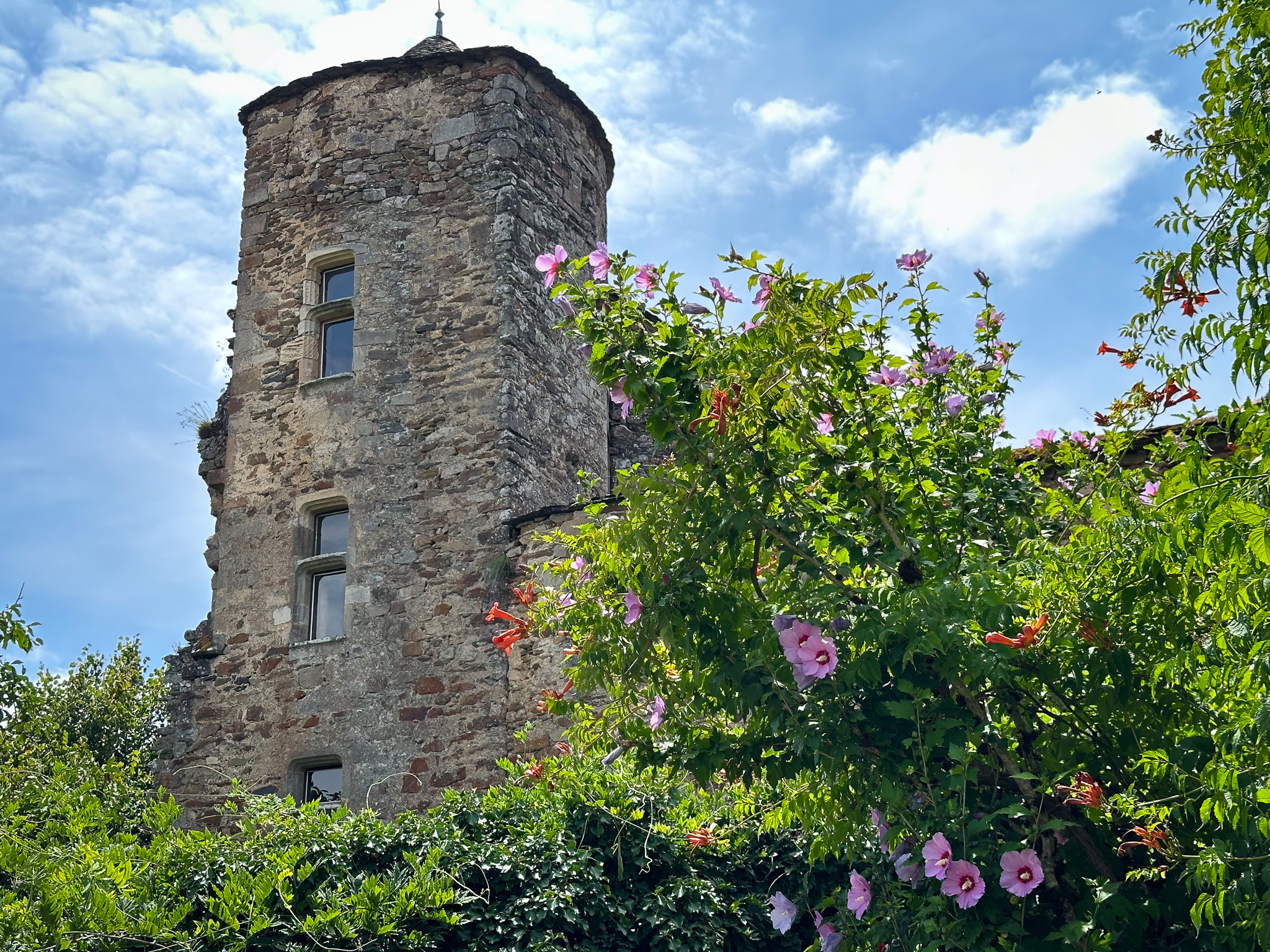
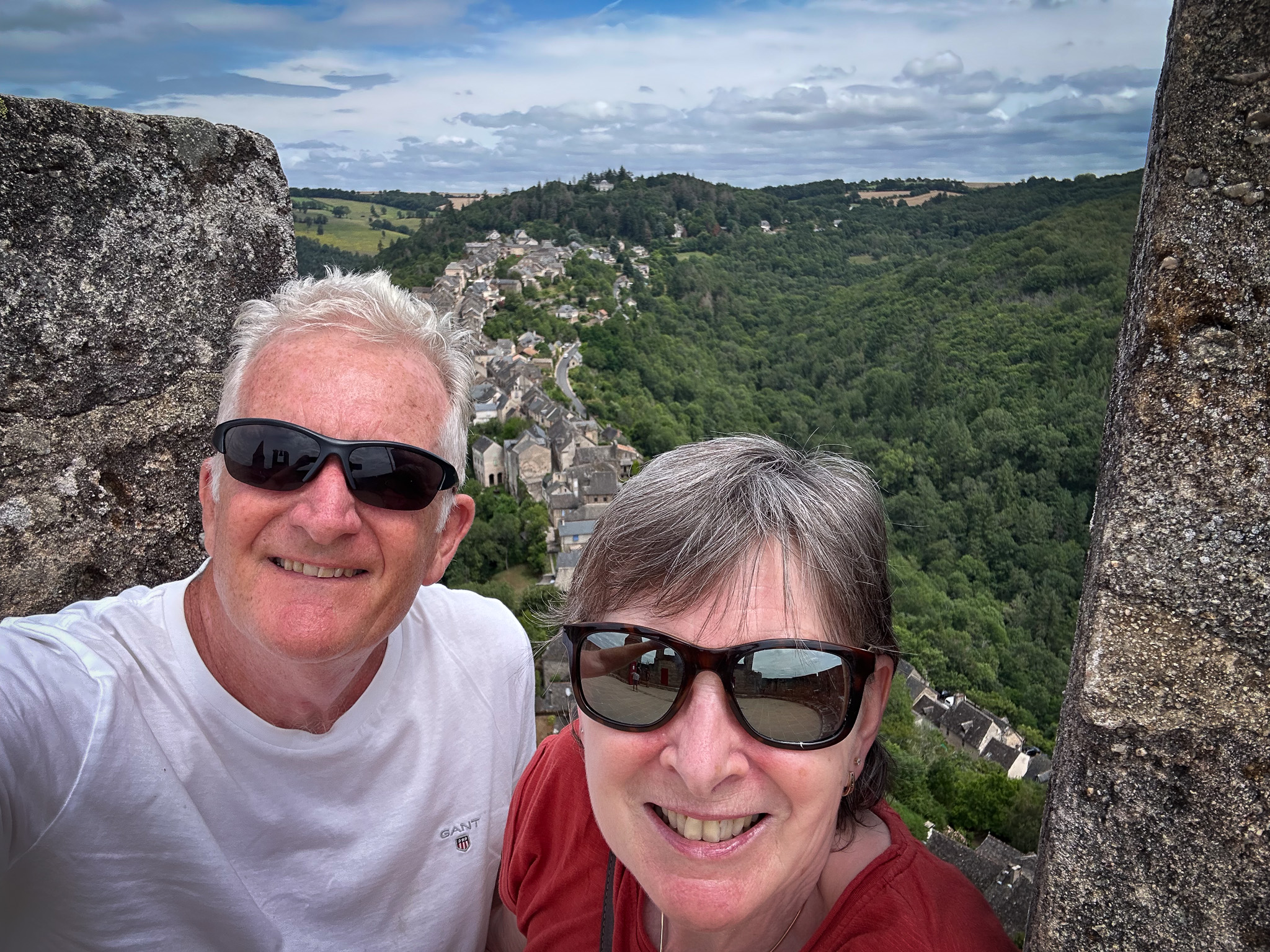
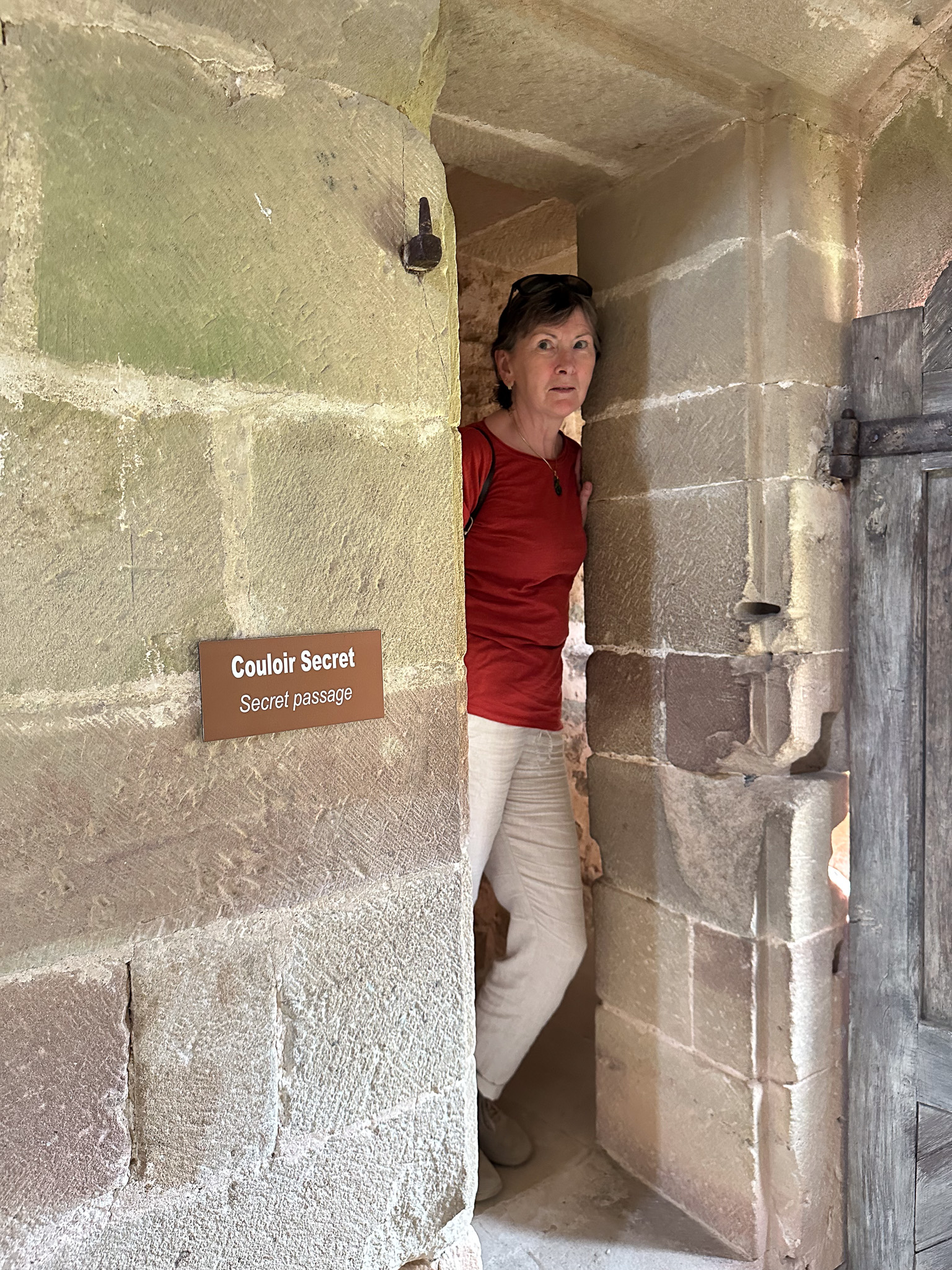
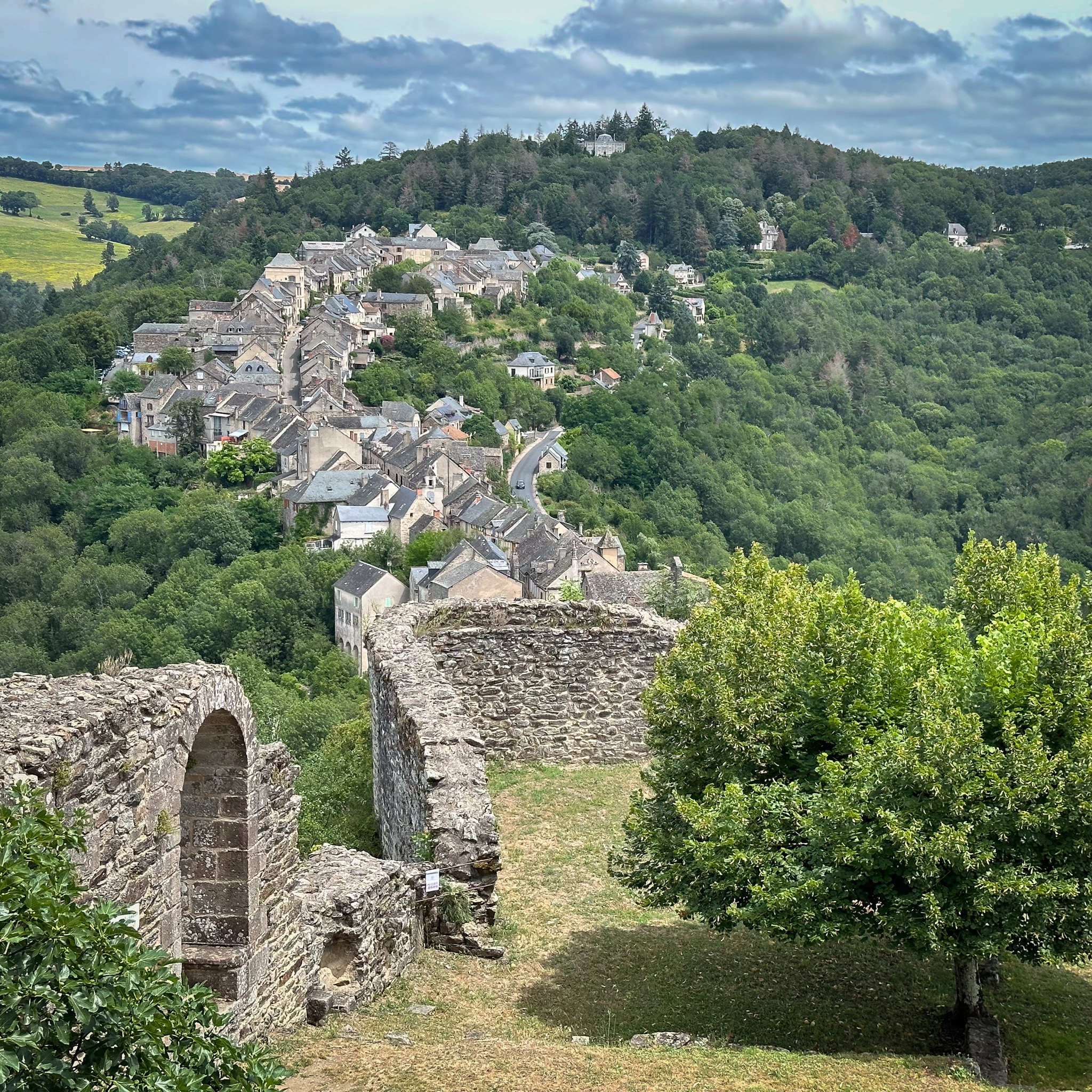
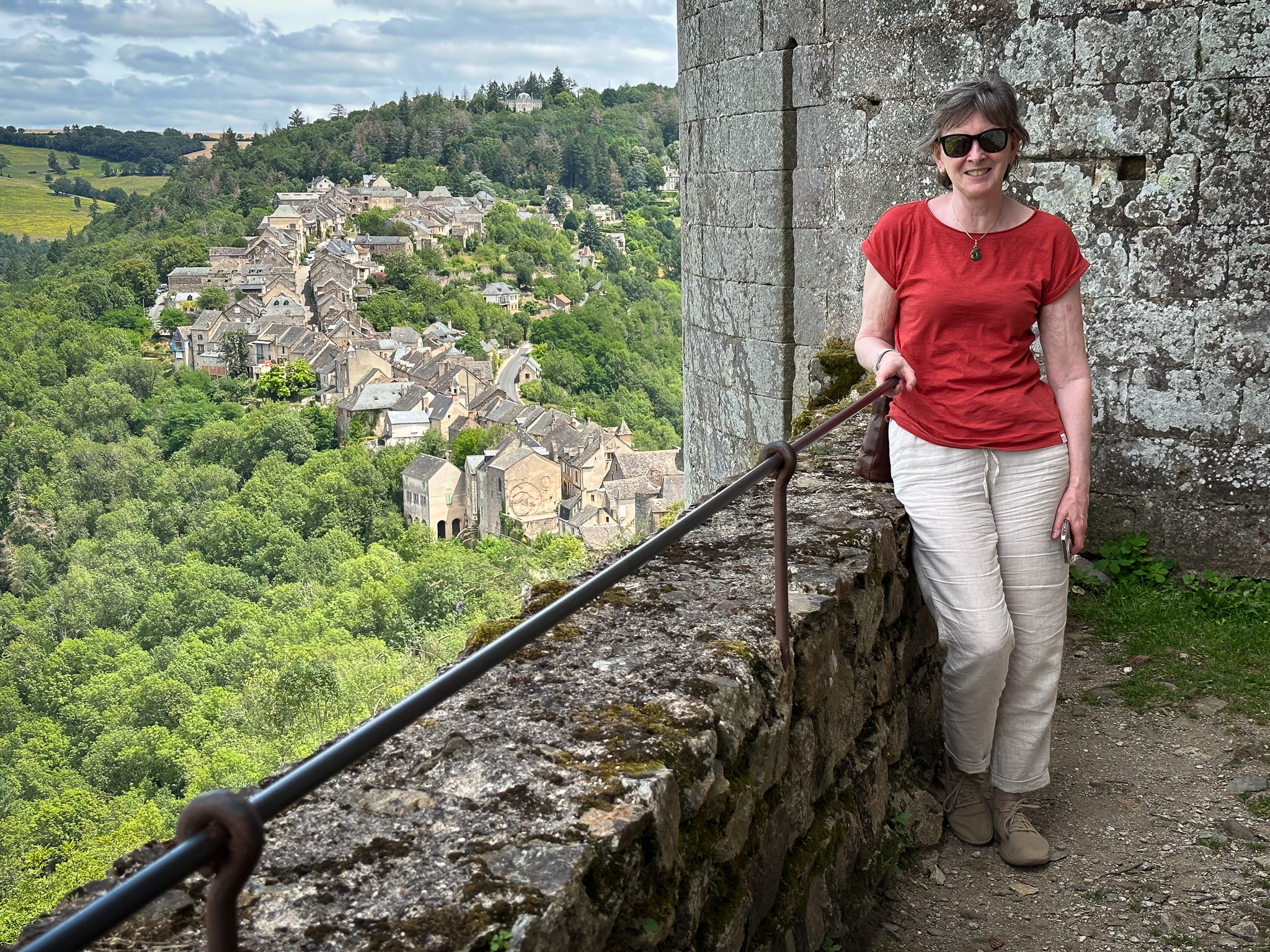
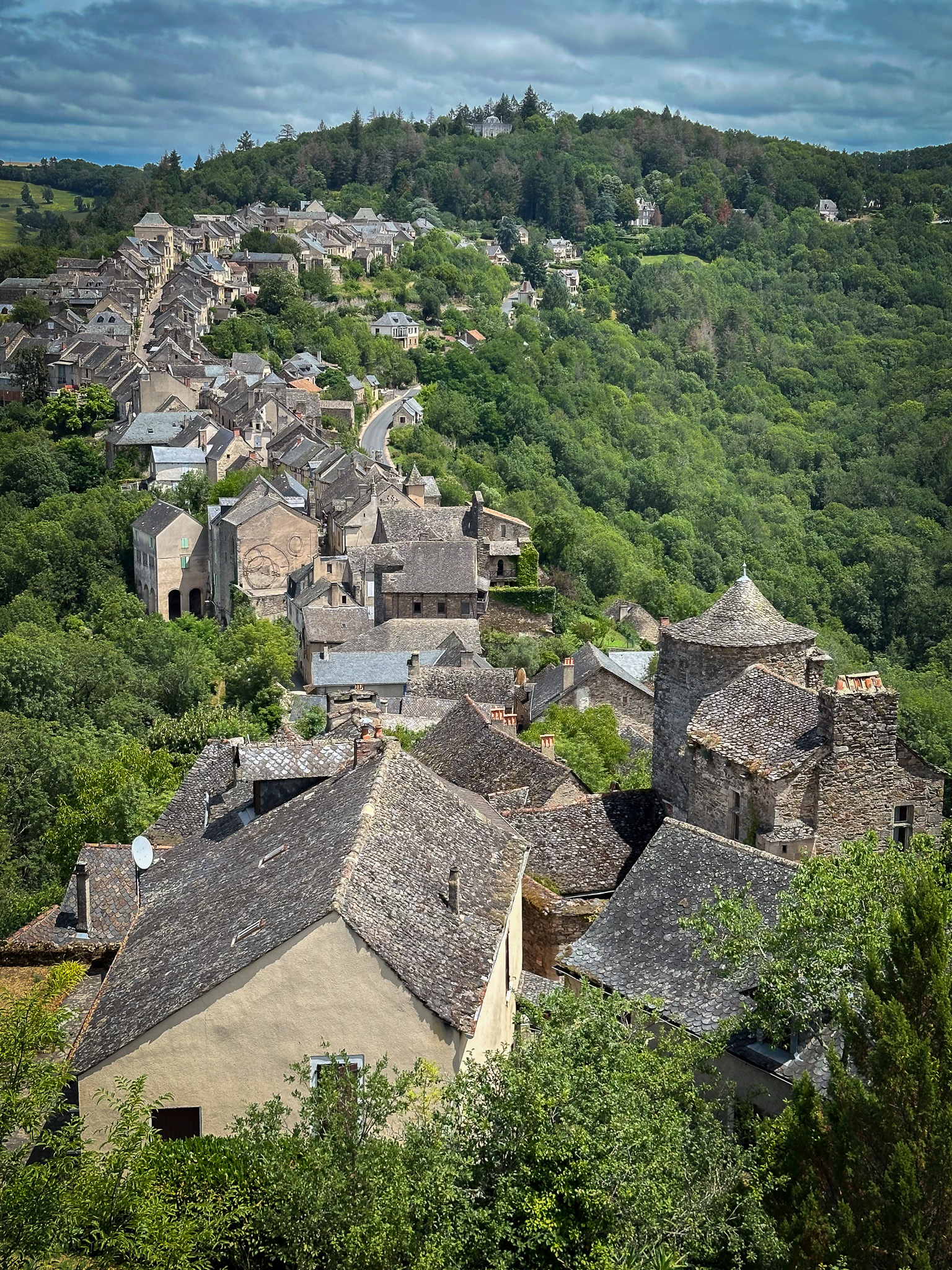
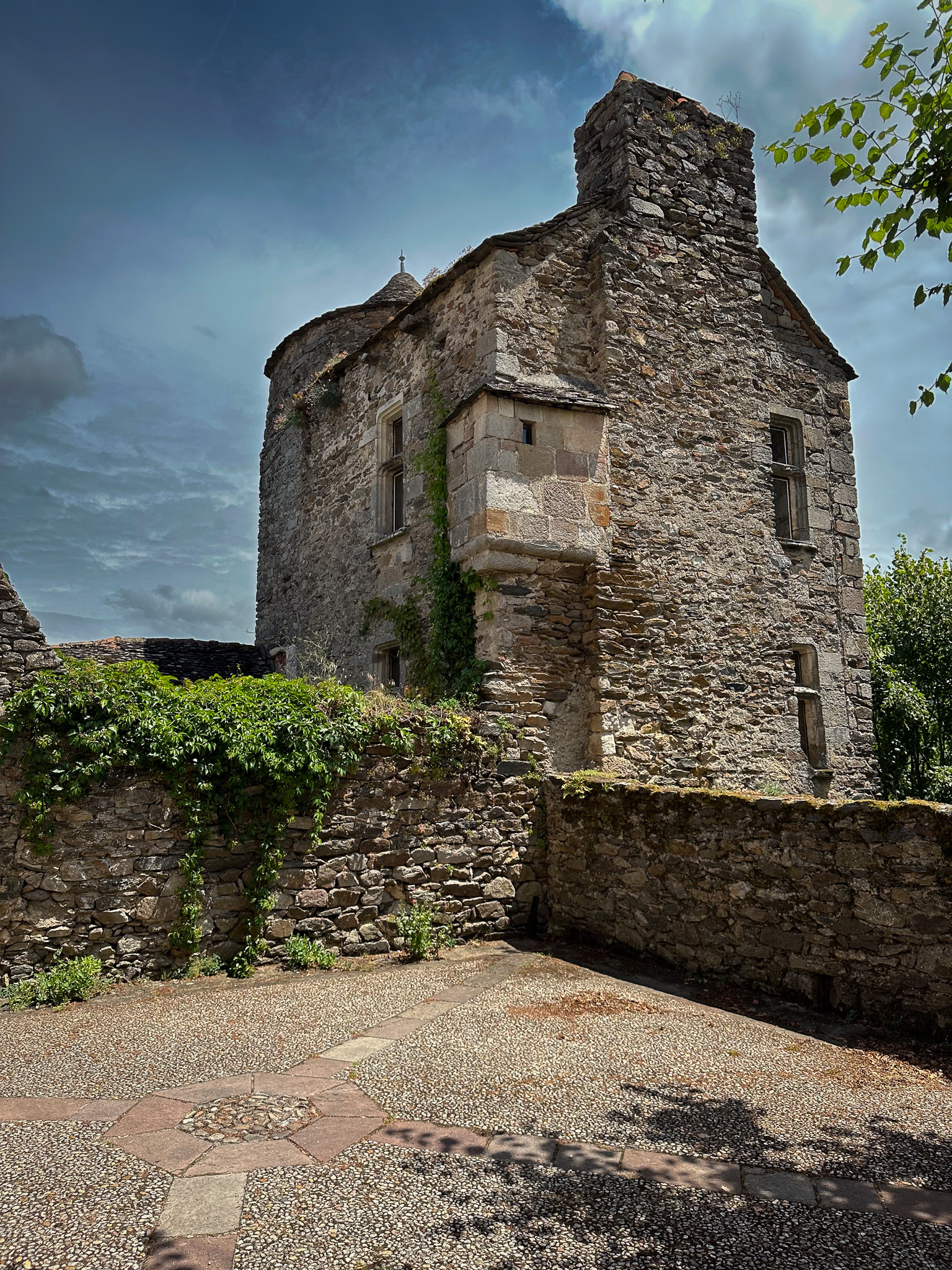
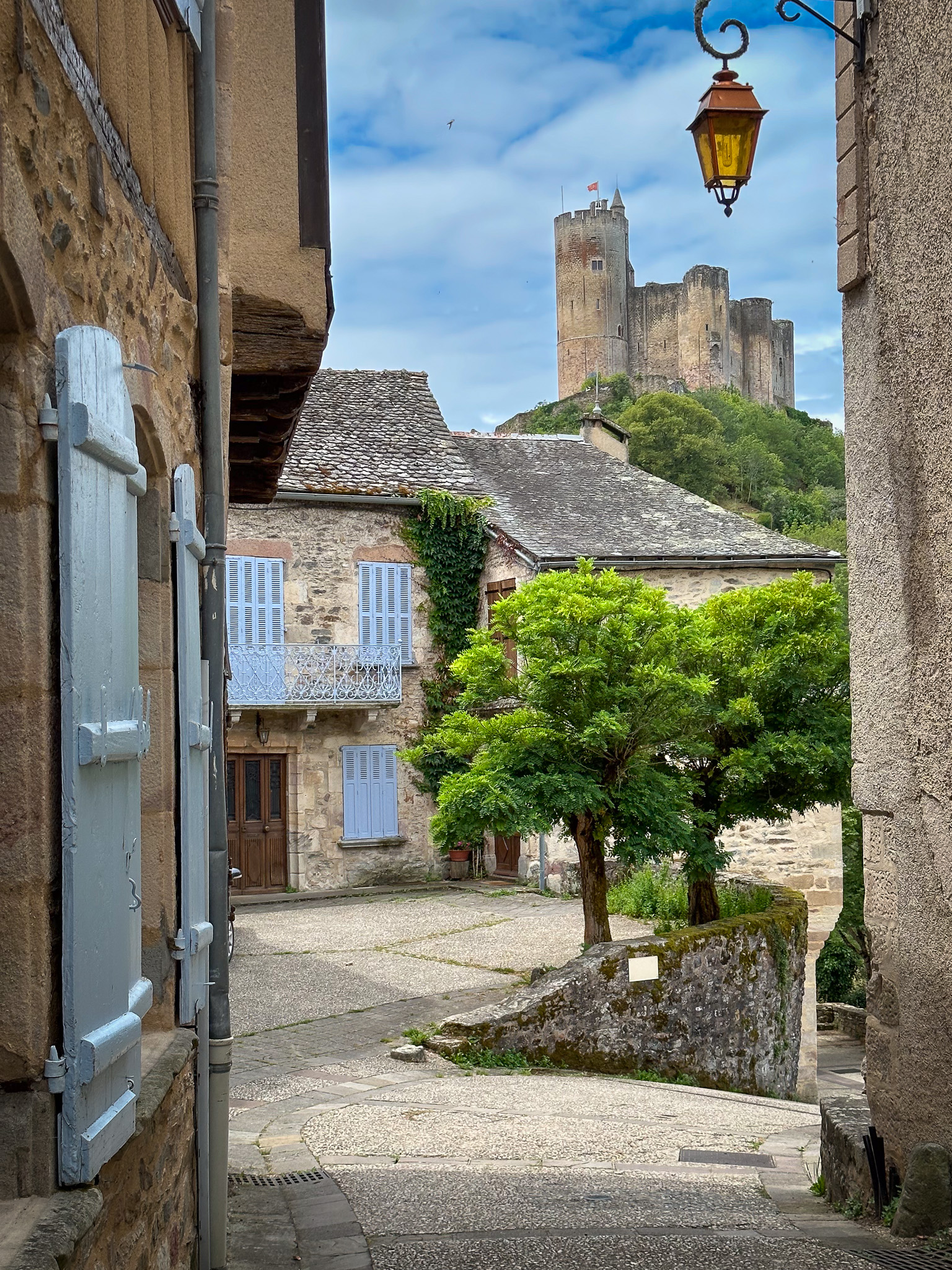
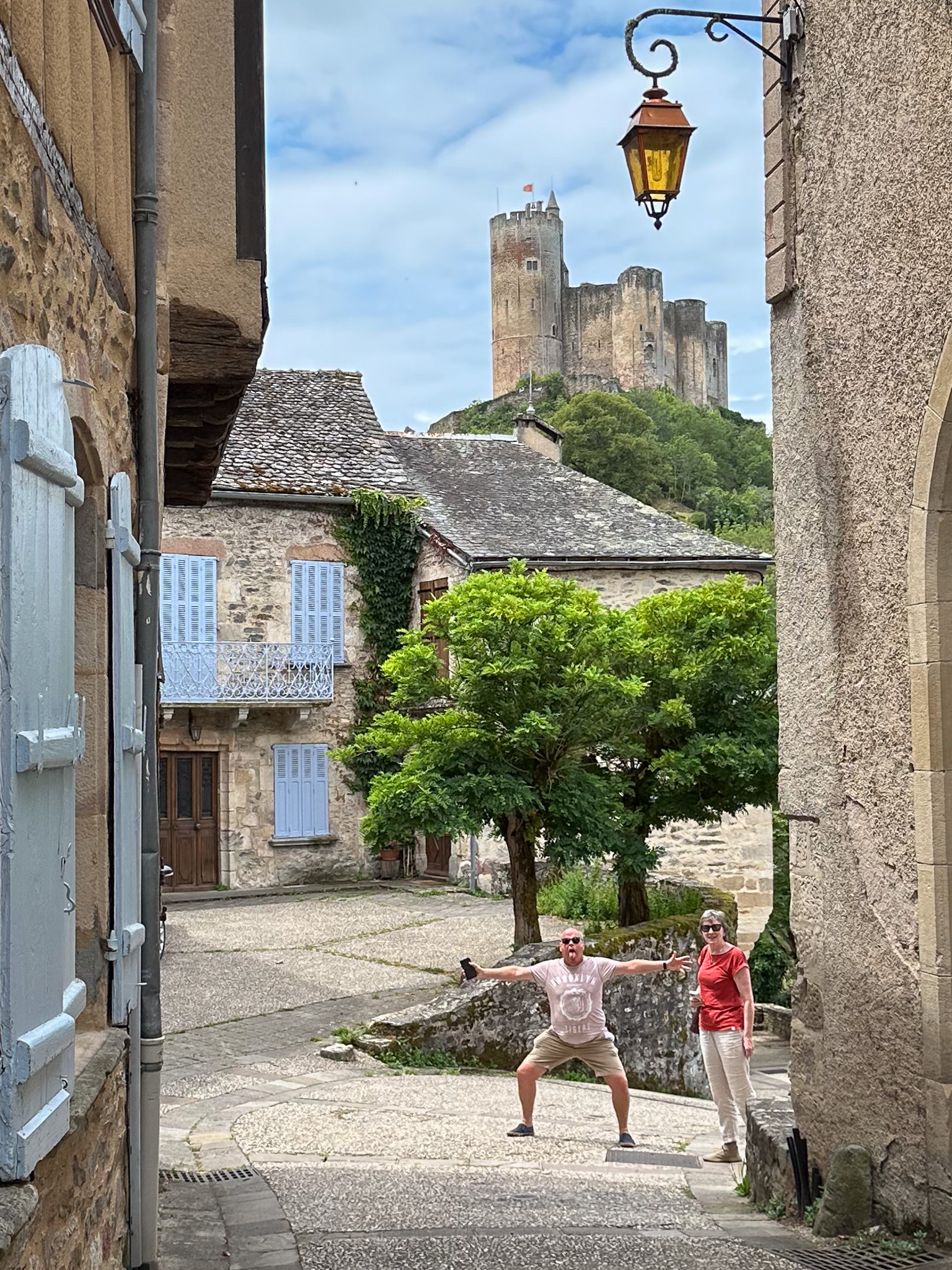
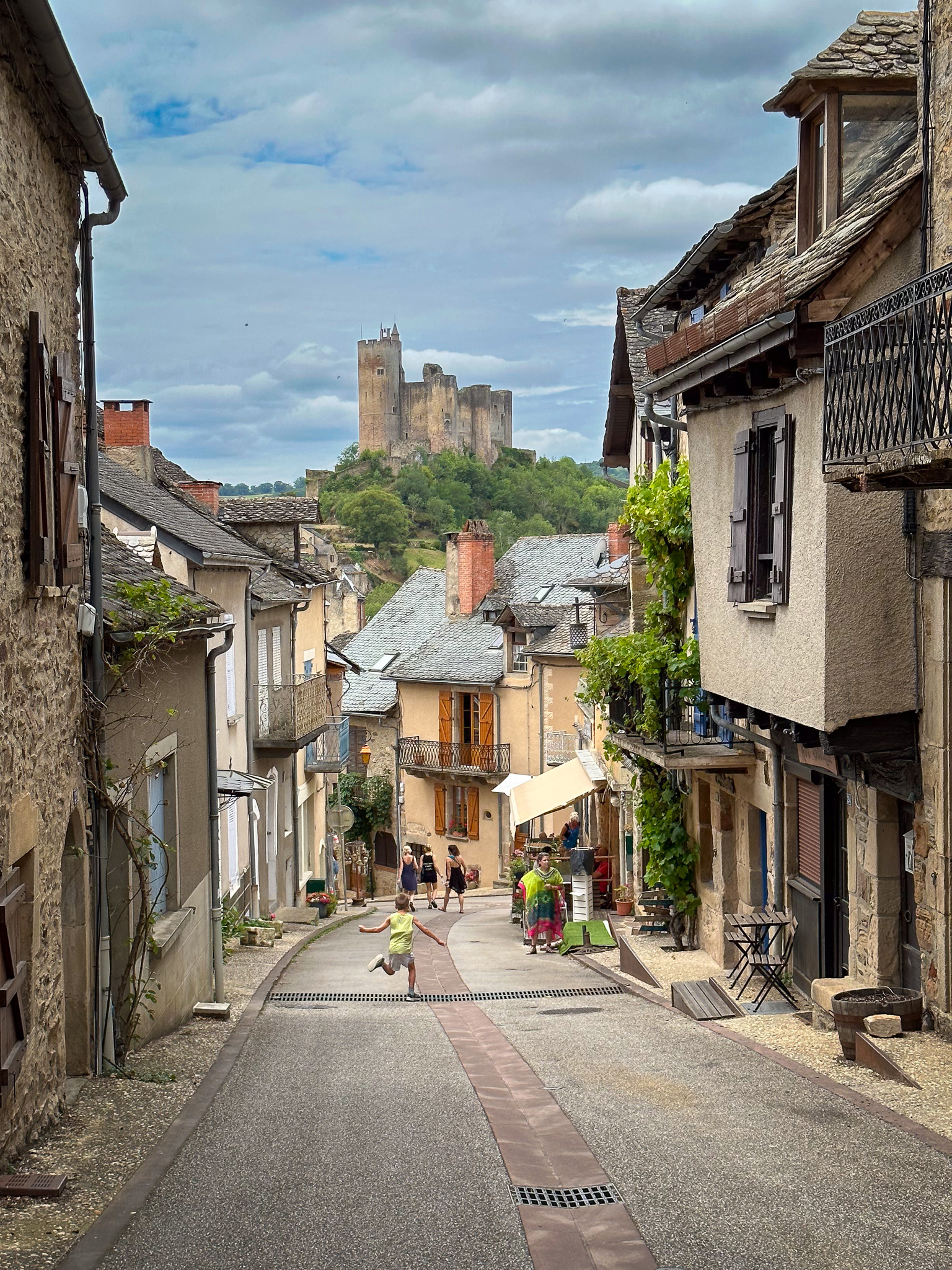
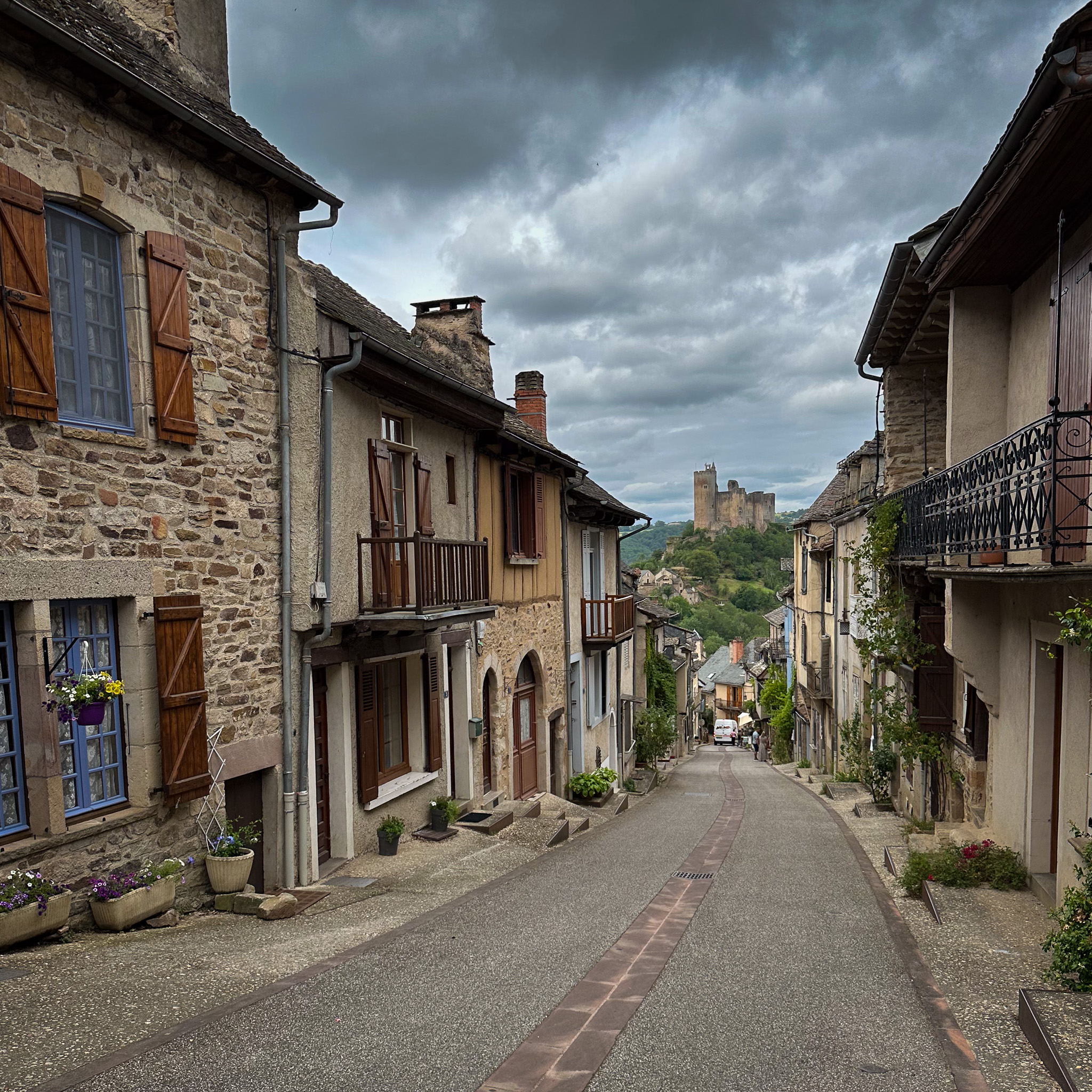
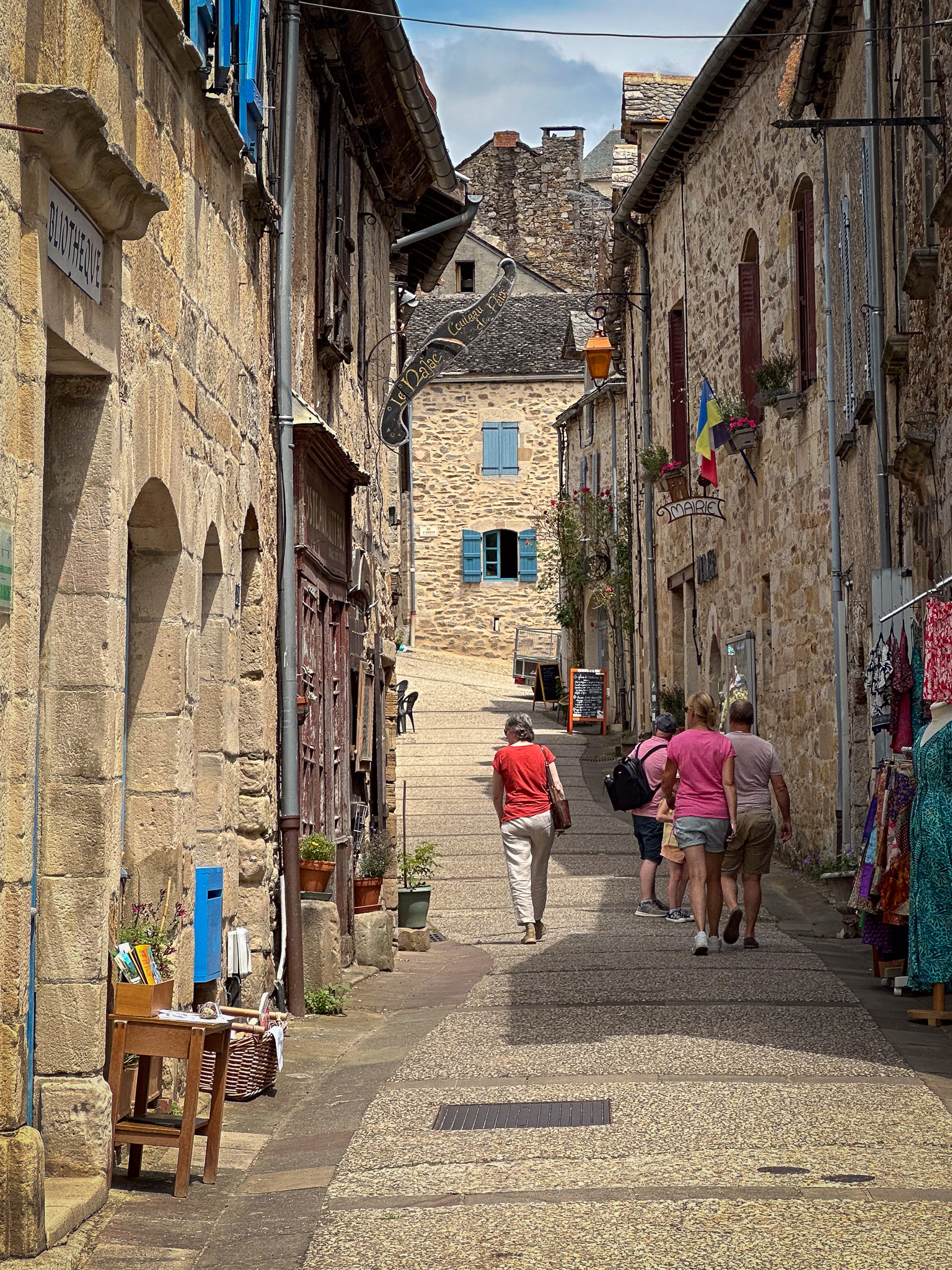
Najac is apparently officially listed as one of the ‘most beautiful villages of France‘. It has just one main street running along the top of a ridge and is towered over by the Najac fortress at the highest point on the ridge. We followed the main street all the way to the fortress and then climbed the highest tower to make sure that we experienced every possible view point. Wandering through the town felt, at every turn, like walking inside a movie set. It was impossibly quaint and lined with houses that might have graced the pages of fairy tale picture books.

Rocamadour
Here, we really struck lucky with our Airbnb. Nigel booked it but had no idea how close it was to the iconic cliff village – nor how incredibly well organised it was.
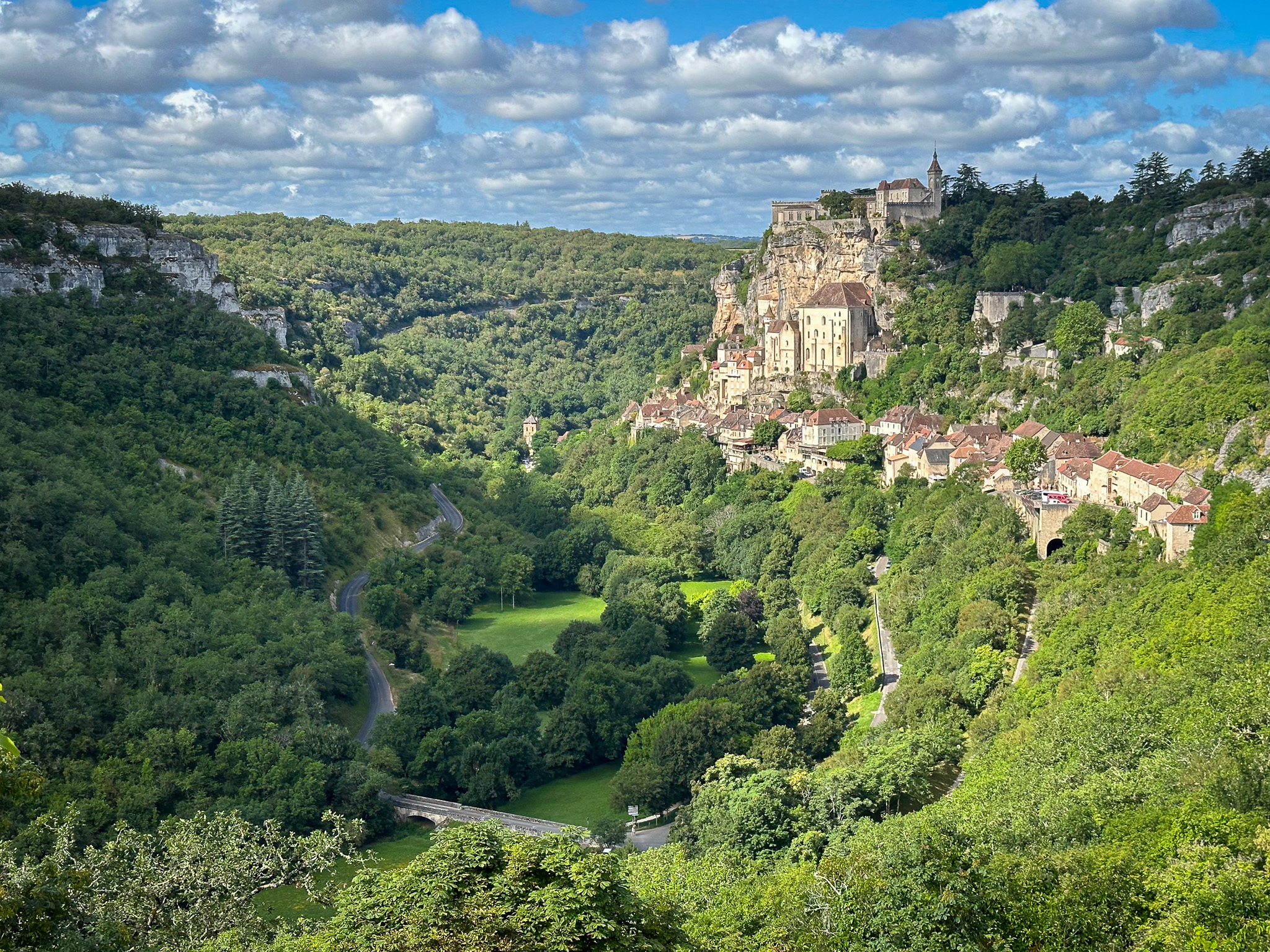
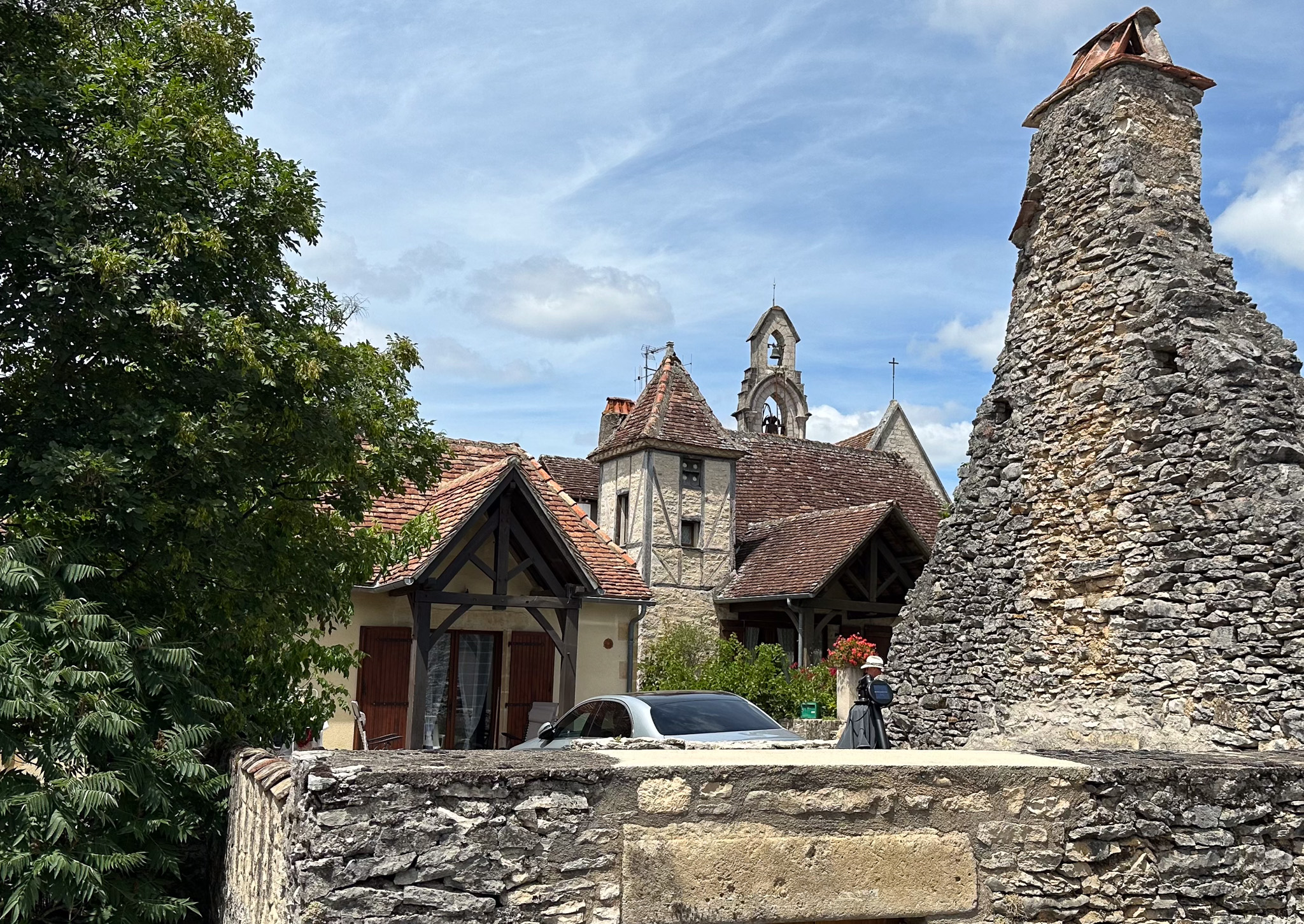
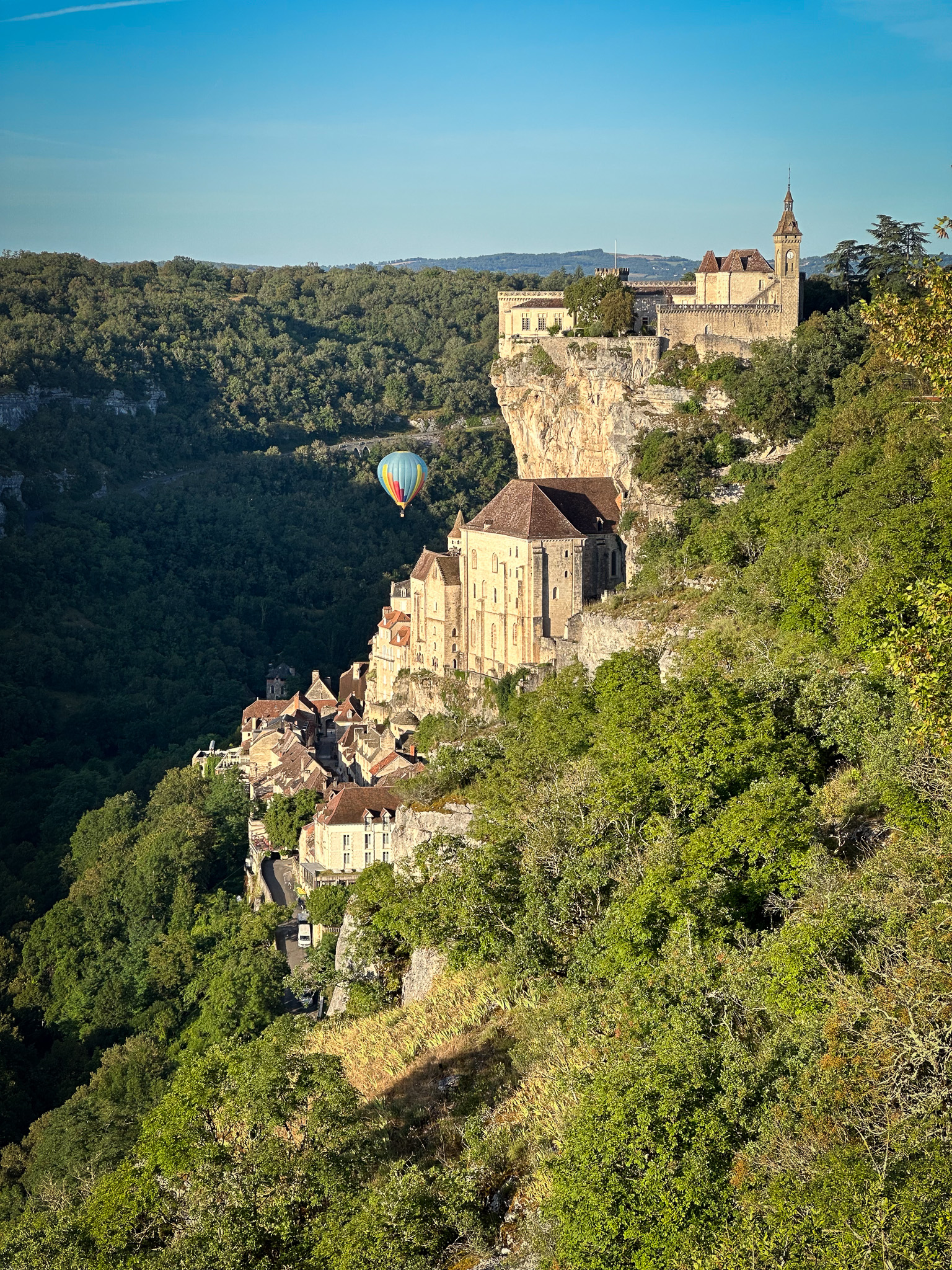
This was the view 10 metres from our doorstep.
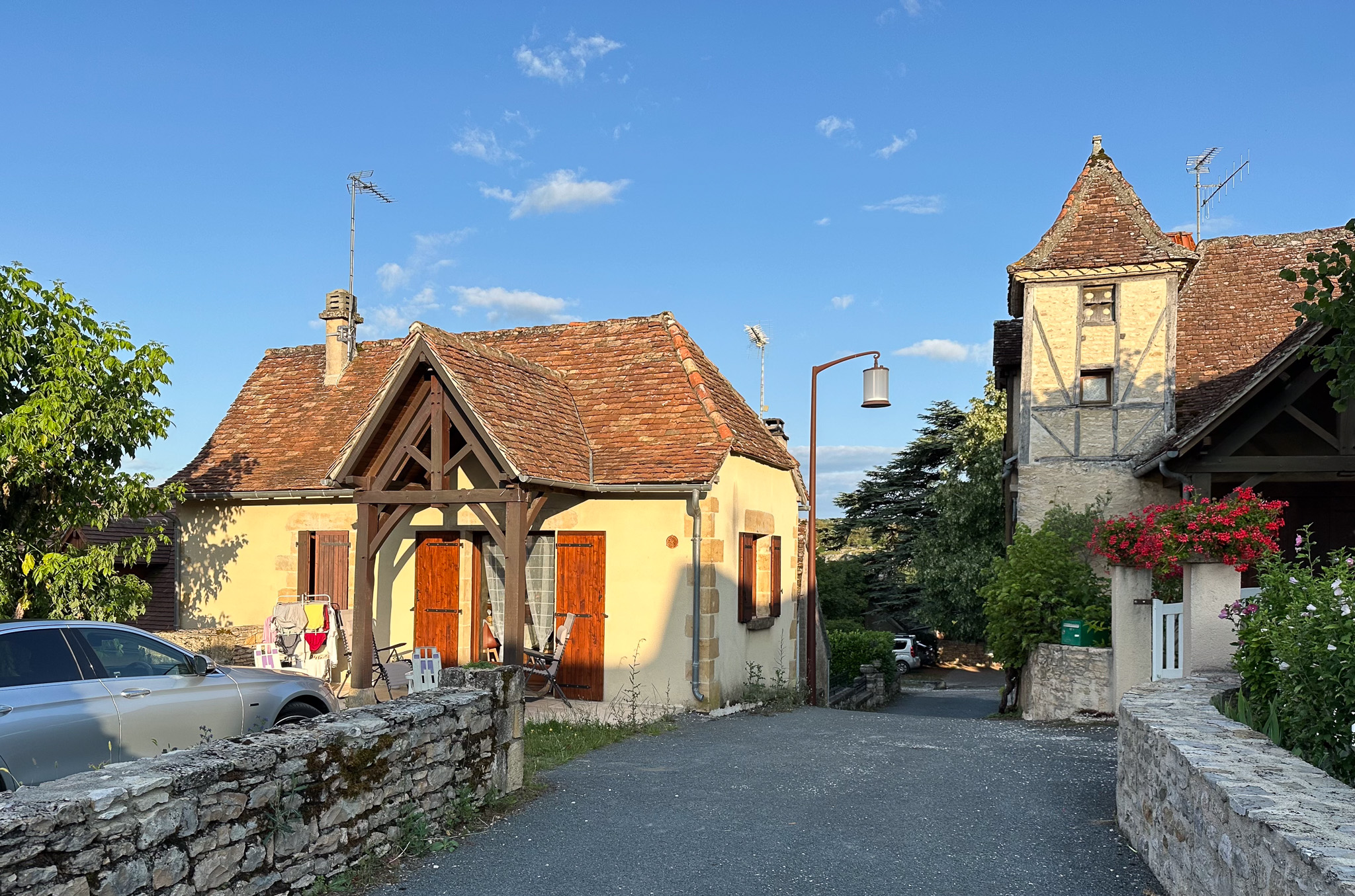
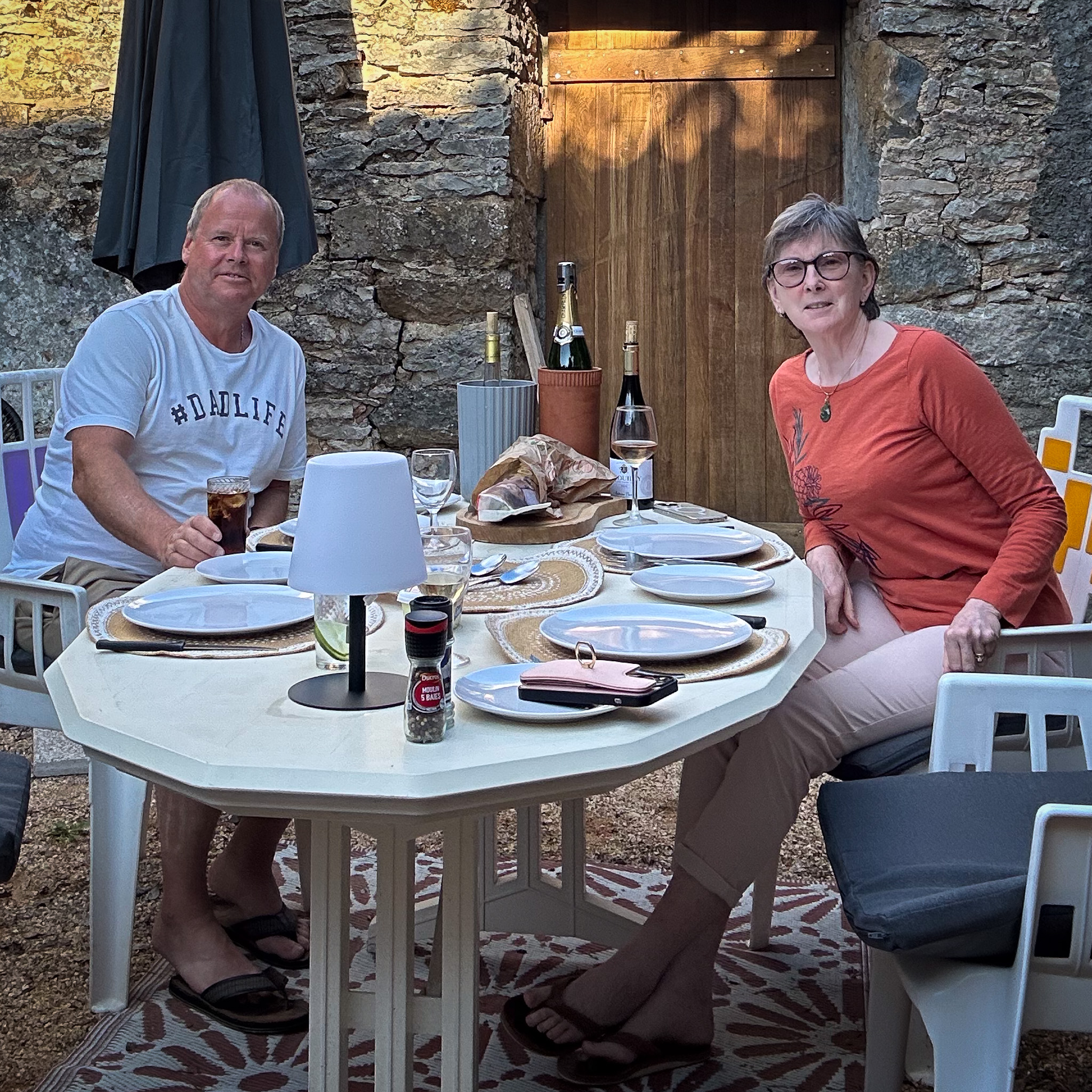
The accommodation itself was wonderful. The renovated old cottage had modern features yet retained a quirky, old character. We loved it. It even had properly sharp cooking knives!

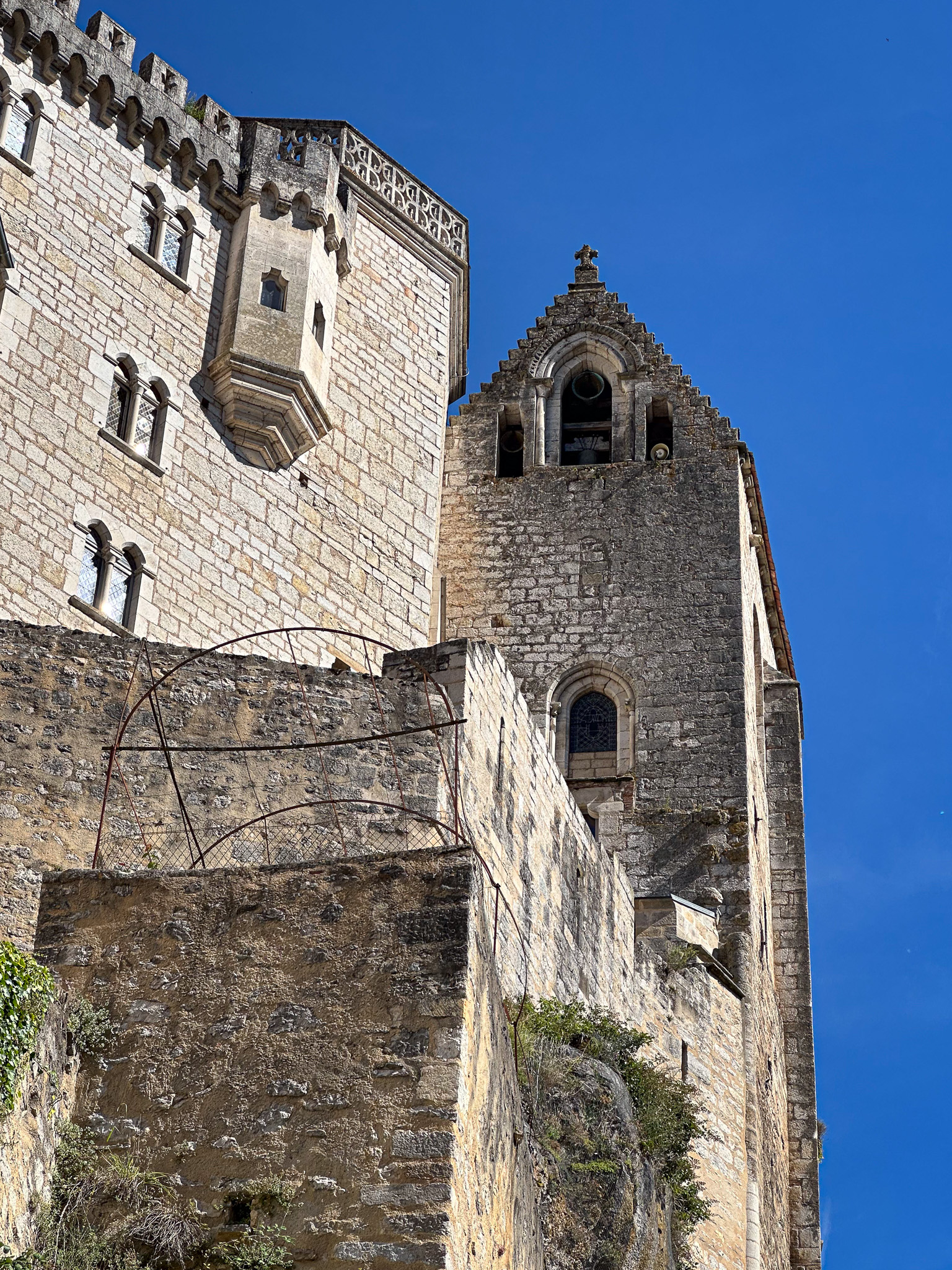
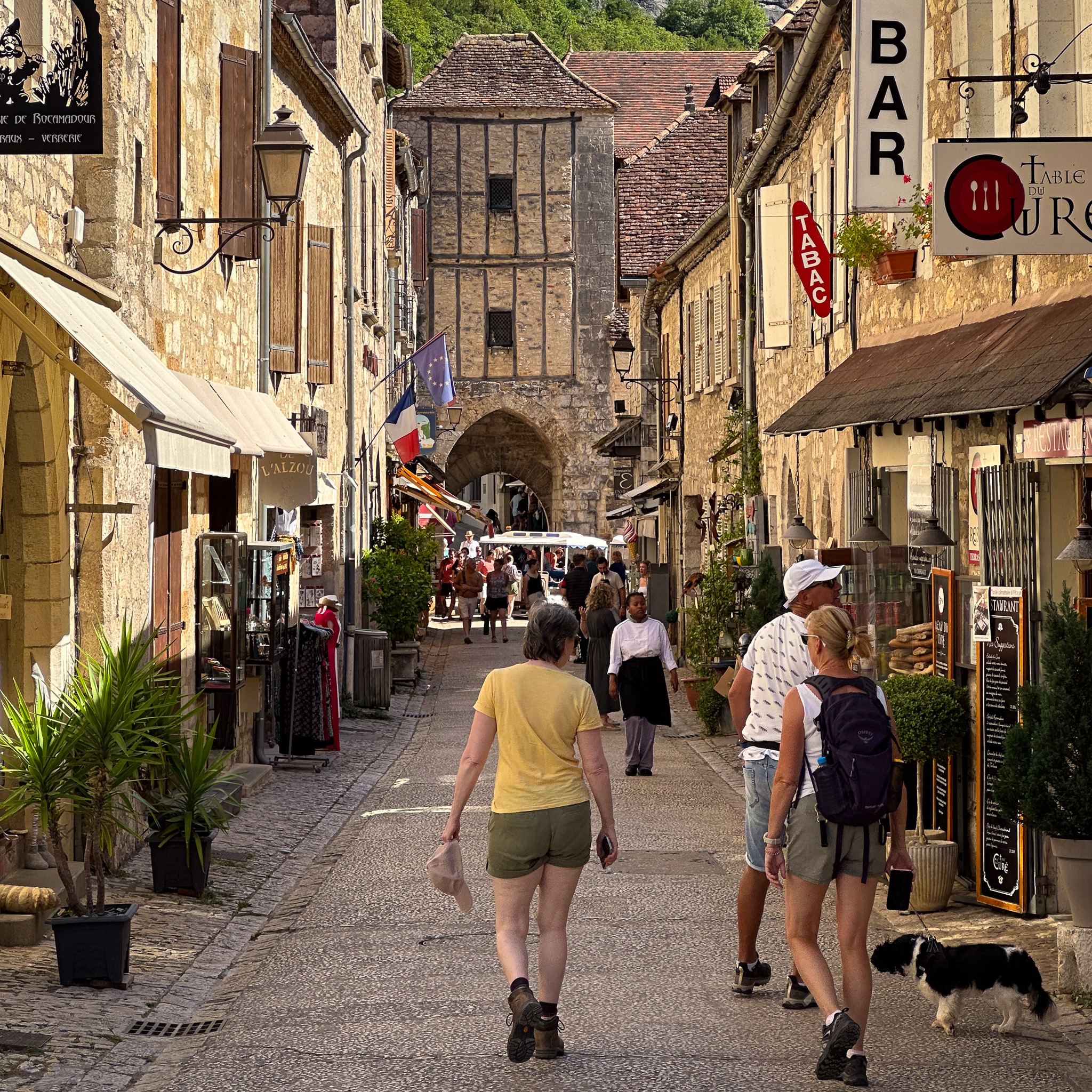
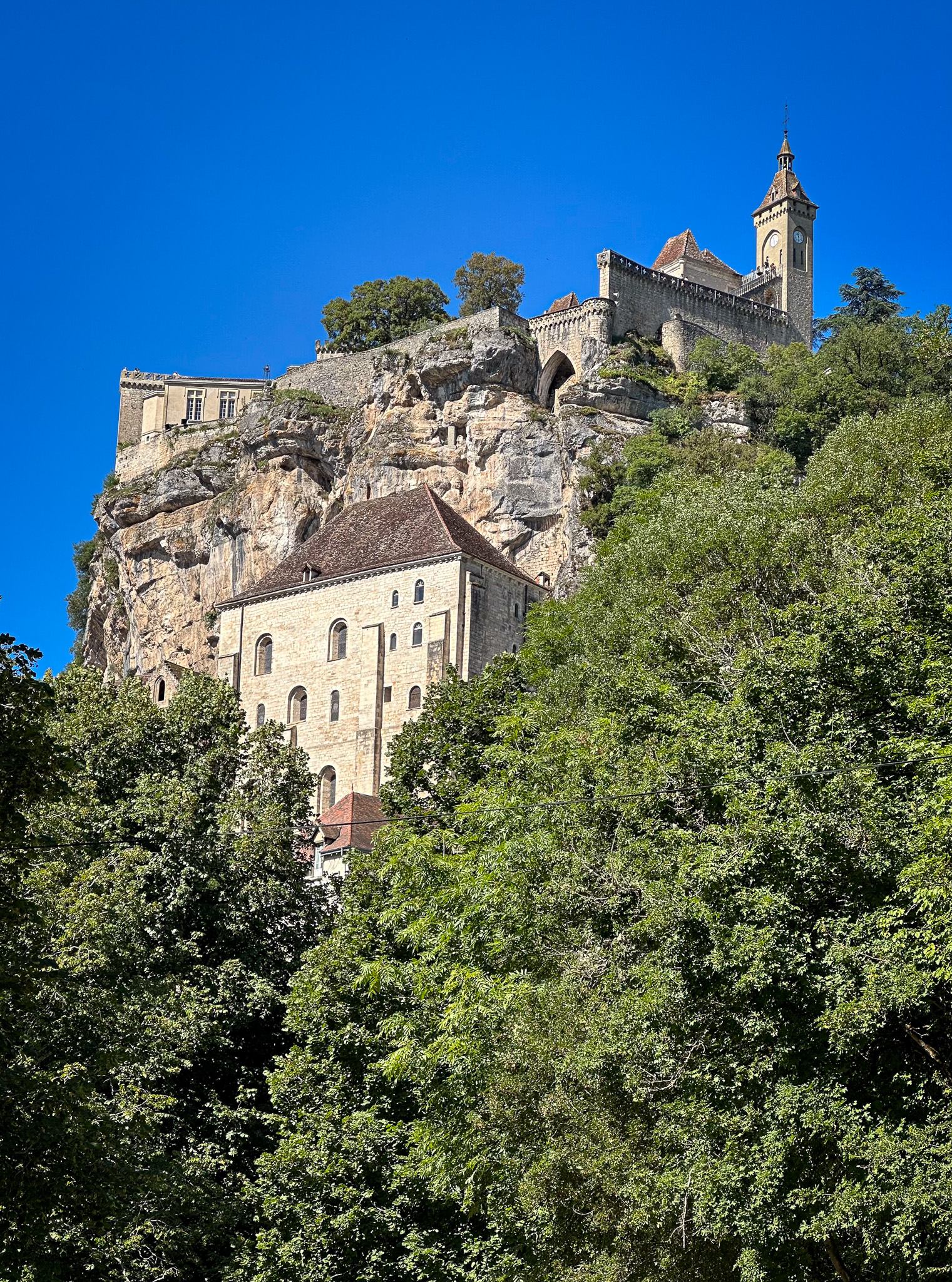
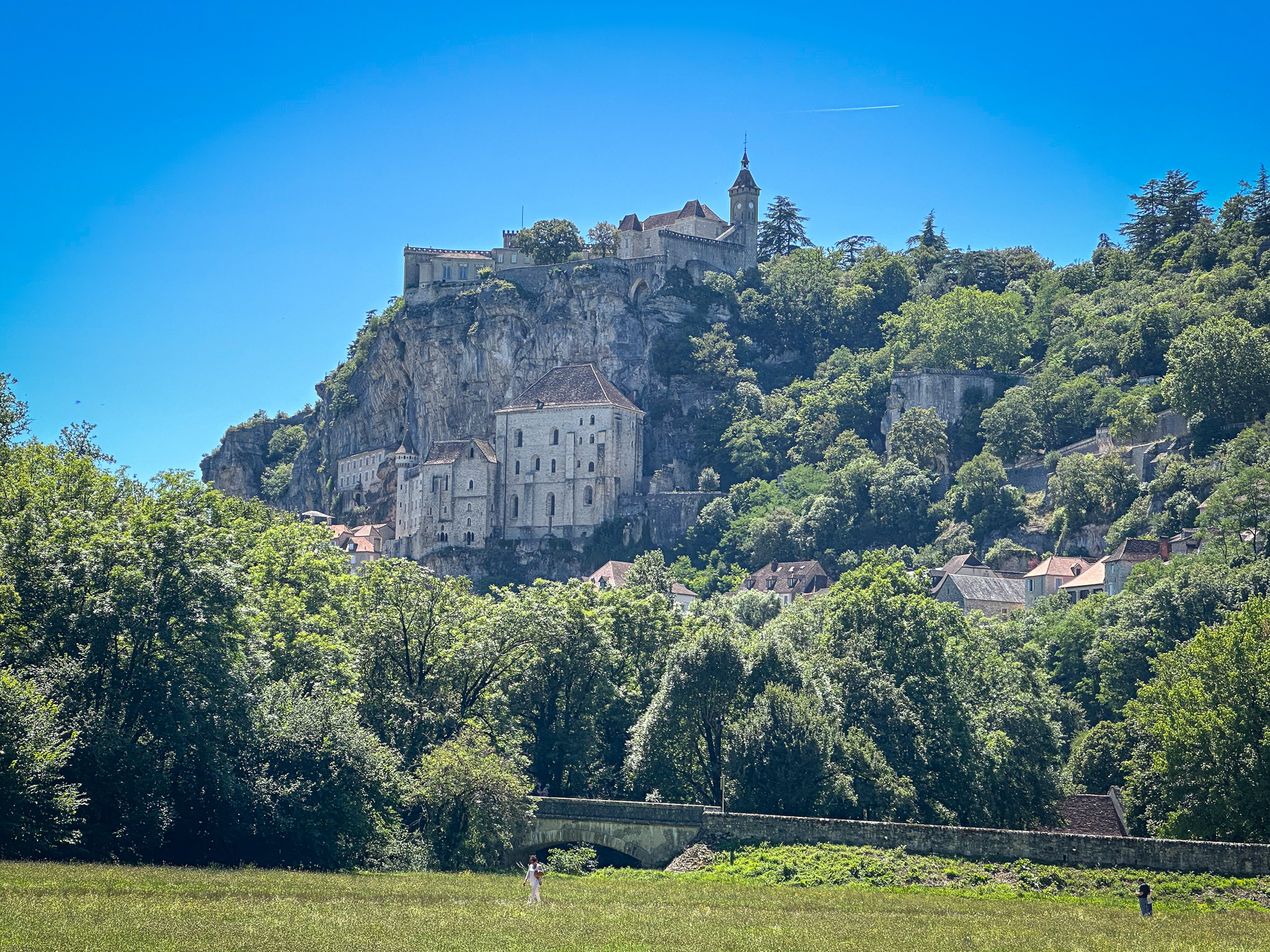
The next day, a 15 minute walk took us down into Rocamadour and led to several hours meandering our way back up through the labyrinth of streets, steps and paths to finish on the top of the cliff at the same level as our cottage.
FYI, we did not feel the need to climb aboard the tourist train. Nor did we feel the need to follow the example of pious pilgrims from days gone by who would climb the long and steeply winding path up the hillside, observing all 14 stations of the cross, on their knees.
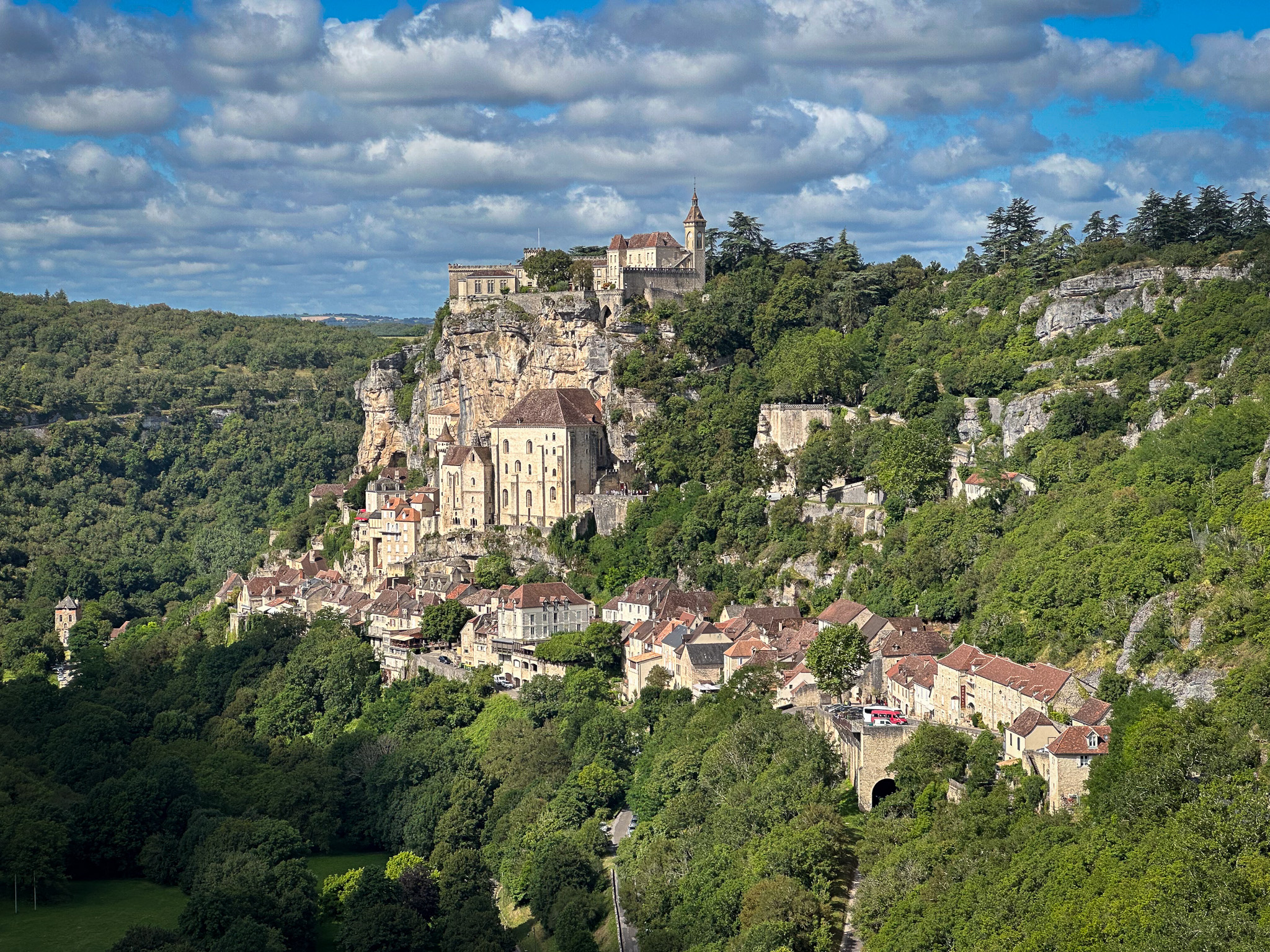
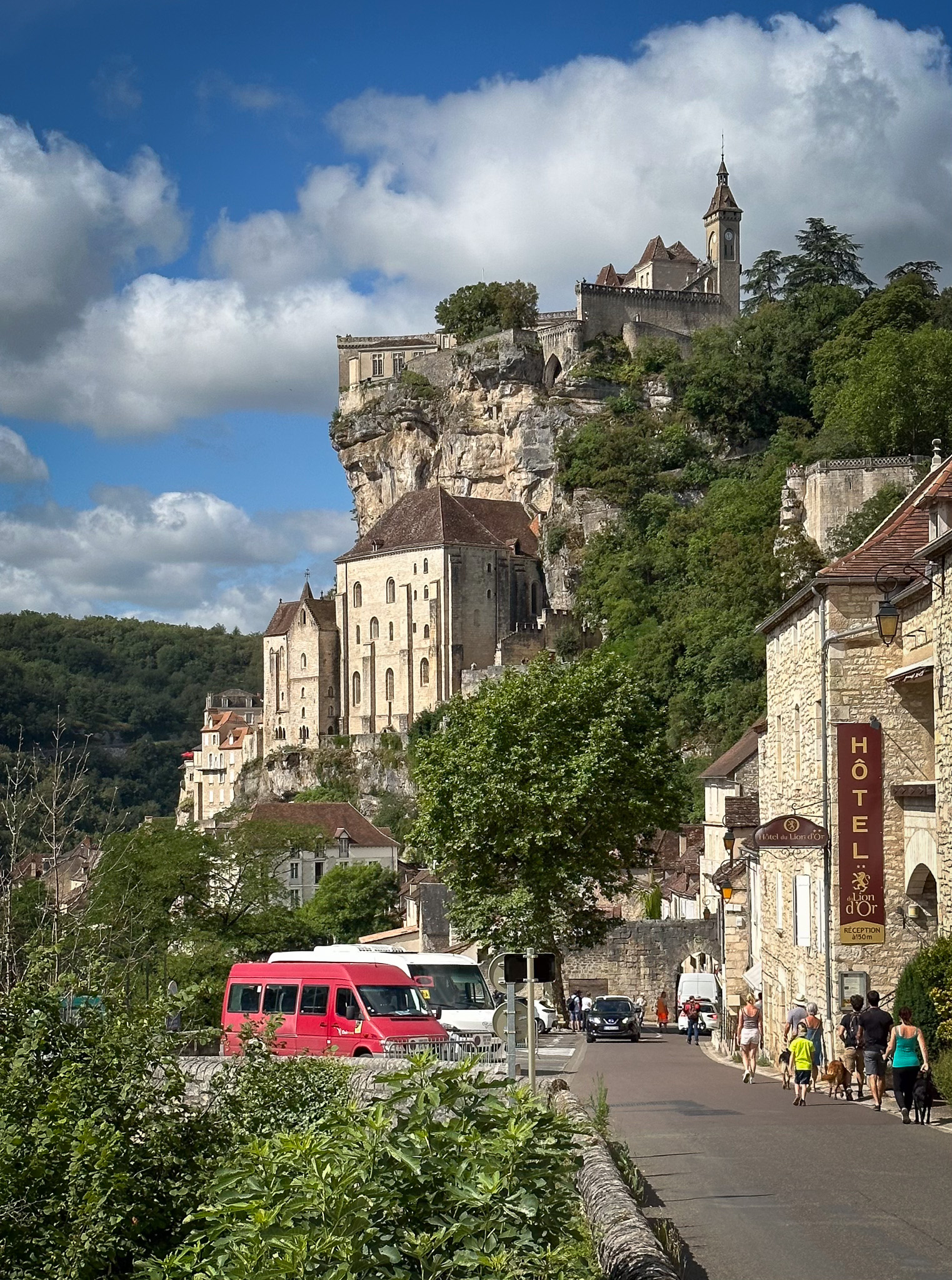
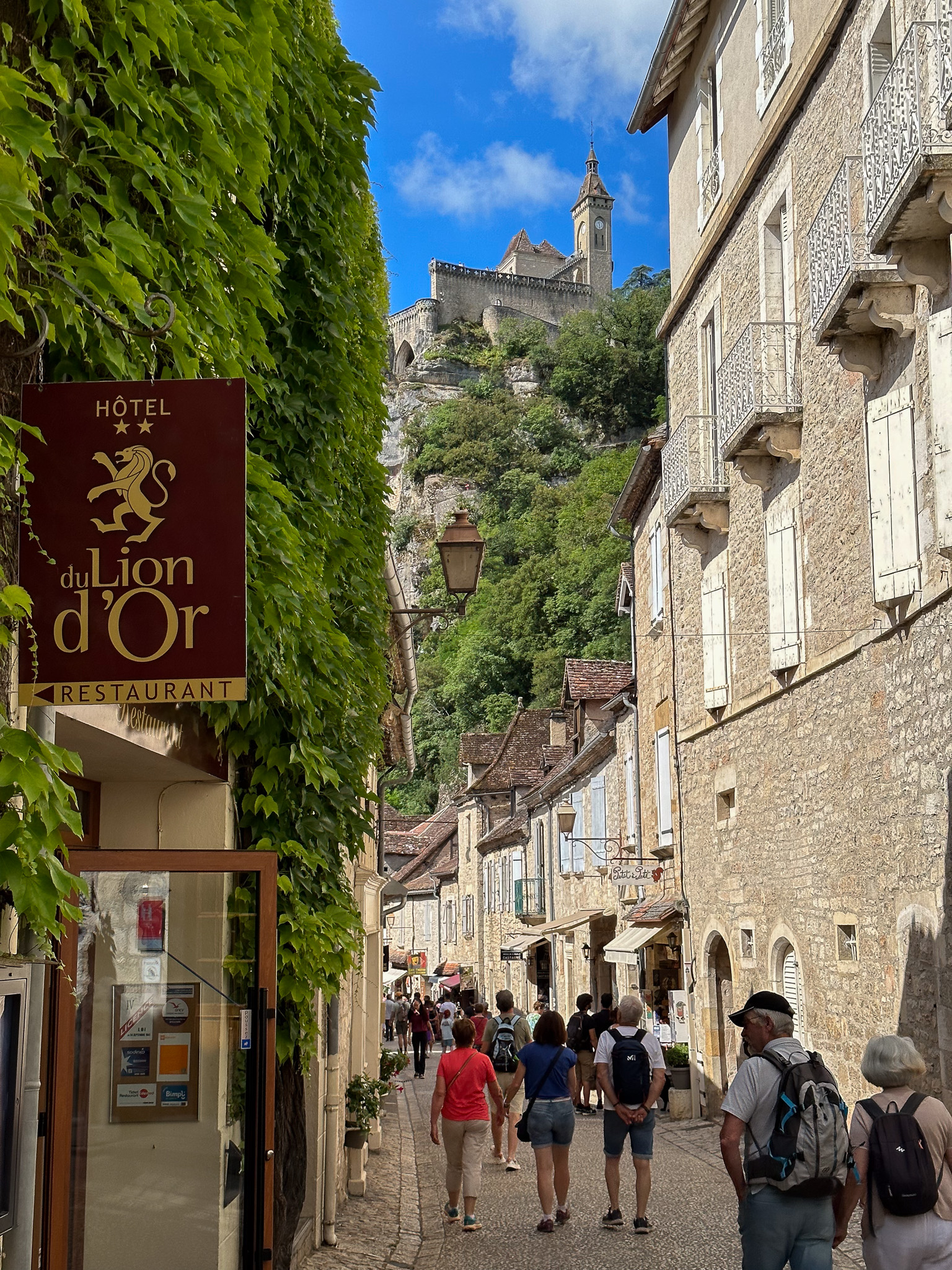
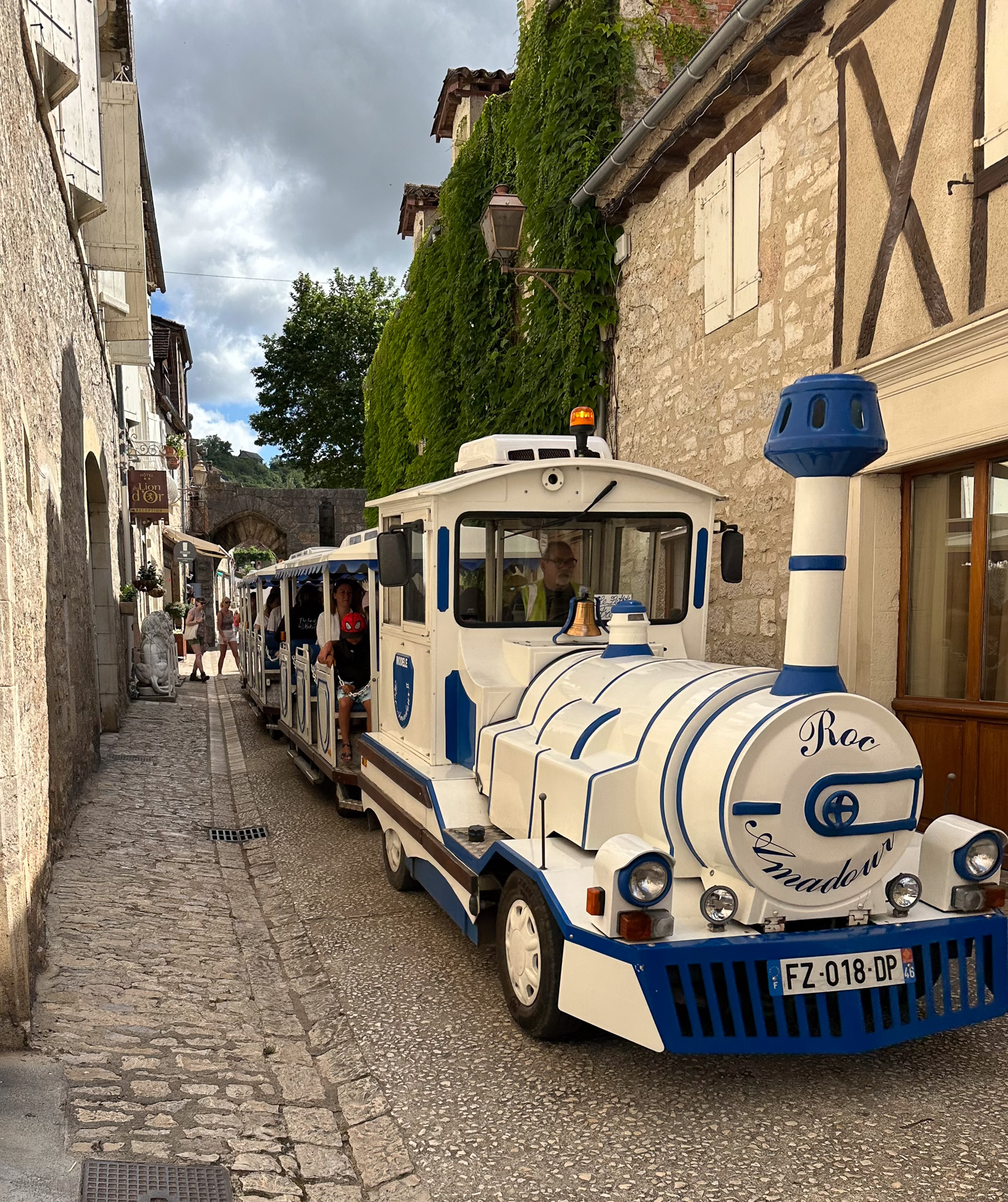
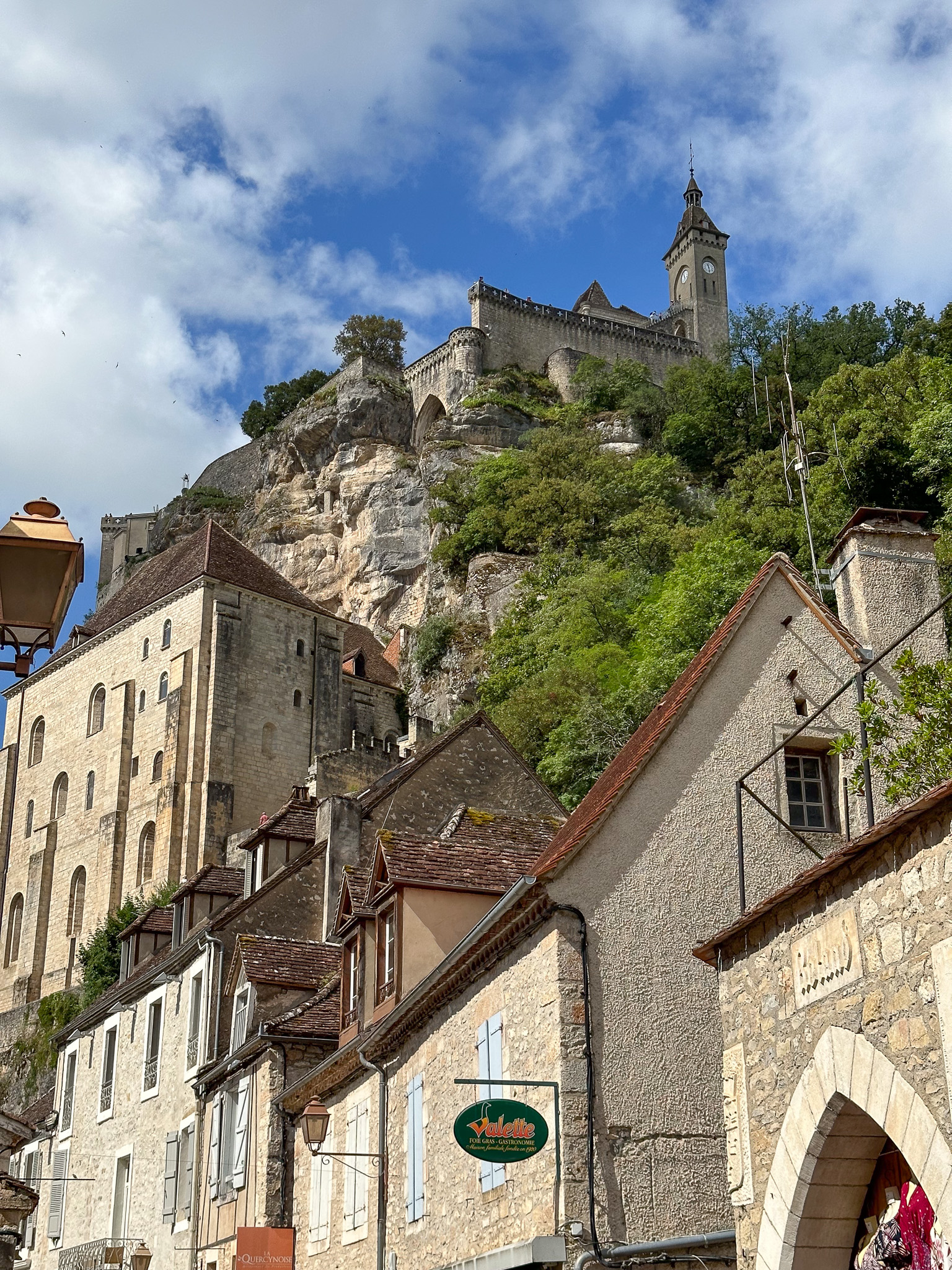
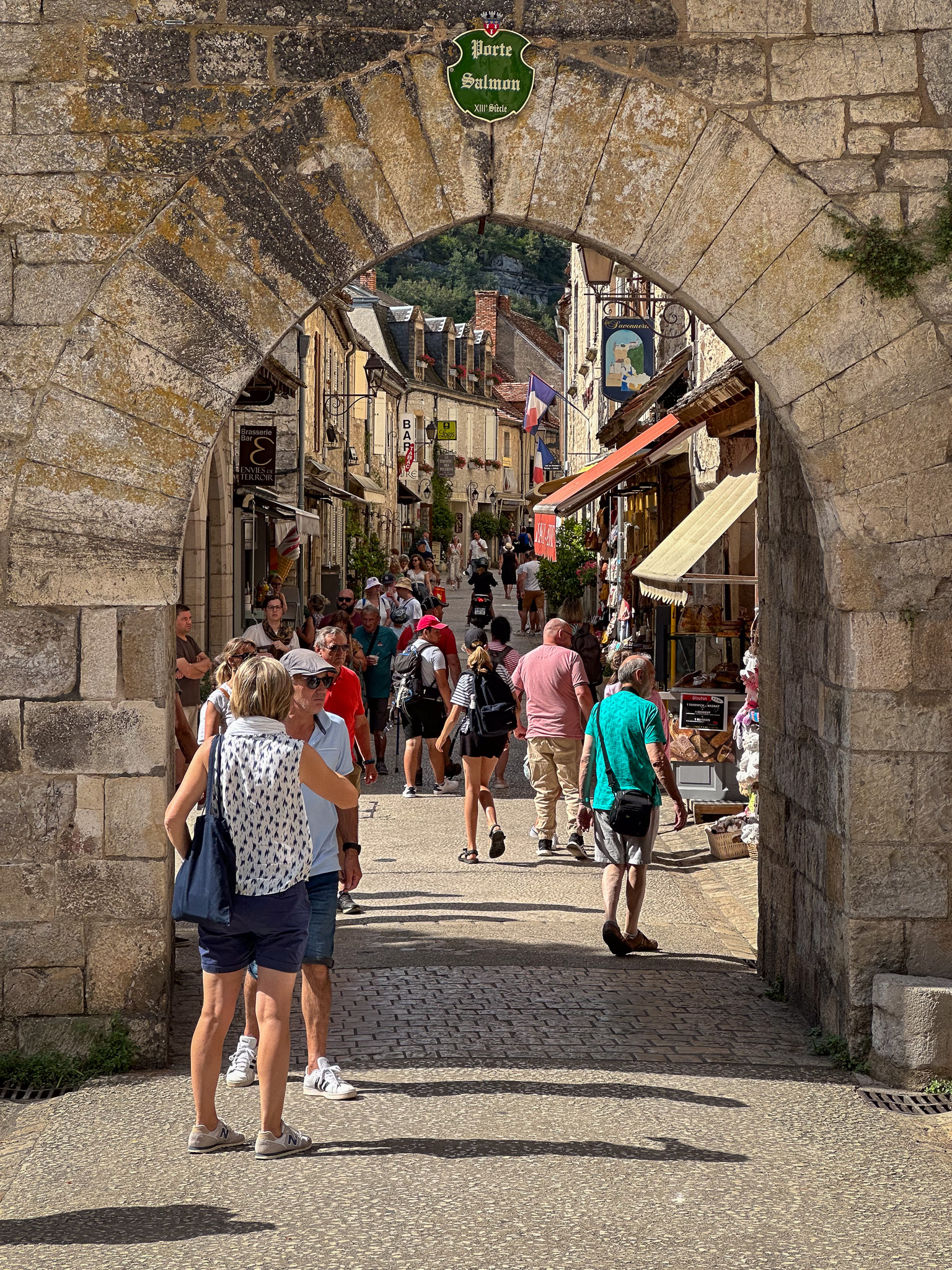
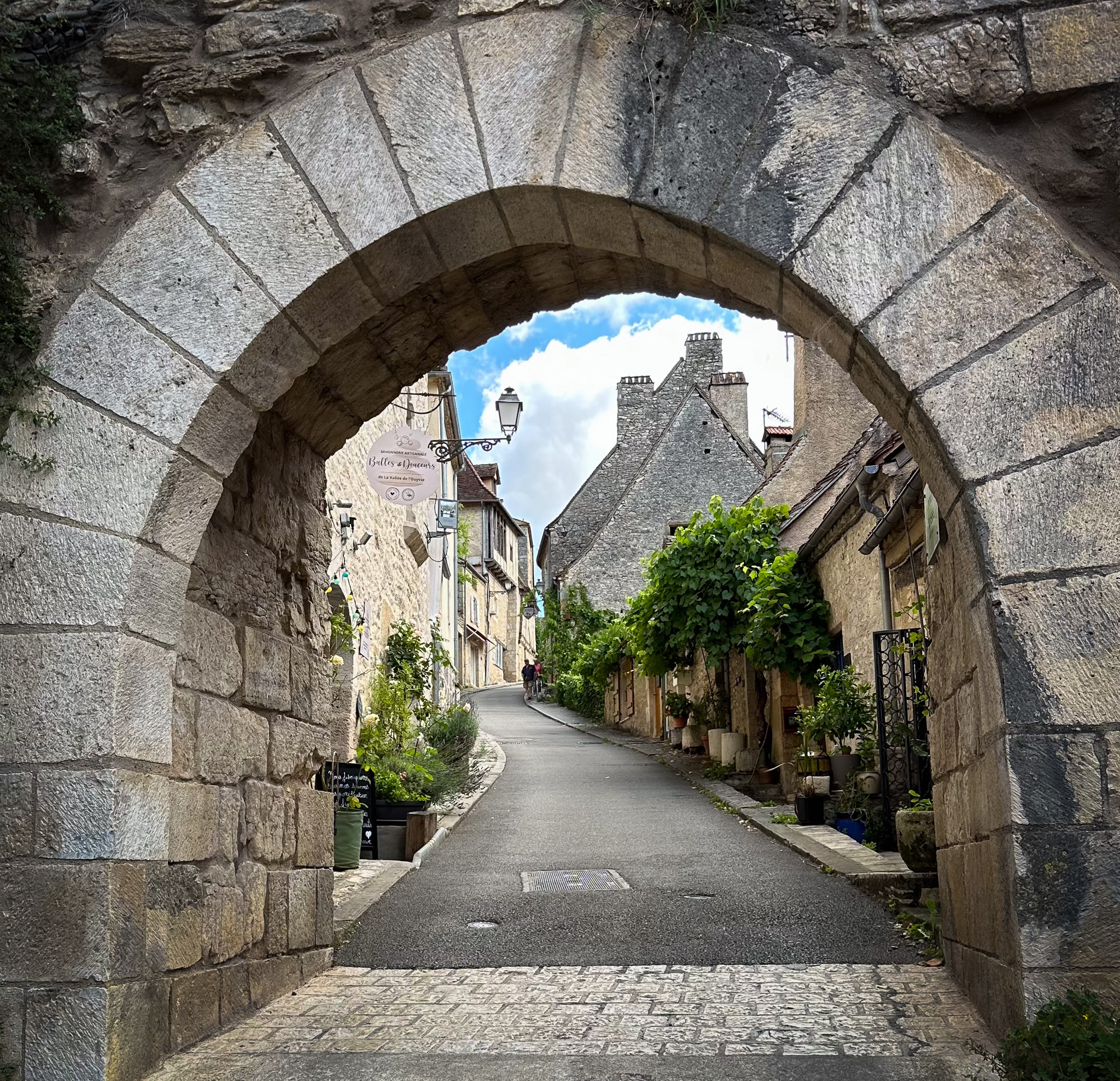
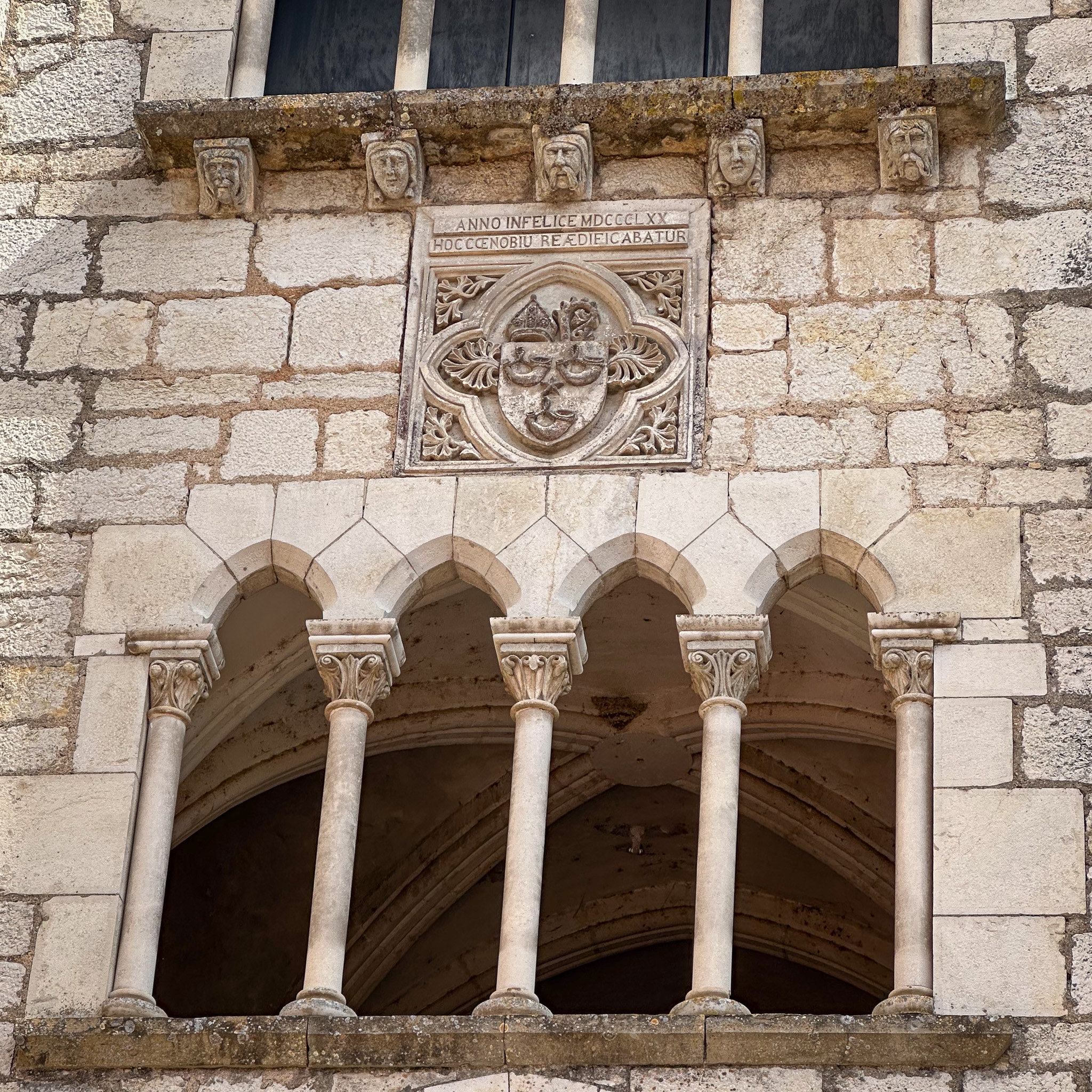
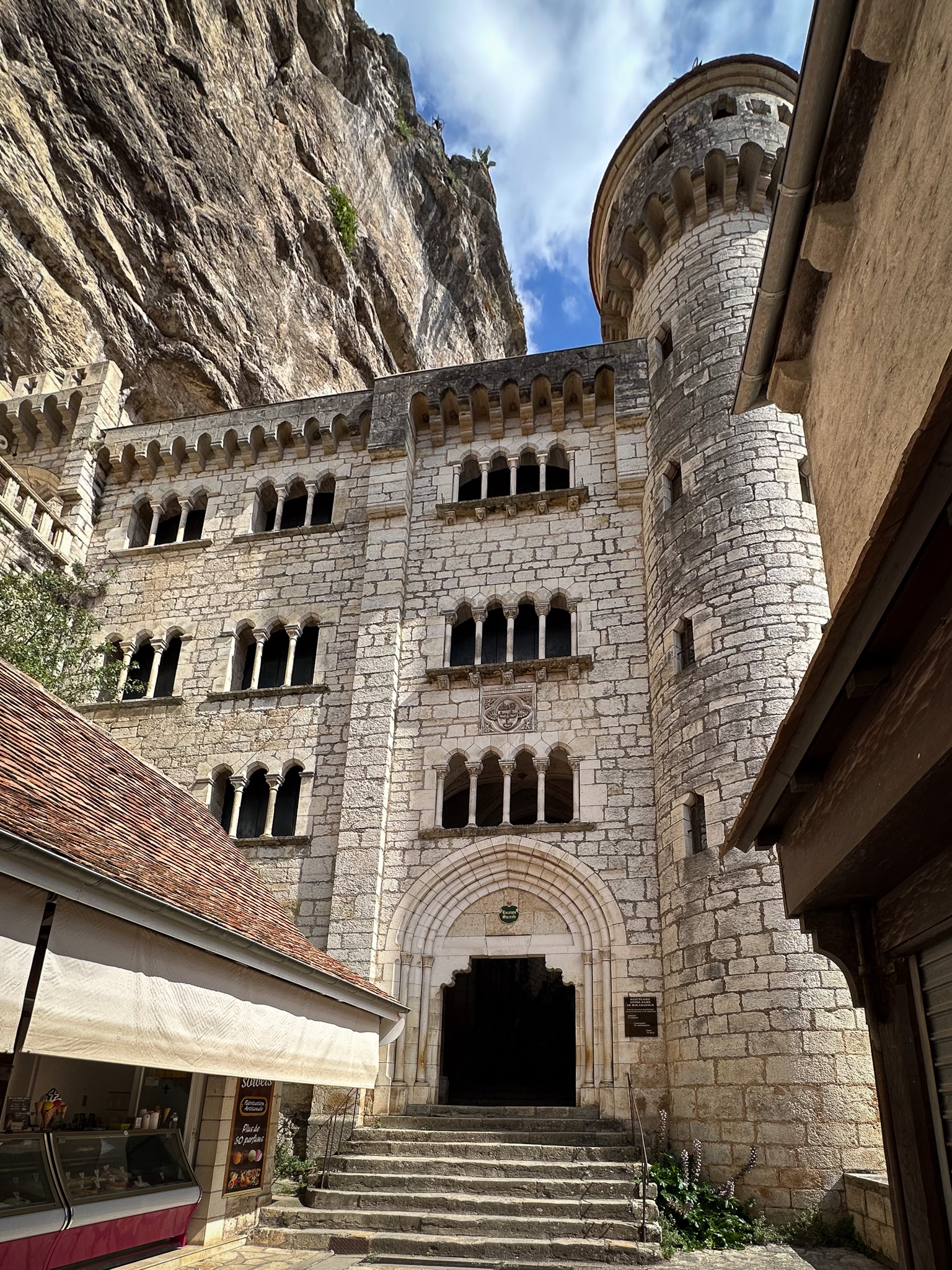
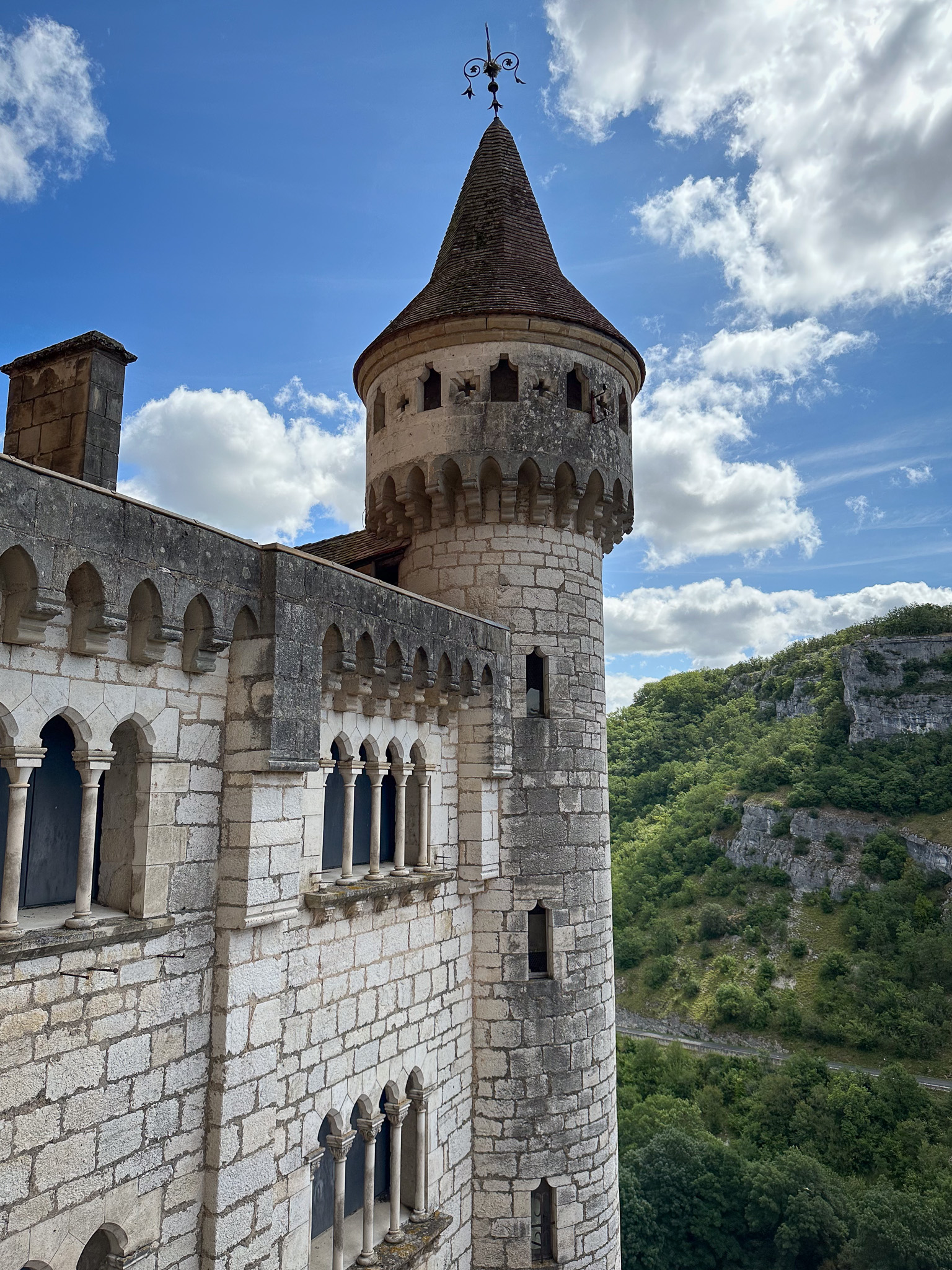
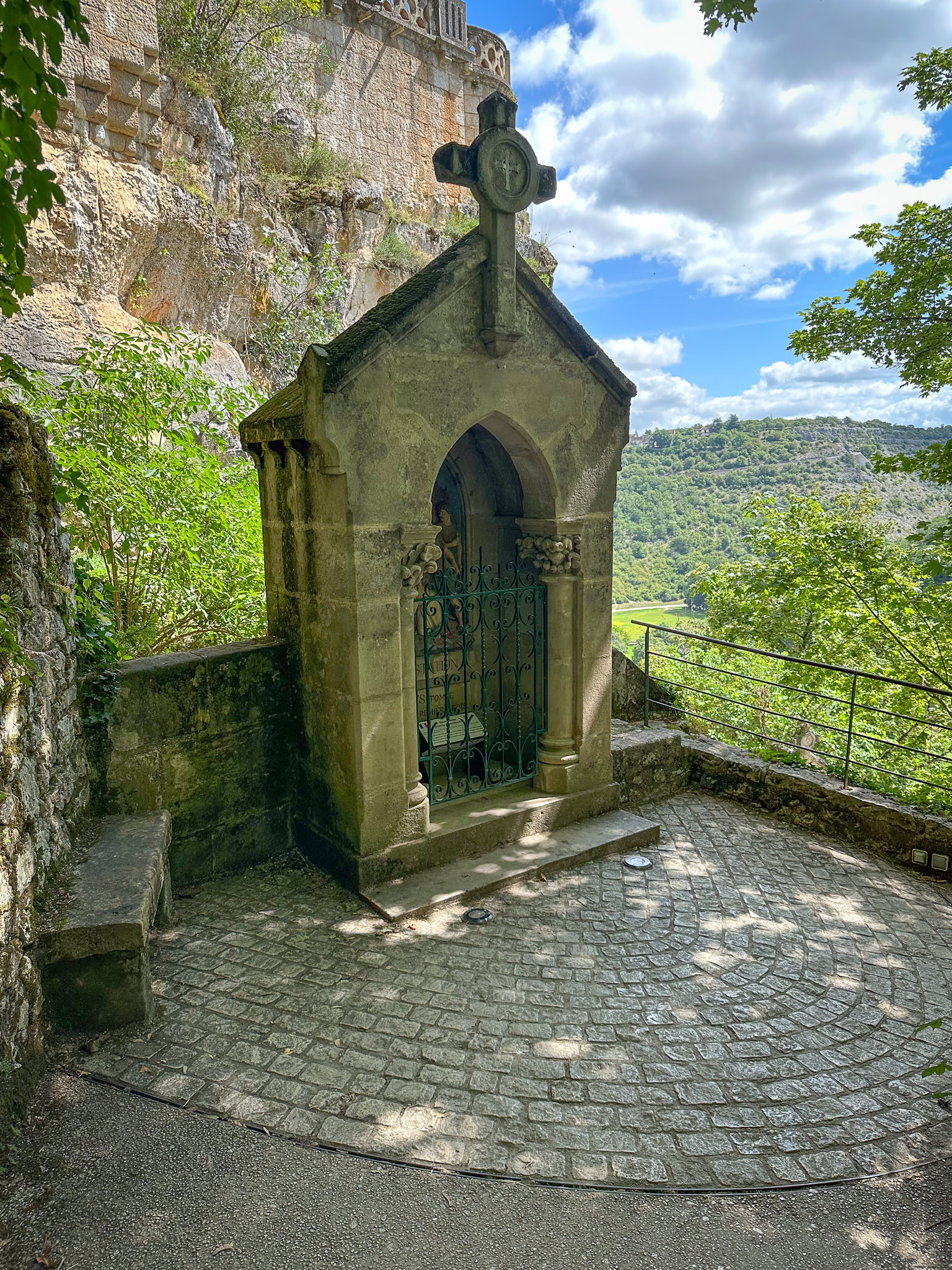
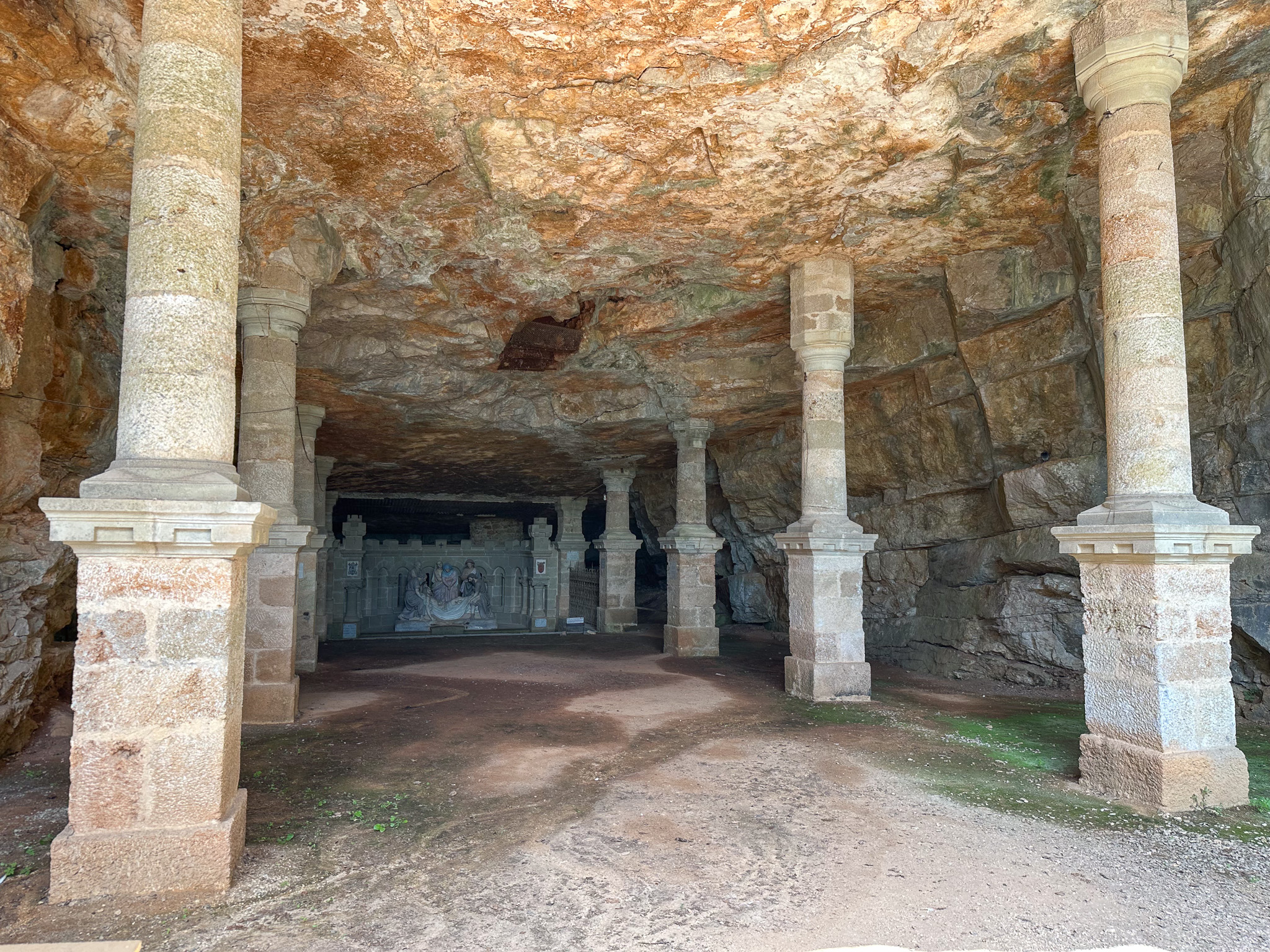
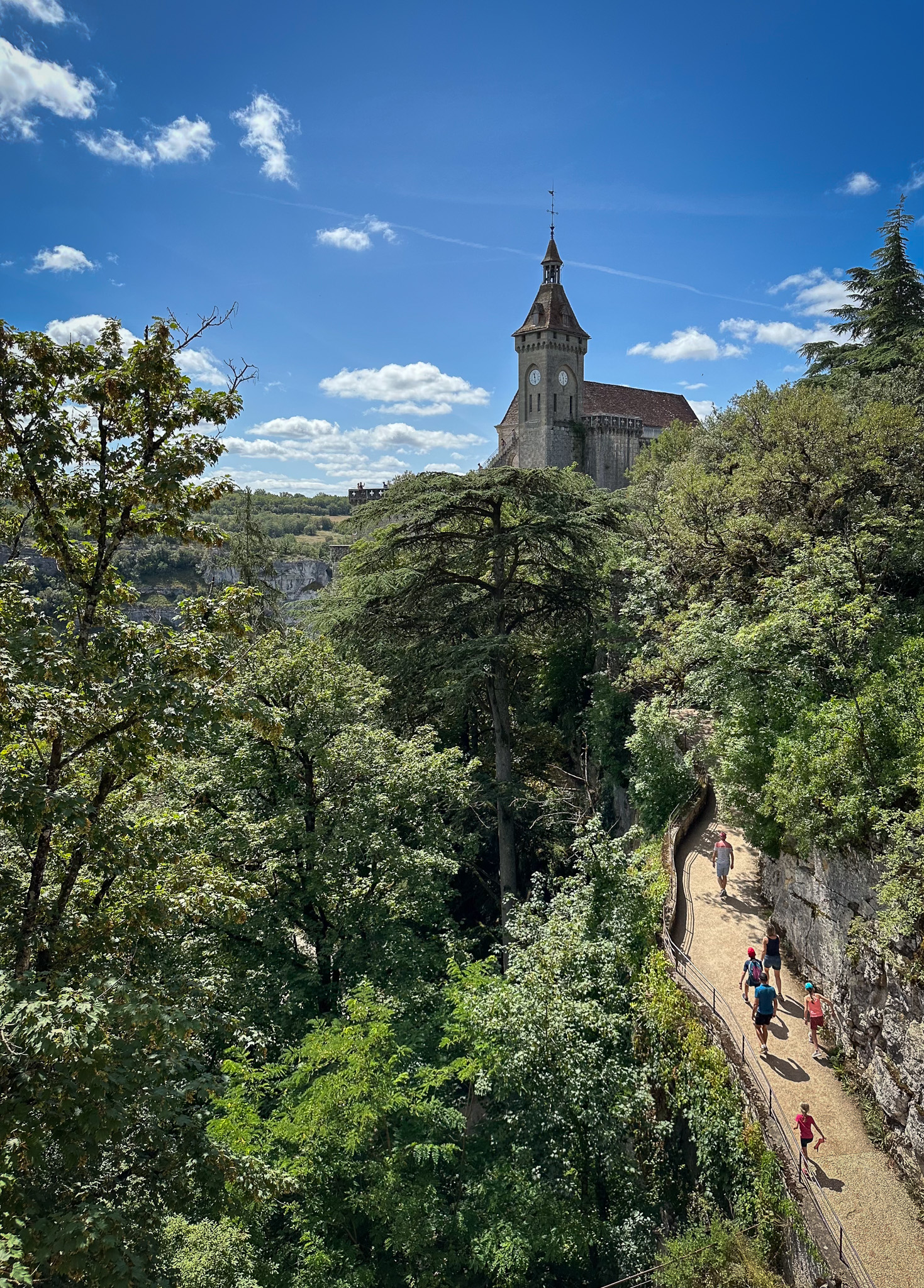
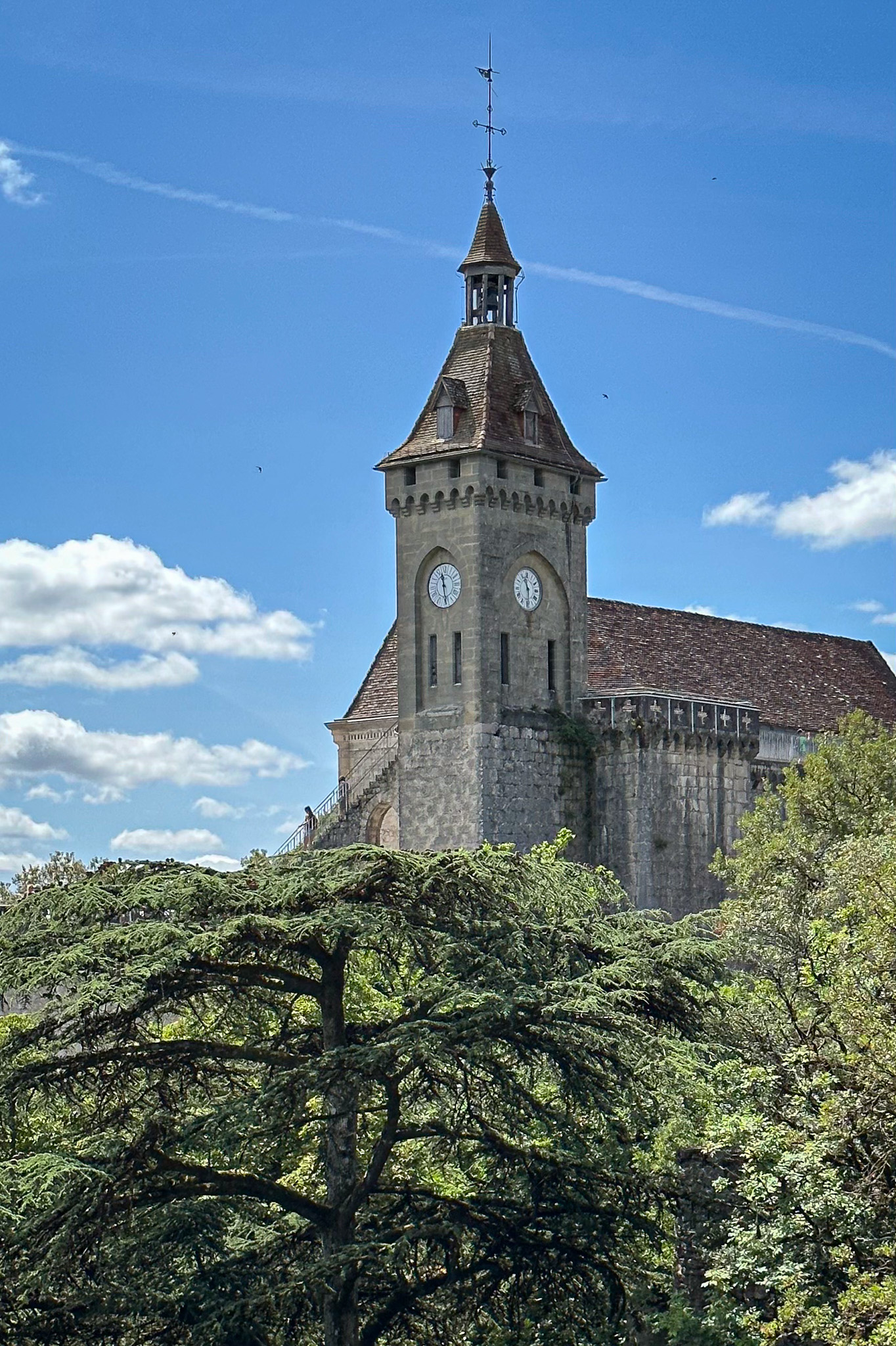

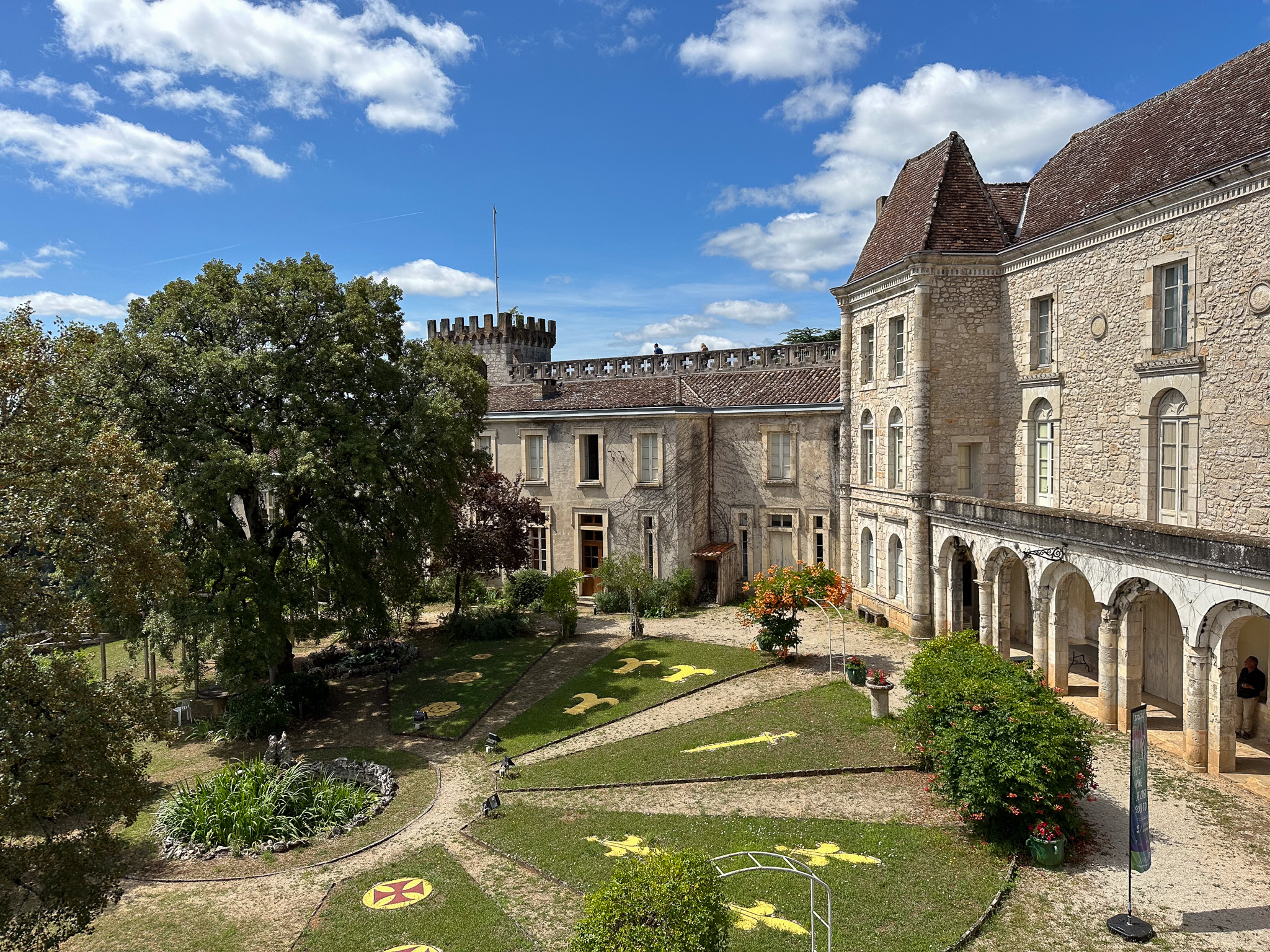
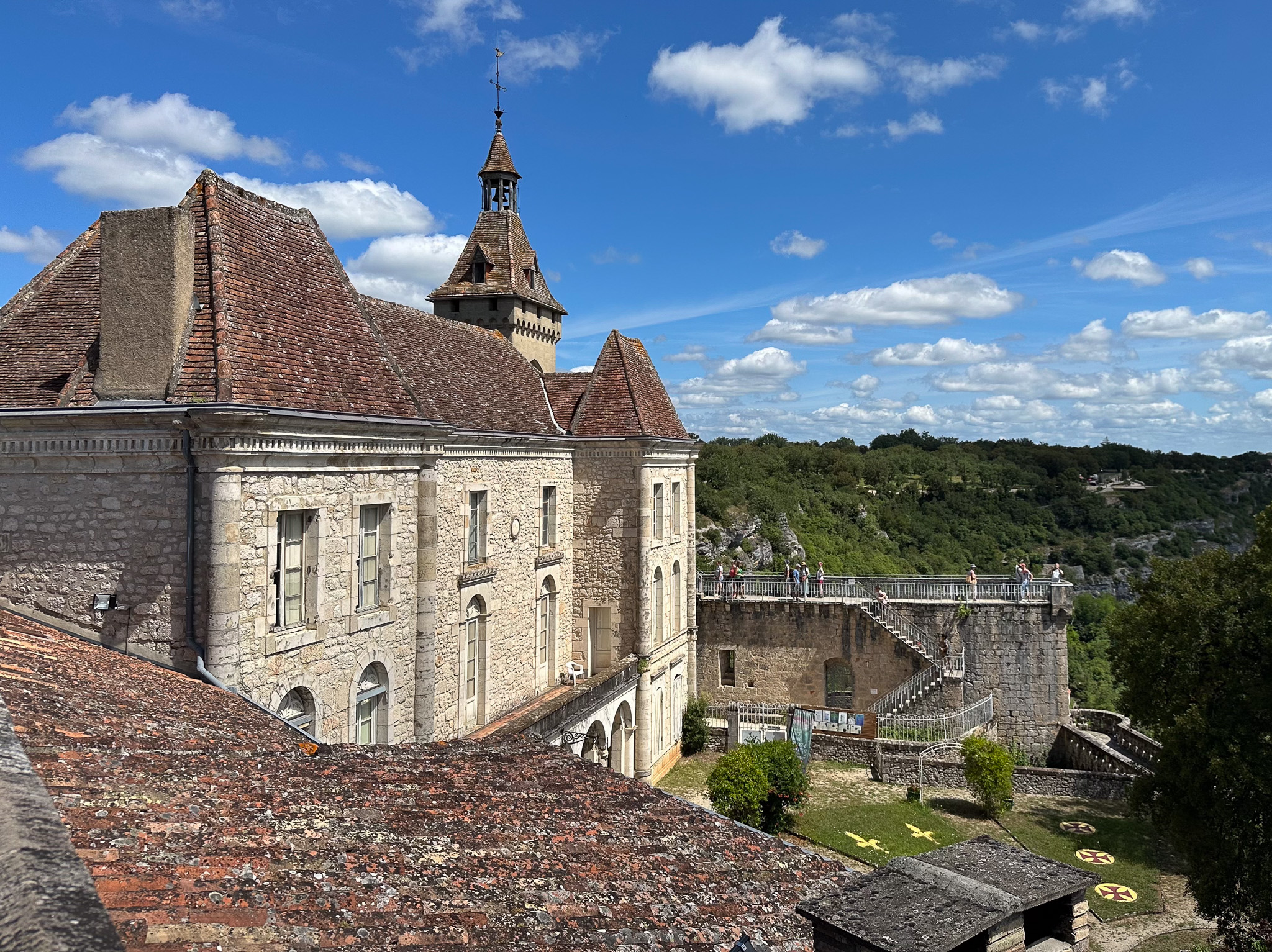
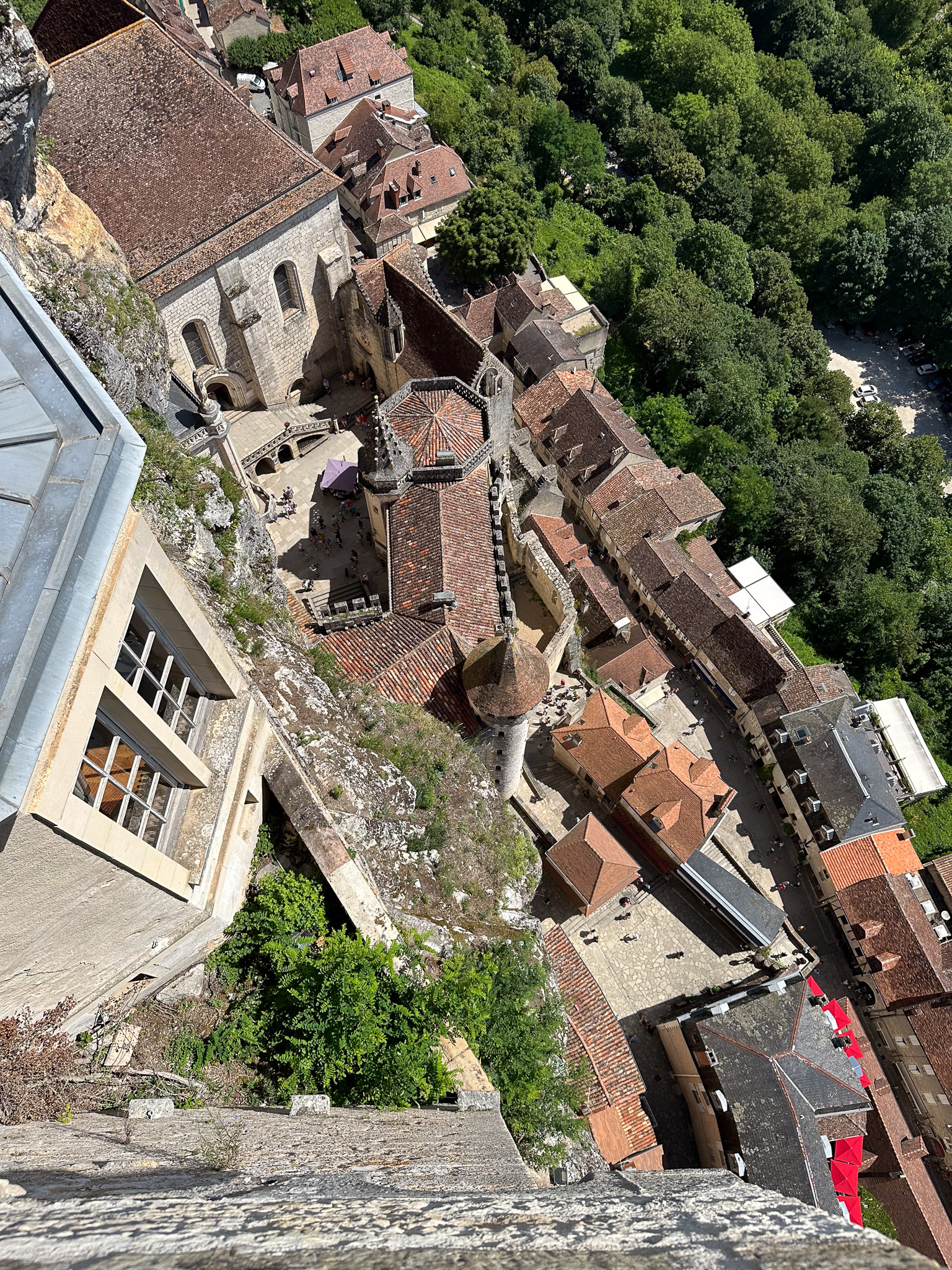
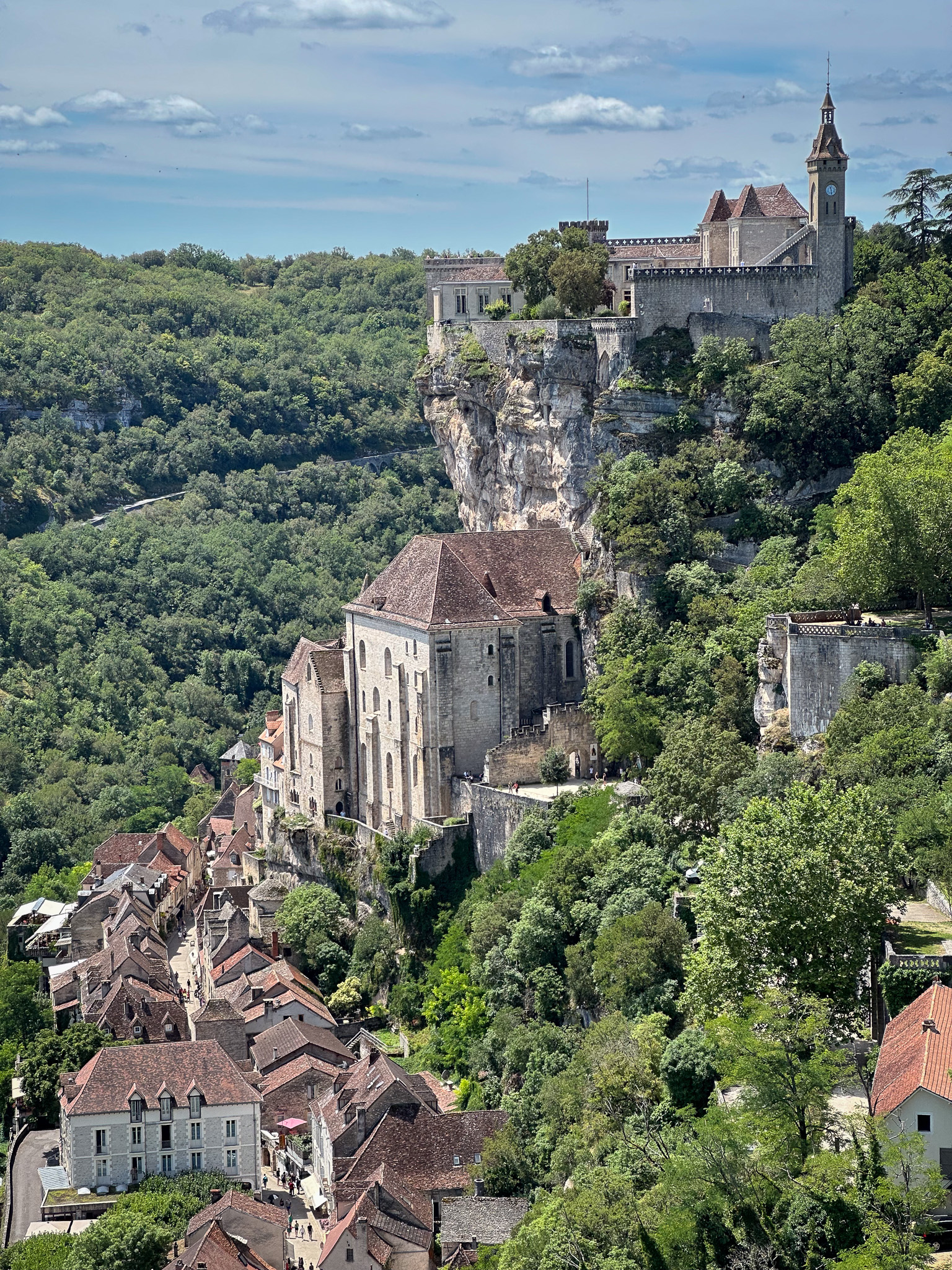
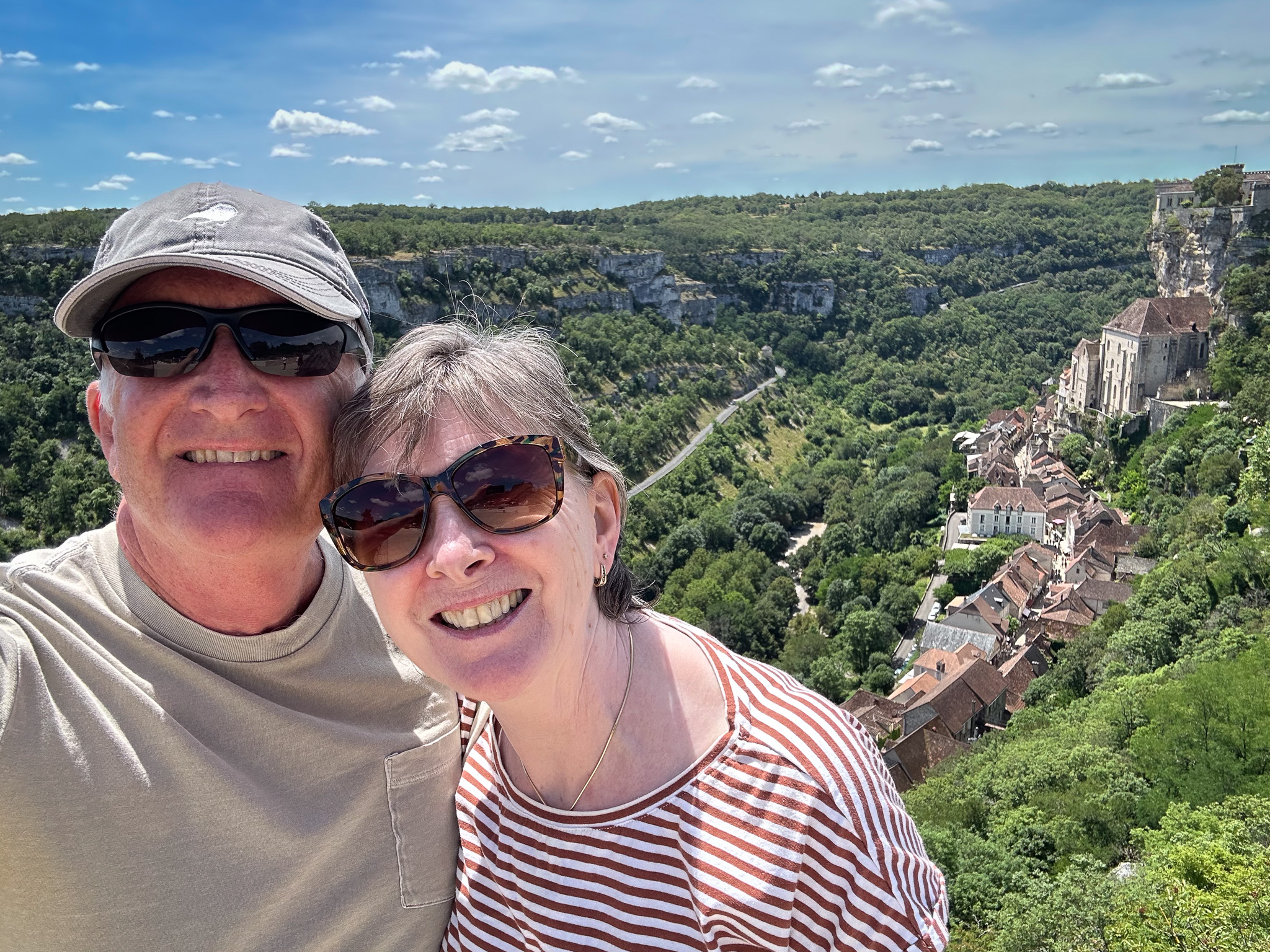

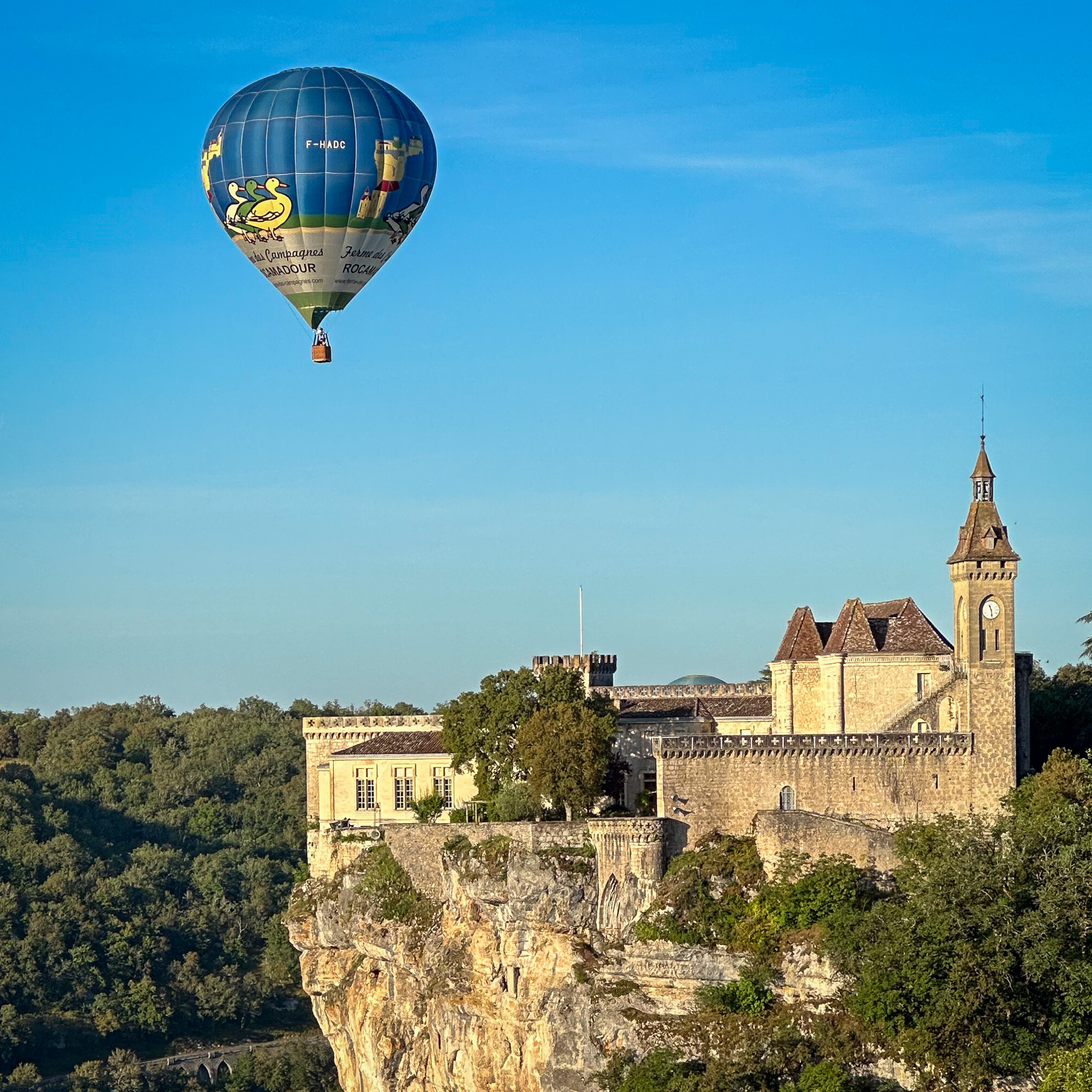
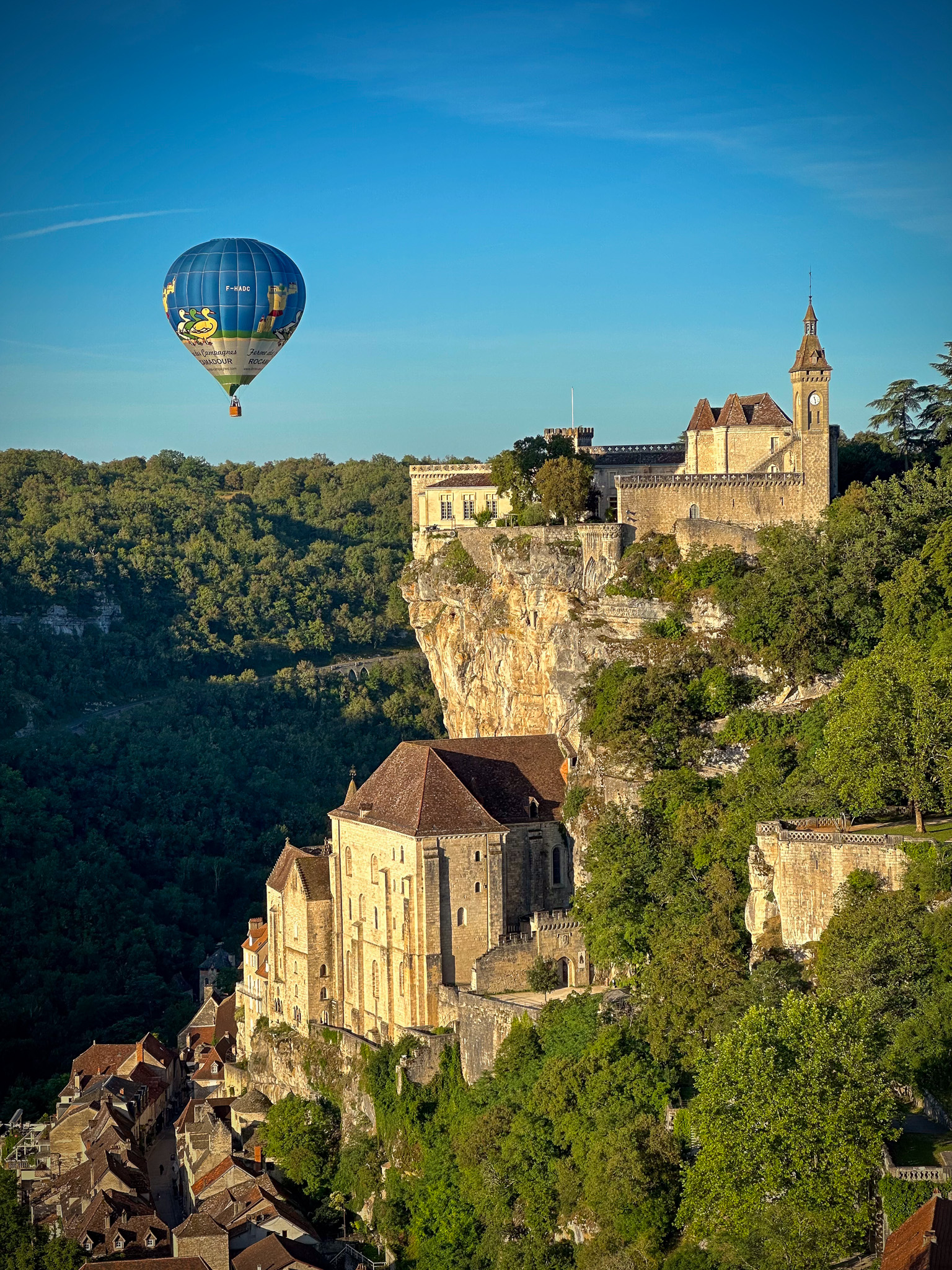
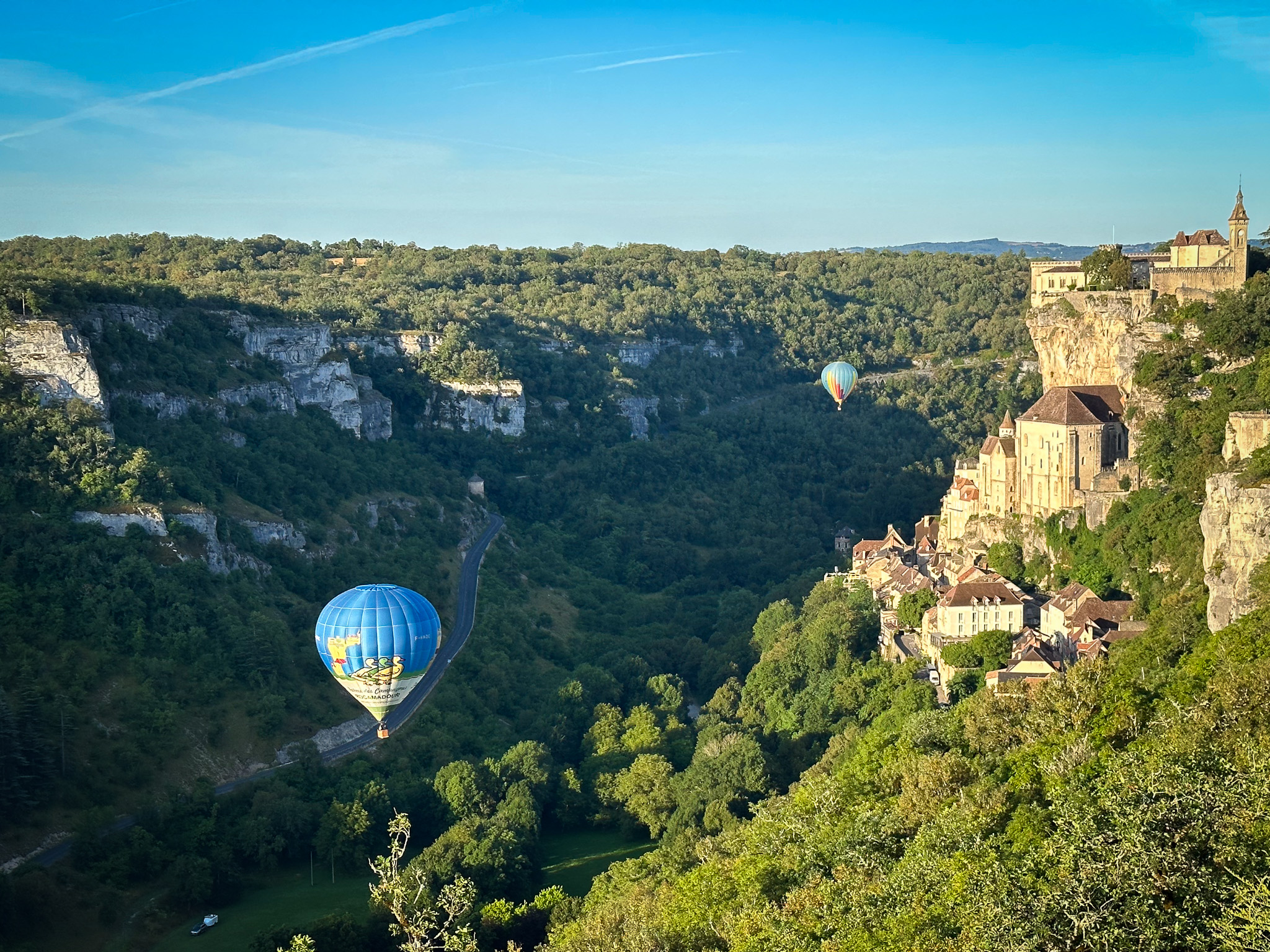
The next day Nigel’s usual early morning walkabout rewarded him with the sight of two hot air balloons drifting down the Alzou river valley before rising in front of Rocamadour to pick up the breeze and disappear over the horizon.

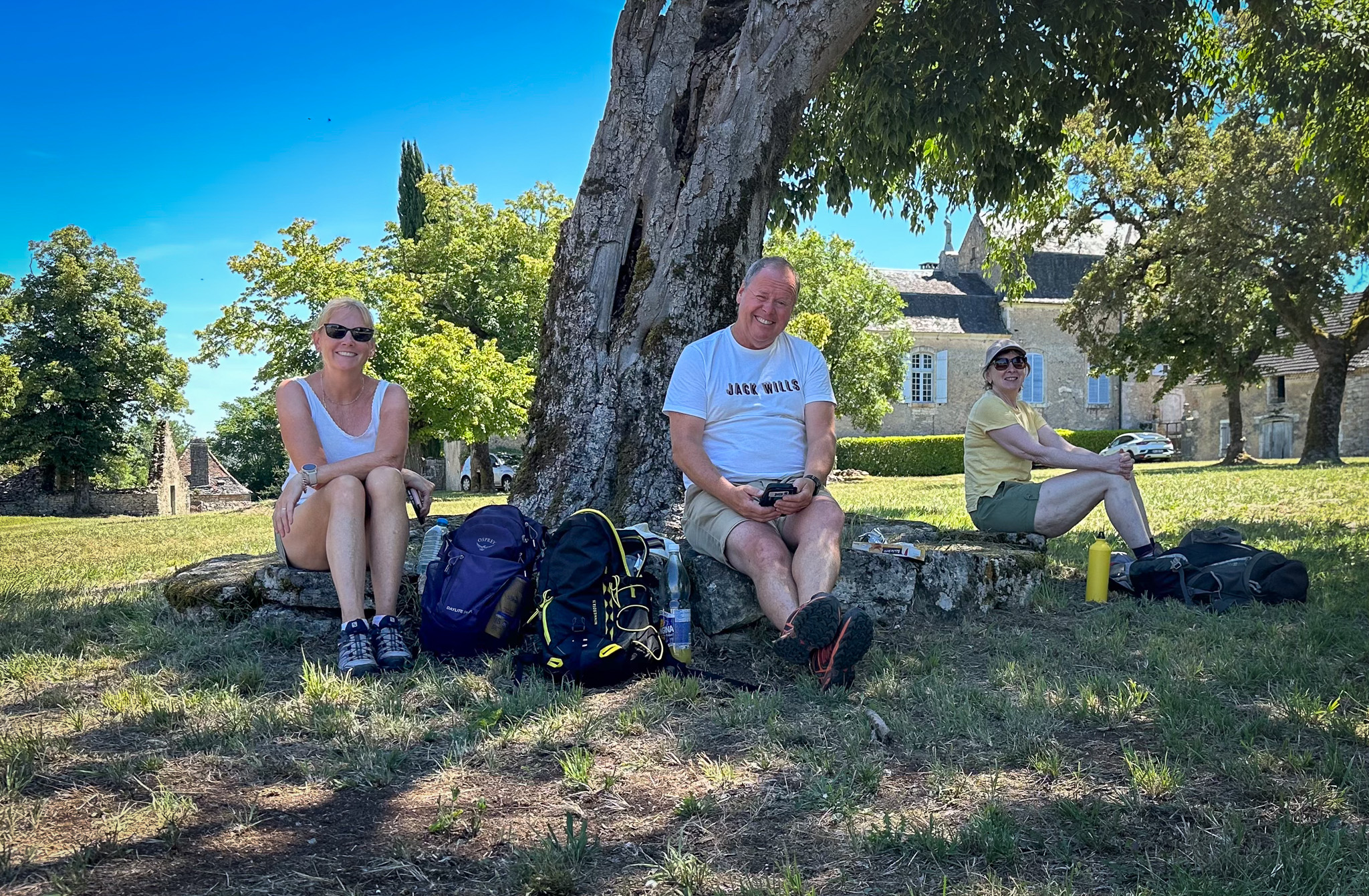
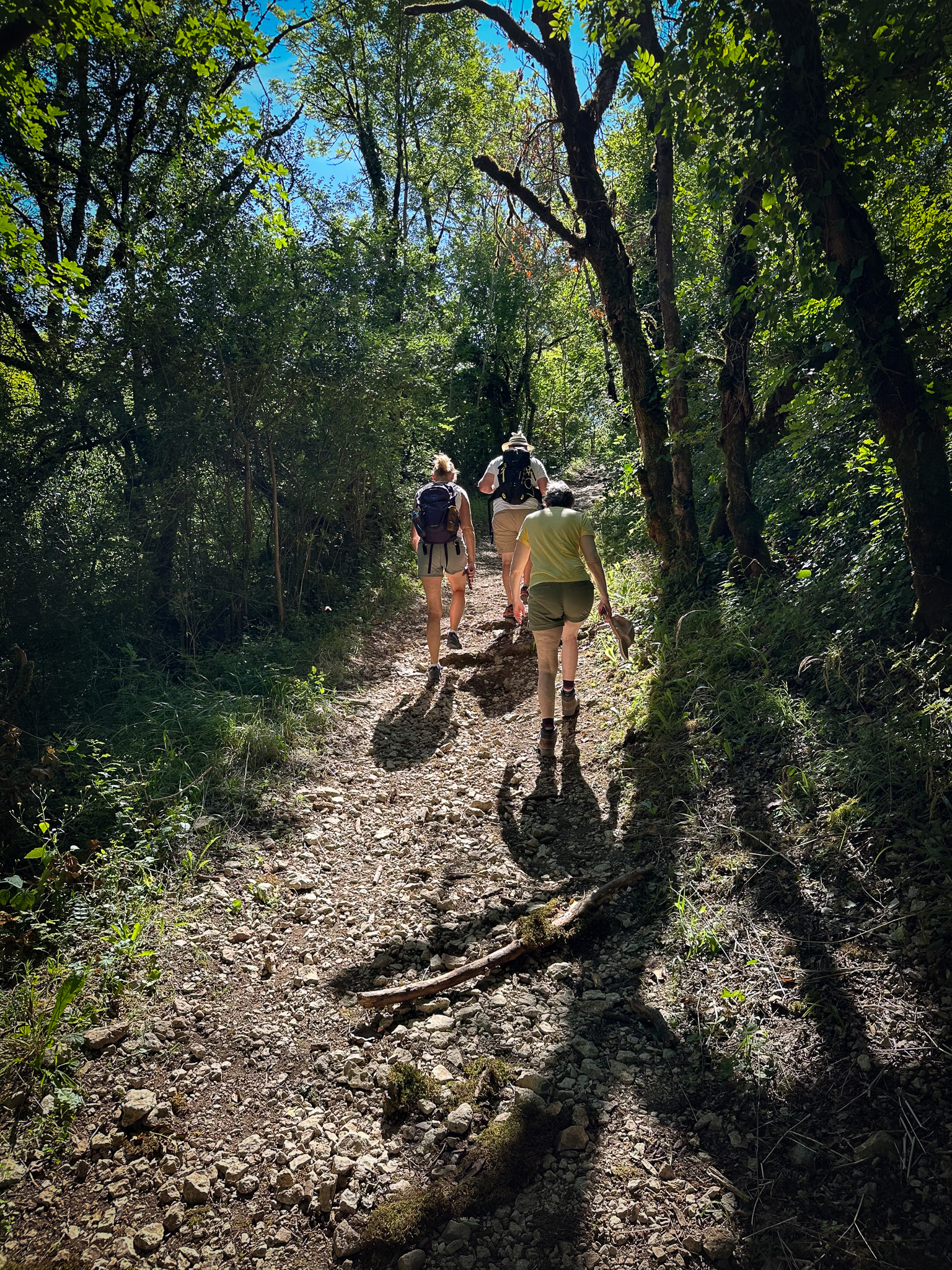
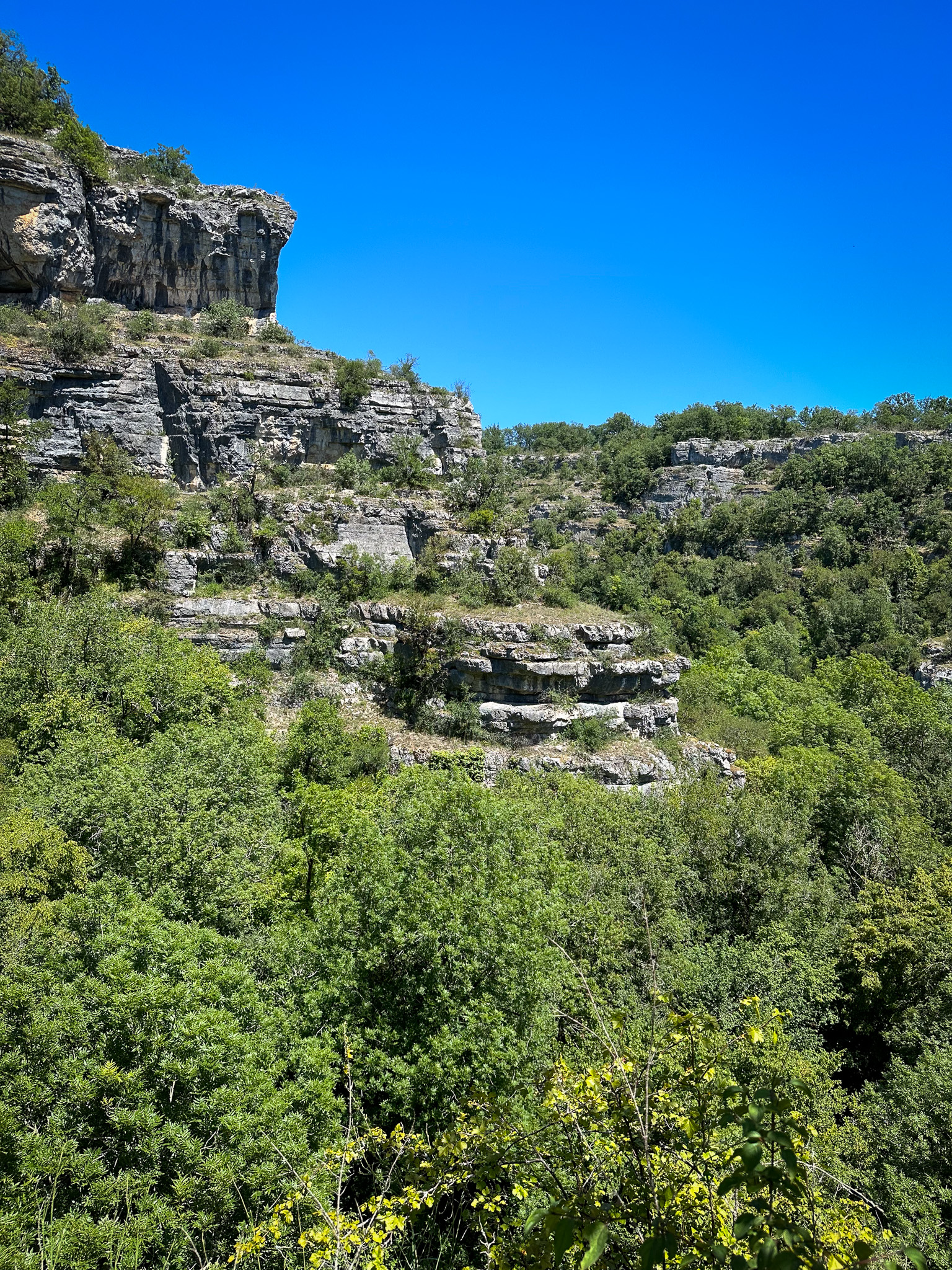
This turned out to be the hottest day of our trip and in true Mad Dogs and Englishmen tradition, (and yes of course Nigel recited it during the day) we had planned our longest walk yet.
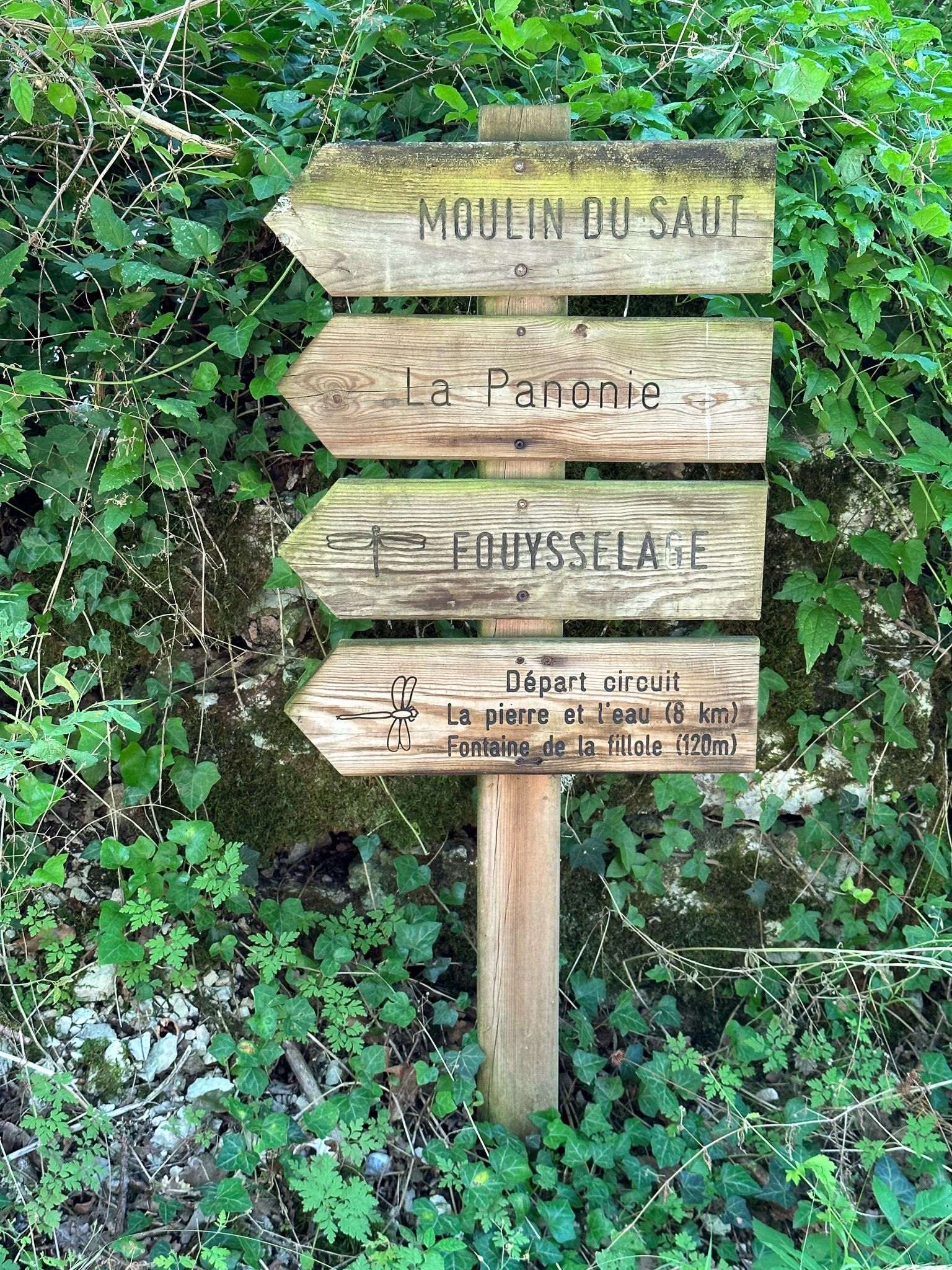
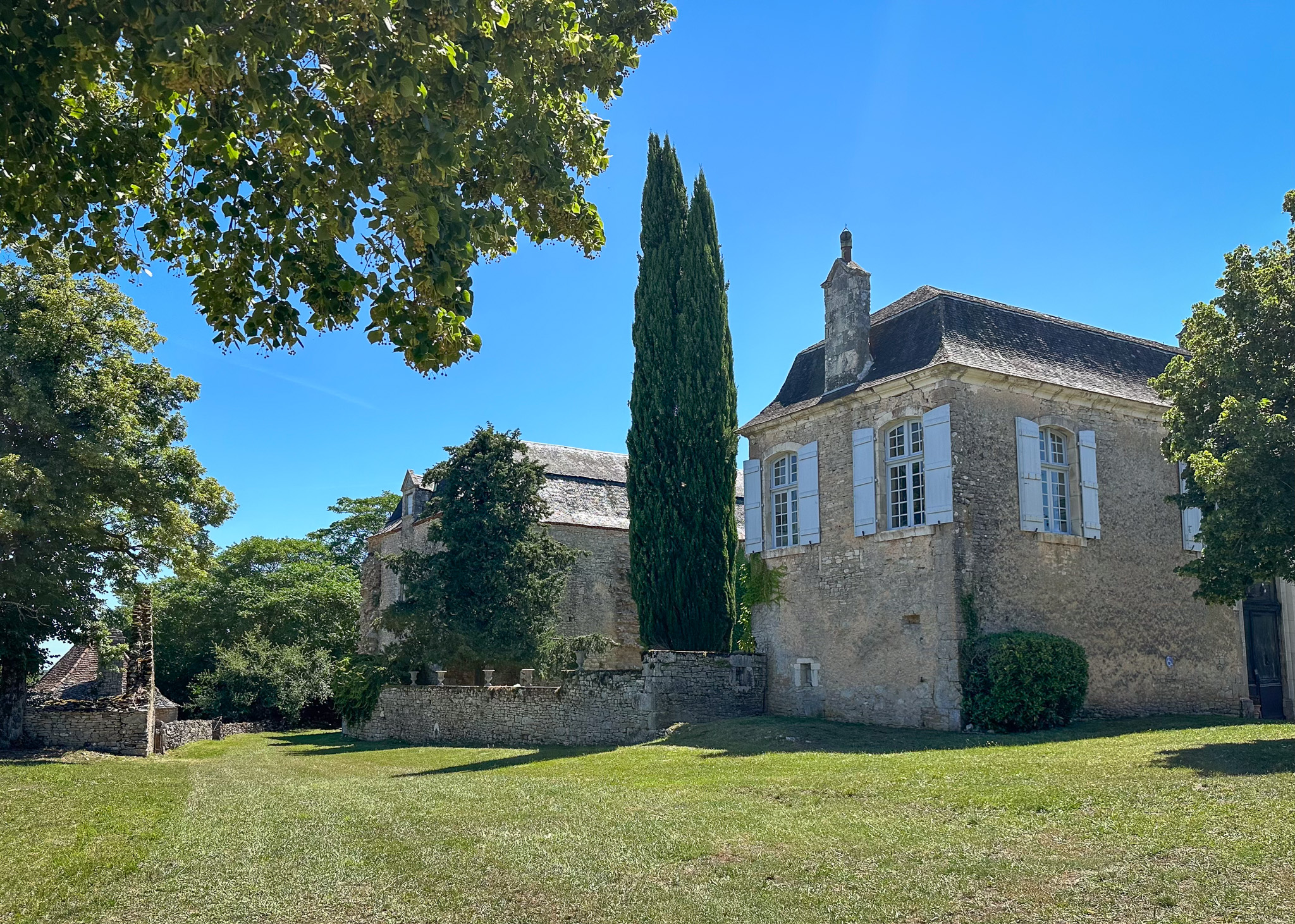
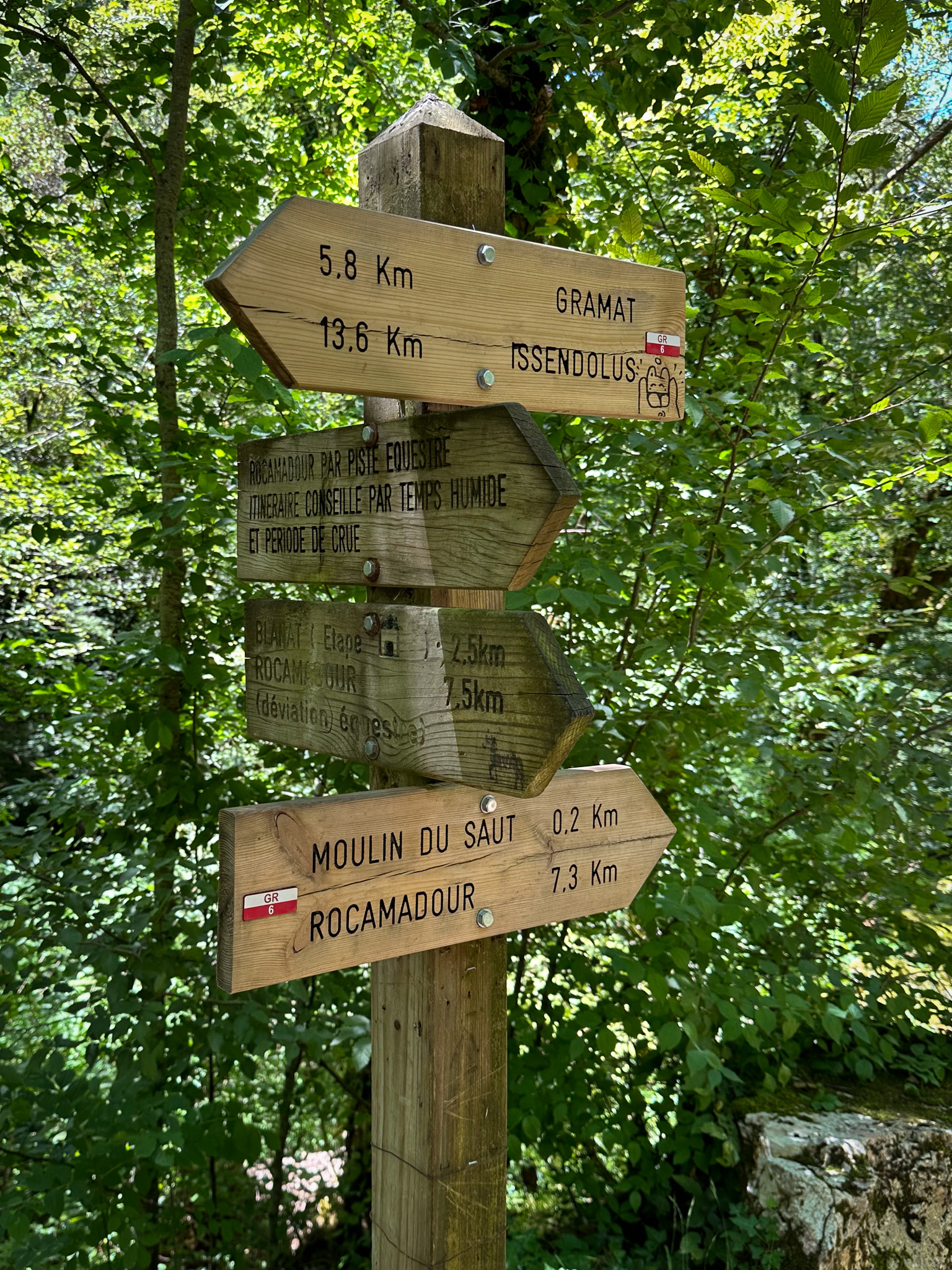
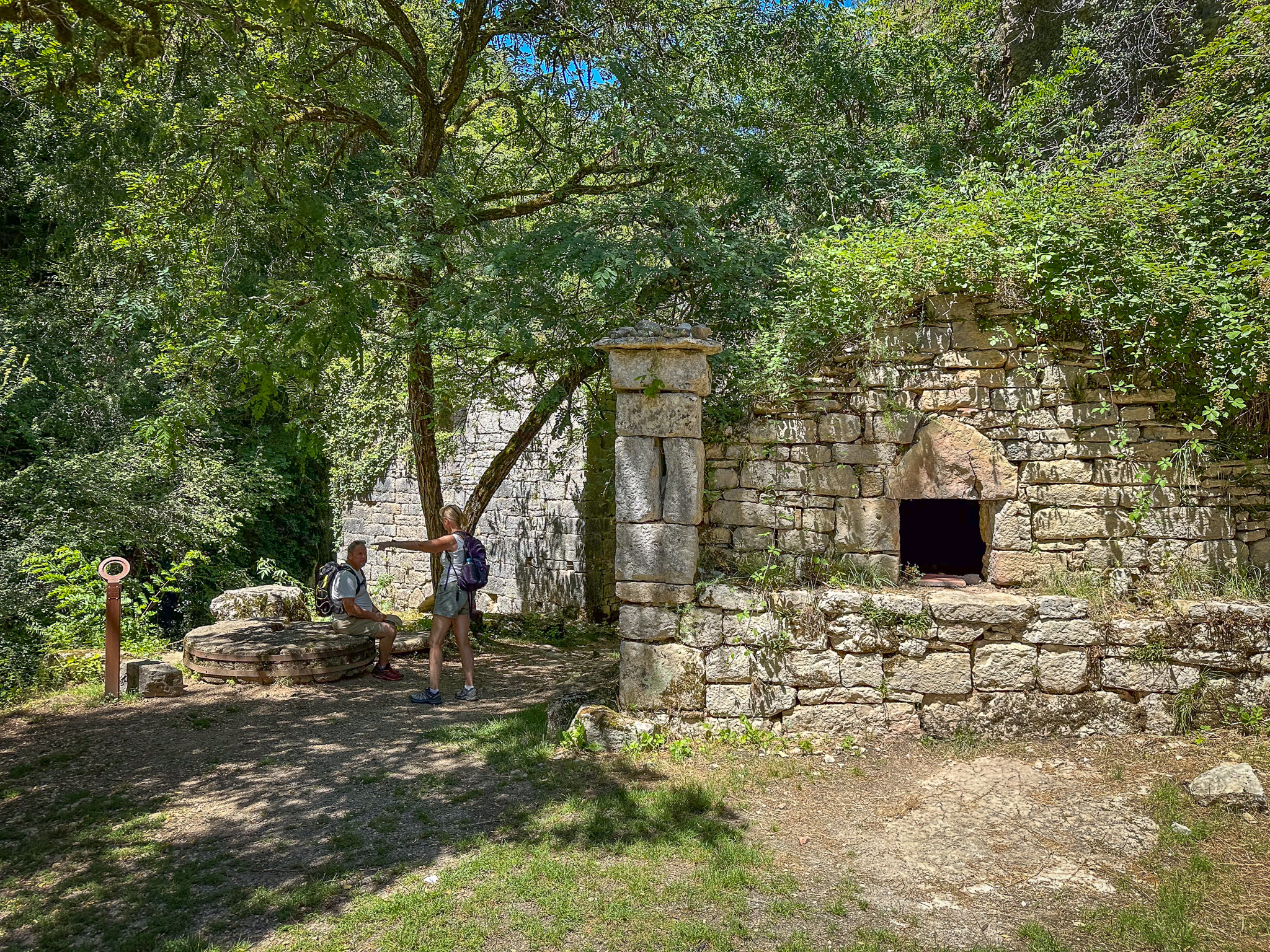
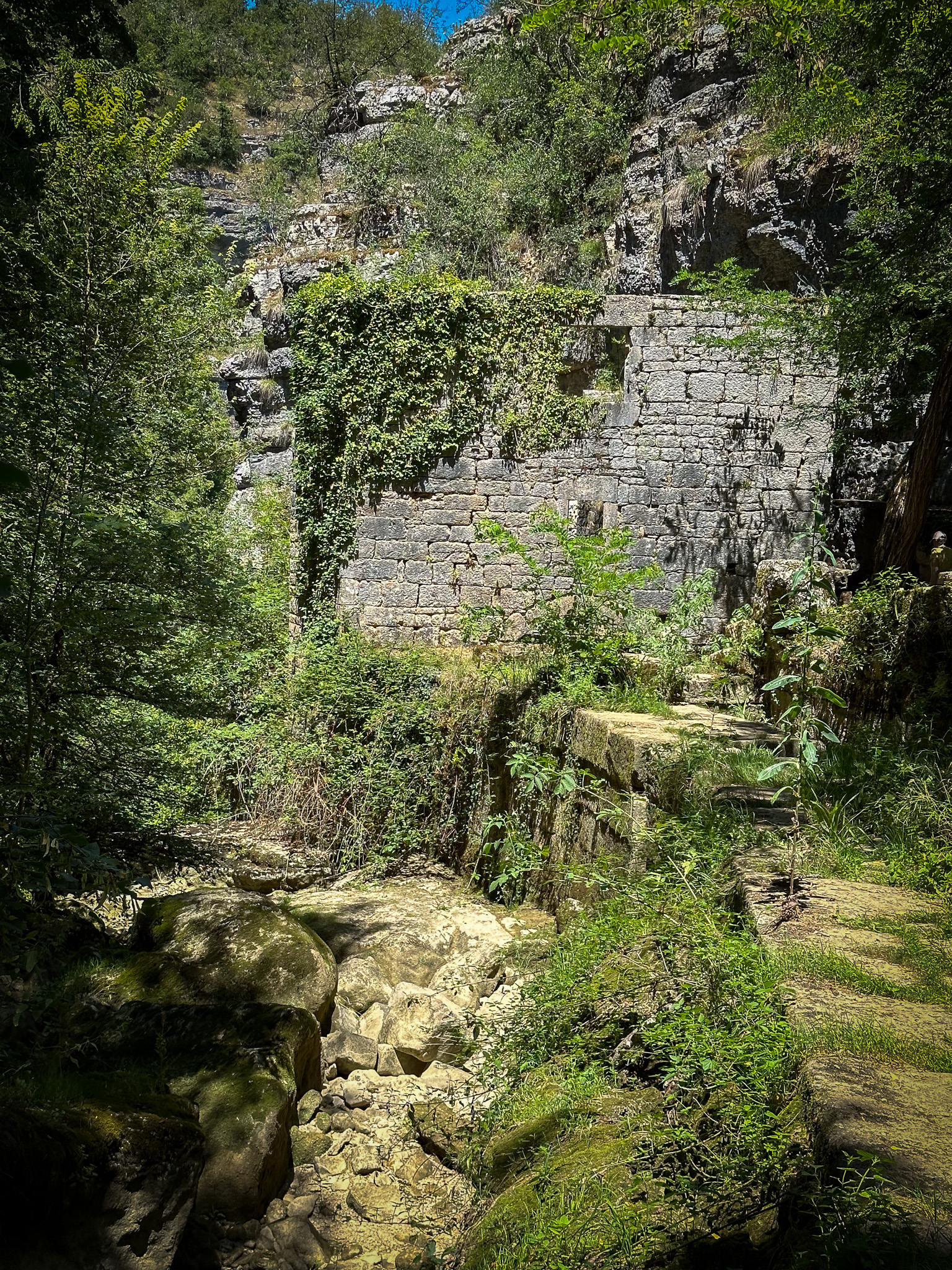
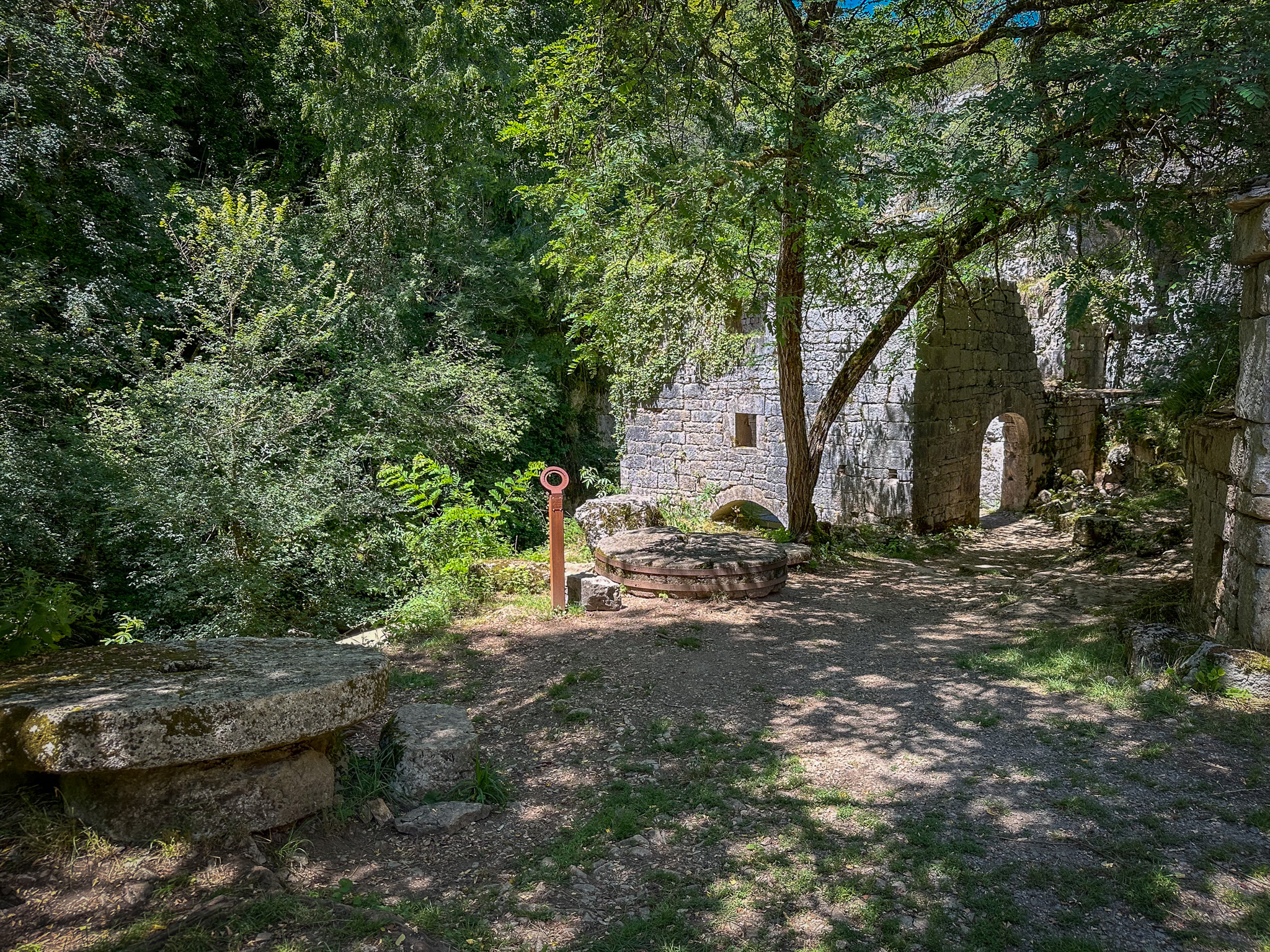
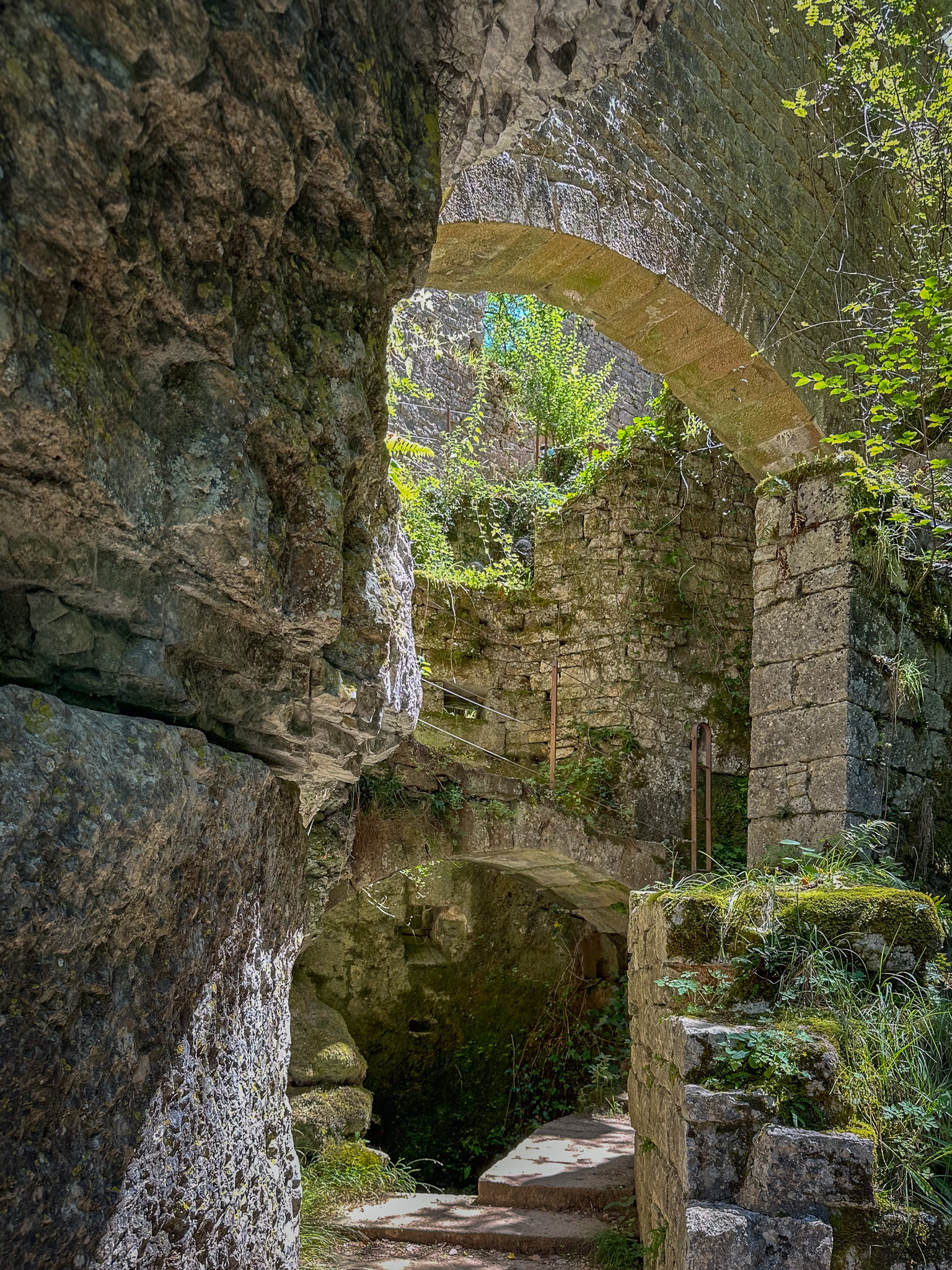
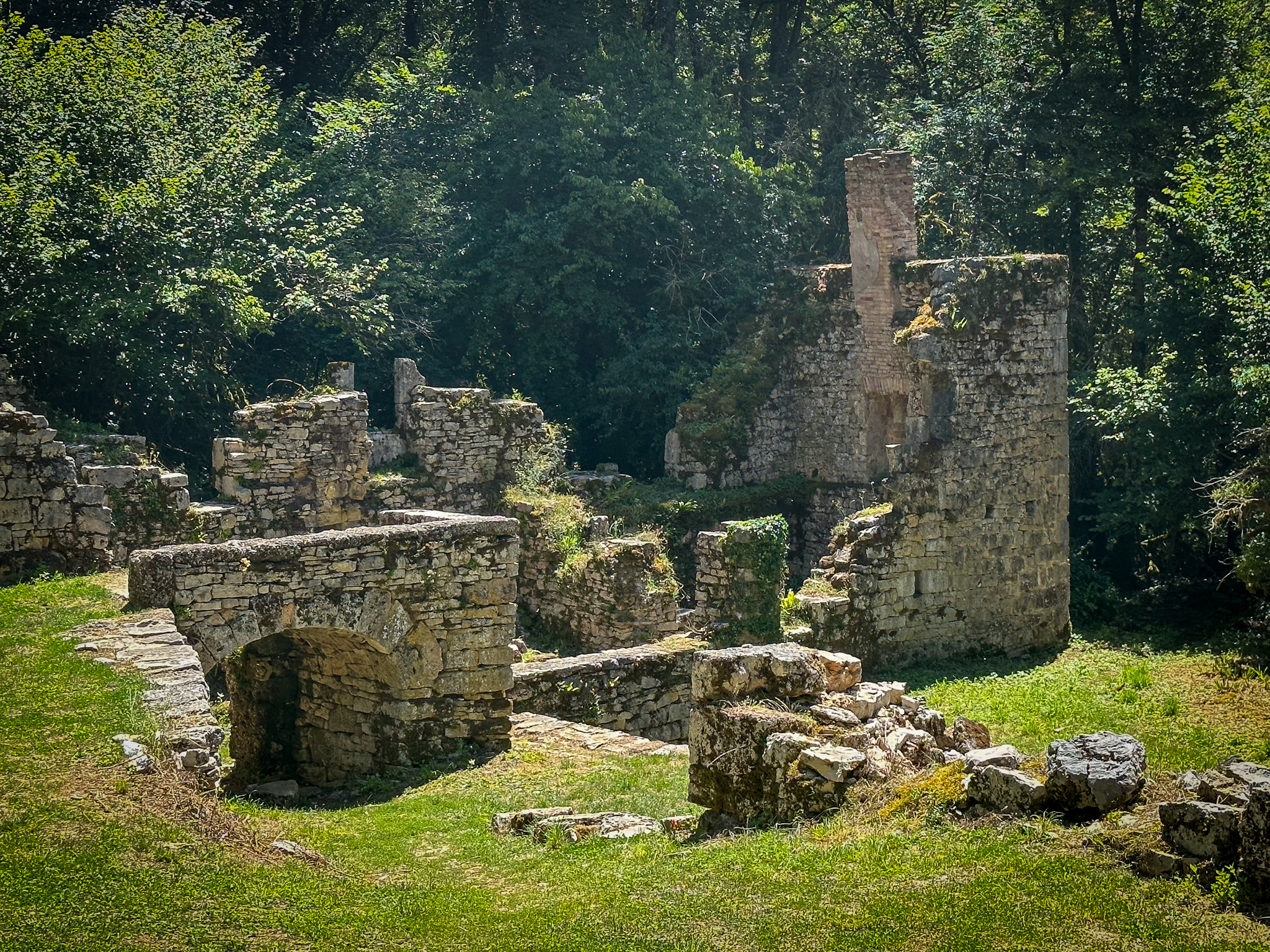
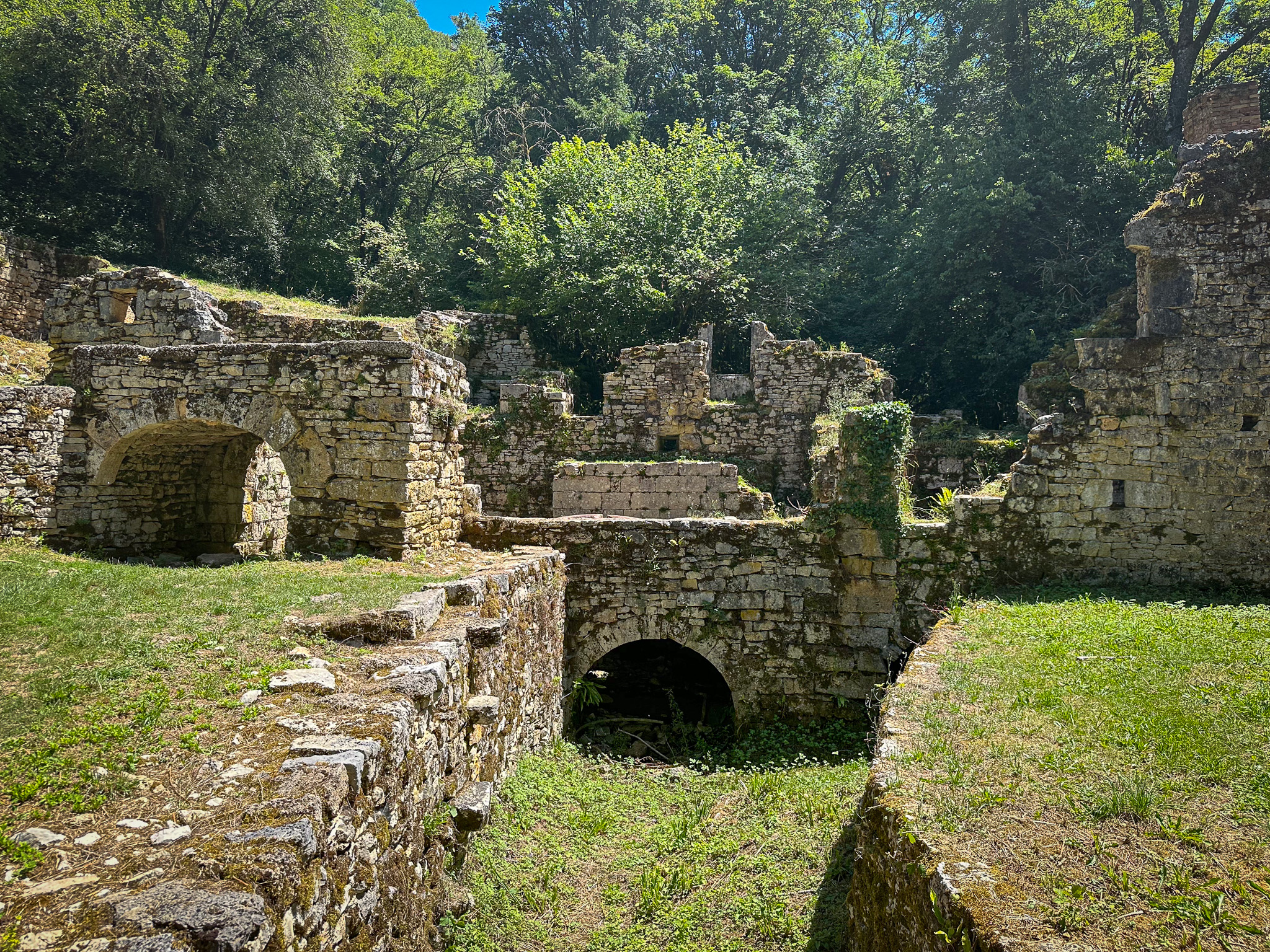
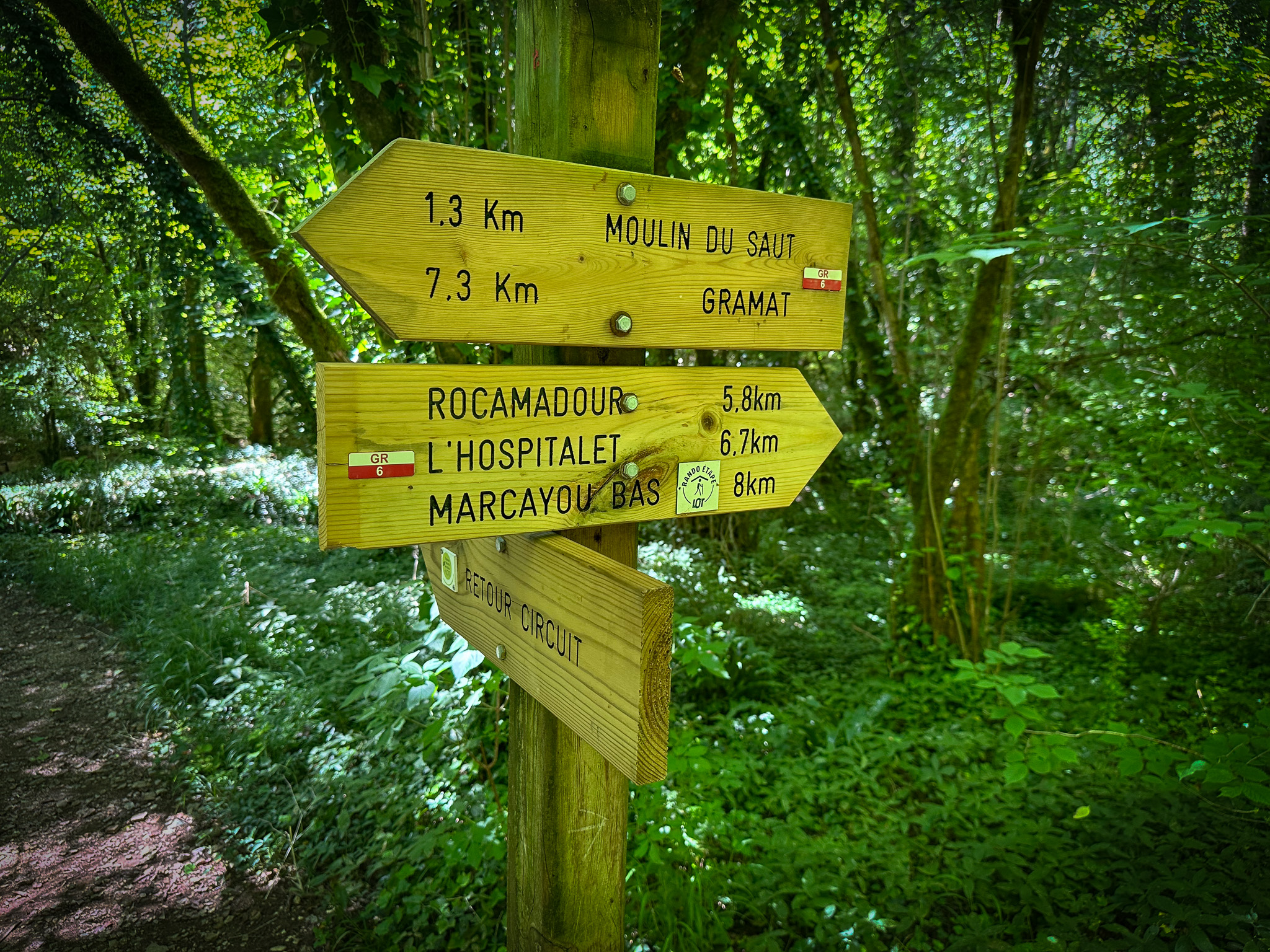
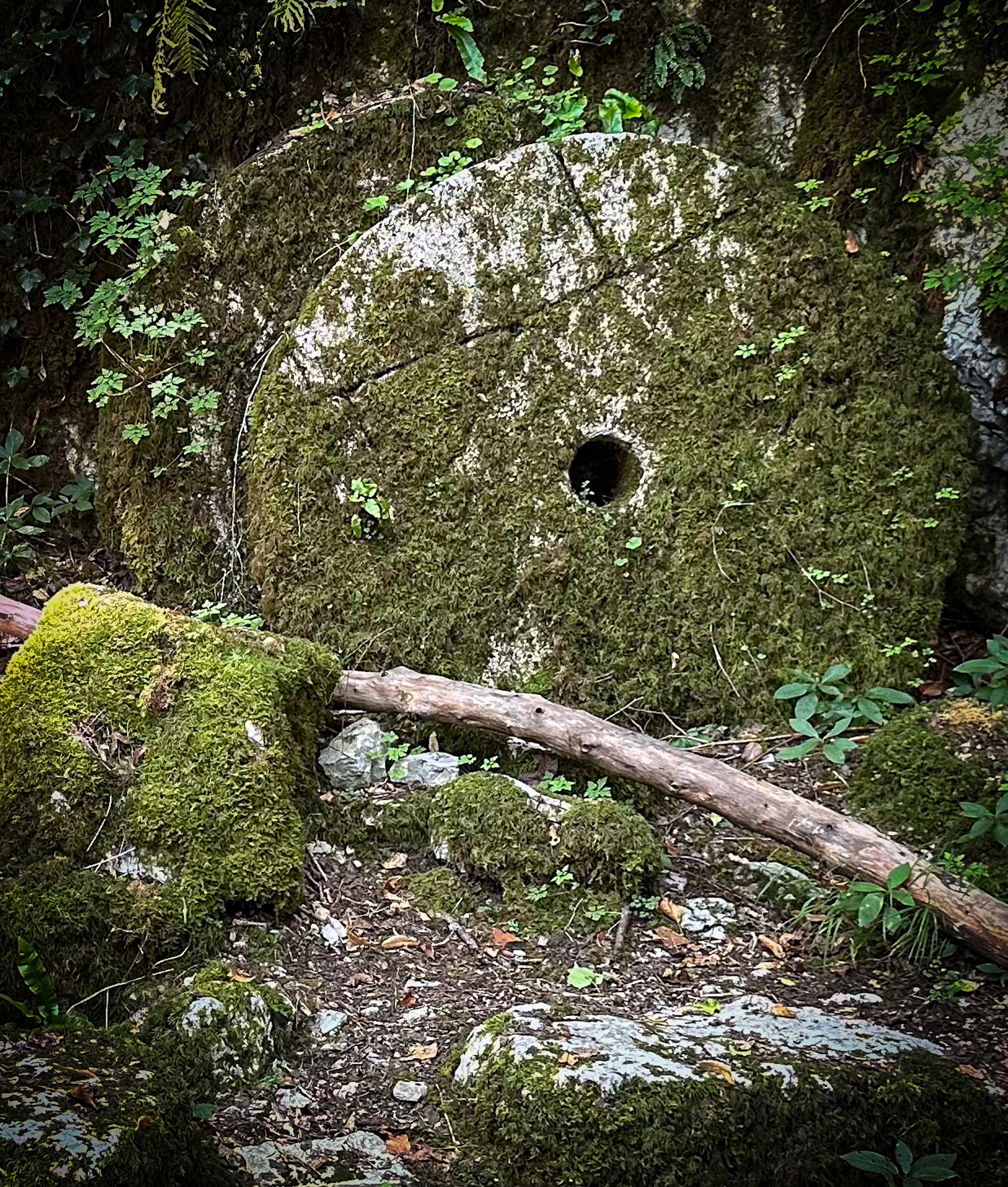
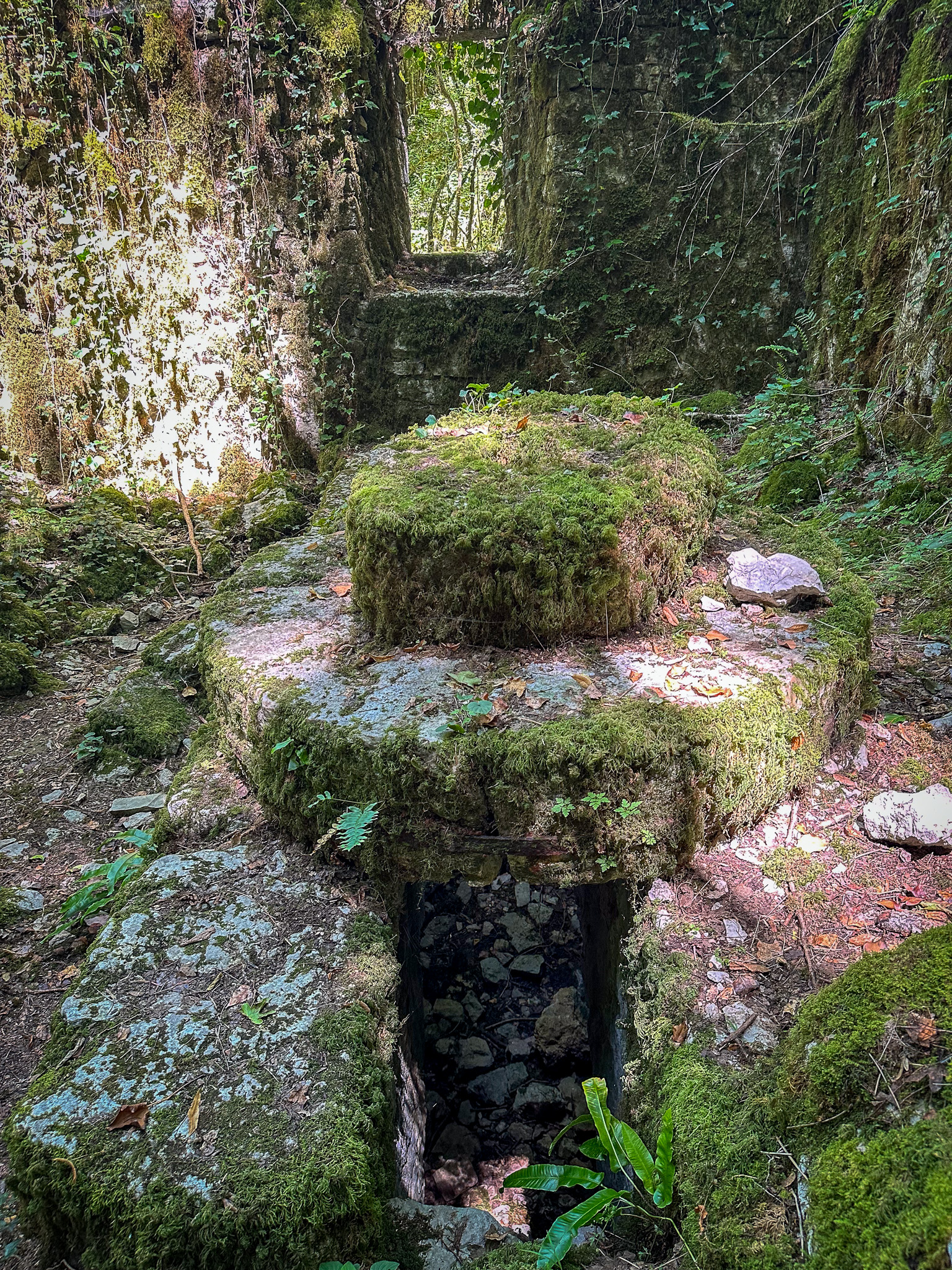
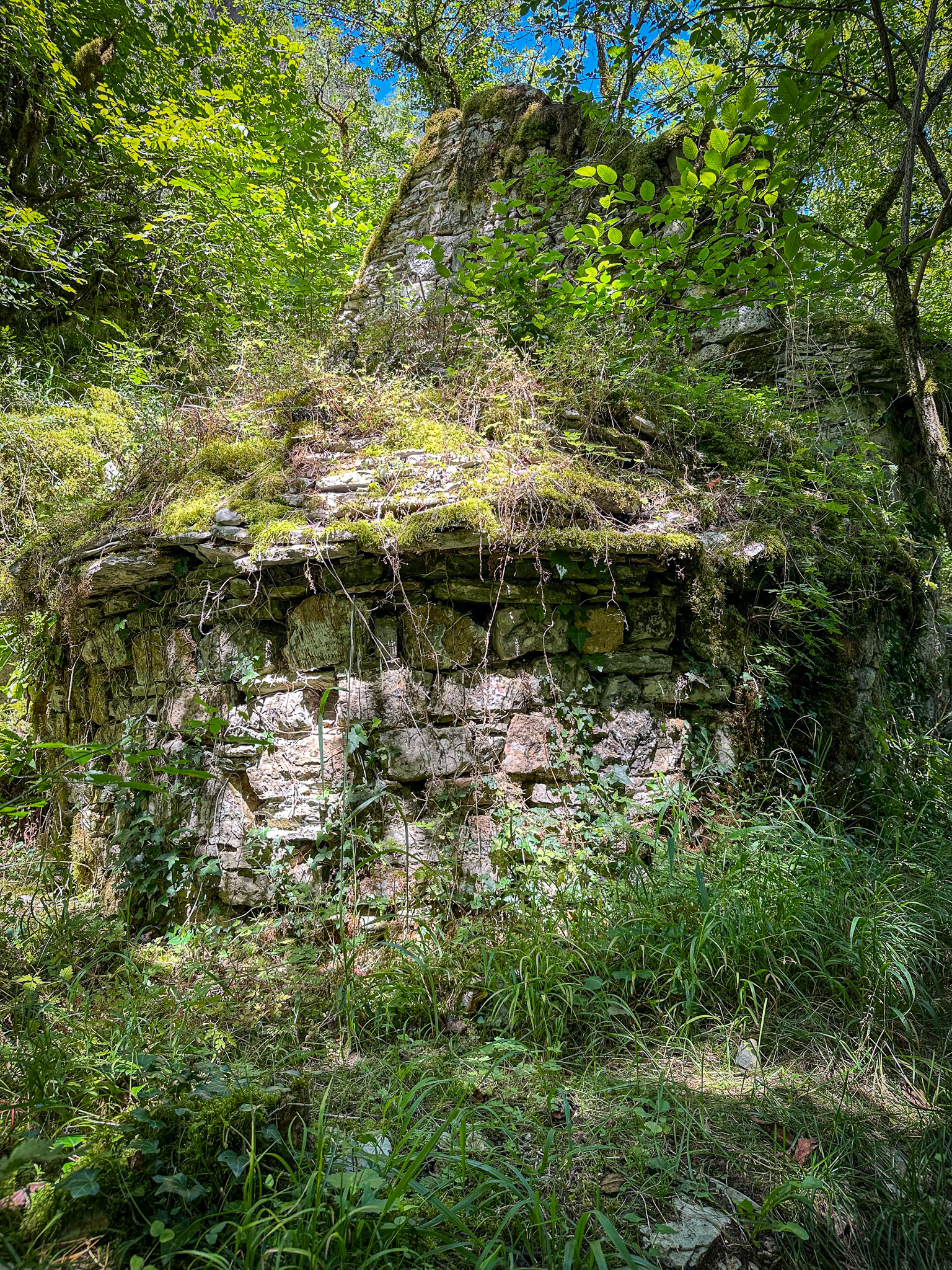
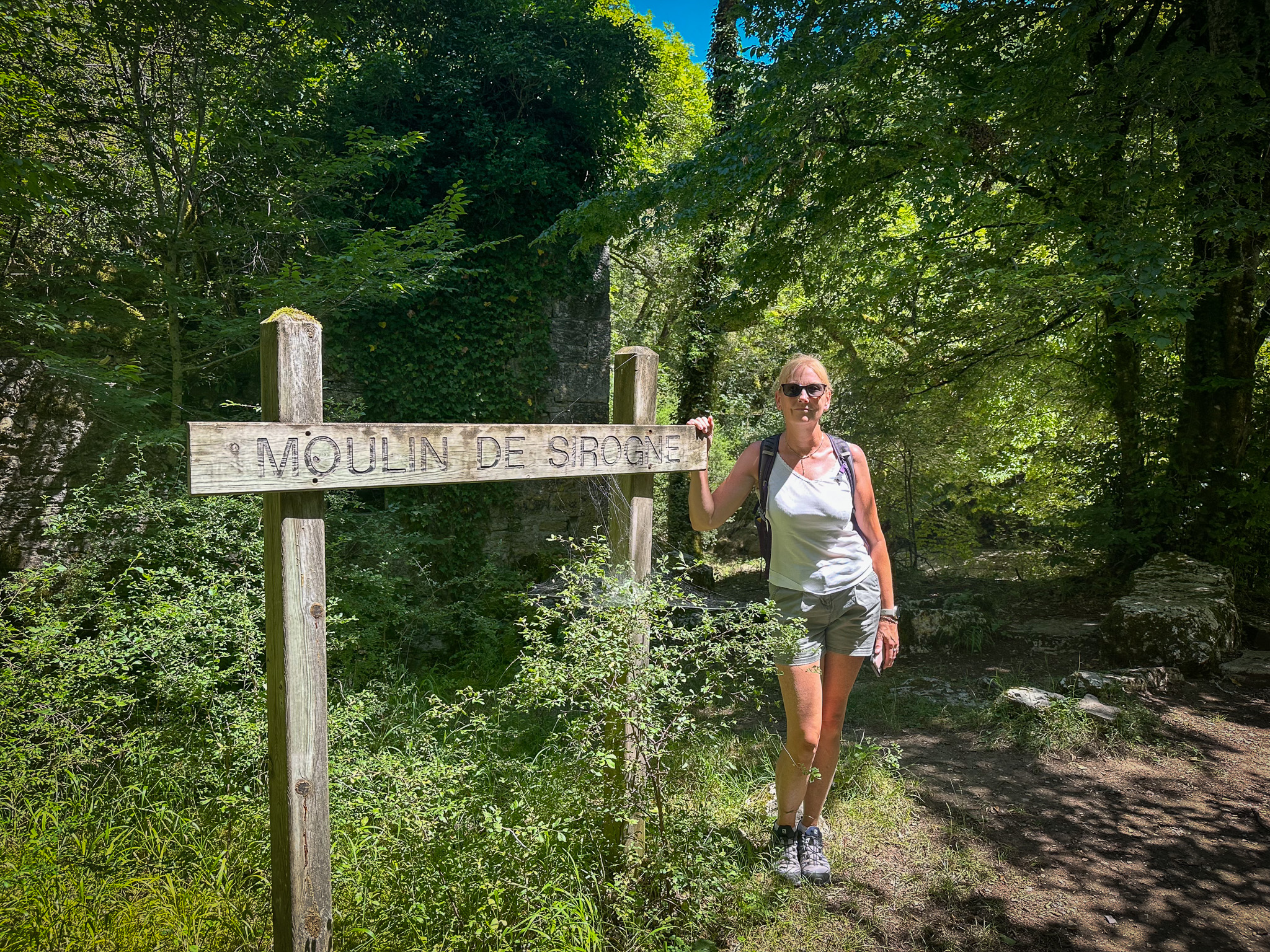
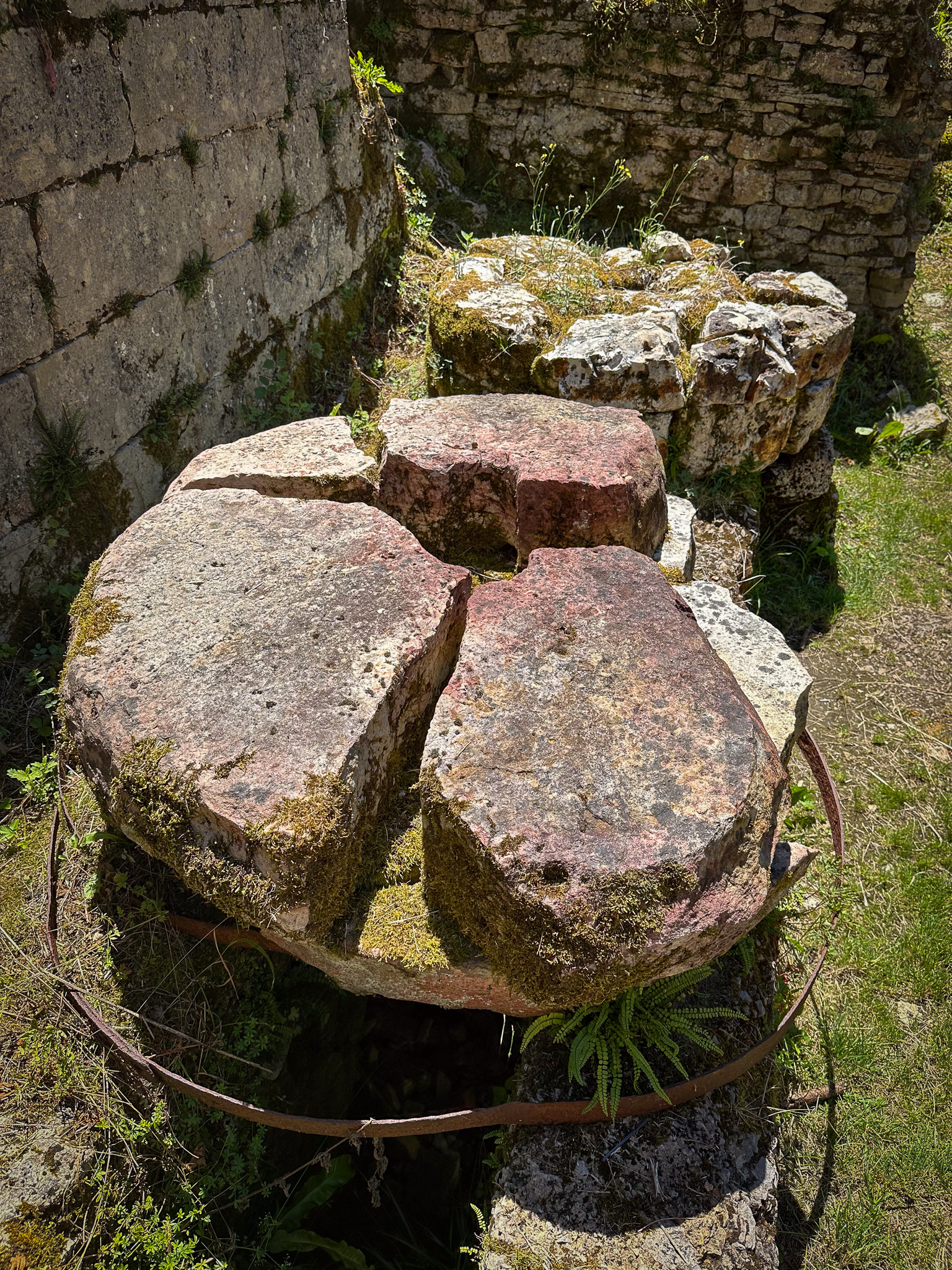
A loop starting from the base of Rocamadour, up out of the gorge on the other side, following ancient trails to an old village with its chateau and then descending back into the gorge to follow the river past ruined watermills and back to the starting point.
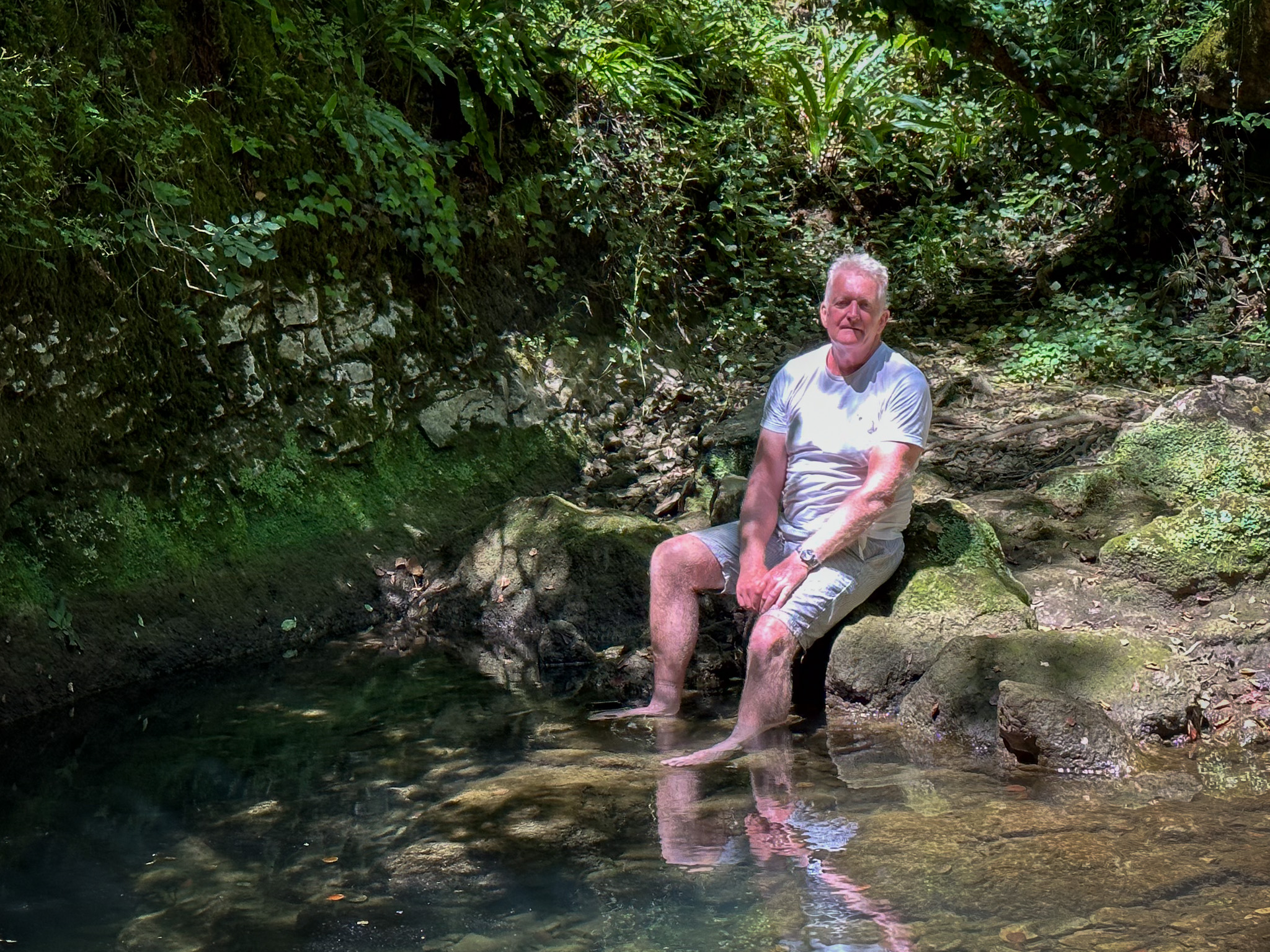
We had optimistically packed swimming togs in the hope of a refreshing dip in the river that we were to follow on our return route. The map indicated numerous ruined watermills which clearly meant that there must be water somewhere.
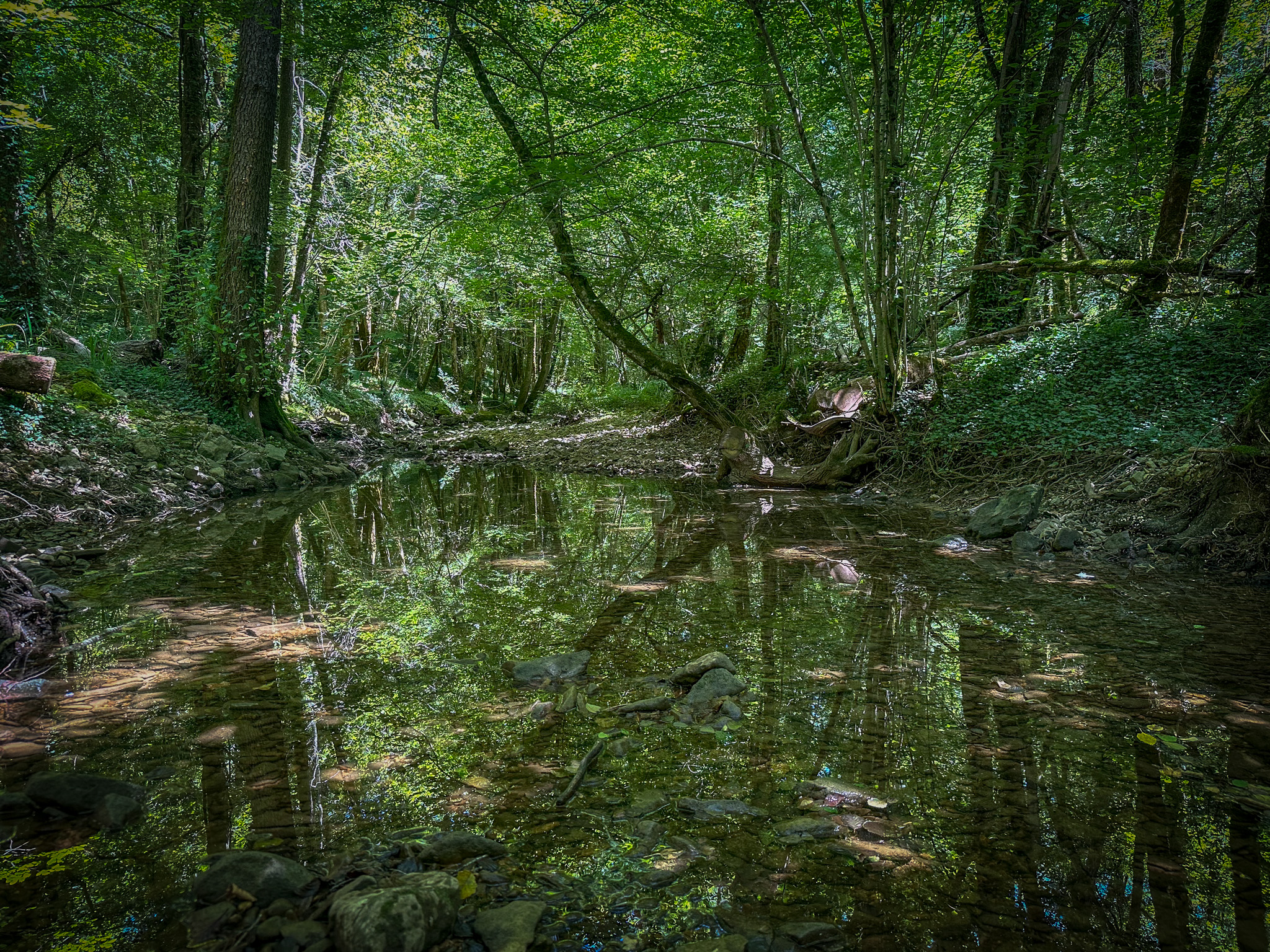
The River Alzou turned out to be mostly a dry river bed with occasional shallow pools. The most we managed was foot cooling paddle.







Our last few days
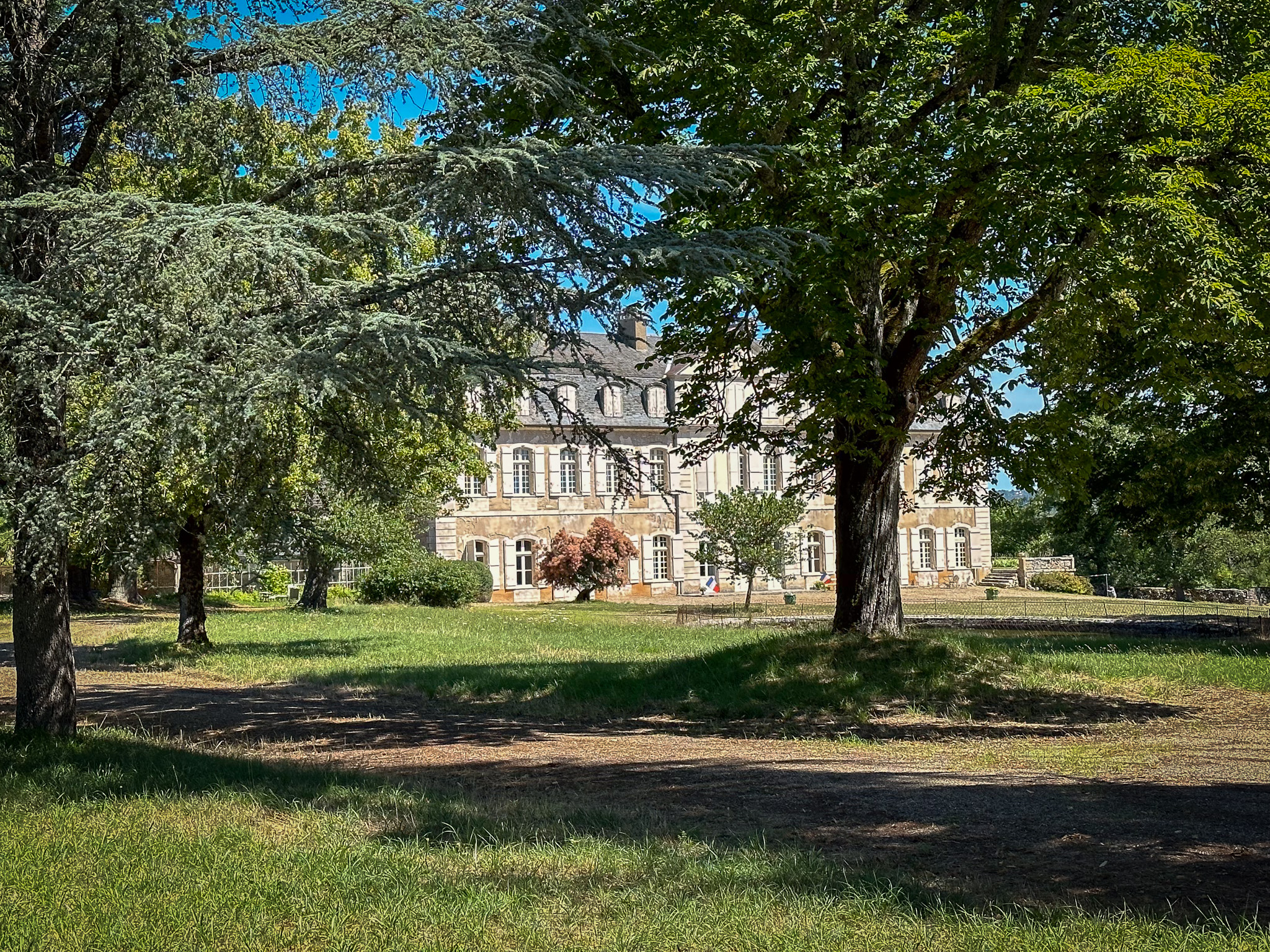
The next day we were all happy to just sit in the car while Jonathan drove the long treck north. We spent the night in a very pleasant hotel in the little village of Évran. Check-in was not until 6pm so a late afternoon stroll in search of a bar led us to a decidedly sleazy looking establishment. Short of other options we went inside and discovered a pair of massive hifi speakers and a huge vinyl collection. Nigel picked out Roger Waters, The Wall -Live in Berlin featuring a range of artists from Van Morrison to Sinead O’Conner, Cyndi Lauper, Bryan Adams and many others and the barman was very pleased to put it on for us. If you are a Pink Floyd fan you really should listen to this. We enjoyed it so much that Sue bought an iTunes version for Nigel’s birthday. Several Ricards later we finally got to our hotel for a delicious meal and a good nights sleep.
Dinan
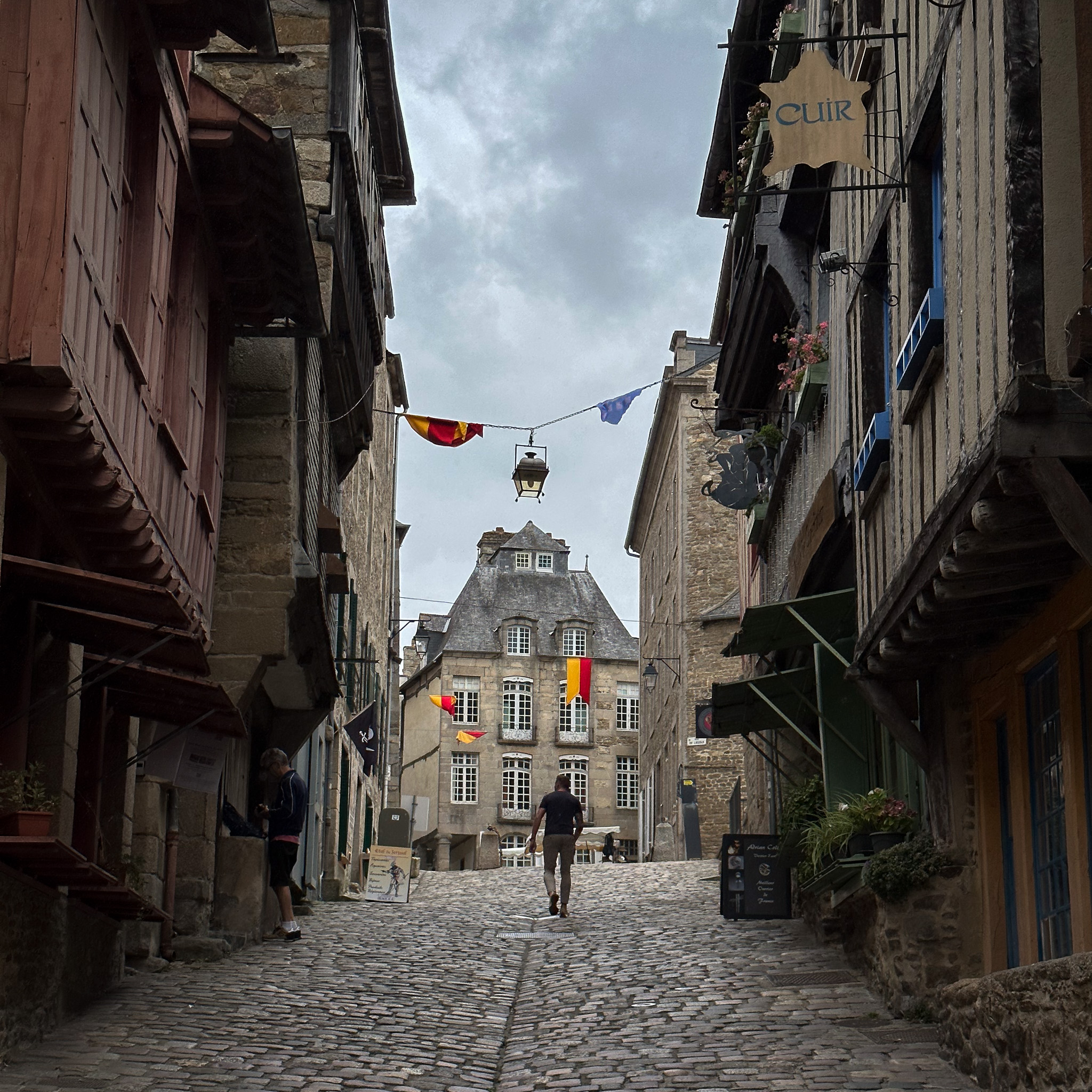
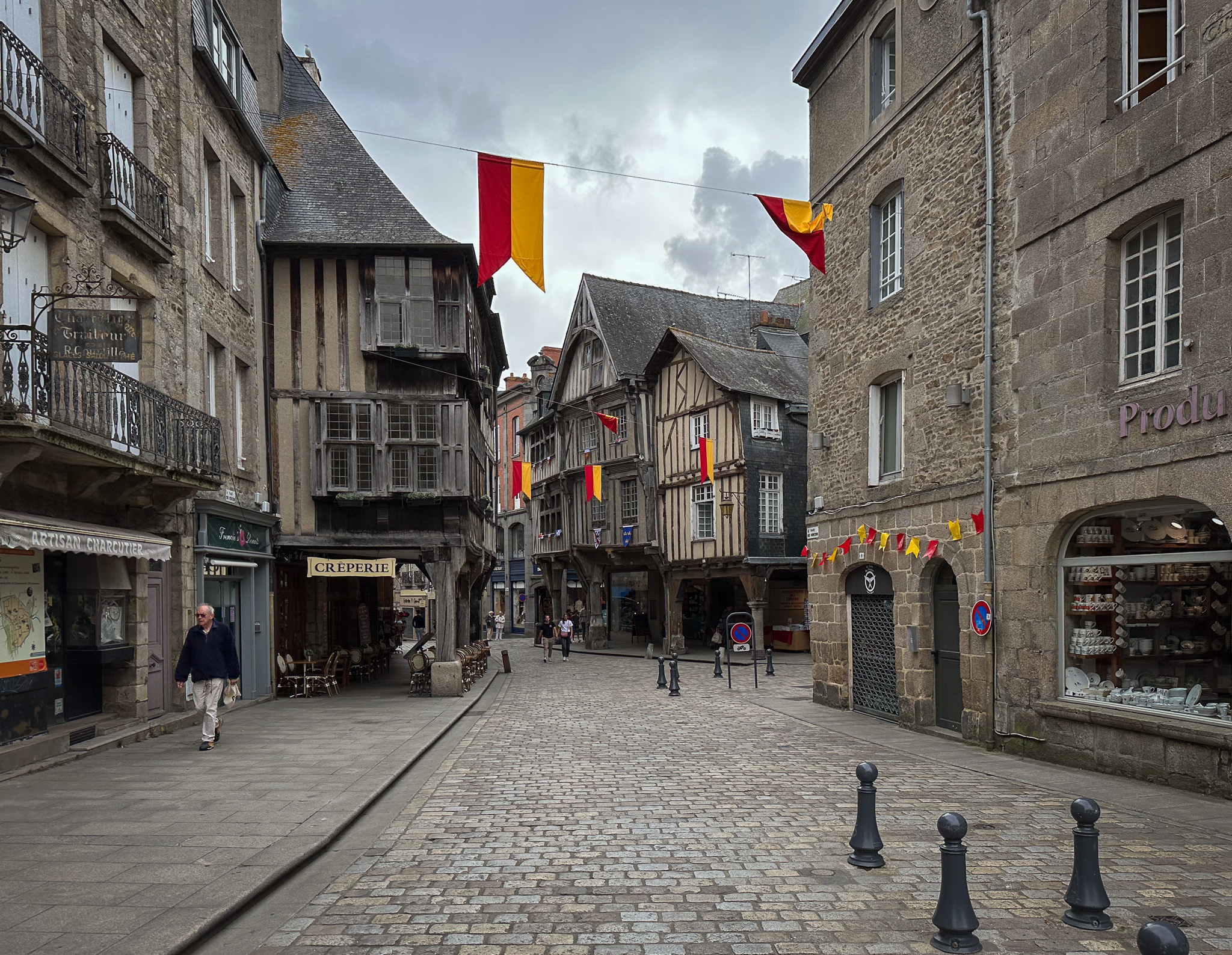
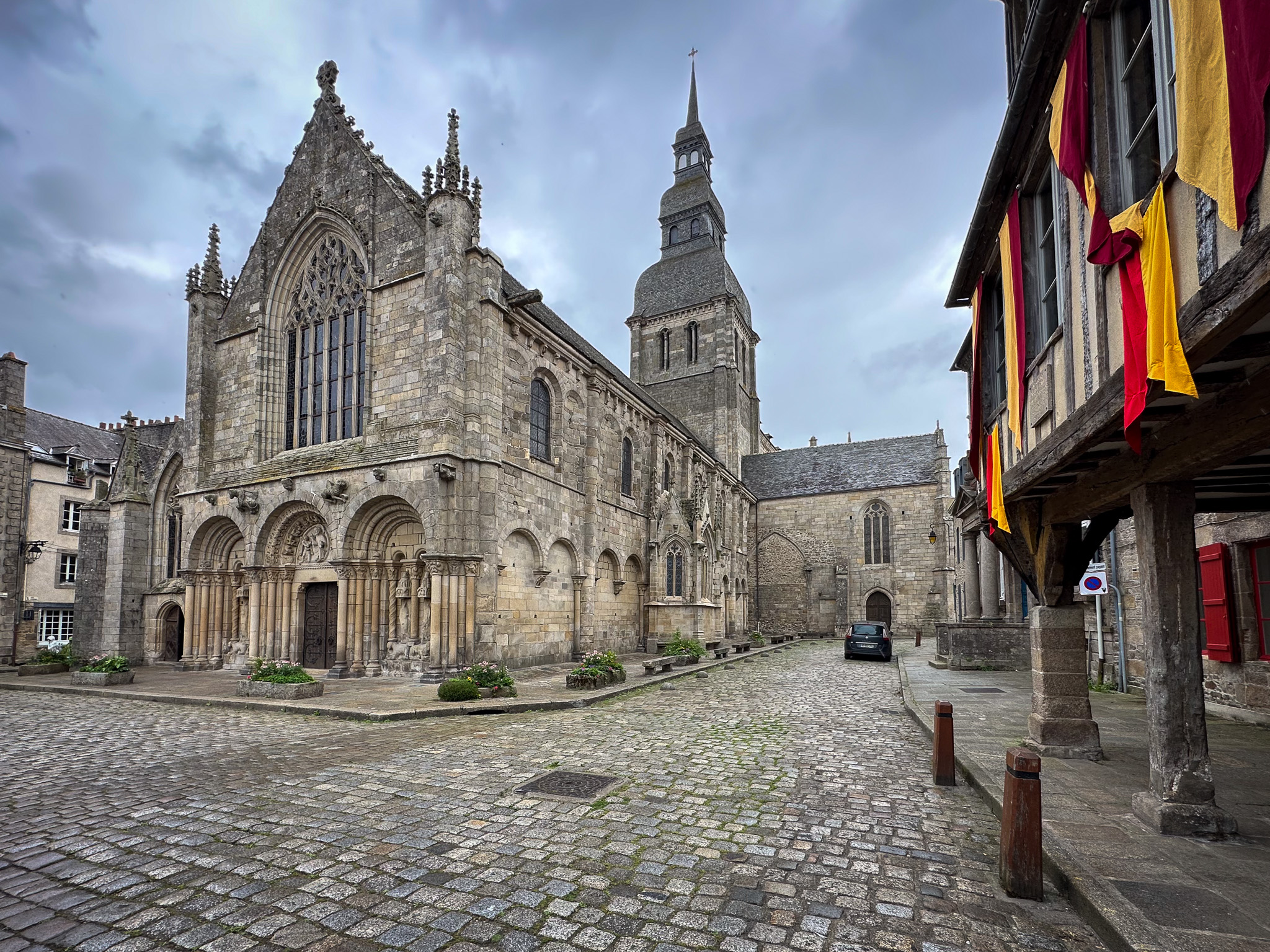
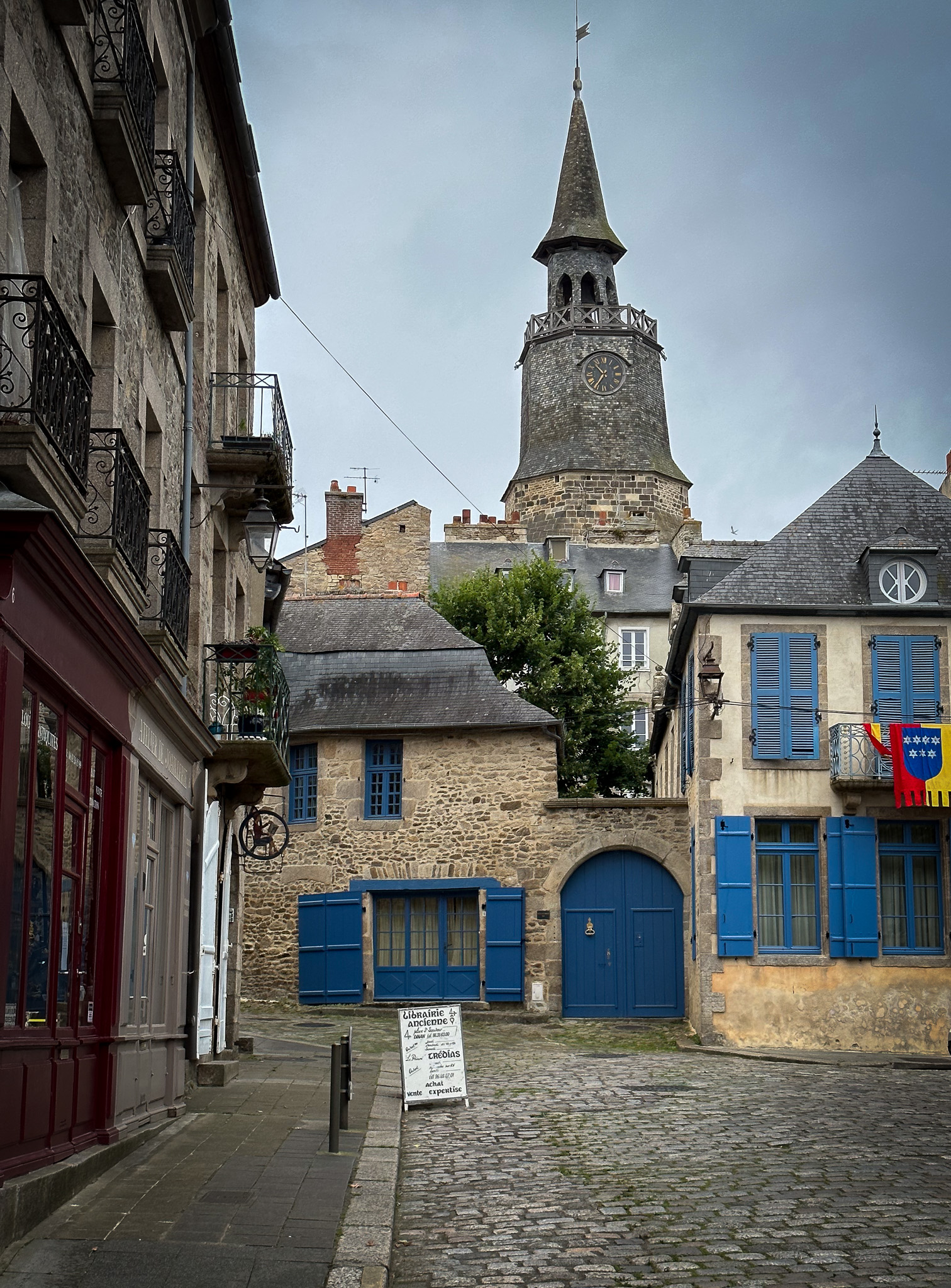
We had time for one last tour and opted to explore a little of the walled town of Dinan before heading back to St Malo for lunch at the same restaurant we had visited on our first day.
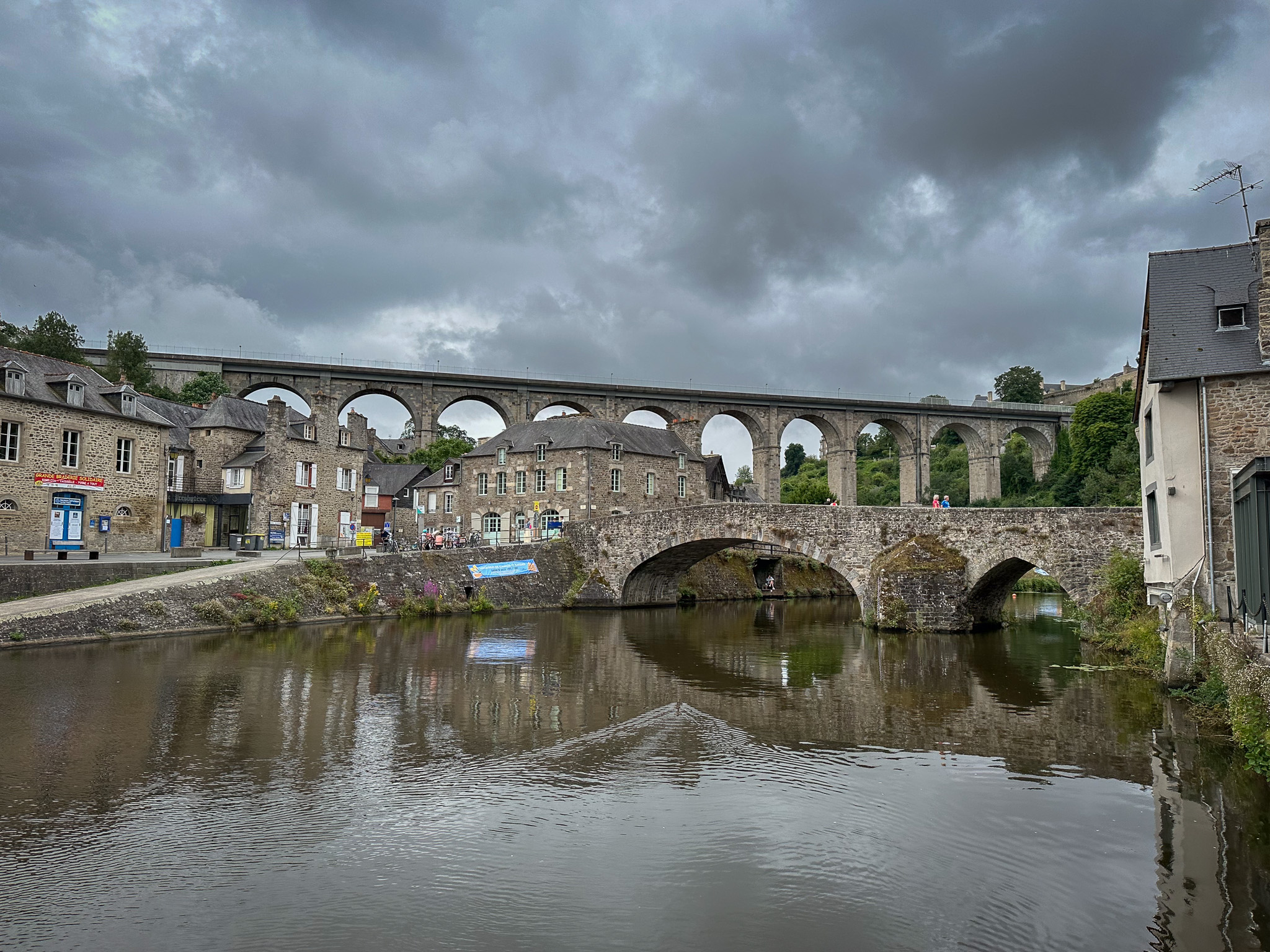
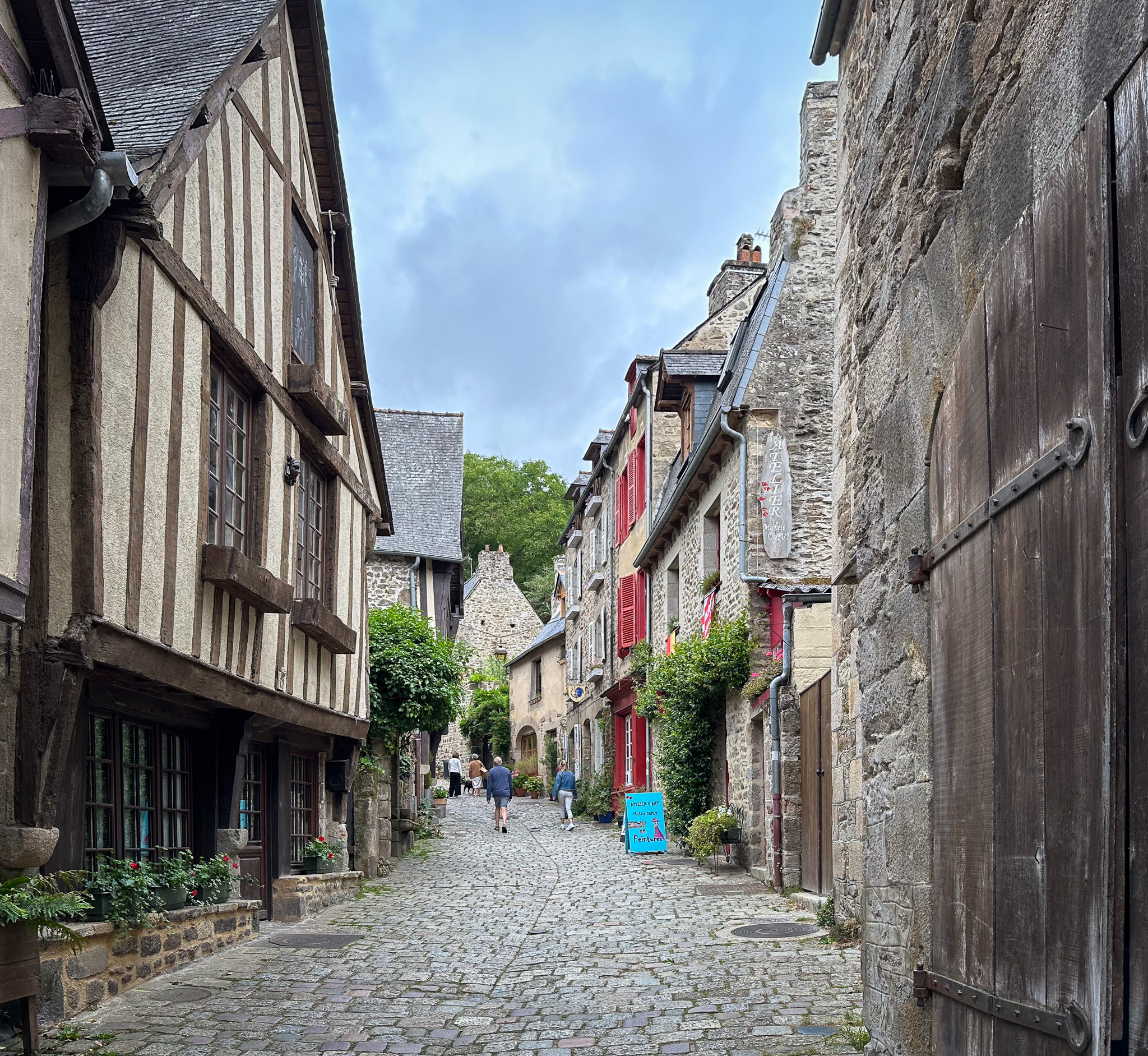
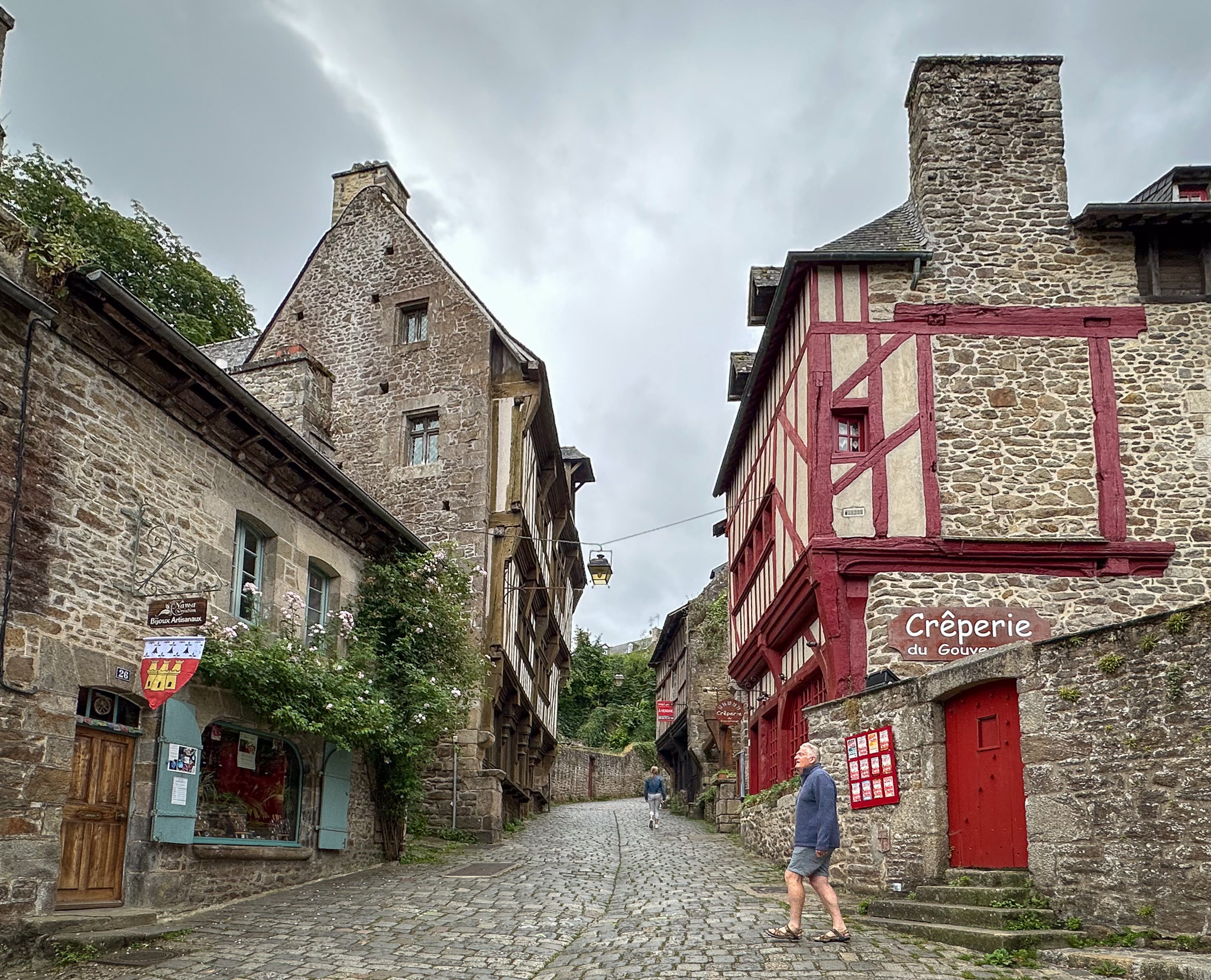
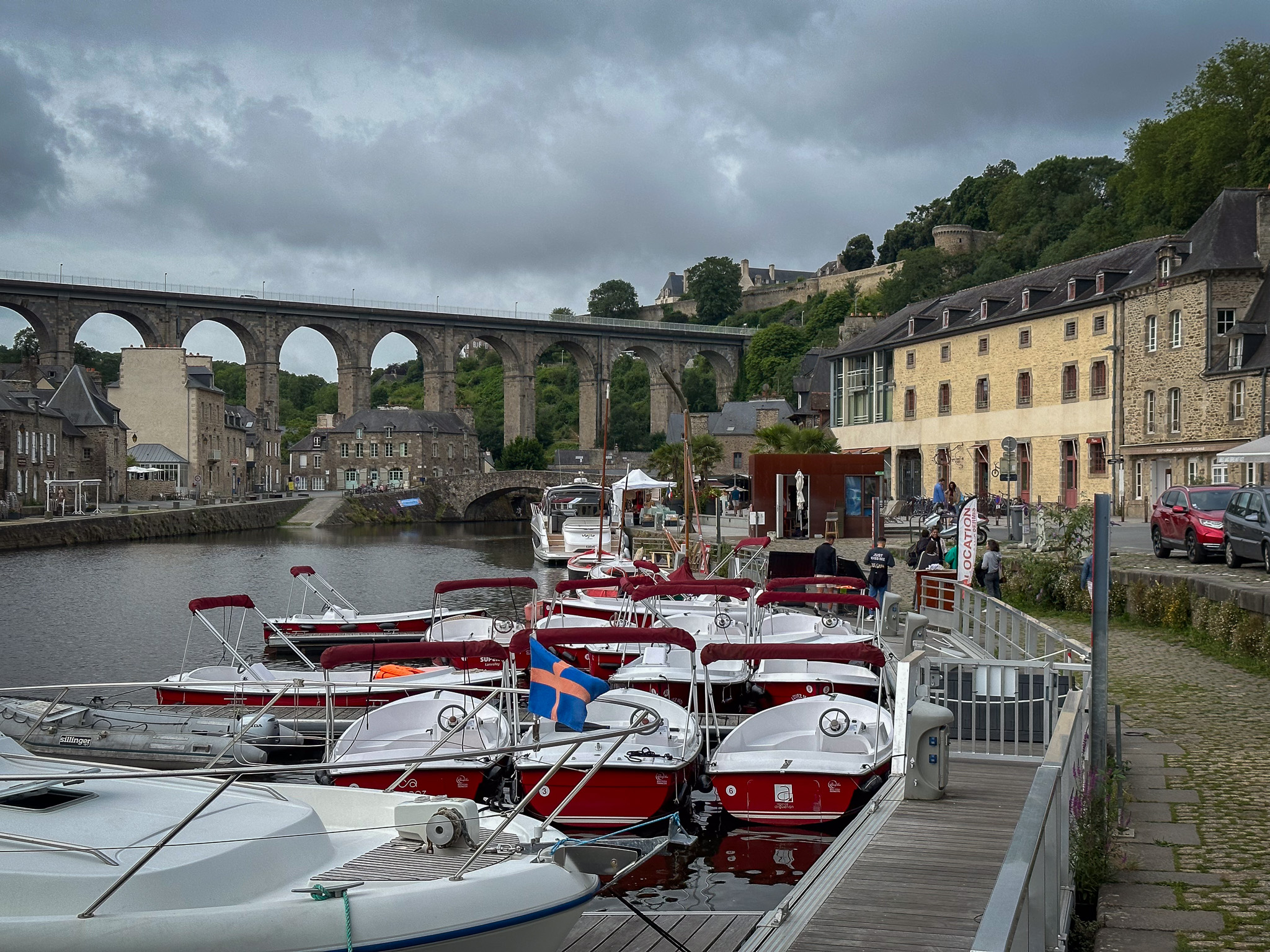
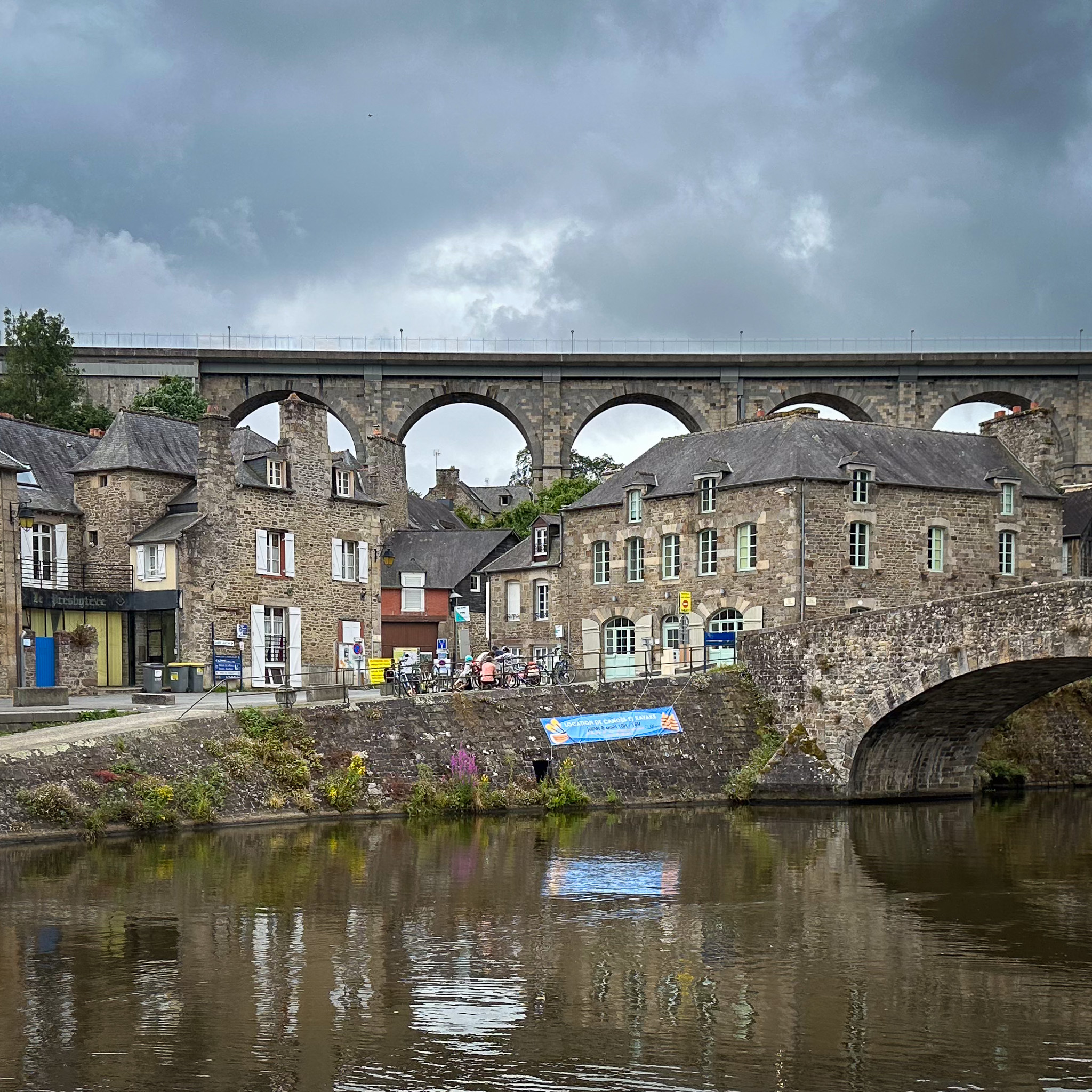
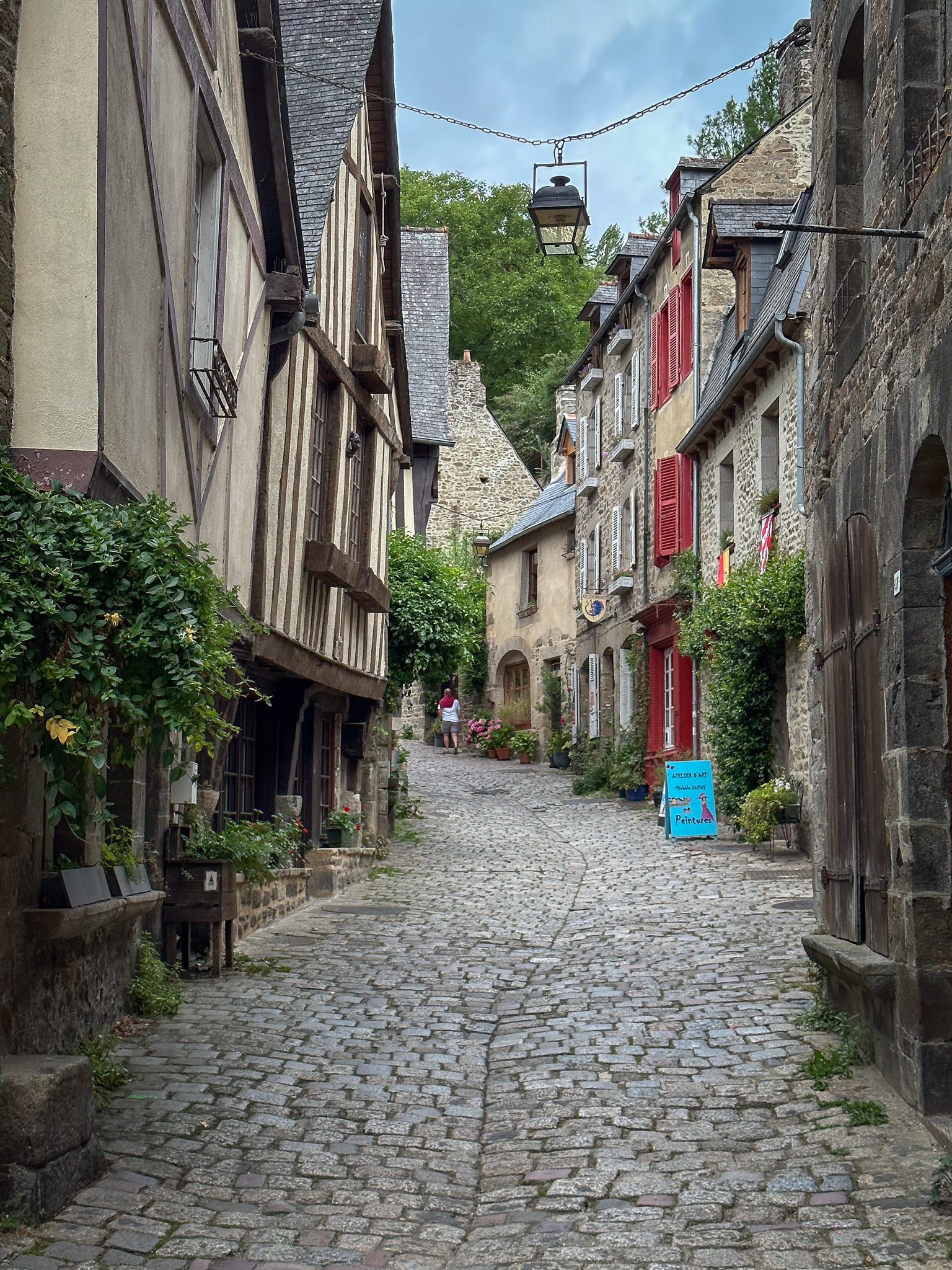
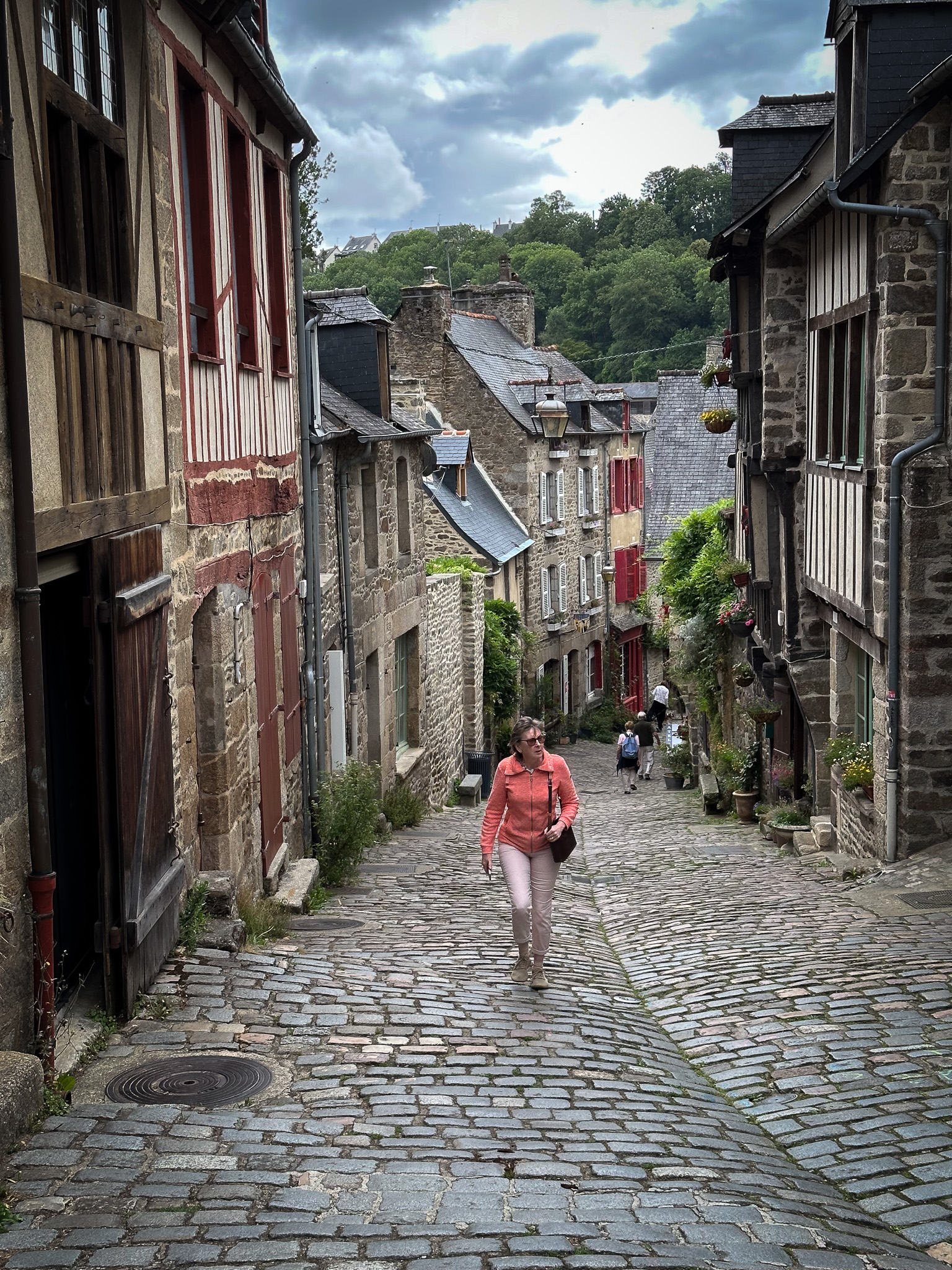
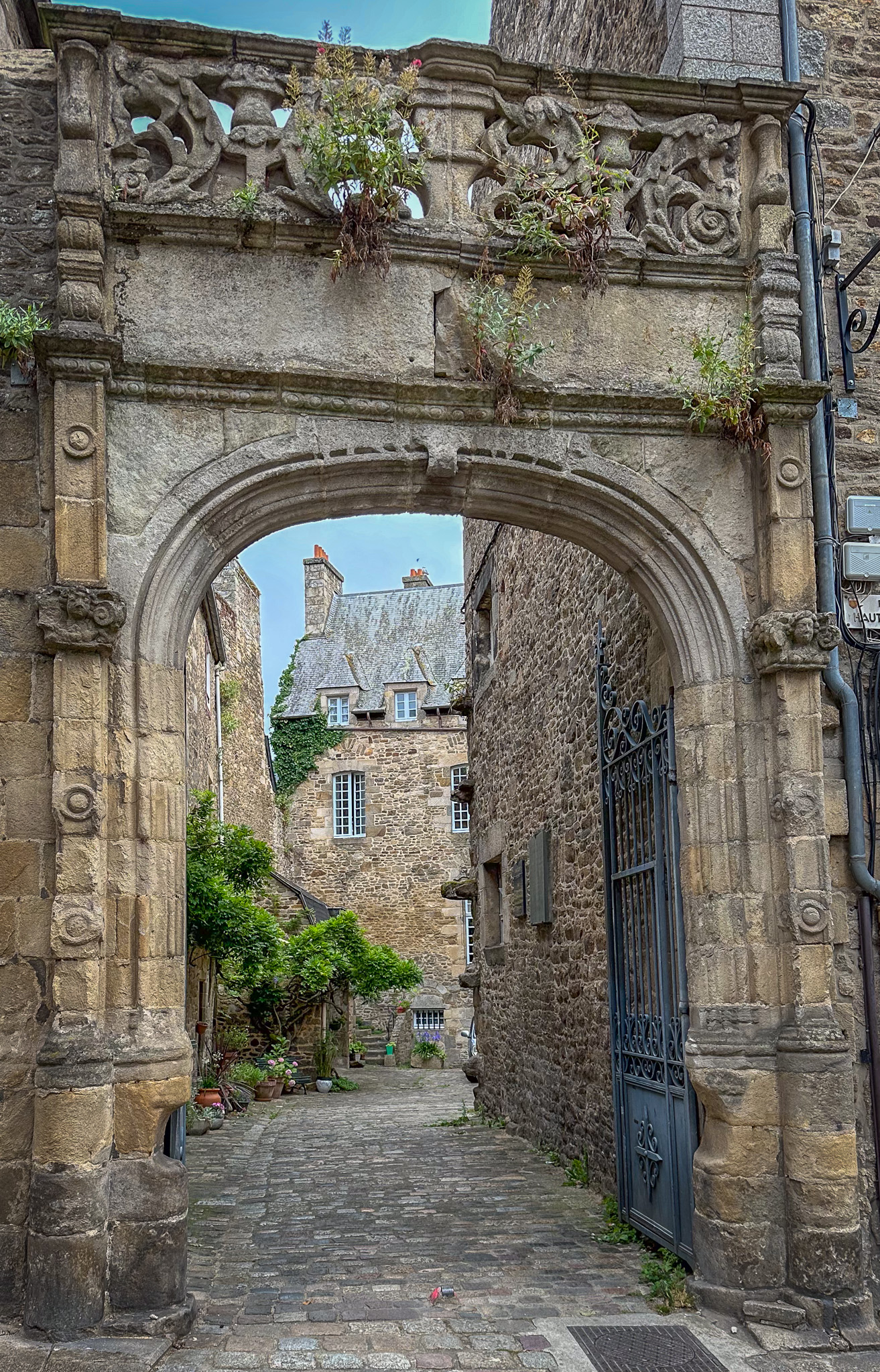
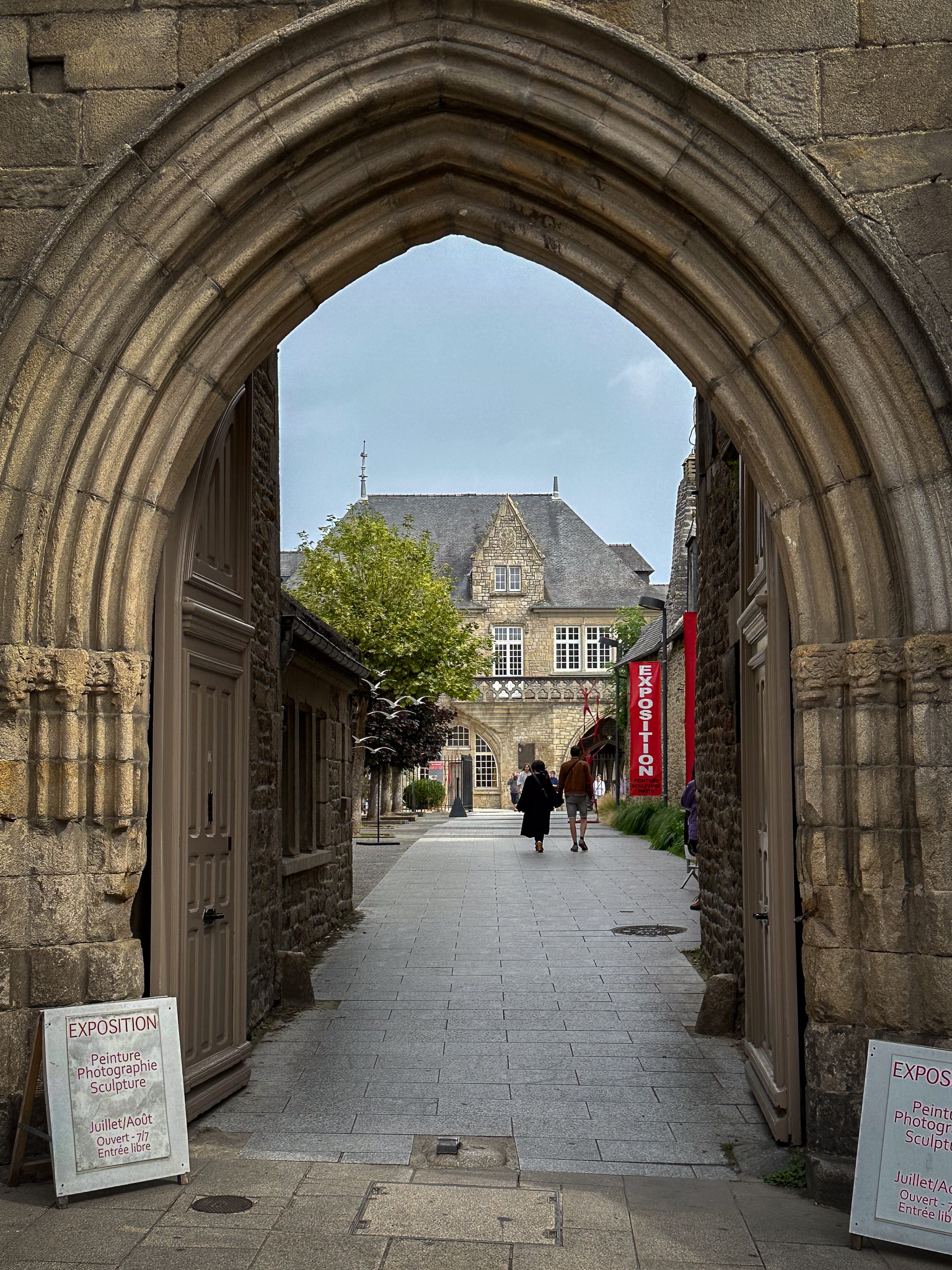
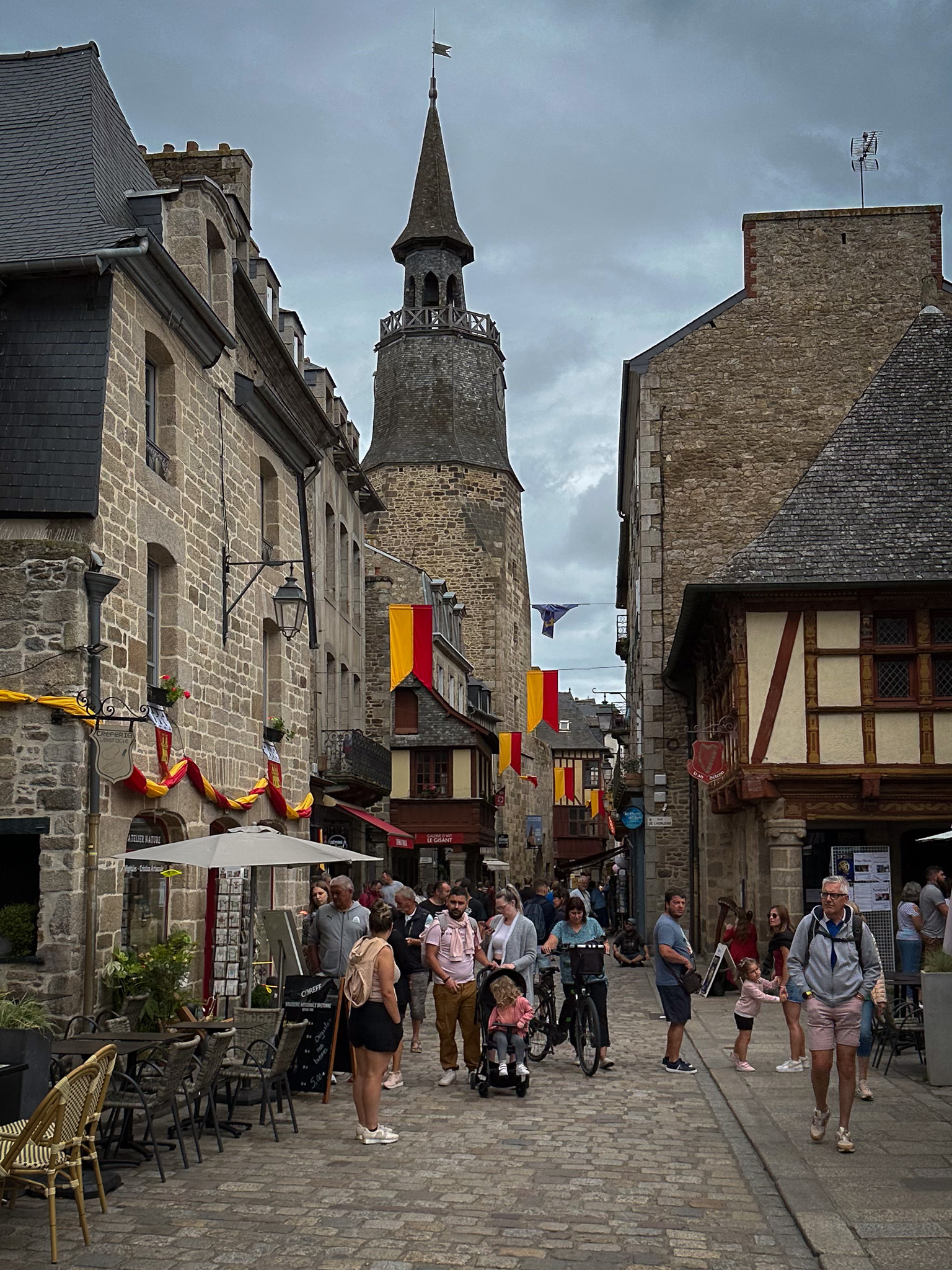
And finally, we abandoned Claire in St Malo where she had several hours to kill before her ferry to Jersey while we headed back to Cherbourg for the evening crossing back to Dorset. A fabulous holiday.
 Weather is lovely, wish you were here