1 – 5 September
Castaways for a day
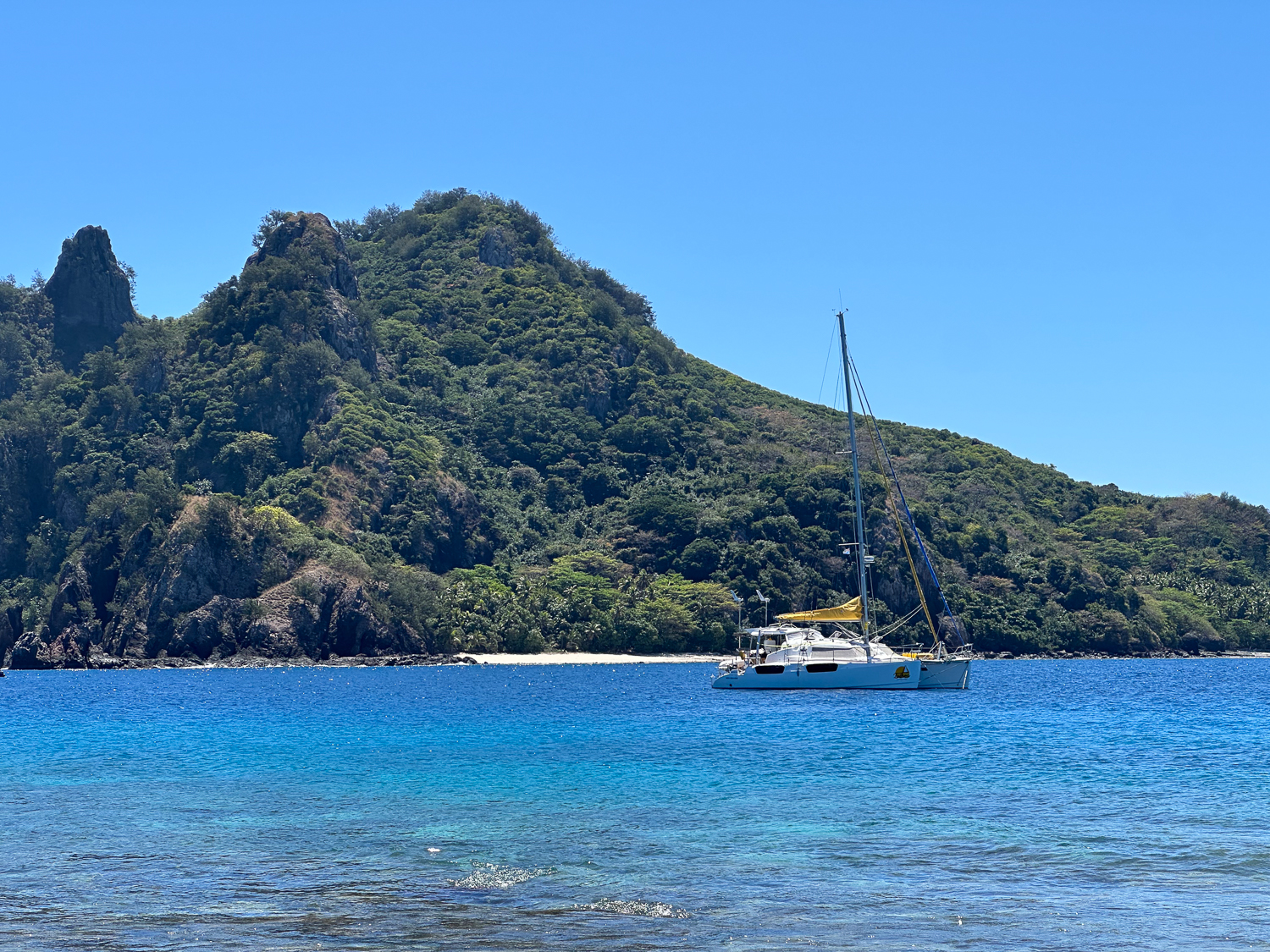
We had a fast sail from Mana to Yanuya Island. This was where we needed to do sevusevu and pay our landing fees to visit Monuriki Island, the setting for Tom Hanks’ Cast Away, that we had sailed past a few days earlier.
A brisk southerly forced us to anchor on the northern side of the island and, as we were preparing to launch the dinghy, we were visited by a young man (Moses) in the ubiquitous Fijian open fibreglass boat with a 70 HP Yamaha Enduro outboard. Every village seems to have a small flotilla of these sturdy craft. They are even used for the school ‘bus’.
Moses claimed that the village chief was away but that we could do sevusevu with him. The ceremony was duly conducted and we handed over the kava. We could also pay our landing fees to him. He asked for $20 per person, which we had read was the going rate. We offered $50 for all of us and he readily accepted. Conman or genuine? We may find out later.
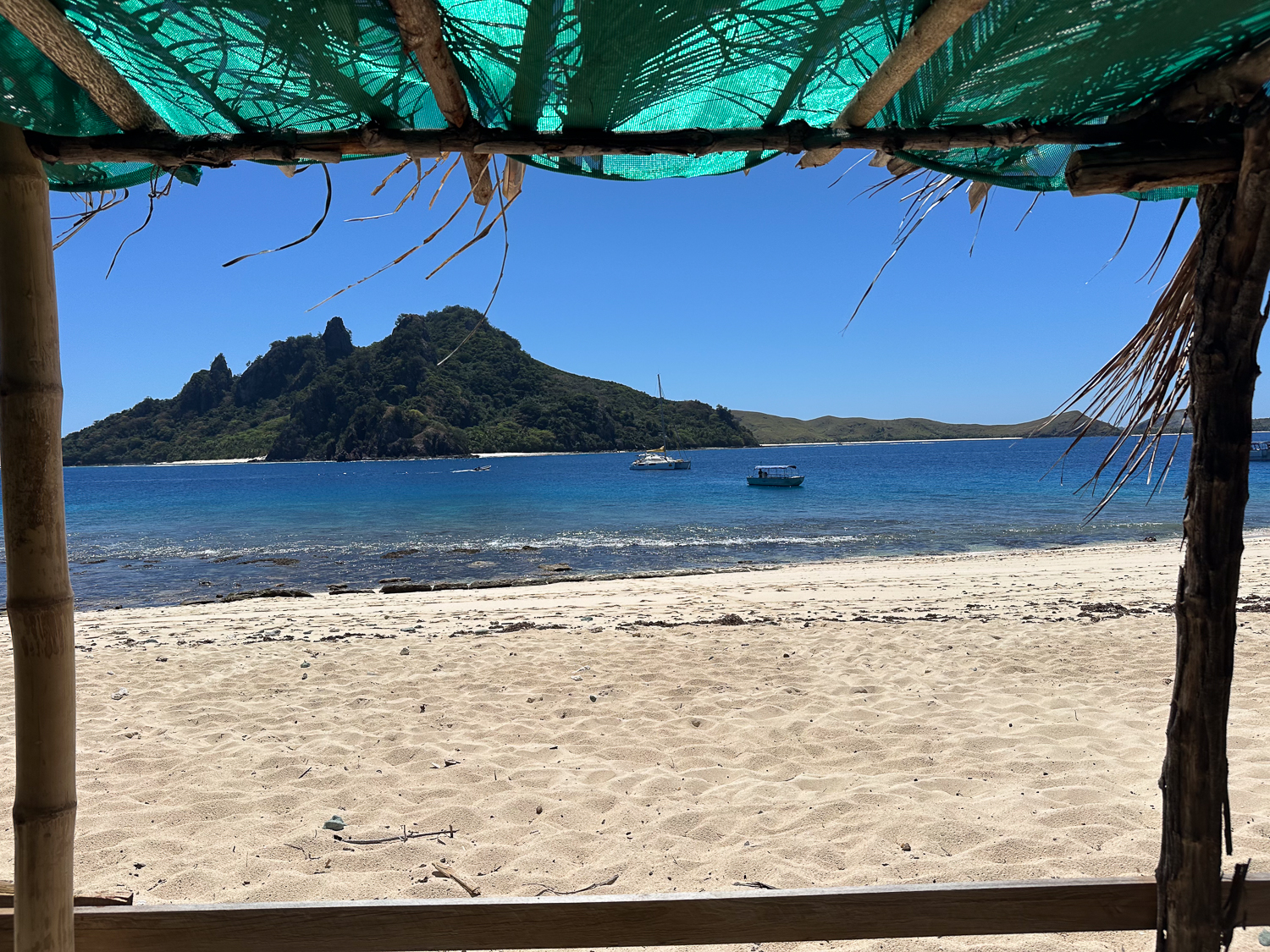
The next day we motored to Monuriki Island. We anchored in a stiff breeze and watched the surf crashing on the beach. As we watched, a tourist boat arrived and the passengers transferred to a local boat (fibreglass with 70HP of course) managed by two locals. They expertly negotiated the surf by anchoring off the beach and then reversing in so that the bow always remained pointing into the waves. Of course we could have done the same but felt that it would be good (not to mention a lot safer) to support local enterprise. We hailed them over and negotiated $20 to take us all ashore and bring us back. We were also pleased when they accepted our story of having conducted sevusevu and paid our landing fees to Moses. Not a conman after all.
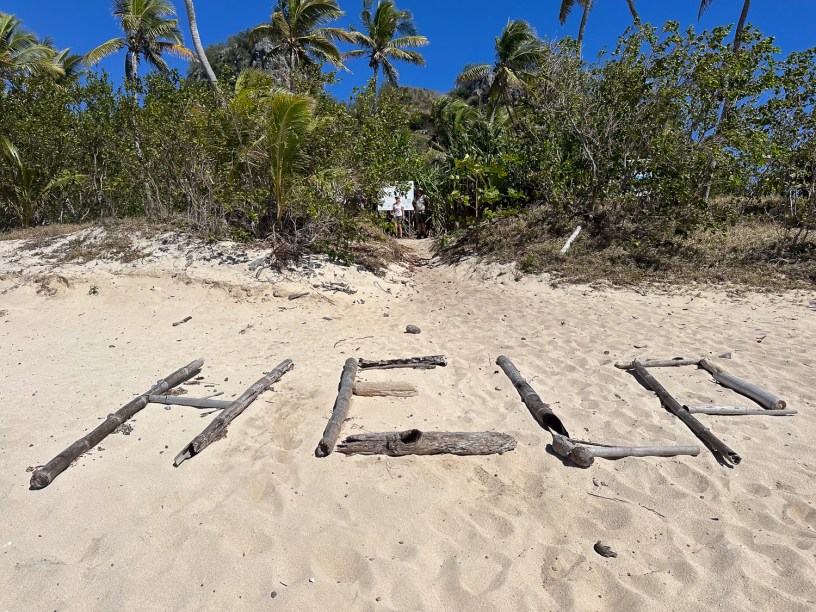
The island was beautiful with trails through the coconut palms and other vegetation and a steep track up to the lookout. We had watched the movie a few days earlier so that many of the sights were familiar – the lookout was home to the tree where Chuck contemplated suicide.
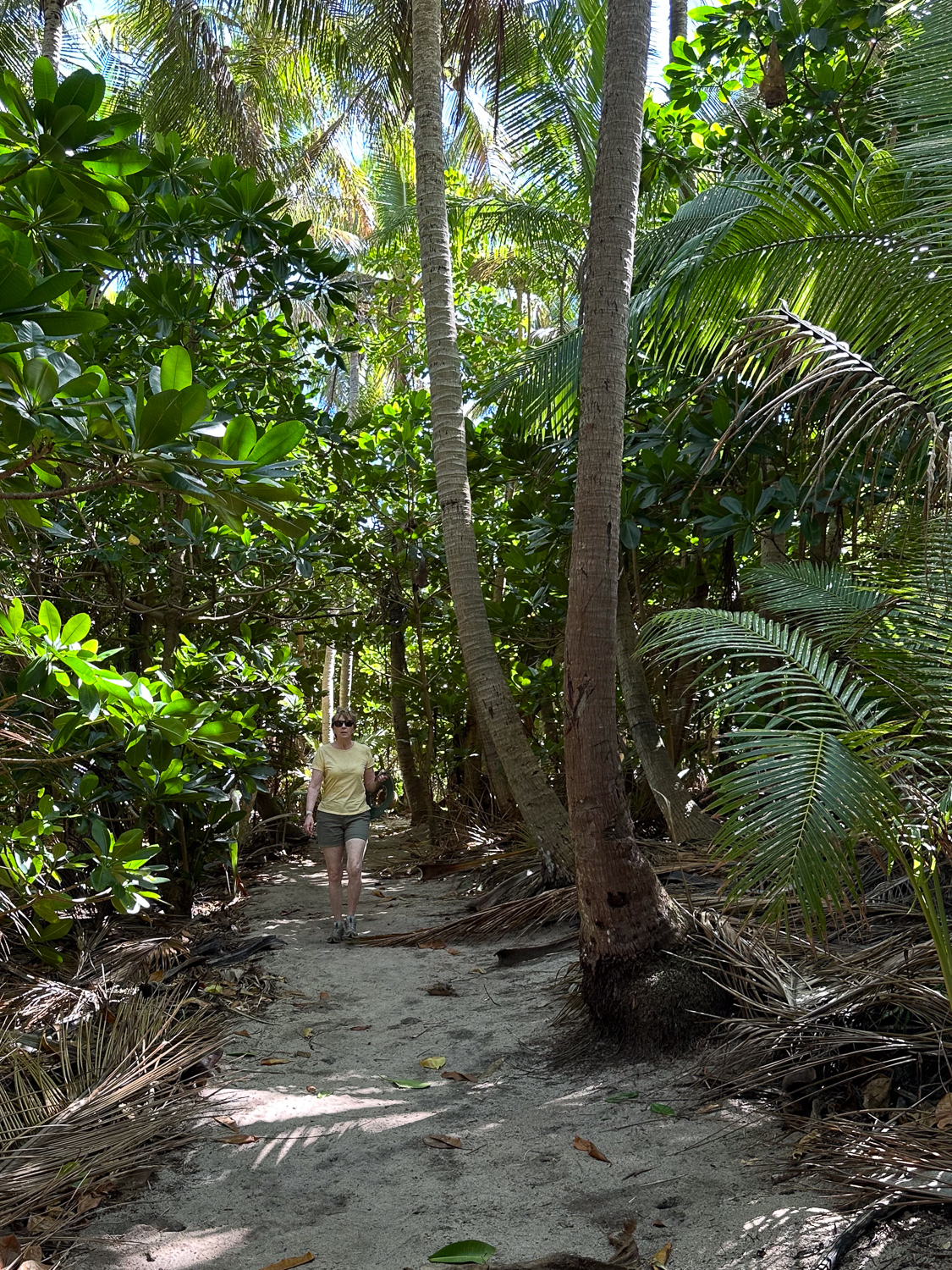
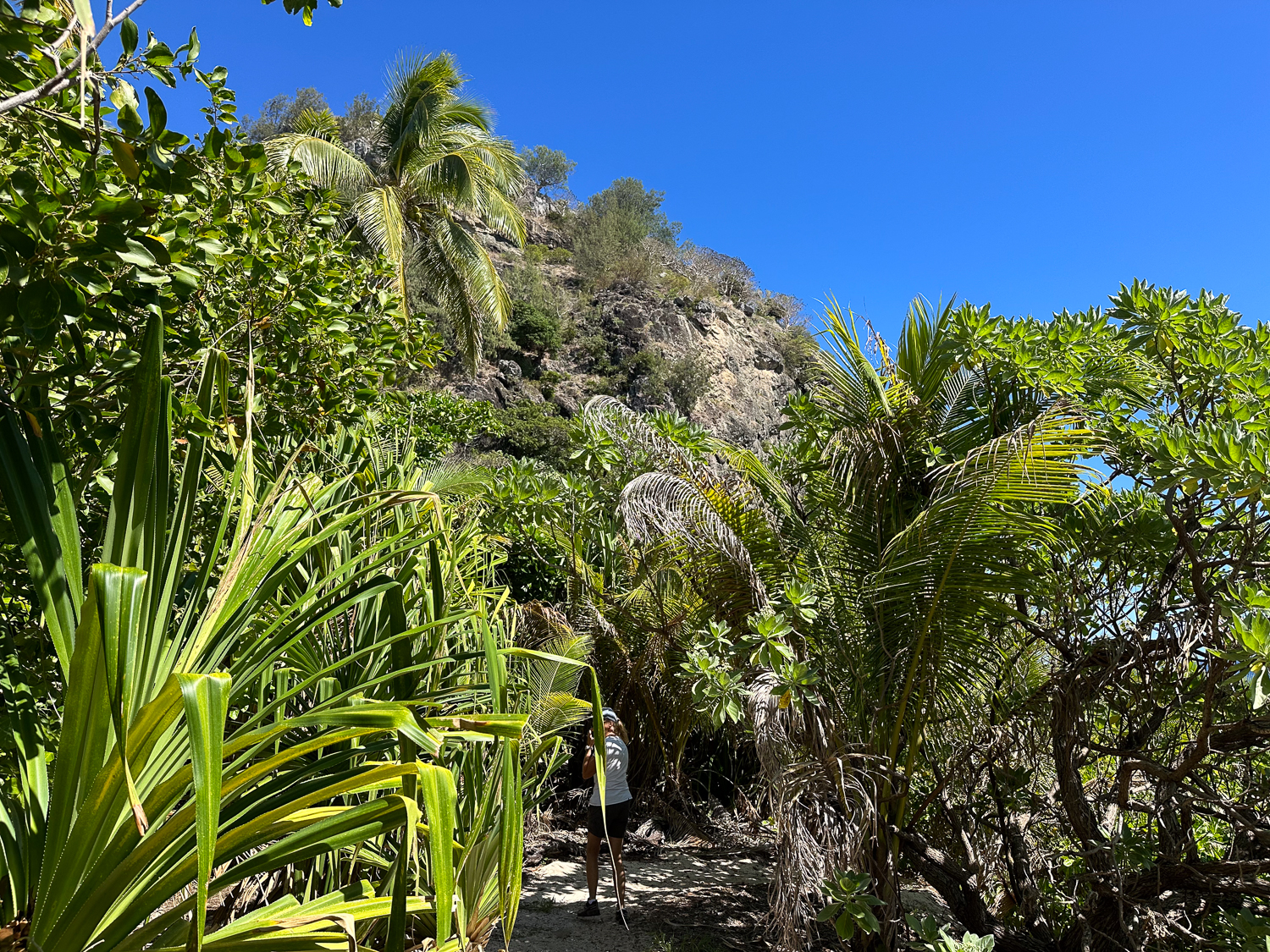


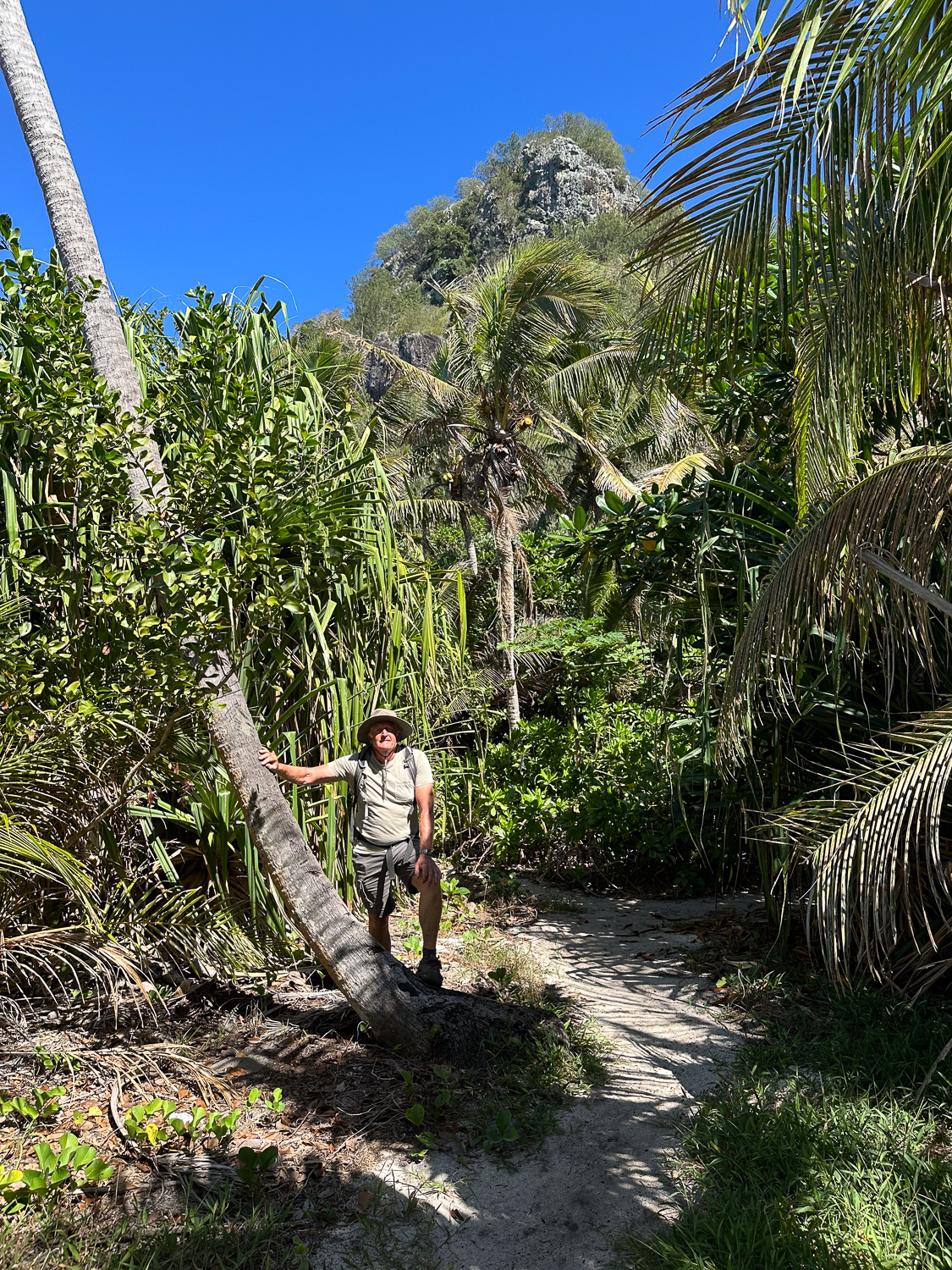
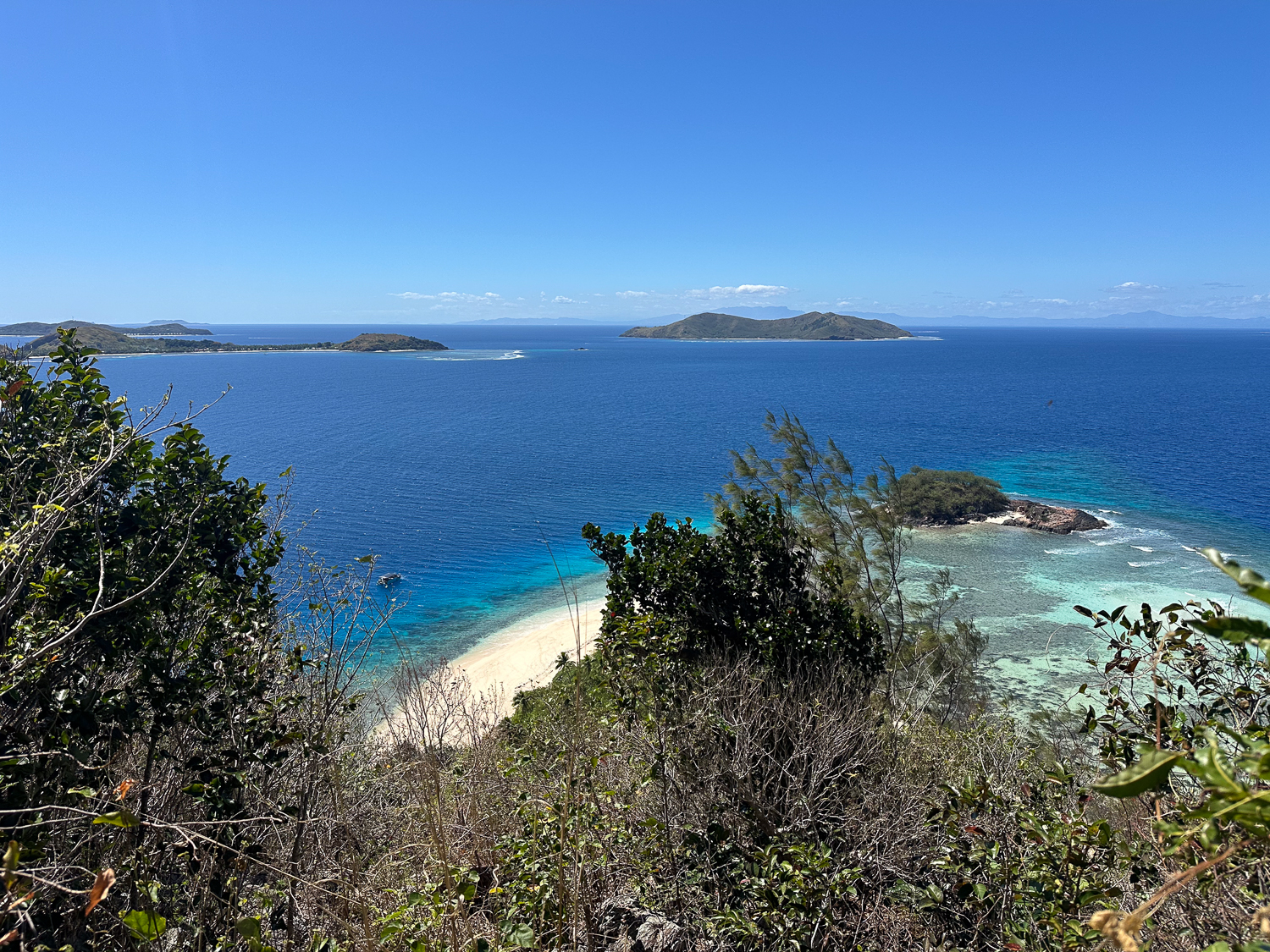
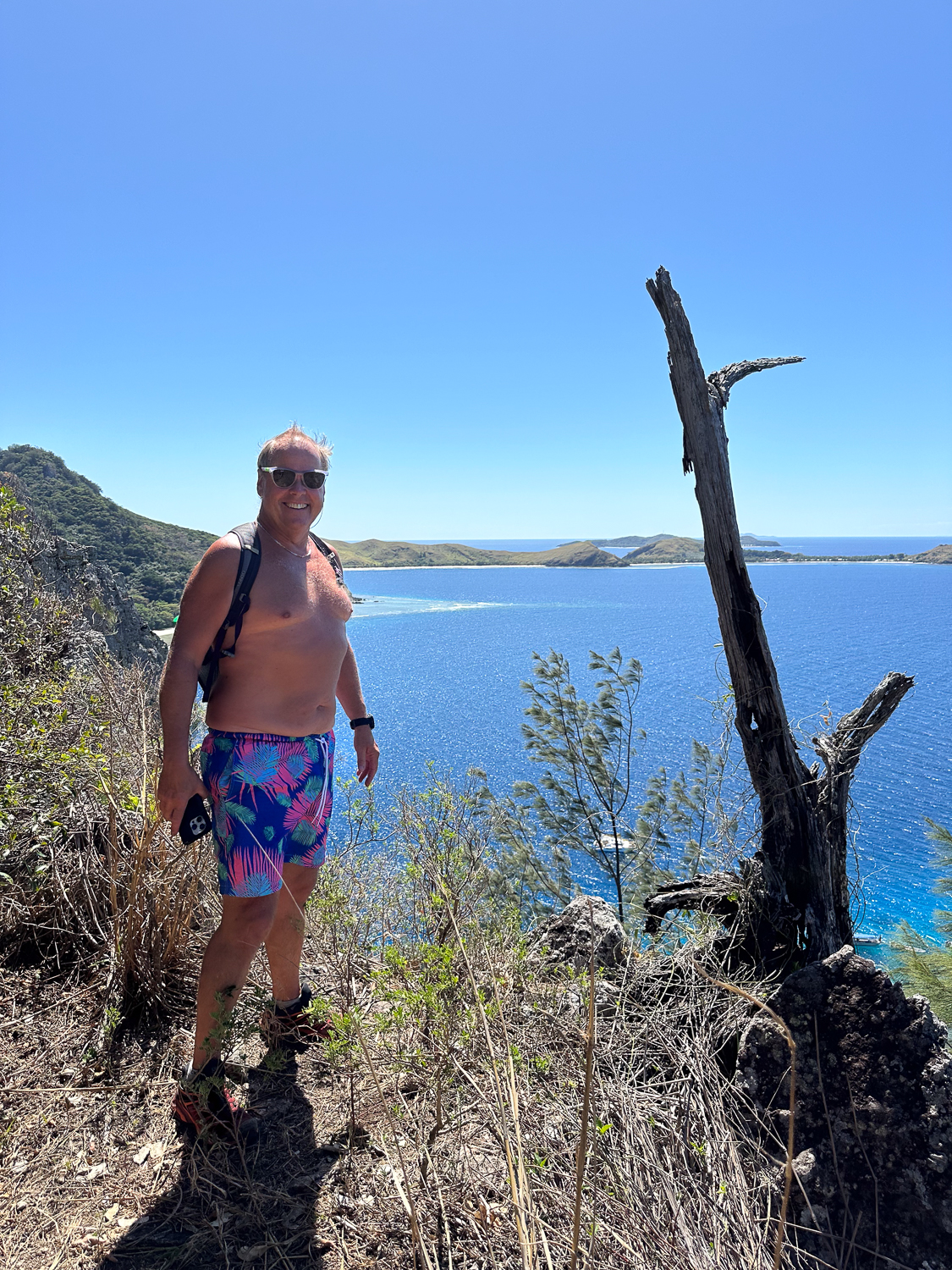

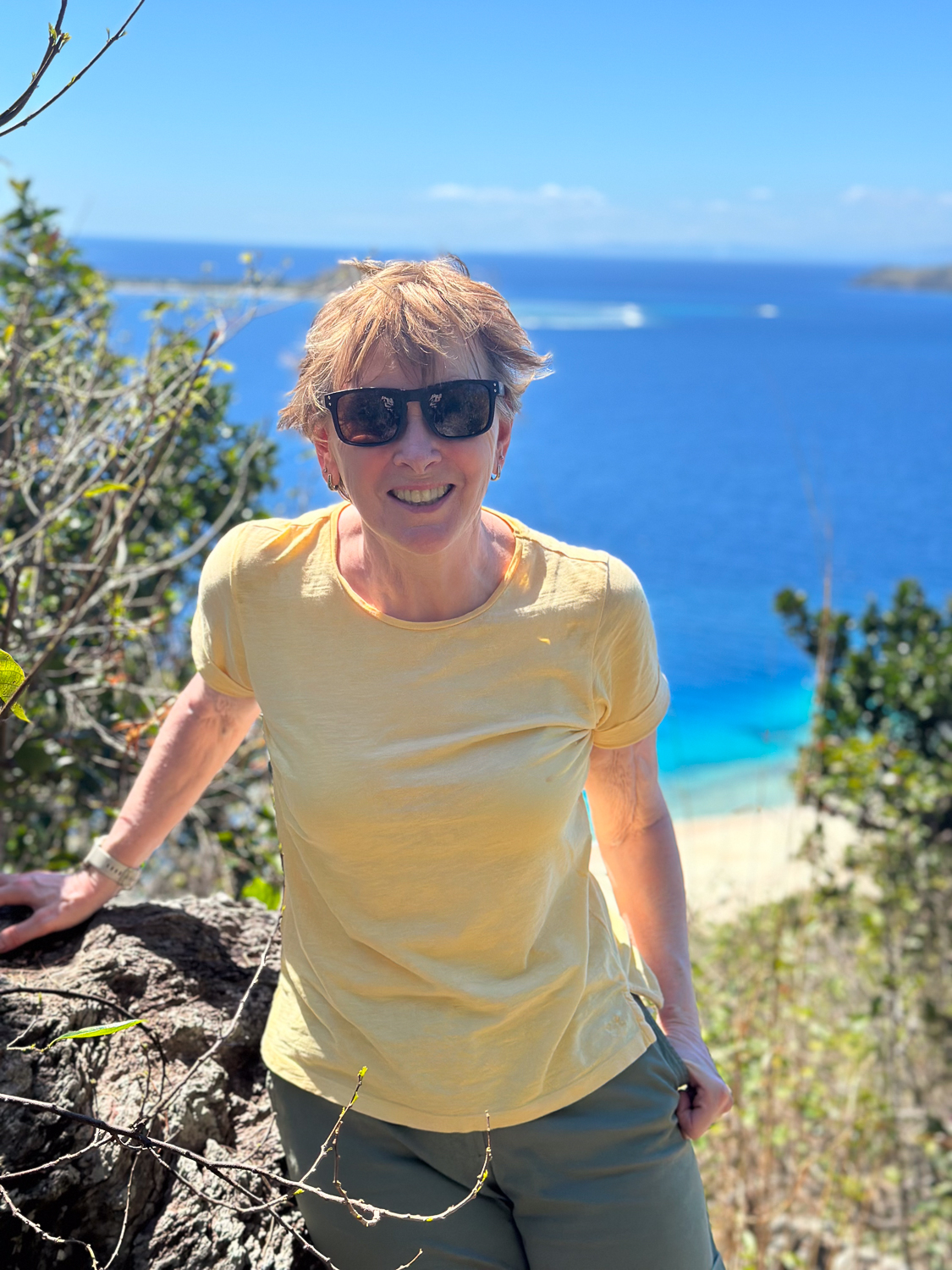


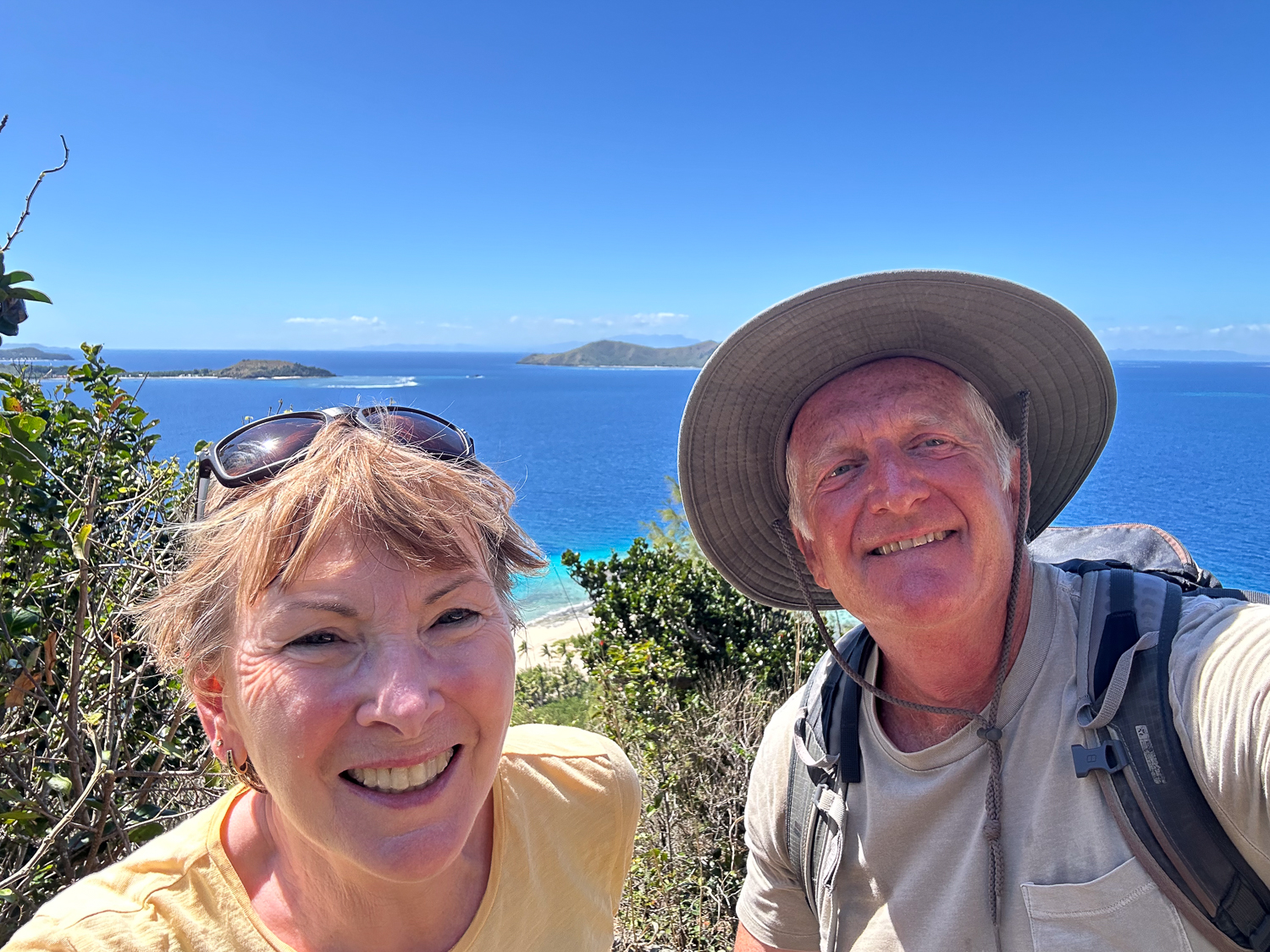
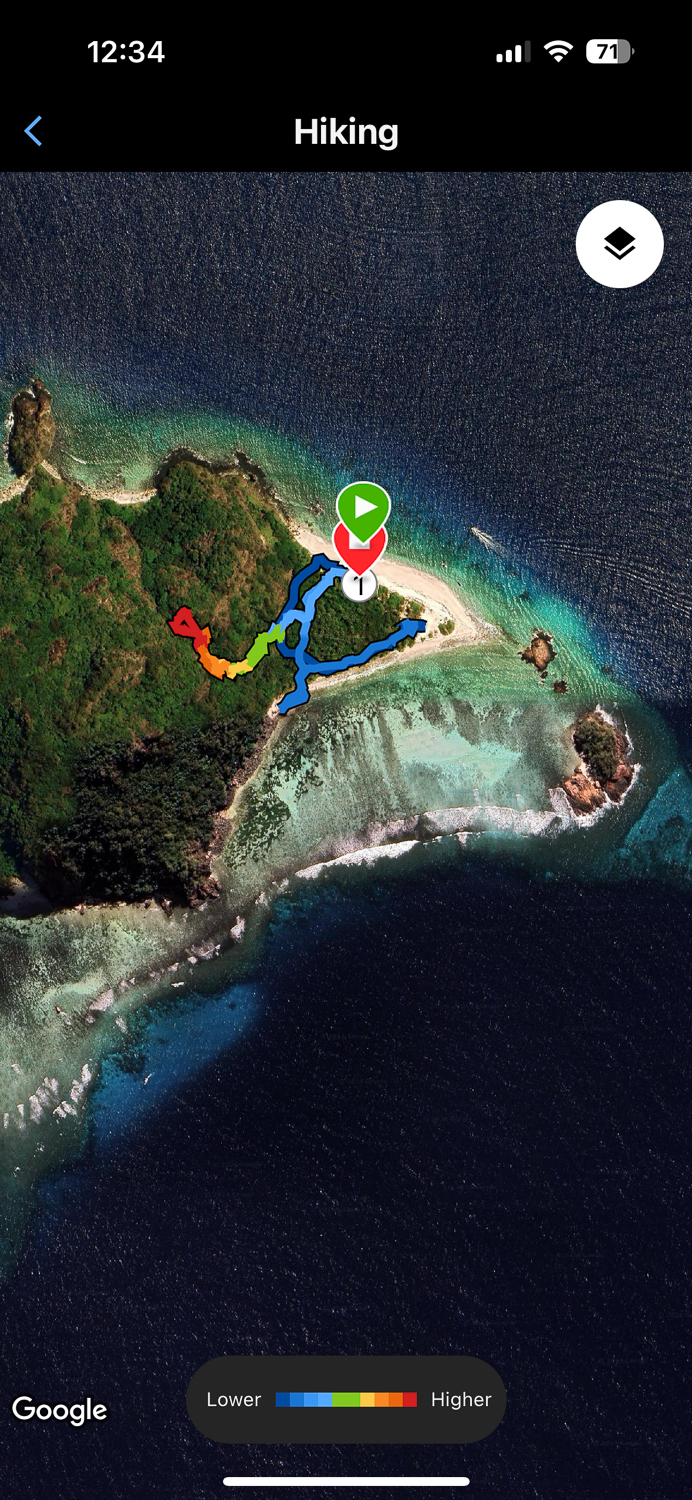
Sue and Nigel had got distracted taking photographs on the beach so Claire and Jonathan had gone ahead to the lookout. The couples managed not to see each other again until Sue and Nigel were returning down the track and met the others traversing the hillside, somewhat ‘off piste’! Somehow they had got lost coming down. It could have been worse. A week later we learned of another couple from one of the Island Cruising Rally group who had got lost on the same track late in the afternoon and had been forced to spend the night on the island. Castaways on Castaway Island, you couldn’t make it up!
Our beach taxi service was waiting to take us back to the boat. They departed as soon as they had dropped us off so clearly they had been waiting just for us. It was $20 well spent. We would have really struggled to have got the dinghy through the surf.

Once back on Taihoa, we enjoyed a great sail with more tacking than we were accustomed to. At some point we slowed down to make some sail adjustments and forgot that we had fishing lines out. That resulted in lines around the props and an unexpected snorkel experience for Nigel to untangle the mess and retrieve one of the lures.
The night was spent anchored off Tropica Island Resort, Malolo Island. We had a few close encounters with the surrounding coral reef and even had to relocate when a wind shift swung us dangerously close to yet more coral on the other side of the inlet. The situation was very obvious in bright sunlight the next morning but not so clear in the fading afternoon light on arrival. A good reason for getting to an anchorage by mid afternoon at the latest.
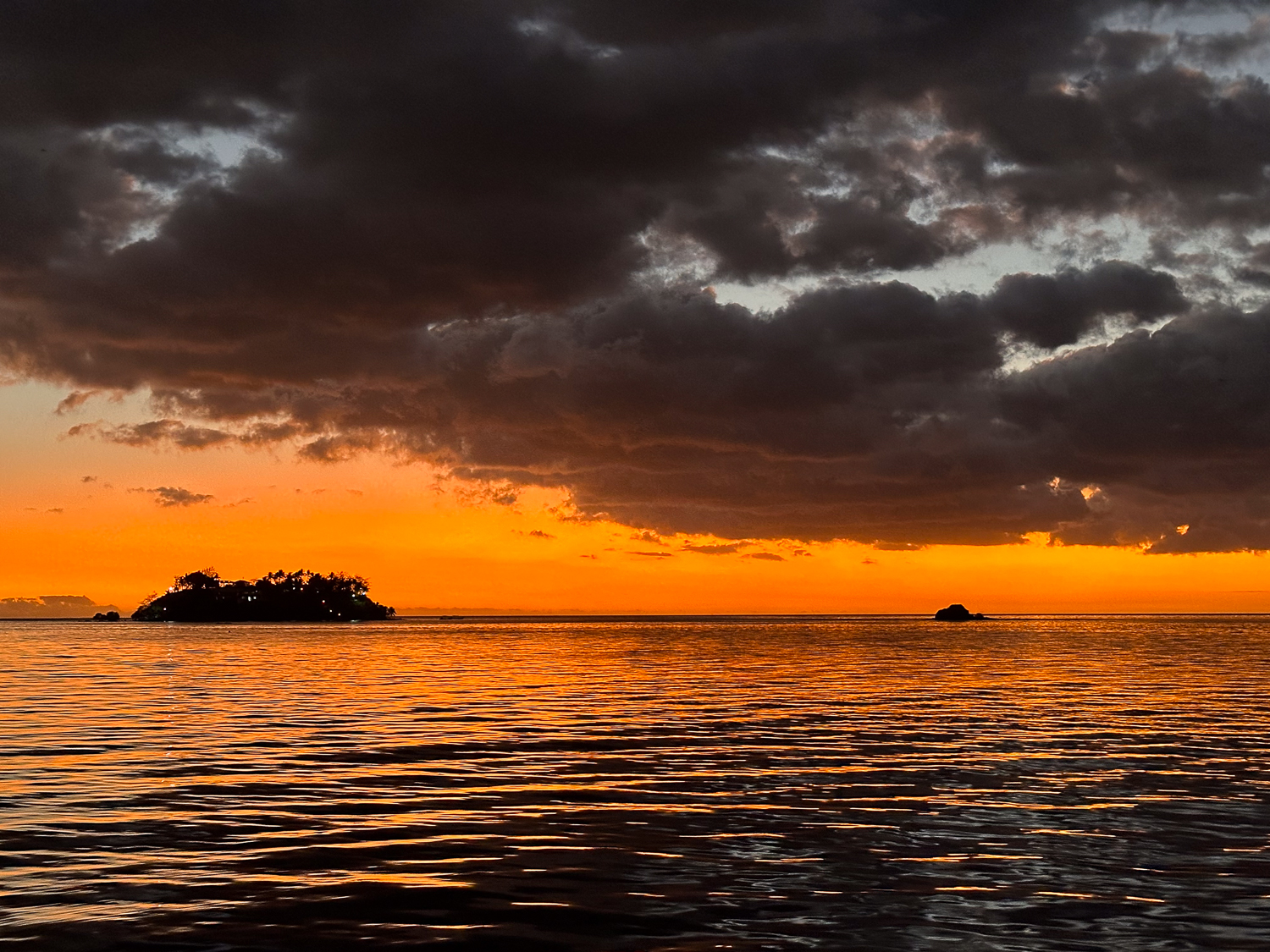

We had chosen the Mololo Island anchorage so that we would have a short trip into our next destination, Musket Cove. This incredibly popular anchorage with a cruiser friendly resort is only a short sail from Denarau. We were there for a conference related to our volunteer scientific work with the Citizens of the Sea group.
The plan was to remain at anchor for the duration of the conference but after three attempts to anchor, each of which left us too close to other boats (for our comfort) or in the path of the fast ferry, we opted to take a spot in the Musket Cove Marina.
Sue took us in. We had anticipated a fairly standard berth arrangement with lines to a pier on one side of the boat. As we approached, it was obvious that this was not the case. In a very narrow channel, we discovered that we were to moor ‘Mediterranean style’ (drop the anchor and manoeuvre the boat in reverse towards the pier, maintaining good tension on the anchor as it is paid out. The stern lines are then secured to the dock and the lines and anchor chain adjusted until the boat is perfectly positioned). A moment of consternation then, as rapid consideration to the change of approach was given.
No problem. Sue at the helm, Jonathan on the anchor and Nigel and Claire on stern lines and fenders. Even the old sea salt in the yacht beside us was impressed. Trying not to look too smug, we celebrated in the Musket Cove Island Bar. Phew!
Coral insights and citizen scientists
The Citizens of the Sea group links scientists with ocean cruisers. Sailors, like us, are equipped to collect environmental DNA (eDNA) and send rich data more cost effectively than has ever been possible. Scientists can then analyse the data to provide insights into climate-related changes and the shifting patterns of life in our oceans.
Erin Bomati was instrumental in linking the group with the Island Cruising rally. We first met her in Taurikura when she came on board Taihoa to show us how to use the ‘torpedo’, the sample collecting device that we tow behind us for a few minutes each day while on passage. We met her and husband Bruno when we arrived at Nawi Marina many weeks ago and handed over our samples from the passage to Fiji. It was great to catch up again at Musket Cove. Erin had helped put together a two day mini conference for the 25 yachts involved in this first full scale trial of the sampling process.
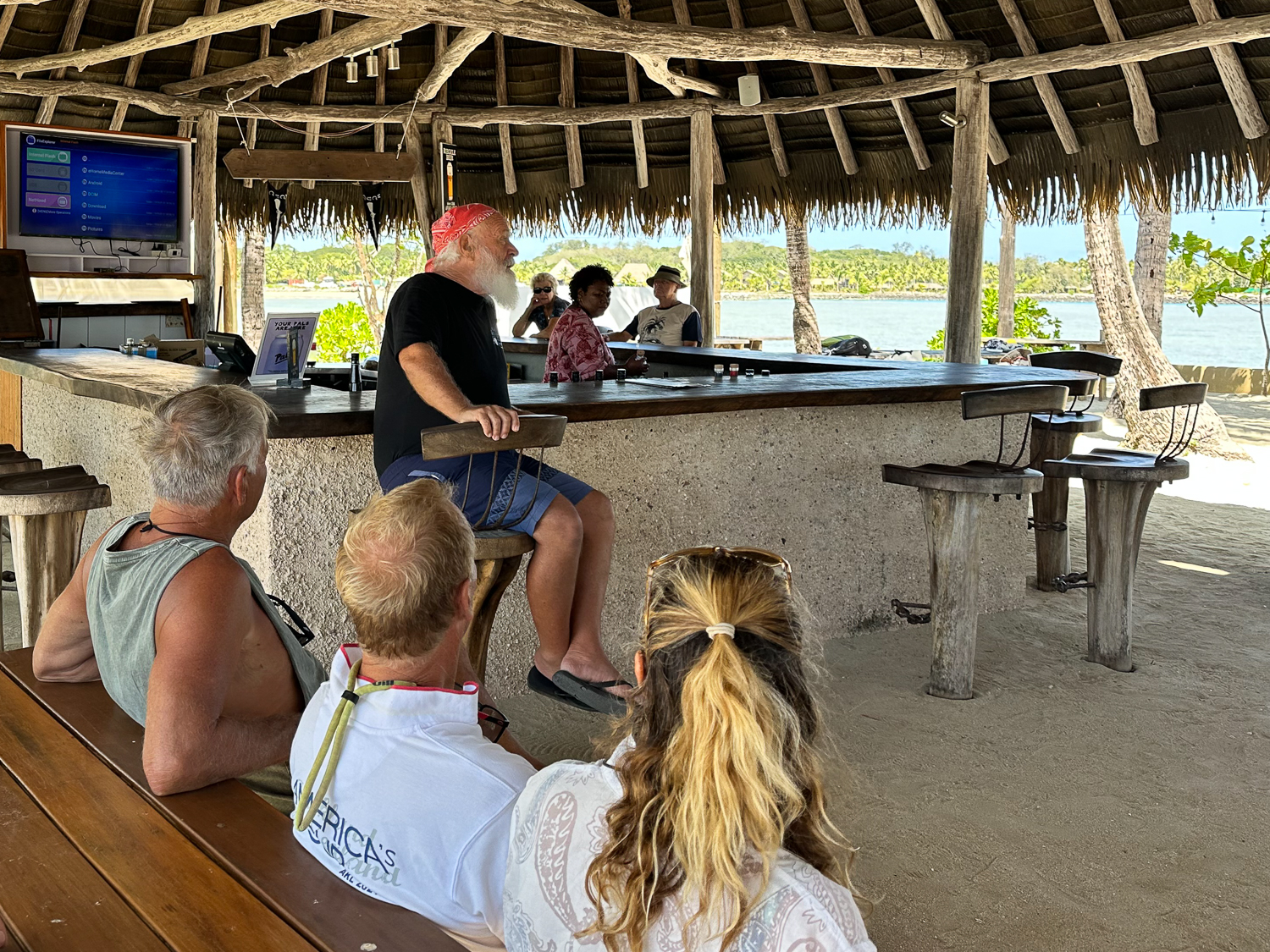
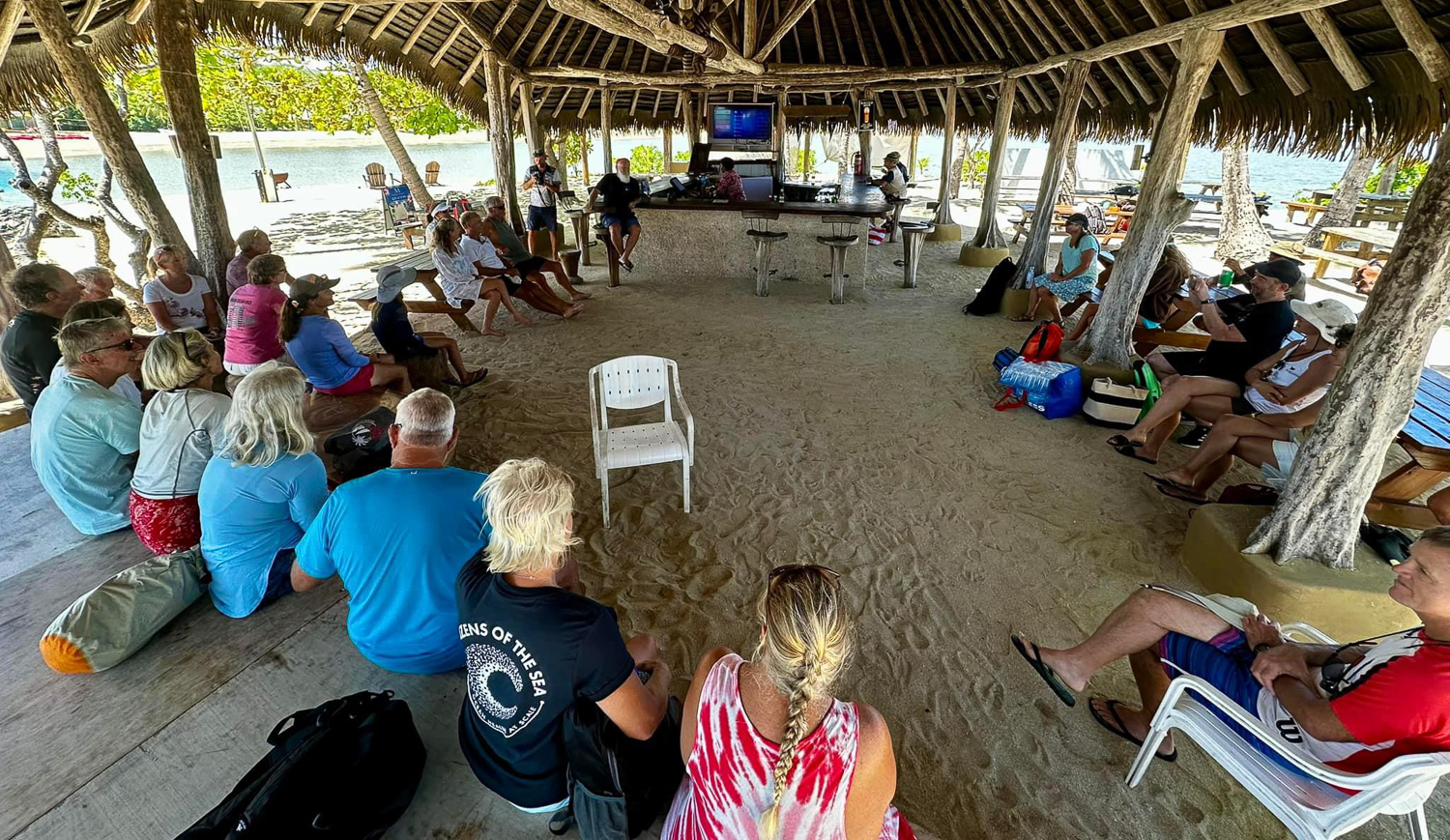
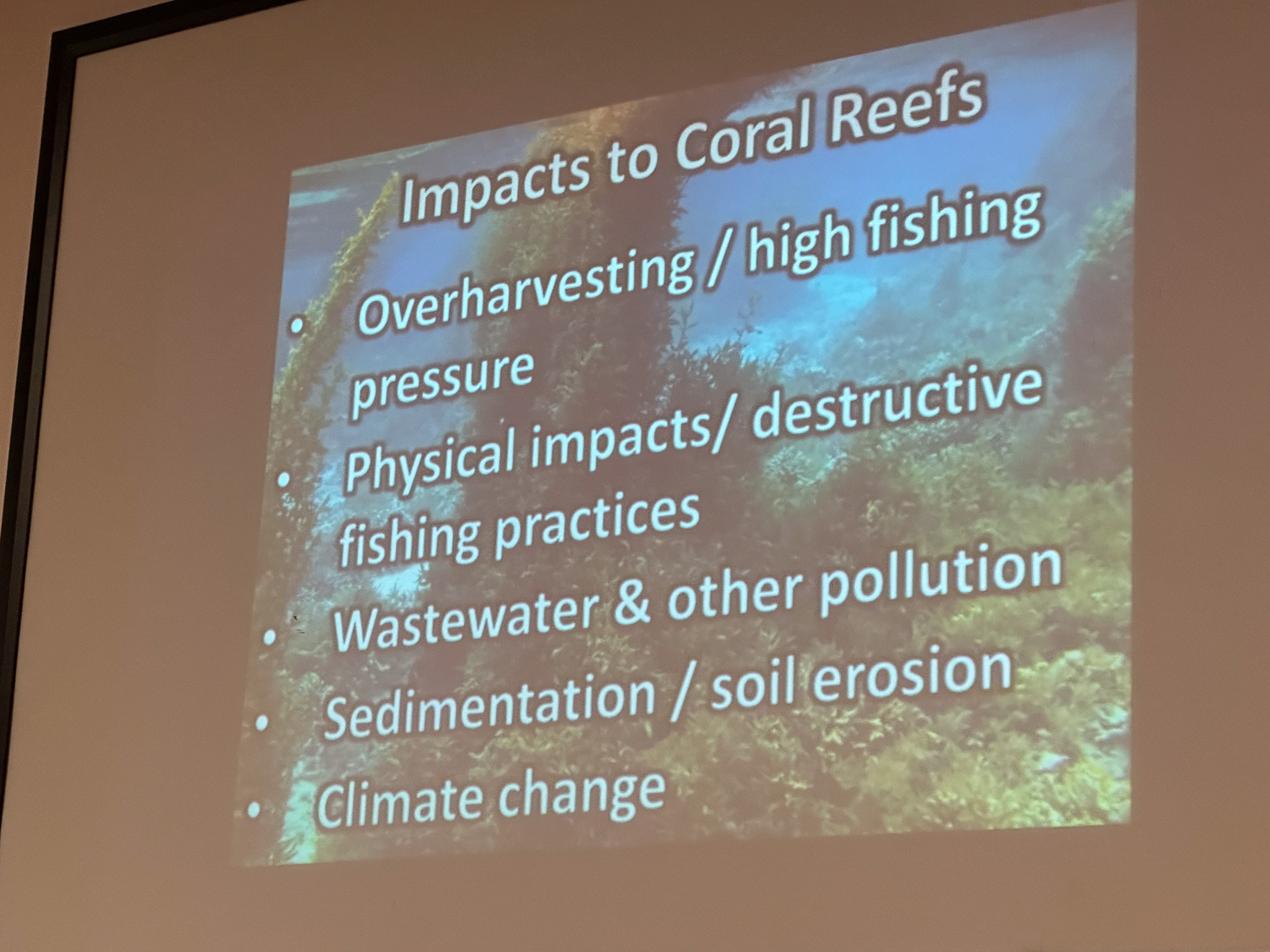
Our first day was spent learning about the issues facing coral as (among other challenges) global temperatures rise. Local scientist, Dr Austin, talked to us about the work he is doing in Fiji to try and protect the precious coral reefs, not just from global warming but also from human interaction.
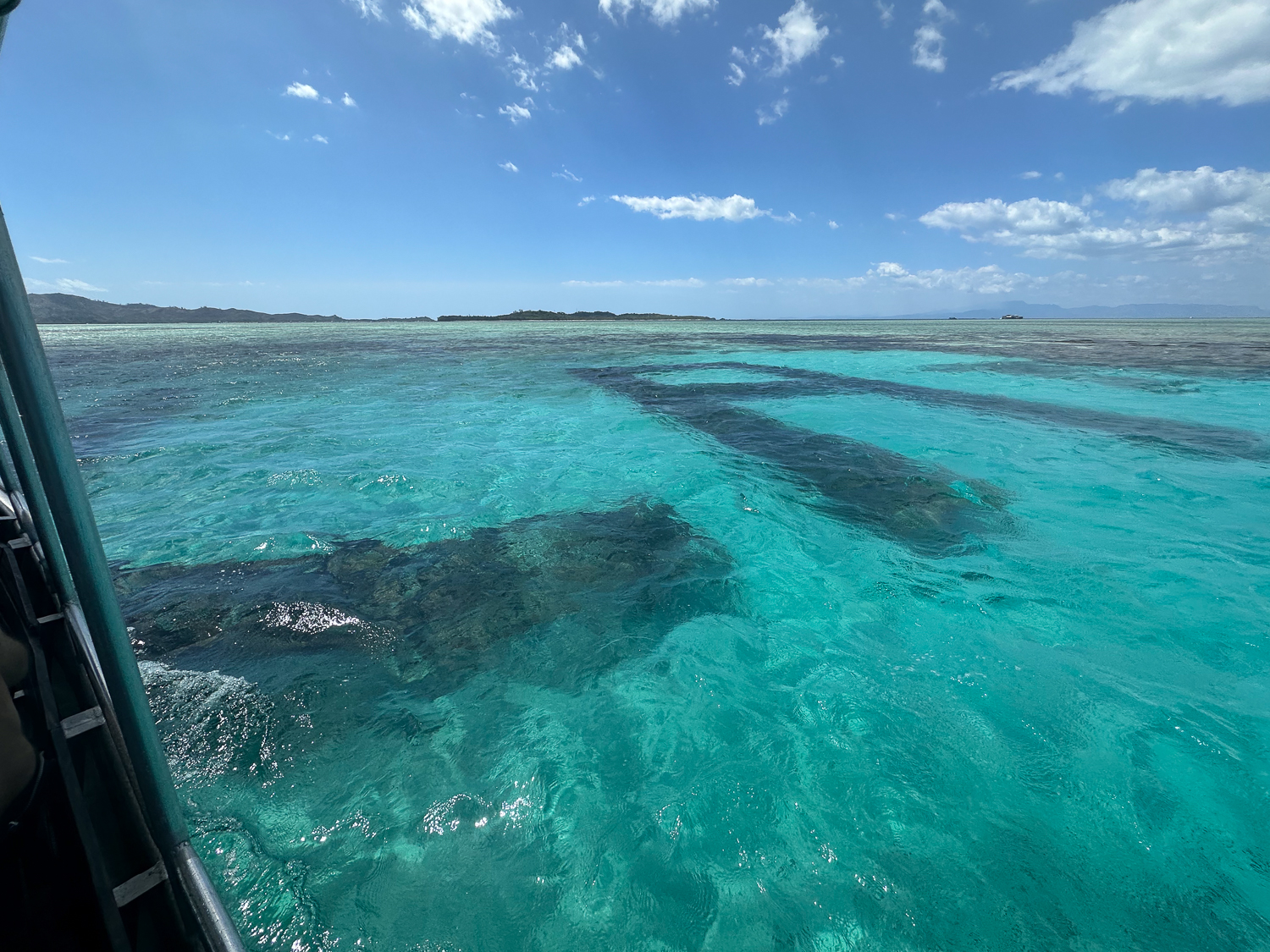
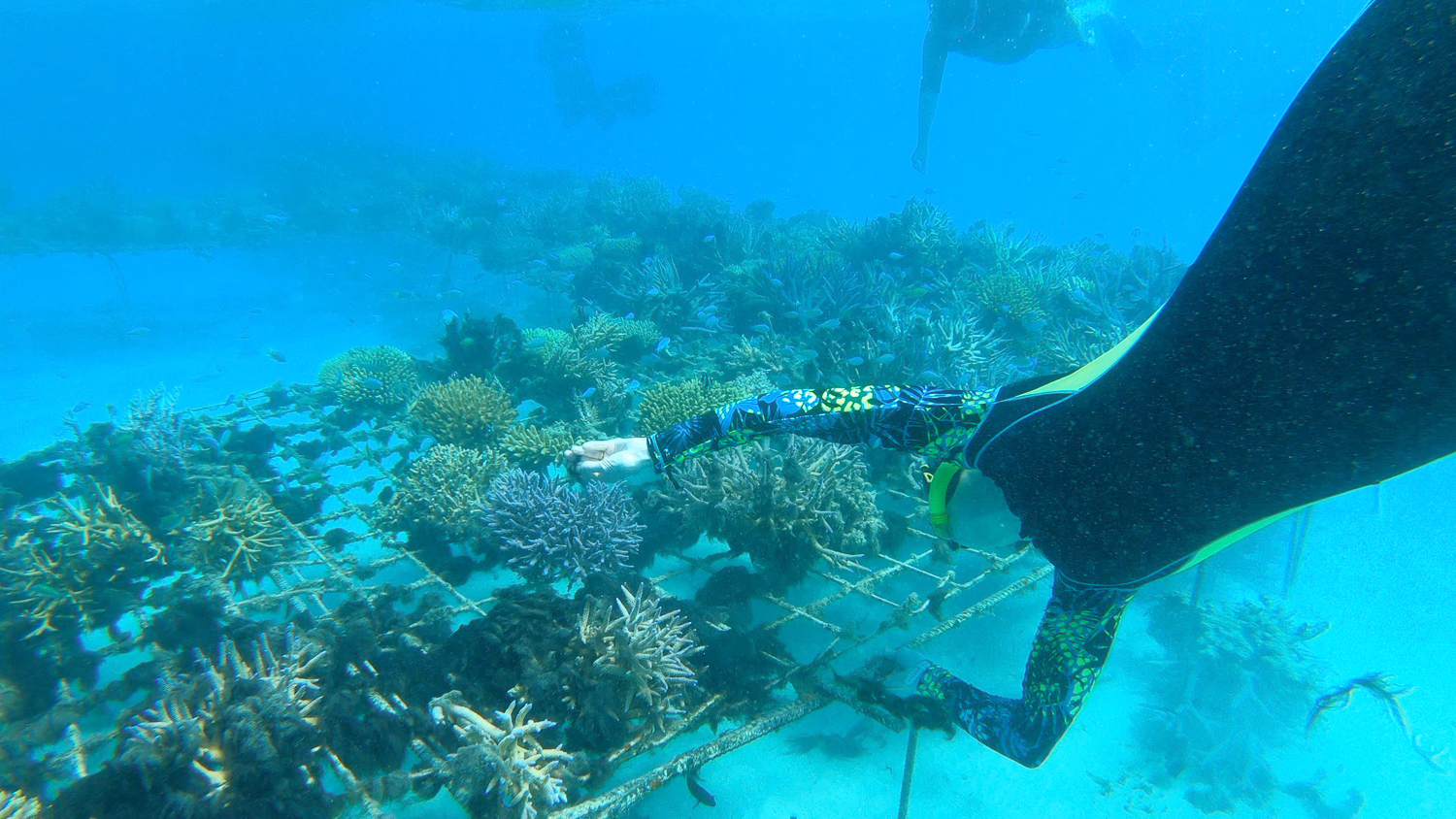
We took a boat trip out to a coral nursery that he has established and snorkelled around the steel frames and ropes used to grow specimens that have been found to be heat tolerant. It seems that some species of coral have begun to produce genetic mutations that mean they are better adapted to heat than others (even within the same species). They have been able to select out the corals which express these genetic markers within several species and are attempting to grow them on these artificial ‘reefs’ for later transplantation to areas that have been bleached or damaged by storms etc. The ‘reef’ has been constructed to spell out BULA – we couldn’t quite capture that on camera.


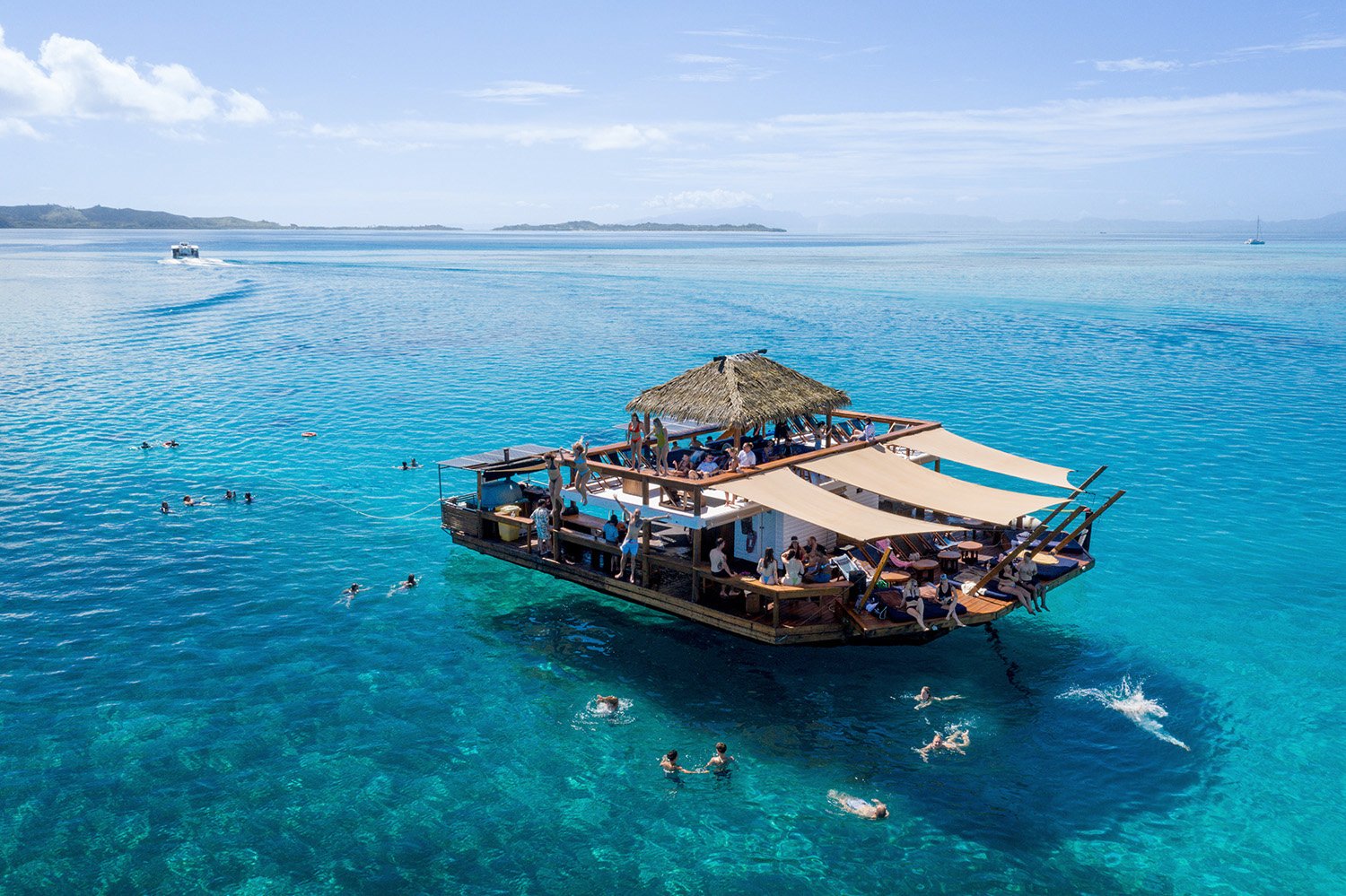
The only disappointment from the day was that the blustery conditions meant we were unable to go to Cloud Nine, the floating bar and pizzeria originally earmarked for lunch. This is what we missed:
Day two was spent indoors listening to the scientists’ initial analysis of the data the earliest boats had collected. Other presentations were made by Fijian government representatives, local dive operators involved in coral protection measures and those working on parallel projects within Citizens of the Sea. One is a photographic project (photogrammetry), creating 3D models of reefs in Tonga. A second, an ocean mapping project to which we are also contributing. For this we have installed a data logger which collects all the information that our boat detects – water temperature, depth (as long as it is less than 120m), GPS location and wind strength. We upload this every few weeks allowing a crowd sourced ocean mapping to take place.


It was wonderfully organised, fascinating and culminated in drinks, gorgeous ‘nibbles’ and pizza at the Island Bar. Perfect.

 Weather is lovely, wish you were here