7 – 27 September
More shark antics
We opted for a two day hop to get us back into the Yasawa group. The forecast was for strong southerlies overnight so we chose to stop once more at Vanua Levu where we knew we could anchor safely.
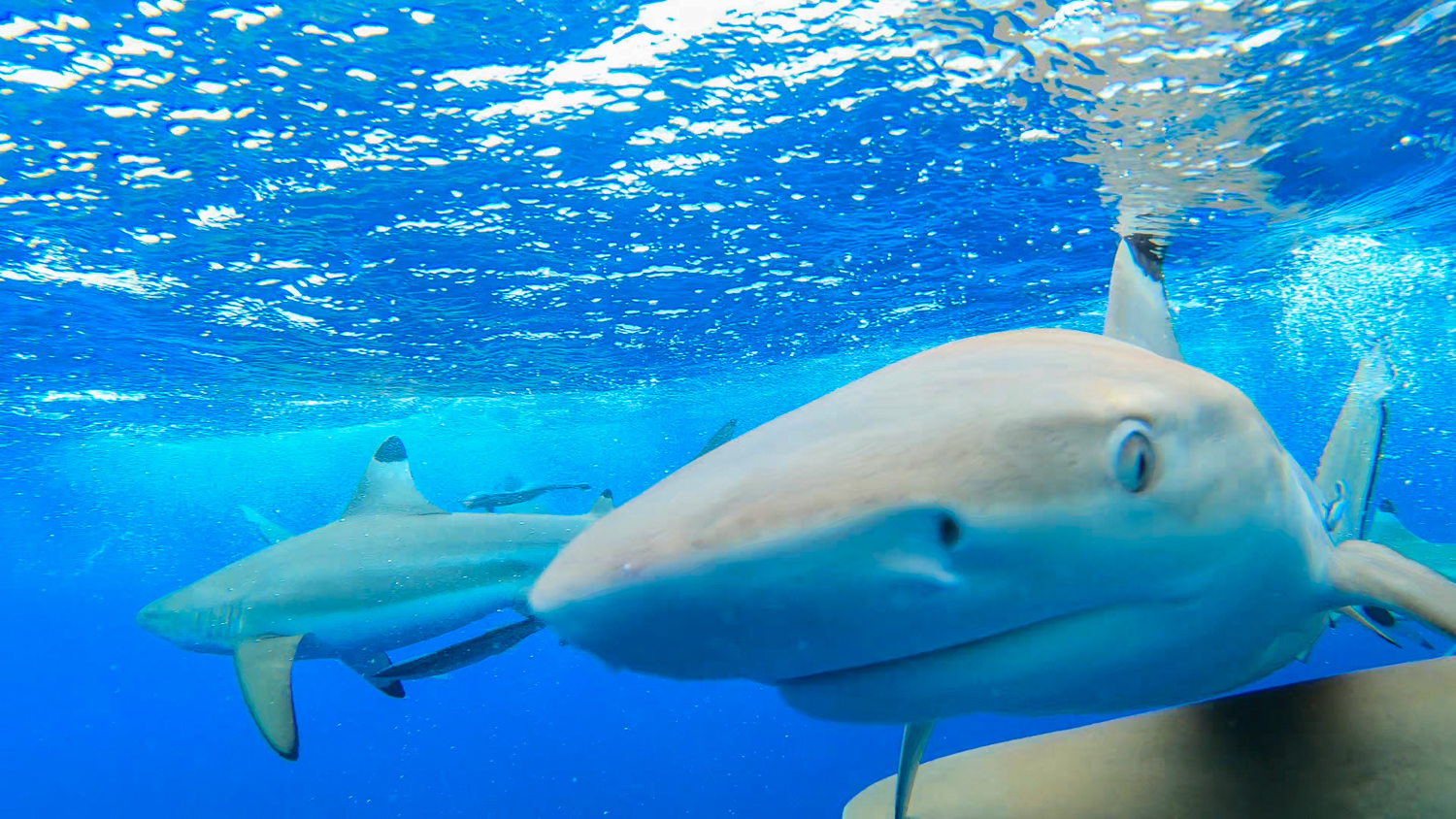
This was the ‘shark island’ and we had caught two ‘little tunny’ (or ‘false albacore’) en route – saving the filleting until we were in a position to feed the sharks.
On cue, our shark friends greeted us a soon as we entered the bay. Jonathan’s filleting activity seemed to attract more. It was soon a bit of a feeding frenzy. We managed to get lots of underwater video using the Go Pros but, not surprisingly, no one was keen to get into the water this time!

It was another wild night there with gusts of over 30 knots but again our extended anchor chain proved its worth.
Local food in Somosomo
We had a fast sail to Somosomo Village on Naviti Island, well into the Yasawa group. It was a great sheltered anchorage. Nigel and Jonathan went ashore the next morning to do sevusevu (sevusevu/somosomo; it all gets very confusing) and organised dinner for the next night with a local couple Va and Ben as recommended in the No Foreign Land app – it is proving to be very useful- and by Sue and Ron from Eudora who we had met at the Citizens of the Sea conference.
We attempted to BBQ roast a whole chicken that evening. It was the nearest we came to a cooking disaster on the whole trip. After 4 hours, the chicken was still not cooked. We gave up waiting and just had the (very tasty) salads. Maybe trying to use the oven and the BBQ at the same time had reduced the pressure, making both ineffective or maybe it was just too breezy.
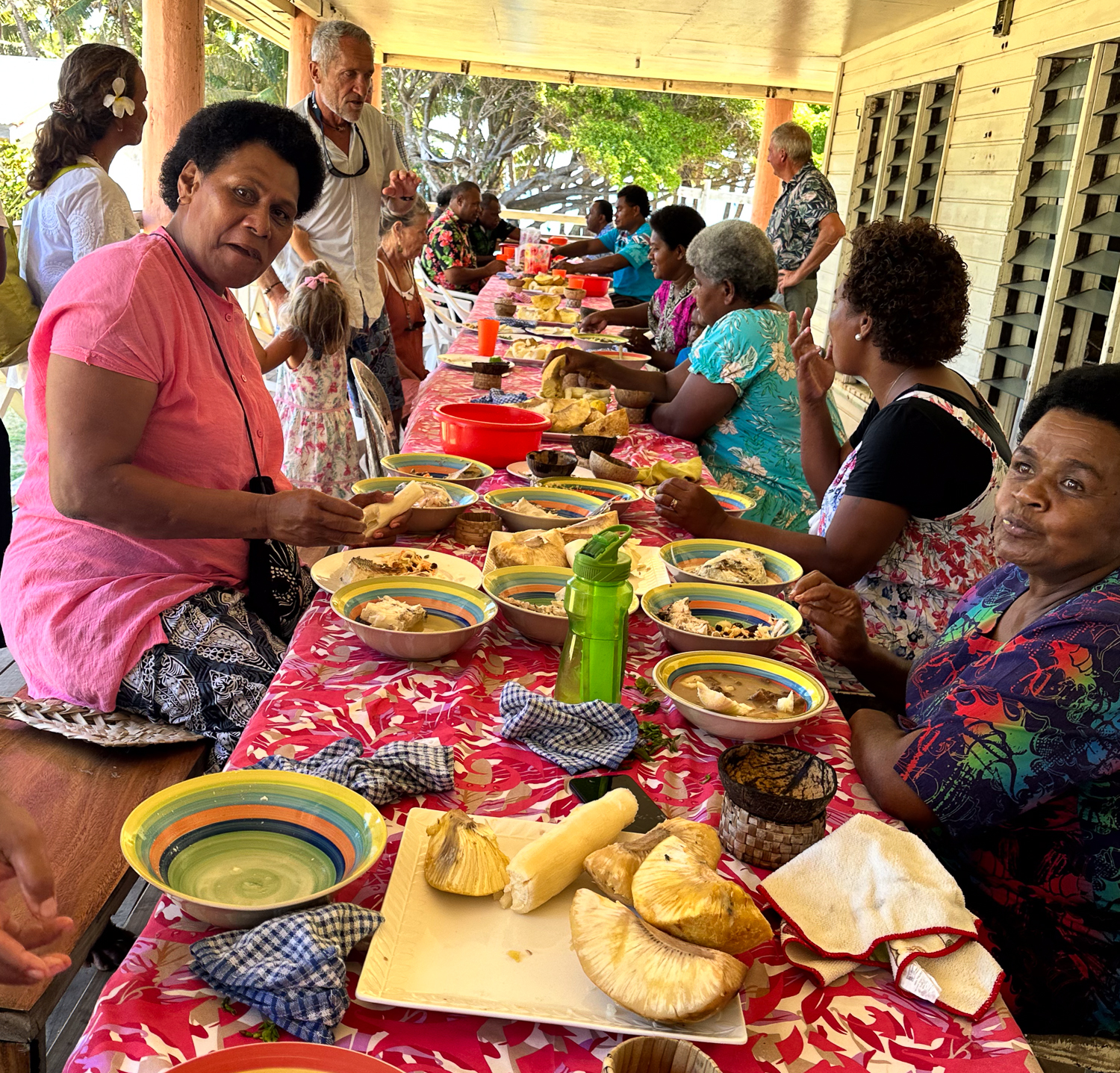
After a day spent snorkelling and cleaning hulls, we ventured ashore. A group of children welcomed us and led us to the beach front home of Va and Ben. It felt as though several families were involved in this venture. A number of women and even more children sat around a table that was laden with all kinds of local foods.


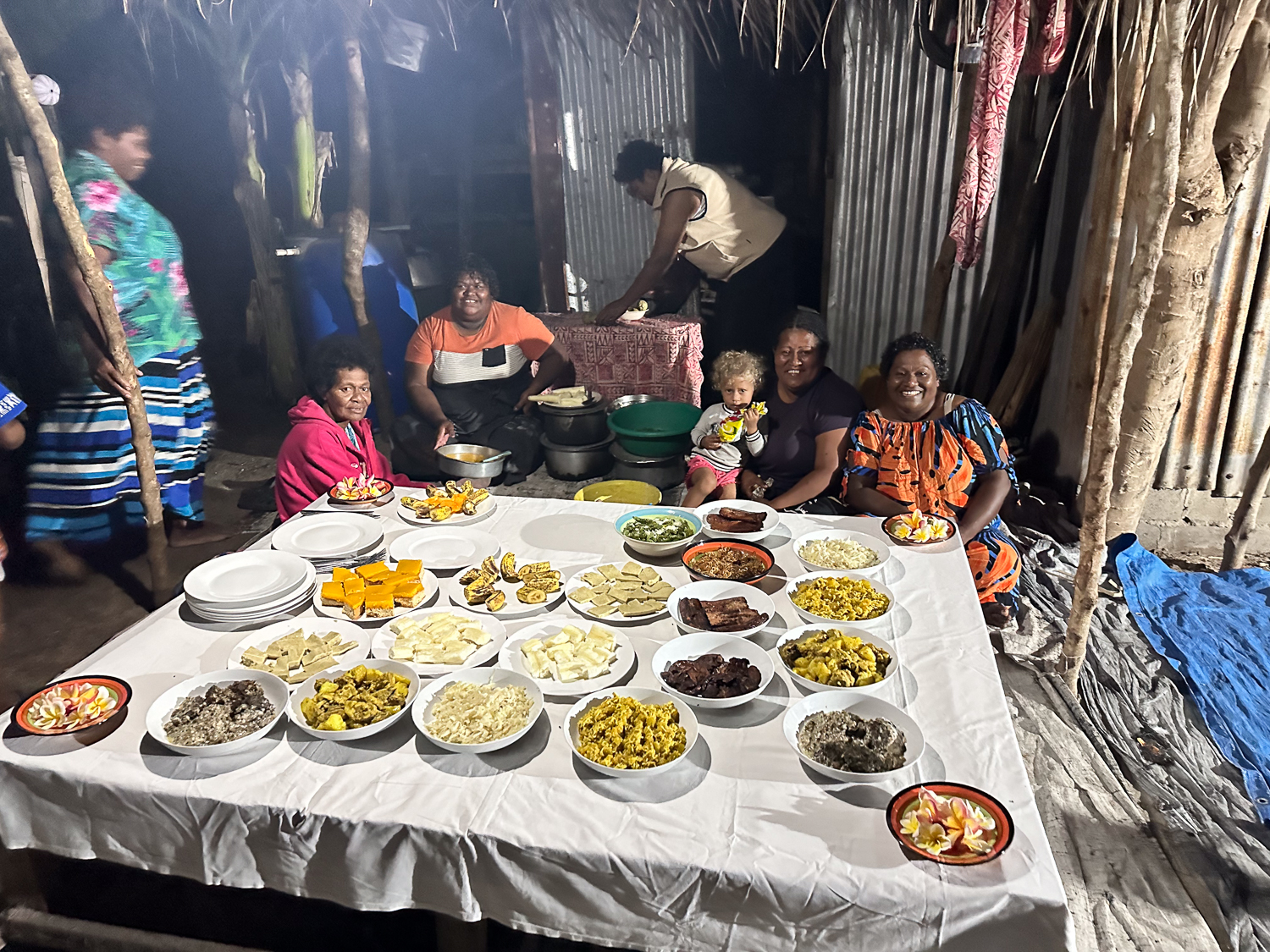
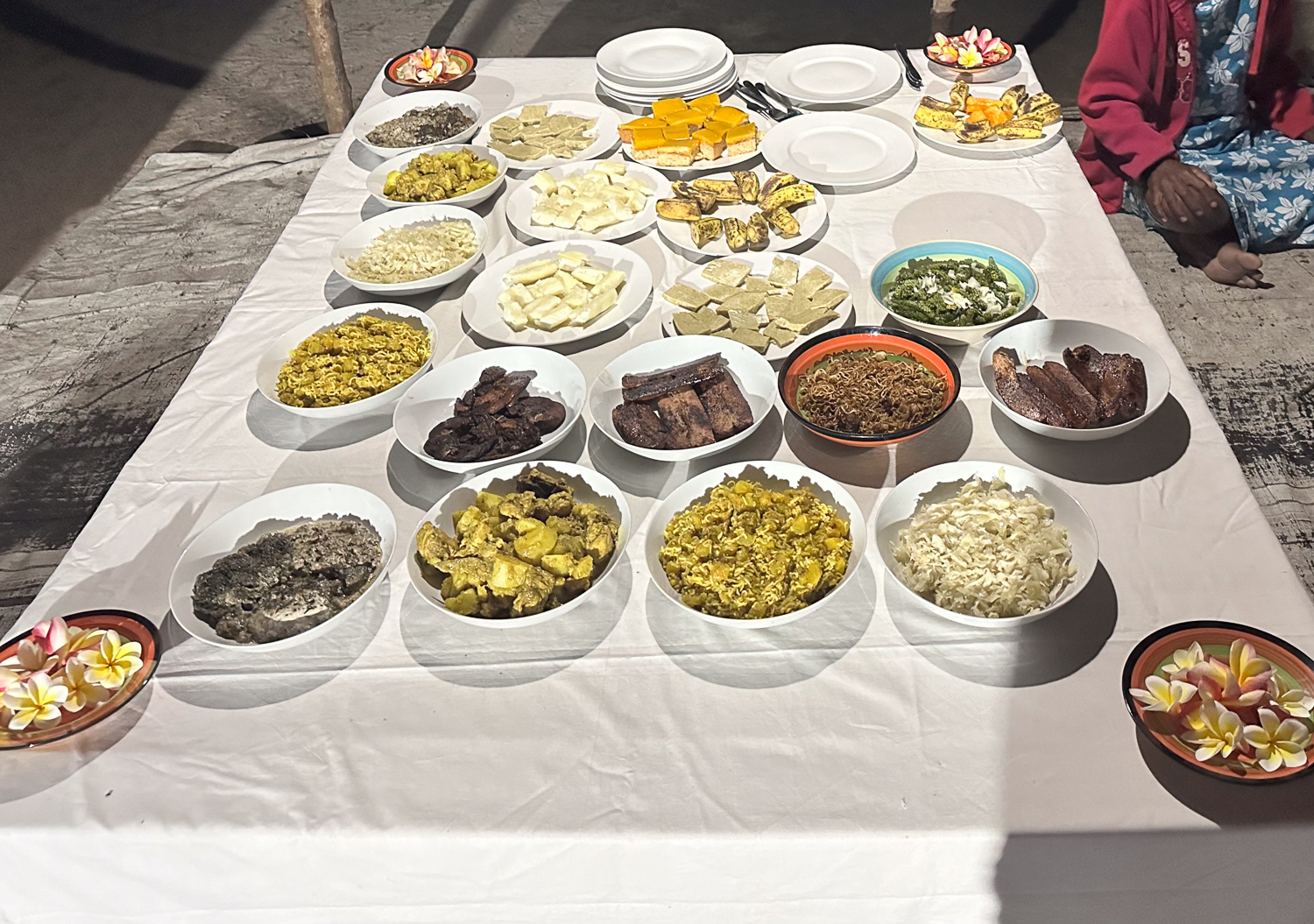
One local delicacy that we were keen to try was sea grapes. We had seen these being harvested from the reef near Nabukelevu ira Village (the rugby village on Kadavu) and were very pleased to be offered them as part of this meal – each of us declared them delicious.
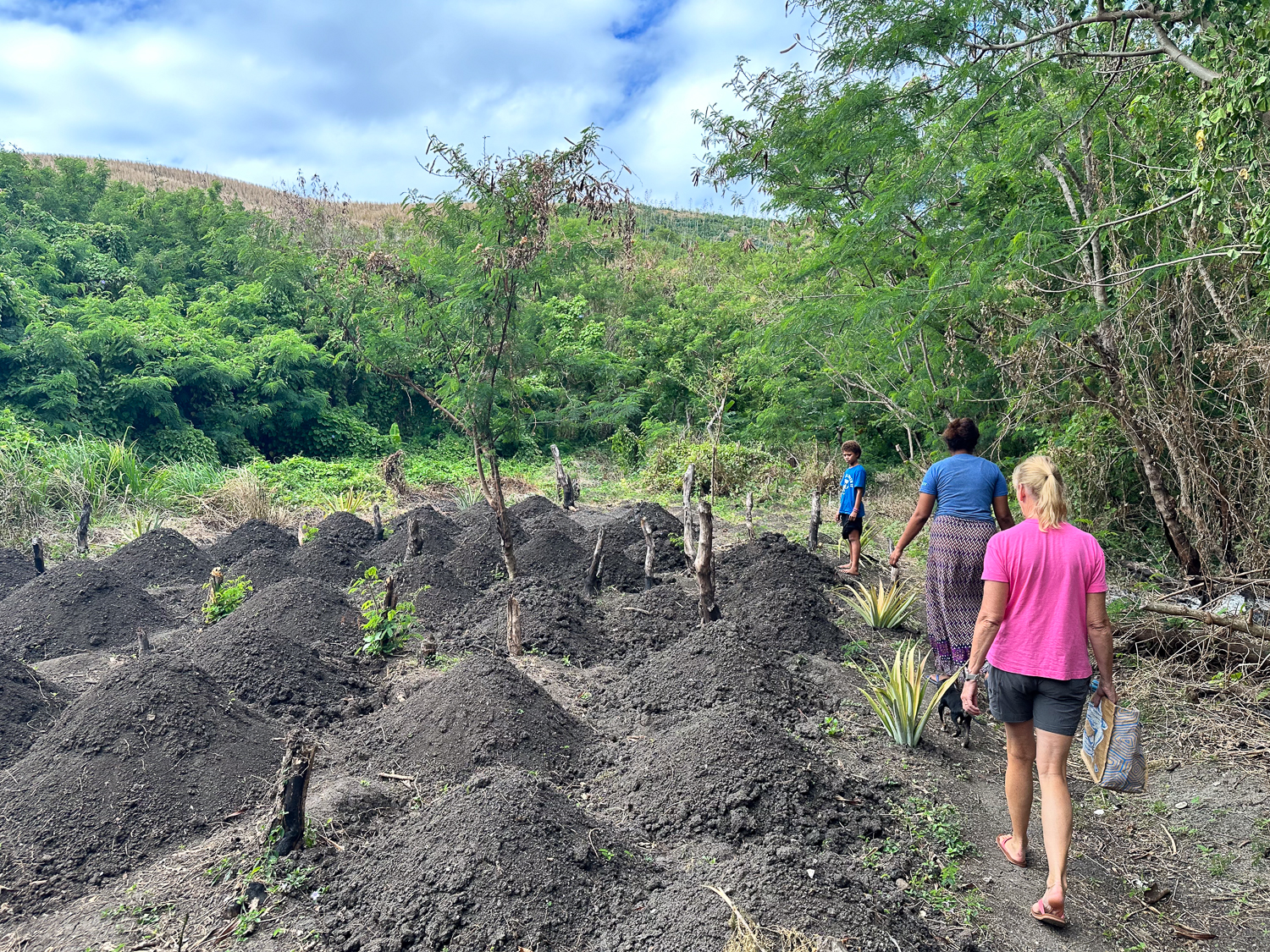
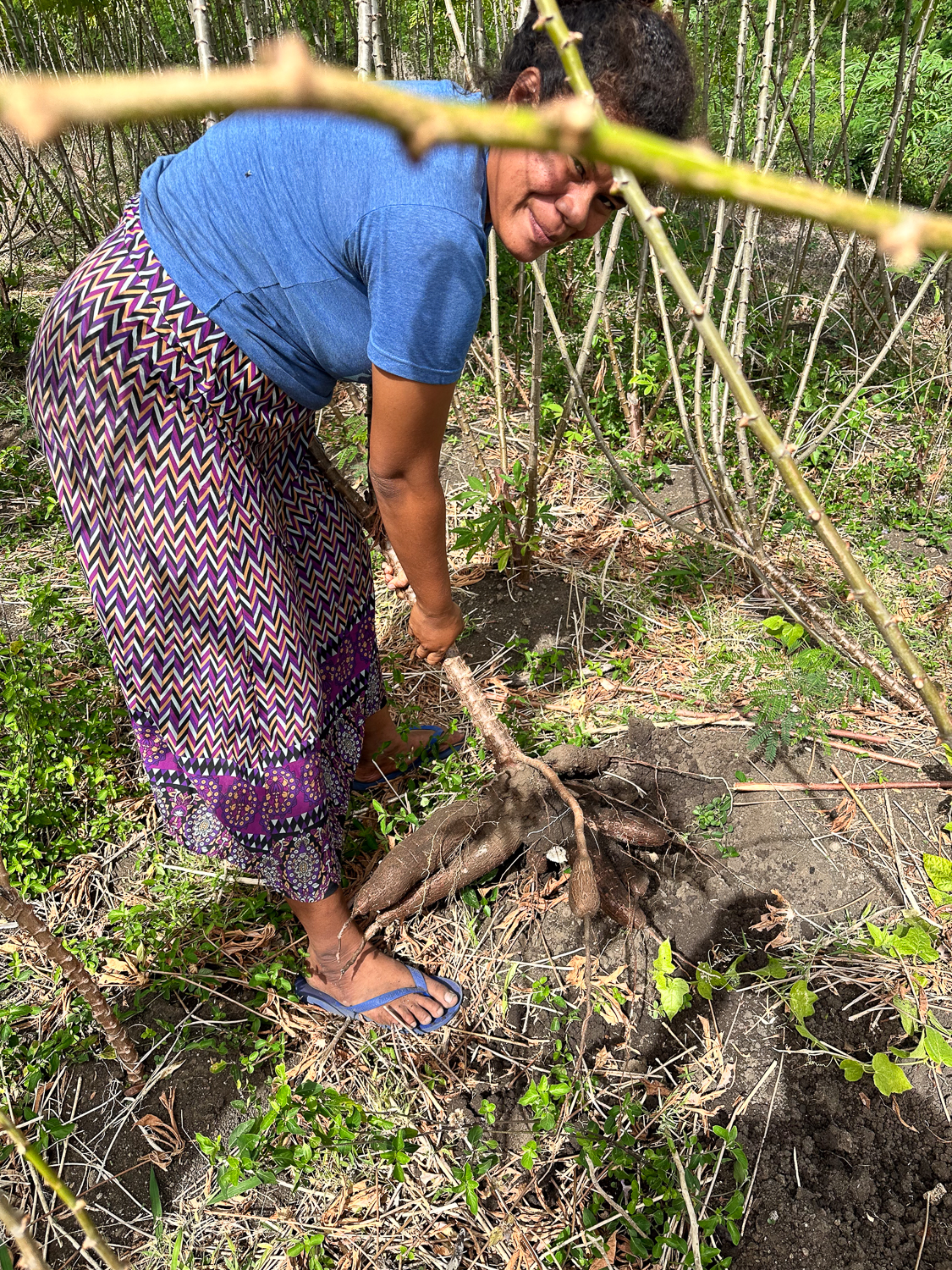
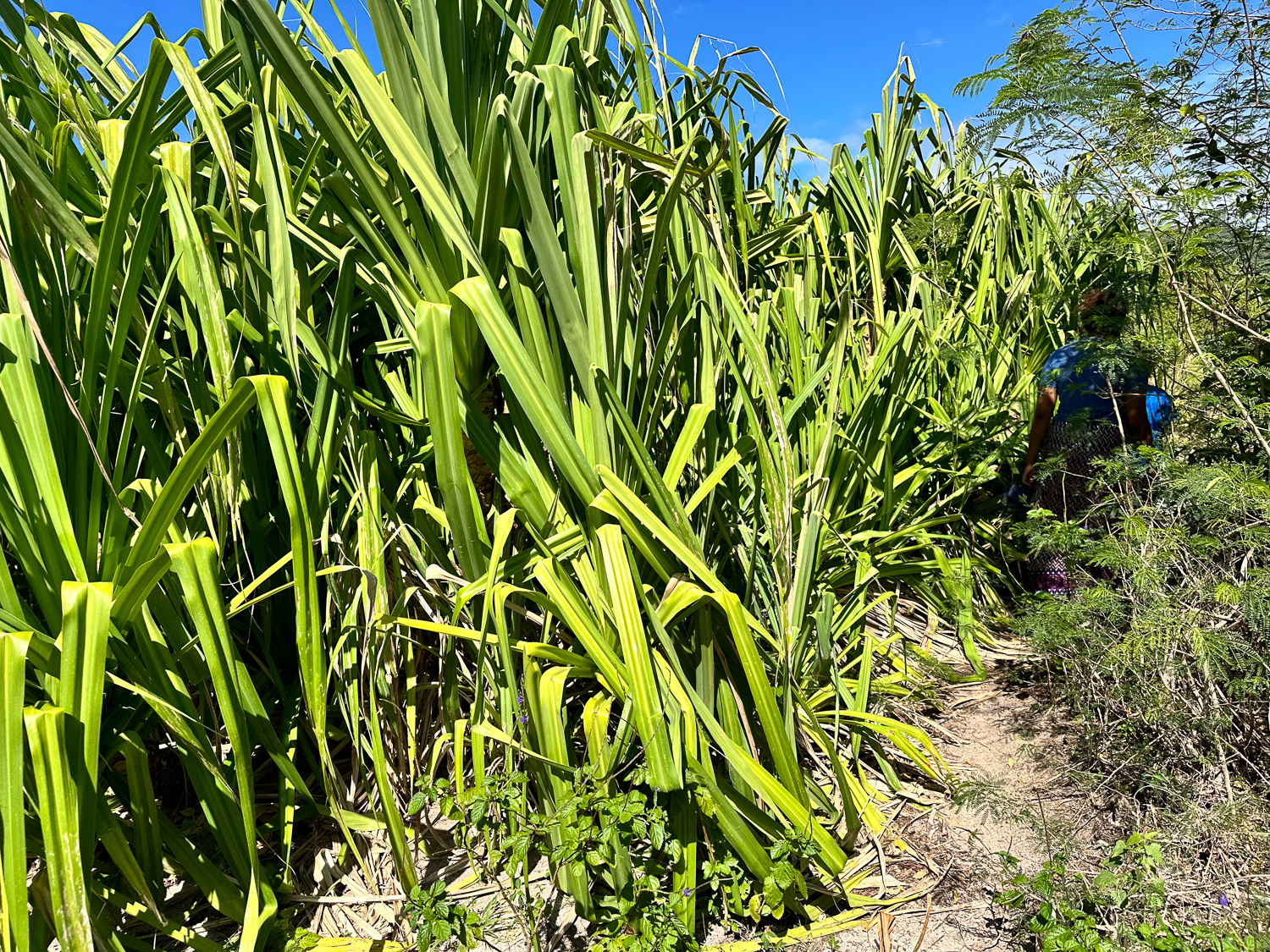
The following morning Claire and Jonathan returned to be taken to Va’s plantation to collect some more fresh fruit and vegetables.

World War II plane wreck
The snorkelling in Somosomo Bay had been a little disappointing so we moved to the next bay. One Dollar Bay was apparently named after a long since abandoned backpackers lodge that used to charge $1 a night. The reef here promised much better snorkelling and the beach gave access to a track to the other side of the island. Here, so we read on No Foreign Land, we could find the wreck of a WWII fighter plane.
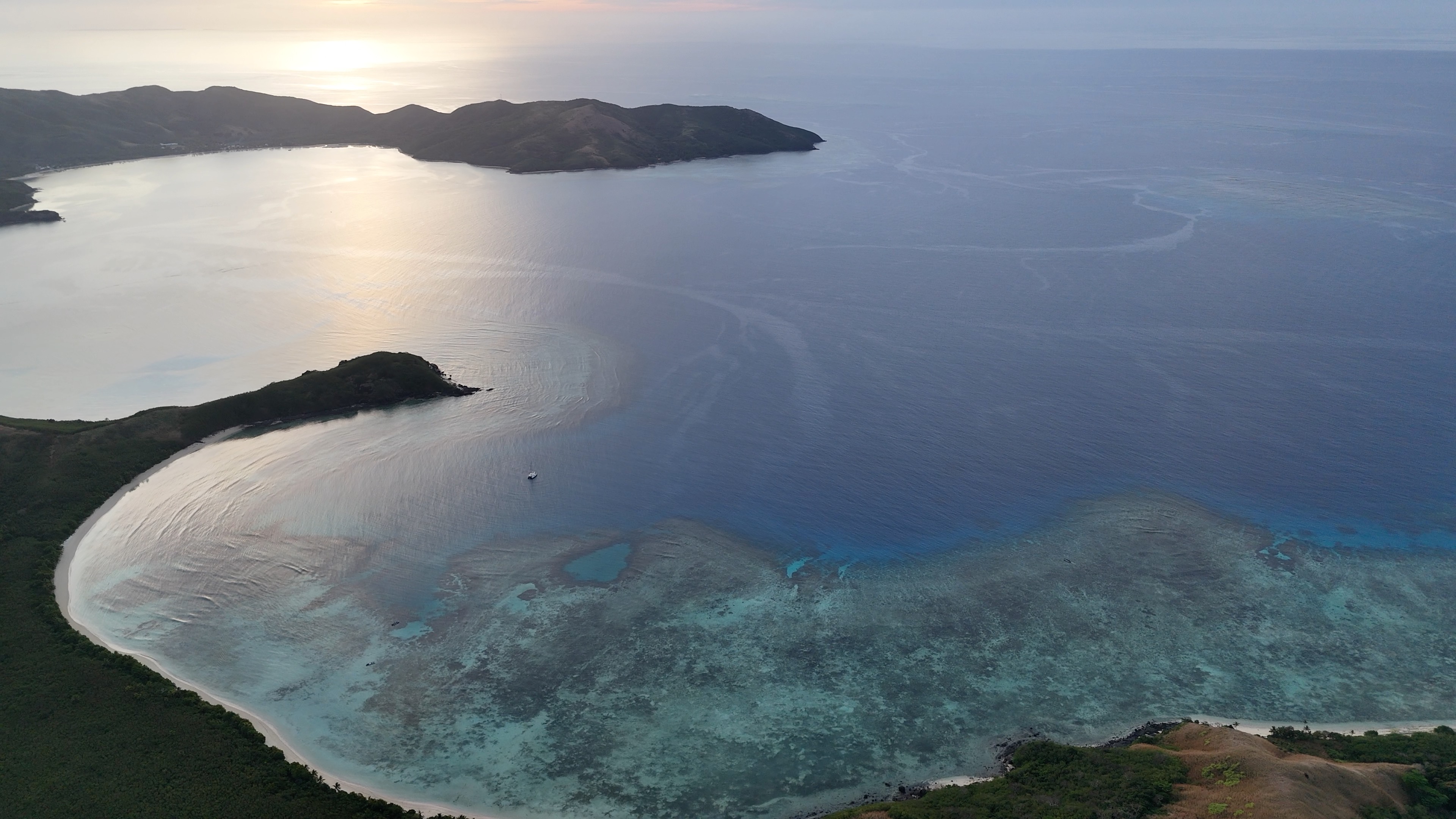
Sue was not feeling great so Nigel, Jonathan and Claire landed in a pretty sandy bay and set of on a one and a half kilometre hike over the island, carrying masks, fins and snorkels, through a variety of grass, scrub and coconut palms.
Our No Foreign Land guide gave foolproof directions for finding the wreck and we met another group on the way who told that there was a buoy on the wreck to make things even easier. From the beach we could see two buoys quite some distance apart. The left most one (and most distant) lined up pretty well with the No Foreign Land directions so we set off on a long wade/swim across the lagoon. Absolutely no sign of an aeroplane. So now we had a long wade/swim back across the lagoon to the second buoy. This was it. Who wrote the guide instructions?
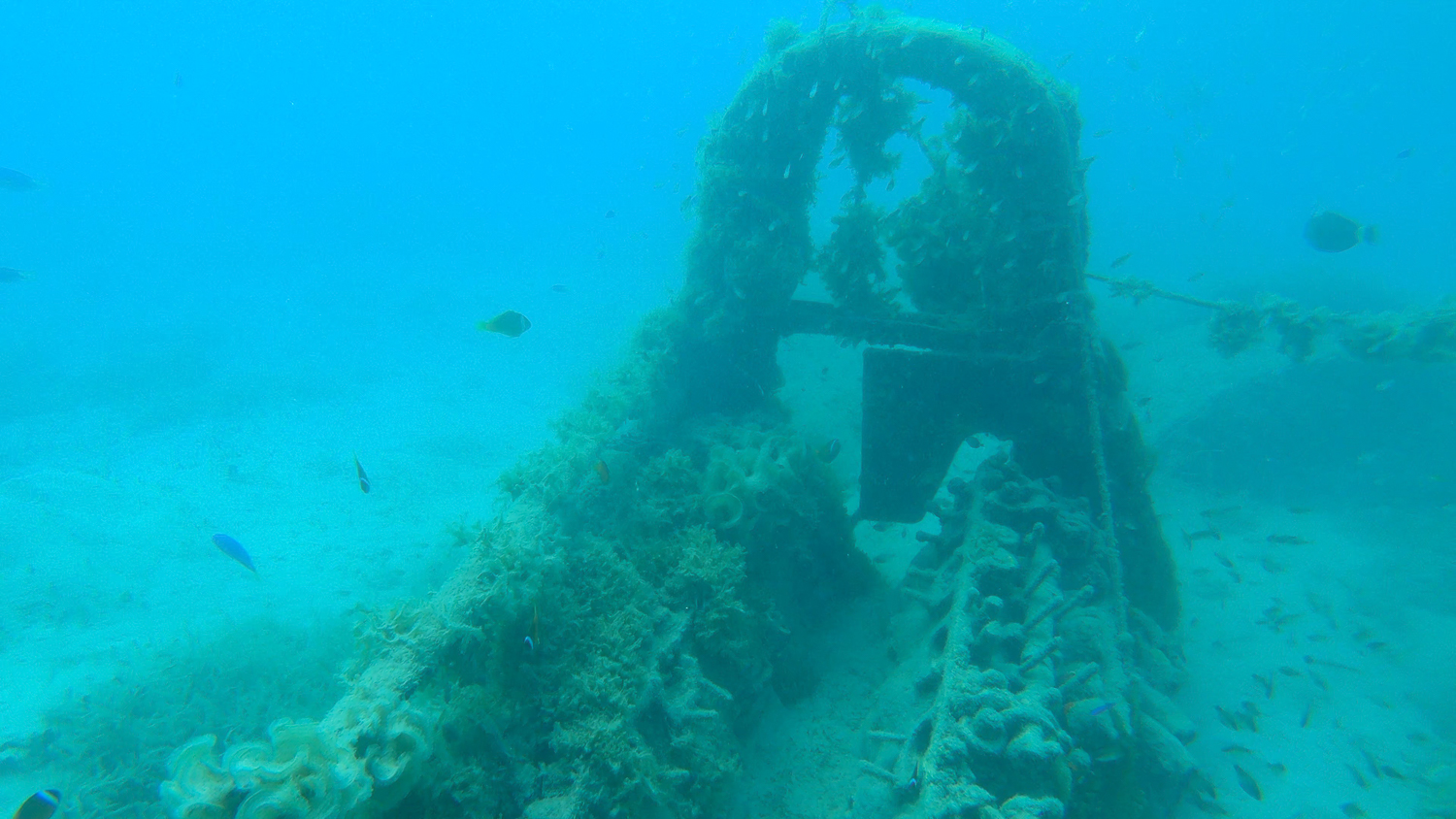
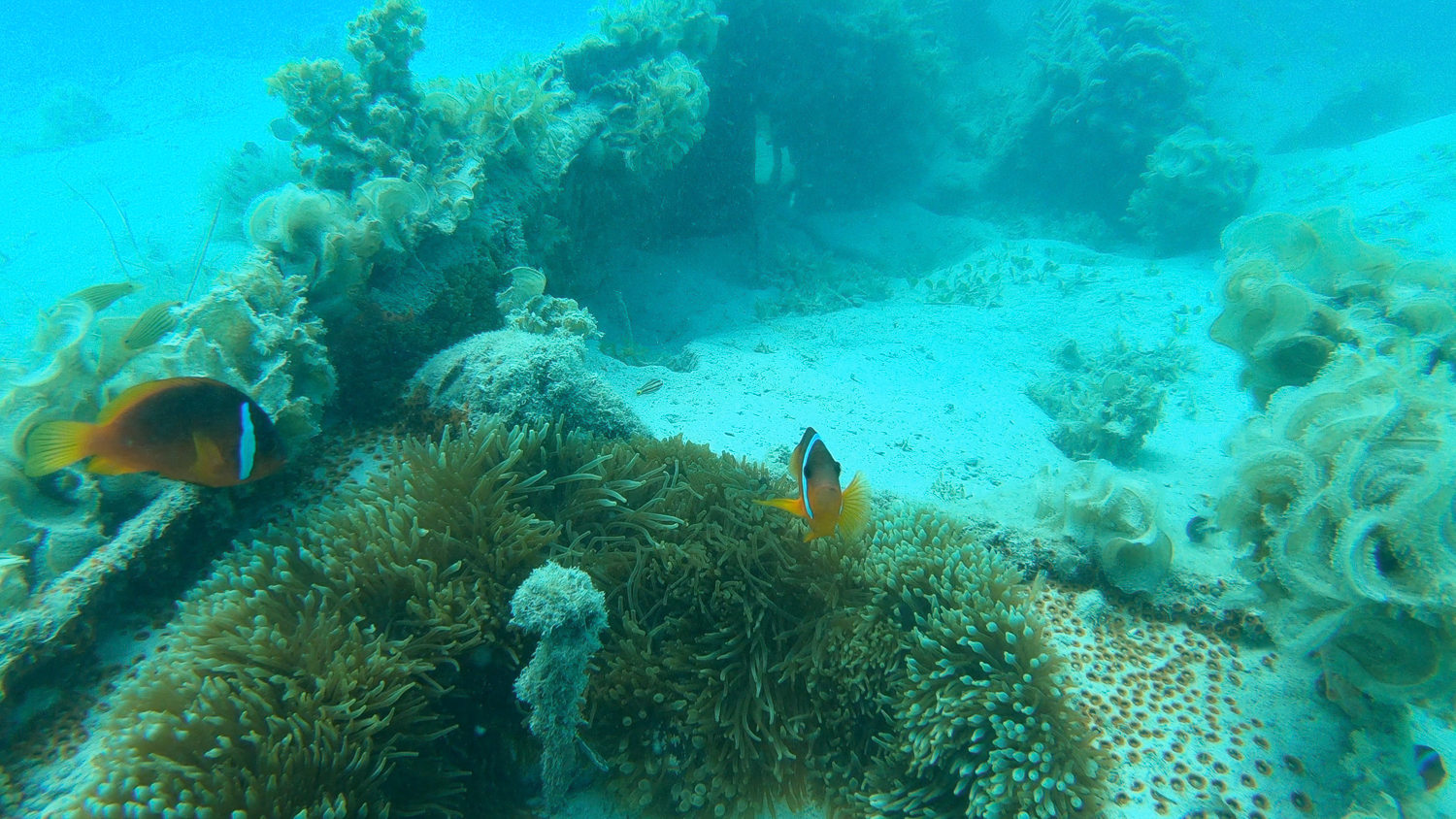
A totally unspectacular wreck. Not sure what we really expected but what we got was an engine with a tiny bit of fuselage. As a consolation, a number of clown fish had made it their home. The coral back in One Dollar Bay was far more interesting. At least we got a walk.

Beach sundowners
Heading north the next day we had a great sail with the Code 0 in 10 – 16 knots of wind. We anchored in 19 metres (extra chain paying for itself again) in front of the Manuya Island Resort in Blue Lagoon Bay.
Nigel and Jonathan went ashore in search of Semi. Claire had found references to Semi in several comments about Blue Lagoon Bay on No Foreign Land. He is a local entrepreneur who cooked traditional Fijian food and curries from his home on the water front and also took people snorkelling. We wondered if he could take us diving.
Nigel and Jonathan tracked him down without to much difficulty and found that Semi was more than happy to take us diving. The fee was a tank of fuel for his boat and what ever we felt in our hearts was appropriate. We settled on $20 per person since this was what we had paid Jack in Viani Bay. Pick up was arranged for 10.30 the next morning.
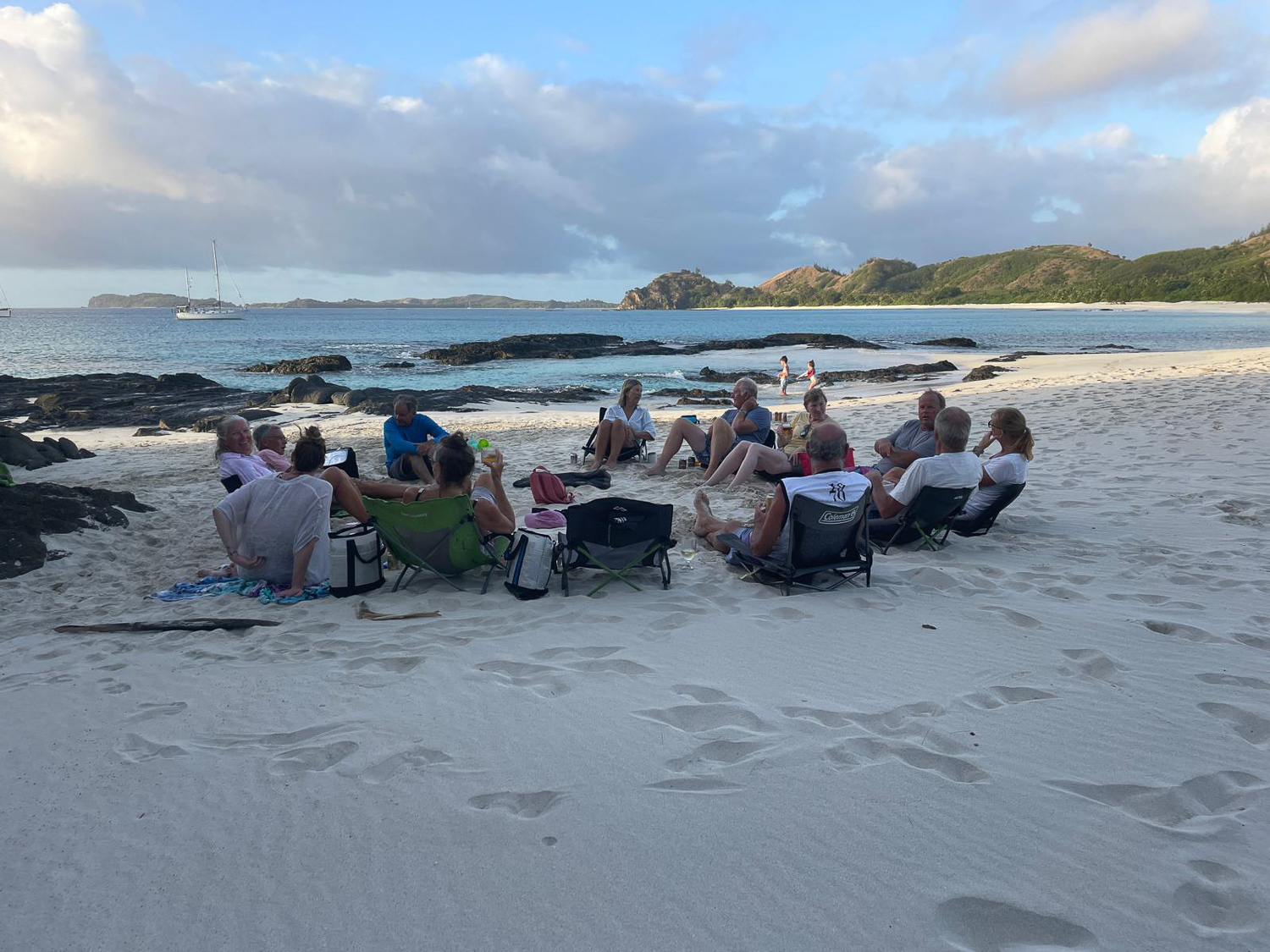
We had planned to go ashore and have drinks at the resort that evening but Sue got a message from Helen (Mintaka) whom we had met along with her husband, Brownie, on the Taveuni bus tour, inviting us to join a group having sundowners on the beach.
Another very sociable gathering where we met lots of new people including Ross and Tamara (on the beautiful, tāwaho) from Whangamata.
A fabulous dive
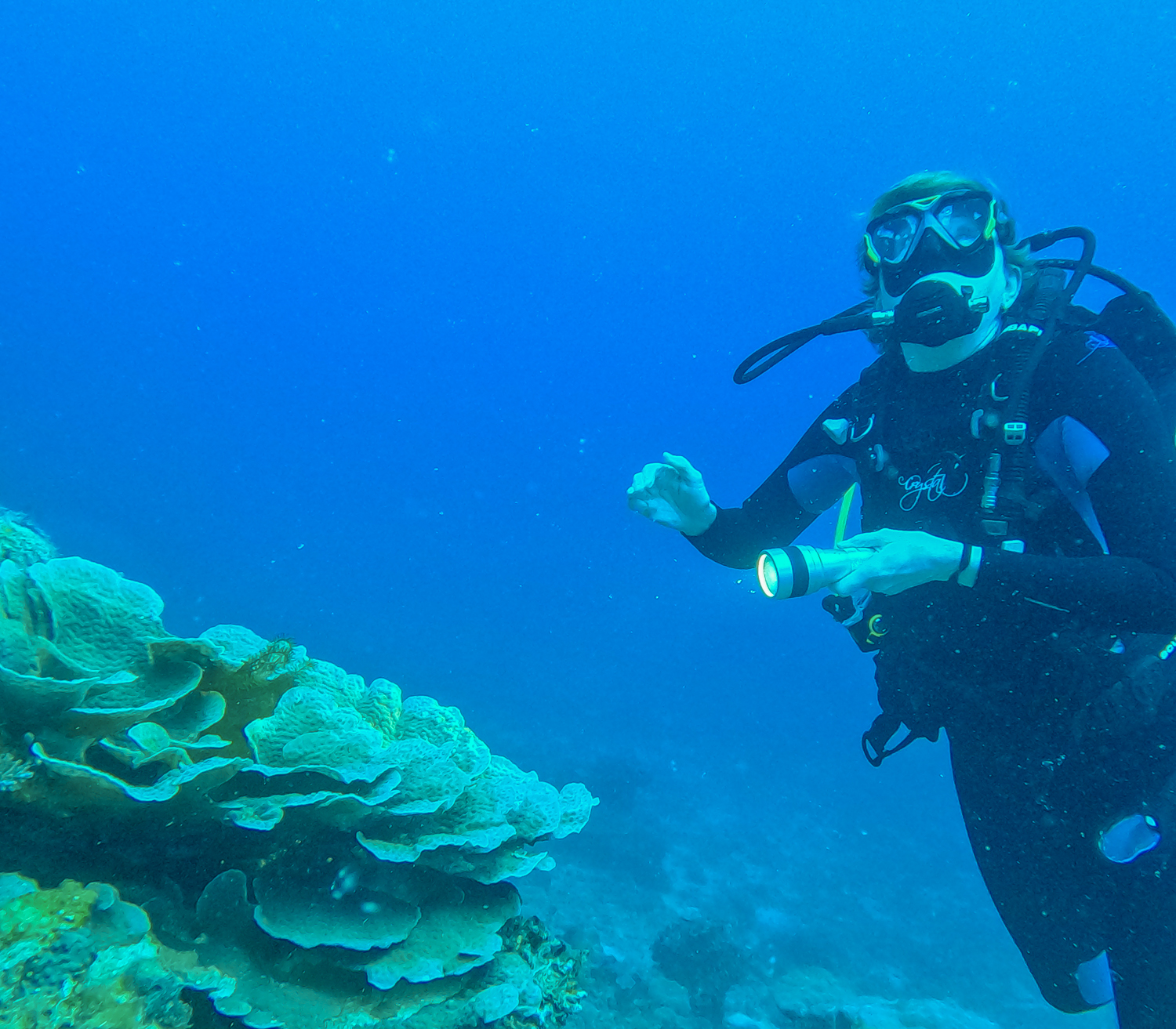
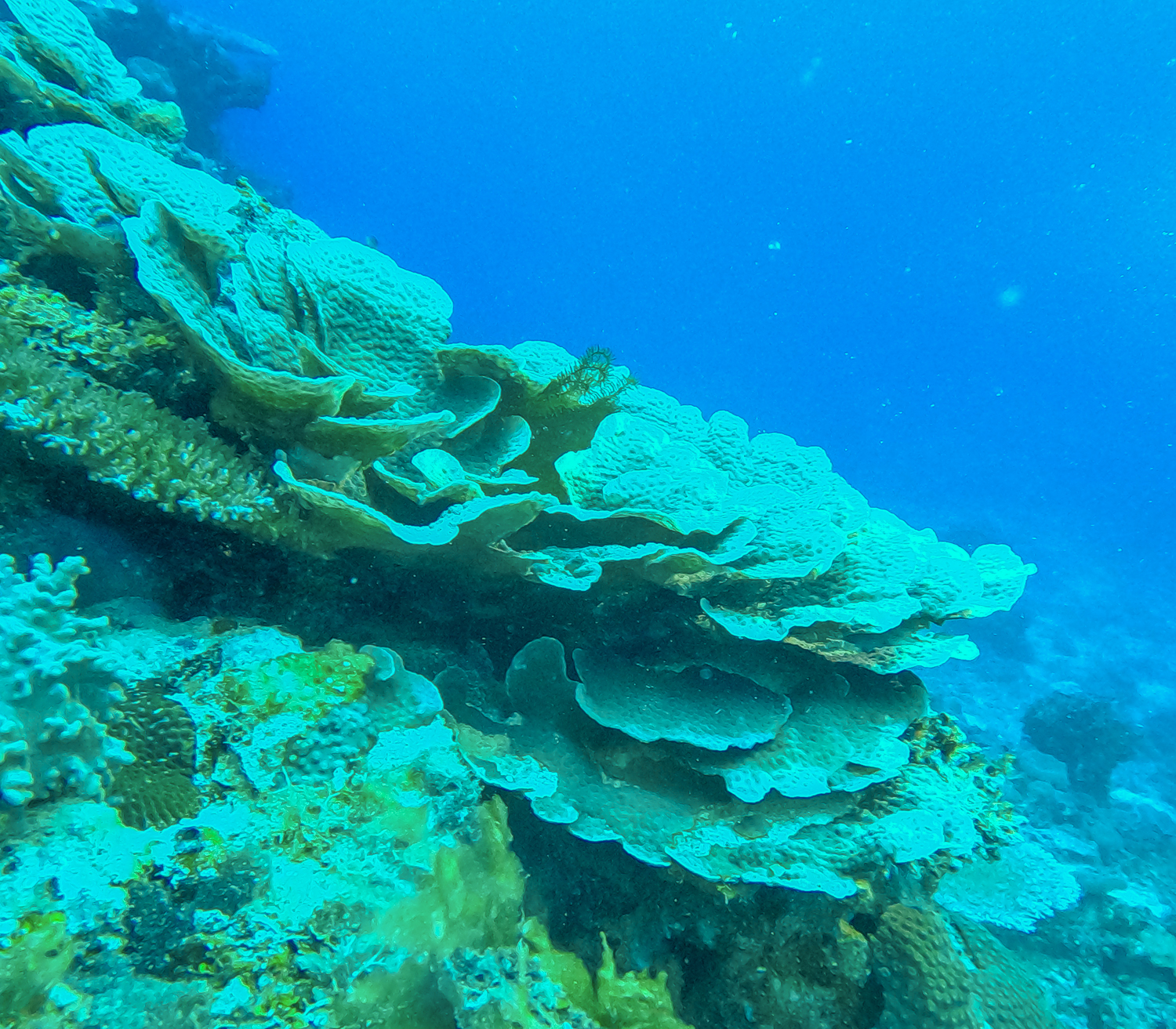
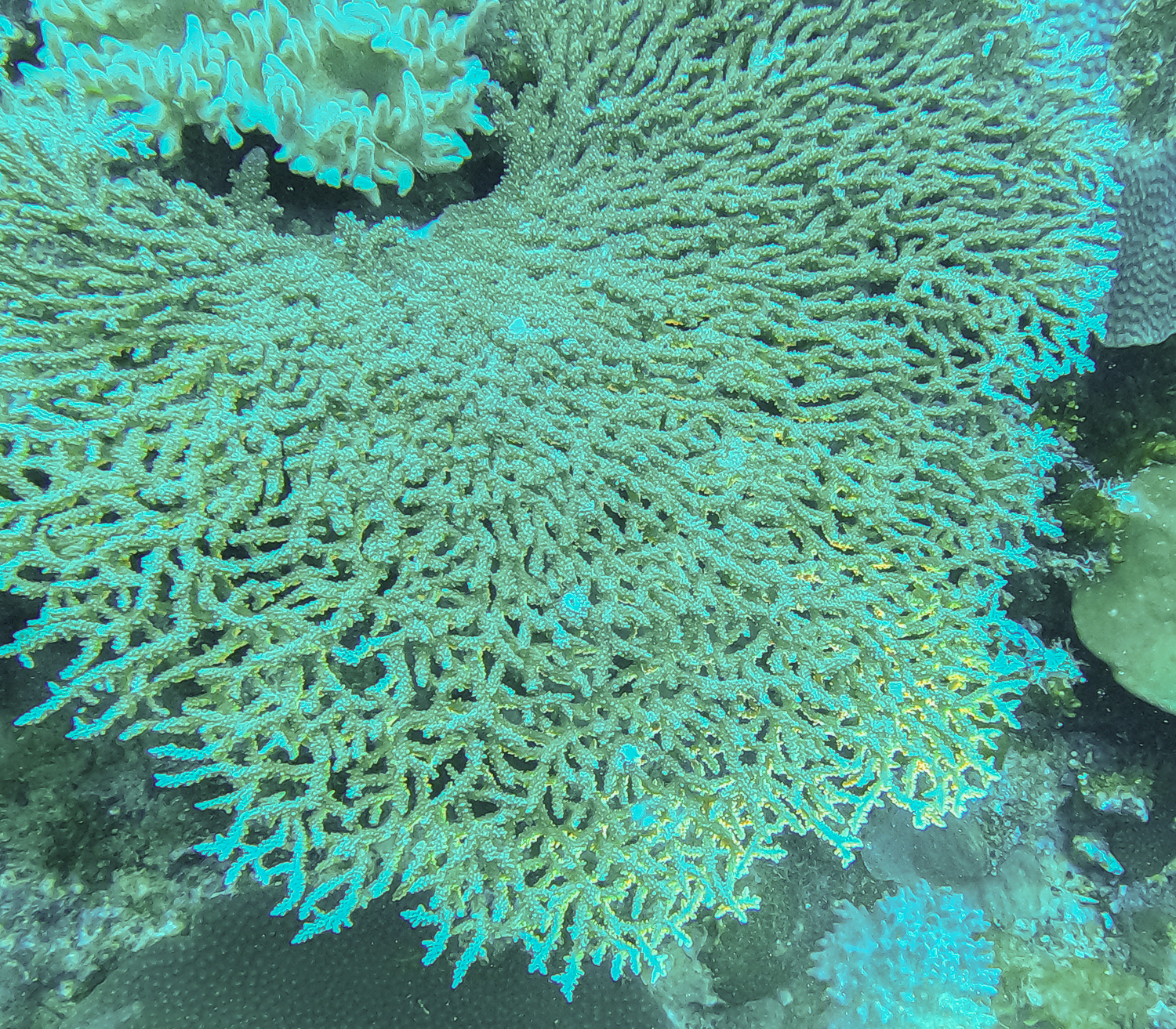
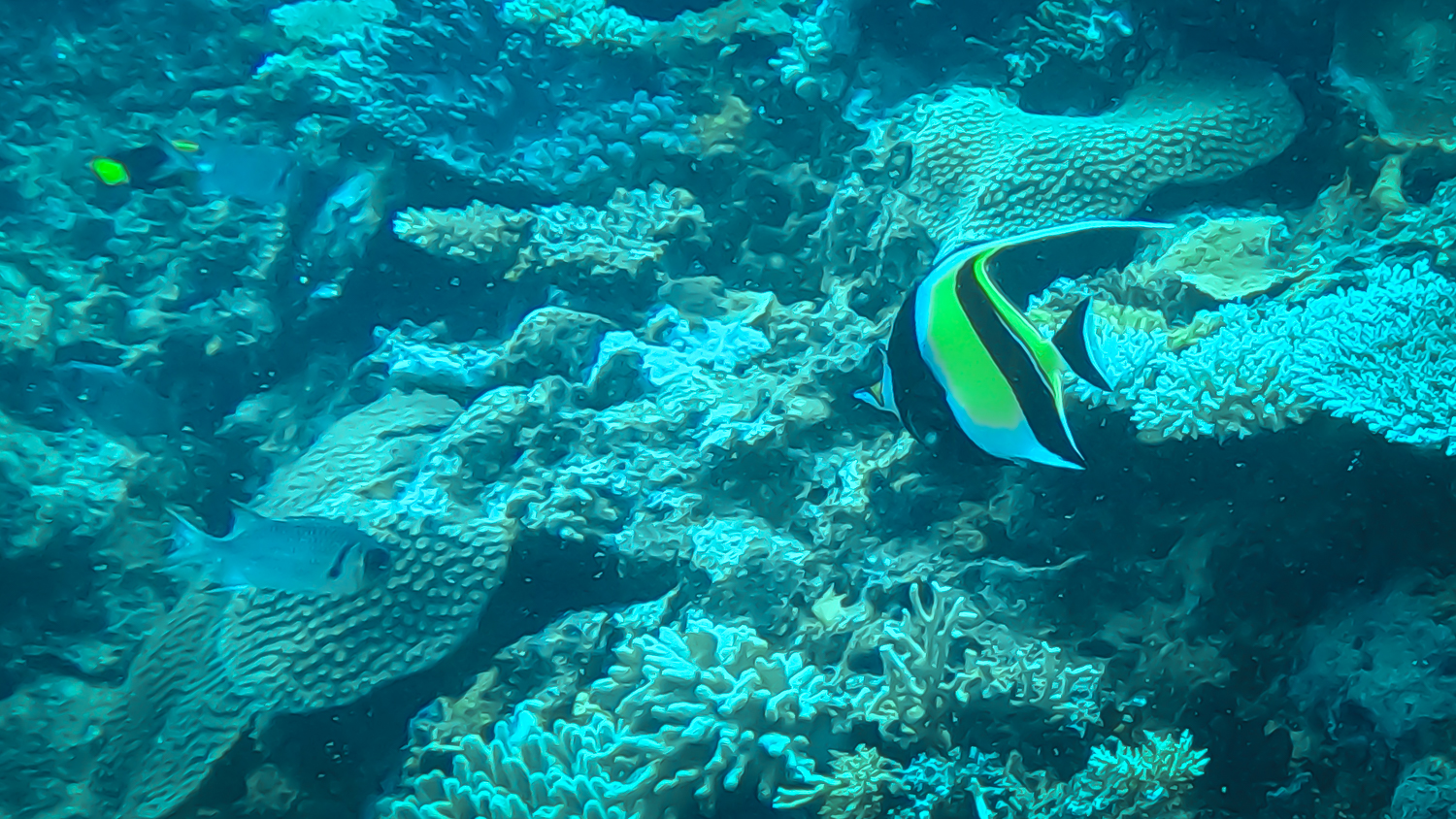
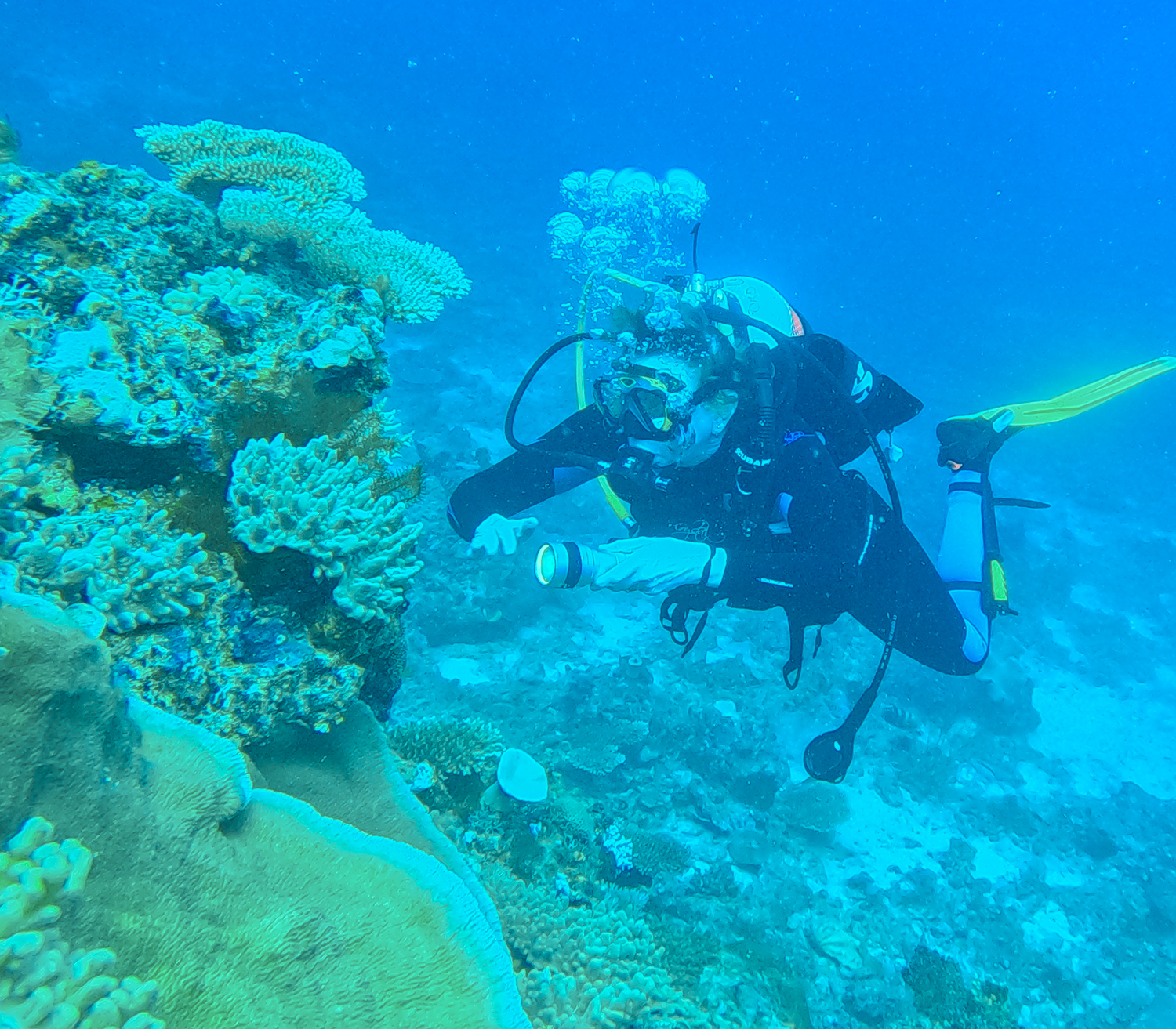
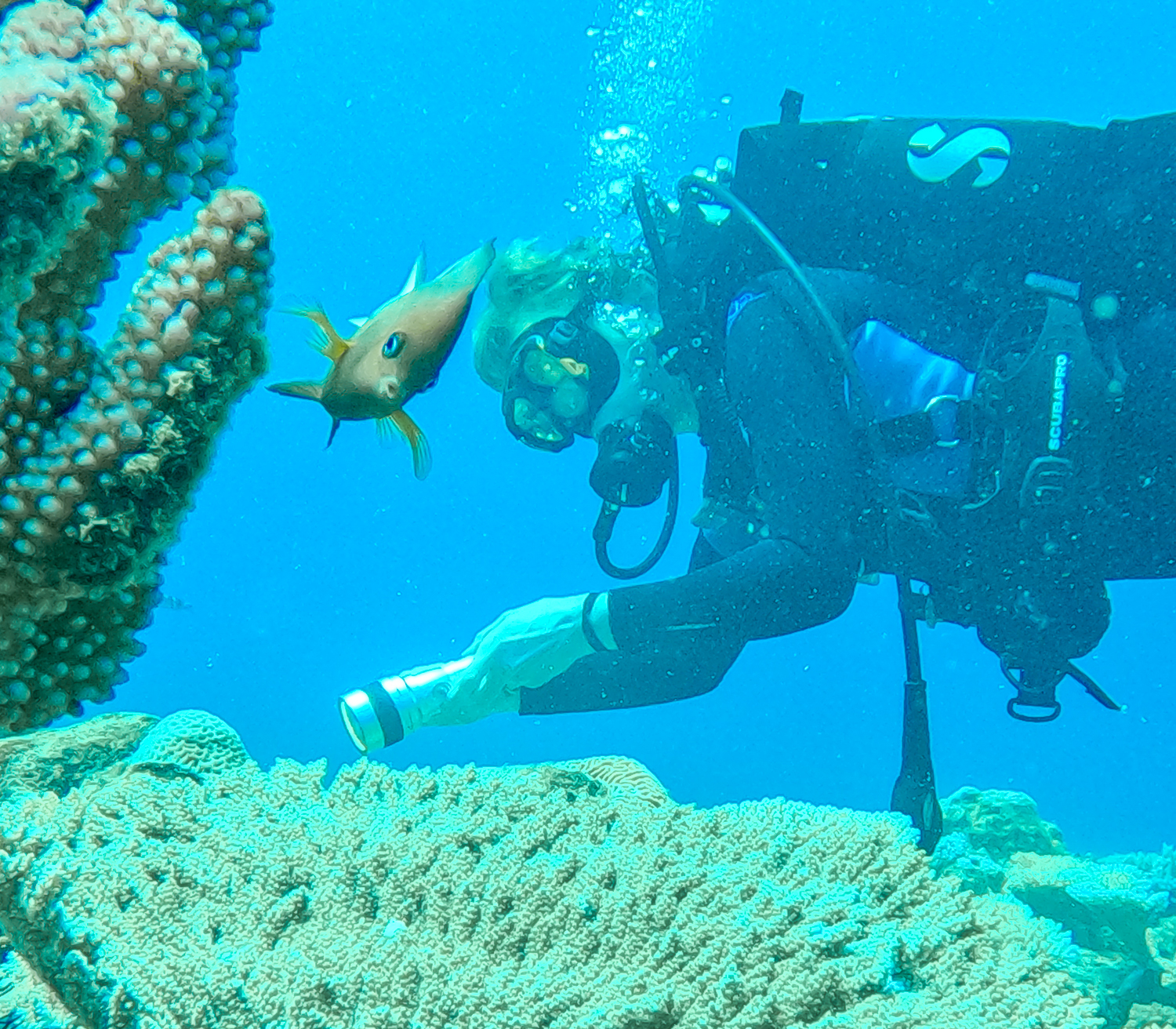
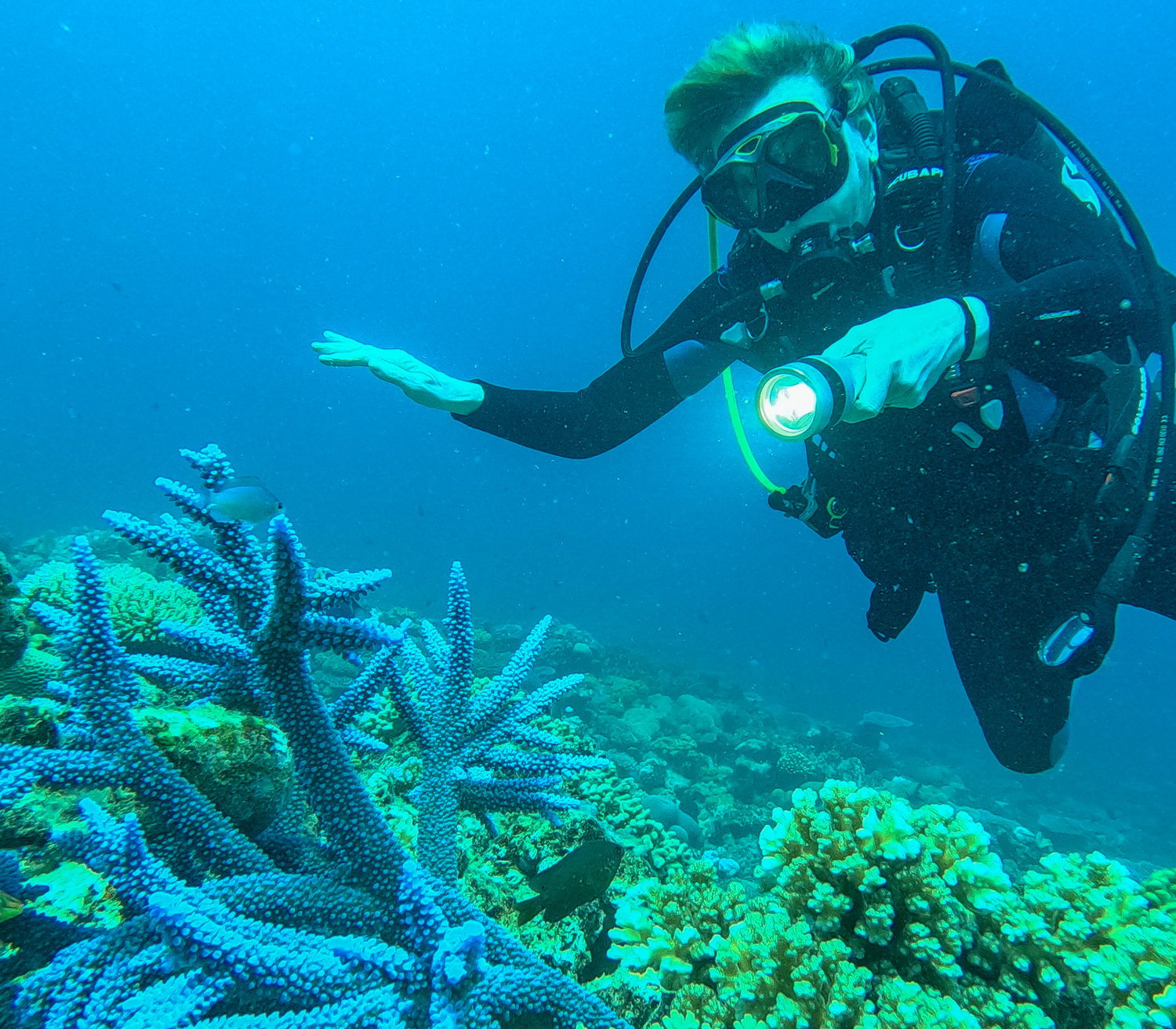
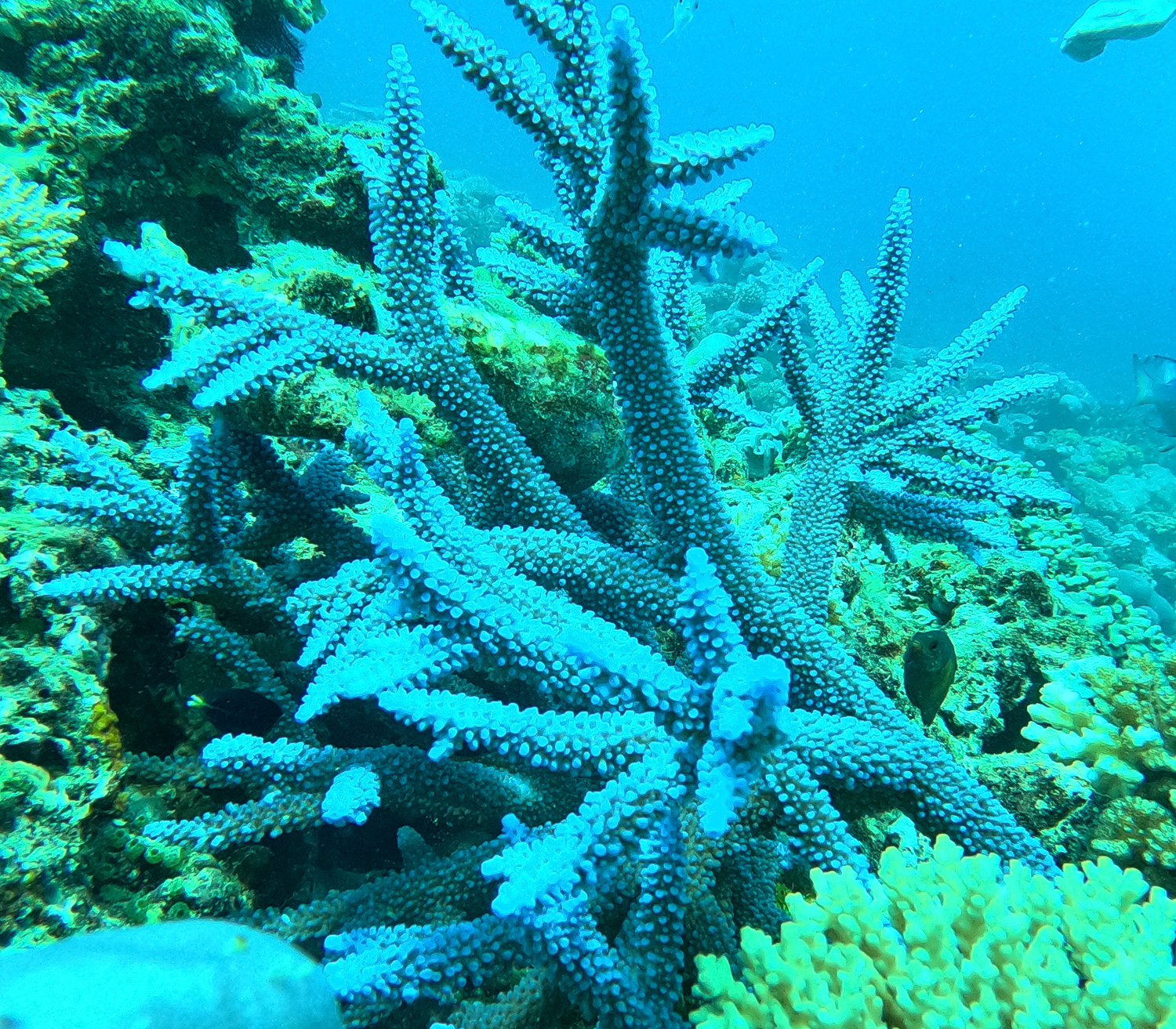
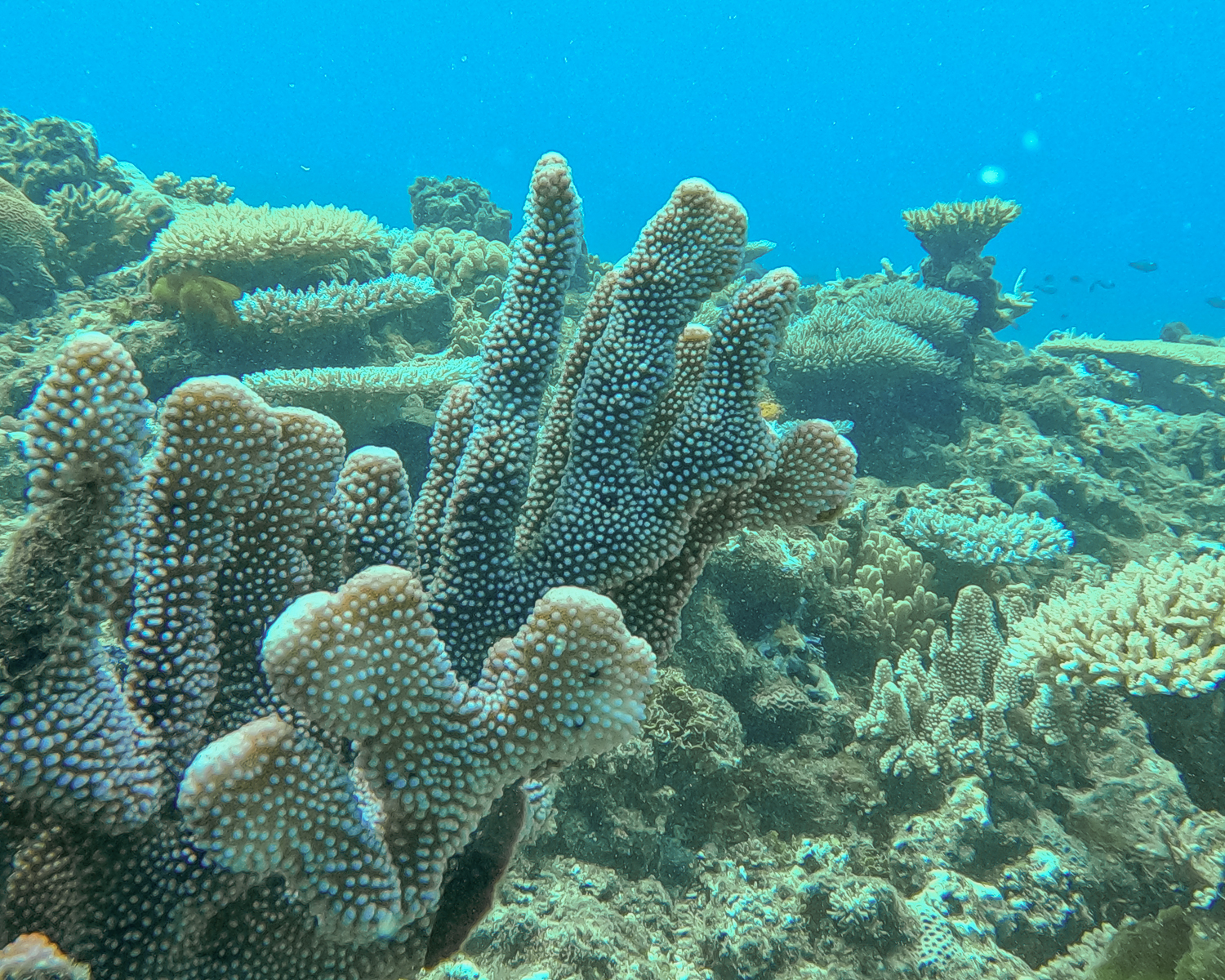
Our arranged 10:30 pick up was obviously Fiji time. But, not long after 11:00am, we were safely aboard Semis’ boat (open fibreglass with 70HP Yamaha) for a short trip to a dive site known as Tavewa Break. Semi clearly was not going to be using too much of the $65 worth of fuel that we had put in his tank!
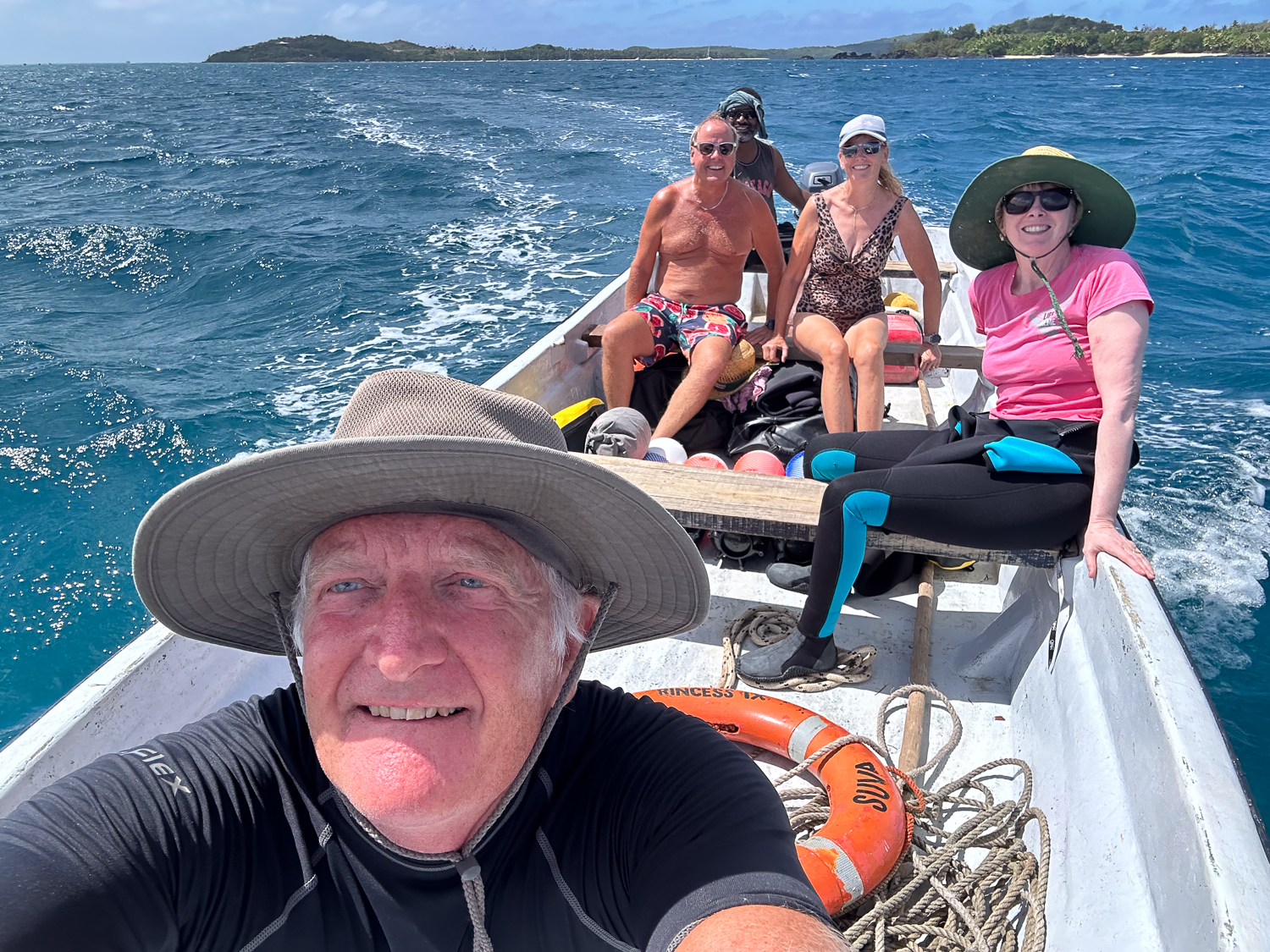

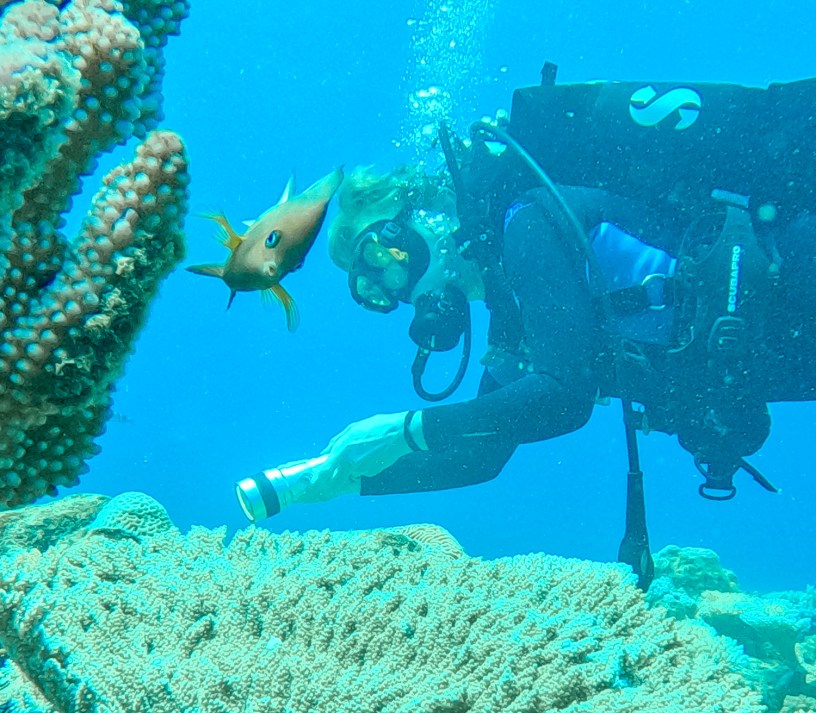
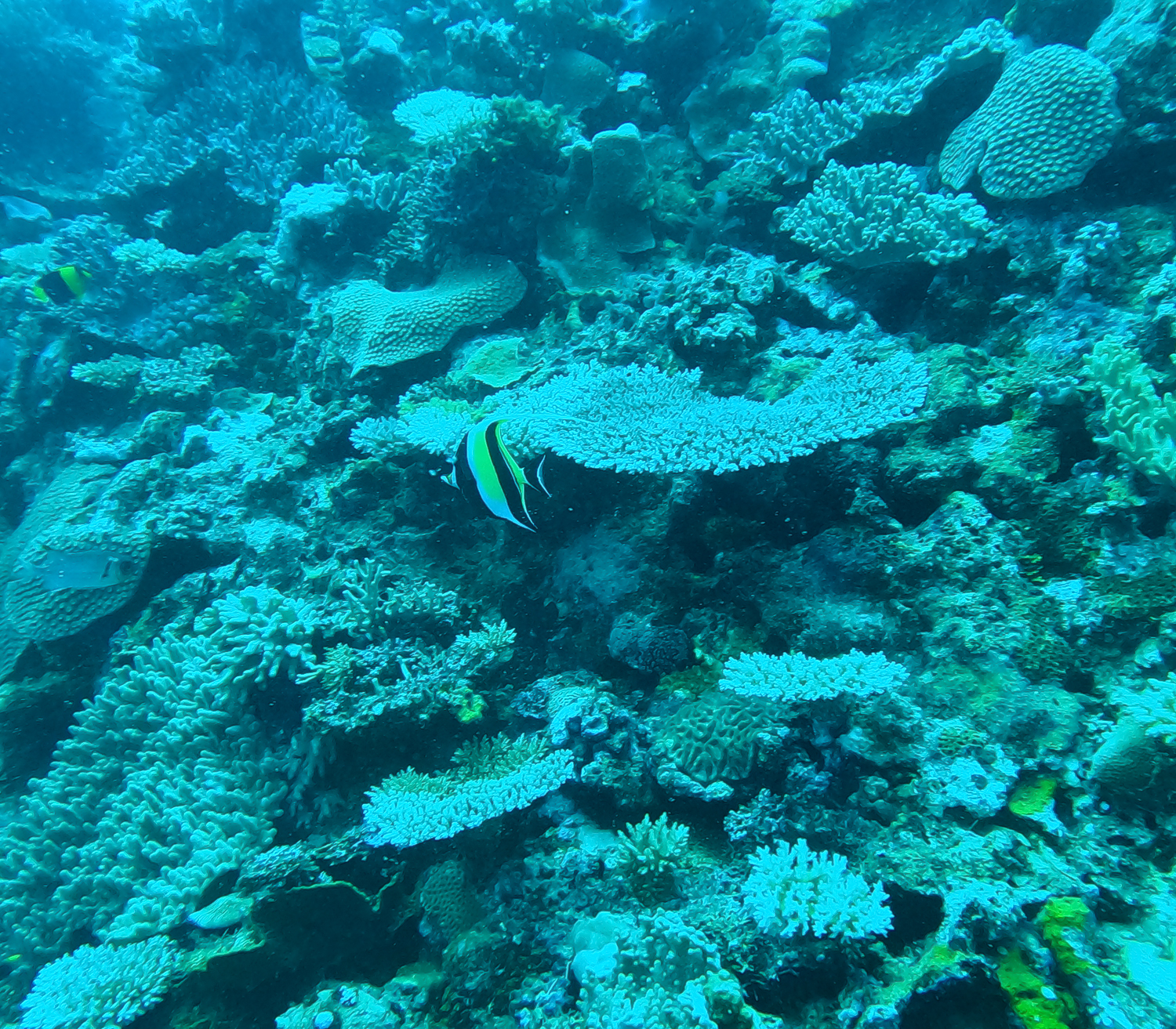
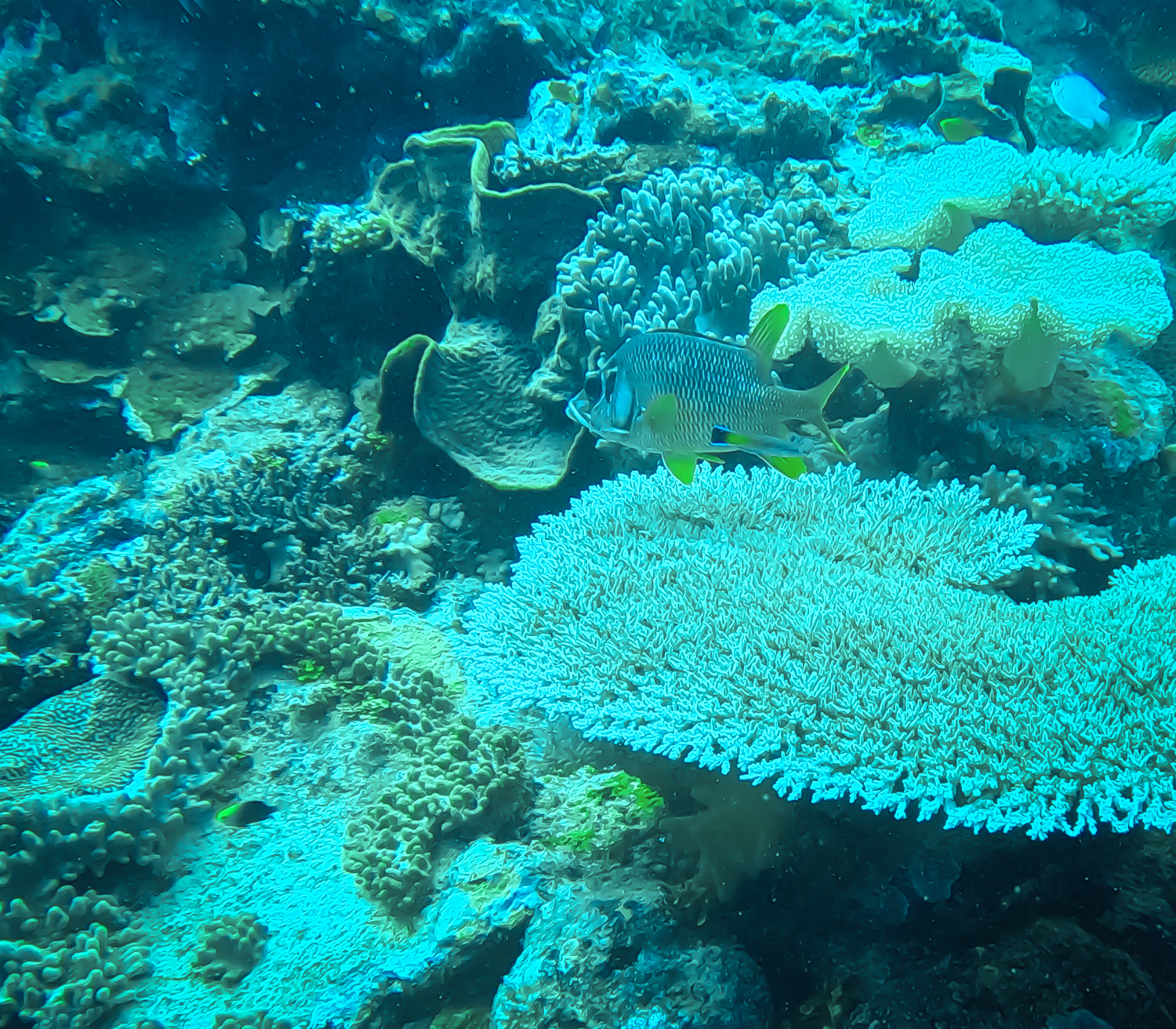
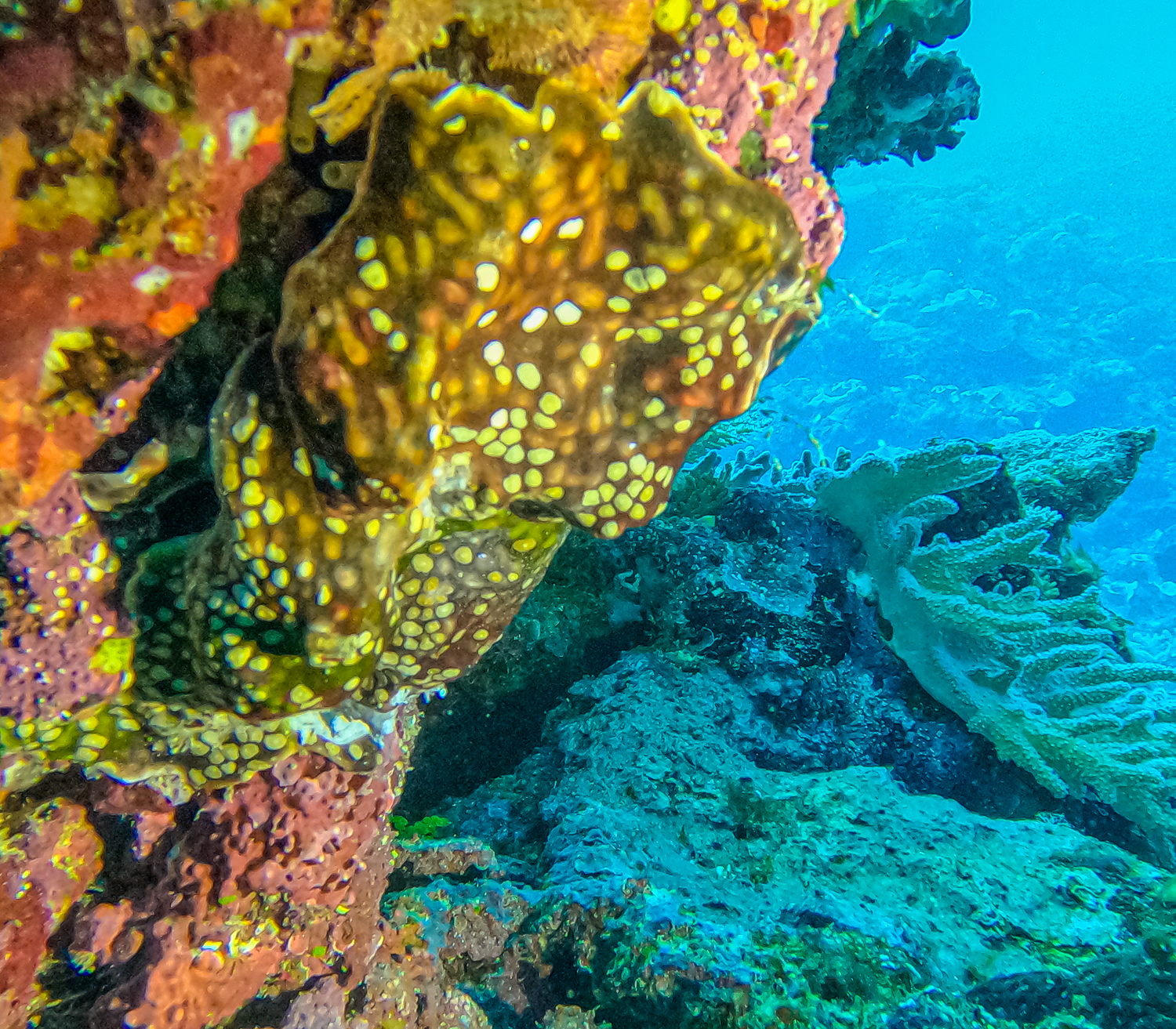
Local knowledge was well worth paying for, however. Semi put us onto a fabulous dive site with great coral structures and fantastic colours – and several clown fish of course.
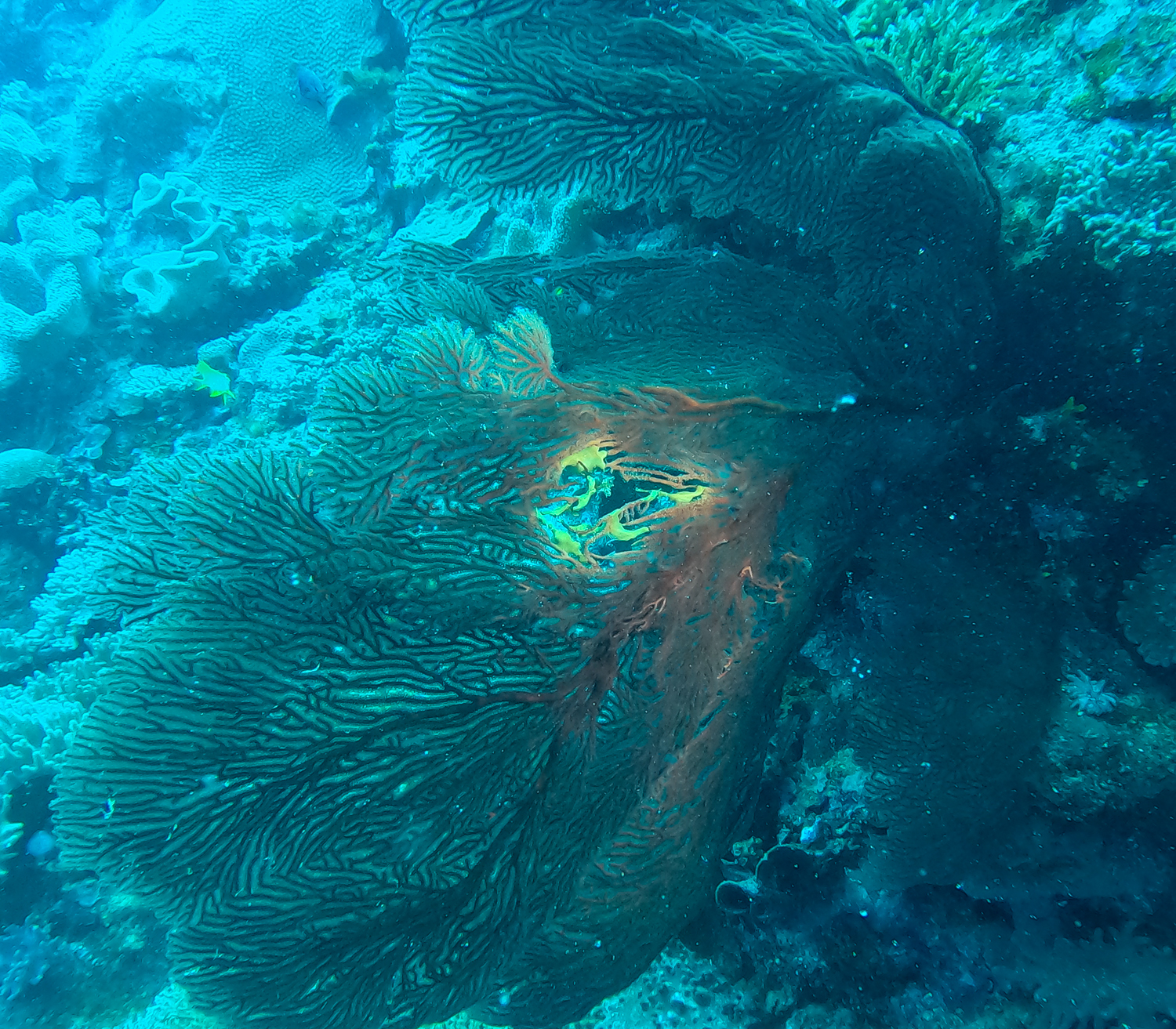


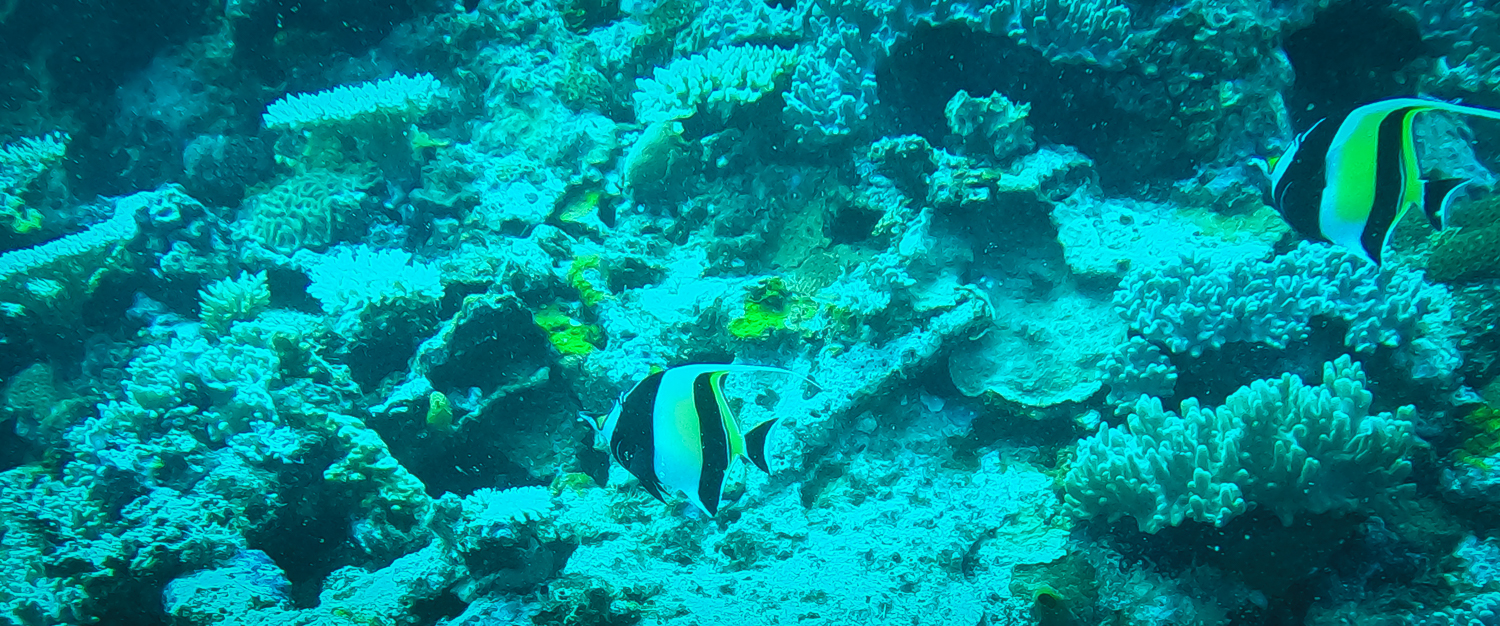
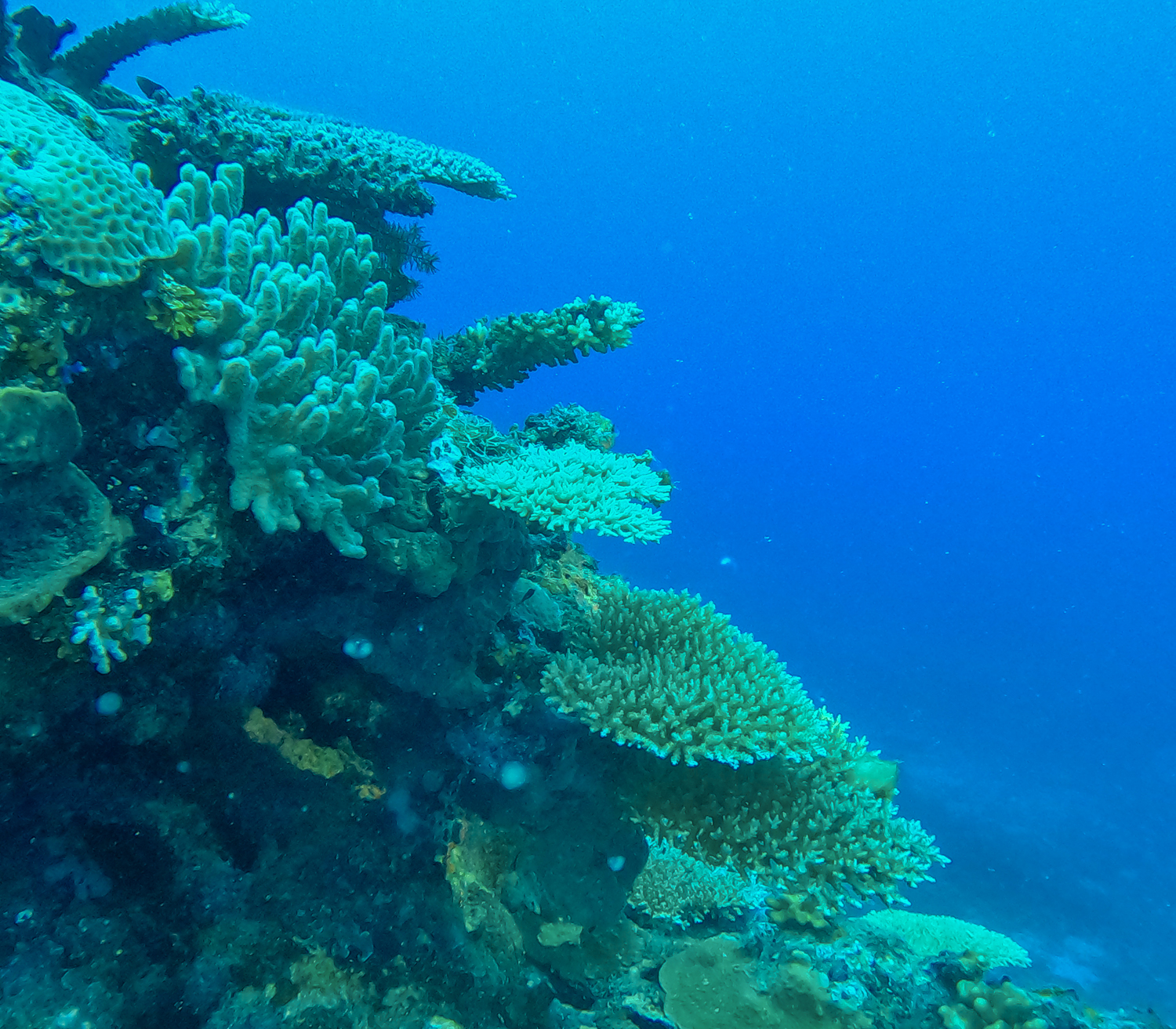
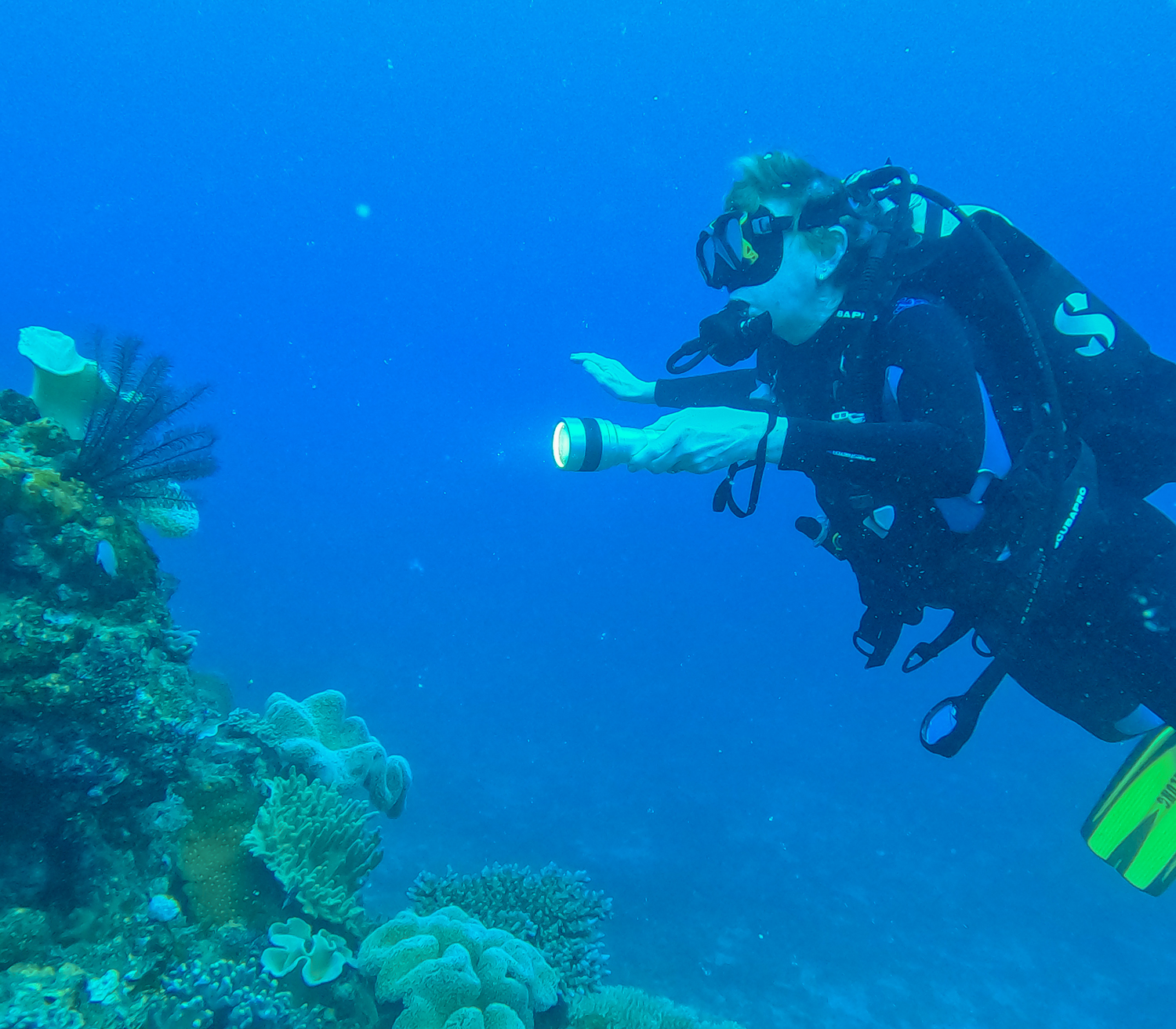






Close encounters of the coral kind
The following day, the plan was to sail further north to Champagne Beach on Yasawa Island, the northern most island in the Yasawa chain.
We had a slight delay after Nigel chose to pass on the wrong side of a channel marker post. For a few minutes we were well a truly perched firmly on top of the reef. Fortunately, a little side to side reversing had us floating again and we backtracked to our anchorage to inspect the damage. Just a little less of our copper coat antifouling in a few places and lots of ‘cat scratches’ as they were described by another cruiser who we met later.
As if in compensation for the stressful start to the day, we had a glorious sail all the way to Yasawa-i-Rara village, where we were expected to do sevusevu.
As we prepared to go ashore we were joined by Helen and Brownie from Mintaka and Chris and Dan from Sea You Soon. They had arrived at Champagne Beach the day before but had not yet done sevusevu. We all went ashore together and did a very informal and friendly ceremony with the ratu’s representative. The ratu and most of the villagers were attending a funeral nearby.

Formalities complete, we were given a tour of the village and were able to purchase some papaya. A place that they were most proud of was their ‘dispensary’. It was a simple building, staffed by a kind of nursing technician. They could call for the help of a nurse or doctor (who would arrive by boat – open fibreglass with 70HP Yamaha) if it was needed – and the main clinic had access to a helicopter if the situation warranted. They were especially proud of how they manage maternity care on the island. We had quite a lot of extra medications and several litres of saline that they were very grateful to receive.
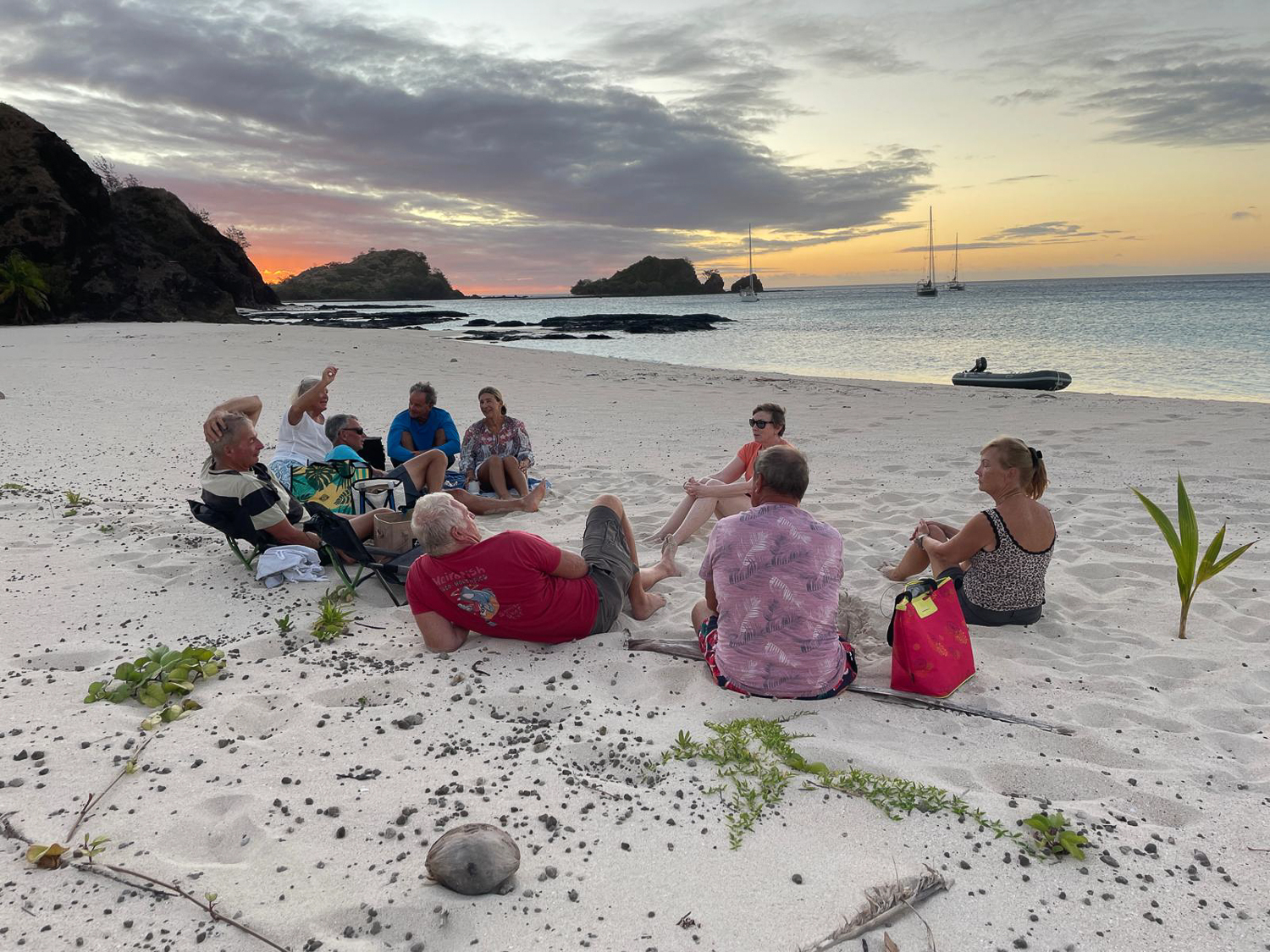
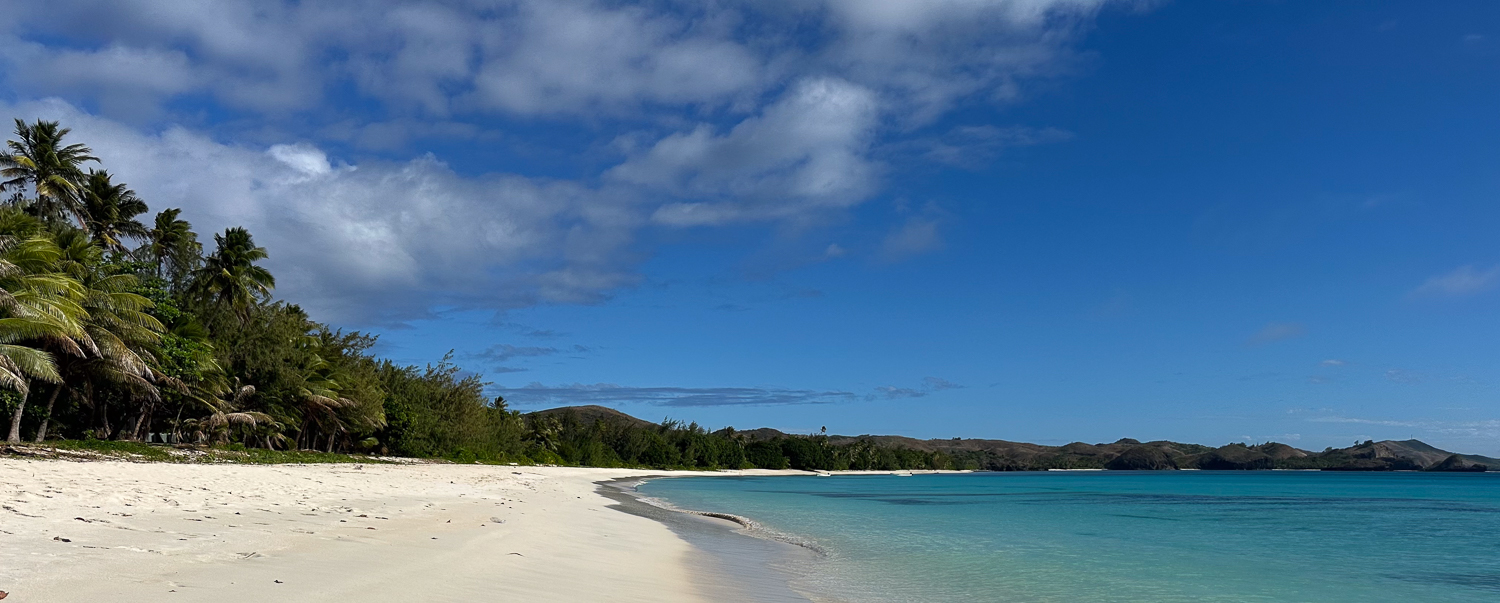
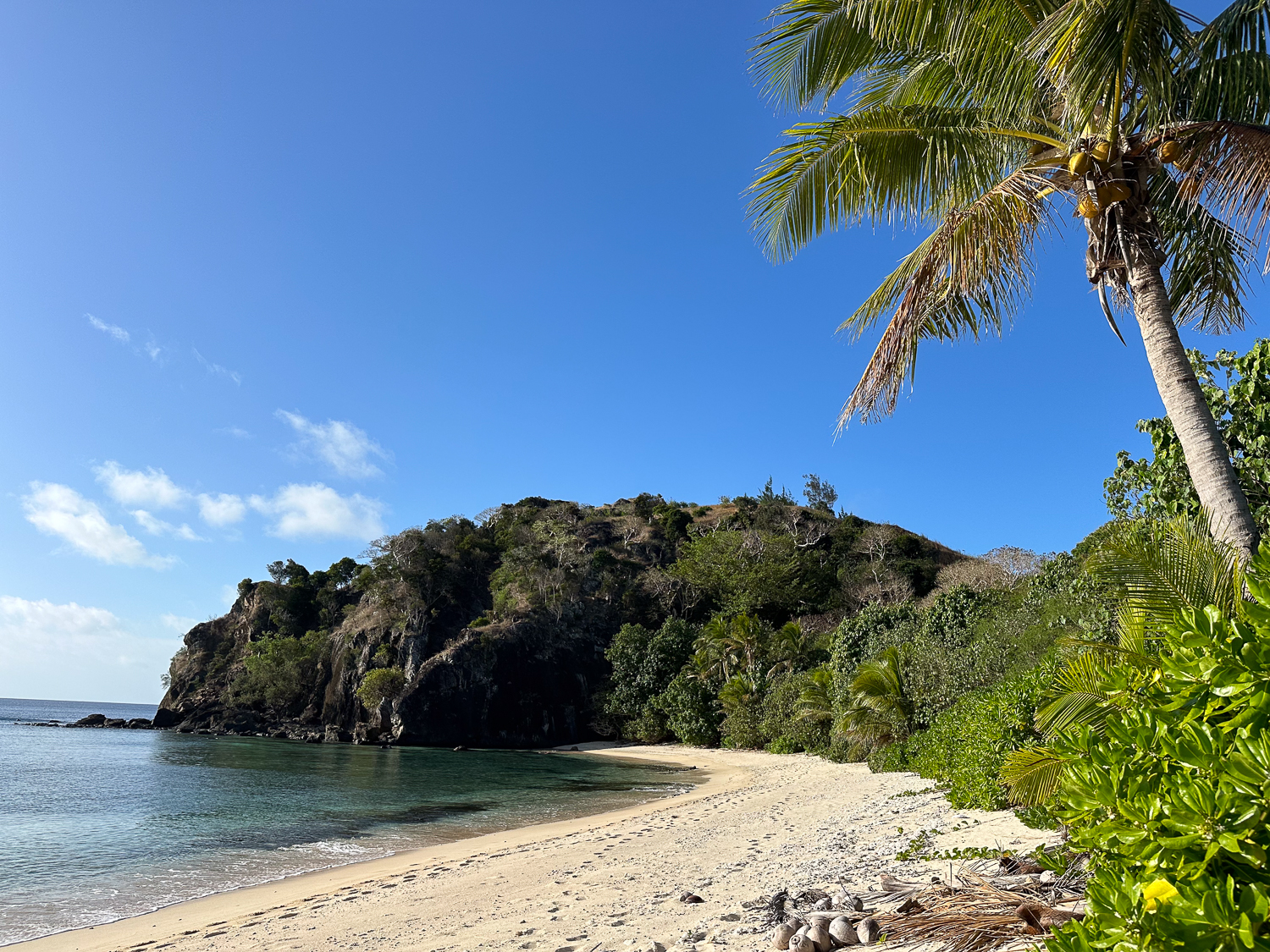
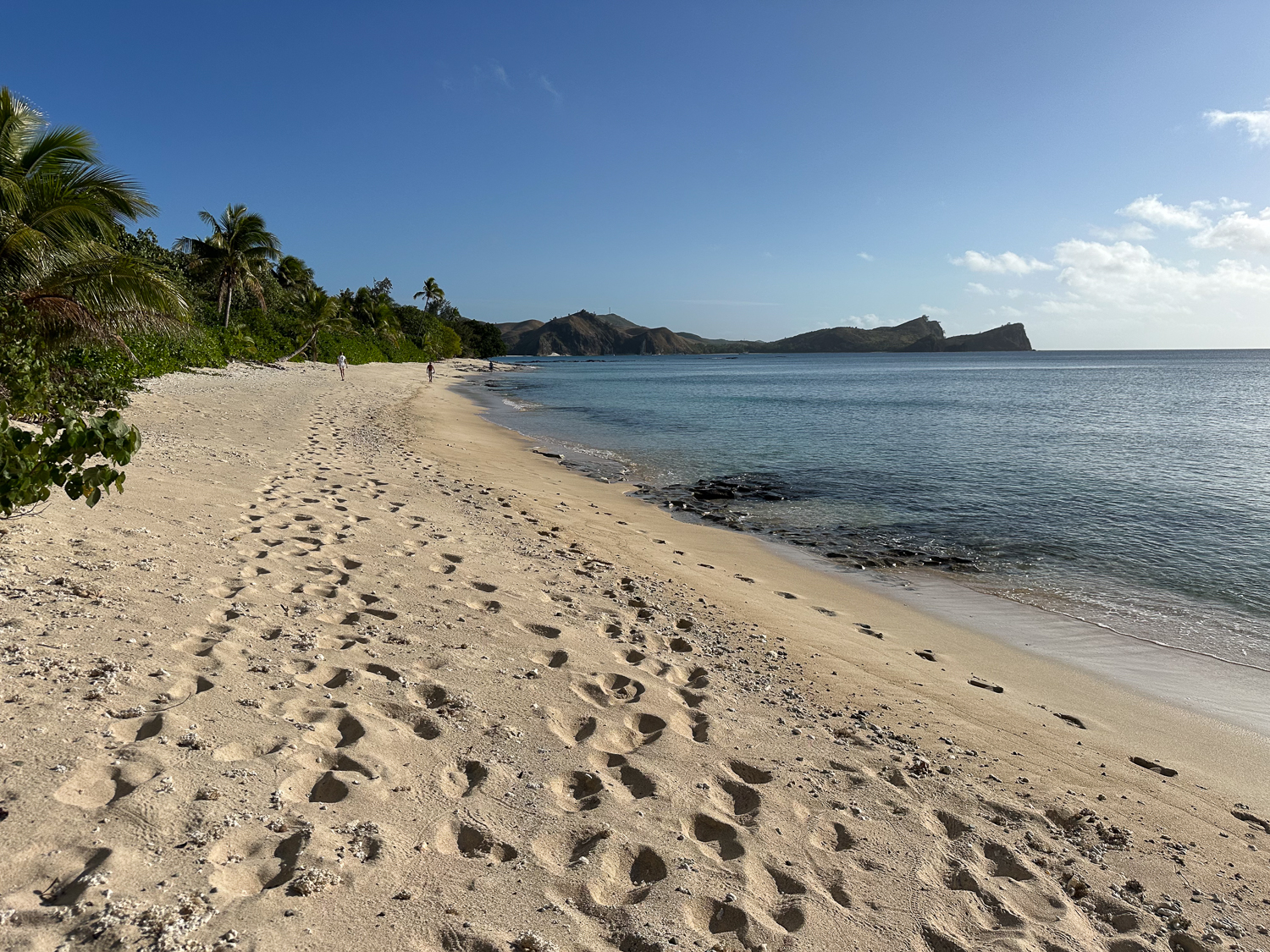
Gifting done, we made the short trip across the bay to Champagne Beach. A beautiful sheltered beach whose sand was supposed to resemble pink champagne. Sundowners on the pink champagne beach with everyone that we had met earlier along with Daryl and Carol from Scoots.
Only slightly lost
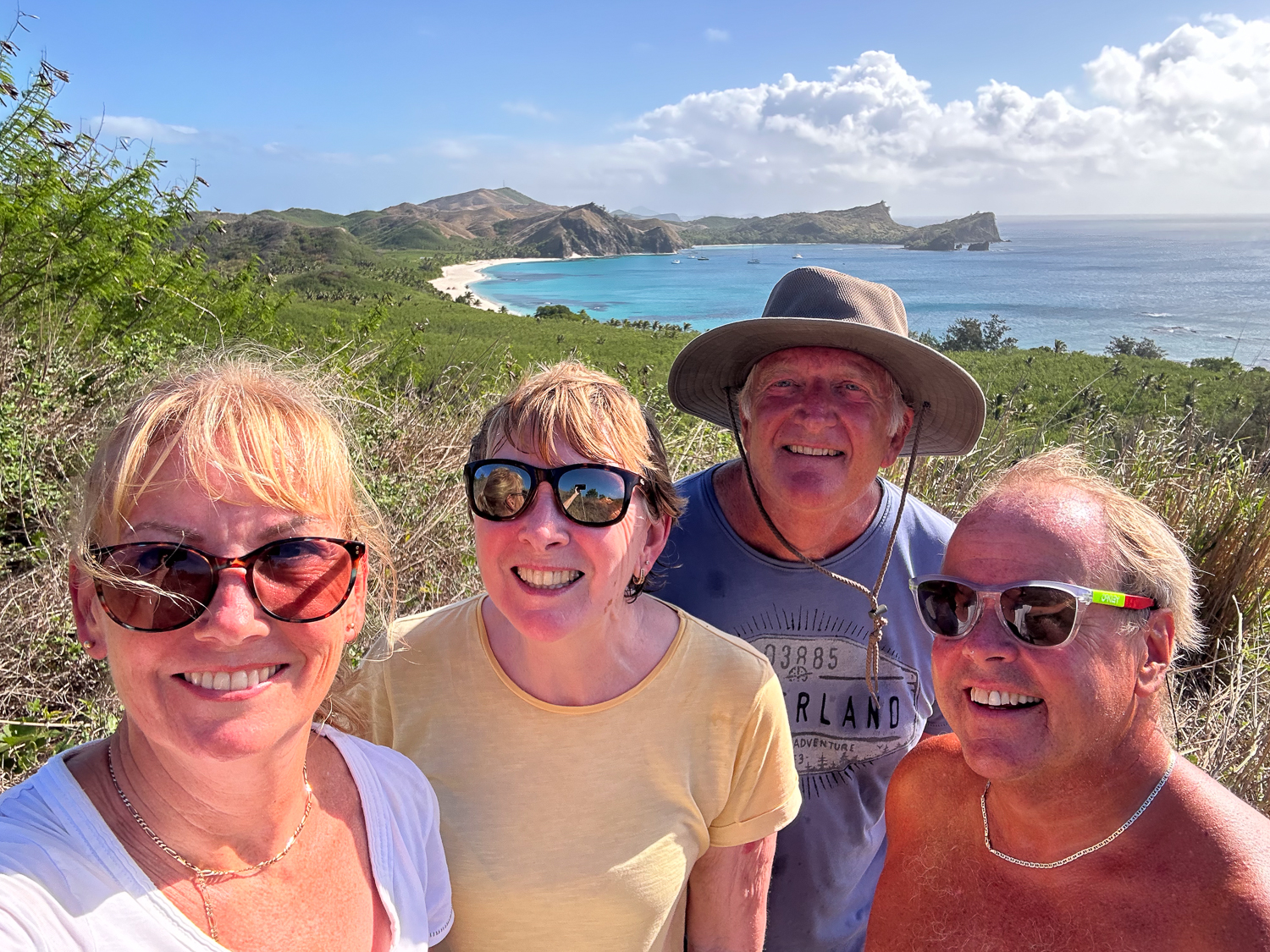
The next day, using information gleaned from No Foreign Land, we followed a track from the beach, past a derelict resort and up to the ‘main road’ that followed the ridge of the island linking the villages at either end and passing by an airstrip.
We opted to turn left towards Yasawa-i-Rara and eventually arrived at a small settlement on the west coast where we met some friendly locals who gave us directions for an alternative coastal path back to Champagne Beach.
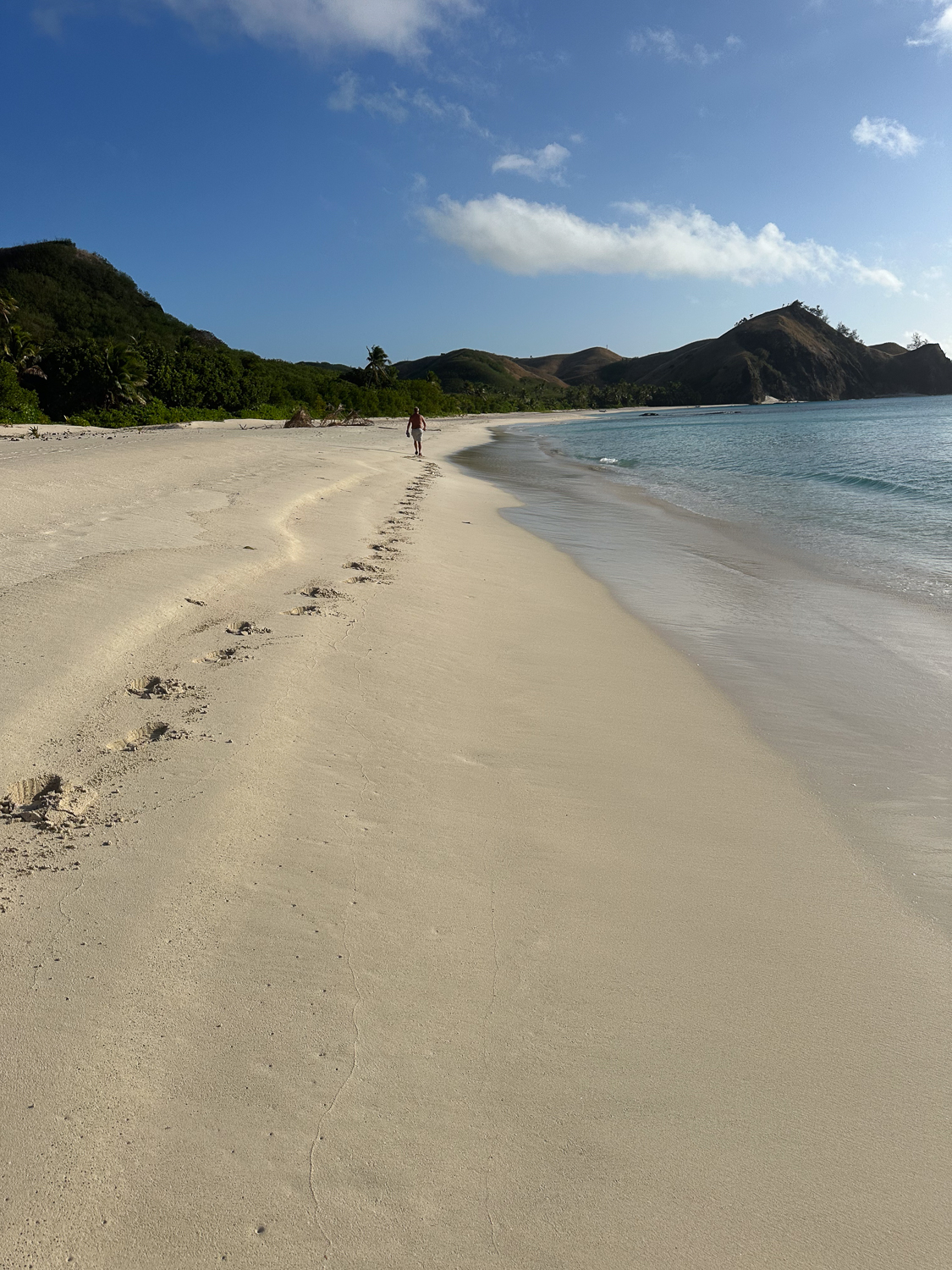
It was a delightful walk through a mix a jungle like bush, coconut palms and scrub. We managed to lose the path several times but always managed to find it again. On one occasion, after searching in vain for the path, a cheerful local walked right past us and pointed out that we were actually on the path – we had mistakenly thought that it was a stream bed. We followed him and the path until we emerged on the beach and had a long walk in soft sand back to the dinghy. Got back just in time to join everyone for drinks on the beach yet again.
The Fijian church experience
Sunday was a very laid back day on the boat, just the usual cleaning and washing that needs to be done wherever you are living.
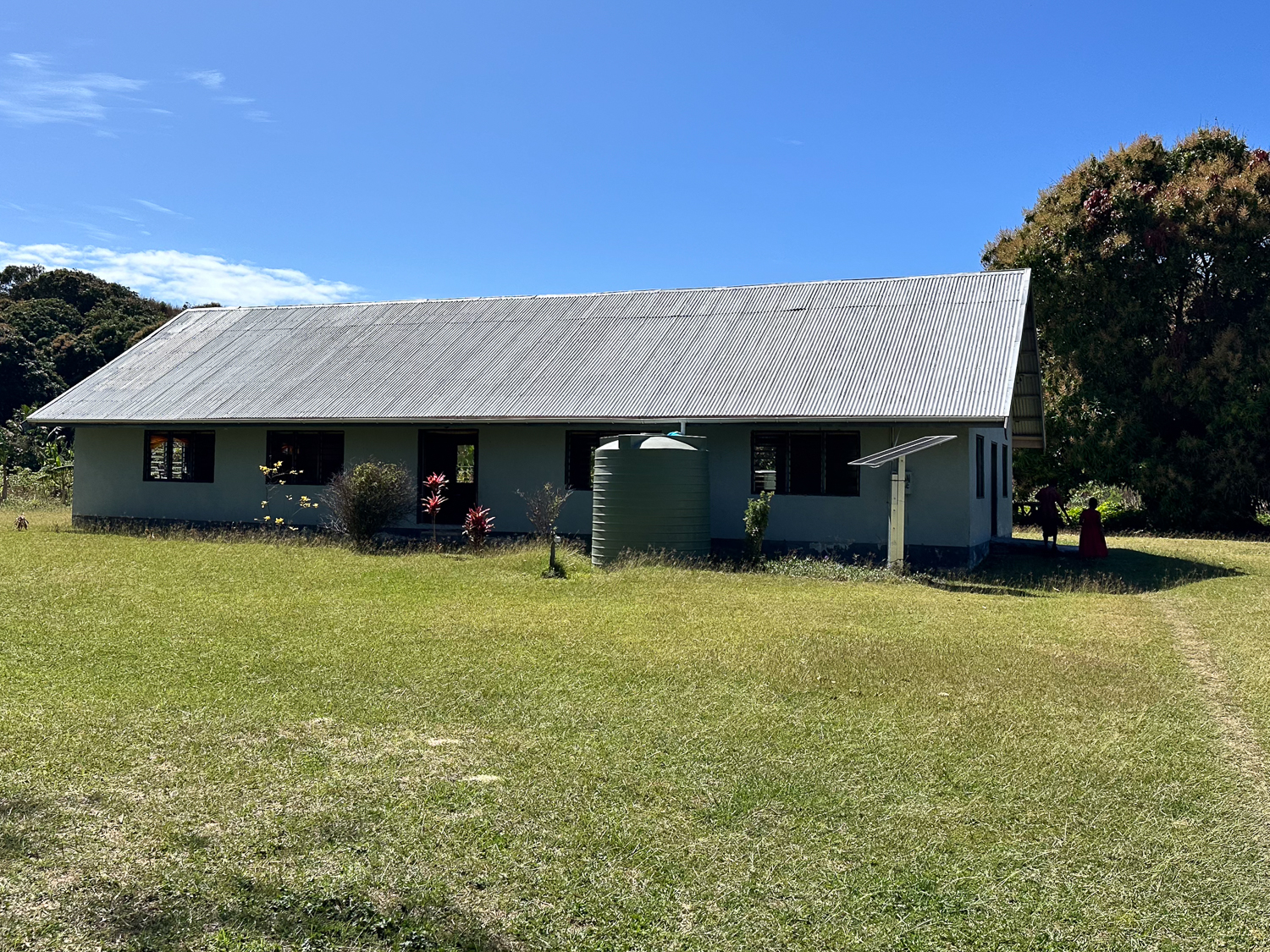
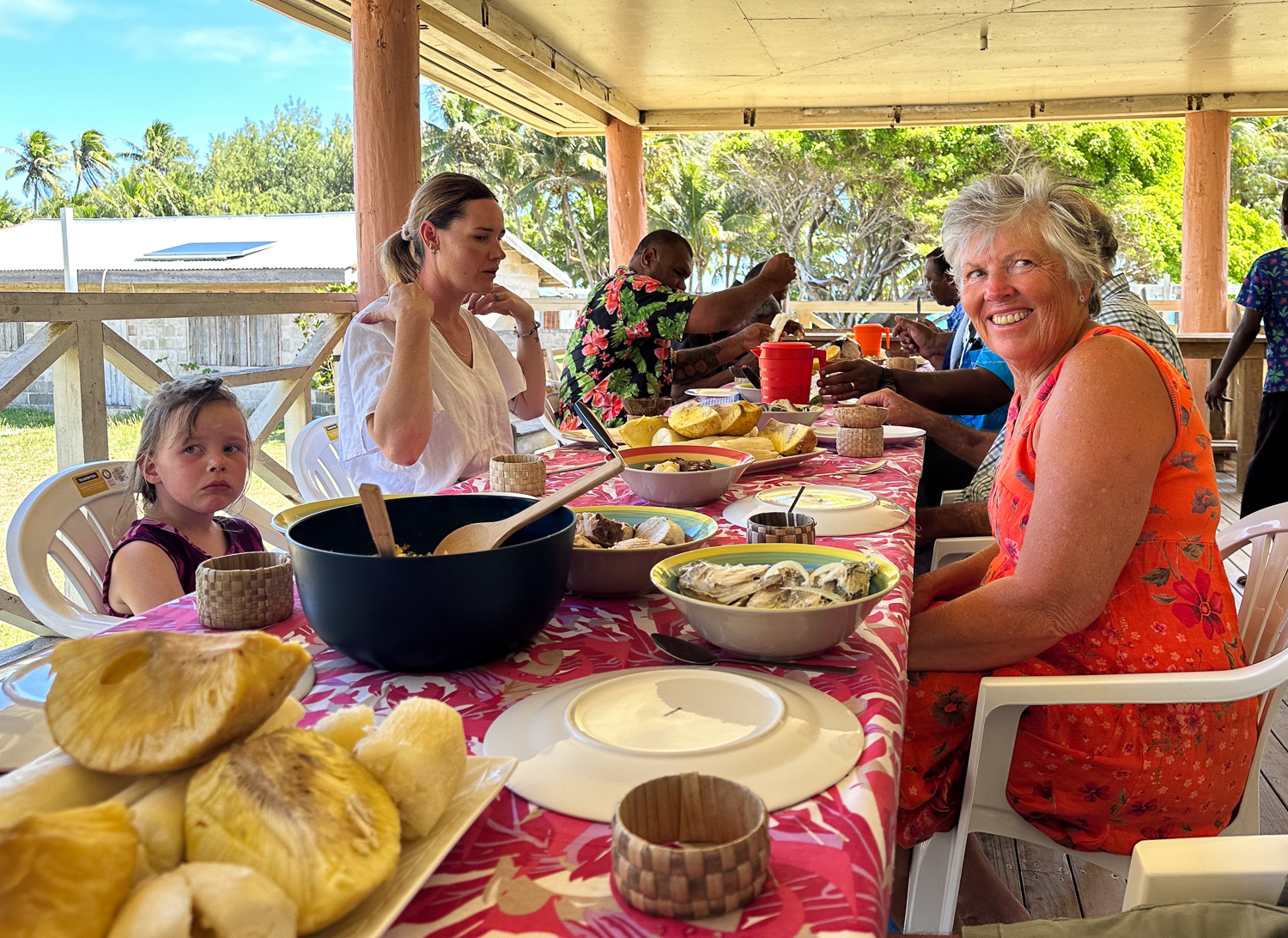
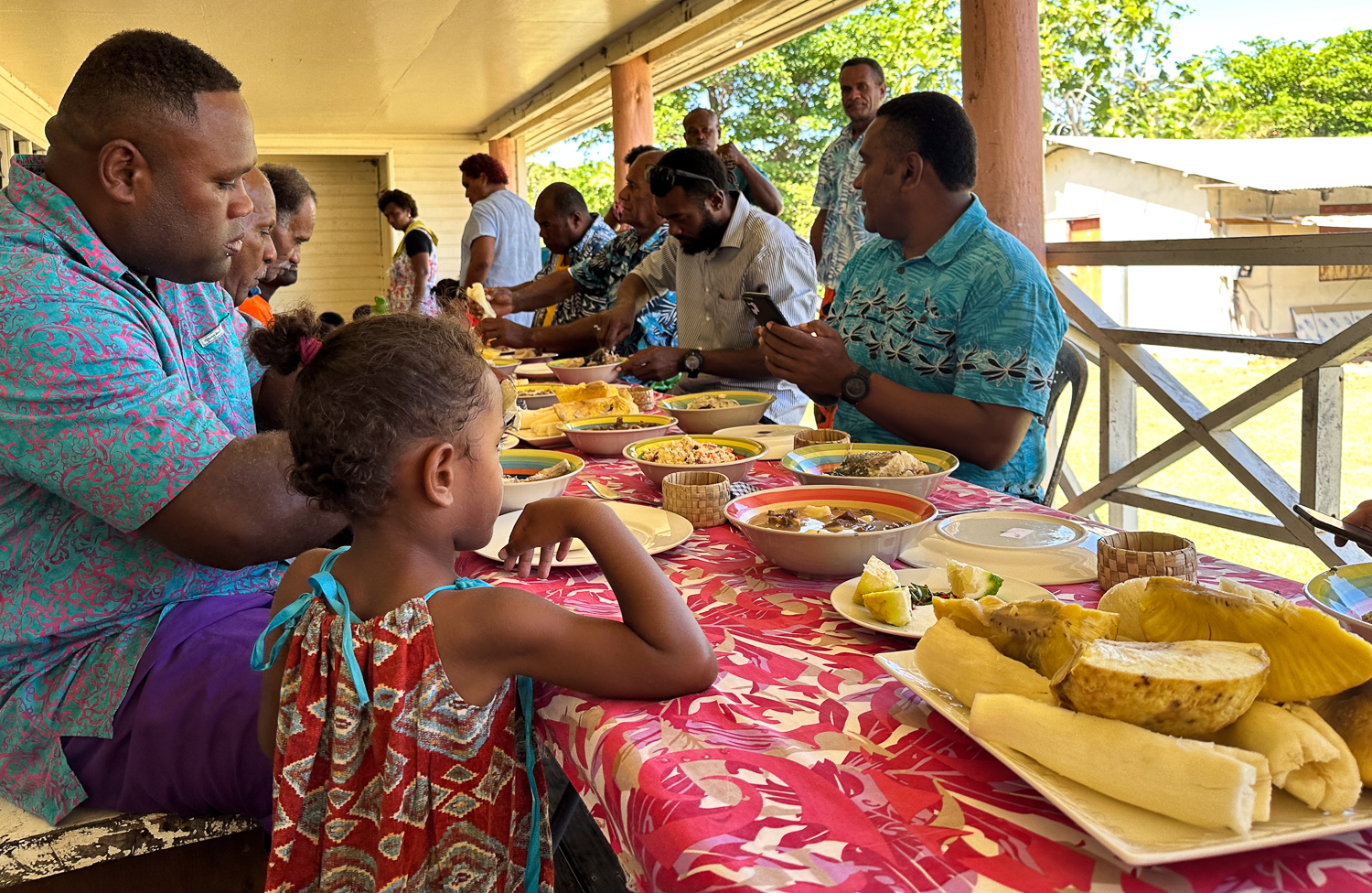
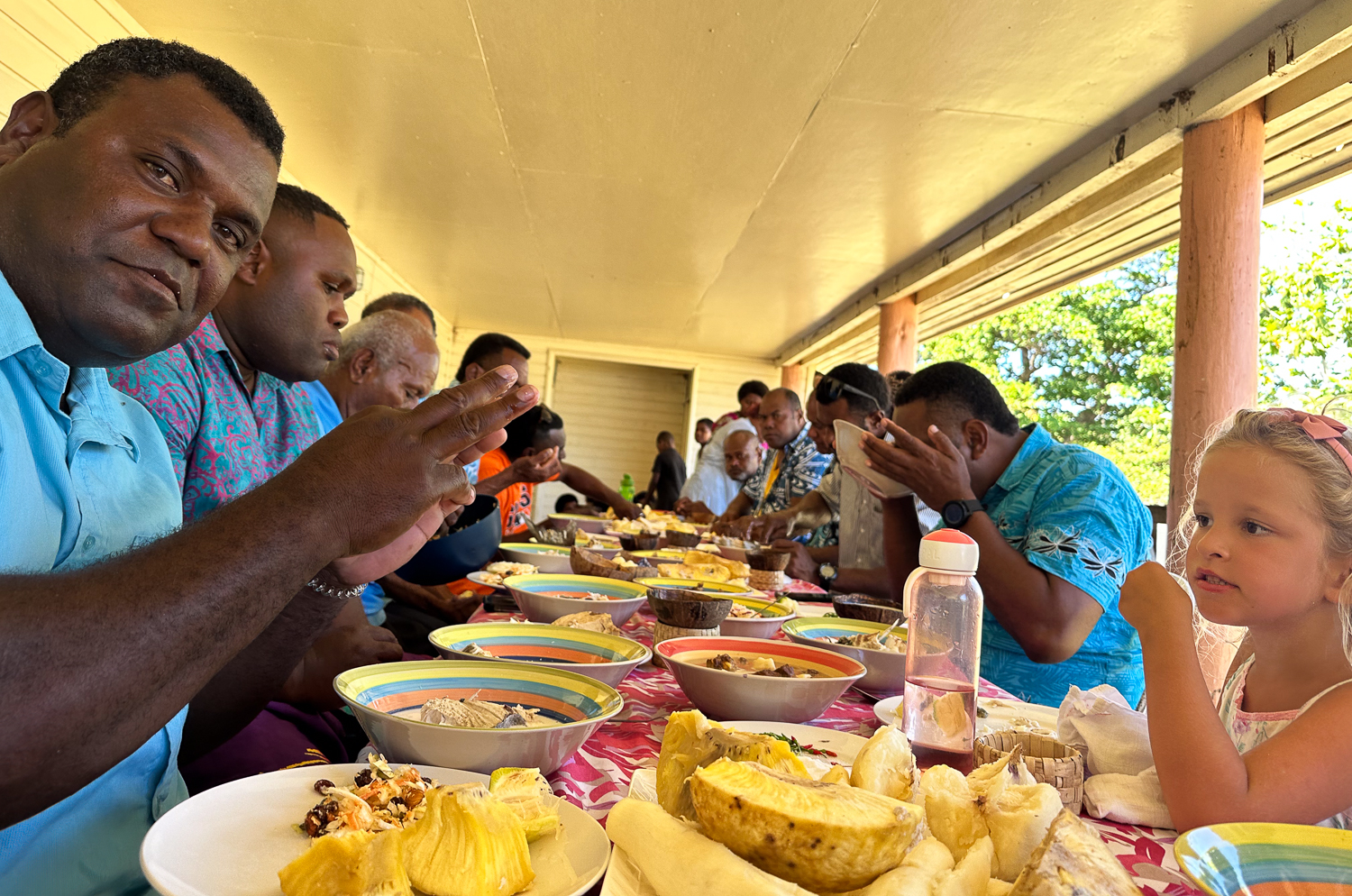
Jonathan had arranged to go to church with Chris and Dan and was picked up at 8:45. We did not see him again until after 3pm. They went to the Assembly of God church where they thoroughly enjoyed some amazing singing but … They had, unwittingly, picked the day that a new minister was taking over. All sorts of dignitaries were present and a special lunch had been laid on. Naturally they were all expected to attend.



Clownfish heaven
If you’ve followed the trip so far, you will know that we have been completely captivated by the clownfish that make their homes in a particular type of anemone. The clownfish and anemones have a fascinating symbiotic relationship – well worth a read. Between us we had taken hundreds of photos and, quite probably, over an hour’s worth of video footage of these colourful fish.
On the reef here we had found a particular coral bommie that was covered in anemones and home to numerous clown fish. We marked the spot with a buoy so that we could return easily with our dive gear and get the definitive clown fish photo.

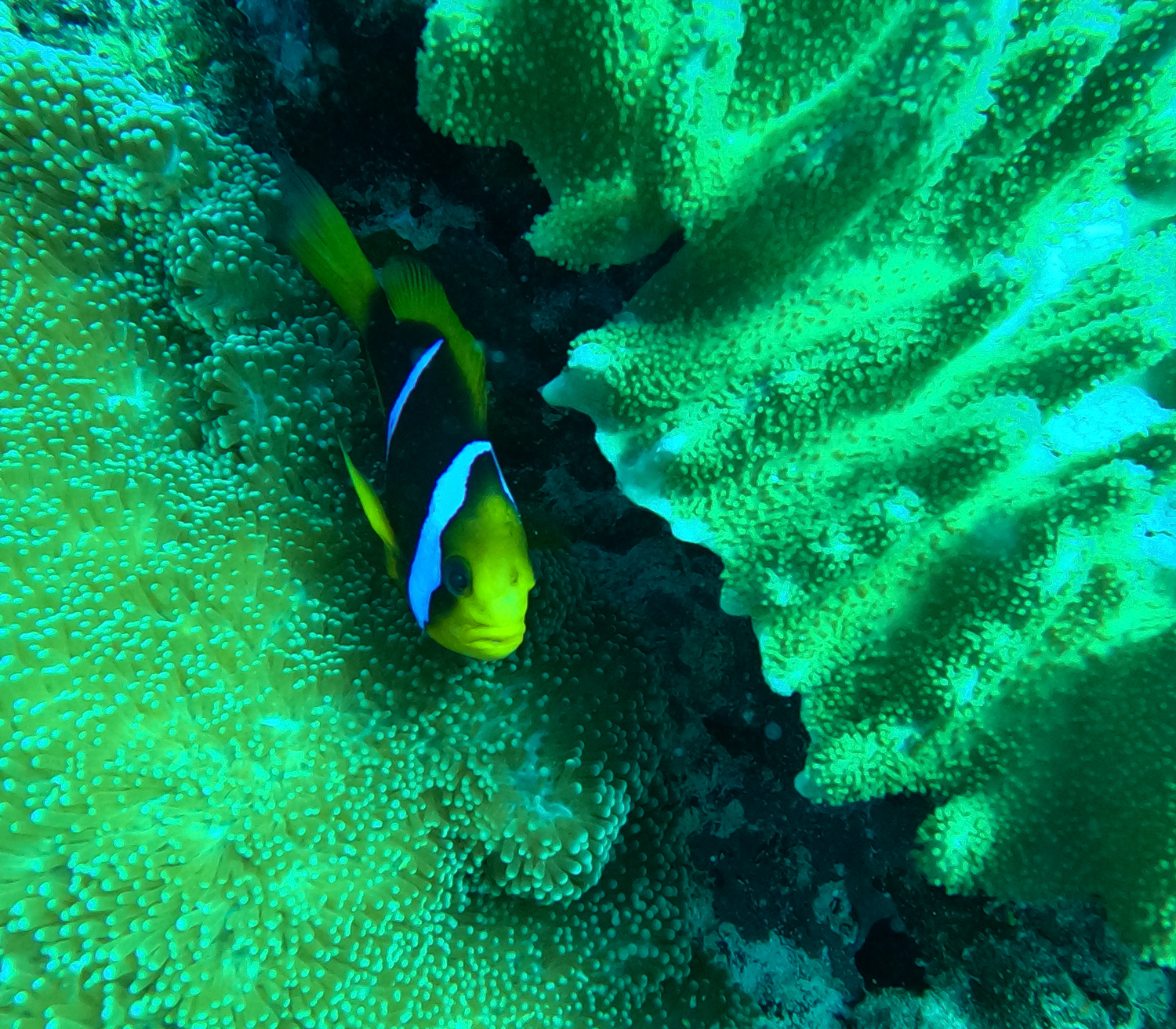
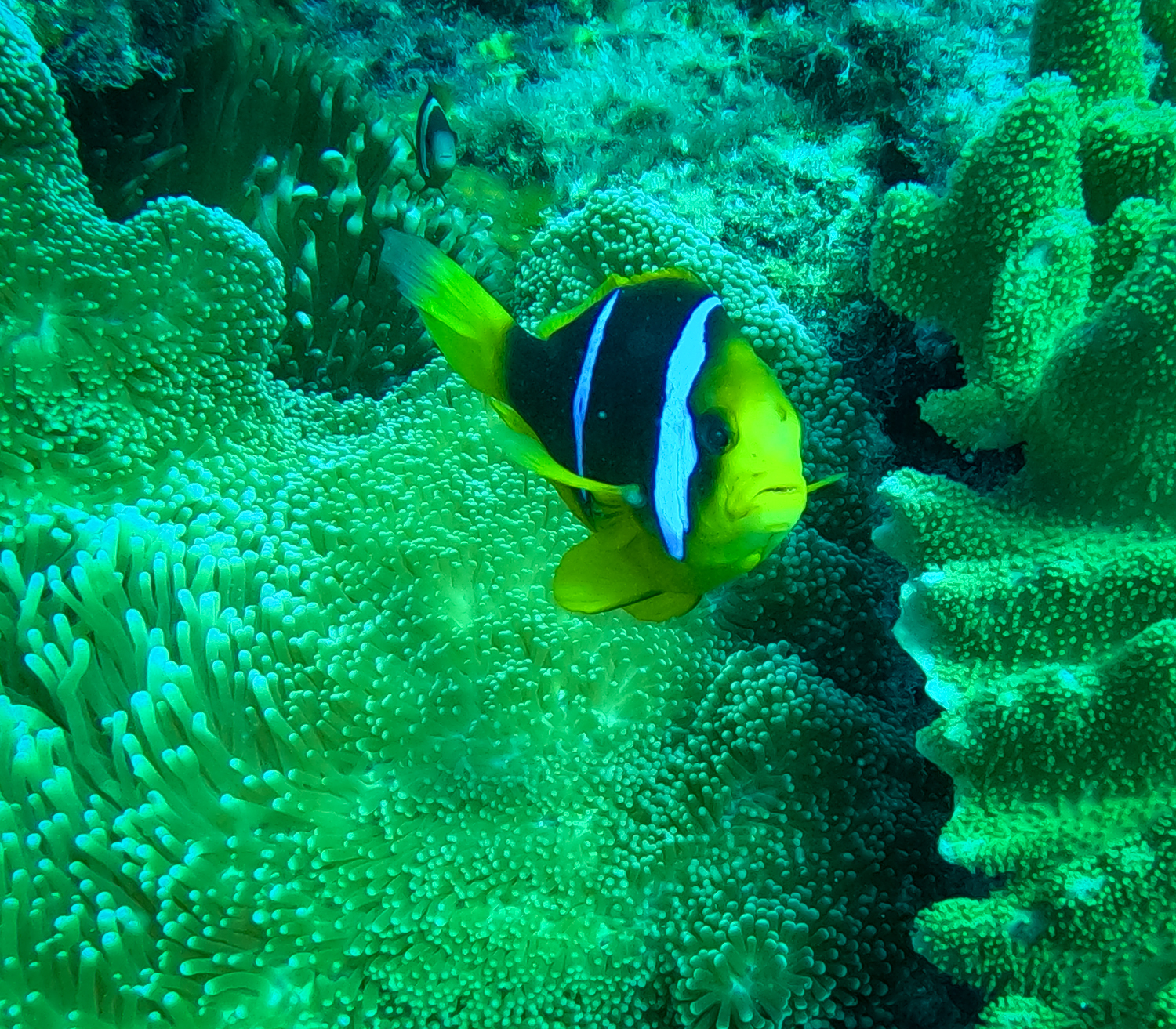
Not sure that we got the National Geographic style iconic photograph but we certainly added to our collection. We also planned on coming back after dark and doing a night dive. Unfortunately the wind picked up and it started to rain – we had a curry instead.
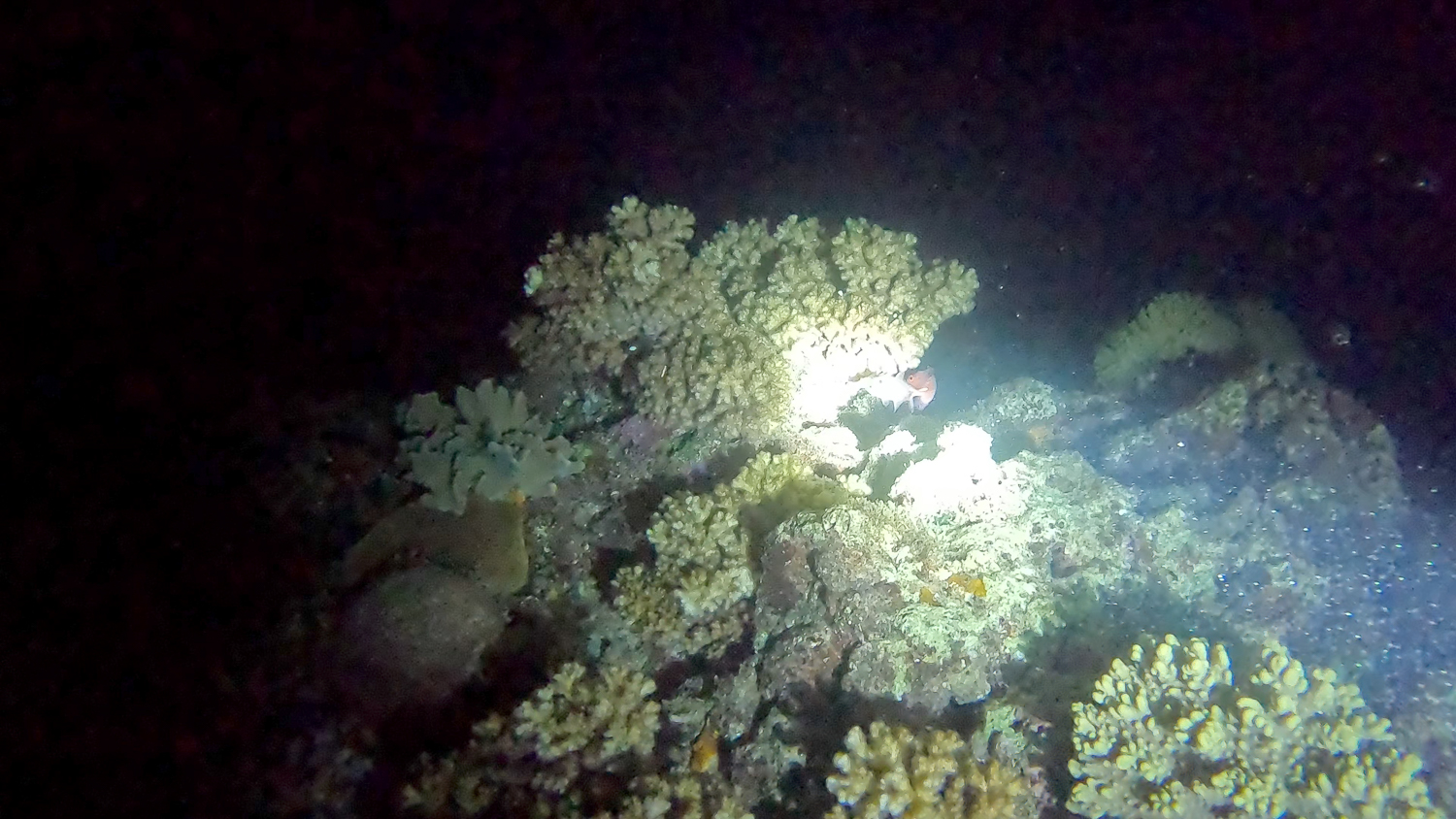
But the next night we managed our night dive. Lots of fun and a completely different experience Sadly, however, the clownfish seem to sleep at night.

A change of scenery
We had loved our time at Champagne Beach but knew that we needed to begin heading south to get ready to leave Fiji at the beginning of October.
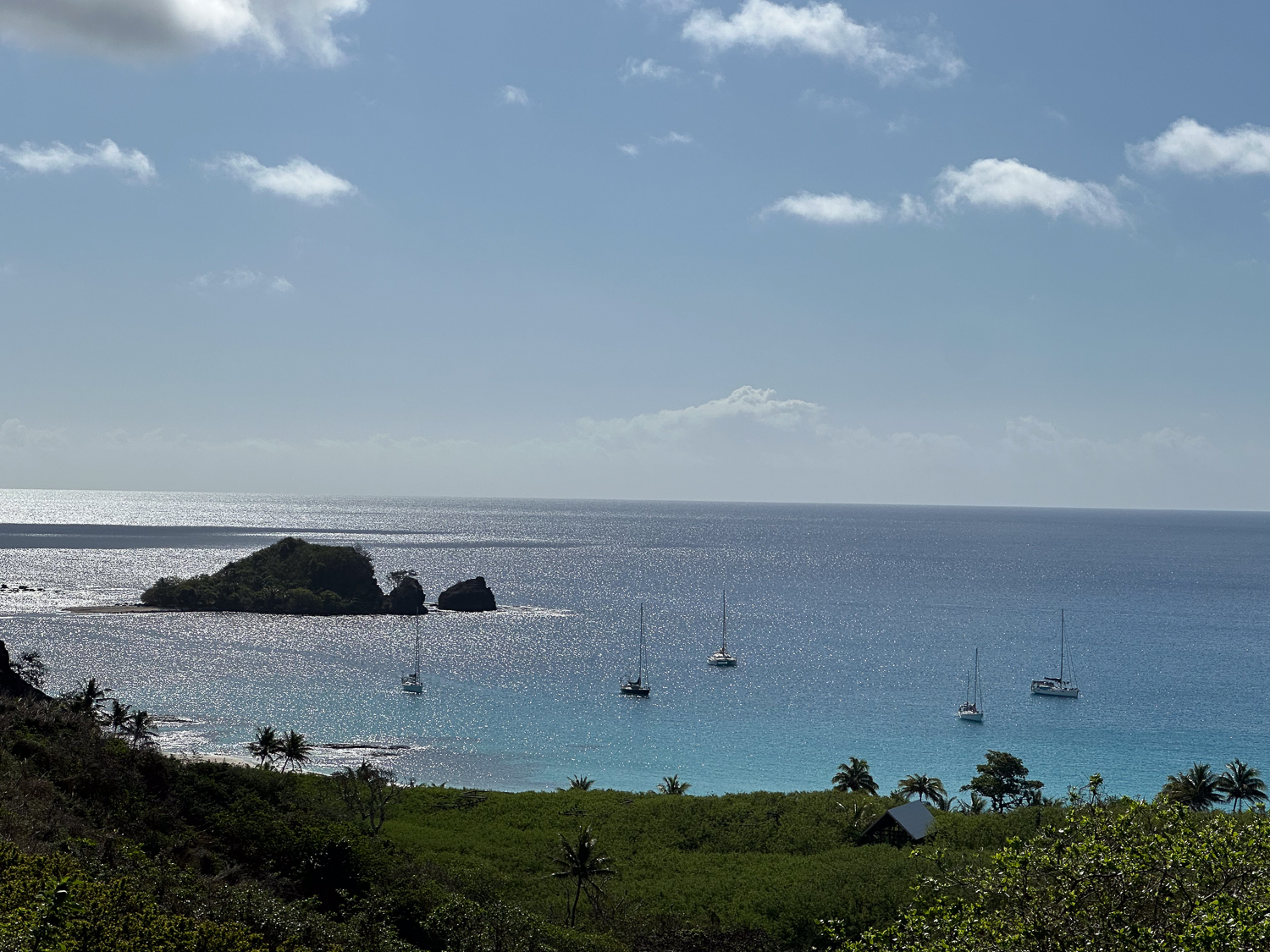
We moved to the southern end of Yasawa to Vunidamanu Bay. Several other boats were leaving the bay as we arrived. Only one remained, a 45 foot Leopard “Second Set” and they left early the next morning – was it something we said?
There was no village nearby and so we had thought we were exempt from sevusevu but, as we had experienced previously, a local, Paul, came by (in his open fibreglass boat with a 70 HP Yamaha outboard) and claimed to do sevusevu on behalf of his grandfather in Ndama Village which had jurisdiction over this bay. We handed over the kava but we were not convinced that he or his family had any such jurisdiction.

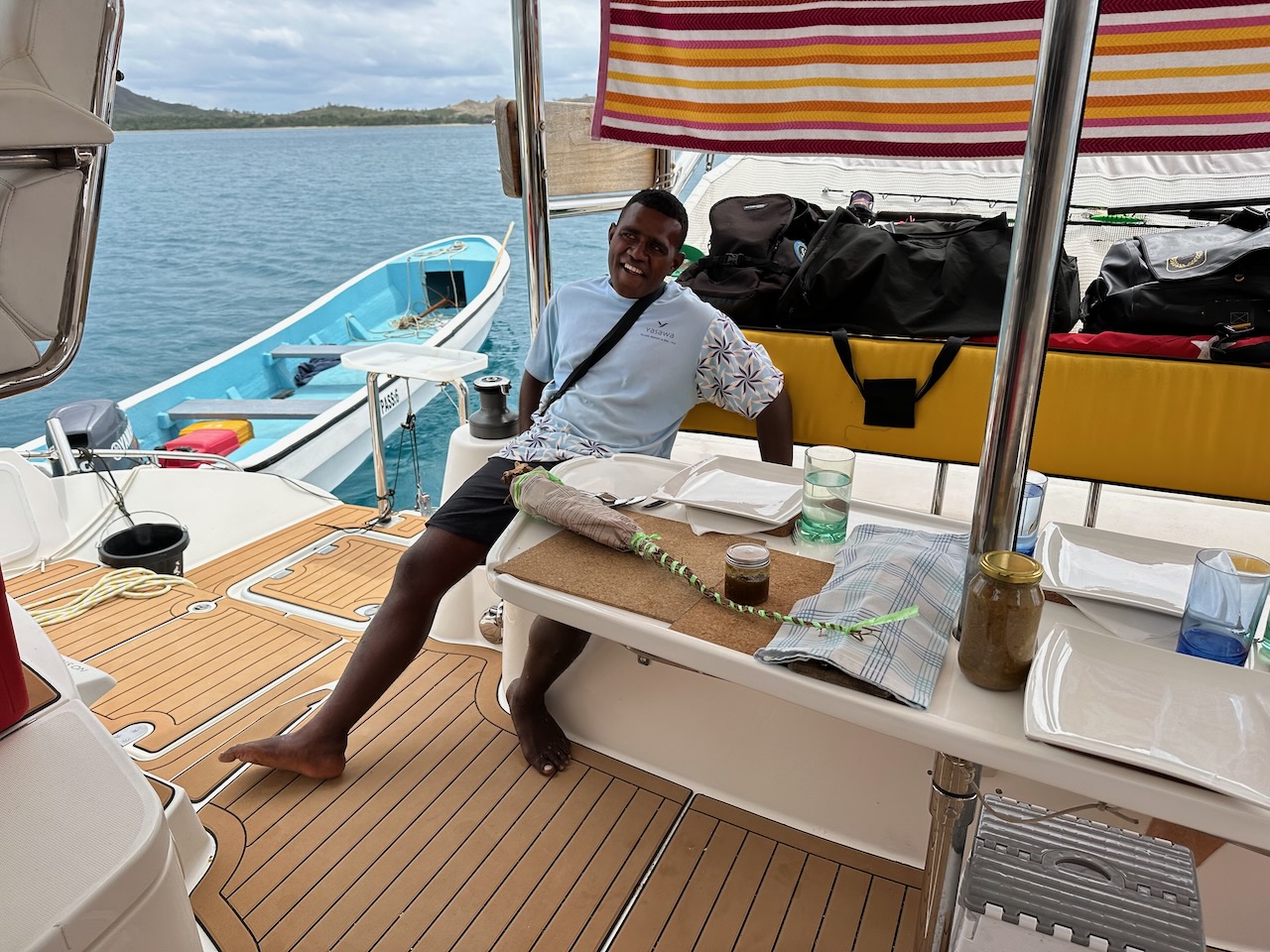
Paul also told us that the diving was excellent off the nearby island of Ndevoi. And he told us that there was a 30 m drop-off with crayfish everywhere. We were very excited.
The next day, we had the bay to ourselves. Claire and Jonathan snorkelled in the morning and reported colourful coral but poor visibility. So rather than get back in the water our afternoon activity was a walk ashore.
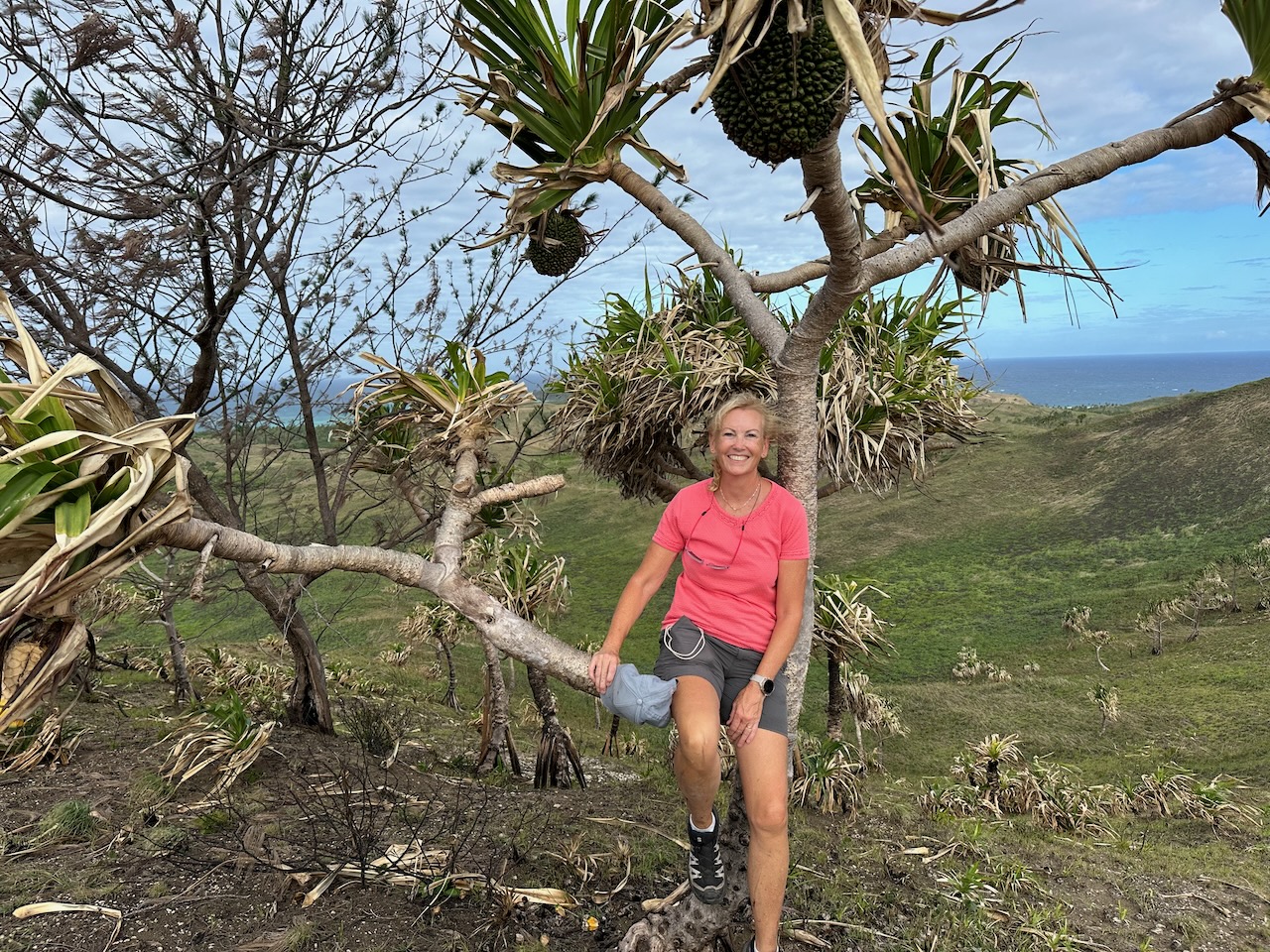
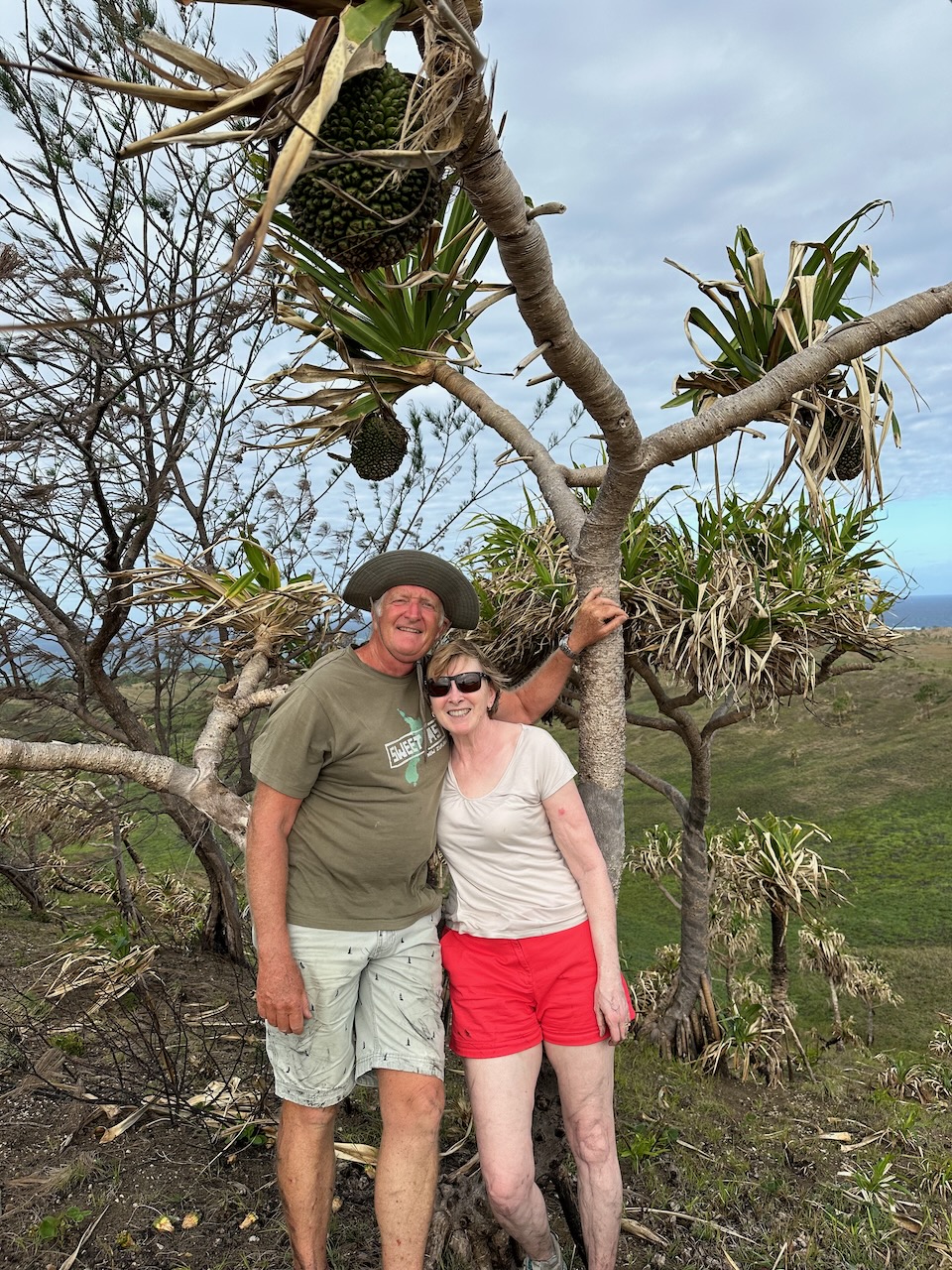
We wanted to climb the hill we could see to get views over the bay. Jonathan opted to stay and ‘guard’ the boat so Nigel, Sue and Claire took the dinghy ashore and set off on what had looked to be a gentle stroll up the hill. Instead we found ourself in burnt scrubby grass that was difficult to walk through and got us exceedingly grubby. We found out later that this was almost certainly caused by locals setting fire to the scrub to flush out wild pigs for them to kill.
We did at least get some decent views.

A fabulous dive
The next day we planned to motor to the nearby Ndevoi Island to dive. Initially, we were reluctant to leave as we could see several yachts heading our way and we were concerned that we would lose our prime anchor spot. We wondered if there was an equivalent, in sailing etiquette, to leaving your towel on the deckchair by the swimming pool in order to retain your anchor spot. Probably not!
One yacht sailed past and anchored in the next bay and another two turned and headed out to sea. Our anchorage was safe for now so we headed over to Ndevoi Island.
Our charts gave no indication of 30m depths anywhere near the island so we began to seriously doubt the information from Paul. Anyhow, we were committed to diving there. Claire and Jonathan went in first. They were underwater for about an hour and surfaced with grins like Cheshire cats. No sign of crayfish, but they had experienced the most beautiful scenic dive amongst fabulous coral formations. Sue and Nigel followed and also had an amazing dive experience. It was astonishingly beautiful.
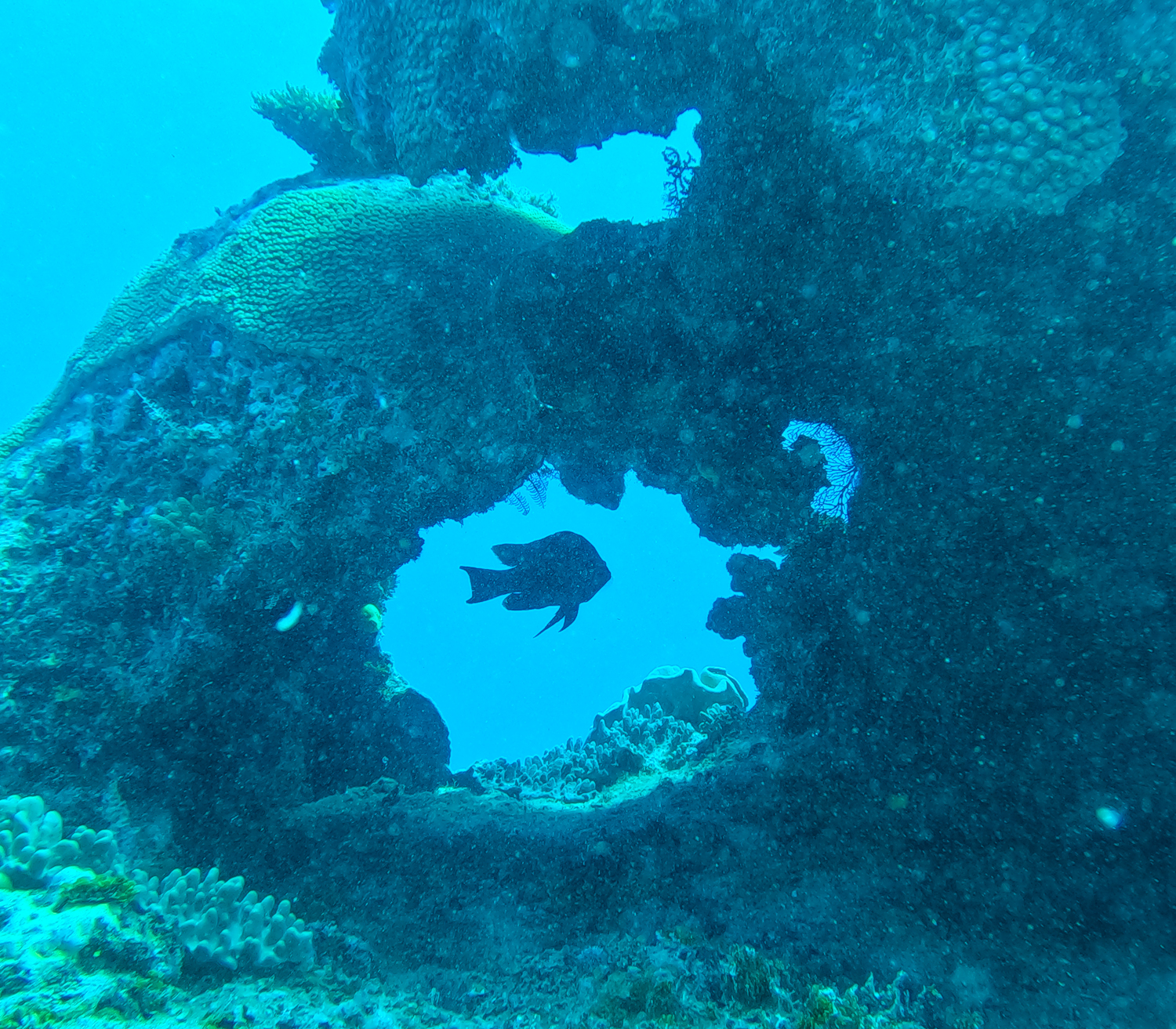
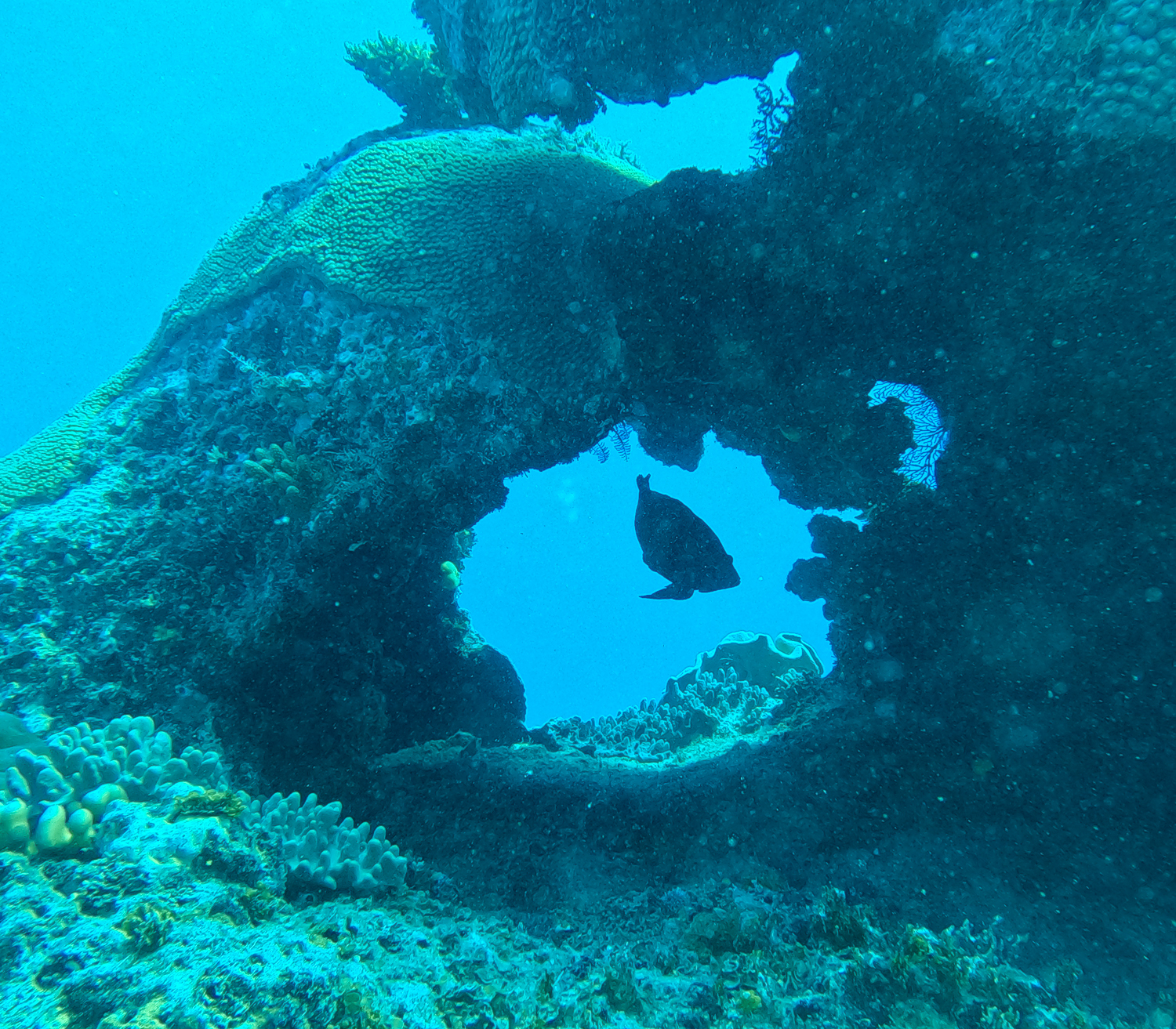

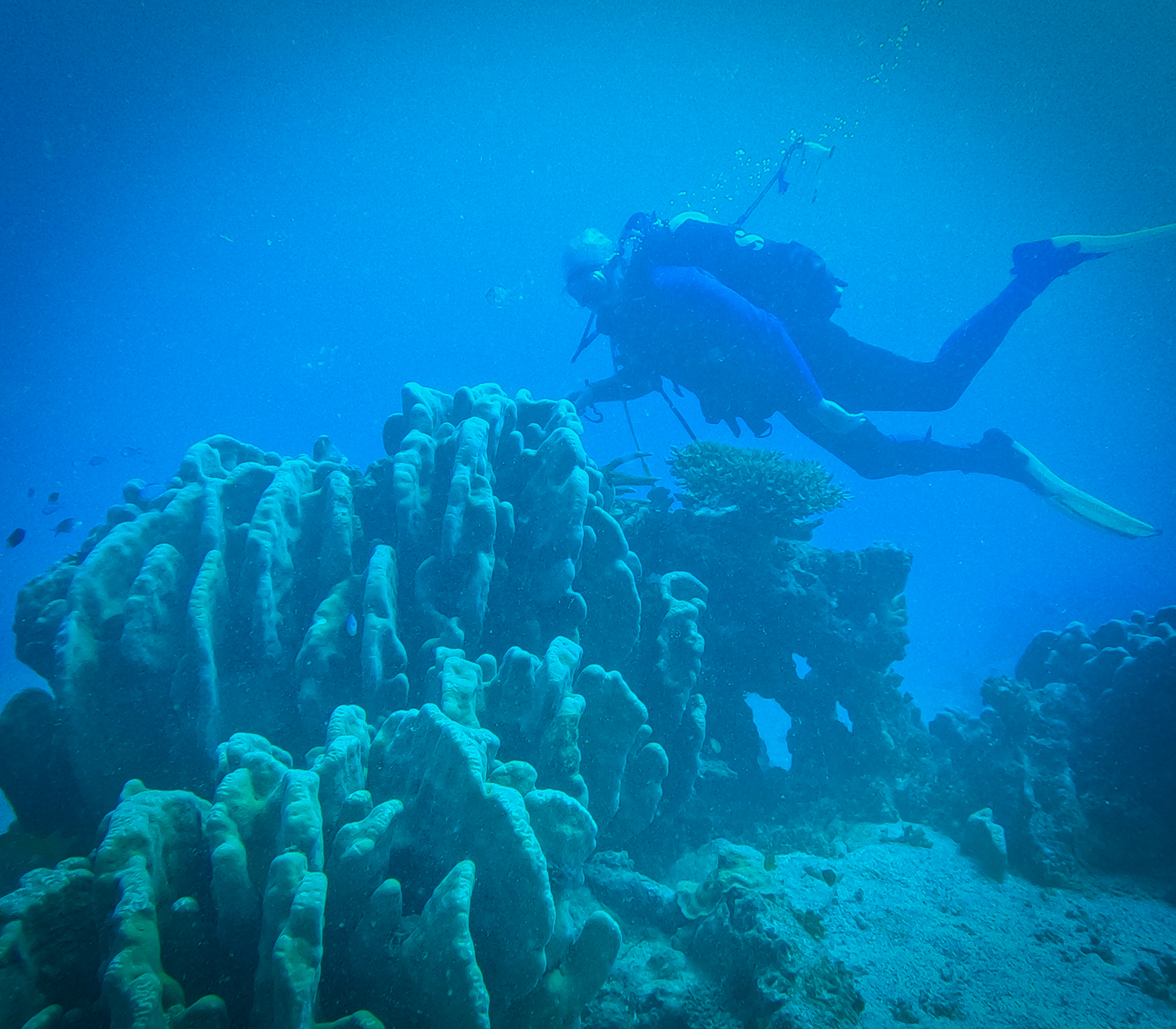
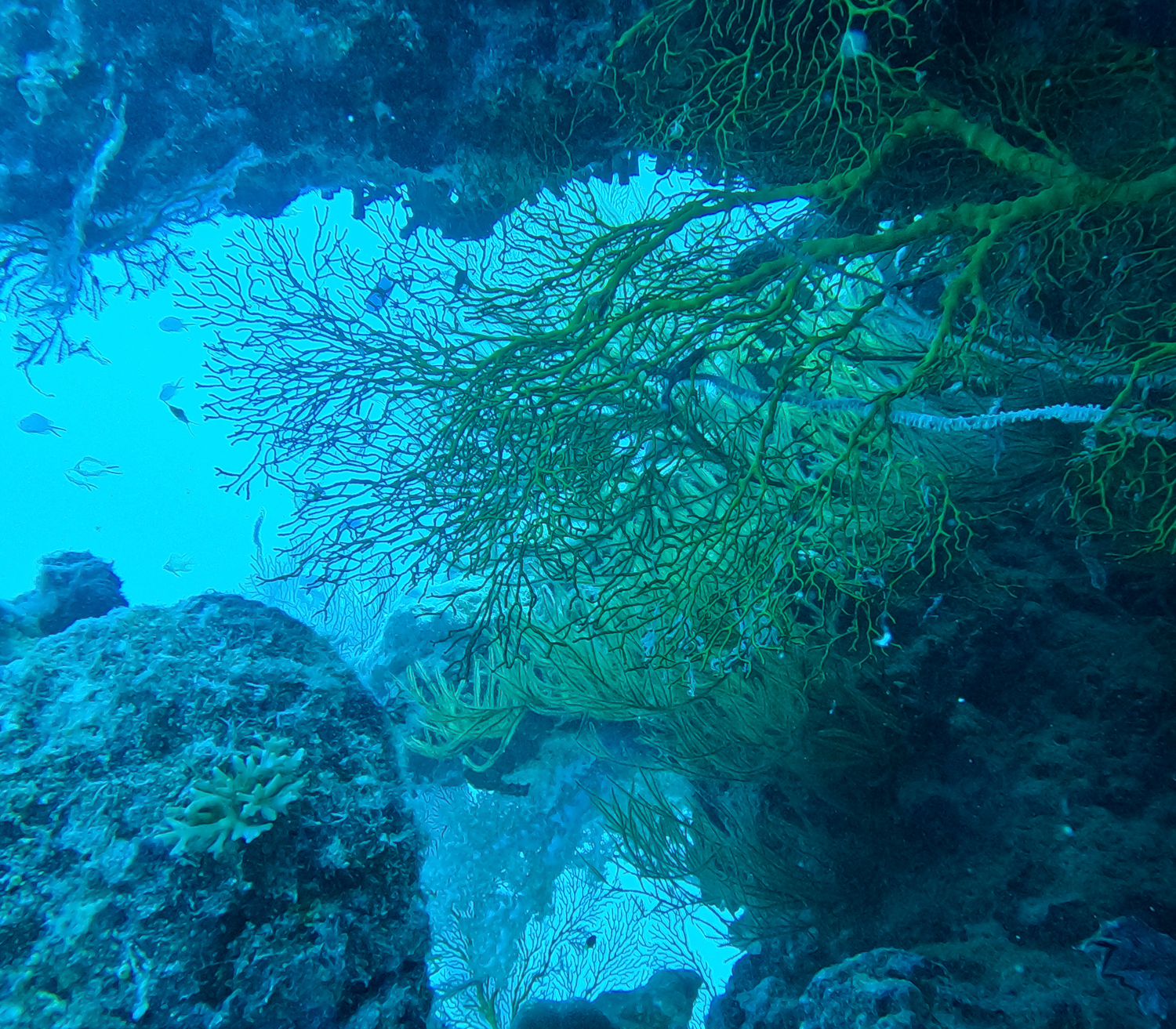
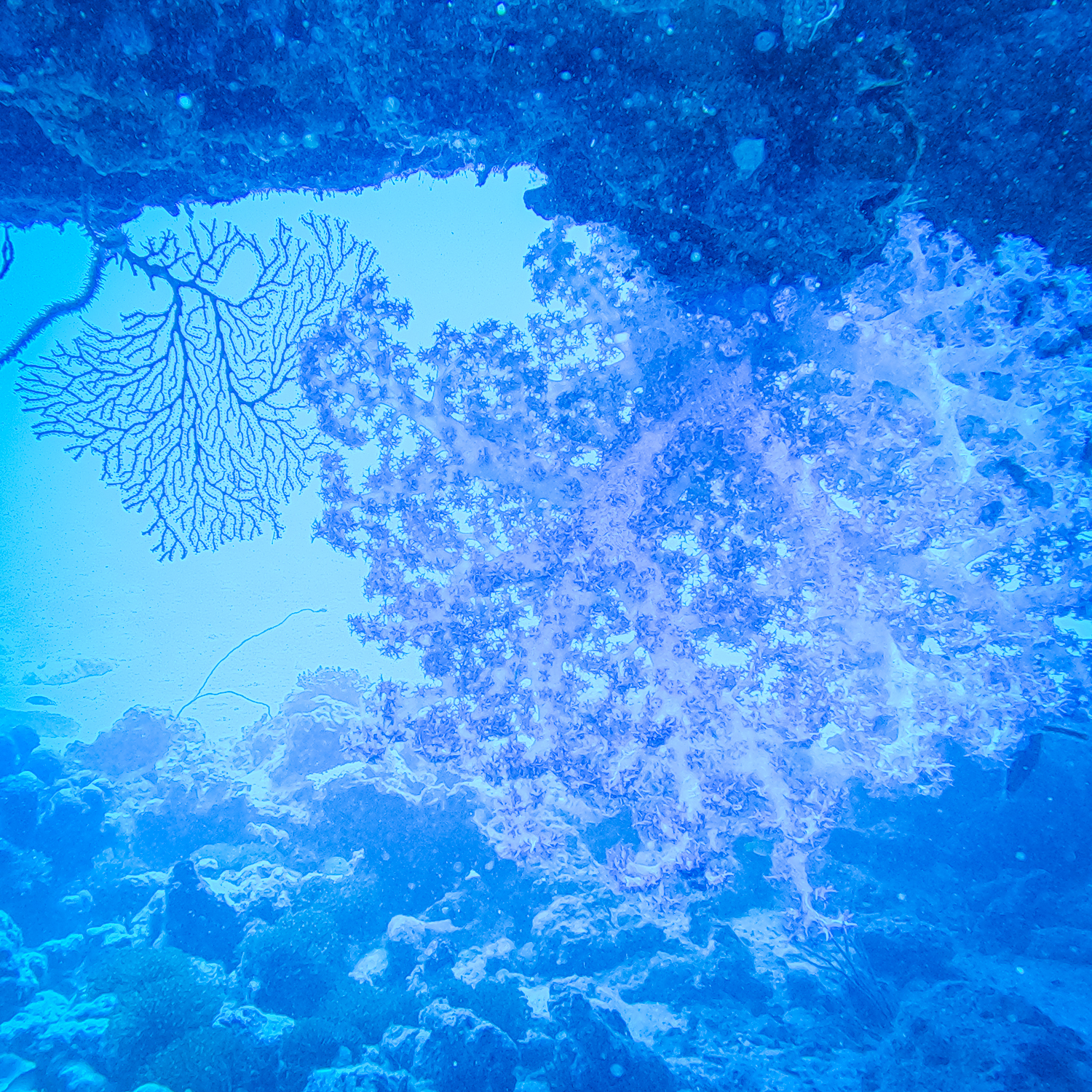

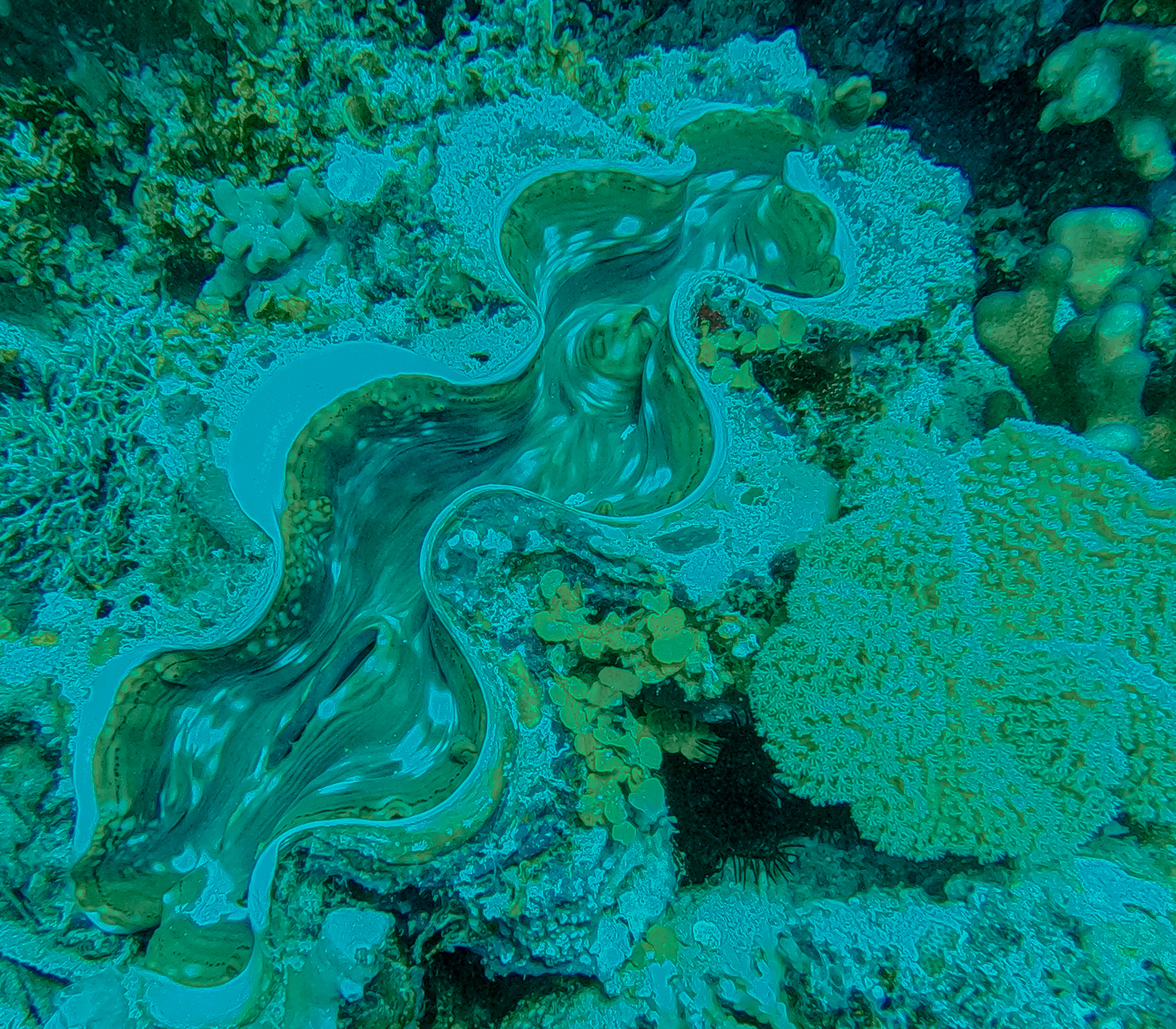
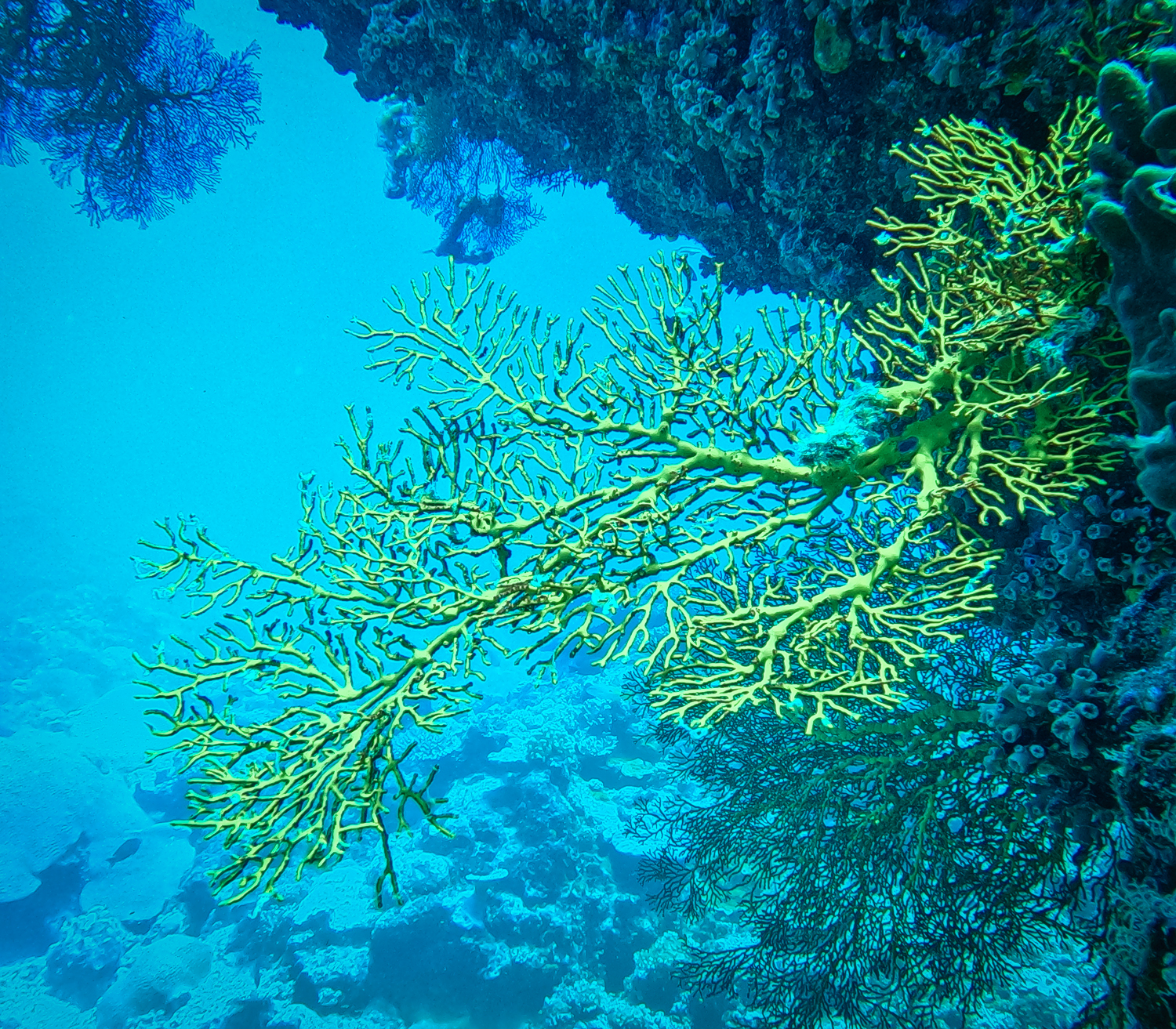
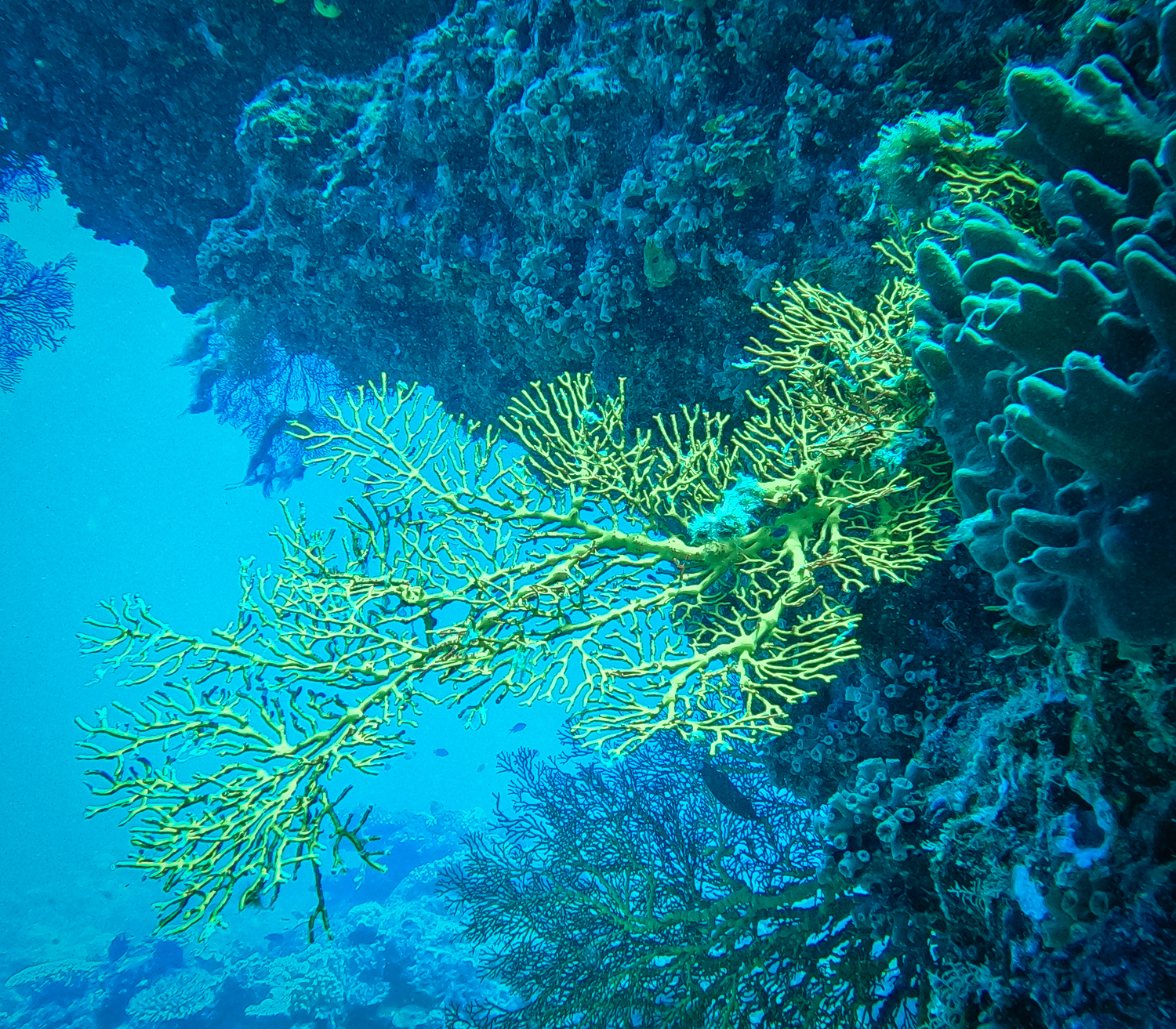


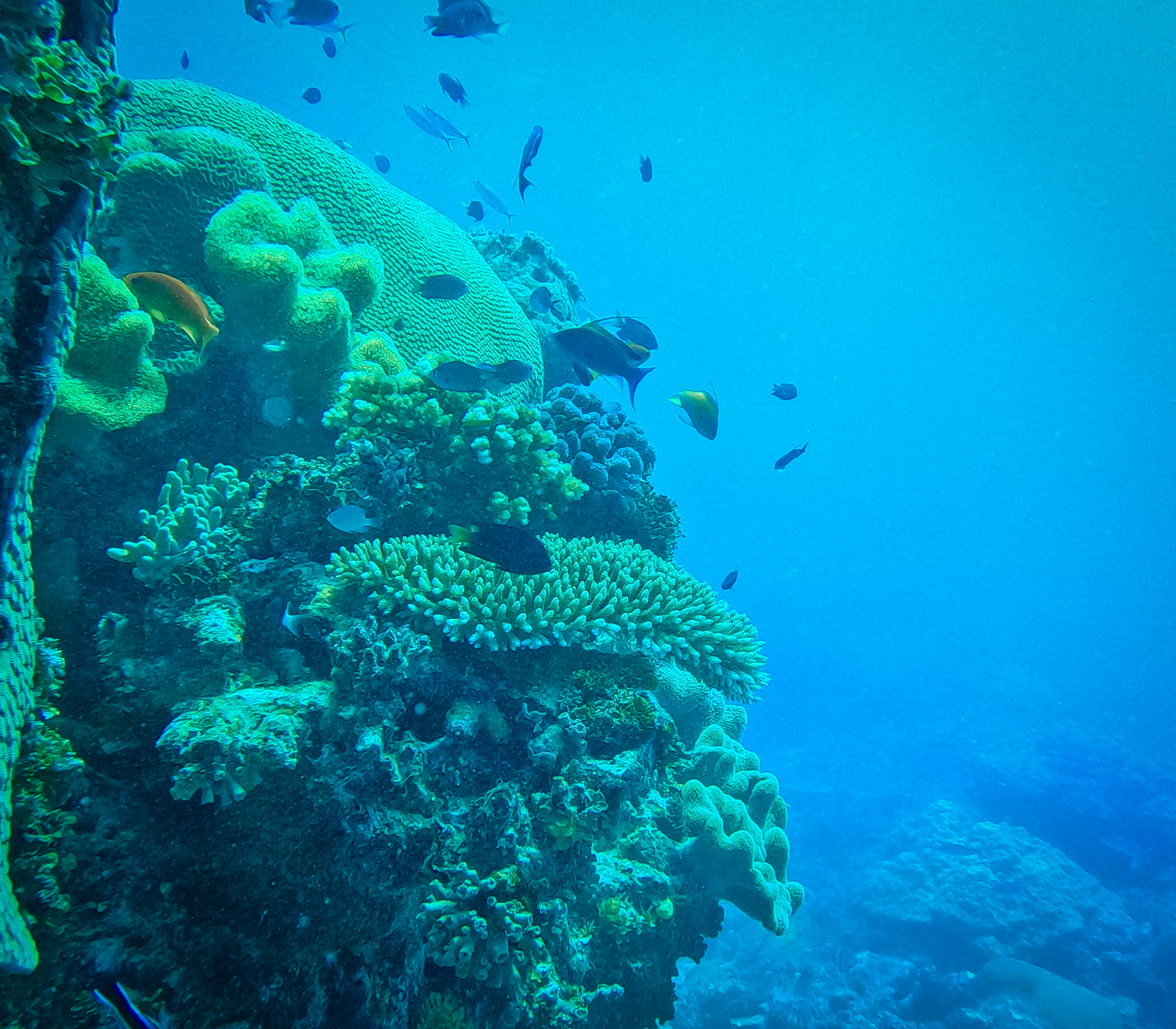
They had dived for well over an hour but Nigel got a little extra diving when we discovered that the anchor was well and truly stuck. After a good ten minutes, Nigel’s efforts to release the anchor were successful and we were able to return to Vunidanama which, to our delight, we still had all to ourselves.
Torchlight crab hunt
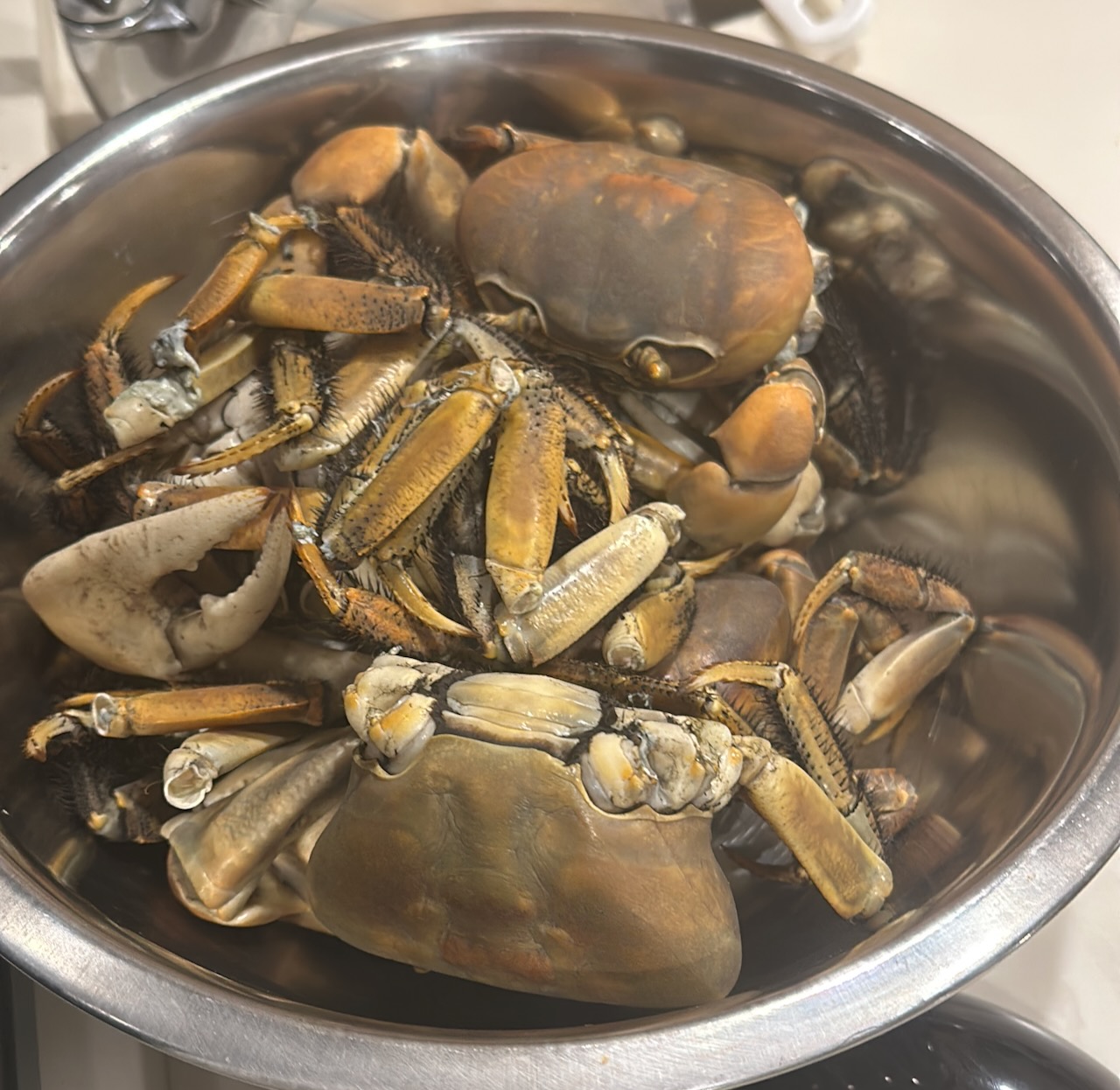
Given our failure to catch (or even see) any crayfish we thought we would have a go at catching some of the coconut crabs that we had seen scurrying around during our walk the previous day. Nigel and Johnathan went ashore as the sun was setting armed with torches, leather gloves and a chilly bin. After a few painful encounters, they developed a finger safe technique for catching the crabs before they disappeared down their holes and returned with enough crab to fill a sizeable pot.
We cooked them up for lunch the next day. We had read various articles on cooking and eating coconut crabs and some even suggested that they could be poisonous, depending on what they had eaten. Jonathan would not take the risk. Three of us enjoyed crab sandwiches and survived.
Another local approached us (in his open fibreglass boat with a 70 HP Yamaha outboard) to ask for Sevusevu, we did not give any. It had become quite clear to us that it had not been required, that Paul was a bit of a fantasist and that there was a bit of a ‘rort’ going on. Other boats on the Island Cruising Rally and through No Foreign Land were reporting similar (sometimes quite demanding) approaches in the bay. A bit of a sour taste to an otherwise universally positive and super-friendly interactions with Fijian villagers.
Return to One Dollar Bay
We had a lovely light wind, Code 0, sail back to One Dollar Bay. There is no need to perform sevusevu again when you return to the same area in the same season. So with no rush to get to One Dollar Bay we were able to get busy with another boat job before departing.
Our anchor chain had become twisted and was slipping on the gypsy (the cog wheel that pulls the chain up) as we raised the anchor. Before we left that day, we managed to get rid of some of the twists and took the opportunity to add some coloured markers to it. Jonathan had come across a ‘delightful’ mnemonic to allow us to check readily how much anchor chain is out. Simply remember to ‘Rub Your Balls With Grease’ and you will know how much anchor chain you have out. The mnemonic gives the colour sequence Red, Yellow, Blue, White and Green and we change colour every five metres. So at 5 metres there is a red marker, at 10 metres there is a yellow marker and so on to a green marker at 25 metres. Then we switch to double markers. So 30 metres is a double red, 35 metres is a double yellow. Our last marker is a triple green at 75 metres.
We miss out on more mantas
We motored the short distance from One Dollar Bay to a bay on the southern tip of Naviti Island. Three more fish were caught – two Spanish mackeral and a jack mackerel. At the southern end of Naviti Island we passed through Drawaqa Passage where we hoped to swim with manta rays at high tide.
The bay was glorious when we arrived so Claire and Jonathan went for a snorkel. Nice coral but poor visibility was the verdict. By the time they had returned to the boat the wind had turned and an unpleasant easterly swell managed was chopping into the bay.
It was a very rolly night. Worse still, the wind and swell combined meant that we were unable to snorkel with the mantas as planned. Very reluctantly, we had to acknowledge that it was time to move on.
Lovely anchorage – on the second attempt
We sailed downwind to Nalauwaki Village on the northern end of Waya Island. Once we had anchored we discovered that the easterly swell curled around the edge of this bay too and made the anchorage almost as rolly as the previous night’s. Nobody wanted that so off we went in search of better.
Just a short motor around a headland took us to a sheltered bay off Octopus Resort on the western side of Waya. We had a lovely calm night. Perhaps it just felt calm after drinks in the resort beach bar.


In the bar we met Mike and Daisy from Picasso. They had abandoned their anchorage beside us on Naviti Island as soon as it began to get rolly. They had needed to find an alternative spot in the dark. Very brave, or stupid.
The cassava that never turned up
Before we got too distracted in the bar we arranged with one of the office staff to purchase some cassava. The lady promised to bring it from the village when she came to work the next day. It was rather late in the day when we finally got ashore to collect it and we were told that she had already gone home and taken the cassava back with her. So Nigel, Sue and Claire climbed the steep steps over the ridge to descend into the village (Nalauwaki Village where we had originally tried to anchor). Jonathan generously stayed in the bar to save seats for us!
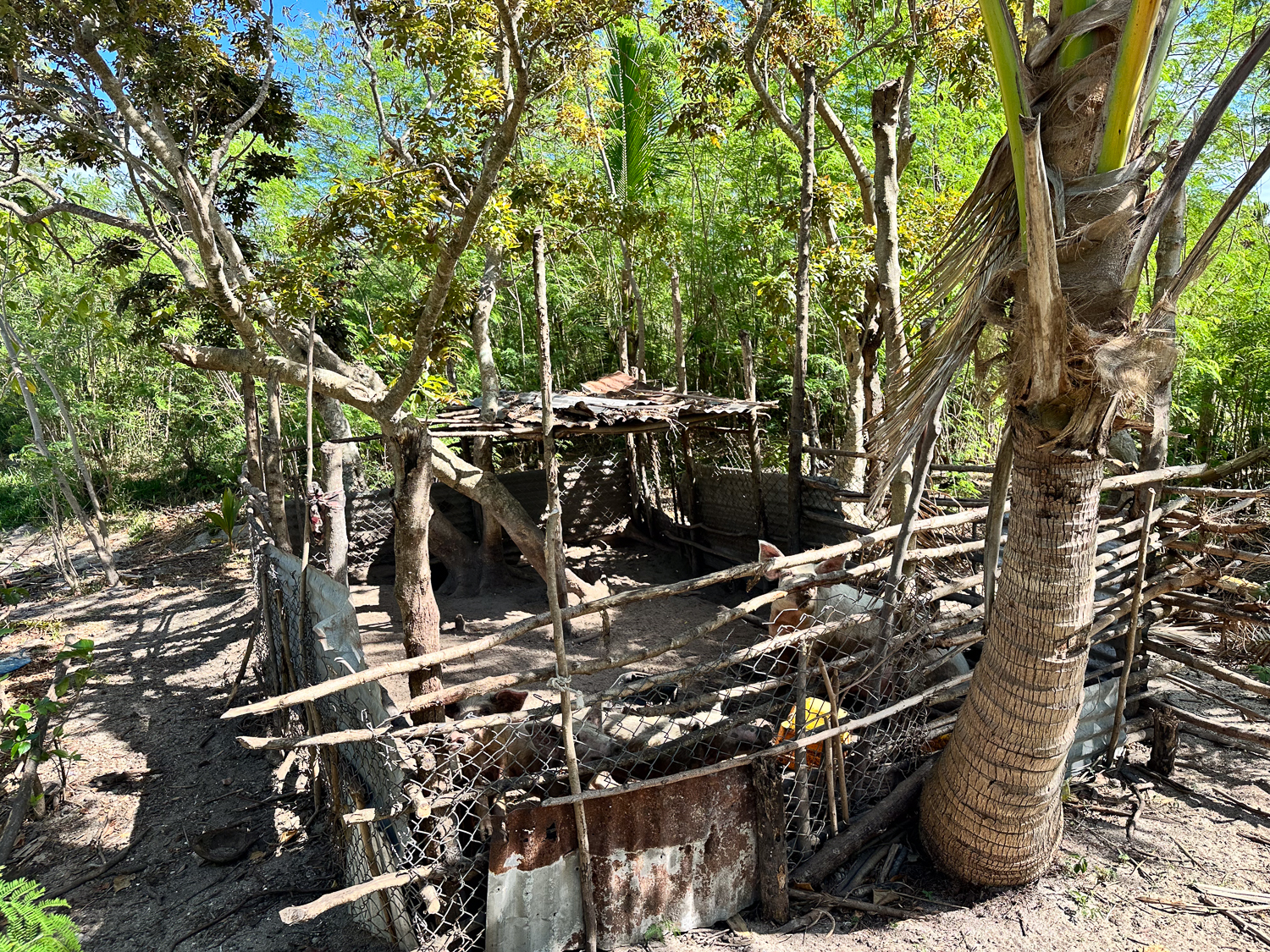
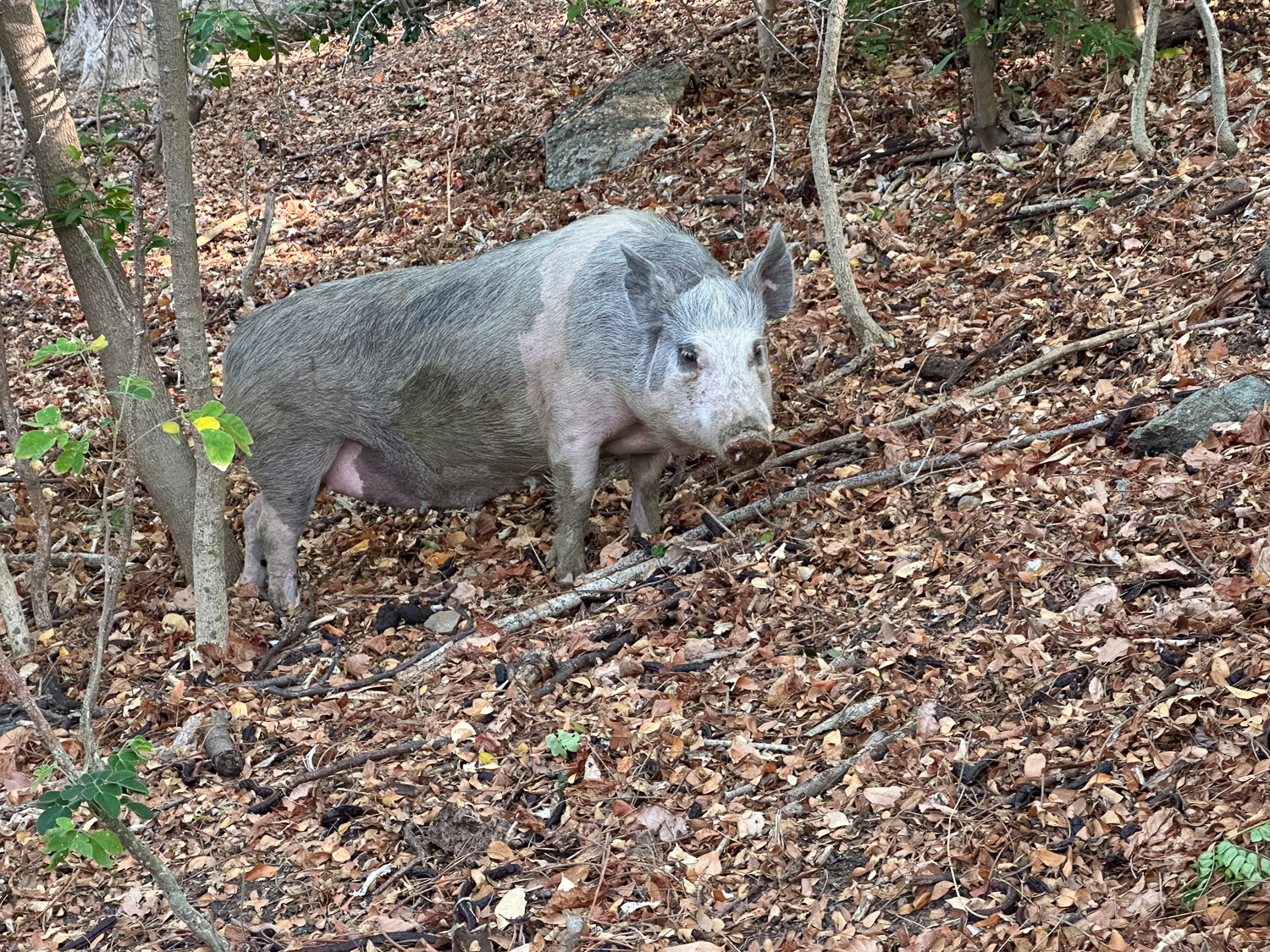
The descent into the village took us through a large piggery with free ranging pigs (many large sows and countless piglets) wandering across the path. In the village we were told that our lady had not returned from work. We gave up and went back to join Jonathan in the bar.


The following day Nigel and Jonathan returned to the resort to pay our bar bill and collect Jonathan’s credit card which was still in the resort office. While there we felt sure they would be able to collect our cassava.
Landing the dinghy was very tricky at low tide with waves breaking on the beach. The previous evening we had seen a dinghy get completely rolled in the surf in the same spot. They were amused to see that the dinghy was still on the beach and assumed that the young man who owned it had spent the night in the resort rather than getting back to his boat.
Bar bill paid, credit card retrieved, still no cassava. They gave up.
Launching the dinghy meant very careful timing between waves and then some furious paddling before the engine could be lowered and started. Fortunately it started first pull and they made it off the beach before the next breaking wave.
Back to Mana Island
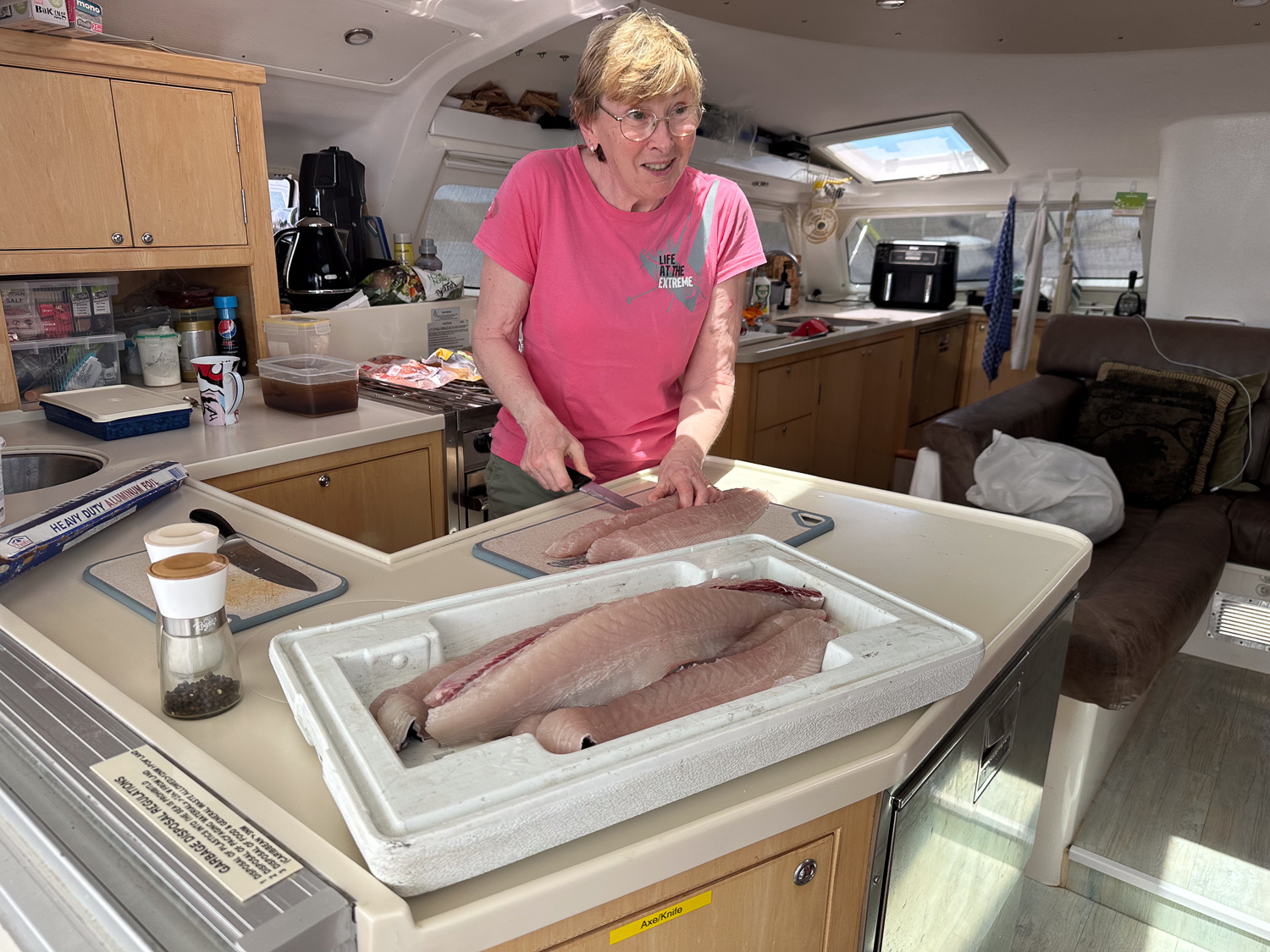
The gentle sail back to Mana Island took most of the day. We were almost there when the wind dropped to nothing and we had to motor. On arrival we finally took a trip ashore and much to our delight not only found a beach front bar but also a lady willing to sell us some fruit and vegetables including cassava. At last cassava chips for dinner! To make it even better, Sue had landed a Spanish mackerel on passage so we were having fresh fish and chips.
We’re getting picky
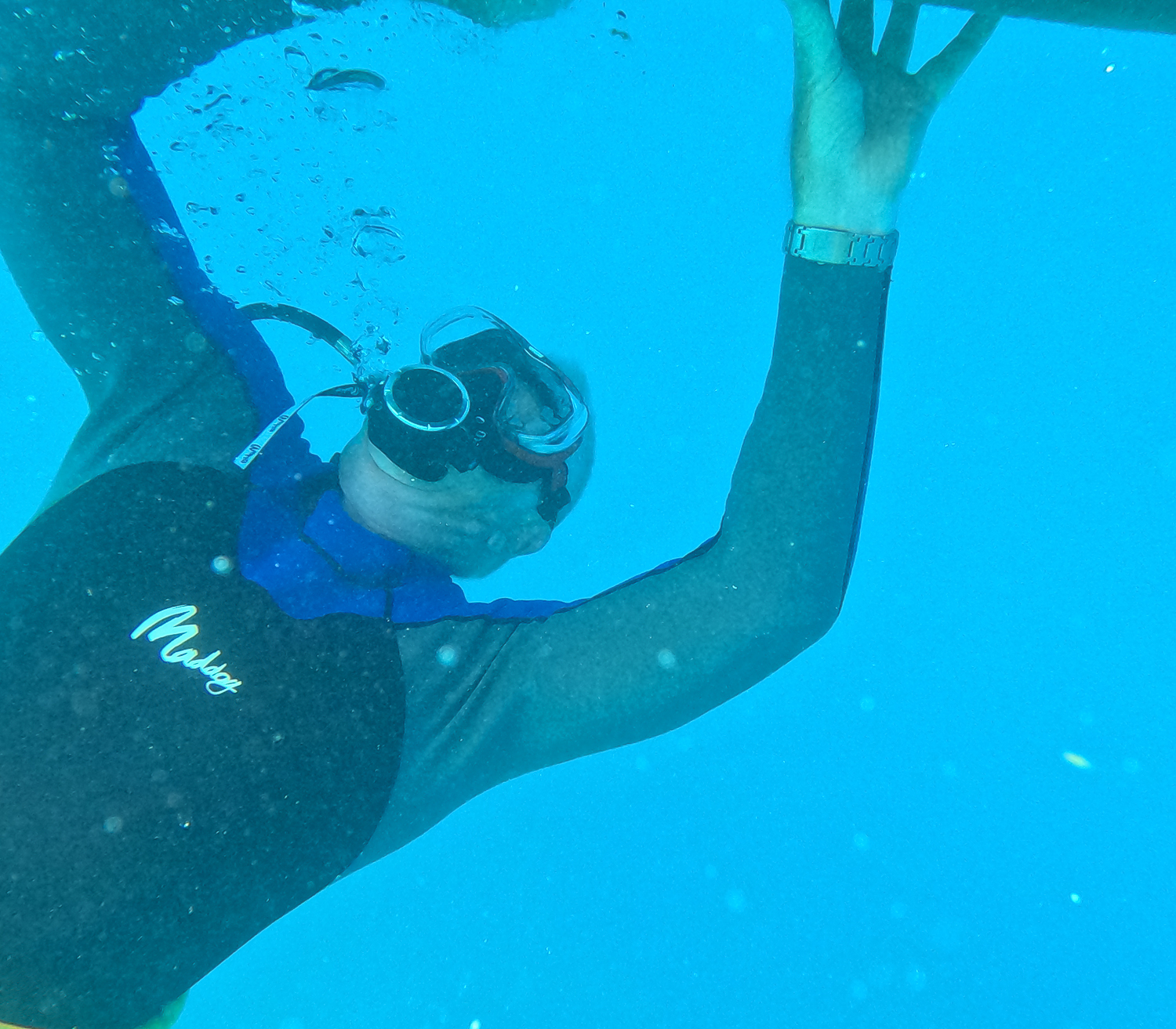
Yet another dive on the Mana Island reef and once again we managed to take the dinghy over the reef with all four of us on board. We dived further west than we had previously and were less impressed. We’re not sure if it was really not that good or whether we have just been spoilt with some fabulous dive sites.
Final preparations
We spent all of the next day getting the boat ready for departure. More bottom scrubbing!
Our trip back to Denarau was once again a motor into a five knot headwind. We managed to arrive in plenty of time to refuel as well as doing all the laundry and shopping. We rewarded ourselves with dinner at the waterfront restaurant “Sails”.
Our final countdown jobs on the day of departure, included collecting our repaired spinnaker from Marshall Sails and collecting our refilled gas bottle from the marina office. The closest dock to the marina office is for locals only and has signage indicating this. We have used it for quick drop offs whenever it has been quiet. On departure day, Nigel handed over our last two bundles of kava to an amused local guy sitting in his boat on the dock. Nigel told him that we wished to do sevusevu for permission to use the dock. The man was obviously on the same wavelength and laughingly recited whatever prayer/incantation/greeting is used during the sevusevu ceremony and happily took possession of the kava.
With the spinnaker and gas bottle safely stowed, last minute shopping purchased, and last hot showers enjoyed, we were ready for the departure formalities. Our appointment with Customs and Immigration was set for 9am, we were a little early but luckily they were ready for us. Sue had all of our paperwork in order so by 10am we were back on the boat and officially not allowed to return to land.
It took the next one and a half hours to secure the dinghy and outboard, sort out our offshore safety lines and a host of other jobs but, at 11:30am, we slipped our mooring.
New Zealand here we come.
 Weather is lovely, wish you were here