
In February 2023 Cyclone Gabrielle caused a slow moving landslide that ultimately led to us being forced out of our house. In May that year we left New Zealand for an extended trip to England (and France) hoping that by the time we got back to NZ our insurance company would have worked out what was to be done with our house.



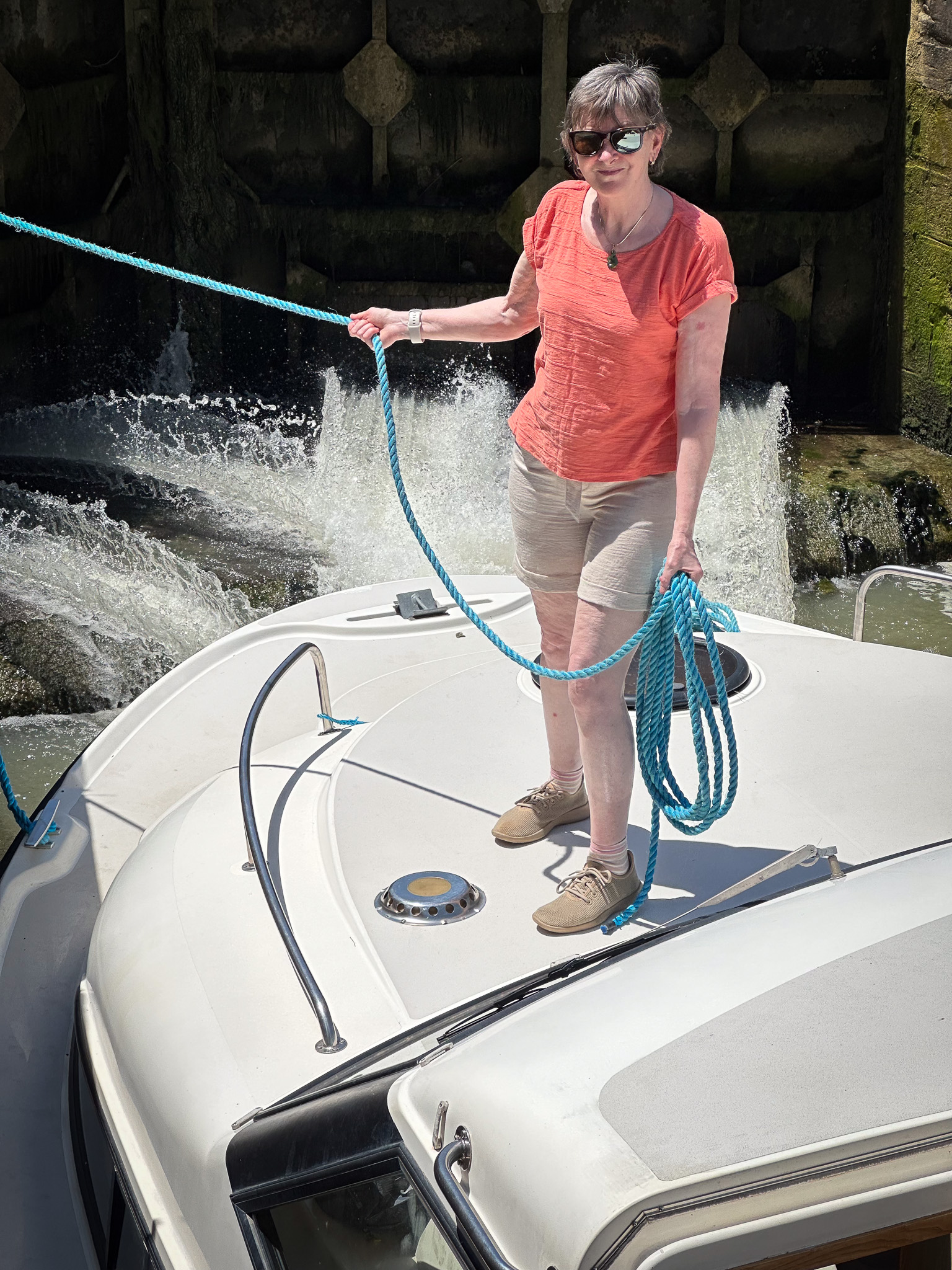



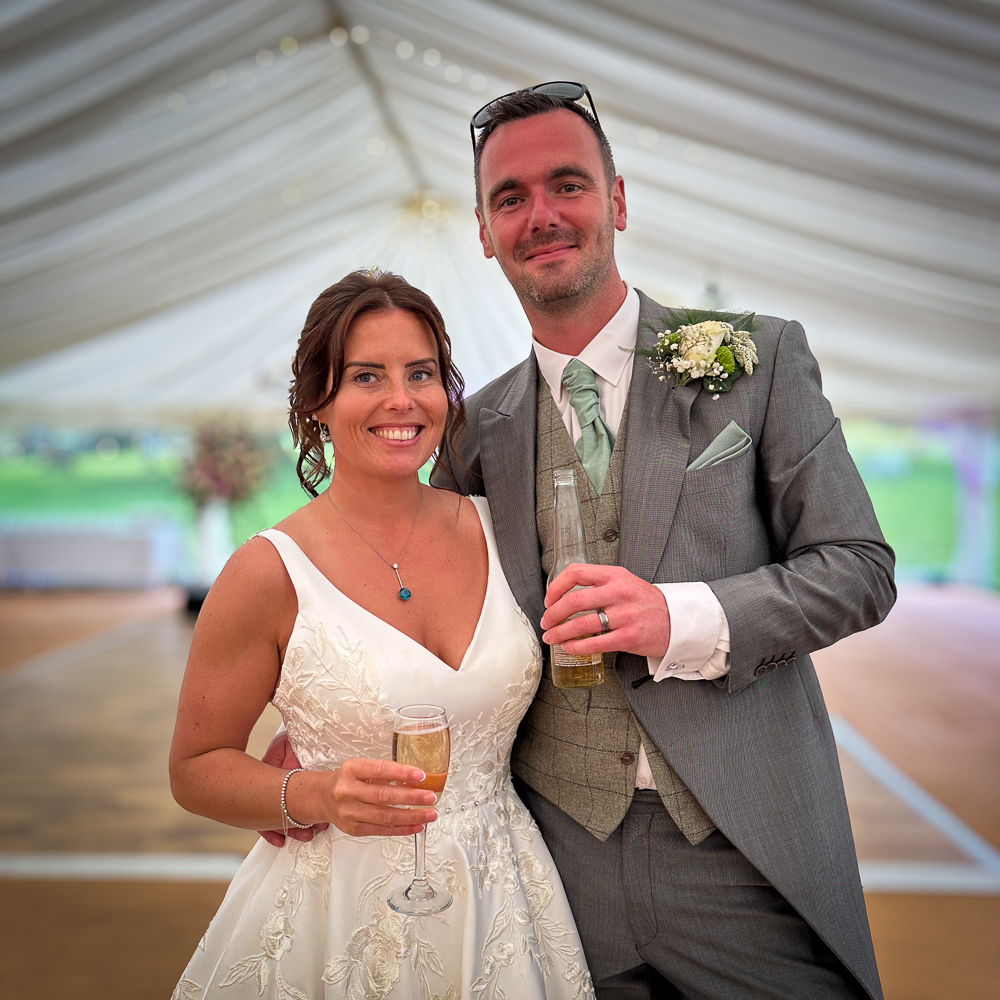
No such luck. We spent the next year trying to get some sort of resolution. Eventually in April 2024 we gave up and headed back to the UK for more time with family and to attend Sean & AJs’ wedding. We were confident that the insurance questions would all be resolved by the time we returned.
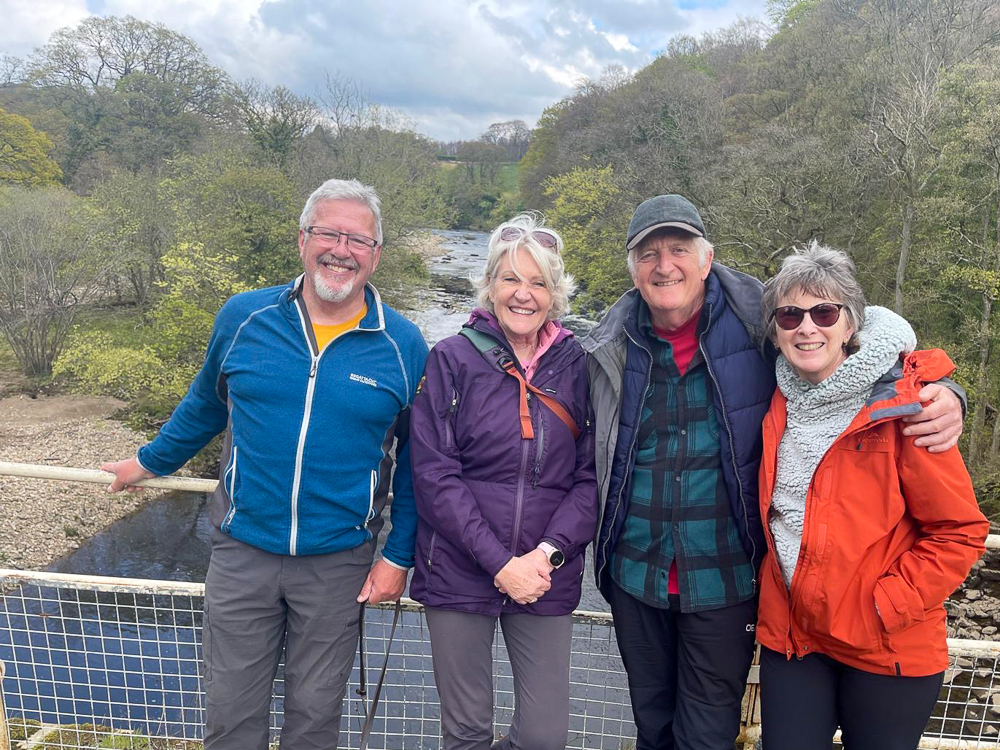





Not a chance. We returned with Claire and Jonathan at the beginning of June and spent a frenetic month preparing the boat for our trip to Fiji. Still no news from the insurance company.





Well that’s not quite true. There had been some communication. They had made us a cash offer that was supposed to be enough to repair the house. We gave them a long list of things that they had overlooked in their estimates, including the fact that the whole house was clad in an asbestos product which would need to be removed. They went back to their drawing boards. We went to Fiji.


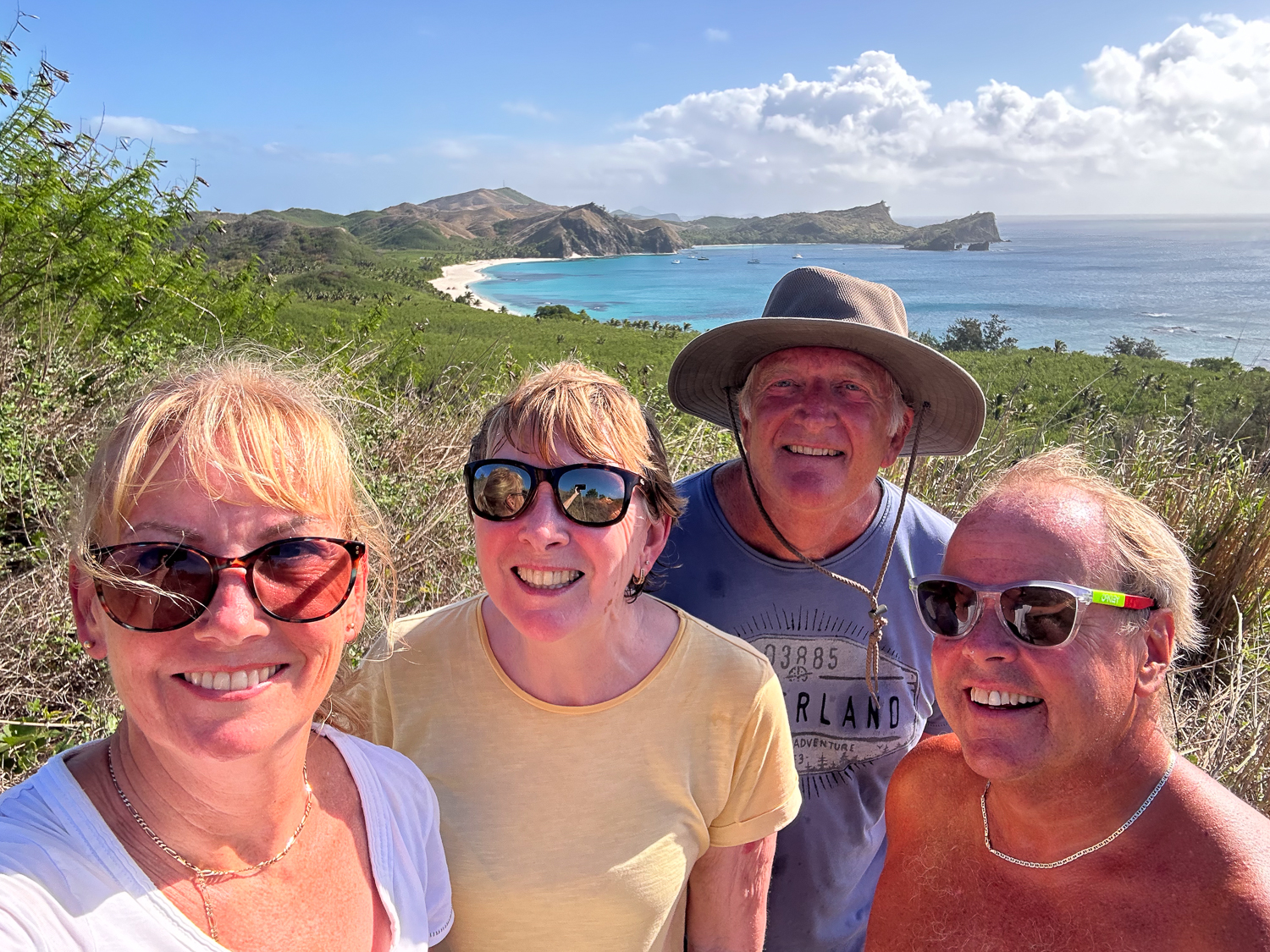


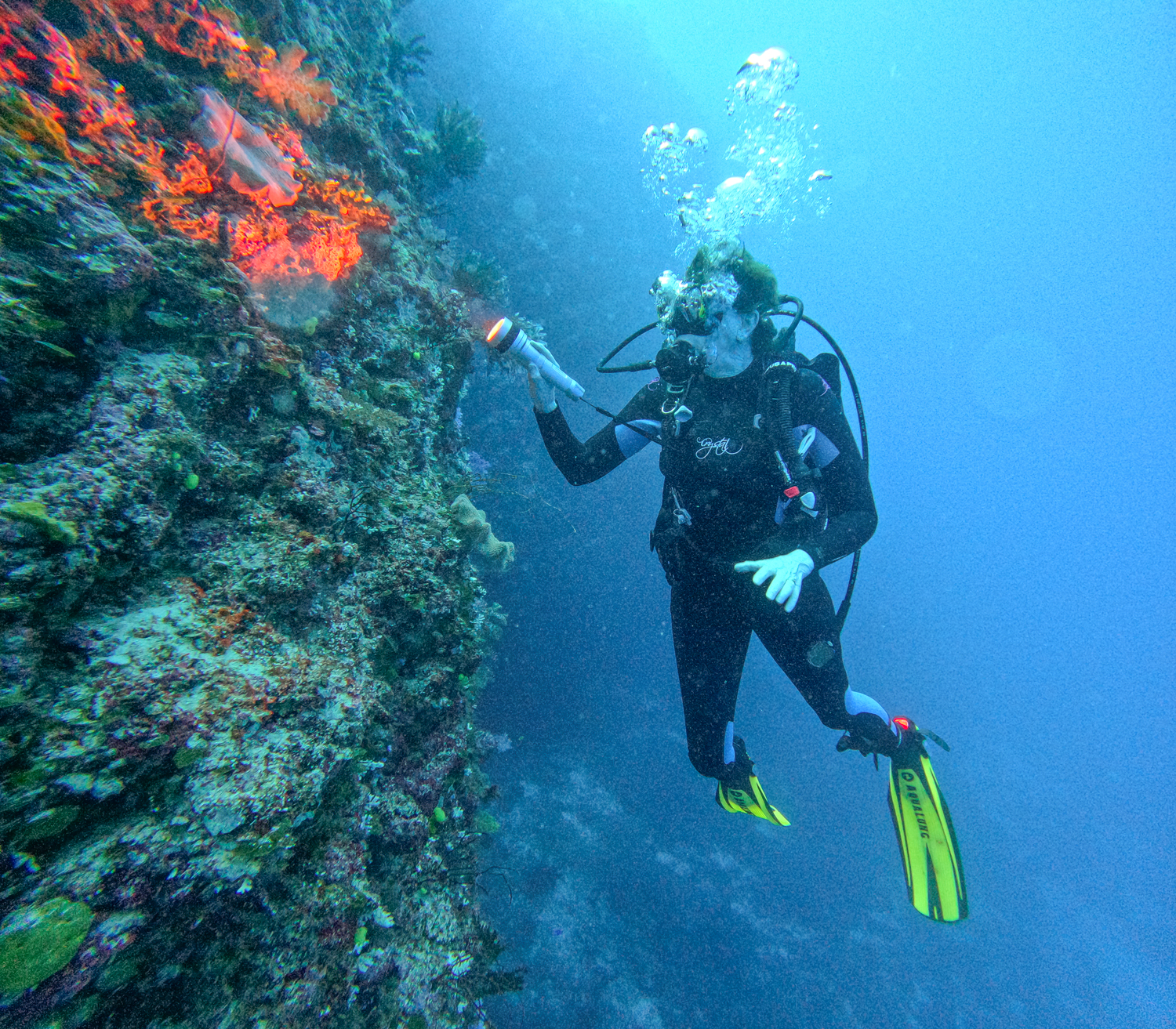




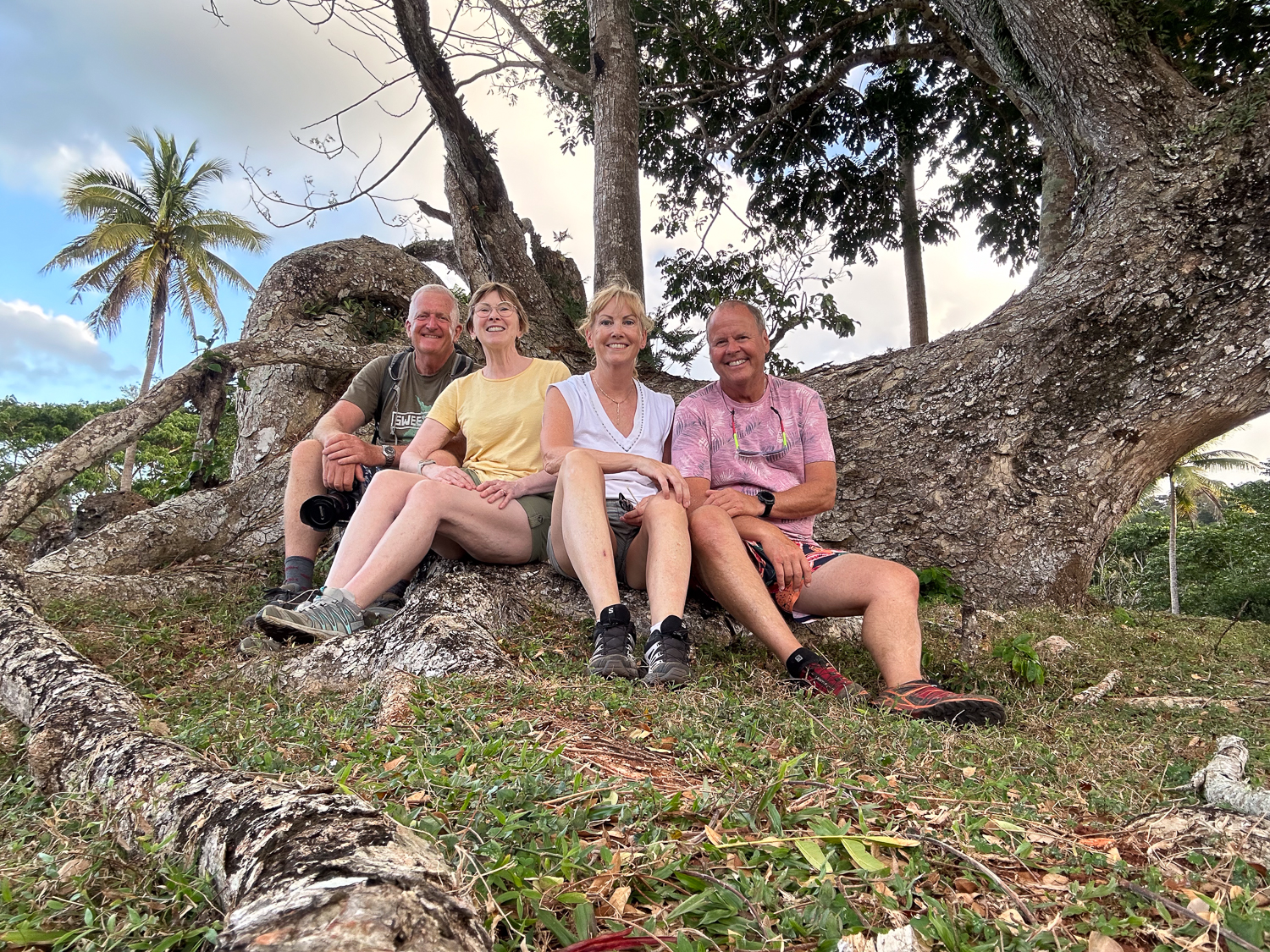








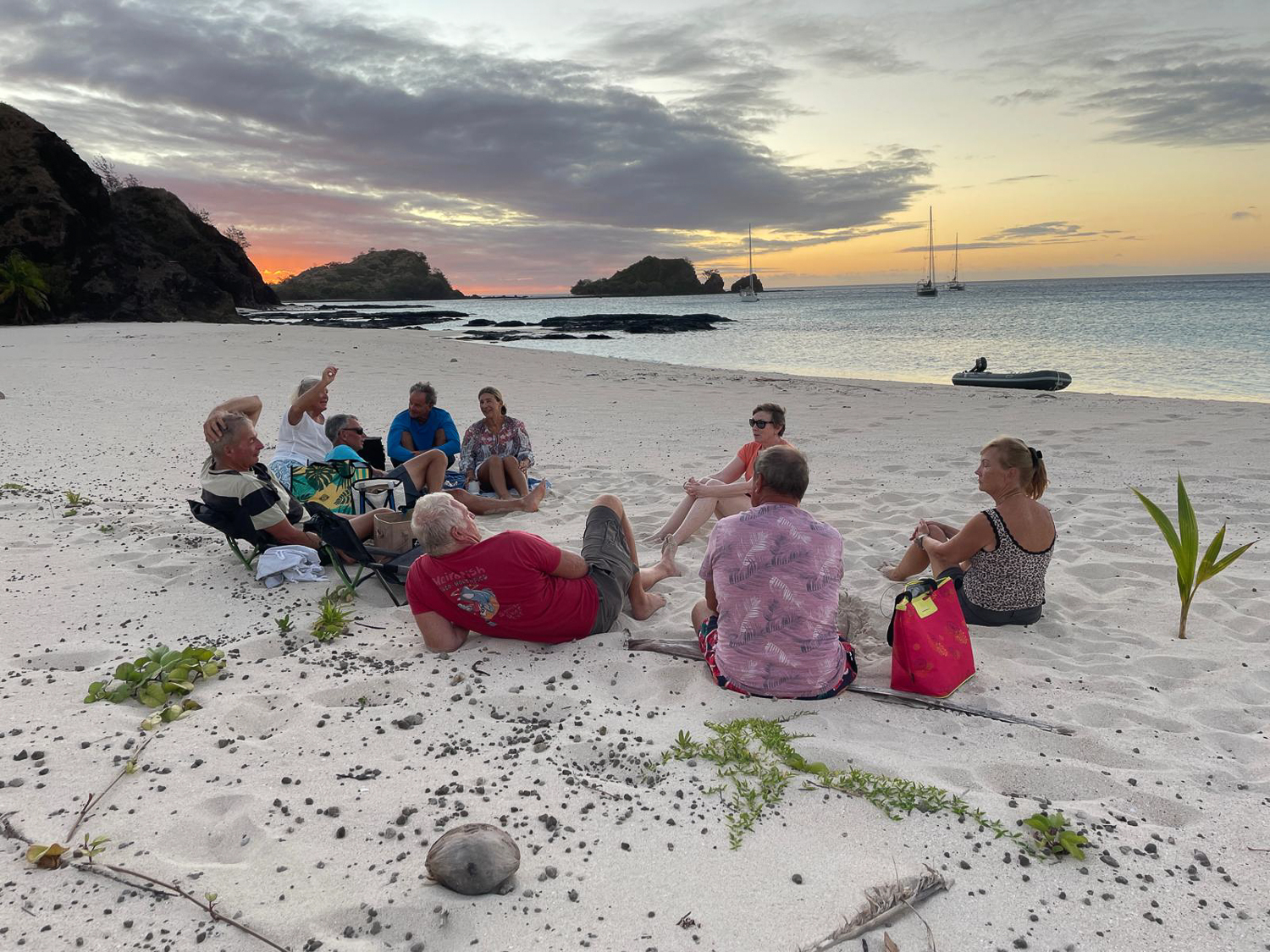




Four months and four thousand nautical miles later we returned from Fiji hoping that by now everything would have been resolved.
No way.


But then… We were half way up the track on Mount Manaia with Claire and Jonathan when Sue got a phone call. At last, the insurance company had agreed that the house could not be repaired and they were willing to pay out the full insured value. Fantastic. Now at last we could make a start.
Not quite.
Our insurance payout included money from the Earthquake Commision. All property insurance has a levy to EQC and in the event of a natural disaster, such as earthquakes or flooding, then EQC pays for some of the damage. For us it meant funding towards the huge retaining walls that will be needed to stop the land slipping further. Three of our neighbours have received similar payouts. Our challenge is that the road above our house is part of the same slip and also needs to be retained. Unfortunately, Whangarei District Council are somewhat reluctant to do anything more than the bare minimum.
The engineers have made it very clear that the road will need to be retained at some stage. Unfortunately then cannot say whether it is likely to slip again in the next heavy downpour, in the next 12 months or in the next 20 years. The Council roading manager then argues that they don’t need to build an expensive retaining wall now, they can just patch the road and wait until it actually slips again before spending more money. We are saying that if they build a retaining wall now then four property owners will contribute to the cost of it. If they wait, then they will have to fund it all themselves.
The reality is that unless the Council contributes to the cost, the funding that we have received is not enough to build a retaining wall strong enough to protect the house and hold back the road. We would probably just have to leave the land as it is and look elsewhere for another house or building plot.
Before all of this became apparent we made the decision to demolish the house so that we could begin building as soon as the retaining walls were complete. With demolition due to start in February we set to work clearing out the last of our belongings and selling off or giving away as much as we could to prevent it simply becoming landfill.
Adverts on the local Facebook pages led to the sale of the dishwasher, hot water cylinder, loft insulation, carpet, doors, shower, toilet …
You name it, we sold it.


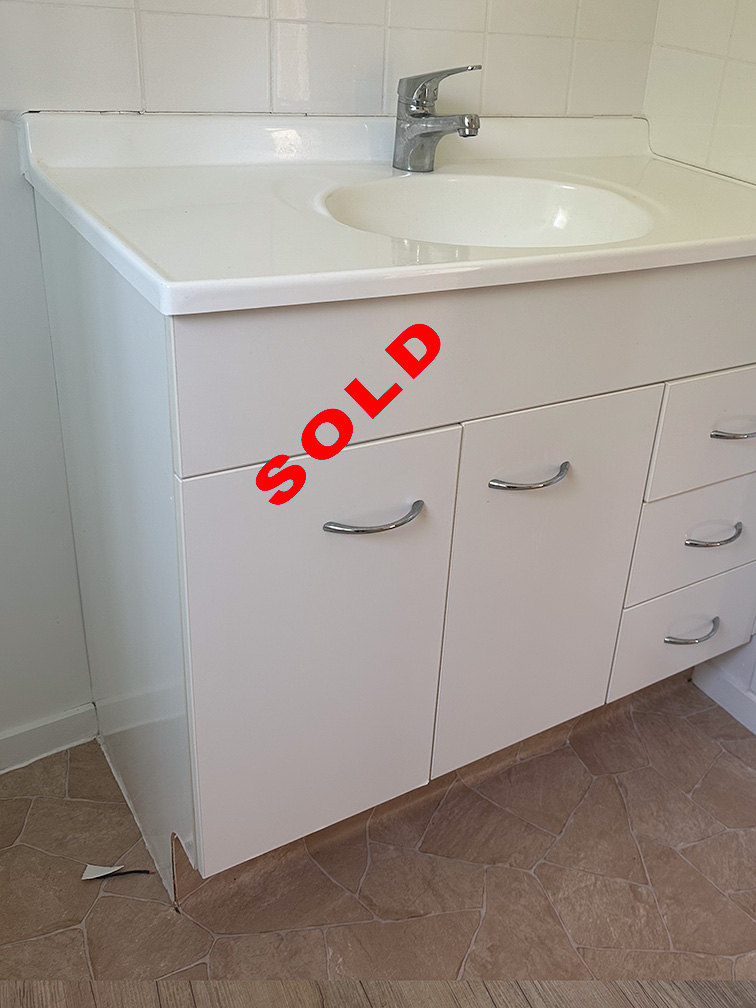
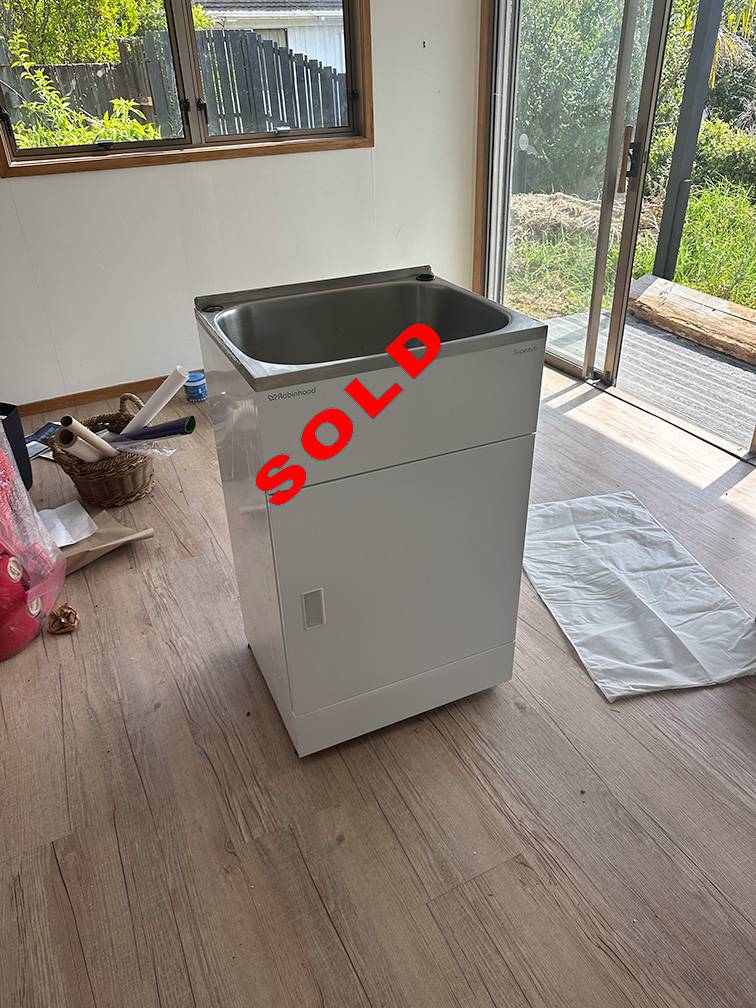

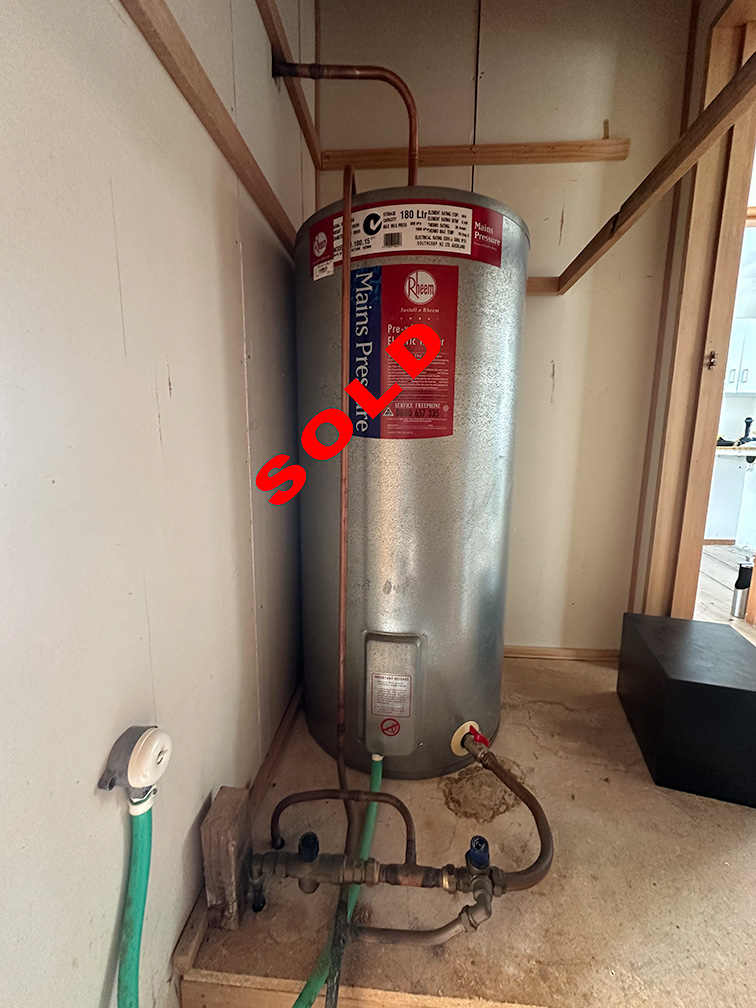


Daniels’ next door neighbour took the railings from around the deck and the flooring from downstairs. A man drove all the way from Wellington to take the flooring from the lounge. One family took a selection of windows to make a greenhouse then another group took the rest of the windows and then came back for the roof. They were stockpiling materials for a house that they were going to build one day.
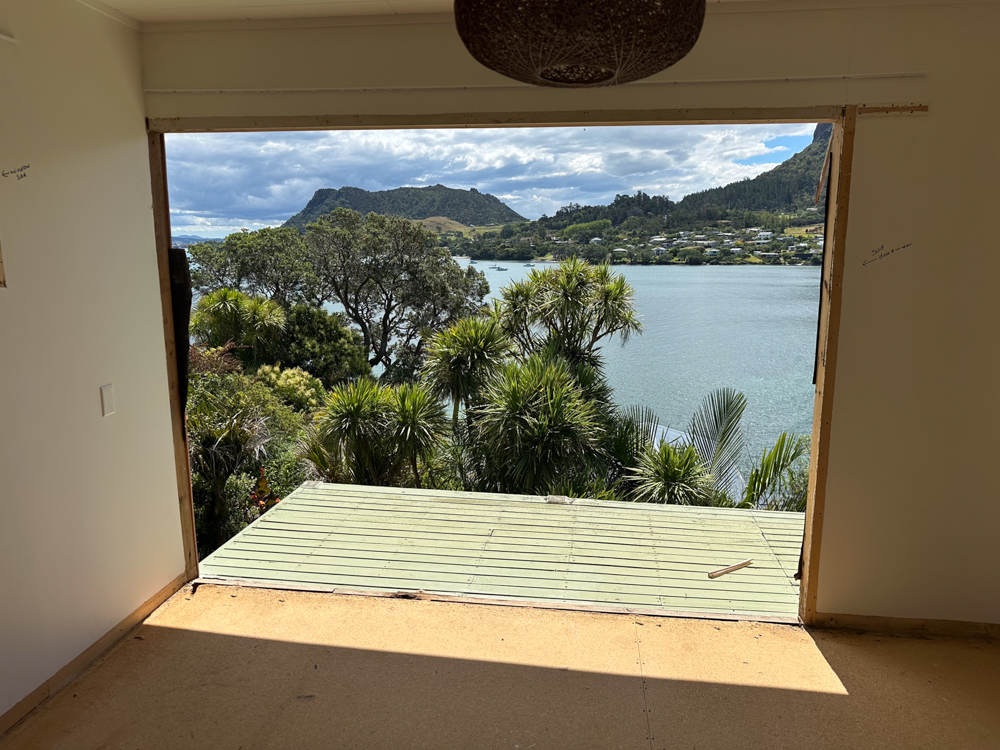
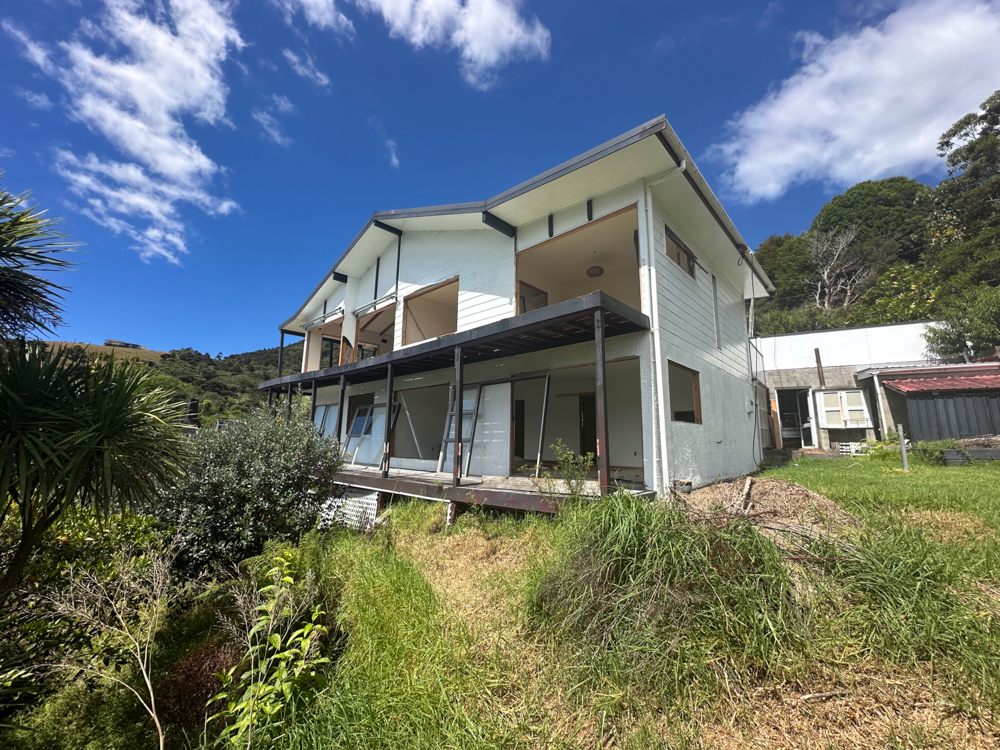
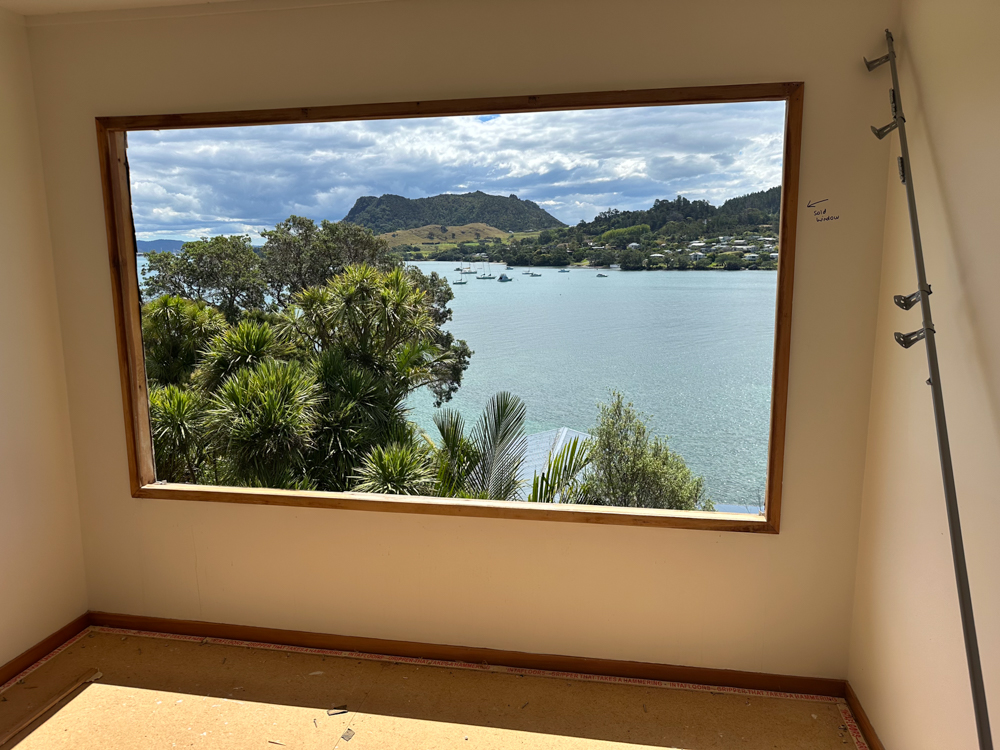


Open plan living taken to the extreme.
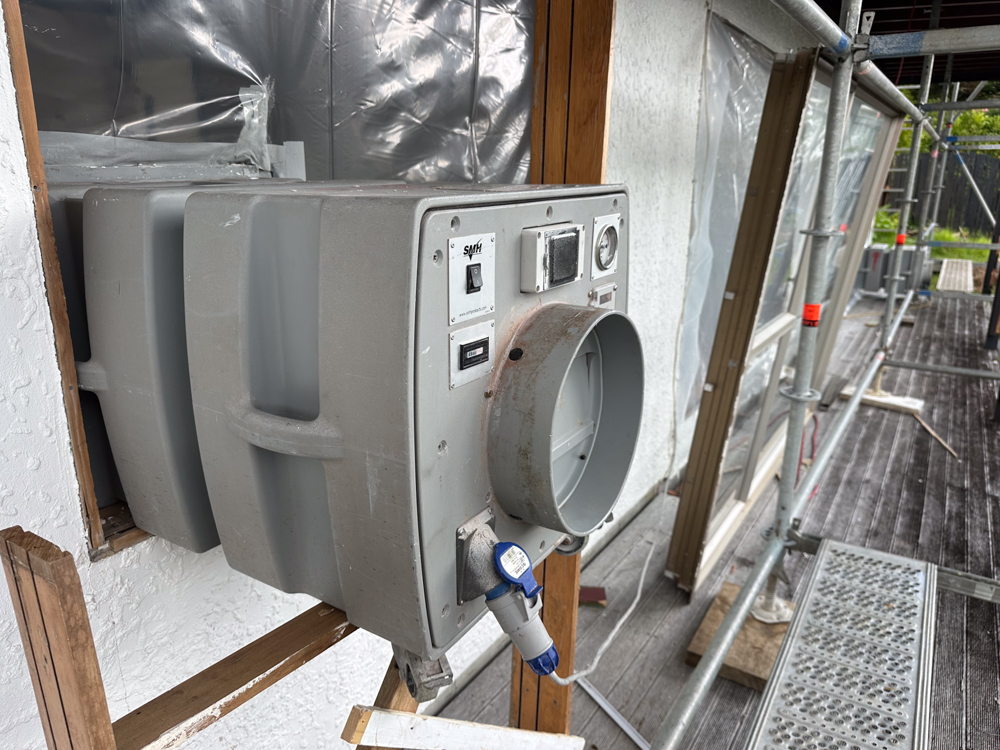
The actual demolition took place in two stages. First, all the asbestos cladding needed to be taken off the outside and the asbestos backed vinyl removed from the floor downstairs.
The cladding removal required scaffolding around the whole house while the vinyl needed an airtight enclosure with extractor fans and filters. A major job.



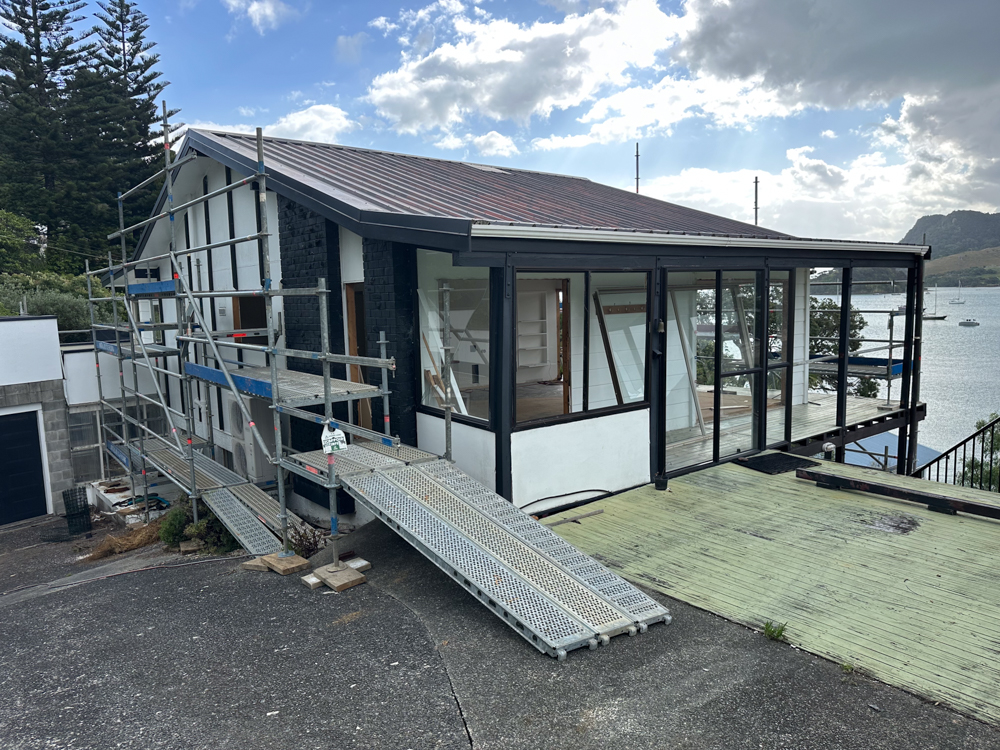


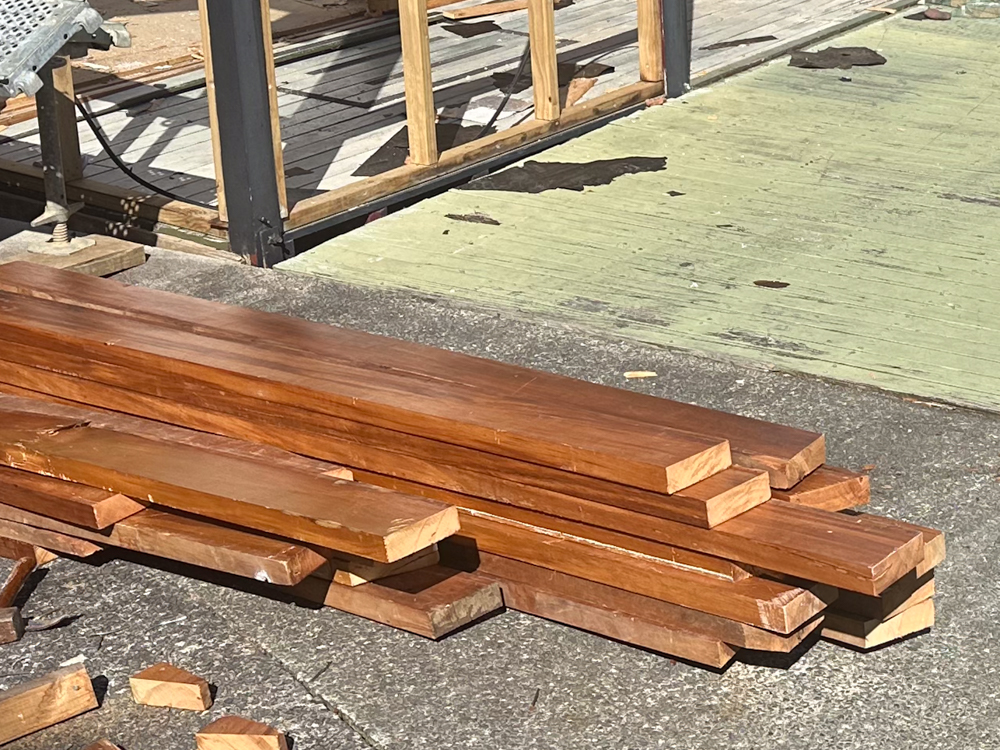
While the scaffolding was up the guys who were stockpiling for their house build made the most of it and removed the roofing iron. Then Nigel could not resist scavenging as much timber as possible. There were some fabulous macrocarpa rafters and then some huge douglas fir beams that are now stacked under Daniels’ house along with multiple lengths of pine framing timbers. We have no idea what we are going to use it for or when!


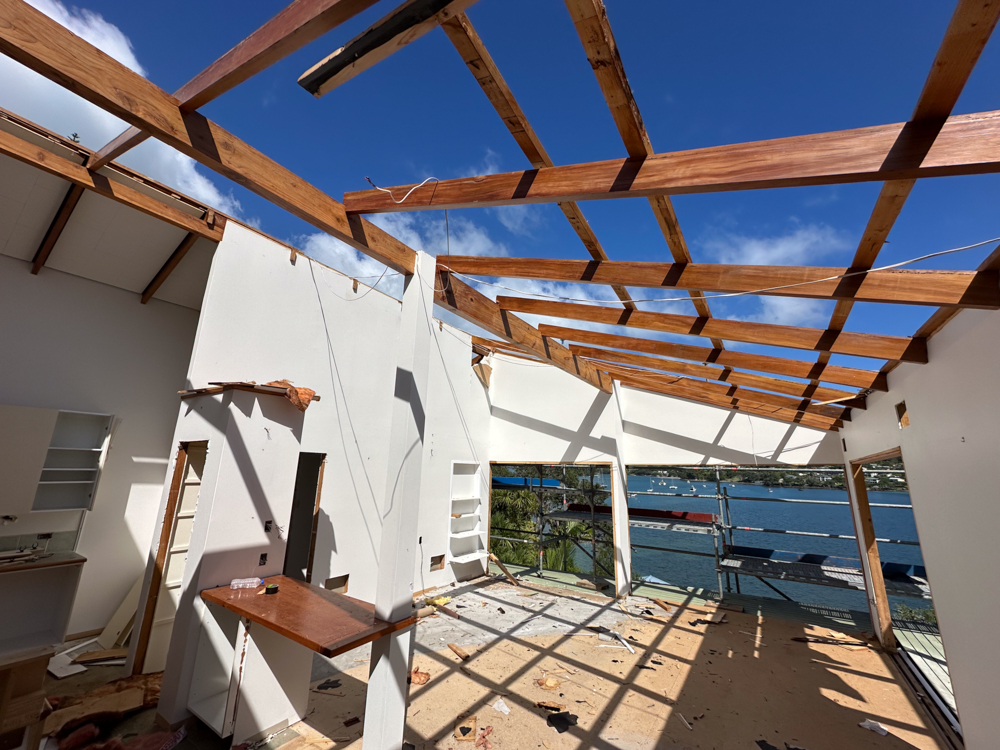


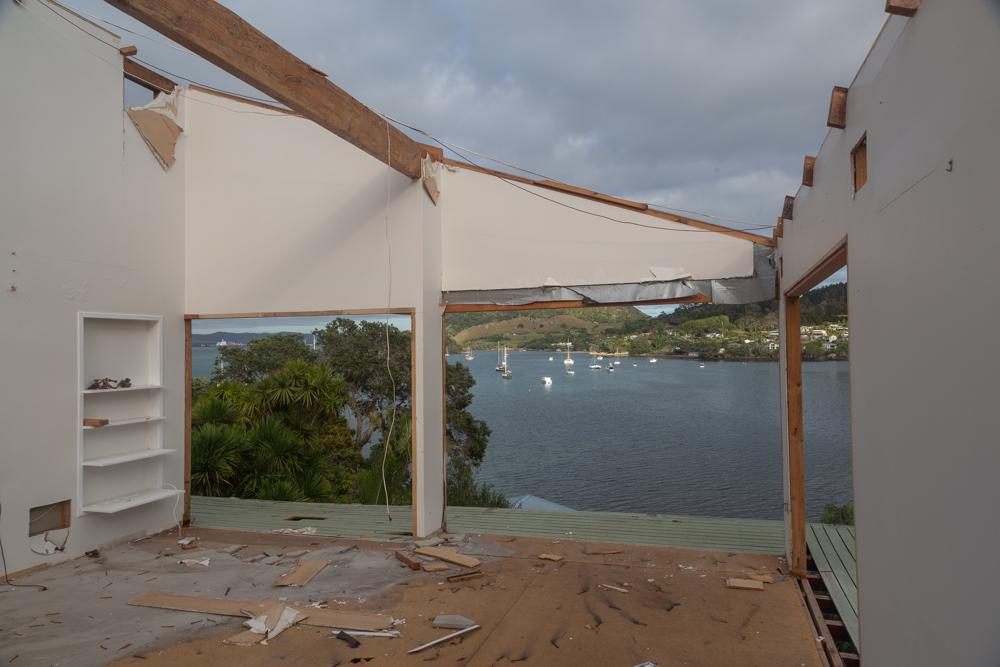

One of our neighbours here at Daniels’ place stopped Nigel in the street one day just to express his concern at the lack of safety precautions from the people demolishing the house. He had witnessed workmen high up, balanced precariously on the roof timbers with no helmets, no safety nets and no ropes. He felt that this was extremely dangerous practice. Nigel had to confess that it wasn’t the contractors – it was him!
A few things have been recycled already.
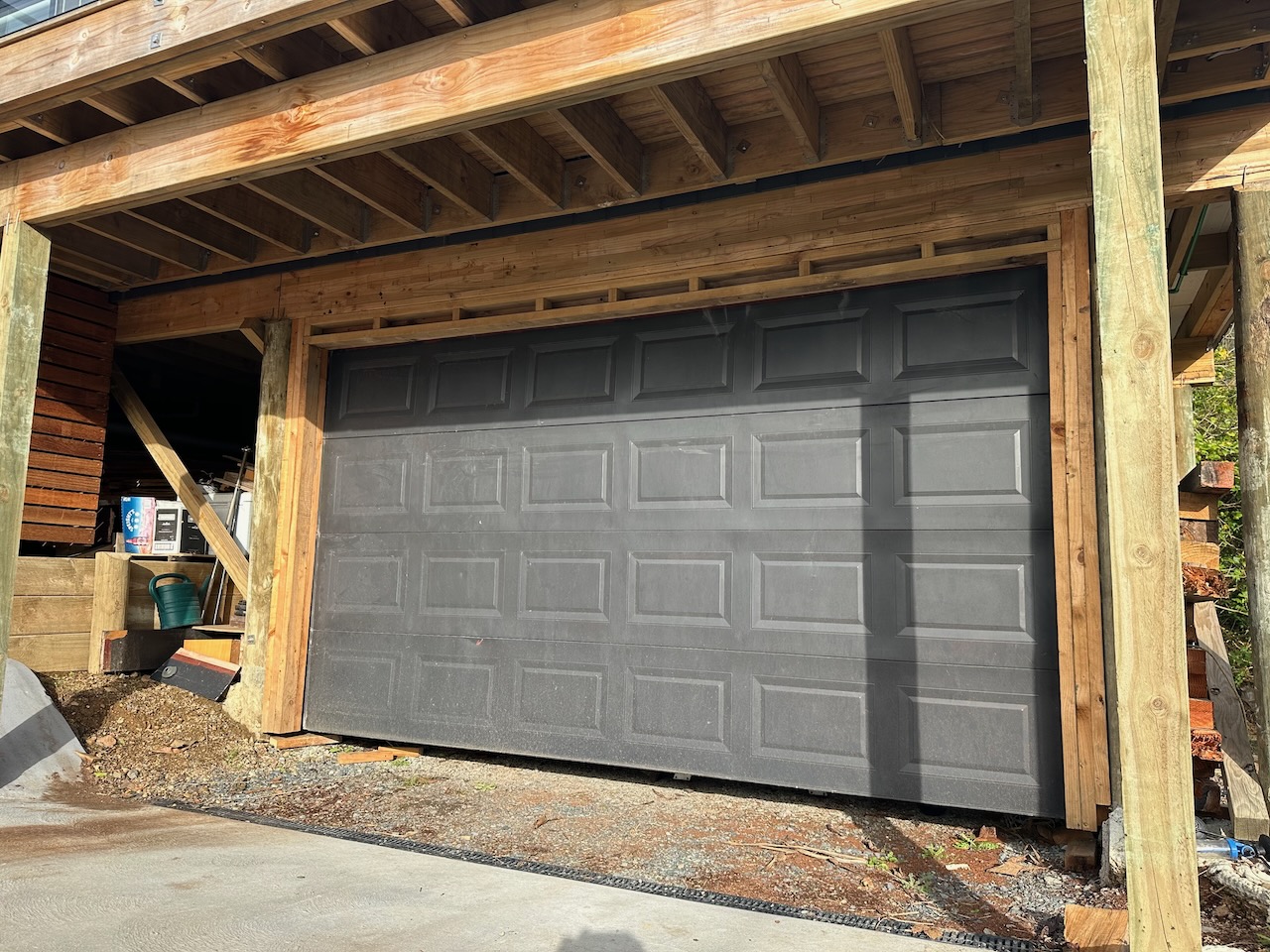
The garage door was a perfect fit for Daniels’ place. Now he just needs to concrete the floor and build some walls.

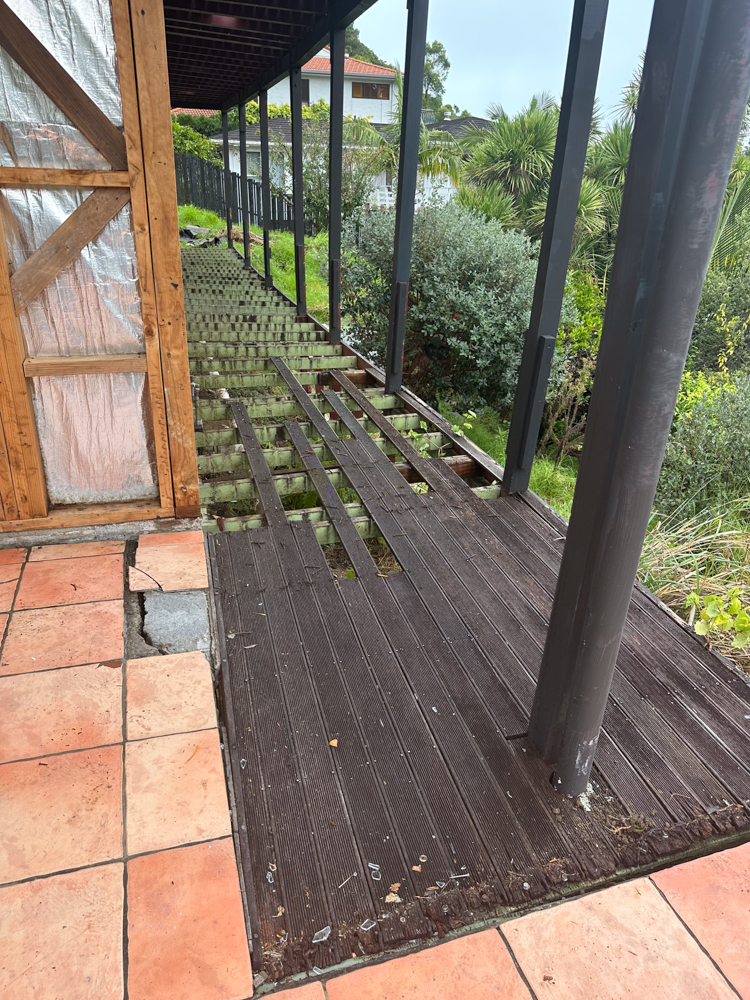
The downstairs decking turned out to be kwila timber. It appeared pretty shoddy but once it had been run through a thicknesser it looked like new. So once again Daniel had a win.



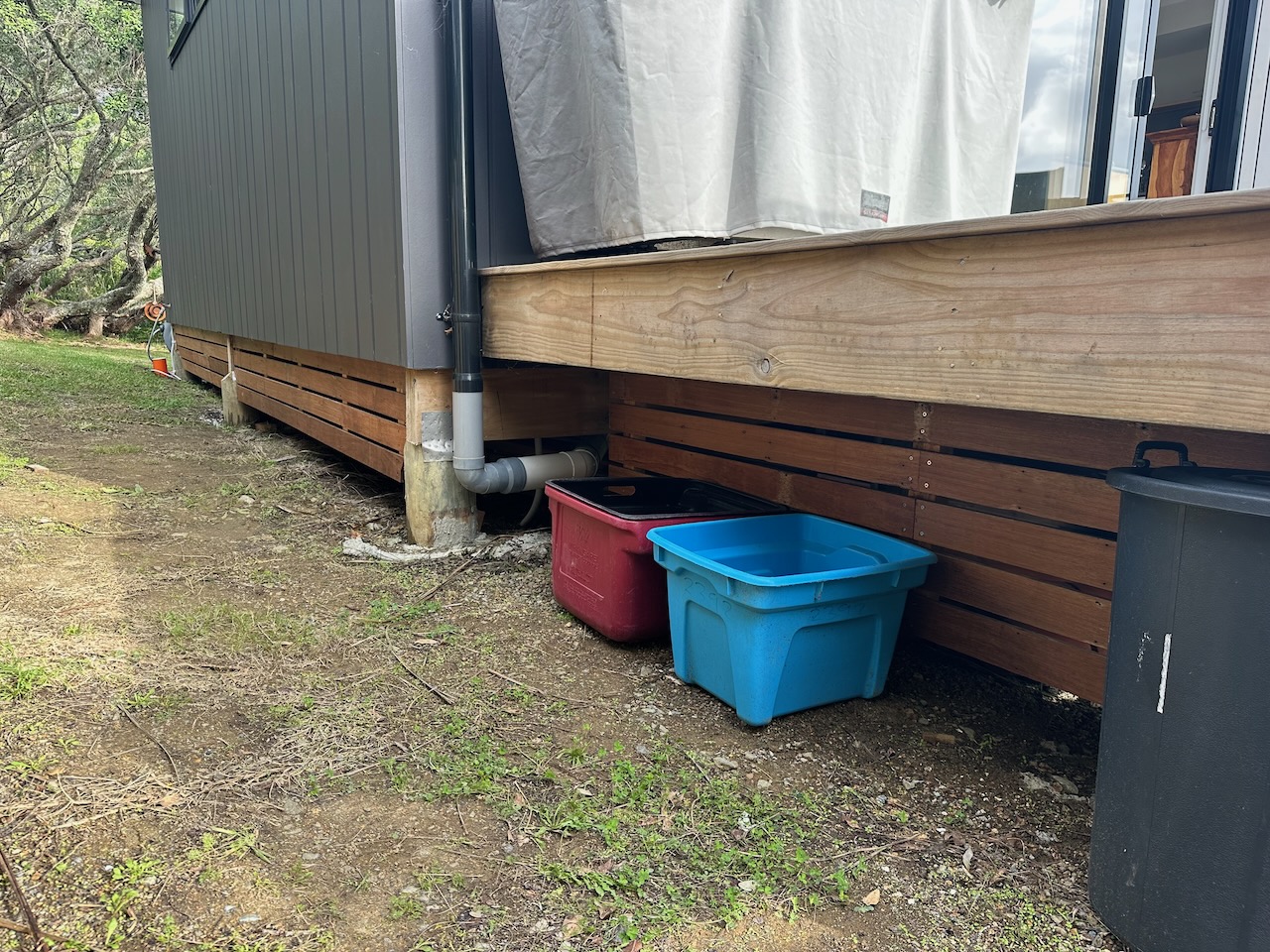
Once Nigel had exhausted all of the salvage possibilities (and himself) it was time for the serious demolition to begin.
One man with a digger took a day to flatten the house and then another four days to clear the site. Nigel was onsite to persuade the digger operator to carefully pull out the few big rafters that he had been unable to remove on his own. Concrete was carefully separated for recycling and much of the copper wiring and pipe work was pulled out of the wreckage. But the vast majority simply went into landfill.
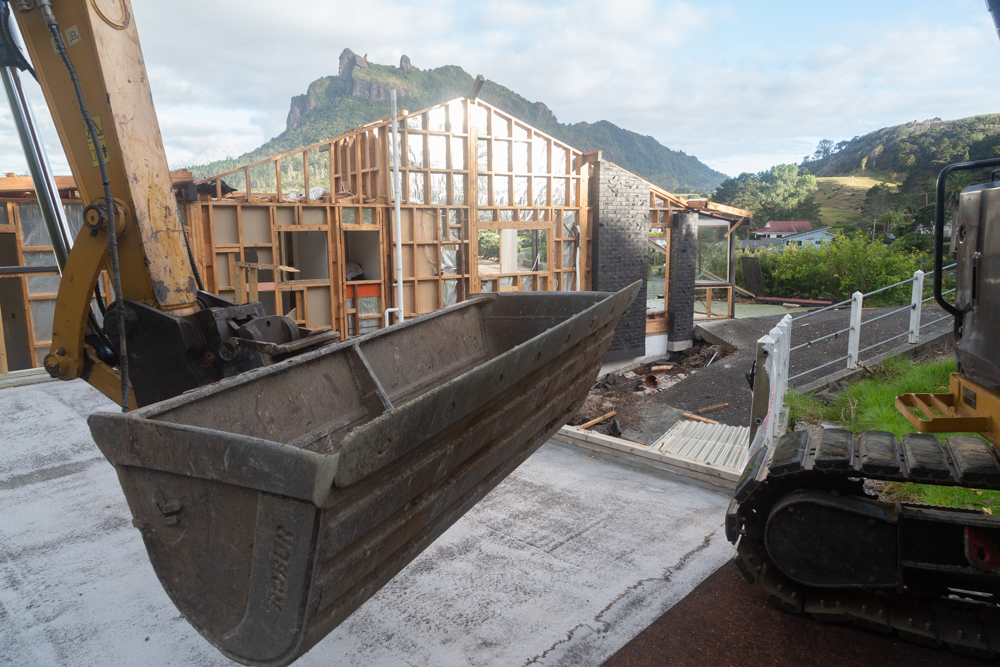
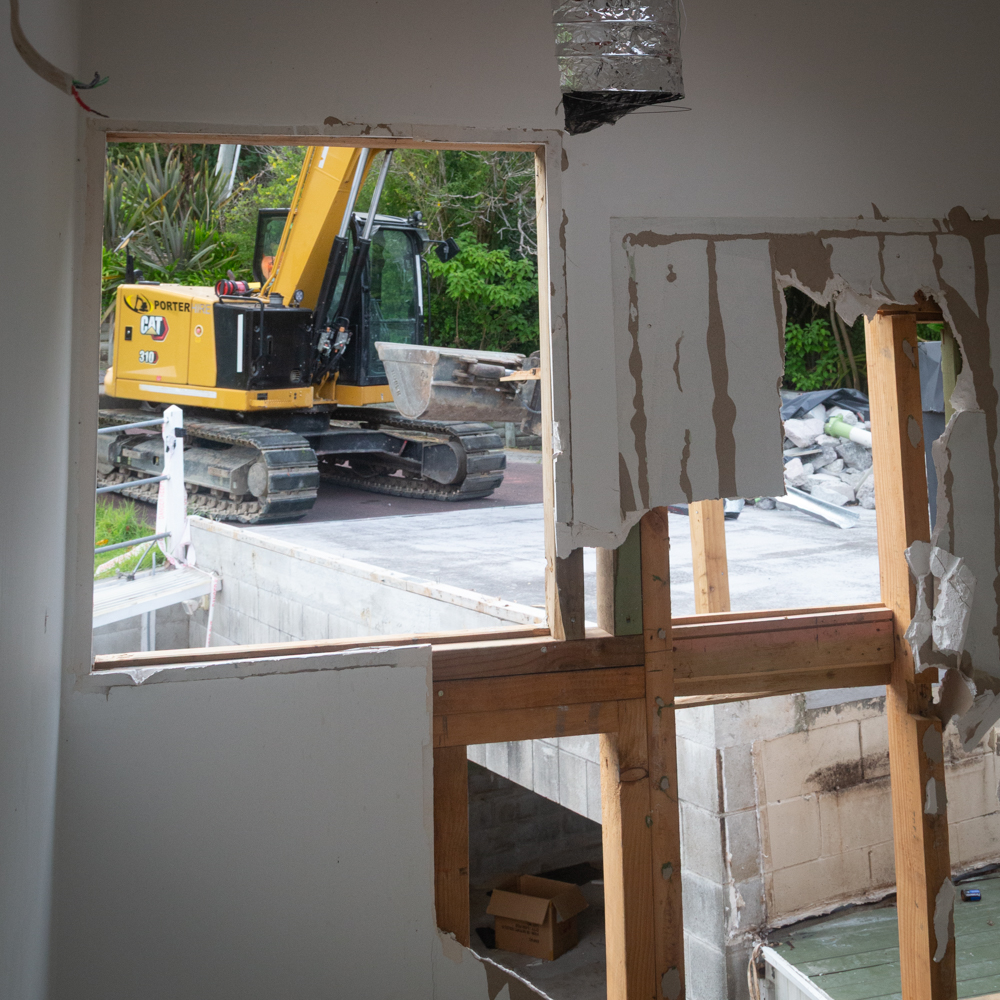


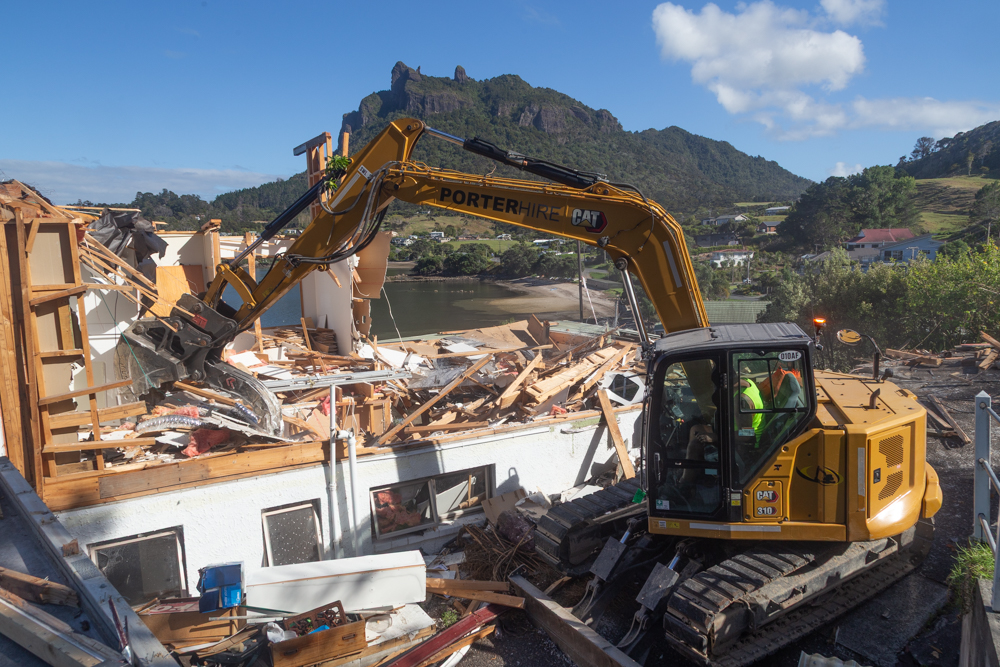

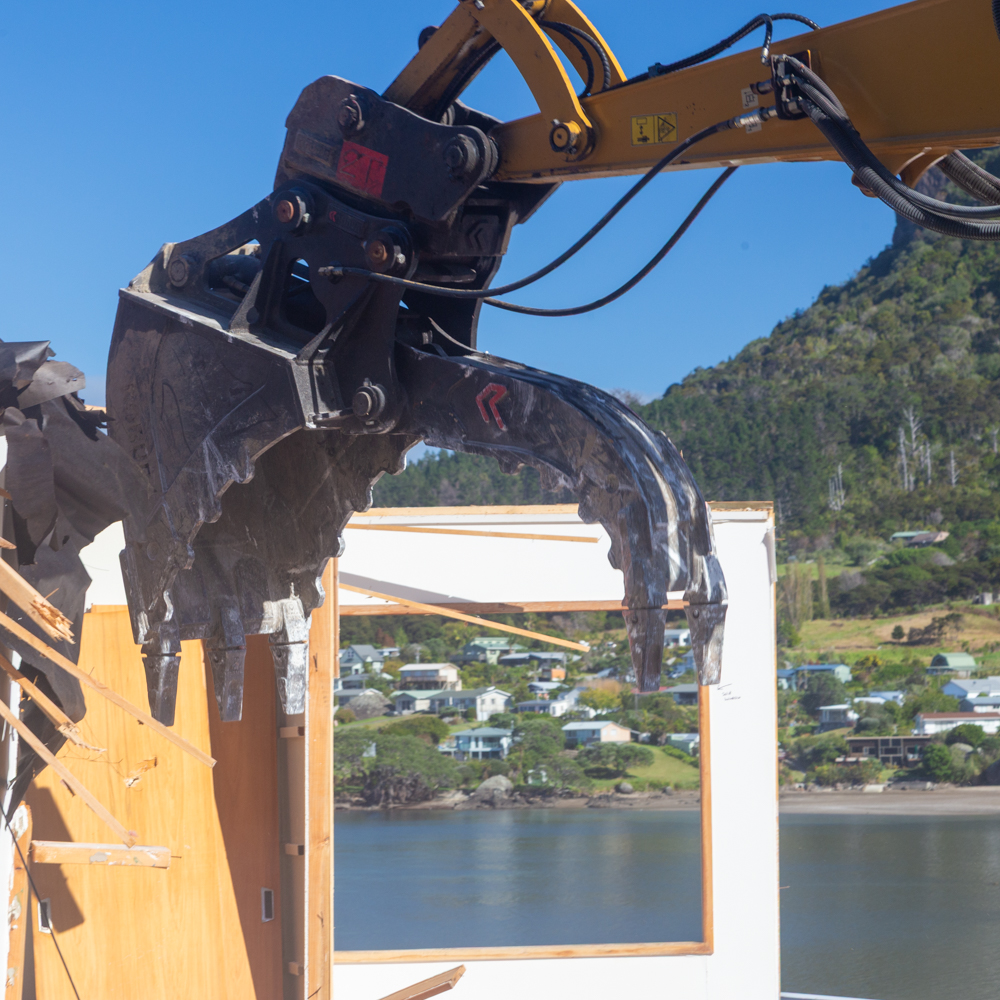
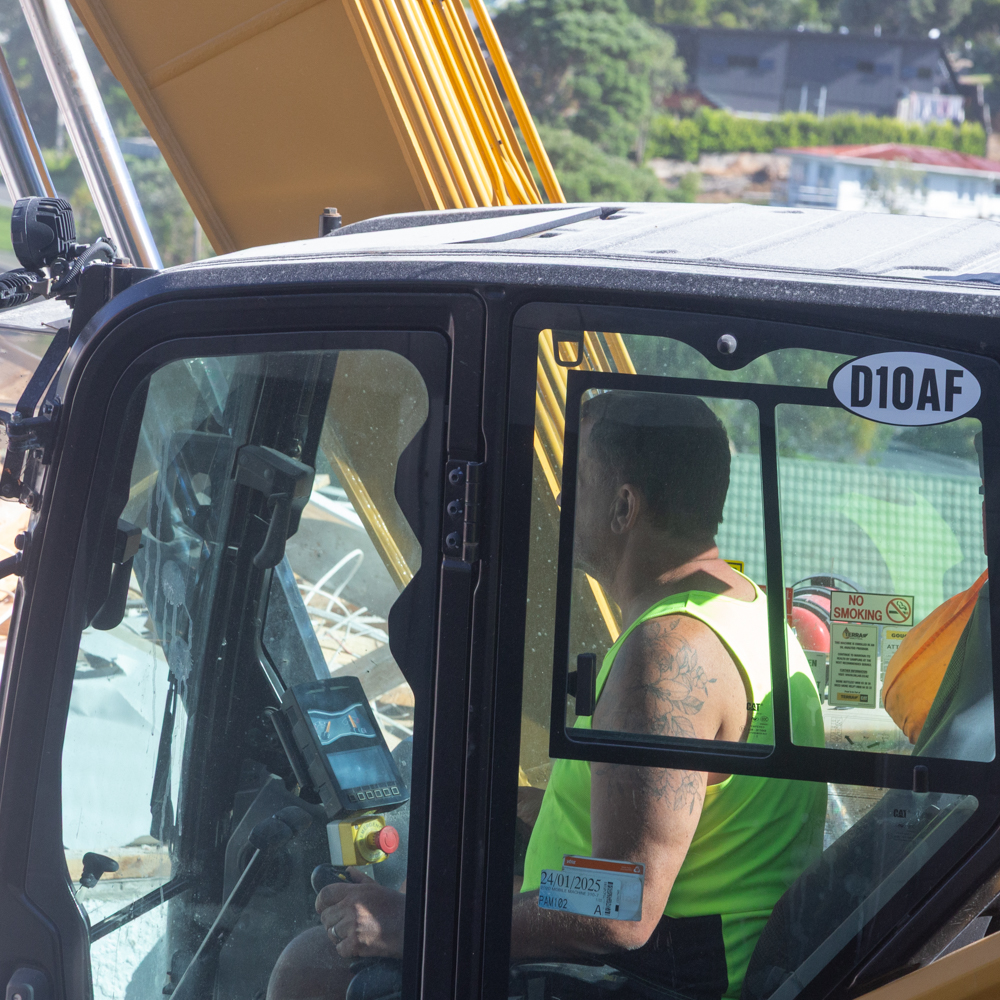

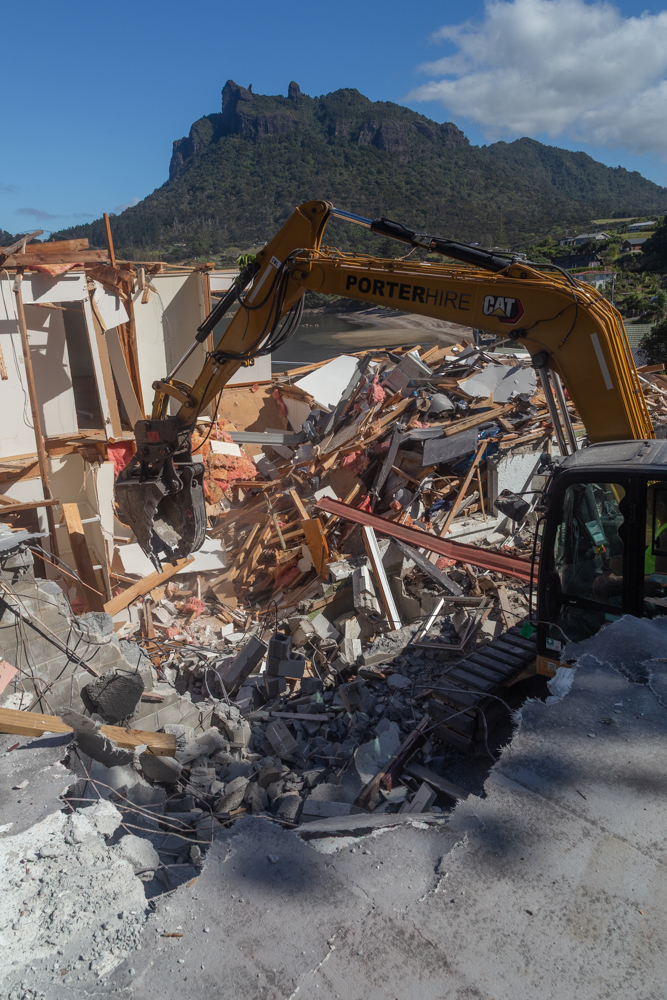
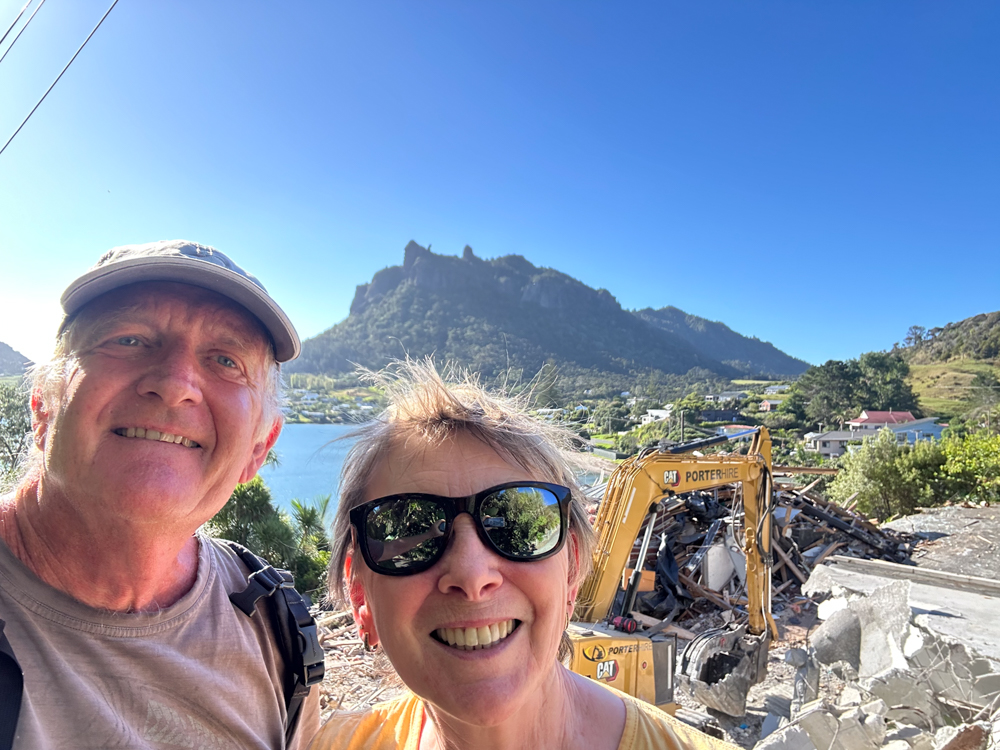


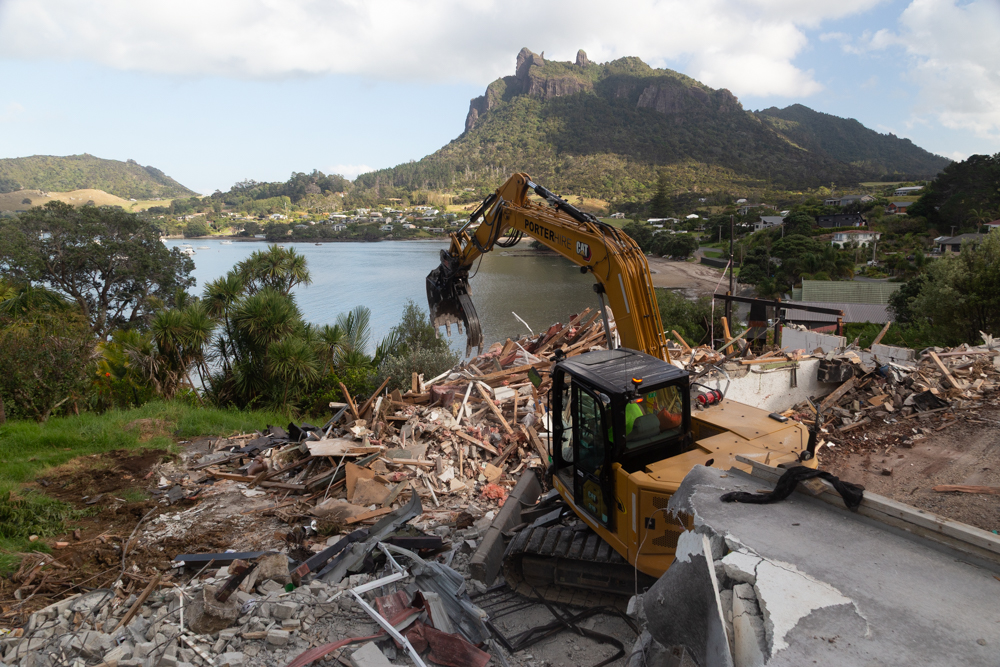
One last look at the view through the bedroom window…

All that remains…
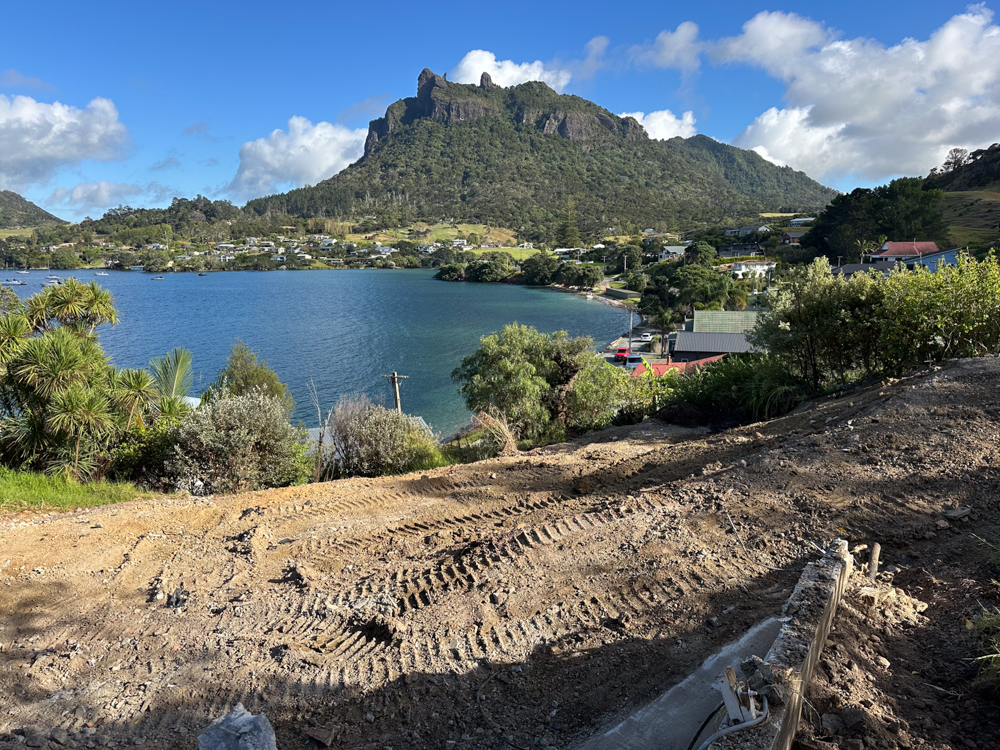
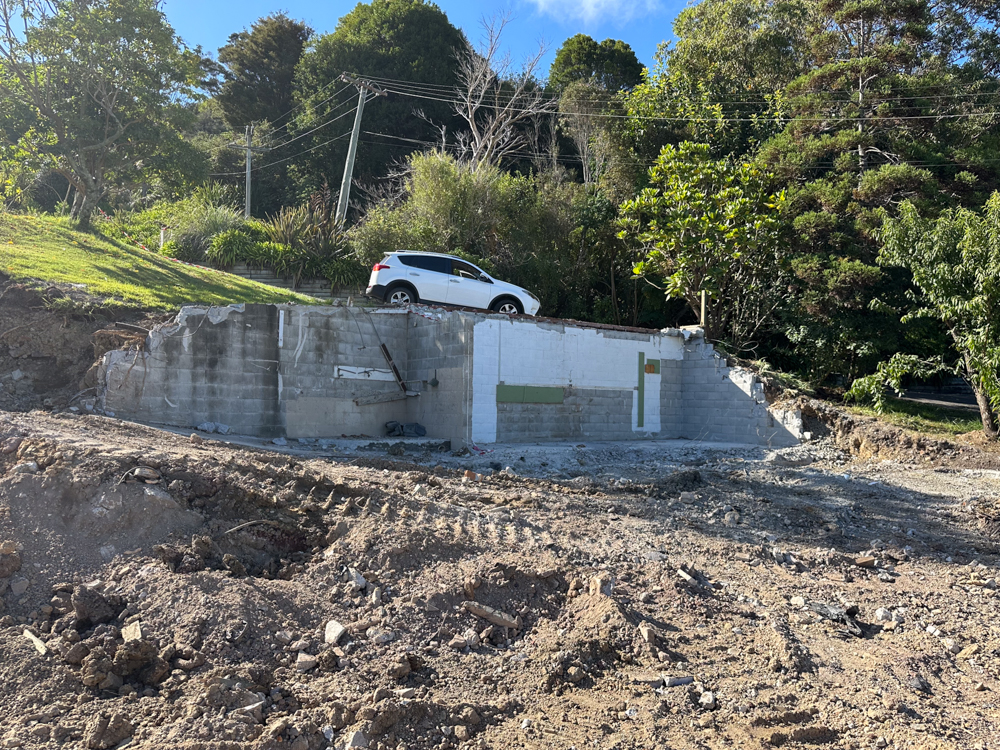
The back wall of the garage had to stay as it helps retain the driveway above it. You can see the power pole leaning at a crazy angle indicating how the ground has slipped below the road.
Now we are about to head back to England for another extended trip and another wedding. By the time we get back the Council should have all the information needed to make a decision on what it intends to do about the road. We shall see.
 Weather is lovely, wish you were here